523 résultats
2006RO30121983FAYARD. 2006. In-8. Broché. Bon état, Couv. convenable, Dos satisfaisant, Intérieur frais. 376 pages augmentées de quelques cartes en couleurs hors texte- petite tâche sur la tranche en tête. . . . Classification Dewey : 958-Asie centrale
1986R160204426PIERRE BORDAS ET FILS. 1986. In-4. Relié. Bon état, Couv. convenable, Dos satisfaisant, Intérieur frais. 226 pages - nombreuses photos et illustrations en noir et blanc et en couleur in et hors texte - contreplats décorés de cartes du Tibet. Avec Jaquette. . A l'italienne. Classification Dewey : 958-Asie centrale
1985R160180557ROBERT LAFFONT. 1985. In-8. Broché. Bon état, Couv. convenable, Dos satisfaisant, Intérieur frais. 249 Pages - Quelques planches photos en noir et blanc. . . . Classification Dewey : 958-Asie centrale
RO20150959A COMPTE D'AUTEUR.. NON DATE. In-4. Broché. Etat d'usage, Couv. convenable, Dos satisfaisant, Intérieur frais. Environ 50 pages augmentées de nombreuses photos en couleurs dans et hors texte - annotation sur la page de faux titre - ENVOI DE L'AUTEUR.. . . . Classification Dewey : 958-Asie centrale
2010R200131709Democratic Books. 2010. In-4. Relié. Etat d'usage, Coins frottés, Dos frotté, Intérieur frais. non paginé, environ 240 pages, nombreuses photos en couleur hors texte - Livre en français et en arabe.. . . . Classification Dewey : 958-Asie centrale
1997R320042890SEUIL. 1997. In-8. Broché. Bon état, Couv. convenable, Dos satisfaisant, Intérieur frais. 325 pages.. . . . Classification Dewey : 958-Asie centrale
1985RO30345586Office du Livre. 1985. In-8. Relié toilé. Bon état, Couv. convenable, Dos satisfaisant, Intérieur frais. 234 pages. Nombreuses illustrations en couleur et en noir et blanc, dans et hors texte. Jaquette en bon état. Reliure interne tâchée. Texte sur deux colonnes.. Avec Jaquette. . . Classification Dewey : 958-Asie centrale
1996RO20033829CELIV. 1996. In-4. Cartonné. Parfait état, Couv. fraîche, Dos impeccable, Intérieur frais. 95 pages. Nombreuses photos en couleur, dans le texte; et nombreuses planches de photos en couleur, hors-texte. Avec Jaquette. . . Classification Dewey : 958-Asie centrale
1999RO80095547DE LA MARTINIERE. 1999. In-4. Relié. Très bon état, Couv. fraîche, Dos satisfaisant, Intérieur frais. 164 pages. Frontispice en couleurs. Nombreuses photos en couleurs, dans le texte et hors-texte. Quelques dessins en fond de texte.. Avec Jaquette. . . Classification Dewey : 958-Asie centrale
8vo grande, Copertina edit. rigida tutta pelle con scritte oro sul dorso e cofanetto. Di questo volume sono state stampate 300 copie ad personam numerate da 1 a 300, esemplare per alberto ronchey. Edizione fuori commercio con dedica ad personam. Le cartine e le tavole nel testo sono disegnate dall'autore. numero pagine: 336 formato: 14x22.5 stato conservazione: Perfetto collana: La storia.
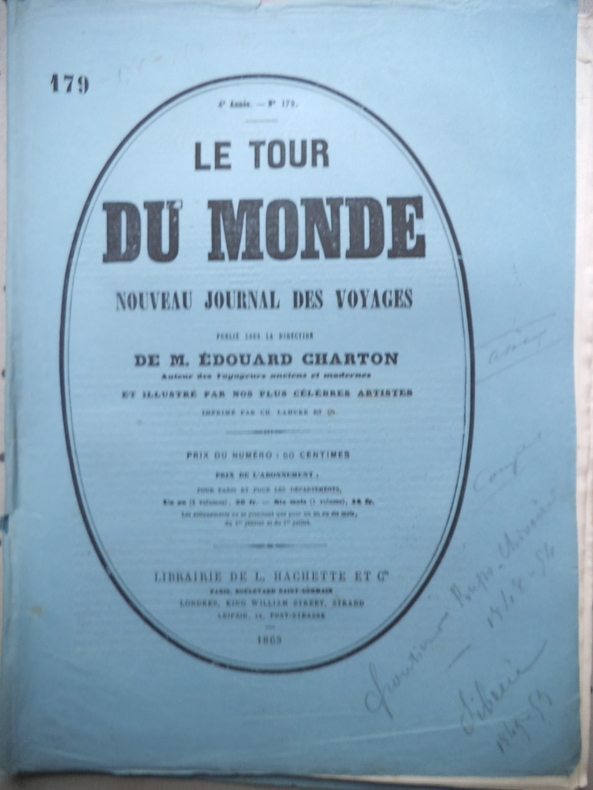
13887Traduction inédite ; Volume VII- 1863. Livraisons 178-179-180-181 30 gravures dans le texte et à pleine page. 1 carte/ Couverture bleue imprimée, de la livraison 179. Hachette 1863. Nouveau journal des voyages publié sous la direction d’Edouard CHARTON. Hachette éditeur. Texte sur 2 colonnes, format 220x310mm
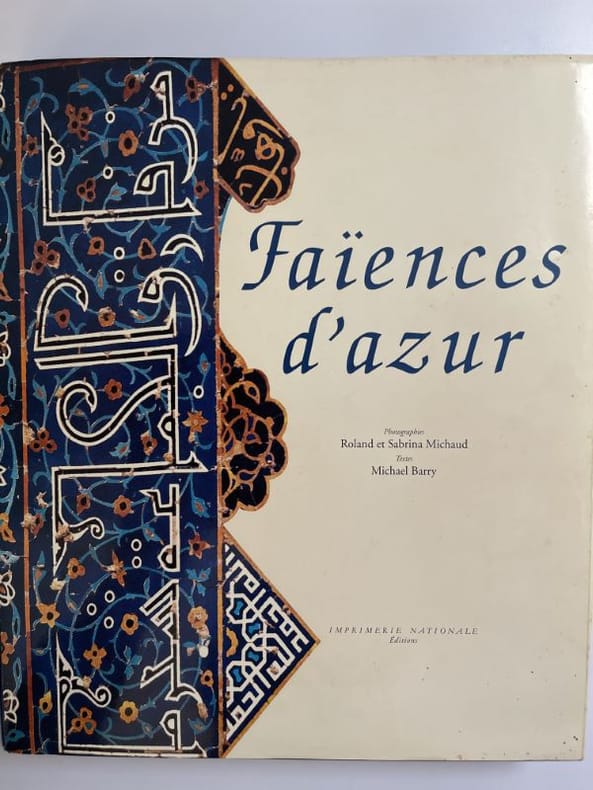
1996158239Imprimerie Nationale Imprimerie Nationale, 1996. In-4 relié pleine toile éditeur de 312 pages ornée de photos cartes et plans. Bon état
Imprimerie Nationale, 1996. In-4 relié pleine toile éditeur de 312 pages ornée de photos cartes et plans. Bon état
8vo, pp. vi + clxix + 164, Illus., Maps in Pocket, Appendices. Contents: 1. The Indus Valley, from British Territory to Boonji. 2. Gilgit-Hunza-Nager-Ponyal. 3. Castes- administration. 4. Baltistan -the Brokpas. 5. Yassin-Chitral. 6. Torwal and Bushkar. 7. Habits and customs. 8. Festivals.9. Past and present religions. 10. The Siah Posh. 11. The Gilgit princes. 12. The Baltistan princes. 13. The Yassin and Chitral princes. 14. Dardistan. Appendices.Biddulph exploried the Hindu Kush one one least accessible regions of the Asia, still largely sealed to European travellers. Gilgit, Hunza, Nagar, Ponyal, Yassin and Chitral. Originale trattato di un etnologo militare inglese, ufficiale del governo Britannico a Gilgit nel 1877, sulle tribù delle aree attorno a Gilgit, Hunza, Nagar, Ponyal, Yassin e Chitral. Il testo originale è molto raro. quality reprint of extremely scarce original. First published in 1880 in an extremely limited edition, and reprinted in 1896. Biddulph served on the Mission to Yarkand, 1873-74, and was Political Agent at Gilgit, 1877-81.
659353S.l., 1976 in-8, 175 pp., carte dépl., broché.
Bloomsbury; 608 pages It was a war begun for no wise purpose and one that need never have taken place. It would stand as the worst British military disaster until the fall of Singapore exactly a century later. William Dalrymple, a British historian, recounts Britains early misadventures in Afghanistan in Return of a King, a masterful history. This is a story that hangs heavy with imperial overconfidence, political incompetence and wilful bureaucratic misjudgment. And as the latest occupying force in Afghanistan negotiates its exit, this chronicle seems all too relevant now. Afghanistan in the early 19th century was insignificant. Though home to the largest market in Central Asia, it was wretchedly poor, and its rulers barely clung to power. But the country was also a vital gateway for invasions into India. Fearing a Russian attack on its most treasured possession, Britain looked to secure Kabul. It would have been easy simply to make a pact with Afghanistans ruler, Dost Mohammad. Instead Britain backed Shah Shuja, the deposed king, who had been living in exile in India for three decades. Thus began the Great Game, an entirely unnecessary competition for Afghanistan between Russia and Britain, conjured up by armchair polemicists in London. The war began promisingly. The grandly named Army of the Indus lumbered off to Afghanistan with 58,000 people, 30,000 camels (300 for the wine alone) and a pack of foxhounds for hunting. The force took Kabul with relative ease and restored Shuja to the throne; he was accepted with little turmoil. But the infidel occupation soon proved unpopular. Shuja was swiftly seen as a puppet of the invading army. A local chieftain inquired of the British, You have brought an army into the country. But how do you propose to take it out again? It remains a tough question to answer. The occupation grew entrenched. Families joined officers and tried to make themselves comfortable. In one case this meant bringing a grand piano; in another a cat, a parakeet and five maidservants. And the soldiers did little to endear themselves, but rather meddled in religious affairs, created a thriving market for prostitutes and helped generate inflation. Afghans grew restless, and within a year rebellions started breaking out. A series of tactical mistakes followed. Assuming the conquest was complete, Britain withdrew large portions of the army in preparation for the brewing opium war in China. Reports of growing discontent were disregarded, and no money went towards new defences in Kabul. The final straw came when the British cut payments to the tribes who guarded vital supply routes, guaranteeing widespread revolts. Much of the carnage that followed was conducted in the religious name of jihad a relative innovation in Afghanistan as previous wars had been largely between Muslims. Ultimately the struggle ended as it began, with Dost Mohammad in power at Kabul. The war cost £15m about £50 billion ($80 billion) in todays money and the lives of 40,000 people, 50,000 camels and at least one cat. That is still a bargain compared with the current conflict, which costs America more than $100 billion every year. return of a King confirms Mr Dalrymples reputation as a gifted historian and an engaging writer. But the signal achievement of this work is that it makes a nearly two-century-old war seem disturbingly fresh. It makes for grim reading. Like the current adventure in Afghanistan, this first one was undone by the unsustainable cost of occupation, waning political and public interest, and the need to divert resources. In the race to secure the country, the British ambassador in Tehran believed "that he who is not with us is against us. Operation Infinite Justice, the abandoned name for the 21st-century war, carries echoes of the Army of Retribution sent in after the disastrous British retreat. Yet there is one parallel that Mr Dalrymple leaves his readers to draw, which is the futility of treating a diffuse enemy like a tra
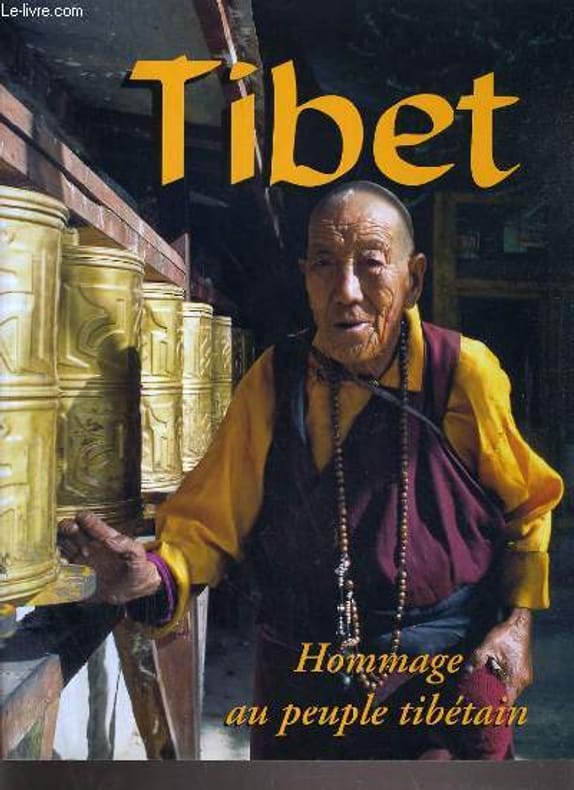
234822Paris, Gallimard, 1975 in-8, 296 pp., broché. Petites taches sur la couverture.
234821Paris, Gallimard, 1977 in-8, 268 pp., broché.
8vo, 2 volumes hardcover in dj. xiv, 313, 296 pages, folding map. George Forster`s journey from Bengal to England during 1782-84. He travelled from India through Kashmir, Afghanistan, Persia, by the Caspian Sea to Russia, from Petersburg finally he took a ship to England, visiting and describing amongst other the cities of Calcutta, Murshidabad, Patna, Benares, Allahabad Lucknow, Bareilly, Moradabad, Bilaspur, Nurpur, Jummu, Jalalabad, Kabul, Ghazni, Khandhar, Herat, Astrakhan and Moscow. He has also devoted chapters to Hindu Mythology, Brief Histories of Rohillas, Shujah-ud-daulah, and the Sikhs. Printed Pages: 625
HBK with dj, green boards, five pages b/w photographs, b/w figures, book as new - ISBN 0 300 09760 3 In this powerful history of Pakistan from 1947 to the present, Bennett Jones describes the many fault lines in Pakistani society. He assesses the role of the nationalists in the provinces, the feudal landlords in the countryside, and the bureaucratic elite in Islamabad and analyses the complex relationships between religion, regional politics and the armed forces.The combination of political instability, deep-seated economic and social problems, access to nuclear weapons, and the war in neighboring Afghanistan have made Pakistan one of the most strategically sensitive countries in the world. Its military ruler, General Pervez Musharraf, recently re-elected to a second term as President, is at the centre of global attention. He is the first Pakistani leader in thirty years to dare to confront the country's Islamic extremists. But will he succeed in controlling the forces that helped create the Taliban in Afghanistan and fuelled the bitter conflict in Kashmir? Will his army and intelligence agencies be able to tame the radical elements that they created and sustained?As a BBC correspondent in Pakistan between 1998 and 2001, Bennett Jones witnessed first hand many of the events that brought General Musharraf to power. This book contains the first detailed accounts of the 1999 coup, the Kargil conflict and how Pakistan came to test its nuclear bomb. It will be essential reading for anyone who wants to understand a country that was crucial to the expulsion of Soviet forces from Afghanistan in the 1980s and which, after the 11 September 2001 attack, became a key coalition partner in America's was against terrorism.328 pages
550901Milano, All'Insegna del Pesce d'Oro, 1976. In-8 broché, n.p., illustr. photogr. en noir et en couleurs à pleine page. (Biblioteca orientale - Arts, 2). Tirage limité à 1000 exemplaires numérotés.
198424306Moscow, Sovetsky Khudozhnik, 1984. Russian / English. 179 S., 123 Farbabb. Gr.-8° (22,5 x 22,5 cm), OLwd., illustr. Orig.-Pappschuber
8vo., First Edition, with a portrait frontispiece and numerous wood-engraved decorations in the text; green cloth, upper board lettered in gilt, gilt back, a near fine copy in unclipped dustwrapper. The frontispiece is a fine self-portrait.
19631967Skira 1963 In-4, pleine toile beige, sous jaquette imprimée, illustrations contrecollées, en couleurs, 133 pp. jaquette légèrement fatiguée, bon état d’occasion.
606103Sabah, Kota Kinabalu, Sabah Society, 1971. In-4 broché, couv. rempliée ill., 272 pp., très nb. ill. photogr., fig., cartes, tableaux (dont 1 dépl.) en n/b., texte en anglais, appendices, bibliographie. Discret ex. libris manuscrit en tête de la couv.