NEPALBiblio.com

91 résultats
CBS 9783642385858USA Edition . New. Brand New! Fast Delivery US Edition and ship within 24-48 hours. Deliver by FedEx and Dhl & Aramex UPS & USPS and we do accept APO and PO BOX Addresses. Order can be delivered worldwide within 6-10 days and we do have flat rate for up to 2LB. Extra shipping charges will be requested if the Book weight is more than 5 LB. This Item May be shipped from India United states & United Kingdom. Depending on your location and availability. unknown
2014Scientific-9783642385858Springer 2014. Hardcover. New. Springer hardcover
2014Scientific-9783642385858Springer 2014. Hardcover. New. Springer hardcover
24998732-nnew. unknown
2025x-1032970863Routledge 2025. Hardcover. New. 274 pages. 9.18x6.12x9.45 inches. Routledge hardcover
2025x-9819693535Springer Nature 2025. Hardcover. New. 321 pages. 9.26x6.11x9.21 inches. Springer Nature hardcover
2024x-9819982383Springer Nature 2024. Hardcover. New. 287 pages. 9.25x6.10x0.69 inches. Springer Nature hardcover
2016x-1138852465Routledge 2016. Hardcover. New. 278 pages. 9.25x6.25x0.75 inches. Routledge hardcover
2025x-9819693578Springer Nature 2025. Hardcover. New. 299 pages. 9.26x6.11x9.21 inches. Springer Nature hardcover
19713117894New York: Harry N. Abrams. Fine in Fine dust jacket. 1971. First Edition; First Printing. Hardcover in slipcase. First American edition. Fine. In fine dust jacket. Folio unpaginated 17" x 12 1/4" Publisher's cloth chemise with bone clasps very near fine with traces of mild shelf-wear and discoloration at spine. Uniform toning at edges of chemise. Pleasing copy of this remarkable production with full-color photos throughout and gatefold maps at close of text. Extra shipping cost due to weight. ; 17" tall' x wide 12 1/4" . Harry N. Abrams hardcover
19782092902138102648Yuzankaku 1978. Soft Cover. Fine. Number of pages: 359 pages Size: 37.5cmx27cm Number of books: 1 Yuzankaku paperback
19822092902143900082Japan Nepal Society 1982. Soft Cover. Fine. Number of books: 51 Japan Nepal Society paperback
19822092902143800083Japan Nepal Society 1982. Soft Cover. Fine. Number of books: 51 Japan Nepal Society paperback
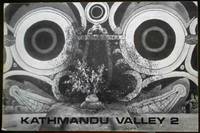
1975I 256Kathmandu: White Lotus 1975. Paperback. Good/no dj. 1.00. Government of Nepal. Kathmandu Valley Vol. 1.2 White Lotus paperback
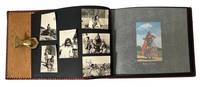
1960232261960. South Asia photo album recording Darjeeling Nepal Calcutta and Agra in the 1960s in a post Independence view of how religious life urban crowding tourism and Himalayan community identity were being documented by a foreign traveler across India and Nepal. The album showcases the various landscapes of cultural and religious identity throughout South Asia with Muslim architecture in Agra Buddhist and Hindu temple spaces in the Himalayan region crowded Calcutta streets captioned in French as an overpopulated refugee city and repeated portraits of Nepali villagers Sherpas women and children. In the decades after 1947 Indian cities such as Calcutta were absorbing refugee movement housing pressure and widening informal street economies while Himalayan communities in Darjeeling and Nepal were increasingly pulled into road building porterage mountaineering border trade and tourism conditions that form the broader social world around the album's portraits and landscapes.<br /> Photo archive of 150 silver gelatin photographs and a small group of color snapshots most measuring 2.5" x 3.75" album measuring 10.5" x 14" Darjeeling Nepal Calcutta and Agra circa early 1960s. Black paper leaves with corner mounts and French captions opening with a map of India labeled in French and moving through place based sequences. Agra pages include captioned views of the "Le Mausolée d'Itimad ud Daula" façades pierced marble screens and views of the Taj Mahal. Buddhist material includes a page captioned "Temple Bouddhique" with rooflines bells carved doors and ornamental details. Nepal and Darjeeling sections show prayer flags strung across roads mountain slopes a ridge top cabin bundled men in traditional clothing and a captioned portrait of "Le sherpa Tensing Norgay." Other leaves caption "Nepalais" and "Mère Népalaise" pairing a woman carrying a child in a basket with village children hillside portraits and small groups gathered outdoors. Calcutta appears through elevated city views dense commercial streets market scenes bridge approaches pavement sleeping and sitting areas and close portraits captioned "mendiantes" and "fumeuse de pipe." A color image captioned "Danseuse du Kashmir" and several small color snapshots extend the album's attention to costume and regional customs.<br /> By the 1960s Independence had ended British rule but it had not eased the pressures of displacement poverty overcrowding and uneven development that shaped eastern Indian urban life and the Calcutta pages make those conditions visible through street congestion market trading informal rest spaces and the compiler's own language about refugees and overpopulation. In the Himalayan sections the album does not directly picture hunger land scarcity or labor migration in explicit terms yet those pressures formed the lived context of many Nepali and Sherpa communities during this period when cash income often depended on carrying service work seasonal movement and the new international economy of trekking and mountaineering that made figures such as Tenzing Norgay globally recognizable. Minor edge and corner wear from cornering; images clean and clear; binding and boards intact. A 1960s record of post Independence South Asia combining sacred architecture urban hardship and Himalayan portraiture. unknown
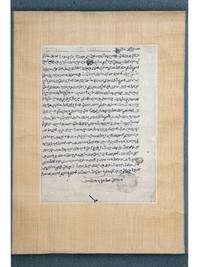
11172One sheet 275 x 205 mm. carefully mounted. Nepal: Vikrama Samvat 1982 Falgun 10 equivalent to 21 February 1926.<br /> <BR> <BR> A rare government document showing growing international scholarly and religious interest during the early 20th century in the Kapilavastu or Lumbini archeological site the birthplace of Buddha located along present-day Nepal's western boundary with India.<br /> <BR> <BR> This is a purji notice from Palhi-Majhkhand goswara provincial office to Sitaram Kurmi a jimidar a local official of mauja an administrative division composed of several villages Khungai in tappa an administrative division composed of several mauja Rupandehi. The government order instructs a local official to facilitate the visit of a certain Mr. Yemitar Yamitaro Yamataro from Japan accompanied by three others who were travelling from the Indian territories into the Nepal frontier. The inscription on the outside of the scroll almost certainly refers to Chandra Shumsher then Prime Minister of Nepal a hereditary executive position similar to the shogunate in Japan. The bearer of this document appears to have treated it as a proof of invitation even though technically the document is an order from one Nepali government department to another. Since it bears the seal of the issuing government department this document seems to be an authorized copy of the original document used as proof and corroboration.<br /> <BR> <BR> Following the discovery of the 3rd-century BCE Ashokan inscriptions by Anton Führer and Rudra Shumsher in 1896 the Kapilavastu ruins had emerged as an important site for both pilgrimage and Buddhological research. The best-known Japanese scholar to visit this location was Kawaguchi Ekai who was followed by ÅŒtani KÅzui Shimizu Mokuji Inoue KÅen and Honda EryÅ« in the early years of the 20th century. Kawaguchi maintained close contact with Nepal's then Prime Minister Chandra Shumsher Rana who in fact acceded to the former's demand that ritual animal sacrifices at a Hindu temple near the site be stopped.<br /> <BR> <BR> While the identity of the leader of this particular 1926 expedition spelled "Yemitar" according to Nepali orthography is not clear from the document it does offer a ground-level view of how the Nepali state then ruled by the Rana military oligarchy organized visits of international scholars and pilgrims. Such trips demanded not only diplomatic consensus between the British colonial state and Nepal's famously insular government but also coordination among numerous provincial officials. We learn from the order that its intended recipient a local revenue officer named Sitaram Kurmi had handled such visitors on several previous occasions. Interestingly the document uses the Sanskrit word darÅ›an meaning auspicious vision of a deity in Indic religions to describe the aim of the Japanese team's visit.<br /> <BR> <BR> Aided by the expansion of the Indian railway close to the Nepal frontier and growing interest in the Kapilavastu site a pilgrimage economy of sorts appears to have developed in the first decades of the 20th century. In addition to giving us a bureaucratic snapshot of this world this document's value lies also in its rarity since similar items are extant only in Nepal's guarded diplomatic archives inaccessible to non-citizens.<br /> <BR> <BR> Fine condition.<br /> <BR> <BR> ⧠Buddhist India: An Illustrated Buddhist Quarterly and Buddhist Gazette Vol. 1 Jan 1927 pp. 1-80. Kai Weise The Sacred Garden of Lumbini: Perceptions of Buddha's Birthplace Paris: UNESCO 2013. Richard M. Jaffe Seeking ÅšÄkyamuni: South Asia in the Formation of Modern Japanese Buddhism Chicago: 2019. unknown