3 141 résultats
191356870Munich: Verlag von F. Bruckmann A.G. 1913. Oblong Atlas folio. 20.75 x 19.5 in. 4 12 pp. w/ 51 tipped-in collotype plates 1 partially coloured all retaining their original tissue guards. Loose portfolio held in folding covers minor bumping to corners of textblock some very light toning 1st couple leaves w/ very slight closed tear at upper left corner w/ open-backed slipcase w/ printed labels on covers wear toning some scuffing minor dampstaining soiling still a VG/G- exemplar. First edition thus of this remarkable group of collotypes reproducing drawings made from the famed frescoes of the renowned Tang Dynasty artist Wu Tao-Tze -- Godoshi in Japanese 680-760. Believed to have painted hundreds of frescoes on Temples representing the Buddhist purgatory or inferno they were of such dramatic power many on viewing them repented of their sins and nearly all were destroyed through the Cultural Revolution and development. All his artworks have either been preserved by being incised on stone as woodcuts or as Chinese brush drawings. These drawings taken from Dr. Martin’s Collection were rendered originally by Li Lung Mien 1070-1106 a Sung master painter and superb draftsman who has been often considered the Leonardo da Vinci of China. He was renowned for his paintings of horses and also adept at painting landscapes as well as works with Buddhist and Taoist themes. Each collotype reproduction within this portfolio has been printed on a tinted background to simulate the originals and then mounted on thick laid paper along with a critique by Anders Zorn and notes were by Dr. Haenisch. See: Reviews & Notices The International Studio Vol. LII 1914 pp. 255-256; Recent Publications of Chinese Subjects Journal of the Royal Asiatic Society Vol. LIV Issue 1 1922 p. 99. Verlag von F. Bruckmann A.G., unknown
1957164737上海.Shanghai.: 地图出版社. Ti du chu ban she. 1st edition 3rd Printing. 1957. 37 maps in colour signs of wear at extremities on covers a stamp and a prior owner's signature rear free endpaper hinge starting good copy in hardback. Text in Chinese. 17.6 x 12.5cm. This Chinese language atlas includes two world maps along with five continental maps. The remaining thirty maps are countries and regions including China Mongolia North Korea Japan Soviet Unions Poland Germany UK France Spain Australia US Arabian Peninsula South and North Poles and more. . 地图出版社. [Ti du chu ban she]. hardcover
1963137007北京. Beijing.: 地图出版社.Di tu chu ban she. 1963. Large folding tourist map of Chinese transportation in colour four inset maps scale 1: 8000000 printed both sides with travel information on reverse. Stamp of a prior dealer in Guangzhou on reverse. Creases on corners occasional small holes along folds very lignt browning lower margin generally good. Text in Chinese. Sheet measures 53.8x 76.4cm. It was first published in 1957 and this map is the 2nd Edition 20th print published in 1963. The four inset maps feature regions of Hainan and surrounding islands Beijing and Tianjin region Shanghai Ningbo and Hangzhou Region and the national commercial airline route. <br>Transportation mileage tables including roads railways and inland waterways alongside general knowledge for travel via railways coaches commercial aeroplanes and cruisers. . 地图出版社.[Di tu chu ban she]. unknown
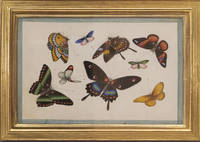
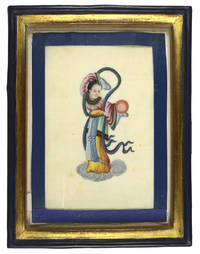
109513Canton ca. 1860. . Watercolour and gouache studies on pith paper overall dimensions 33 x 23.5cm. framed and glazed.<br /> Pith seems not to have been adopted for painting until about 1820. Some European museums claim that their paintings on pith often erroneously called "rice paper" or "mulberry pith" come from the end of the eighteenth century but there do not seem to be any dateable examples that are so early. There is a record of the Kaiser Franz of Austria buying some albums from an English Consul-General Watts in 1826. We know of an Italian Count who visited Canton in 1828 and had over 350 paintings on pith in his baggage when he died in Ambon two years later. In the British Library there is a scrap-book containing six pith paintings and a journal entry by a serving British officer who sent them home from India in 1829. These examples and contemporary accounts by visitors to Canton suggest that there was a flourishing trade in pith paintings by the early 1830s.<br /><br />Pith presumably came into use for painting to satisfy the increasing demand for small inexpensive and easily transported souvenirs following the massive growth in the China Trade in the first quarter of the nineteenth century. Paintings in oils on board and canvas were costly and difficult to carry home. Earlier and more prestigious export water-colours had often been on a larger scale and painted on fine Chinese paper or on paper imported from Europe. The albums of pith paintings and later the little glass-fronted boxes were inexpensive light easy to pack and gave the pictures some protection on the long voyage home. Because many were sold in albums and hence protected from the light they retain their bright colours to this day.<br /><br />Pith comes from the central column of spongy cellular tissue in the stem of a small tree called Tetrapanax Papyrifera native to south-west China. It has had a variety of uses some going back many centuries. At the imperial court both men and women wore coloured flowers made from pith in their hair. For use in painting it is cut by hand with a knife into thin sheets from short lengths of the spongy tissue. Cutting is highly skilled and the constraints of the process mean that the finished sheets for painting seldom if ever measure more than about 30cms by 20cms. The sheets are dried trimmed and used for painting without any further processing.<br /><br />Because of the nature of pith and its cellular structure the gouache used by the Chinese sat on the surface and produced a bright and even sparkling effect. Very fine detail could be achieved but pith did not lend itself to the flat wash of colour favoured for European watercolours. <br /><br />Carl Crossman in his book The Decorative Arts of the China Trade originally published under the title The China Trade gives an excellent list of export painters with a note of those known to have painted on pith. These include Tingqua Sunqua and Youqua. From 1757 until 1842 Canton was the only Chinese port open to trade with the west and it is no surprise that of the eight studios identified by Crossman as producing works on pith six were in Canton. <br /><br />It seems that the 1830s and 1840s may have been the heyday of pith painting. The international trading bases the waterfront 'factories' on the 'Hongs' in Canton where they were produced were partially burnt during the First Opium War 1839-41 and totally destroyed in a fire of 1856. The foreign trading companies then moved to Honan and subsequently put up splendid new offices on reclaimed land at Shamian Island a little up river. As the result of the Treaty of Nanking in 1842 additional Chinese ports were opened up for foreign trade and Hong Kong was established as a major trading centre. <br /><br />By 1860 references to China in the Illustrated London News plentiful three years earlier were few and far between. That is not to say that painting on pith ceased. Nicholas the second was given paintings on pith when he visited Canton in 1891 and the last Emperor is said to have sent him a gift which included pith paintings in 1907 though these could have been examples of much earlier work. <br /><br />Painters on pith did not in general sign their work the sole exception is Sunqua whose name can be found on the face of three paintings on pith. <br /><br />There are collections of paintings on pith in the Ashmolean the British Museum the Fitzwilliam the Hermitage the Peabody/Essex Museum in Massachusetts and the Hong Kong Museum of Art. However because paintings on pith are not in general regarded as fine art they are usually to be found in ethnographic or specialised collections.<br /> Canton, ca. 1860. unknown
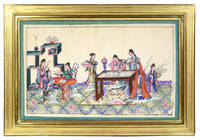
94512Canton 2nd half of 19th century. . Six watercolour and gouache studies on pith paper edged in turquoise silk ribbon and laid on paper; framed glazed and overall size: 27 x 39.4 x 2 cm.<br /> An exquisite group of interior scenes exclusively of noblewomen and ladies in waiting engaging in various genteel activities such as flower arranging painting poetry reading and writing surrounded by elegant Qing dynasty furniture and ornaments including unusual asymmetrical display cabinets exotic bird swings and porcelain vases all standing or sitting on elaborately patterned silk carpets.<br /><br />Pith seems not to have been adopted for painting until about 1820. Some European museums claim that their paintings on pith often erroneously called 'rice paper' or 'mulberry pith' come from the end of the eighteenth century but there do not seem to be any dateable examples that are so early. There is a record of the Kaiser Franz of Austria buying some albums from an English Consul-General Watts in 1826. We know of an Italian Count who visited Canton in 1828 and had over 350 paintings on pith in his baggage when he died in Ambon two years later. In the British Library there is a scrap-book containing six pith paintings and a journal entry by a serving British officer who sent them home from India in 1829. These examples and contemporary accounts by visitors to Canton suggest that there was a flourishing trade in pith paintings by the early 1830s.<br /><br />Pith presumably came into use for painting to satisfy the increasing demand for small inexpensive and easily transported souvenirs following the massive growth in the China Trade in the first quarter of the nineteenth century. Paintings in oils on board and canvas were costly and difficult to carry home. Earlier and more prestigious export water-colours had often been on a larger scale and painted on fine Chinese paper or on paper imported from Europe. The albums of pith paintings and later the little glass-fronted boxes were inexpensive light easy to pack and gave the pictures some protection on the long voyage home. Because many were sold in albums and hence protected from the light they retain their bright colours to this day.<br /><br />Pith comes from the central column of spongy cellular tissue in the stem of a small tree called Tetrapanax Papyrifera native to south-west China. It has had a variety of uses some going back many centuries. At the imperial court both men and women wore coloured flowers made from pith in their hair. For use in painting it is cut by hand with a knife into thin sheets from short lengths of the spongy tissue. Cutting is highly skilled and the constraints of the process mean that the finished sheets for painting seldom if ever measure more than about 30 by 20 cm. The sheets are dried trimmed and used for painting without any further processing.<br /><br />Because of the nature of pith and its cellular structure the gouache used by the Chinese sat on the surface and produced a bright and even sparkling effect. Very fine detail could be achieved but pith did not lend itself to the flat wash of colour favoured for European watercolours. <br /><br />Carl Crossman in his book The Decorative Arts of the China Trade originally published under the title The China Trade gives an excellent list of export painters with a note of those known to have painted on pith. These include Tingqua Sunqua and Youqua. From 1757 until 1842 Canton was the only Chinese port open to trade with the west and it is no surprise that of the eight studios identified by Crossman as producing works on pith six were in Canton. <br /><br />It seems that the 1830s and 1840s may have been the heyday of pith painting. The international trading bases the waterfront 'factories' on the 'Hongs' in Canton where they were produced were partially burnt during the First Opium War 1839-41 and totally destroyed in a fire of 1856. The foreign trading companies then moved to Honan and subsequently put up splendid new offices on reclaimed land at Shamian Island a little up river. As the result of the Treaty of Nanking in 1842 additional Chinese ports were opened up for foreign trade and Hong Kong was established as a major trading centre. <br /><br />By 1860 references to China in the Illustrated London News plentiful three years earlier were few and far between. That is not to say that painting on pith ceased. Nicholas the second was given paintings on pith when he visited Canton in 1891 and the last Emperor is said to have sent him a gift which included pith paintings in 1907 though these could have been examples of much earlier work. <br /><br />Painters on pith did not in general sign their work the sole exception is Sunqua whose name can be found on the face of three paintings on pith. <br /><br />There are collections of paintings on pith in the Ashmolean the British Museum the Fitzwilliam the Hermitage the Peabody/Essex Museum in Massachusetts and the Hong Kong Museum of Art. However because paintings on pith are not in general regarded as fine art they are usually to be found in ethnographic or specialised collections.<br /> [Canton, 2nd half of 19th century]. unknown
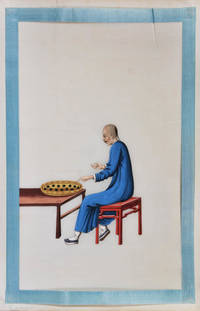
100987c.1830 . 4to album 33 x 26 cml; 24 gouaches on pith paper each one 30.5 x 20.4 cm all mounted on paper and framed with a pale blue silk fabric border; bookplate 3 plates with small tears approx 2 cm length at margins; bound in contemporary patterned decorated silk boards some pencilling on front pastedown ; overall an attractive copy. <br /> An excellent example of rare Chinese album on pith paper on tea cultivation depicting each process in detail. <br /><br />Pith seems not to have been adopted for painting until about 1820. Some European museums claim that their paintings on pith often erroneously called 'rice paper' or 'mulberry pith' come from the end of the eighteenth century but there do not seem to be any dateable examples that are so early. There is a record of the Kaiser Franz of Austria buying some albums from an English Consul-General Watts in 1826. We know of an Italian Count who visited Canton in 1828 and had over 350 paintings on pith in his baggage when he died in Ambon two years later. In the British Library there is a scrap-book containing six pith paintings and a journal entry by a serving British officer who sent them home from India in 1829. These examples and contemporary accounts by visitors to Canton suggest that there was a flourishing trade in pith paintings by the early 1830s.<br /><br />Pith presumably came into use for painting to satisfy the increasing demand for small inexpensive and easily transported souvenirs following the massive growth in the China Trade in the first quarter of the nineteenth century. Paintings in oils on board and canvas were costly and difficult to carry home. Earlier and more prestigious export water-colours had often been on a larger scale and painted on fine Chinese paper or on paper imported from Europe. The albums of pith paintings and later the little glass-fronted boxes were inexpensive light easy to pack and gave the pictures some protection on the long voyage home. Because many were sold in albums and hence protected from the light they retain their bright colours to this day.<br /><br />Pith comes from the central column of spongy cellular tissue in the stem of a small tree called Tetrapanax Papyrifera native to south-west China. It has had a variety of uses some going back many centuries. At the imperial court both men and women wore coloured flowers made from pith in their hair. For use in painting it is cut by hand with a knife into thin sheets from short lengths of the spongy tissue. Cutting is highly skilled and the constraints of the process mean that the finished sheets for painting seldom if ever measure more than about 30 by 20 cm. The sheets are dried trimmed and used for painting without any further processing.<br /><br />Because of the nature of pith and its cellular structure the gouache used by the Chinese sat on the surface and produced a bright and even sparkling effect. Very fine detail could be achieved but pith did not lend itself to the flat wash of colour favoured for European watercolours. <br /><br />Carl Crossman in his book The Decorative Arts of the China Trade originally published under the title The China Trade gives an excellent list of export painters with a note of those known to have painted on pith. These include Tingqua Sunqua and Youqua. From 1757 until 1842 Canton was the only Chinese port open to trade with the west and it is no surprise that of the eight studios identified by Crossman as producing works on pith six were in Canton. <br /><br />It seems that the 1830s and 1840s may have been the heyday of pith painting. The international trading bases the waterfront 'factories' on the 'Hongs' in Canton where they were produced were partially burnt during the First Opium War 1839-41 and totally destroyed in a fire of 1856. The foreign trading companies then moved to Honan and subsequently put up splendid new offices on reclaimed land at Shamian Island a little up river. As the result of the Treaty of Nanking in 1842 additional Chinese ports were opened up for foreign trade and Hong Kong was established as a major trading centre. <br /><br />By 1860 references to China in the Illustrated London News plentiful three years earlier were few and far between. That is not to say that painting on pith ceased. Nicholas the second was given paintings on pith when he visited Canton in 1891 and the last Emperor is said to have sent him a gift which included pith paintings in 1907 though these could have been examples of much earlier work. <br /><br />There are collections of paintings on pith in the Ashmolean the British Museum the Fitzwilliam the Hermitage the Peabody/Essex Museum in Massachusetts and the Hong Kong Museum of Art. However because paintings on pith are not in general regarded as fine art they are usually to be found in ethnographic or specialised collections.<br /> [c.1830] hardcover
91713Canton 2nd half of 19th century. . A set of 10 watercolour and gouache studies on pith paper; one with a long horizontal closed tear. Contemporary red patterned silk binding; upper hinge broken and upper cover detached.<br /> <br />Pith seems not to have been adopted for painting until about 1820. Some European museums claim that their paintings on pith often erroneously called "rice paper" or "mulberry pith" come from the end of the eighteenth century but there do not seem to be any dateable examples that are so early. There is a record of the Kaiser Franz of Austria buying some albums from an English Consul-General Watts in 1826. We know of an Italian Count who visited Canton in 1828 and had over 350 paintings on pith in his baggage when he died in Ambon two years later. In the British Library there is a scrap-book containing six pith paintings and a journal entry by a serving British officer who sent them home from India in 1829. These examples and contemporary accounts by visitors to Canton suggest that there was a flourishing trade in pith paintings by the early 1830s.<br /><br />Pith presumably came into use for painting to satisfy the increasing demand for small inexpensive and easily transported souvenirs following the massive growth in the China Trade in the first quarter of the nineteenth century. Paintings in oils on board and canvas were costly and difficult to carry home. Earlier and more prestigious export water-colours had often been on a larger scale and painted on fine Chinese paper or on paper imported from Europe. The albums of pith paintings and later the little glass-fronted boxes were inexpensive light easy to pack and gave the pictures some protection on the long voyage home. Because many were sold in albums and hence protected from the light they retain their bright colours to this day.<br /><br />Pith comes from the central column of spongy cellular tissue in the stem of a small tree called Tetrapanax Papyrifera native to south-west China. It has had a variety of uses some going back many centuries. At the imperial court both men and women wore coloured flowers made from pith in their hair. For use in painting it is cut by hand with a knife into thin sheets from short lengths of the spongy tissue. Cutting is highly skilled and the constraints of the process mean that the finished sheets for painting seldom if ever measure more than about 30cms by 20cms. The sheets are dried trimmed and used for painting without any further processing.<br /><br />Because of the nature of pith and its cellular structure the gouache used by the Chinese sat on the surface and produced a bright and even sparkling effect. Very fine detail could be achieved but pith did not lend itself to the flat wash of colour favoured for European watercolours. <br /><br />Carl Crossman in his book The Decorative Arts of the China Trade originally published under the title The China Trade gives an excellent list of export painters with a note of those known to have painted on pith. These include Tingqua Sunqua and Youqua. From 1757 until 1842 Canton was the only Chinese port open to trade with the west and it is no surprise that of the eight studios identified by Crossman as producing works on pith six were in Canton. <br /><br />It seems that the 1830s and 1840s may have been the heyday of pith painting. The international trading bases the waterfront 'factories' on the 'Hongs' in Canton where they were produced were partially burnt during the First Opium War 1839-41 and totally destroyed in a fire of 1856. The foreign trading companies then moved to Honan and subsequently put up splendid new offices on reclaimed land at Shamian Island a little up river. As the result of the Treaty of Nanking in 1842 additional Chinese ports were opened up for foreign trade and Hong Kong was established as a major trading centre. <br /><br />By 1860 references to China in the Illustrated London News plentiful three years earlier were few and far between. That is not to say that painting on pith ceased. Nicholas the second was given paintings on pith when he visited Canton in 1891 and the last Emperor is said to have sent him a gift which included pith paintings in 1907 though these could have been examples of much earlier work. <br /><br />Painters on pith did not in general sign their work the sole exception is Sunqua whose name can be found on the face of three paintings on pith. <br /><br />There are collections of paintings on pith in the Ashmolean the British Museum the Fitzwilliam the Hermitage the Peabody/Essex Museum in Massachusetts and the Hong Kong Museum of Art. However because paintings on pith are not in general regarded as fine art they are usually to be found in ethnographic or specialised collections.<br /> Canton, 2nd half of 19th century]. unknown
86239Canton c.1860. . A set of 6 watercolour and gouache studies on pith paper each surrounded by blue fabric borders.<br /> Pith seems not to have been adopted for painting until about 1820. Some European museums claim that their paintings on pith often erroneously called "rice paper" or "mulberry pith" come from the end of the eighteenth century but there do not seem to be any dateable examples that are so early. There is a record of the Kaiser Franz of Austria buying some albums from an English Consul-General Watts in 1826. We know of an Italian Count who visited Canton in 1828 and had over 350 paintings on pith in his baggage when he died in Ambon two years later. In the British Library there is a scrap-book containing six pith paintings and a journal entry by a serving British officer who sent them home from India in 1829. These examples and contemporary accounts by visitors to Canton suggest that there was a flourishing trade in pith paintings by the early 1830s.<br /><br />Pith presumably came into use for painting to satisfy the increasing demand for small inexpensive and easily transported souvenirs following the massive growth in the China Trade in the first quarter of the nineteenth century. Paintings in oils on board and canvas were costly and difficult to carry home. Earlier and more prestigious export water-colours had often been on a larger scale and painted on fine Chinese paper or on paper imported from Europe. The albums of pith paintings and later the little glass-fronted boxes were inexpensive light easy to pack and gave the pictures some protection on the long voyage home. Because many were sold in albums and hence protected from the light they retain their bright colours to this day.<br /><br />Pith comes from the central column of spongy cellular tissue in the stem of a small tree called Tetrapanax Papyrifera native to south-west China. It has had a variety of uses some going back many centuries. At the imperial court both men and women wore coloured flowers made from pith in their hair. For use in painting it is cut by hand with a knife into thin sheets from short lengths of the spongy tissue. Cutting is highly skilled and the constraints of the process mean that the finished sheets for painting seldom if ever measure more than about 30cms by 20cms. The sheets are dried trimmed and used for painting without any further processing.<br /><br />Because of the nature of pith and its cellular structure the gouache used by the Chinese sat on the surface and produced a bright and even sparkling effect. Very fine detail could be achieved but pith did not lend itself to the flat wash of colour favoured for European watercolours. <br /><br />Carl Crossman in his book The Decorative Arts of the China Trade originally published under the title The China Trade gives an excellent list of export painters with a note of those known to have painted on pith. These include Tingqua Sunqua and Youqua. From 1757 until 1842 Canton was the only Chinese port open to trade with the west and it is no surprise that of the eight studios identified by Crossman as producing works on pith six were in Canton. <br /><br />It seems that the 1830s and 1840s may have been the heyday of pith painting. The international trading bases the waterfront 'factories' on the 'Hongs' in Canton where they were produced were partially burnt during the First Opium War 1839-41 and totally destroyed in a fire of 1856. The foreign trading companies then moved to Honan and subsequently put up splendid new offices on reclaimed land at Shamian Island a little up river. As the result of the Treaty of Nanking in 1842 additional Chinese ports were opened up for foreign trade and Hong Kong was established as a major trading centre. <br /><br />By 1860 references to China in the Illustrated London News plentiful three years earlier were few and far between. That is not to say that painting on pith ceased. Nicholas the second was given paintings on pith when he visited Canton in 1891 and the last Emperor is said to have sent him a gift which included pith paintings in 1907 though these could have been examples of much earlier work. <br /><br />Painters on pith did not in general sign their work the sole exception is Sunqua whose name can be found on the face of three paintings on pith. <br /><br />There are collections of paintings on pith in the Ashmolean the British Museum the Fitzwilliam the Hermitage the Peabody/Essex Museum in Massachusetts and the Hong Kong Museum of Art. However because paintings on pith are not in general regarded as fine art they are usually to be found in ethnographic or specialised collections.<br /> Canton, c.1860]. unknown
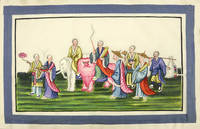
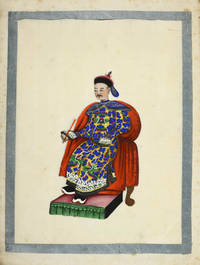
90282Canton ca. 1860. . Album 29.5 x 21.5 cm with 12 watercolour and gouache on pith paper each laid on paper with a light blue ribbon; one a bit stained in brown. Contemporary binding of patterned brown paper; very rubbed.<br /> A lovely variety of Chinese official costumes in fine condition and bright colours.<br /><br />Pith seems not to have been adopted for painting until about 1820. Some European museums claim that their paintings on pith often erroneously called "rice paper" or "mulberry pith" come from the end of the eighteenth century but there do not seem to be any dateable examples that are so early. There is a record of the Kaiser Franz of Austria buying some albums from an English Consul-General Watts in 1826. We know of an Italian Count who visited Canton in 1828 and had over 350 paintings on pith in his baggage when he died in Ambon two years later. In the British Library there is a scrap-book containing six pith paintings and a journal entry by a serving British officer who sent them home from India in 1829. These examples and contemporary accounts by visitors to Canton suggest that there was a flourishing trade in pith paintings by the early 1830s.<br /><br />Pith presumably came into use for painting to satisfy the increasing demand for small inexpensive and easily transported souvenirs following the massive growth in the China Trade in the first quarter of the nineteenth century. Paintings in oils on board and canvas were costly and difficult to carry home. Earlier and more prestigious export water-colours had often been on a larger scale and painted on fine Chinese paper or on paper imported from Europe. The albums of pith paintings and later the little glass-fronted boxes were inexpensive light easy to pack and gave the pictures some protection on the long voyage home. Because many were sold in albums and hence protected from the light they retain their bright colours to this day.<br /><br />Pith comes from the central column of spongy cellular tissue in the stem of a small tree called Tetrapanax Papyrifera native to south-west China. It has had a variety of uses some going back many centuries. At the imperial court both men and women wore coloured flowers made from pith in their hair. For use in painting it is cut by hand with a knife into thin sheets from short lengths of the spongy tissue. Cutting is highly skilled and the constraints of the process mean that the finished sheets for painting seldom if ever measure more than about 30cms by 20cms. The sheets are dried trimmed and used for painting without any further processing.<br /><br />Because of the nature of pith and its cellular structure the gouache used by the Chinese sat on the surface and produced a bright and even sparkling effect. Very fine detail could be achieved but pith did not lend itself to the flat wash of colour favoured for European watercolours. <br /><br />Carl Crossman in his book The Decorative Arts of the China Trade originally published under the title The China Trade gives an excellent list of export painters with a note of those known to have painted on pith. These include Tingqua Sunqua and Youqua. From 1757 until 1842 Canton was the only Chinese port open to trade with the west and it is no surprise that of the eight studios identified by Crossman as producing works on pith six were in Canton. <br /><br />It seems that the 1830s and 1840s may have been the heyday of pith painting. The international trading bases the waterfront 'factories' on the 'Hongs' in Canton where they were produced were partially burnt during the First Opium War 1839-41 and totally destroyed in a fire of 1856. The foreign trading companies then moved to Honan and subsequently put up splendid new offices on reclaimed land at Shamian Island a little up river. As the result of the Treaty of Nanking in 1842 additional Chinese ports were opened up for foreign trade and Hong Kong was established as a major trading centre. <br /><br />By 1860 references to China in the Illustrated London News plentiful three years earlier were few and far between. That is not to say that painting on pith ceased. Nicholas the second was given paintings on pith when he visited Canton in 1891 and the last Emperor is said to have sent him a gift which included pith paintings in 1907 though these could have been examples of much earlier work. <br /><br />Painters on pith did not in general sign their work the sole exception is Sunqua whose name can be found on the face of three paintings on pith. <br /><br />There are collections of paintings on pith in the Ashmolean the British Museum the Fitzwilliam the Hermitage the Peabody/Essex Museum in Massachusetts and the Hong Kong Museum of Art. However because paintings on pith are not in general regarded as fine art they are usually to be found in ethnographic or specialised collections.<br /> Canton, ca. 1860]. unknown
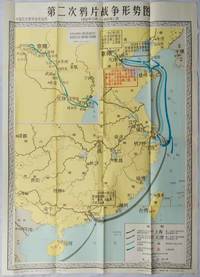
1980216471Shanghai.: 地图出版社.Map Press. First Edition. 1980. Colourful folding teaching reference wall map of China during the Second Opium War October 1956 - November 1860. Includes an inset at top left of the route that French and British invaders took in 1860 and a key at bottom right explaining the dates of different invasion routes. Text boxes explain key events. Original wrapper creased on top edge with a red "山东济南第五十." stamp. Bottom right corner of map very slightly worn else in excellent bright crisp condition. 106 x 76cm. Text in simplified Chinese characters. . 地图出版社.[Map Press]. unknown
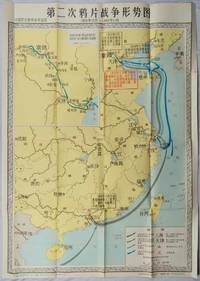
1980216702Shanghai.: 地图出版社.Map Press. First Edition. 1980. Colourful folding educational wall map of China during the Second Opium War October 1956 - November 1860. Includes an inset at top left of the route that French and British invaders took in 1860 and a key at bottom right explains the dates of different invasion routes. Text boxes explain key events. Original wrapper repaired with cellotape and washi paper. Bottom right corner of map very slightly worn else in excellent bright crisp condition. 106 x 76cm. Text in simplified Chinese characters. . 地图出版社.[Map Press]. unknown
193064082Chefoo Yantai China: Self-Help Dept. Women’s Bible School Presbyterian Mission ca. 1930. Oblong 4to. 9.25 x 7 in. 18 leaves unnumbered. w/ title leaf promotional explanatory leaf laid-in printed text on tissue papers w/ borders each facing the delicately cut-out silhouette Jianzhi paper designs on the facing leaves of thick paper stock. Pictorial silk flexible covers punch-sewn at gutter margin as issued w/ black silk braid NF copy. First edition thus of this beautiful album of mounted paper Jianzhi silhouette cut-outs prepared and cut from stencil drawings from a pattern. The introductory laid-in leaf details the steps of preparing the pattern sewing down the stencil to ten thicknesses and thereupon using tiny scissors and knives of various shapes to create the subsequent designs. Typically these are good for making ten at a time and then pasted on cards. These were fundraisers for the China Inland Mission Women’s Bible College in Chefoo Yantai and copies would have different stories and designs. This particular copy includes Wen Yen Beh and the Lost Ball; Djang Liang and Whang Hsi Gung; Han Hsien and Hsiao Nine; Outwitting of Wang Shen; The friend who failed; How the frogs got their croak; and finally Story of Si Mah Gwang. These original occupational works enhanced vocational training for Chinese women in developing a skill aided funding for the Women’s Bible College but also contributed to funding the Temple Hill Hospital at the CIM also known as the Yuhuangding Hospital. It later served during World War II during the 1942-43 Japanese Occupation as an internment camp. Worldcat locates 4 similar copies w/ varying supposed dates and frequently different stories or legends Texas A&M Peabody Essex Royal Danish Library & UBC. Self-Help Dept., Women’s Bible School, Presbyterian Mission, unknown
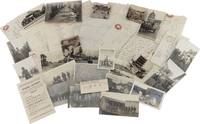
191237938Ripon CA: S.i. ca.1912-1913. A small archive of photographs and letters relating to the Marine Corps career 1909-1913 of John P. Treder a Polish-born resident of Ripon California. Includes 26 original vintage photographic prints a few commercial but most apparently vernacular of scenes in China and the Philippines; three pieces of printed ephemera and 9 ALS. A few photographs with marginal creasing or tears and light soil; letters folded in original mailing envelopes; overall Very Good. <br /> <br /> In February 1912 a small occupying force of U.S. Marines was sent to Peking to protect American interests during the brief but violent spate of riots that took place there following the Revolution of 1911 and the subsequent abdication of the Dowager Empress. John born Joannes P. Treder a Private in Company "E" of the U.S. 2nd Marines was part of this occupying force; this small but informative collection of commercial and vernacular photographs would have been collected by him during the brief interval of his Chinese service between February and April of 1912. The photographs include views of Peking; garrisons of both American and Chinese troops; and a few amateur snapshots of what we presume to be Treder in the company of friends including a fascinating series of four photographs of a bloody bare-knuckle fistfight between two soldiers. One commercially produced image depicts a pair of decapitated heads with the printed caption "A Pair Who Paid / Peking." Another - probably a vernacular image - shows an alleyway littered with dead bodies the victims lying face-down in the mud at least one with his hands tied behind his back. As the Marine presence in Peking was small about 200 troops and brief about eight weeks these photographs must be among the very few images of the Peking Riots extant in the West. This sets this collection apart from those assembled during the Boxer Rebellion of ten years earlier - a broader conflict which spawned a profusion of sensationalistic commercial images not dissimilar from the ones collected here and for which we mistook these images at first glance.<br /> <br /> Also present here are several photographic views of Manila and Subic Bay in the Philippines the usual home of the 2nd Marines; three pieces of printed ephemera; and a clutch of letters from various members of Treder's family addressed to him after his return stateside in 1913. In the year prior to his mustering out Treder was stationed aboard the Receiving Ship Saratoga at Mare Island in northern California; the family writes from their farm in Ripon situated about midway between Stockton and Modesto in the Central Valley. The letters touch frankly on family matters including the hardships of farm life; their continued attempts to sell out; and some unspecified financial setbacks suffered by Treder's father. According to genealogical websites the Treder family originally from north Poland emigrated to California from Wisconsin some time around the turn of the century. S.i. unknown
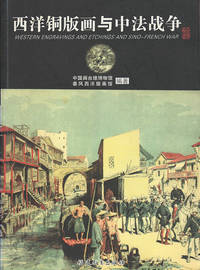
2008170535福州.Fuzhou.: 福建教育出版社.Fujian jiao yu chu ban she. 1st Edition 1st Printing. 2008. Profuse illustrations some in colour 206pp very good paperback copy. Text in Chinese only. 28.5 x 21cm. This album includes western engravings and etchings of 19th century China covering the Sino-French War Naval Battle of Mawei Battle of Taiwan Battle of Northern Vietnam and the Social Customs of Fujian Taiwan and Vietnam. . 福建教育出版社.[Fujian jiao yu chu ban she]. paperback
41046101China 1891-1903. Leather spine & corners over green cloth oblong: 33 x 24 cm.249 b.w. & 3 hand-colored photos firm clean & solidly bound all photos laid downmost with pencil captions & date. STUNNING COLLECTION OF EARLY IMAGES . . . ORIGINAL DATED 1891-1903 PHOTOGRAPHIC ALBUM . . . PLACES IN MASSACHUSETTS NEW YORK U.S. EAST COAST HAWAII . . . CHINA MANCHURIA &c. . THE PHOTOS: The album contains various sizes & types of photos for the most part they are either silver-gelatin types or glossy finish most are black & white finish with a few hand-colored. All photos are laid down. Size in centimeters range from the smallest: 2.8 x 4.2 cm to the largest: 28 x 21 cm. There are 249 various kinds of photo processed black & whites and 3 hand-colored Japanese photos in all. . PHOTO DESCRIPTIONS BY PAGE NUMBERS PENCILED IN UPPER CORNERS 52 PAGES IN ALL: . Most with pencil captions & some with dates: . 1. 1 Photo: THE "STARS & STRIPES" photo of the U.S. Flag . 8 x 8 cm. . 2. & 3. Pictures of 2 lions 2 horse not photos clips from . unknown source. . 4. 2 Photos: most likely around the Massachusetts area: a. Tipped over house. "After the storm Atlantic Coast U.S.A. b. Beached ship. "After the storm Atlantic coast U.S.A." . 16.5 x 11.5 cm. . 5. 2 Photos: a. U.S.A. General Putnam's house. Revolutionary War . Rutland Mass.16.5 x 11.5 cm. b. U.S.A. Birch grove in the Adirondacks New York 16.5 x . 11.5 cm. . 6. & 7. 2 Photos all the same size. a. PORT ARTHUR CHINA 1900 16.5 x 11.5 cm. b. ditto c. ditto d. ditto . 8. 4 Photos: oval square round a. Claude L. Hall Roxbury 1899 cutout portrait5.5 x 5.5 cm b. Douglas Huntington New York 1900 2.3 x 3.5 cm. oval c. Capt. Hatch U.S.S. New Orleans 3 x 4.2 cm. square d. Susie A. Nye Sugamore U.S.A. albumen type 9.5 cm. roun e. Gertrude E. Spurr 1899. Melrose 4.2 x 7.2 cm. square . 9. 4 Photos: all oval cut outs albumen types. a. Charles S. Fuller Cambridge 1891 8 x 11.2 cm. b. E. Gertrude Dymond 91 Roxbury size ditto c. Alice J. Raymond Cambridge 1891 size ditto d. Gertrude E. Spurr Boston 1891 size ditto . 10. 3 Photos: a. Mama at Leomuslir U.S.A. May 1903 5.4 x 8 cm. b. Mrs. Caleb Saundres of Lawrence U.S.A. and her tiny lap . dog 1903 10 x 18 cm. c. Massachusetts U.S.A. Shows 4 horse-team buggy with . riders. 16.5 x 11.5 cm. . 11. 9 Photos:Aboard Steamship Heading to China actually 3: a. Captain Patterson of the China Merchants Steamship . Navigation Company 4 & 4 photos per print 7 in all of . him 10.8 x 4.3 & 5.8 x 4/3 cm. b. Hsing Fung in Chinese waters: captions for each of the . 4 people: Mrs. Nye Mrs. Roller Captain Patterson . Captain Roller on board 1902 8.4 x 8.3 cm. c. 4 people: Captain Patterson Mrs. Roller Captain Roller . Dr. Nye China on board C.M. Hsing Fun 19028.4 x 8.3 cm . 12. 3 Tientsin Photos: a. Coolies carrying wool Tientsin. 1902 8.4 x 8.3 cm. . b. Hoisting sail on Chinese boat Island canal Tientsin . 1901 8.4 x 8.3 cm. c. Tientsin Posing for their picture 1903 8.4 x 8.3 cm. . 13. 4 Tientsin Photos: a. Chinese kids fishing Tientsin 1903 8.4 x 8.3 cm. b. Our tennis orator Tientsin 1902 10 x 14.2 cm. c. Chinese soldiers on Chinese ponies Tientsin 1903 10 x . 14.2 cm. d. Chinese kids Tientsin 1902 9 x 6 cm. . 14. 6 Photos: a. Harry S. Nye Los Angeles Ca. Sept.16 1900 11.8 x 2.4 . cm. 6 views. b. Edwin H. Jose Jr. 1898 Whiteface N.H. c. U.S.A. Horvace F. Cooks & Joto Leominster Mass. 1902 . 5.5 x 8.3 cm. d. Ellen R. Nye Sagamore Bach 1899 5.5 x 8.3 cm. e. Harold J. Cook Alice L Jose Grace P. Cook Susan C. . Will Leominster Mass U.S.A. 1898 8.5 x 8 cm. f. Jor Leominster Mass U.S.A. 1902 83 x 55 cm. . 15. 5 Tientsin Photos all the same size: a. 1902 Mrs. Daniel B. Nye Tientsin China riding . rickshaw 8.5 x 8 cm. cm. b. One corner of our home Tientsin China 1902 Rue de . France. c. 1902 Dr. Daniel B. Nye Tientsin China riding rickshaw. d. Rue de France 1902 our home Tientsin China. e. Rue de France 1902 our home Tientsin China. . 16. 4 Tientsin Photos: a. Mary Allen as "Old Lady who Lived in the shoe" at church . of England's fair Tientsin China 1902 13.7 x 9.3 cm. b. A typical Chinese temple pagoda 8.5 x 8 cm. cm. c. At the mouth of a pottery kiln China 1902 ditto size. d. Children who took part in the Church of England fair at . Tientsin China 1912 13.7 x 9.3 cm. . 17. 1 Large Tientsin photo: a. Tientsin China 1904 photo of 14 foreign women each . dressed in the same kind of dress similar to 15 a "old . lady who lived in a shoe" 27.5 x 21.5 cm. . 18. 5 Mass. Photos first 4 faded: a. Witch house Salem Mass. U.S.A. 11.5 x 9.2 cm. b. House in which was born a famous witch Ann Hutchinson . Dainero Mass U.S.A. 11.5 x 9.2 cm. c. Edwin H. Jose Jr. Cambridge Mass U.S.A. 4.5. x 10 cm. d. Old Fort Sewall Marblehead Mass. U.S.A. 9.7 x 9.5 cm. e. Cutout portrait Ellen Nye Crowell Sagamore Mass. . U.S.A. 5 x 4.5 cm. . 19. 4 China Photos all the same size.: a. Dr. Drake rowing Major O'Brian washing boat Grand . Canal China 1902 8.5 x 8 cm. b. Speaks for itself. c. Mrs. D.B. Nye Grand Canal China sampan 1902 d. A yard of roses Hsi-Ku China 1902. . 20. 1 Large Chefoo photo: a. Chefoo China from Temple hill. Panoramic view of the . city 1903 20 x 14.7 cm. . 21. 4 Galesburg Il. Photos all same size; a. Uncle Alpheus' house at Galesburg Illinois 12 x 9.5 cm. b. Willard Dean New years' Day 1902 Galesburg U.S.A. c. At aunt Lizzie's Galesburg Aug. 1901. d. Uncle Alpheus & Aunt Lizzie in the library 1901 . 22. 2 Chefoo China Photos: a. Chow time at Deaf & Dup school Chefoo China9.7 x 7 cm. b. Mrs. Mills teaching sound to the deaf & dumb children . Chefoo China 1902 size ditto. . 23. 4 PHOTOS; HONOLULU & MT. PLEASANT MASS.: a. Leaving Honolulu H.T.on Hong Kong Maru 19018.5 x 8 cm b. Mama. Mt Pleasant St. Cambridge Mass 1903 12 x 9.5 cm. c. Mamma Mt Pleasant St. Cambridge Mass 1903 12 x 9.5 cm. d. Leaving Honolulu H.T.8.5 x 8 cm. cm. . H.T. means Hawaiian Territory now commonly called "T.H. . 24. 1 China Photo: a. The old Cedar Grove at the Ming Tombs Trees 300 years . old June 1903. China 9.7 x 7 cm. . 25. Three Naukow Pass China photos all same size: a. A laden camel caravan passing through Naukow Pass to . Kalgan June 1903 9.7 x 7 cm. b. Mr. Westerdorf and a caravan at rest at a hamlet in the . Naukow Pass June 1903. c. A difficult road Through Naukow Pass June 1903 Boy on a . Donkey. . 26. 4 Photos of Japan all same size: a. Japan 1901 Hakone Lake 13.3 x 9 cm. b. Japan 1901 Yumoto hand colored. c. Fujiya Miyanoshita hand colored c. Miyanoshita Japan 1901 hand colored 2 left corners . torn away. . 27. 6 Photos of Chefoo China: a. En route to Temple Hill Chefoo China 1903 she is . being carried by two coolies ca. 8 x 6 cm. b. Qu Lieuws Ryukyu Mud World 1902 4.5 x 5.8 cm. c. Same caption as b ca. 8 x 6 cm. d. Same caption as a ca. 8 x 6 cm. e. Chefoo Harbor in the background 1903 ca. 8 x 6 cm. d. same caption as e ca. 8 x 6 cm. . 28. 5 Peking & near Peking China photos: a. Mr. Westerdorf ready to start from the inn at . Tschong-ping-Jir June 1903 9.7 x 7 cm. b. Peking from drum tower looking toward the Forbidden City . ditto size c. Mr. Westerdorf on Rice Road Techong-ping-jir June 1903 . ditto size. d. Queen's Hotel at Wei-hai-Wei August 1903 oval 6.2 x . 6.8 cm. e. The main street and South Gate with bell in it . Tschong-ping-Jir June 1903 9.7 x 7 cm. . 29. 4 Peking China Photos 1903. all same size 9.7 x 7 cm.: a. A whole in the Great Wall at Pa li-ling June. b. Native bridge near Sehah-ho-chow on the way to the Great . Wall from Peking June. c. The main entrance to the largest Ming Tombs June. d. 3000 years old stones at Confucius Temple Peking 1903. . 30-38 A series of 10 RARE original photos of the YAO people and other views of northwestern "Kwangtung Guangdong area 9 of 10 are large size: 19 x 14 cm. dated 1903. . The American visitors go to see the native Yao people in their primitive villages and environs. . Excellent ethnographic examples clear fine RARE images. . a. Family scene in primitive mud-brick hut thatched roof dirt poor but in native home-spun embroidered & stitched clothing. Grandma & another woman wears the traditional "Bow" elaborate hair dress. With a long caption: "A group of Yao people Kwantung province." . b. "Dwelling house of the Yao people made of bamboo & grass." Thatched hut in the rocky hillside wilderness. . c. Terraced cultivated hillsides in the Yao peoples country." d. Yao woman and her son working in the tea fields." . c. "Rain clothing worn by the Chinese in Kwantung.bamboo hats grass capes and skirts." Shows two river craft. . 36. "Wall washed away at time of cloud burst at Chefoo-China July 1903" 8.5 x 6.5 cm. . Continue with large format photos 19 x 14 cm. dated 1903 of northwest northern part of Kwangtung: . 37. "In the northern part of Kwantung province nearly every village has a large house beside the village which is intended as a place of retreat for the villages in attack by robbers. fort house." . 38. "Temple Dr. Drake lived in for a short time." . 39. Return to the first format: 4 China photos 1903: a. "Chinese beggar at Chefoo" 7 x 9 cm. b. "Typical entrance to Chinese Temples" Peking 14.5 x 10 . cm. c. "View of Chefoo North China" ditto size. d. "Temple built to the Gods by a young Chinese who vowed to . built of if the Gods would cure him of sickness 100 mile . from Peking" 7 x 9 cm. . 40. 4 Photos of USA: a. The U.S.S. Olympia going down the Hudson River to . anchor after saluting at Grant's tomb During the Dewey . celebrations. The U.S.S. Chicago behind her. USA. Compose . of 2 separate but adjoining photostogether:16.8 x 12 cm . b. Blanch Jewel Boston U.S.A. 1891 outline photo 3 x 8 . cm. 1891. c. Mr. ad Mrs. Caleb Saunders Laurence Mass. 7 x 12.5 cm. . An elaborately dressed couple. . 41. 3 Famous Forbidden city Peking China photos all the . same size: 9.8 x 8 cm.: a. Dr. Westerdorf at one of the gates to Confucius Temple. b. Sacred stone dragon Confucius Temple c. Mr. Westerdorf and 'boy" under the Marble Arch of Llama . Temple Peking. . 42. 6 Photos Sagamore Mass. & Honolulu 1901: a. "Our Home" Sagamore Mass. 8.5 x 7.5 cm. b. 1900 Falls at Newton Mass. round photo: 7.8 x 8 cm. c. Honolulu Hawaii 1901 8 x 5 cm. d. Our barn Sagamore Mass. 8 x 5 cm. e. "Winchester U.S.A. duds" shows 3 kids 1 in American . Indian dress the others cowboy "duds" 4.5 x 6 cm. f. Mr. Stowell leaving 1901 Honolulu 8.5 x 6.5 cm. . 43. 3 Photos Tientsin China 1902 all 8.5 x 6.5 cm.: a. "Rue de France: Dr. Nye in his Tientsin office Mr. . Roding in the dental chair." b. Daniel Butler Nye DDS in his office at Tientsin. c. Dest in Rue de France office. . 44. 5 Photos aboard ship in China all 8.5 x 6.5 cm.1901: . corners clipped: a. Lt. Morgan asleep in his bunk on U.S.S. Monocacy Tanku b. Drill aboard U.S.S. Monocacy Tangku c. U.S.S. Monocacy leaving dry dock Tongku d. " " ditto e. " " " . 45. 5 China Photos of the U.S.S. Moncacy Tongku 1901 a. Captain Roller of the U.S.S. Monocacy 8.5 x 6.5 cm. b. Mrs. Roller " " " ditto c. U.S.S. Monocacy leaving dry dockTongku faded7.5 x 6.5 d. ditto above e. ditto above not faded same size . 46. 6 China Tientsin & U.S.A. photos 1902-03: a. Part of front room at Rue de France 1902 8.5 x 6.5 cm. b. Mama on Amb. Emmuii's Piazzco Leominster Mass 1903 . 5.5 x 8 cm. c. "Ah Chin" in dining room Rue de France 6.6 x 4.8 cm. d. Corner of front room at Rue de France 19024.2 x 8.2 cm. e. Round photo "Enjoying Kipling 1902 4 x 4.5 cm. f. Side board in dining room at Rue de France 8.5 x 6.5 cm. . 47. 8 Blue pictures of photos of family & friends. . 48. 2 Photos of Peking & Shanghai China: a. Temple in which the Emperor was imprisoned . Empress Dowager Peking 1900 14.5 x 10 cm. by the b. Chinese pagoda Shanghai ca. 9 x 12 cm. . 49. blank . 50. 6 Photos of Tientsin China: a. Grand StandTientsin Race Club in Race Way 19027.8 x 5. b. Japanese Temple 8.5 x 11 cm. c. Hsi Shan Terrace Tongshan 1903 Residence of Me and . Mrs. G.B. Wikow 12 x 9.5 cm. d. French market Tientsin 1902 8.7 x 3 cm. e. Chinese children Tientsin 1902 2.5 x 4 cm. . 51. 3 Photos of China: a. Old tombs in interior of China. Where a man became old and useless he would have this tomb built around him with only small opening at top where his family put in food each day until he died. 15 x 10 cm.Korean penciled above this . b. Making pottery Tientsin 1902 9.7 x 7 cm. c. Blind musician Chefoo 1903 9 x 10.5 cm. . 52. 4 China Photos. a. God of Transmigration In Buddhist Hall breaking the bones of wicked Chinese on the Wheel of torture by the Monkey King 15 x 10.5 cm. . b. Rear view of the 'steam roller' making roads Tientsin . 1902 7.5 x 6 cm. c. Chinese prisoners going for trial British concession . Tientsin 1902 7 x 8.5 cm. d. Photo of Boxer placard 1900 15 x 10.5 cm. . End of photo album. . A rough list of names places dates &c. in order of appearance: . 1900 Los Angeles Sept. 151900: Harry S. Nye 1898 Whiteface N.H. Edwin H. Jose Jr. 1898 Mass. Horace F. cook Alice F. Jose Grace P. Cook Samuel C. Willard Leominster Mass. 1902 Horvath F. Cook and "Joe" dog Leominster Mass. 1902 "Joe" Leominster Mass. 1898 Ellen R. Ne Sagamore Beach Tientsin 1902-1903 . OF ANTHROPOLOGICAL INTEREST: PHOTOS OF YAO PEOPLE: . The album contains 5 superb images large size: 19.5 x 14 cm. illustrating the Yao minority in native costume their hand-made dwellings terraced rice paddy sea-worthy vessels tea fields &c. Each with lengthy pencil caption dated 1903 documenting Yao living in Kwantung province. Located in southern tip of the Liaodong Peninsula near Port Arthur Manchuria. . About the Yao nationality its great majority branch is also known as Mien or Pinyin: Yáo zú; and as "Ngui Dao" in Vietnamese. They form one of the 55 ethnic minority groups officially recognized by the People's Republic of China where they reside in the mountainous terrain of the southwest and south. They also form one of the 54 ethnic groups officially recognized by Vietnam. In the last census in 2000 they numbered 2637421 in China and roughly 470000 in Vietnam. . Origins of the Yao Iu-Mien can be traced back 2000 years ago starting in Hunan Province. . The Yao people were among the rebels during the Miao Rebellions Ming Dynasty along with the Miao people against the Ming dynasty. . Around 1890 the Guangdong government started taking action against Yao in northwestern Guangdong. . Emigration from the late 1800s to early 19th century the Yao migrated into Thailand Vietnam and the highlands of Laos. The migration was agitated by the opium trade said by the Chinese government. But The Iu Mien say all the emigration was because of the Chinese taking their land. . A group of 61000 people on the island of Hainan speak the Yao language Kim Mun 139000 speakers of Kim Mun live in other parts of China Yunnan and Guangxi and 174500 live in Laos and Vietnam. . Color photos are posted to our website. . CONDITION: THE IMAGES: The photographs are for the most part very clear vivid most little or no fading saying that there are a few each noted that are faded. There are 3 hand-colored Japanese images. Naturally there is some of the typical fading of some of the photos depending on the process. By and large overall an excellent examples. . Prior to coming to us there was a small number of photos extracted from the album the above list and count are accurate for what is present. . The captions are original in pencil in some places for better understanding we added "." to capture the creator's affect or to separate our comments. . THE ALBUM: The album has red 3/4 leather binding the spine is neatly re-backed the corners also neatly replaced with matching leather with gold-stamped cover title: "PHOTOGRAPHIEN" & spine title: "CHINA 1900-1903." . The balance of the covers are in green cloth which has gold rule lines with cover title: "Photographien" most likely of German/Austrian origin ca. 1880-90's vintage. . Album pages are solidly cloth hinged firm and serviceable there are no stains or other obtrusive marks inside. . There are a few lower right page corners rubbed chipped a few broken away typical for an item 120 years old. . BIBLIOGRAPHY: en-wikipedia-org/wiki/Yao_people . . unknown
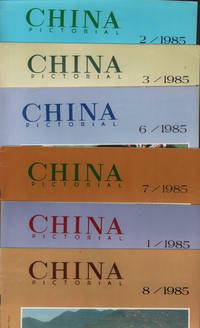
1985217468Beijing.: China Pictorial. 1985. Six issues from 1985. Black and white and colour photographic illustrations throughout to accompany articles 44pp. Minor wear extremities pictorial wrappers all in very good condition. Text in English. 37 x 26cm. Includes issues numbers 1 2 3 6 7 and 8. <br> <br>Articles include: Ye Jianying - An Eminent Army Commander Takins in China Egrets and Herons Pelicans Xinjiang Pioneers A Town in the Gobi 'Life' - a Feature Film Important Discoveries at Xia Ruins Ancient Capital of the Shang Dynasty Tianshan Mountains Glacial Station China's First Research Base in Antarctica A Scientific Survey of the Southern Ocean Tianjin Matteo Ricci and His Autumn of Beijing Suburbs. . China Pictorial. unknown
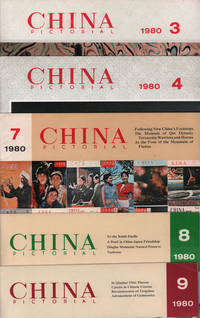
1980217485Beijing.: China Pictorial. 1980. Broken run of five issues of China Pictorial. Black and white and colour photographic illustrations throughout to accompany articles 43 - 44pp. Pictorial wrappers minor wear extremities and spines else in very good condition. Text in English. 37 x 26cm. Includes issue numbers 3 4 7 8 and 9. <br> <br>Many articles in this incomplete set are of interest because they feature China moving on from the Cultural Revolution and the Gang of Four and focusing instead on modernising and scientific progress. Articles on this theme include A Scientific Excursion in Tibet Scientific Investigations in the Qinghai-Tibet Plateau Chinese Test Pilots The China International Trust and Investment Corporation New Factories and Mines Surveying the South Pacific Clouds and Earthquakes and The Chinese River Dolphin. <br> <br>Other topics of interest include Sixty Years on Stamp Collecting Sun Yat-Sen's Mausoleum and various other tourist destinations: Hainan Island Mt Hengshan Mt Huashan and Dunhuang. Two articles are about important ancient artefacts Art Treasures Unearthed in Suixian County and another recently unearthed and hugely important treasure the Terracotta Warriors. There is an article dedicated to the author Mao Dun and another to the 1979 restaging of Lao She's play 'Teahouse'. The article Upturn in Chinese Cinema with portraits of film stars indicates how the purpose of cinema has changed in just a few short years. . China Pictorial. unknown
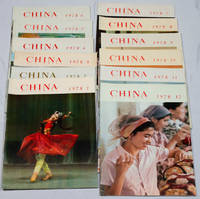
1978217484Beijing.: China Pictorial. Nos. 1-121978. A complete run of 12 issues. Black and white and colour photographic illustrations throughout to accompany articles 43 - 44pp. Pictorial wrappers minor wear extremities and spines else in very good condition. Text in English. 37 x 26cm. The Cultural Revolution having come to an end with the passing of Chairman Mao in 1976 issues in 1978 focus on life returning to normal after the downfall of the Gang of Four. Many articles feature explanations of problems caused by the Gang of Four e.g. The Anshan Iron and Steel Complex After the Downfall of the Gang of Four Commune-run Enterprises The Revolutionization of Beijing Opera and discuss newly staged productions such as the 'Red Lantern Society' the film 'Hai Hsia' and the plays 'Red Hearts' and 'Yang Kai-hui'. Numerous articles also refer to the Gang of Four such as Old Doctors in the PLA Hospital the New Look of Beijing University and the articles on authors Guo Moruo and Wei Wei. <br> <br>Chairman Hua meeting foreign leaders and his visits to notable Chinese sites is heavily featured in the first few pages of nearly every issue with Deng Xiaoping also included. Other articles include the new Long March to Modernisation Chinese Medicine Tangshan The Tahsingkou Forestry Area Paulownia and Farming Fishes of the Yangtze Archaeological Finds from the Yin Ruins Women Scientists and Technicians in Peking The 1978 National Middle School Students' Mathematics Contest Developments in Maotian Song and Dance and Science and Technology in Xinjiang Commemoration of Mao and the 80th Birthday of Premier Zhou En-lai and the Index to China Pictorial 1978. . China Pictorial. unknown
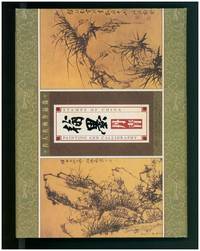
38234Hardcover. Pictorial boards. Comes in pictorial cardboard clamshell box. Presents forty-one stamps based on the works of Wu Chang Shuo Qi Bai Shi Huang Bin Hong Pan Tian Shou Bao Shi Xiang Ning Zheng Ban Qiao and Ba Da Shan Ren. Text in English and Chinese. A fine copy in fine clamshell box. hardcover
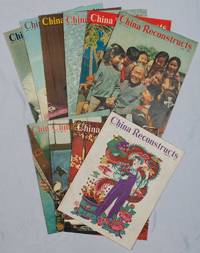
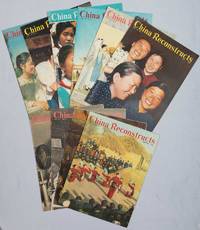
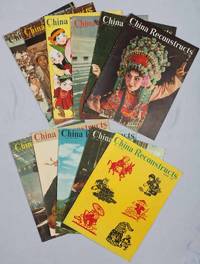
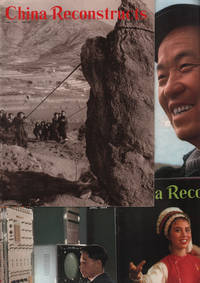
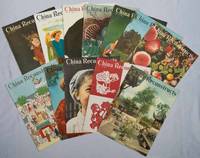
1960217584Peking.: China Welfare Institute. Vol. X Nos. 2-5 7-121960. A broken run of 10 issues of the magazine China Reconstructs 1961 Issue 1 January and Issue 6 June are missing. All are in original coloured pictorial wrappers profusely illustrated throughout in black and white with some colour photographic illustrations usually 44pp. Number 12 features an index for the full year. Text in English except for Language Corner 30.5 x 22.5cm.Some occasional wear to wrapper spines slight soiling at opening edges else in good condition. This influential magazine was established by Soong Ching-ling in 1949. Published in 6 languages including Arabic and Chinese the purpose was to present a very positive view of Chinese life and culture to the outside world. <br> <br>Articles in these issues include many of educational and cultural interest: Bringing Opera to the Village Pearls Cleansed of Sand College courses by Television Four Master Painters Table Tennis - A Popular Sport in China Peking University's New Intellectuals Violins and Pianos for China The Twenty-four Solar Terms An Opera for Millions The Essays of Lu Hsun My Last Meetings with Mei Lan-Fang Soochow Storytelling Debate on Architectural Style The Stone Arch - Symbol of Chinese Bridges The Education of Inner Mongolia New Music in Shanghai The Minority Peoples of Yunnan. <br> <br>Articles of particular historical significance at this time when the Great Leap Forward was ending include: Agriculture - Foundation of the National Economy Rivals Help Each Other - for More Steel Commune Dining Hall Building up Productive Power The Revolutionary Years Chu Tse-ching Refused U.S. Relief Food and more. <br> <br>Issue Number 12 has an index for the whole year inserted. . China Welfare Institute. unknown
1960217580Peking.: China Welfare Institute. Vol. IX Nos. 2 3 5-121960. A broken run of 10 issues of the magazine China Reconstructs 1960 Issue 1 January and Issue 4 April are not included. All are in original coloured pictorial wrappers profusely illustrated throughout in black and white with some colour photographic illustrations usually 40pp. Number 12 features a fold out pictorial plate. Text in English except for Language Corner 30.5 x 23cm. Some occasional wear to wrapper spines and slight soiling at opening edges. One leaf from Number 8 pp 31/32 is missing. Spine of Number 10 has washi paper minor repair otherwise in very good condition. This influential magazine was established by Soong Ching-ling in 1949. Published in 6 languages including Arabic and Chinese the purpose was to present a very positive view of Chinese life and culture to the outside world. <br> <br>Articles in these issues include many of cultural interest: A Family Reunited "Family Reunion" by Lao Sheh Dunhuang Memories Lhasa's Year of New Life An Actor and His Responsibility Artists Bombard Imperialism Memoirs of the Revolution A Poet of the Working Class Shaohsing's Famous Wine - New Look For an Old Product. <br> <br>Articles of particular historical significance at this time of the Great Leap Forward include: North China's Biggest Reservoir New Yangtze Bridge at Chungking The Metallurgical Industry Is Transformed Farm Women Say: Dining Halls are Good! Achievements of the Continued Great Leap forward in 1959 with a pull-out coloured chart Observations on the Sino-Indian Border Issue 100000 Varieties of Goods Flashes on the Technical Revolution A New Revolution "Pushes Back the Skies" From Grain Shortage to Grain Surplus Where Returned "Overseas Chinese" are Farming "Red Flag" - A City People's Commune The 12 Year Programme - Blueprint for China's Modern Agriculture Commune-run Economy Spells Prosperity A Revolution in Rice Cultivation Storm over Asia Cities Help the Farm Meeting the Need for Fertilizer The Continued Leap Forward The Thought of Mao Tse-tung Casts Its Light Everywhere with a fold out coloured pictorial chart. <br> <br>Issue Number 12 has an index for the whole year inserted. . China Welfare Institute. unknown
1461217587Peking.: China Welfare Institute. Vol. VIII. Nos. 1-4 6-121959. A broken run of 11 issues of the magazine China Reconstructs 1959. Issue 5 May 1959 is missing. All are in original coloured pictorial wrappers profusely illustrated throughout in black and white with some colour photographic illustrations usually 40pp. Number 12 includes an index for the full year. Text in English except for Language Corner 30.5 x 23cm. Some occasional wear to spines. Some insect damage to a few leaves in places else in very good condition. This influential magazine was established by Soong Ching-ling in 1949. Published in 6 languages including Arabic and Chinese the purpose was to present a very positive view of Chinese life and culture to the outside world. <br> <br>Articles in these issues include many of educational and cultural interest: Making Documentary Films in China Merging Factory and School Peking After 10 Years Checkerboard of Canals Women of the Communes How We Dug More Coal Than Britain Opening an Imperial Tomb New Blossoms On An Old Tree Szechuan Opera is Reborn Tibetan Serfdom Nears Its End "The Philanthropist" by Lao Sheh Pottery Tomb Figures Learning from Ancient China's Medicine The Traditional Theatre Today Tracing the Thread of the Past The Great Decade - A Prelude to Progress Yet Greater with a pictorial fold-out. <br> <br>Articles of particular historical significance at the beginning of the Great Leap Forward include: A Leap That Has Made History Lushan's "Pig-Iron" Sputnik A Glorious Era: A Glorious People with a photographic illustration of Soong Ching Ling near the furnace set up in her garden The Building of a Giant How China Gets High Farm Yields Back Street Rolling Mill New View of Water Conservancy The Race for Electric Power Economic Achievements The Bumper Crop Charter The Leap Forward Continues The New Trend in Local Steel Manufacture and more. <br> <br>Issue Number 12 has an index for the whole year inserted. . China Welfare Institute. unknown
1966217631Peking.: China Welfare Institute. Vol. XV. Numbers 3-61966. A broken run of 4 numbers of the magazine China Reconstructs 1966 March - June inclusive. All are in original coloured pictorial wrappers profusely illustrated throughout in black and white with some colour photographic illustrations usually 44pp. Text in English except for Language Corner 30.5 x 23cm. Number 5 has a little insect damage to wrappers and lower edges near spine with minor repairs made with archival washi paper else in good condition. This influential magazine was established by Soong Ching-ling in 1949. Published in 6 languages including Arabic and Chinese the purpose was to present a very positive view of Chinese life and culture to the outside world. <br> <br>Articles in these issues include many of educational political and cultural interest: A Canal Cut Through the Mountains The 'Big Red 1 Gets a Mauling' about South Vietnam U.S. Must Get Out of Vietnam A Television Cameraman in South Vietnam On the Szechuan-Tibet Railway Science Films Educate Millions New Finds of Vertebrate Fossils and more. <br> <br>Articles of particular historical or industrial significance at the beginning of the Cultural Revolution include: Animated Cartoon Films Teach the Young A Revolution in Sculpture Self Reliance Has Proved Itself Revolution in Machine Designing The 'Man of Iron' - Wang Chin-Hsi Writers of the Socialist Age Laughing Away Old Ideas and more. . China Welfare Institute. unknown
1958217575Peking.: China Welfare Institute. Vol. VI Nos. 1-121958. A complete run of 12 issues of the magazine China Reconstructs 1957. All are in original coloured pictorial wrappers profusely illustrated throughout in black and white with some colour photographic illustrations usually 32pp. Number 5 May one leaf reattached some occasional wear to wrapper spines else all are in very good condition. Text in English except for Language Corner. 30.5 x 23cm. This influential magazine was established by Soong Ching-ling in 1949. Published in 6 languages including Arabic and Chinese the purpose was to present a very positive view of Chinese life and culture to the outside world. Of note is the January issue wrapper; a 5th birthday greeting for China Reconstructs from regular contributing artists with their view of life in the magazine. <br> <br>Articles in these issues include many of cultural interest: "A Writer Speaks of Writing" Lao Sheh Peonies Gardens of Soochow New Chinese Woodcuts "The Double-Fifth Festival" by Lu Hsun Door Gods Stage Design First Asian Film Week China and Japan: Ancient Cultural Relations Old Palys; A Treasury Reopened. <br> <br>Articles of particular historical significance at this time when the campaign "Let a Hundred Flowers Bloom" was just finishing include: Second Five-Year Plan A Hundred Schools Contend The Great Debate A Day in a Szechuan Co-op Can China Feed Her People China Gets an Alphabet A Capitalist's Experience "Free Market" in Vegetables Educated Peasants - A New Concept US Penetration in Taiwan Ending the Scourge of Schistosomiasis Water Conservancy 2000 Years Ago What's Happening in Former Private Firms and more. <br>Issue Number 12 has an index for the whole year inserted. . China Welfare Institute. unknown
1971146680Peking: China Reconstructs 1971. 1st edition. Nice copy. large octavo. pictorial wrappers 44pp. colour & b/w plates Supplement to China Reconstructs: Superb photographic account of International Table Tennis in China with many action photos of the leading Chinese players. Scarce China Reconstructs unknown