[CHINA, Canton School]Biblio.com

73 résultats
180026715Canton 1800. Large 4to. 15 x 12 1/2 inches. 141 watercolours on thin paper nearly all captioned in ink in Chinese in the lower right corner each tipped to a sheet of wove paper. Mid-nineteenth century citron half morocco over marbled paper covered boards spine with raised bands in six compartments lettered in gilt in the second compartment the others with a repeat decoration in gilt marbled edges<br/> <br/> Provenance: Annie Pearson Viscountess Cowdray née Cass 1860-1932 Dunecht House Aberdeenshire.<br/> <br/> An extraordinary album of early Chinese export watercolours of the highest quality.<br/> <br/> Beginning in the late 18th century centred on the treaty port of Canton there existed a thriving trade in ethnographical watercolours executed by local Chinese artists and sold to the western merchants and travellers. The best known result of this trade is William Mason's Costume of China first published in London in 1800 which is illustrated with 60 hand-coloured aquatints adapted from a series of original watercolours by Pu-Qua of Canton. It was common for the local artists including Pu-Qua to work from a set series of models. The present album includes a number of compositions that are from the same set of models as those used by Pu-Qua but they include more detail and more of the trade-associated paraphernalia than are shown in the images as published in Mason's work. This suggests that they were not copied from Mason but were after another more detailed source or were unique compositions by the artist based on a similar series of models. Importantly these watercolours are of a uniformly higher quality than usually encountered and represent not only a wide array of occupations but also members of the highest echelon of Chinese society. The detailing on the costumes worn by these members of the royal court is breathtaking with copious use of gilt. Later collections of Chinese export watercolours were routinely executed on less expensive pith paper whereas the present watercolours are on high quality tissue and are larger in size than those typically encountered. The album represents an earlier more prestigious style of export watercolour paintings specifically meant for wealthy Europeans. These are Chinese watercolours of the highest quality designed and executed to the highest standards. The album was once owned by Annie Pearson Viscountess Cowdray Steward of Colchester and wife of Lord Weetman Dickinson Pearson 1st Viscount Cowdray.<br/> <br/> Cf. Crossman The China Trade Princeton: 1972; cf. Clunas Chinese Export Watercolours London: 1984. unknown
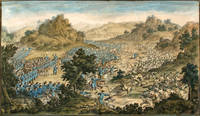
17751691811775. QIANLONG EMPEROR OF CHINA 1736-1796. Suite of four engravings depicting the conquests of the Qianlong Emperor. From the suite of sixteen engraved plates. Printed in Paris under the direction of Charles-Nicholas Cochin. Broadsheets image size: 515 x 890 mm. Preserved in the contemporary French green paper mounts with black ink outline borders. Professionally framed. With the original French printed labels describing the individual engravings affixed to back of frames. Paris 1769-1774. These four contemporary hand-coloured engravings represent individual scenes from the exceedingly rare series of sixteen engravings commissioned by the Qianlong Emperor to commemorate the victory of his 1755-1760 military campaigns against the Western Mongols. The four plates are: I. "General Fou Te Accepts the Surrender of the Ili" showing the triumphal march of the Emperor and his general to Beijing. Drawn by Sichelbart and engraved by B.L. Prévost in 1769 Pirazzoli-t'Serstevens 1; II. "The victory of Khorgos." in the Spring of 1758 against the forces of Amoursana. Drawn by J. D Attiret cut by C. N. Cochin and engraved by J. Ph. Le Bas in 1774. Pirazzoli-t'Serstevens 4; III. "The great victory of the Qurman." on February 3 1759 when the Chinese general Fou-te with only 600 soldiers defeated an army of 5000 Muslims. Drawn by Damasceno and engraved by A. de St. Aubin in 1770. Pirazzoli-t'Serstevens 8. IV. "The Emperor Gives a Victory Banquet to the Officers and Soldiers who have distinguished themselves in battle" at Tseu-kuang-ko the Imperial Palace Gardens Beijing on July 5 1754. Drawn by Castiglione and engraved by J. Ph. le Bas 1770 Pirazzoli-t'Serstevens 16. These large Chinese-French prints are among the most impressive works ever produced by the method of copper engraving. This is the first series of engraved plates to document the conquests of the Qianlong Emperor. They represented an amalgam of Chinese imagery Italian interpretation and Parisian copperplate engraving at its apogee. The drawings were supplied by Jesuit artists attached to the Emperor's court in Beijing. Upon completion they were shipped to France for engraving as the craft was unknown in China. After the Emperor was shown battle prints by the Augsburg artist Georg Philipp Rugendas 1666-1743 he wished to see his military conquests recorded in intaglio prints as well. He therefore ordered his Jesuit court painters Giuseppe Castiglione 1688-1766 called "Lang Shining" Jean Denis Attiret 1702-1768 "Wang Zhicheng" Ignaz Sichelbart 1708-1780 "Ai Qimeng" and Giovanni Damasceno Sallusti i.e. Joannes Damascenus a SS. Concepcione d. 1781 later bishop of Beijing called "An Deyi" to prepare sketches for the prints which they did in 1764 and 1765. Four of the drawings had been completed by the time of Castiglione's death when the decision was made to send the work to France via the ships of the Compagnie des Indes. According to the Emperor's decree no expense was to be spared. The first four drawings reached Paris in the autumn of 1766 and the remaining twelve in July 1767. The Marquis de Marigny director of the Academie Royale de Peinture et Sculpture decreed that the work should be carried out under the supervision of Charles-Nicholas Cochin 'fils' 1715-1790. As the French paper manufacturers did not have paper of the desired proportions the paper-merchant Prudhomme was ordered to make it to custom; the new size was called Grand Louvois. The copperplates were imported from England. Cochin chose Beauvais for the actual printing of the sheets on the grounds that he was "the only one who can be completely trusted both regarding his talents as well as his honesty which is well-known." The work proceeded slowly; standards of the highest quality were called for and some of the pictures especially the one by Sallusti needed careful editing. The original order was for 100 copies of each print but by 1768 this figure was increased to 200 copies so that at least 100 would survive the journey back to China ! -- however several authorities claim that many copies were lost at sea. In any event the final delivery was not shipped until 1775 occasioned in part by the difficulty the printers had producing a uniform series of prints from drawings by different artists. Three of the initial drawings were made by Attiret six by Damasceno one by Sichelbart and at least two by Castiglione; the remaining are unsigned but have been attributed to Castiglione by C. & M. Beurdeley and others. The engravers were L.J. Masquelier 1 J. Aliamet 2 J. Ph. Le Bas 5 A. St.-Aubin 2 F.D. Née 1 B.L. Prevost 2 P.P. Choffard 2 and N. de Launay 1. The Emperor's instructions stated that all the impressions were to be sent to him along with the original copper plates. However there is plentiful evidence that prints were pulled for the King of France and influential persons in Paris as well. Most of the surviving sets and individual prints appear to belong to this surreptitious group. The above series is not only a landmark in the history of Chinese and European art but also testifies to the direct artistic cooperation between China and Europe in the eighteenth century. It has been a common misconception that China was only interested in itself and detested the foreigners -- here the Emperor himself proved the contrary. VERY RARE IMPRESSIONS WITH CONTEMPORARY FRENCH HAND-COLOURING. The complete set of sixteen black and white engravings or a few individual prints from this set have come onto the market for sale only rarely. We can locate no other examples of any of the prints with contemporary colouring having been for sale or in public or private collections. PROVENANCE: Robert Barnwell Roosevelt 1829-1906 the uncle of Theodore Roosevelt and great-uncle of Eleanor Roosevelt. He was an early conservationist and worked for the protection of waterways. Roosevelt served in Congress and was later appointed to a diplomatic post in the Netherlands. He is credited with influencing his nephew Theodore Roosevelt to become a conservationist. With the ownership label "R.B. Roosevelt/ 26 East 20th Street/ New York" attached to the verso on one print. Cohen-De Ricci 1012-1013. Cordier Bibliotheca Sinica 641-642. Fünf Jahrhunderte Buchillustration 141. Brunet V 1178. P. Pelliot "Les conquêtes de l'empereur de la Chine" T'oung Pao ed. H. Cordier & P. Pelliot vol 20 1921 pp. 183-274. Michèle Pirazzoli t'Serstevens Gravures de conquêtes de l'Empereur de la Chine Kien-Long au Musée Guimet 1969. Hartmut Walravens "The Introduction of Copper-Engraving into China" 62nd IFLA General Conference August 25-31 1996. unknown
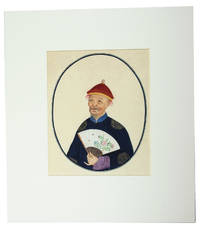
1800J76F1EWPWNYUChina 1800. In a modern gold-tooled dark green morocco clam shell box in contemporary style. Collection of 17 Chinese watercolours on Asian paper with chain lines including 3 of birds seated on a branch 3 of ensembles of fruit and flowers and 5 of fishes all ca. 30 x 37 .5 cm; 2 further watercolours each showing 2 branches of flowers and trees in a drawn oval border ca. 39 x 30 cm; and 4 watercolours of Chinese people posing with objects ca. 25 x 21 cm. Thirteen detailed Chinese watercolours of birds fruits flowers plants and fishes together with four portraits of Chinese people posing with a pipe lute flower and a handheld fan. The drawings in this album show the mixture of the Chinese and European styles that was popular in the market for export paintings in the first half of the 19th century: a combination of the Chinese approach to rendering with European aesthetics concerning light shadow and realism. As traditional in these paintings large areas of flat colour have been subtly shaded with very thin lines to draw the veins of the leaves fins of the fish and feathers of the birds. The production of these export paintings began earnestly in the 1820s and reached its height in the 1830s and 1840s especially after China's defeat in the First Opium War 1839-1842 opened the country to foreign trade. Photography was introduced in China in the 1840s and the market for export paintings declined after 1860.By the end of the 18th century Chinese painters in Hong Kong and Canton started producing paintings and drawings for European buyers. Although they were made for artistic and decorative purposes many European naturalists began collecting drawings to study Chinese plants and species. Most of the plants and animals would simply not survive the journey to Europe whereas dried specimens did not preserve the colour or shape of the flower. Most of the export paintings were ensembles of flowers and animals placed on a background. Imagination was more important than copying nature and the realistically painted flowers could have different colours or even be a composition of elements from different species. For that reason serious naturalists commissioned Chinese artists to paint according to the standards of European scientific illustration. With a few tiny spots and minor smudges but otherwise in very good condition. unknown
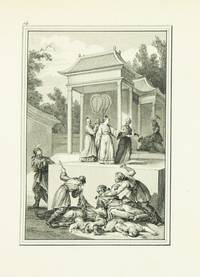
1788ST20889Paris: Chez l'Auteur 1788 1788. FIRST EDITION. 565 x 400 mm. 22 1/4 x 15 3/4". 50 leaves. Two separately published works bound in one. <br/> Modern retrospective calf-backed tan paste paper boards smooth spine profusely gilt with a repeating pattern of grape vines red morocco label lettered in gilt vellum tips. ENGRAVED THROUGHOUT WITH A TOTAL OF 48 FULL-PAGE ILLUSTRATED PLATES each accompanied by either one or two plates of engraved text. SHEETS UNCUT AND UNFOLDED the first work printed only on the recto; the second with three sheets printed on both sides. Reed and Dematté China on Paper 20 21; Cohen-de Ricci 479. Edges and lower corners slightly worn but the binding with only just minor signs of use; free endpaper in front and back with vertical crease one sheet with an early marginal repair isolated inconsequential faint spotting but still AN EXTREMELY FINE COPY the wide-margined sheets exceptionally fresh and bright and with strong impressions of the engravings.<br/> <br/> This pair of lavishly illustrated fully engraved works produced by a talented French engraver after earlier Chinese artworks are here presented in an enormous volume made up of uncut and unfolded sheets. According to Benzit Parisian engraver and print seller Isidore Stanislas Henri Helman 1743 - ca. 1809 "stands out among the engravers of the end of the 18th century" and his skill is evident in the two works bound together here. The first is a pictorial history of the Chinese emperors from the earliest mythical rulers to the Northern Song dynasty 960-1126. It is based on the Dijian Tushuo composed in 1573 to educate the Ming-dynasty Wanli Emperor 1563-1620 who had ascended to the throne at the age of nine. In accordance with its didactic aims it presents the very best and worst of imperial behavior and the original handwritten album was published as a block-printed book to great popularity. Two centuries later the Qing-dynasty Qianlong Emperor 1711-99 commissioned a Western-style edition of the famous work which was executed by two French artists the Jesuit painter Jean-Denis Attiret and the engraver Charles-Nicolas Cochin II. The enterprising Helman was able to see the Attiret-Cochin book in the collection of French statesman Henri Léonard Jean Baptiste Bertin 1720-92 and having had great success with a previous reproduction of a Chinese work Conquêtes de l'Empereur de la Chine ca. 1783 he created the present reproduction. The second work the life of Confucius was also reproduced from plates in Bertin's collection. The source material in this case was the biography of Confucius assembled by the Jesuit Joseph-Marie Amiot 1718-93 as part of his informational series on China meant to educate missionaries. Amiot was a correspondent of Bertin and had sent him the biography and accompanying album of drawings which were based on the Shenji tu Illustrated Traces of the Sage a popular Confucian work throughout the Ming and Qing dynasties. Helman selected 24 scenes from each creating books that balance serene scenes of mountainous landscapes and temples with dramatic fight scenes and dragons. The quality of the engravings is excellent with delicate linework creating faint wisps of smoke and subtle shadows. These two works apparently both published in 1788 were released in several formats. The format here with the engravings laid out on the recto of large uncut sheets appears at auction very infrequently: we have been able to trace only two copies of both works in this format since 2004 and neither in such fine condition as the present example. Chez l'Auteur unknown
1788314738Paris: chez l'auteur . et chez Ponce 1788. First editions. Vol 1: Title 24 plates and 24 leaves of text; vol 2: title dedication 24 plates and 24 leaves of text. 4to. Contemporary green morocco with gilt Greek key borders pink silk endpapers a.e.g. Corners rubbed spine a touch browned marginal foxing in first volume and to a few leaves in second. First editions. Vol 1: Title 24 plates and 24 leaves of text; vol 2: title dedication 24 plates and 24 leaves of text. 4to. First editions beautifully and fully engraved. The first volume is on the life of Confucius the second details notable events in the reigns of various Chinese emperors. The plates were made after a series of drawings by the Jesuit missionary Joseph Marie Amiot. Cohen-De Ricci 479; Lust 729 1133. Provenance: Francis John Hughes bookplate chez l'auteur ... et chez Ponce unknown
1797035987London: G. Nicol 1797. 1st Edition 1st Printing. Hardcover. Very Good . 11 1/8" Tall. Frontispieces Plates And Illustrations. Ii Xxxiv518; Ii Xx 626. The Two Complete Text Volumes In Full Size Text Blocks 10 5/8" Tall; The Plates Were Issued 1796 In A Separate Volume Not Present Here; But The Plate Of The Camellia Sesanqua Is Present Between Pp 466 And 467. Original Quarter Morocco Binding Five Bands Morocco Spine Labels Over Boards Covered With Marbled Paper Original Off-White Endpapers Preliminary And Final Blank In Each Volume. Bindings With Old Wear But Nicely Furbished Morocco Labels Clean With Brilliant Gilt A Little Loss Of Leather At Tops Of Spines And At Top Right Front Spine Edge Paper Frayed Along All Edges Of Boards Hinges Tight Contents Clean Just A Few Tiny Foxing Spots. Small Very Old Booksellers' Label Of The China Times Bookseller 94 Consular Road Tientsin. And Another From Sydney. Former Owner's Signature Dated 1894 Erased In Volume 1 Of George Ernest Morrison And A Few Marginalia Which Appear To Be His; George Ernest "G. E." Morrison 1862 - 1920 Also Known As Morrison Of Peking Or Chinese Morrison Was An Australian Adventurer Appointed In February 1897 As The Times Correspondent In Peking Despite His Lack Of Knowledge In The Chinese Language. He Traveled To Vladivostok And Reported To The Times That Russian Engineers Were Making Preliminary Surveys From Kirin Towards Port Arthur Then Sent A Telegram To Say That Russia Had Presented A Five-Day Ultimatum To China Demanding The Right To Construct A Railway To Port Arthur. This Was A Triumph For The Times And Its Correspondent But He Had Also Shown Prophetic Insight In Another Phrase Of His Dispatch When He Stated That "The Importance Of Japan In Relation To The Future Of Manchuria Cannot Be Disregarded". After A Visit To Siam And England Then To Australia 1899-1900 He Returned To Peking. When The Boxer Uprising Broke Out And During The Siege Of The Legations From June To August Morrison As An Acting-Lieutenant Showed Great Courage Always Ready To Volunteer For Every Service Of Danger. After A Siege Of 55 Days The Legations Were Relieved By A Multinational Force Which Then Ransacked Much Of The Palaces In Peking With Morrison Taking Part In The Looting. There Was Great Uncertainty Regarding The Future Of China In The Following Months And Through The Times Morrison Managed To Depict A Skewed Picture Before The British Public. While Russia And Japan United In Opposing Any Dismemberment Of China The Country Was Nevertheless Punished By The Imposition Of A Heavy Indemnity. In 1904 Morrison Became A Correspondent With The Japanese Army. He Was Present At The Entry Of The Japanese Into Port Arthur Early In 1905 And Represented The Times At The Usa Peace Conference. In 1907 He Crossed China From Peking To The French Border Of Tonkin And In 1910 Rode From Honan Across Asia To Russian Turkestan. From Andijan He Took A Train To St Petersburg And Then Traveled To London Arriving On 29 July 1910. A Great Chinese Physician Dr. Wu Lien-Teh Succeeded In Staying The Spread Of This Mortal Sickness Which Seemed To Threaten The Whole World. Morrison Published A Series Of Articles Advocating The Launching Of A Modern Scientific Public Health Service In China. When The Chinese Revolution Began In 1911 Morrison Took The Side Of The Revolutionaries. In August Morrison Resigned His Position On The Times To Become Political Adviser To The Chinese Government And Immediately Went To London To Assist In Floating A Chinese Loan Of £10 Million. In China During The Following Years He Had An Anxious Time Advising And Endeavoring To Deal With The Political Intrigues That Were Continually Going On. He Visited Australia Again In December 1917 And Returned To Peking In February 1918. He Represented China During The Peace Discussions At Versailles In 1919 But His Health Began To Give Way And He Retired To England Well Aware That He Had Only A Short Time To Live. He Died On 30 May 1920 . A Nice Historical Association. Later Ownership Signatures Of G B Wilson. <br/> <br/> G. Nicol hardcover
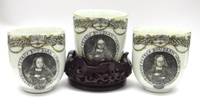
174012377China n.n. 1740-1760. Drie fraaie kopjes van Chinees porselein gedecoreerd in encre de Chine en goud. Met op de buitenwand van de kopjes een portret van Petrus Boudaan vaandels en de tekst 'Petrus Boudaan Ecclesiastes Amstelodamensis'. Langs de mondrand een fijn lijnornament in goud. Niet gemerkt. Portretten naar een gravure van Frederik Ottens. Enkele vergelijkbare exemplaren betreffende Gijsbertus Voetius in 1903 uit een legaat ontvangen zijn te vinden in Museum de Lakenhal te Leiden inventaris nr. 3645. Petrus Boudaan was de oudste zoon van Gualtherus Boudaan en Maria Coymans. Geboren in 1666 te Middelburg in het huis van zijn grootvader Pieter Boudaan. Hij studeerde te Franeker en werd in 1691 predikant te Rijnsburg twee jaar later te Arnhem en in 1710 te Amsterdam. Hij overleed 20 Mei 1734 en werd te Amsterdam in de Oude kerk begraven. H. 65 cm. Fragmentarische stukjes van de rand wat slijtage aan de vergulding één kopje met een haarlijn aan het oor. Literatuur: Jochem Kroes 'Chinese armorial porcelain for the Dutch market' p. 299. A set of three encore de Chine porcelain cups on a wooden stand decorated with a portrait of Petrus Boudaan 1666-1734 a protestant pastor from Amsterdam banners and the text 'Petrus Boudaan Ecclesiastes Amstelodamensis'. Portraits after an engraving by Frederik Ottens. Unmarked. China 1740-1760. H. 6.5 cm. Tiny chips to the rim some wear to the gilding one with hairline to the ear. Literature: Jochem Kroes 'Chinese armorial porcelain for the Dutch market' p. 299. China, n.n. unknown
1799254690Paris: Chez F. Buisson Imprimeur-Librair rue Hautefeuille no. 20 1799. Seconde édition augmentée d'un Précis de l'Histoire de la Chine par le traducteur et du Voyage en Chine et en tartare de J. C. Huttner traduit de l'allemand par le même Traducteur. Vol.1 : with half-title portrait frontispiece of Macartney clxxxiv 311 pp. Plates 1-6. VOLUME II : half-title 408 pp. Plates 7-13. VOLUME 3 : Half title 414 2 Catalogue "Voyages" de la librairie chez Buisson pp. Plates 14-27. VOLUME 4 : half-title 380 pp. Plates 28-35. VOLUME. 5 : half-title. 350 pp 1 plate 36 and 2 folding maps Plates 37 & 38. 5 vols. 8vo. Nineteenth century brown boards red paper labels some rubbing else Very Good. Seconde édition augmentée d'un Précis de l'Histoire de la Chine par le traducteur et du Voyage en Chine et en tartare de J. C. Huttner traduit de l'allemand par le même Traducteur. Vol.1 : with half-title portrait frontispiece of Macartney clxxxiv 311 pp. Plates 1-6. VOLUME II : half-title 408 pp. Plates 7-13. VOLUME 3 : Half title 414 2 Catalogue "Voyages" de la librairie chez Buisson pp. Plates 14-27. VOLUME 4 : half-title 380 pp. Plates 28-35. VOLUME. 5 : half-title. 350 pp 1 plate 36 and 2 folding maps Plates 37 & 38. 5 vols. 8vo. Cordier Biblioteca Sinica IV 2385 Chez F. Buisson, Imprimeur-Librair, rue Hautefeuille, no. 20 unknown
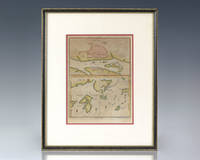
173816232London: Edward Cave at St. John's Gate 1738. Very good condition. A map of the entrance to Canton with Macau Ma-kau and the islands on the approach pictured with depth soundings and an inset "Plan of Quang-Chew Fu commonly called Kanton". Copper engraved map 9 3/8 x 14 1/2" with sml margins a little ruffled with slt. margin loss. The map is from the Edward Cave folio edition of Du Halde's important encyclopedic work on Chinese culture history and society "A Description of the Empire of China and Chinese-Tartary Together with the Kingdoms of Korea and Tibet" by a French Jesuit who specialized in China. Du Halde's work inspired great interest in China among Europeans and was a ground breaking work in geography. The Du Halde book is referred to in Cordier BS 50; Löwendahl 409; Lust 15. Edward Cave, at St. John's Gate unknown
173816233London: Edward Cave at St. John's Gate 1738. Very good condition. A map of the China coast from Behai to Shantou centering on the Pearl River Canton Macau & the islands of Hong Kong. Copper engraved map 20 3/4 x 16 1/2" with sml margins. The map is from the Edward Cave folio edition of this important encyclopedic work on Chinese culture history and society "A Description of the Empire of China and Chinese-Tartary Together with the Kingdoms of Korea and Tibet" by a French Jesuit who specialized in China. Du Halde's work inspired great interest in China among Europeans and was a ground breaking work in geography. The Du Halde book is referred to in Cordier BS 50; Löwendahl 409; Lust 15. Edward Cave, at St. John's Gate unknown
173824523London: Edward Cave at St. John's Gate 1738. Good condition. Maps of Tibet from the Edward Cave folio edition of this important encyclopedic work on Chinese culture history and society by a French Jesuit who specialized in China. Du Halde's work inspired great interest in China among Europeans and was a ground breaking work in geography. <br /> <br /> The 6 sheets include the second through the seventh:<br /> 1. The Second Sheet of Tibet containing the Country of Little Bukharia to ye West of Tursan; 2. The Third Sheet included in the map of Tibet containing the parts of Little Bukharia about Kathghar. 3. The fourth Sheet comprized in the Map of Tibet <br /> containing in particular the country of the Tartars of Koko Nor; 4. The fifth Sheet which is properly the first of Tibet as bounded by China & including the country of the Si-san.<br /> 5. The Sixth sheet which is properly the Second of Tibet containing the Country to the East of Lasa; and 6. The Seventh sheet which is properly the third sheet of Tibet including the Country in the Neighbourhood of the Tsanpu to the west of Lasa.<br /> <br /> Copper engraving period folds. Engraved map on 6 sheets a few sheets with loss to lower margin; 5th sheet with chip top edge some loss to title. 11 1/4 x 10" with margins. The book: Cordier BS 50; Löwendahl 409; Lust 15. Edward Cave, at St. John's Gate unknown
1797223222London.: Printed for John Stockdale Piccadilly. 1797. 2 folding maps 30 copper plate engravings including engraved title page 6 xv 475pp 2 Errata and Directions to the Binder 3 publisher's advertisements; recent half calf early mottled-papered boards spine gilt decorated and lettered to style flecked fore edges 22 x 13.5cm boards a little rubbed the text age-toned and the plates with marginal foxing previous owner's bookplate to the front pastedown and the neat inscription of three others to the prelims a very good copy of the octavo edition. Handsome copy of the abridged octavo edition of Lord Macartney's voyage and embassy to China 1792-4 by his secretary and "Minister Plenipotentiary in the absence of the Ambassador" George Staunton. Many of the illustrations are after drawings by William Alexander whose "views remained unrivalled until the era of photography" Lowendahl. . Printed for John Stockdale, Piccadilly. hardcover
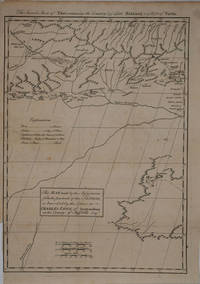
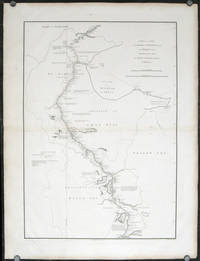
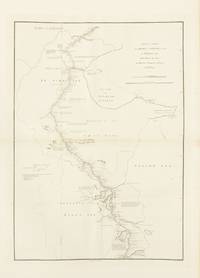
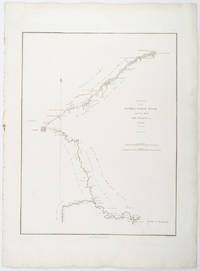
1796207049London.: George Nicol. 1796. Double-sheet engraved copperplate map 63.2 x 44.8 cm; 75 x 57 cms sheet including platemark central fold the sheet toned at the edges and central fold a couple of minor spots and edge wear but in very good condition. An exquisitely engraved map with fine detail of the route taken by George Macartney on the first official British embassy to China 1792-1794 undertaken with the aim of gaining trade concessions from the Chinese Emperor and published in George Staunton's officall account. <br> <br>While the official purpose was not successful much was learned about China and the Chinese as is evident from this map with its explanatory texts. To the west of Pekin just below the starting point at Zhe-hol Jehol which is situated at the top of this map the commentary reads: "A great part of the country around Pekin is employed in the production of culinary vegetables and a variety of fruits." At the lower edge of the map just north of the ending point of Hangzhou is the lake Tai Hoo: "The western side of the Tai-hoo is bounded by a very romantic and fertile country whose mountains are clutivated to their very tops. A great part of the province of Tche-tchiang appears to be cultivated with Mulberry trees for the food of the Silk worms." Cities of the 1st 2nd and 3rd orders "considerable towns" and villages are marked along with "Halting places" etc. Fascinating Western documentation of the area around the Imperial Canal of the late Eighteenth Century. . George Nicol. unknown
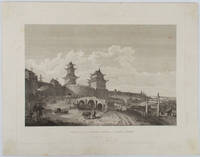
1796177643London.: G. Nicol. April 121796. Large format engraving 23.7 x 35.4 cm; 35.5 x 45.4 cm sheet including caption and platemark spots of browning to the image affecting the sky and marginal foxing corners a little browned the sheet a little dusty but a strong dark impression in very good condition. Fine detailed engraving after a drawing by the artist William Alexander 1767-1816 prepared as plate 20 for the folio atlas to George Staunton's account of the Macartney Embassy to China of 1793. <br> <br>From the Estate of the late collector and scholar Arthur Hacker. . G. Nicol. unknown
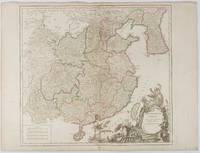
1751177606Paris. 1751. Engraved map 48 x 52.2 cm; 51 x 67.6 cm sheet provinces highlighted with outline hand-colour elaborate title cartouche central fold small tear at the foot affecting the border old paper repair on the verso affecting the margin only pin-holes to the four marginal corners margins a little browned and dusty a handsome map in good condition. Fine large format map showing China Korea Taiwan and parts of Central Asia prepared for De Vaugondy's "Atlas Universel". The beautifully foliated cartouche features a duo of joyful Chinese musicians one dancing and a diminutive figure holding a parasol. <br> <br>From the Estate of the late collector and scholar Arthur Hacker. . unknown
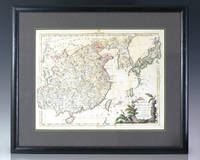
1784137611Venice: Presso Antonio Zatta 1784. Large eighteenth century hand-colored map of China and Japan by Venetian cartographer Antonio Zatta. One page hand-colored with a fine botanical cartouche. In near fine condition. The entire piece measures 19.5 inches by 23.5 inches. Venetian cartographer and publisher Antonio Zatta's major contribution to cartography was the Atlante Novissimo a four volume atlas of the world including detailed maps of China Italy North American and Eastern Europe. Presso Antonio Zatta unknown
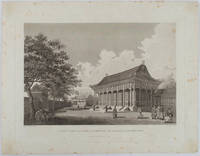
1796177641London. 1796. Large format engraving 23.9 x 35.9 cm; 35.9 x 46 cm sheet including caption and platemark spots of browning to the image affecting the sky and marginal foxing old paper abrasions to the verso the sheet a little creased and dusty but a strong dark impression in very good condition. Fine detailed engraving after a drawing by the artist William Alexander 1767-1816 of the sumptuous Hall of Audience to the Summer Palace prepared as plate 22 for the folio atlas to George Staunton's account of the Macartney Embassy to China of 1793. Staunton's commentary noted its magnificence: "Its projecting roof was supported upon two rows of large wooden columns the shafts of which were painted red and varnished; and the capitals ornamented with various scrolls and devices in vivid colouring particularly with dragons.". The engraver William Lowry 1762- 1824 specialised in architectural engravings and was later a member of the Royal Society. <br> <br>From the Estate of the late collector and scholar Arthur Hacker. . unknown
176614884Florence Italy: Giuseppe Vanni 1766. Print. Very good condition. Period hand-colored copper engraving from the Natural History of the Birds Treated Systematically and Adorned with Copperplate Engraving Illustrations in Miniature and Life-Size 1766-1777. <br /> <br /> The work carries some interesting historical importance according to Peter Dance: "The production of its five massive folio volumes must have been one of the most remarkable publishing ventures ever undertaken in Florence. Begun in 1767 and based on birds taken from the collection of Giovanni Gerini it was completed ten years later. It was larger better engraved and more vividly coloured than any previous work on birds but these are not its only claim to fame. The attitudes of the birds themselves give this book its unique character. Strutting parading posturing and occasionally flying.are birds whose real-life counterparts would surely disown them and not without reason for Manetti seems in these pictures to be depicting the human comedy the habits and mannerisms of contemporary Italian society. His book may still be rated among the very greatest bird books if only for its magnificent comicality" S. Peter Dance The Art of Natural History: Animal Illustrators and their Work. London 1978.<br /> <br /> Approx. 10 5/8 x 13 1/2" platemark on watermarked paper measuring 14 1/2 x 18". The original images were drawn by Lorenzo Lorenzi Violante Vanni or Manetti himself. HKD3680. Giuseppe Vanni unknown
1796143663London: George Nicol 1796. Very Good. London George Nicol April 12th 1796. A large engraved map printed surface 640 × 451 mm sheet size 812 × 557 mm. Engraved by B. Baker. Horizontal centrefold crease as issued; occasional spots of foxing mainly in the margins; two small faint stains to the left-hand margin well clear of the printed surface; old guard on the verso with some light associated tanning on the recto about the fold; in excellent condition with wide margins. John Barrow later first Baronet was attached to the first British diplomatic mission to China led by George Macartney in 1792-94. The map is plate 9 from the atlas to the official account of the embassy George Staunton's 'An Authentic Account of an Embassy from the King of Great Britain to the Emperor of China .'. <p>The journey shown here was from Chengde formerly Jehol to Beijing and then south to Hangzhou along the Grand Canal. While Macartney failed to secure any concessions from the Qianlong Emperor the expedition nevertheless collected important information about the geography culture population and politics of the Chinese Empire. George Nicol unknown
1736137249J. Wood c. 1736. Rare eighteenth century hand-colored map providing plans of Kanton Shang Chwen Shan and Ma-kau being a plate extracted from Du Halde's celebrated Description Geographique the most important cartographic record of the region of the eighteenth century. In near fine condition. Double matted and framed. The entire piece measures 14 inches by 11.5 inches. Based on surveys conducted by French Jesuits at the behest of the Emperor Kang Hsiand Jean-Baptiste Du Halde's Description Geographique constitutes the first scientific mapping of China and remains the most important cartographic record of the region from the eighteenth century. Du Halde did not travel to China but collected seventeen Jesuit missionaries' reports and provided an encyclopedic survey of the history culture and society of China and "Chinese Tartary" that is Manchuria. Voltaire said of Du Halde's work: "Although it is developed out of Paris and he hath not known the Chinese he gave on the basis of the memoirs of his colleagues the widest and the best description the empire of China has had worldwide." J. Wood unknown
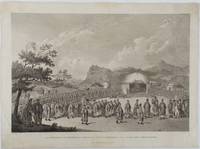
1796177644London.: G. Nicol. April 121796. Large format engraving 29.9 x 45 cm; 37 x 50 cm sheet trimmed to the platemark spots of browning to the image mainly affecting the sky and marginal foxing corners a little toned old paper repair affecting the caption only no loss the sheet creased at the corners and a little dusty but a strong dark impression in very good condition. Intricate and wonderfully composed engraving after a drawing by the artist William Alexander 1767-1816 prepared for the folio atlas to George Staunton's account of the Macartney Embassy to China of 1793. The engraver James Fittler 1758-1825 was appointed by George III to be his Marine Engraver. Despite the serried ranks of the Chinese noblemen attendants and the figure of the Emperor himself occupying almost the entire engraving it is the figure of Lord Macartney making an entrance stage right who steals the show. Fittler has amplified Macartney as "hero" with the dramatic use of tone: Lord Macartney is bathed in light a representative of the British Empire "on which the sun never sets". The page attending Macartney is the figure of George Staunton's son Thomas. <br>A dramatic evocation of the might of Empire. <br> <br>From the Estate of the late collector and scholar Arthur Hacker. . G. Nicol. unknown
173816699London: Edward Cave at St. John's Gate 1738. Very good overall. Copper engraving period folds. 13 3/4 x 13 1/4" with margins. Map including Shanghai area from the Edward Cave folio edition of this important encyclopedic work on Chinese culture history and society by a French Jesuit who specialized in China. Du Halde's work inspired great interest in China among Europeans and was a ground breaking work in geography. The book: Cordier BS 50; Löwendahl 409; Lust 15. Edward Cave, at St. John's Gate unknown
173816705London: Edward Cave at St. John's Gate 1738. Very good overall. Copper engraving period folds. 12 1/ x 14 1/4" with margins. Closed semi-circular tear repaired archivally. Map from the Edward Cave folio edition of this important encyclopedic work on Chinese culture history and society by a French Jesuit who specialized in China. Du Halde's work inspired great interest in China among Europeans and was a ground breaking work in geography. The book: Cordier BS 50; Löwendahl 409; Lust 15. Edward Cave, at St. John's Gate unknown
173816707London: Edward Cave at St. John's Gate 1738. Very good overall. Copper engraving period folds. 15 1/4 x 18 3/4" with margins. Map from the Edward Cave folio edition of this important encyclopedic work on Chinese culture history and society by a French Jesuit who specialized in China. Du Halde's work inspired great interest in China among Europeans and was a ground breaking work in geography. The book: Cordier BS 50; Löwendahl 409; Lust 15. One small section of fold separated and repaired archivally. Edward Cave, at St. John's Gate unknown
1796209283London.: George Nicol. 1796. Engraved copperplate map on Whatman paper 43.8 x 33.6 cm; 57 x 42 cm sheet including plate markscale in nautical and English miles; light undulation to sheet marginal toning and edgewear but in very good condition. Finely engraved and detailed map of two routes to Pekin Beijing along the White River Baihe from the Gulf of Petcheli and along the Imperial Highway from Jehol and includes commentary locating palaces and gardens type of cultivation "many barges" and "the road shaded by willow trees". The map elegantly drawn by Henry William Parish was published in George Staunton's account of Earl Macartney's embassy to China 1792-1794. . George Nicol. unknown