1 137 résultats
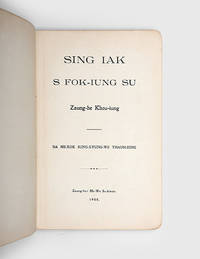
191754<p>Very rare first edition. Bible for the Lisu nationality who are a minority living in a southwestern mountain area in China. This book is of very interesting because Lisu has only oral language but not written language. This Lisu written language was invented and designed by the missionary writer of this book for the nationality by combining both oriental and western languages. However this written language disappear after Chinese Communist Government got power in 1949 when they began to spread Chinese Characters in the area.</p><p>Title from verso t.p. Has also a Chinese title page as shown because it is published in Shanghai China.<br /></p><p>136 pages ; 20 cm. A little wear on covers near fine in total. </p><p><br /></p> Shanghai : British and Foreign Bible Society, 1917. paperback
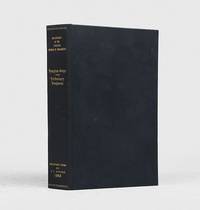
1944172481United States: Department of the Interior Bureau of Reclamation 1944. The genesis of the Three Gorges Dam Number 4 of a small number of copies of this report by the engineering mind behind the Hoover Dam on harnessing the mighty Yangtze River for hydroelectric power generation - a vision finally realized over half a century later. We have traced only four other surviving examples all found in institutions. The author John Lucian Savage 1879-1967 was an American civil engineer who became the Chief Designing Engineer at the Bureau of Reclamation in 1924. "In this capacity he designed dams canals and other irrigation-related structures throughout eleven western states the most impressive projects being Hoover - the supreme engineering feat of its day - Grand Coulee Parker and Shasta dams. Because the first three were respectively the highest widest and deepest dams in the world at the time of their construction Savage and his design team developed trial-load analysis for determining actual versus theoretical stresses in arched dams as well as models for determining concrete deterioration land subsidence and increased seismicity caused by the weight of a mammoth dam" ANB. Since the 1930s Savage had been fascinated with both the idea of damming the Yangtze and the prospect of co-operation between the Bureau of Reclamation and the Chinese government. Chiang Kai-Shek's administration was equally keen. Amidst Chinese efforts to repel a Japanese invasion in 1943 the National Resources Commission of Chiang's government invited Savage to China to devise concrete plans - an opportunity Savage described to the State Department as a "signal honor" and "an opportunity to be of service to the valiant people of China" quoted in Rowley & Gahan p. 584. Even as Chinese-Japanese armed engagements raged nearby Savage spent the period from May to November 1944 researching feasibility and necessary administrative and financial arrangements. This resulting report outlines several different plans for constructing a dam reservoir and power plant to generate up to 11 million kilowatts of power 74 million acre feet of water for irrigation and 22 million acre feet of flood storage. Savage projects a final cost of around 1 billion US dollars and annual revenues exceeding 50 million US dollars. The main 98-page technical report is accompanied by his 238-page discussion of four hydro-projects located on important tributaries discussing costings and technical details. The two reports are supported by dozens of technical maps plans and diagrams. Savage's time in China only reinforced his belief in the possibilities of a project unprecedented in its scope and ambition: "The Yangtze Gorge Project is a 'CLASSIC'. It will be of utmost importance to China. It will bring great industrial developments in Central and Western China. It will bring widespread employment. It will bring high standards of living. It will change China from a weak to a strong nation. The Yangtze Gorge Project should be constructed for the benefit of China and the World at large" p. 6. An accompanying typescript letter dated 2 April 1946 from Walker R. Young Chief Engineer in the Bureau of Reclamation confirms that as many as 50 Chinese engineers will soon be available to orchestrate the Yangtze project but also hints at the impact of the Chinese Civil War on the National Resources Commission - the war proved the ultimate undoing of efforts to act on Savage's vision. The letter states that numbered copies of the report are being distributed in preparation for a formal planning conference involving American and Chinese engineers. The number of recipients - nine western engineers - gives a good indication of the report's small circulation. Savage's copy is housed with some of his papers at the National Museum of American History. Copies are also found at the US National Archives the Colorado School of Mines and Purdue University where Savage served as a faculty member. The National Library of China has a version with a Chinese title page - the precise nature of this copy awaits further research. Folio. With 73 large folding maps plans and diagrams. Original black cloth spine lettered in gilt hinges reinforced with brown linen as issued buff endpapers text printed in photostat typescript. Cloth lightly soiled and rubbed internally clean. A fine copy. William D. Rowley & Andrew H. Gahan The Bureau of Reclamation: From Developing to Managing Water 1945-2000 2006. hardcover
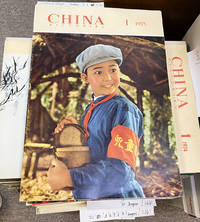
19591007<p><b><i>China Pictorial 219 issues</i></b></p><p>Beijing: China Pictorial distributed by Guozi Shudian; printed in the People's Republic of China comprising 219 issues covering the years 1959–1984 each measuring approx. 10-3/16 x 14-1/2 inches 26 × 37 cm overall condition is very good plus to near-fine. Because of the weight shipping will be by FedEx Ground</p><p>China Pictorial is a monthly magazine bi-weekly thru 1960 illustrated with photographs and essays about current events <b>highlighting the development and progress in modern PRC</b> the People's Republic of China. It doubled as a <i>propaganda tool of the Chinese government</i> and was issued in 19 languages including Korean Russian German French Spanish and Italian. Several issues include various supplements calendars and flyers laid inside. Except for the one duplicate issue covering the funeral of Chairman Mao 1976.11 which is in Chinese all remaining 218 issues are the English-Language version. Quite rare thus.</p><p>1959: No. 2-22; 1960: No. 2-14 16-24; 1961: No. 1-12; 1962: No. 1 3 4 5 6 7 8 10 11; 1963: No. 1-12; 1964 No. 1-5 7-12; 1965: No. 1-4; 1966: No. 1-10; 1968: No. 1-9 11-12; 1969: No. 1-8 10-12; 1971: No. 1-9 11-12 1972: No. 1-12; 1973: No. 1-12; 1974: No. 1-6 8-11; 1975: No. 1-6 8 10; 1976: No. 1-9 11; 1978: No. 1 7; 1979: No. 1-9 12 1980: No.1 3 4 5 7 11 12; 1981: No.1 3 4 7 8 9 10; 1982: No. 2 4 9 11; 1983: No. 12; 1984: No. 12; </p><p><i>Important events detailed: Modern woodcuts in China; Hard-Stone Carving-A Special Craft of Peking; Stamp collection; the Propaganda Poster—A Fighting Art; Works of Art by PLA Men; Peking Peasants Hold Sports Meeting; Wrought Iron Pictures; The Museum of the Chinese Revolution; In Commemoration of the 50th Anniversary of the 1911 Revolution; Tea Drink in China; Mei Lan-fang and His School of Art; The people of Tibet for the first time in history in the midst of electing their local representatives; A Great People's Fighter—Lei Feng & Lei Feng's Dairy; The First GANEFO; Guo Lan-ying A Well-Known Singer; Box-Wood Carving; Painting Illustrating Chairman Mao's Poem; New Stamps</i><i>ï¼›</i><i>China Successfully Explodes Her First Atom Bomb; A Splendid Revolutionary Oil Painting "Chairman Mao Goes To Anyuan"; Piano Music "The Red Lantern" with Peking Opera Singing; Ping Pang Ball Spreads Friendship: Chuang Tse-tung of China with Glenn Cowan of the US.; Ancient Chinese Silk and the Silk Road; President Nixon Visits China: Chairman Mao Meets President Nixon in Peking; Photographs Taken by Edgar Snow in China in 1936; Choukoutien-Home of Peking Ape-Man; Peking Duck; Jade in China; Yellow River Valley-Cradle of Ancient Chinese Civilization; Evergreen Friendship Between the Chinese and Japanese People; Criticize the Fallacies of Lin Piao and Confucius in Peiking and Tsinghua University; A Madman's Diary by Lu Hsun; Chin Shih Huang's Progressive Role in History; the Shang Yang Reform; Lu Shun a Pictorial Series in Gouache; the Chen Sheng-Wu Kuang Uprising; More Ancient Treasures Excavated at Mawangtui: Books Copied on Silk; Wang Chung Against Confucius; Tsao Tsao; Vice Premier Deng Visits The United States; The Silk Road; Painting of Wu Guanzhong; The Chinese Muslim; How an Ancient Chinese Painting Was Reproduced; Fan Zeng's Figure Painting; The Museum of Qin Dynasty Terracotta Warriors and Horses; The Ma Haide I Know; Colored Paintings on Ancient Architecture; Lu Xun: His Life and Works</i>; <i>Confucius Temple; Traditional Chinese Painting Watercolor; Oil Painting—Li Huaji Style; Wushu; Modern Porcelain</i><i>Special Issue About Cultural Revolution: Decision of the Central Committee of The Chinese Communist Party Concerning the Great Proletarian Cultural Revolution; Revolutionary Ballet: White-Haired Girl; Chairman Mao Joins a Million People in Celebrating the Great Cultural Revolution; Comrade Lin Piao and Chou En-lai's Speech; Supplement: In Memory of Lu Hsun—Comments from Chairman Mao; Comrade Chu Teh's Life Was One of Fighting for Cause of Communism; Bamboo Slips from the Chin Dynasty Unearthed; Chairman Mao Meets Former U.S. President Nixon in February; People Throughout China March to Against Teng Hsiao-ping's Crimes of Reverting Capitalism; Children's Paintings; Death of Comrade Chou En-lai; Chairman Mao's Funeral: Eternal Glory to the Great Leader and Great Teacher Chairman Mao Tsetung; Message to the Whole Party the Whole Army and the People of All Nationalities Throughout the Country; Memorial Speech by Comrade Hua Kuo-feng with original photo of Hua Kuo-feng's delivering memorial speech &c</i>.</p><p>《人民画报》æ‚志,本组涵盖1959年到1984年(具体期刊è§åˆ—表),ä¸åŽäººæ°‘共和国出版,国å书店å‘行。本组包括219期,å“相éžå¸¸å¥½ã€‚</p><p>《人民画报》是月刊,通过照片ã€æ–‡å—ç‰æ–¹å¼æ¥å±•ç¤ºä¸å›½çš„å‘展和进æ¥ï¼Œå®ƒåŒæ—¶è¿˜å‘行了包括韩è¯ï¼Œä¿„è¯ï¼Œå¾·è¯ï¼Œæ³•è¯ï¼Œè¥¿ç牙è¯ï¼Œæ„大利è¯ç‰å¤šç§è¯è¨€æ¥ä½œä¸ºä¸å›½æ”¿åºœå‘ä¸–ç•Œå®£ä¼ ä¸å›½çš„é‡è¦å·¥å…·ã€‚内部还包括多个增刊ã€æ—¥åŽ†å’Œå®£ä¼ å•ã€‚</p><p>出版社:外国è¯è¨€å‡ºç‰ˆç¤¾ ä¸å›½Â·åŒ—京</p><p><br /></p> distributed by Guozi Shudian; printed in the People's Republic of China, paperback
193471Some wears as shown many photo plates color maps of Concession. Concession Francaise de Changhai (Shanghai) paperback
20002091502135401362Not Available 2000. Soft Cover. Fine. Volume: 163 Not Available paperback
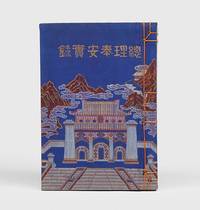
1929172181Nanjing: Zongli fengan huakan bianzuan weiyuanhui 1929. Bidding China's "National Father" farewell First and only edition and printing of the official commemorative publication for Sun Yat-Sen's state burial distributed as a gift by the Chinese Ministry of Foreign Affairs. Over one hundred photographic illustrations record the elaborate multi-day ceremony and the appearance of Sun's mausoleum; these are accompanied by several folding architectural plans. Loosely inserted is the ministry's printed presentation card. Following Sun's death on 12 March 1925 the Kuomintang formed a 12-man committee tasked with overseeing the construction of a massive mausoleum on Mount Zijin in Nanjing. The stakes were high: amidst the breakdown of the Kuomintang's relations with the Chinese Communist Party and Chiang Kai-Shek's tightening grip on the party-state exerting control over Sun's legacy and image was paramount. The design of the site was opened to public tender the committee requiring the winning design to combine traditional Chinese styles with modern concepts of adaptive architecture. The winning architect Lu Yanzhi 1894-1929 died before construction finished and his vision was seen through to completion by his colleague Poy Gum Lee 1900-1968. Lu and Poy's American training is reflected in such design elements as the layout of the site which draws on the Mall in Washington and the Liberty Bell and the design of a statue of Sun seated in Lincoln-esque fashion. In spring 1929 the internment ceremony began with the transfer of Sun's body from Beiping to Nanjing on a special train named the "Soul Train" in Chinese. "The transfer was designed as a long drawn-out mobile media event that was to spiritually mobilize modernize and unify the population around the spirit and body of Sun Yat-sen". The internment ceremony held on 1 June 1929 after the body had lain in state for three days was a lavish and highly regulated spectacle. The body was escorted by a 3-mile-long procession to the echoes of a 101-gun salute from a gunboat moored on the Yangtze River. At midday as Song Qingling and Sun Ke Sun's wife and son closed the metal door on the tomb the ceremony closed with a national three-minutes silence. This is the most important printed record of one of 20th-century China's defining political events. The majority of copies are now housed in institutional collections and we have traced no others in commerce. Accompanying this copy are two contemporary typescript translations into English of the book's captions. Large octavo. With 73 plates 4 collotype and 35 half-tone plates 7 maps and plans 6 folding ornate title page after calligraphy by Han Minjing. Original lavish silk brocade lettered in gold orange thread xianzhuang stitching spine and covers lined with tan silk. With original blue cloth folding case xylographic label on front panel reproducing calligraphy by Chiang Kai-Shek lined with decorative blue paper bone toggles. Brocade bright some losses to silk on spine rear cover silk lining worn and feathering where sometime damp text and illustrations very well preserved one folding plan with small hole not affecting printed area: a very good copy the binding having lost none of its lustre in very good case with rubbing a little soiling and cockling to lining. Rudolph G. Wagner "1925-1928: Enshrining the Father of the Republic" China Heritage Annual available online. hardcover
19432092902144201915Daiichishobo 1943. Soft Cover. Fine. The book is in fine condition. Daiichishobo paperback
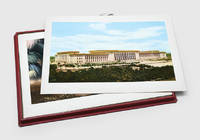
1959168629Beijing: Renmin meishu chubanshe c.1959. Monumentality and the weight of state power First edition first printing of this grand portfolio. Occupying 170000 square metres on the western flank of Tiananmen Square the Great Hall of the People was one of ten architectural projects completed in 1959 to celebrate the tenth anniversary of the founding of the People's Republic of China. The design combines classical and neoclassical styles with Chinese aesthetics. For example the total number of columns in the main gate colonnade equals the number found inside the most important hall in the Forbidden City and these columns are spaced at receding widths away from the central point - a long-held Chinese architectural practice. The decision to build the hall was enacted by the Politburo in 1958 and a force of 30000 builders and technicians finished the project in just ten months. For the last six decades the Great Hall's main ceremonial space capable of holding 10000 people has served as the venue for Chinese Communist Party meetings and lavish state events. Its corridors and many smaller rooms have also played host to political intrigues contentious meetings and important diplomatic dialogues. In 2003 Riverdance became the first Western show to perform on the hall's main stage selling out 11 performances. Copies were also issued in a dark red vinyl box with no priority established. Landscape folio. Title leaf printed in red and black. 20 colour photographic plates c. 292 x 465 mm printed on glossy paper each tipped onto loose 372 x 525 stiff card sheet together with loose single title leaf printed both sides all housed in original red cloth box lid with calligraphic title in gilt and blind-stamped decoration. Plates bright a little soiling and foxing to card sheets; bright box lightly rubbed and soiled abrasions to base sides of tray a little tender: a fine set in well-preserved box. Parr & WassinkLundgren The Chinese Photobook: From the 1900s to the Present pp. 183-5. Chang-tai Hung Mao's New World: Political Culture in the Early People's Republic 2011. hardcover
19802091202133212040Nigensha 1980. Soft Cover. Fine. Volume: 1 Nigensha paperback
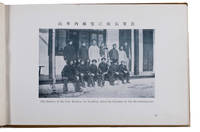
1912ABC_47646Shanghai: Commercial Press Limited 1912. Original publisher's orange-brown pictorial cloth marbled endpapers. Oblong 8vo 15 x 22.5 cm. 160 black-and-white photographic illustrations all protected by tissue paper guards. First and only edition of a very rare work with photographic illustrations of the Chinese Revolution of 1911 with captions in Chinese and English. It was published specifically for circulation in the West and consists of 14 parts. The present work contains the first 4. However any volume in this series is exceptionally rare as we have not been able to find another copy in sales records of the past 100 years.The Chinese Revolution of 1911 is an important event in Chinese history as it resulted in the establishment of the Republic of China. The Revolution was preceded by decade of revolts since Chinese citizens had already been dissatisfied with the rule of the Qing dynasty 1636-1912 for some time. The Revolution started in October 1911 with the Wuchang Uprising after which similar revolts broke out across the country. The Qing court then initiated negotiations with the revolutionaries. Both parties came to the agreement that the emperor who was just 6-years old had to abdicate in February 1912. Revolutionary statesman Sun Yat-Sen 1866-1925 became the first provisional president.The present work offers an authentic pictorial record of the first revolts. The work contains numerous portraits of important leaders of the Revolution and members of the Qing court grim photographic illustrations of the battlefields in Wuchang now the Wuchang District of Wuhan and Hankow or Hankou and images of the attack on Nanking now Nanjing including the preparations and the aftermath.The binding shows very slight signs of wear the gutters of the front and back endpapers are weakened causing the binding to be wobbly but the boards are still attached. The tissue paper between the photographic illustrations has browned throughout. Otherwise in very good condition.l WorldCat 891342401 2 copies. Commercial Press, Limited, hardcover
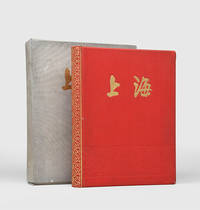
1959168621Shanghai: Shanghai renmin meishu chubanshe c.1959. The preferred deluxe issue First edition first printing of this photobook issued by the Shanghai Municipal Government to celebrate ten years of Communist rule as well as Chinese culture history and art. Shanghai's status as the country's economic powerhouse is stressed through numerous pictures of heavy and light industries smiling workers and modern housing developments as well as of consumer goods such as fountain pens sewing machines and bicycles. Space is given to healthcare culture and the arts the historic architecture of the Bund parades and tourism. Unlike other propaganda from the period the message is uniformly forward-looking centring on developments achieved under socialism rather than recycling shop-worn condemnations of the Republican and imperial eras. Copies of this extravagant production were also issued housed in a paper box. Folio. With 21 tipped-in plates 16 colour 2 folding colour and black and white illustrations throughout. Title page printed in brown and grey. Binding designed by Ren Yi Chen Zhichu Zhang Suyu Cai Zhenhua and Qian Zhenzhi. Original red cloth spine elaborately decorated in gilt gilt calligraphic title on front cover foot of front board blocked in blind floral-patterned endpapers. Housed in publisher's folding grey cloth case title to front panel in gilt bone ties. Spine bright boards lightly soiled extremities worn spine ends and tips a little finger soiling internally else bright. A very good copy indeed in very good case with some soiling lining foxed. Parr & WassinkLundgren The Chinese Photobook: From the 1900s to the Present pp. 189-92. hardcover
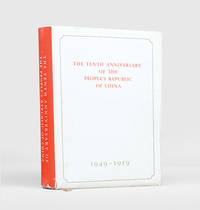
1959185410Beijing: no stated publisher 1959. A grandiose photobook First and only edition with a printed compliments card from the preparatory committee for the anniversary celebrations. Though unmarked as such this copy was owned by Solomon Adler one of the select group of Westerners permanently resident in China during the Mao era. The 1959 festivities signalled China's growing independence on the international stage and its stepping out of the Kremlin's shadow. This lavish production carefully compiled and printed at great expense is a comprehensive pictorial review of events held on and around 1 October 1959. It begins with the text of addresses by Liu Shaoqi Zhou Enlai Lin Biao Deng Xiaoping and Song Qingling followed by vistas of famous architectural landmarks such as Tiananmen Square and the Museum of the Chinese Revolution. Photos of a meeting and banquet held in the Great Hall of the People accompany shots from the National Day parade showing fireworks dancing and flowers. Mao and Khrushchev feature prominently as do images of diplomatic events and of politicians inspecting industrial exhibits architectural landmarks and cultural artefacts. An economist by training Adler 1909-1994 worked in the US in the 1940s but later fell under suspicion during the "red scare." After a period spent at Cambridge University he moved to China in 1962 living in Beijing until his death three decades later and working on the official Chinese translation into English of Mao's Selected Works. Folio. With tissue-guarded portrait frontispieces of Mao Zedong and Liu Shaoqi tipped in many illustrations 9 folding in text. Original white cloth spine lettered in gilt on red ground compartments elaborately tooled in gilt front board with gilt and red emblem of the People's Republic of China "1949-1959" lettered below in gilt silver silk bookmarker. With dust jacket. Housed in original card box. Binding with touch of wear couple of illustrations slightly proud where incorrectly refolded; jacket flaps without price as issued a few closed tears and chips scuffing: a near-fine copy in very good jacket and like box with some toning and marking. hardcover
19732091202133213203Gakushu Kenkyusha 1973. Soft Cover. Fine. Number of books: 4 books in total Gakushu Kenkyusha paperback
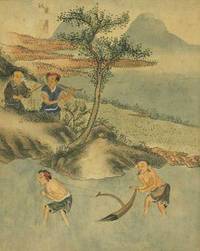
1920218778China Late 19th or early 20th century. 34 scenes on paper each featuring several figures in traditional dress disporting themselves amid landscapes and in a few instances houses all done by the same artist. Each picture is a separate scene; subjects include fishing visiting boating farming wrestling courting harvesting rice and hunting--a particularly effective image shows a tiger hunt and several scenes include wild and domestic animals. 1 vols. Images measure 8-3/4 x 7 inches plus margins bringing the overall page size to 11 x 8 inches. The mounted leaves are linked in the Oriental accordion fashion and contained within two substantial wood covers. Fine condition. 34 scenes on paper each featuring several figures in traditional dress disporting themselves amid landscapes and in a few instances houses all done by the same artist. Each picture is a separate scene; subjects include fishing visiting boating farming wrestling courting harvesting rice and hunting--a particularly effective image shows a tiger hunt and several scenes include wild and domestic animals. 1 vols. Images measure 8-3/4 x 7 inches plus margins bringing the overall page size to 11 x 8 inches. A very interesting and engaging collection of genre scenes. The trees rocks and landscapes are particularly well rendered and the figures are full of life. unknown
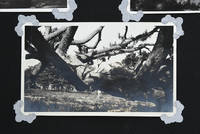
1920152667China: 1920. From palace to park lake to shining sea A collection of 230 vernacular photographs recording a couple's trip to Beijing Jinan and Qingdao a decade after the abdication of the last Qing emperor. Arranged chronologically the album combines landscape and architectural views with candid shots of the travellers and the people they met. The appearance of many easily identifiable landmarks more than compensates for a lack of captions. The travellers begin their holiday in Beijing recently the site of the May Fourth demonstrations. The first 35 images capture the serenity of the Summer Palace once an imperial retreat with images showing the East Palace Gate and the exterior Hall of Joyful Longevity. The visitors strike jaunty individual poses on a stone lion and ride regally on the back of a bronze deer statue. The lady is captured from a distance on a balcony overlooking the Kunming Lake the largest body of water in the palace complex with the famous 17-arch bridge visible in the background. Like many before them these travellers are drawn to such architectural wonders as the Glowing Clouds and Holy Land Archway as well as the full-size marble boat restored by the Empress Cixi in the 19th century using funds allocated for outfitting a real navy. Several vistas of the lake show its solitude and remoteness - qualities accentuated by the palace's transition in 1914 from a working royal residence into a publicly accessible monument to China's imperial past. Until 1924 the Forbidden City remained the private residence of the last emperor Pu Yi and this album thus contains only a few images taken in the accessible outer court. The travellers find more freedom however in nearby Beihai Park climbing up to the imposing White Pagoda and snapping several views of Beijing from on high. Also captured here are two soldiers on duty by one of the bridge archways as well as the classic view of the pagoda looming over the park's picturesque lake. China's rapidly growing network of railway lines afforded travellers conveniences unknown even a couple of decades before. The visitors record their journey on the Beijing-Zhangjiakou line the first stretch of railway built by the Chinese government rather than foreign investors alighting near Nankou. There the lady poses in a sedan chair and later with three young children fascinated by a camera held by one of the couple's acquaintances. Visiting the Ming tombs affords many opportunities to photograph and be photographed with the famous stone animal sculptures while in one image the lady lies comfortably in a tree. Back on the train they travel to the Great Wall near Badaling and Qinglongqiao. A dozen pictures taken on the wall show the brickwork in a state of disrepair as was common with sections of the wall by this time and the travellers take refreshments on a level section with some local children for company. A well-earned rest on the return train refreshes them for a visit to the Jade Peak Pagoda on Jade Spring Hill today the site of residences for top political leaders with the camera capturing several nice landscape views of the pagoda and a temple desecrated inside. Following further excursions to the unmissable Temple of Heaven and the Cishou Pagoda they follow the steel rails to Jinan admiring the Yangtze River and waterfront industries in the company of local perhaps warlord troops. The holiday ends in the Japan-controlled coastal resort of Qingdao its station platform teeming with adult and child passengers and its seafront peppered with colonial architecture including the Grand Hotel. The final photographs commemorate time spent at the beach and climbing a nearby mountain most likely Laoshan - the relaxing denouement to a holiday of considerable excitement. Landscape folio 260 x 335 mm. Original brown pebble-grain leatherette tied with brown chord through punch holes front cover lettered in gilt within blind frame covers lined with black moiré-patterned cloth 52 black card leaves with 230 gelatin silver photographs each c. 75 x 130 mm mounted with silver photo corners first blank with pencilled title "China 1920". With 3 gelatin silver photographs 63 x 40 mm loosely inserted. 2 photographs no longer present. Photographs clear most with silver mirroring and a few with corners lifting image loose from its mount and another partially split vertically a few leaves beginning to split at gutter couple of expertly repaired tears: a very good example. hardcover
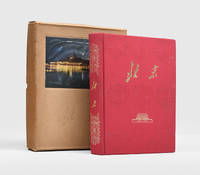
1959185404Beijing: "Beijing" huace bianji weiyuanhui 1959. The splendours of a socialist capital First edition deluxe issue published to mark the tenth anniversary of the founding of the People's Republic of China. Though unmarked as such this copy was owned by Solomon Adler one of the select group of Westerners permanently resident in China during the Mao era. The celebratory photobooks published in 1959 - equivalents were produced for Shanghai and other major cities - were predominantly distributed as gifts to party officials and foreign VIPs the latter group also receiving brochures containing translations of the captions. Among the many plates is an impressive folding panorama of Tiananmen Square and its vicinity showing the Great Hall of the People and the history museums which were all built in record time by a state keen to display communism's accomplishments. Immediately following the title page is a high-quality reproduction of Dong Xiwen's famous painting Kaiguo dadian "The Founding Ceremony". The work was repainted several times over the course of the 1950s as several party leaders present at the founding ceremony fell out of favour with Mao. An economist by training Adler 1909-1994 worked in the US in the 1940s but later fell under suspicion during the "red scare." After a period spent at Cambridge University he moved to China in 1962 living in Beijing until his death three decades later and working on the official Chinese translation into English of Mao's Selected Works. Parr & WassinkLundgren note three other issues: "a special deluxe clothbound issue with a gold brocade box and red cover;. a third edition with 120 selected photos printed on loose pages and placed in a brocade box; and a fourth edition with a silver brocade case". Quarto. With 64 tipped-in colour plates 8 folding 2 folding colour plates; illustrations throughout; title page printed in dark and light brown. Text in Chinese. With publisher's 8-page brochures of English and Russian captions loosely inserted. Original red silk over bevelled boards spine and front cover lettered in gilt spine with decorative gilt patterns front board decoratively blocked in blind with gilt vignette of Tiananmen cream patterned endpapers. Housed in original textured cardboard box front cover with calligraphic title in blind and photographic onlay showing fireworks in Beihai park. Silk bright with just light soiling and marking couple of edge creases to folding plates: a near-fine copy in very good box the onlay with some cockling. Parr & WassinkLundgren The Chinese Photobook: From the 1900s to the Present pp. 180-1. hardcover
1905184601Shanghai: American Bible Society 1905. The Word on the street First edition traced in two institutions only designed to aid Christian missionaries preaching to China's 18 million Shanghainese speakers. Although unstated on the title page this version was prepared by John Alfred Silsby a presbyterian missionary eventually resident in the city for four decades. During the 19th century Christian missionaries produced transliteration and romanization systems for over 20 Chinese dialects. The first romanized Shanghainese gospel was published in 1856 Matthew edited by Chao Yin Sung and the first romanized New Testament appeared in 1870-1. Silsby 1858-1939 issued the Gospel of Matthew as a standalone work in 1895 and this edition of the gospels followed a decade later. In 1913 he completed his important reference An English-Chinese Vocabulary of the Shanghai Dialect. This work was printed by the Presbyterian Mission Press on behalf of the American Bible Society. Copies are held by Cambridge University and National Taiwan University. Octavo in 4 parts. Original brown moiré cloth over limp card covers spine lettered in gilt. A few contemporary pencilled notes on one page. Spine sunned tidemarks at foot of inner front cover and first blank endleaves browned: very good. Thousand Tongues 252. hardcover
19332111902160200105North China Water Conservancy Commission 1933. Soft Cover. Fine. Number of pages: 317 pages of the main volume additional maps Size: 26cm x 18cm Number of books: 4 North China Water Conservancy Commission paperback
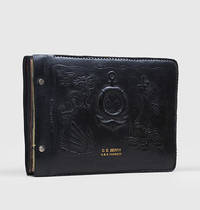
1934115861Chefoo Yantai Shanghai Singapore: 1934-37. Battleships baseball and the Bund An evocative album containing over 300 photographs both personal and from commercial studios recording the active service of the USS Parrott DD-218 on the China Station with the Asiatic Fleet - part of Destroyer Division 58 - including the Asiatic neutrality patrol in 1935 and 1936 offering a wealth of images of China Japan the Philippines and the South Pacific on the eve of the Second Sino-Japanese War 7 July 1937-9 September 1945 and the Second World War. Studio photographs include a number from the renowned commercial photographers Afong based in Yantai formerly Chefoo Joseffa and Skvirsky both established in Shanghai. It was compiled by Yeoman 2nd Class E-5 Charles Edmond Berry and opens with two fine photographs of the officers and crew of the Parrott on deck two colour-tinted photographs showing the ship at anchor and a humorous pictorial advertising photo from the Afong studio including an image of the studio exterior - clearly issued to all ships passing through Yantai - and featuring the Parrott at the centre. There follows an often joyful evocation of life onboard a US Navy destroyer prior to the Second World War with photos of the after-parties at the famed Beach Cafe in Chefoo which featured White Russian "hostesses" and tremendous amounts of alcohol as well as the morning-after breakfasts. Berry has also included panoramic photos of the Asiatic fleet in harbour at Chefoo Yantai and Hong Kong even including a humorous photographic pictorial "Bootlegger's Map of the United States." There are a series of photos showing the other US Navy Clemson-class destroyers on station with the Parrott the USS Pillsbury USS Bulmer USS John D. Ford USS Paul Jones USS Smith Thompson and USS Pope as well as various shipboard shenanigans baseball games battleships and destroyers on maneuvers gunnery practice loading of shells crew pets Liberty parties sailors carousing down the Bund in Shanghai buying souvenirs in Cuba sailing through the Panama Canal sightseeing trips to a walled city in Northern China the Great Wall of China cremation ceremonies in Bali riding rickshaws snake charmers and more. There are photos of Pan American Airways flying boats landing and unloading passengers in China many street scenes in Shanghai Hong Kong Tsing Tao Qingdao including the beheading of Chinese robbers outside the town Peking and Singapore. Of special interest are the series of photos showing Chinese Naval Ships from the Republic of China Navy in the mid-1930s including the CNS Yixian sunk by Japanese aircraft in September 1937; CNS Yisheng which had been converted into a gunboat in 1928 later sunk the CNS Shin Shey built in 1911 converted to a gunboat in 1929 sunk in 1938 and many others. There are also images of Kobe Yokohama street cars in Shanghai parks in Tokyo street scenes in Kyoto and views of the temples there. The USS Parrott DD-218 was a Clemson-class destroyer laid down by William Cramp & Sons Philadelphia and launched in 1919 commissioned in 1920 with a complement of 157 officers and enlisted men. The Parrott spent most of her career sailing with the Asiatic Fleet was awarded the Yangztze Service Medal in part for humanitarian assistance during the flooding of 1931-32 operating through the Chinese Civil War which resulted in considerable naval activity in Chinese waters collecting hydrographic data in and around Saigon then French Indochina in 1935. By 1940 she had served successively as station ship at Amoy Xiamen and Swatow Shantou China. From 7 July to 4 October she patrolled China waters based at Tsing Tao Qingdao and then made calls to other northern Chinese ports returning to Manila on 11 October. There in the early months of 1941 she was refitted with anti-mine and detection gear for anti-submarine warfare. The Parrott saw action in several theatres of war: South China Sea Battle of the Java Sea Atlantic Convoys and the bombardment of Spanish Morocco. She was accidentally rammed by the SS John Morton in Norfolk Naval Shipyard in 1944 and so severely damaged that she was decommissioned that same year and saw no further active service. Thick oblong quarto 380 x 280 x 51 mm. 319 corner-mounted original photographs ranging in size from 102 x 63 mm to 292 x 240 mm including 6 colour-tinted images and 4 panoramas 292 x 145 mm many studio prints captioned in the negative often with the photographer's stamp at lower corner a few with manuscript annotations verso coloured and patterned tissue guards intact white pink blue and jade-green. Contemporary heavily embossed black padded-calf post-binder photo album front board with devices of a Chinese Dragon a junk the Great Wall a life-preserver and anchor title in gilt as above nickel-plate posts rounded corners 52 leaves of black heavy card-stock most of the original tissue guards preserved. Together with a very appealing group of related ephemera and publications including: The Missions to Seamen The Sailors' Institute Anson Road Singapore; The Short Cut to Beauty: Hong Kong's Peak Tram; jocular Subpoena and Summons Extraordinary Royal High Court of the Raging Main Domain of Neptunus Rex two copies; U.S. Naval Despatch USS Parrott; Voyage Smoker USS Henderson en route to Honolulu T.H. to Guam M.I.; Radio Press News en route Manila P.I. to Guam M.I. 23 March 1937; Map of Shanghai dog tags and Bakelite Jesus medallion all preserved together in the original canvas sailcloth bag with stud fasteners. A few slight scuffs to binding occasional creasing to the mounting leaves very minor damage to a couple photographs overall in excellent condition. hardcover
19422091502135500862Not Available 1942. Soft Cover. Fine. Number of pages: 444p Size: B5 size 17x25 cm Not Available paperback
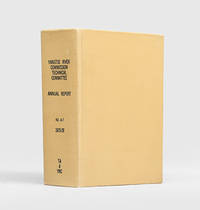
1925188317Beijing & Shanghai: Yangtse River Commission 1925-26-28. Measuring China's longest river First editions of these invaluable technical publications which record a wealth of data from gauging stations across hundreds of charts and diagrams. The Yangtse River Commission was formed by presidential order in December 1922 and the American engineer George Gottlieb Stroebe 1877-1965 served as the first head of its survey department. After several years of operation the commission switched its focus to the middle section of the river stretching from Hankou to Yichang. In 1925 it installed new gauges and discharge measurement stations while also collecting data with equipment maintained by the customs service. Until 1926 inclusive reports were released in the name of the commission's technical committee before responsibility transferred to the Ministry of Communications. The table of contents for the fifth annual report 1926 calls for 221 plates but numbers 150-221 were not issued. 3 works bound in 1 octavo 255 x 180 mm. Together 351 diagrammatic plates 2 folding tables; tables in text. Text in English and Chinese. 1966 tan buckram by the Heckman Bindery Indiana label on rear pastedown spine lettered in black original green card wrappers bound in. Ex-Library of Congress with its ink stamps and shelf-marks on the original wrappers index card holder on rear pastedown and "duplicate" deaccession stamp on front free endpaper. Contents toned one original wrapper creased at foot occasional marking and offsetting internally couple of short closed tears: very good. hardcover
19802090202120414273Heibonsha 1980. Soft Cover. Fine. Number of books: 1 Heibonsha paperback
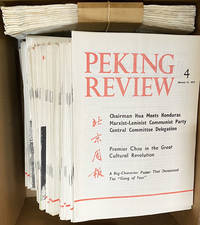
19631008<p><i><b>621 issues</b></i></p><p><i><b>Beijing Review</b></i> Chinese: åŒ—äº¬å‘¨å ±; pinyin: <i>BÄ›ijÄ«ng ZhÅubà o</i>; Wade–Giles: <i>Pei-ching Yu-pao</i> previously <i><b>Peking Review</b></i> is China's only national news magazine in English published by the Chinese Communist Party-owned China International Publishing Group. In 2006 it claimed a per-issue circulation of 70000 and distribution "throughout China and 150 countries and regions worldwide." Founded in March 1958 as the weekly <i>Peking Review</i> it was an important tool for the Chinese government to communicate to the rest of world. The first issue included an editor's note explaining that the magazine was meant to "provide timely accurate first-hand information on economic political and cultural developments in China and her relations with the rest of the world." The U.S. Postal Service initially restricted distribution of the magazine but the U.S. Supreme Court overturned this policy in <i>Lamont v. Postmaster General</i>. In October 2020 the United States Department of State designated <i>Beijing Review</i> as a "foreign mission" of China. An important time period covering the entire Cultural Revolution through the death of Chairman Mao the policies of Deng Xiaoping and the establishment of modern China.</p><p>Each issue in original printed wrappers: 1963: No. 10 11 13 15 25 30 32-36 38 41-45 52; 1964: No. 1-52; 1965: No. 1-19 21-22 24-52; 1966: No. 5-30; 1970: No. special issue 8 May 21 31; 1972: No. 1-33 35-52; 1973: No. 1-52; 1974: No. 1-35 37-49 51-52; 1975: No. 1-52; 1976: No. 1-52; 1977: No. 1-52; 1978: No. 1-52; 1979: No. 1-43; 1980 No. 10 12-15 21 33 38 40 47 48; 1981: No. 1 2 5 23 27 28 37 42 44 51; 1982: No. 31 33 35 37 38 48 50-52; 1984: No. 36 40 42 1985: No. 9 11 12; 1986: No. 1 3 13 14 30 36 43 46; 1987: No. 8 9 27 28 37 42 44-46; 1988: No. 10; 1989: No. 3 5 6 9 19 21-23 27-29 41; 1995: No. 4 8</p><p>The name change of this journal under President Deng presaged a new direction. From being a revolutionary magazine presenting the ideas and aspirations of a young and relatively weak Socialist state struggling along the road to the construction of Communism it was now displaying its open statement of aims of an outright capitalist and imperialist state – with global ambitions. From the very beginning the new Socialist state had to face many obstacles. There was opposition from within and without the country from within and without the Party. Those who might have played an important role in the past in the fight for liberation were not necessarily the ones who were needed to build a radically new society. All revolutions bring with it old baggage from the past but some leaders found it more difficult than others to throw it away and start fresh. </p><p>《北京周报》创刊于1958å¹´3月1,最åˆè‹±æ–‡å为"Peking Review",在ä¸å›½å…¨é¢æ”¹ç”¨æ±‰è¯æ‹¼éŸ³ä½œä¸ºè¯‘åæ ‡å‡†åŽæ”¹ä¸ºçŽ°å。æ‚志主è¦æŠ¥é“ä¸å›½çš„政治ç»æµŽçŽ°çŠ¶ï¼Œä»‹ç»ä¸å›½æ”¿åºœå¯¹å†…对外的é‡å¤§æ–¹é’ˆæ”¿ç–ç‰2。《北京周报》也曾出版过法文ã€è¥¿ç牙文ã€æ—¥æ–‡åŠå¾·æ–‡ç‰ˆå®žä½“刊,ä¸è¿‡é™¤è‹±æ–‡ç‰ˆä»ä¿ç•™å®žä½“刊外,其他è¯è¨€ç‰ˆæœ¬å‡å·²äºŽ2000å¹´12月åœåˆŠï¼Œä»…ä¿ç•™ç½‘络版。</p><p><br /></p> Published by Guozi Shudian for the Foreign Language Press, paperback
19832080702109502880Nigensha 1983. Soft Cover. Fine. Number of pages: 1 volume 1 commentary Nigensha paperback
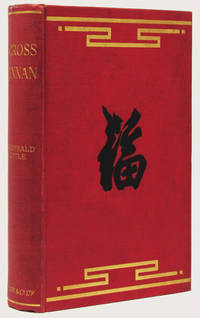
191033716London: Sampson Low Marston & Co. Ltd. 1910. Very Rare First Edition. No Copies Currently Exist in Commerce. This copy with excellent provenance having come from the War Office marked received on 22 Apr 1910. Illustrated with many full-page plates from period photographs and a large folding map. 8vo publisher's original red cloth the spine lettered in gilt the upper cover decorated with Chinese bordrs in gilt and a central calligraphic ornament in black. 164 pp. A very fine copy as close to pristine as one could hope already unusually rare this copy is also extremely well preserved. VERY RARE FIRST EDITION AND ONE OF THE FIRST BOOKS IN ENGLISH TO DESCRIBE THE PROVINCE OF YUNNAN. Archibald Little wrote a number of books on China as did his wife Alicia who called herself Mrs. Archibald Little. Little was a merchant scholar and later travel writer who'd spent many years in China. With his wife they moved to Chungking an isolated city to the far west of the country. Impossibly hot in the summer the couple had planned to build a holiday home in the cooler countryside but the authorities blocked the idea after concern that the locals would not take kindly to foreigners. An idea was then hatched for the Littles to move onto a local farm by the Yangtse River for a few months with the hope that it might get the locals used to their presence.<br> Published posthumously in 1910 Archibald Little's memoir of his journey across the Yunnan Province in Southwest China was one of the first comprehensive accounts of the region to be published in English. Little a skilled linguist worked as a merchant in China for over fifty years and opened up the Upper Yangtze area to steam-powered commerce. He was well known for his intrepid travels into territories not yet explored by Westerners and his record of this journey was originally published as a series of letters to the North China Herald. This book also contains Little's account of the building of the French Railway Line to Yunnan-Fu which provided a trade route from India to the Upper Yangtze region. Across Yunnan was completed and edited by Little's wife after his death in 1908. The book includes a detailed map of the area and several photographs. Research Gate<br> Mrs. Archibald Little began a prolific two decade literary career in London focused primarily on highlighting the plight of women. During this time she was also active politically in the feminist movement penning pamphlets lecturing and campaigning around women's property rights suffrage. Both she and her husband traveled around China although Mrs. Little had to dress as a male to avoid attracting attention which had on occasion resulted in items being thrown at her.<br> The book offered here is very rare. At the present time no copies appear in the marketplace or in commerce. Additionally this copy comes with very fine provenance having been owned by the British War Office. The War Office has referred to several British government organizations in history all relating to the army. It was a department of the British Government responsible for the administration of the British Army between 1857 and 1964 when its functions were transferred to the new Ministry of Defence MoD. It was at that time equivalent to the Admiralty responsible for the Royal Navy RN and much later the Air Ministry which oversaw the Royal Air Force RAF. The name 'War Office' is also given to the former home of the department located at the junction of Horse Guards Avenue and Whitehall in central London. Sampson Low, Marston & Co., Ltd. hardcover