Antiquariat.de

38 résultats
165510114Amsterdam, Blaeu, 1655. Aus: Novus Atlas Sinensis. Ca. 42 cm x 57 cm.
1683154291683 veau brun, dos à n. (chemin de vers marginal à qq. ff. du tome II) Les deux volumes… 2 vol. in-16, (3ff.), 412pp., (6ff. table), 1 gravure dépl. et (1f.), p.361 à p. 829, (7ff. table), (Cologne) 1683-1689
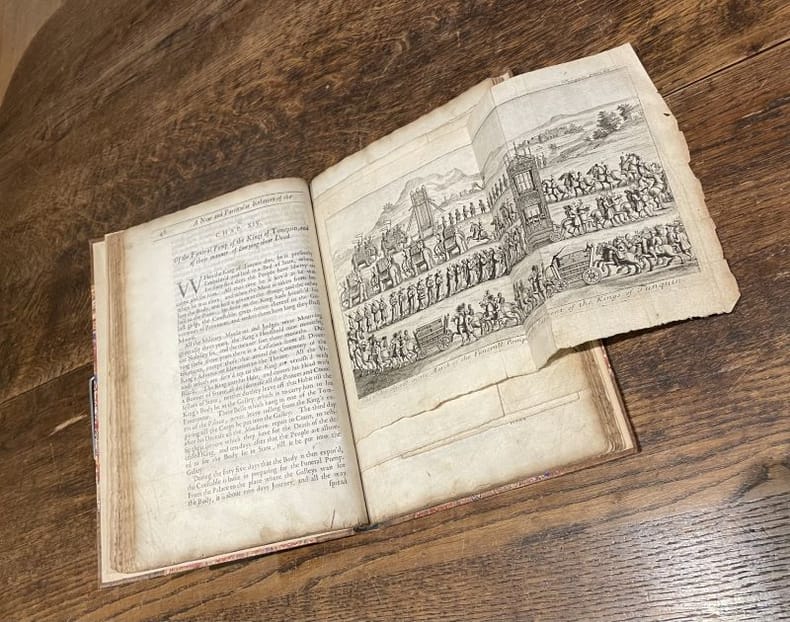
168082460Londres Printed by A. Godbid and J. Playford, for Moses Pitt at the Angel in S. Paul's Churchyard 1680 1 vol. relié in-4, demi-veau jaspé à coins, dos à nerfs encadrés de filets dorés, pièce de titre maroquin rouge, plats de papier peigné, non rogné, 1 f. + titre + 10 ff. (avertissement, dédicace, préface, table)+14-[4]-15-46-[4]-47-87+66 pp. Édition originale anglaise (l'originale française parut chez Clouzier l'année précédente) qui contient une description du Tonkin, dérivée des observations du frère de l'auteur, une description du Japon, recueillie auprès de négociants, et une violente attaque contre les agents de la Compagnie néerlandaise des Indes orientales. La première partie, consacrée au royaume du Tunquin (Tonkin), est illustrée de 8 planches gravées dépliantes oblongues. Mais il manque la planche réunissant les cartes du Japon et du Tonkin. Initiales gravées sur bois et ornements en tête de chapitres. Notes manuscrites sur la première page muette (deux citations poétiques en anglais dont une d'Alexander Pope : "If to her share some female errors fall, Look on her face and you'll forget them all") et ex-libris manuscrit au bas de la page d'avertissement "Franceis Stephens book 1721". Cet ouvrage très rare est conservé dans une bonne reliure du début du XXe siècle, mais présente deux restaurations grossières (au premier feuillet de la préface et à la dernière gravure collée qui ne se déplie plus), quelques déchirures sans manque (notamment sur trois des gravures), quelques rousseurs et tâches.
168082460Londres Printed by A. Godbid and J. Playford, for Moses Pitt at the Angel in S. Paul's Churchyard 1680 1 vol. relié in-4, demi-veau jaspé à coins, dos à nerfs encadrés de filets dorés, pièce de titre maroquin rouge, plats de papier peigné, non rogné, 1 f. + titre + 10 ff. (avertissement, dédicace, préface, table)+14-[4]-15-46-[4]-47-87+66 pp. Édition originale anglaise (l'originale française parut chez Clouzier l'année précédente) qui contient une description du Tonkin, dérivée des observations du frère de l'auteur, une description du Japon, recueillie auprès de négociants, et une violente attaque contre les agents de la Compagnie néerlandaise des Indes orientales. La première partie, consacrée au royaume du Tunquin (Tonkin), est illustrée de 8 planches gravées dépliantes oblongues. Mais il manque la planche réunissant les cartes du Japon et du Tonkin. Initiales gravées sur bois et ornements en tête de chapitres. Notes manuscrites sur la première page muette (deux citations poétiques en anglais dont une d'Alexander Pope : "If to her share some female errors fall, Look on her face and you'll forget them all") et ex-libris manuscrit au bas de la page d'avertissement "Franceis Stephens book 1721". Cet ouvrage très rare est conservé dans une bonne reliure du début du XXe siècle, mais présente deux restaurations grossières (au premier feuillet de la préface et à la dernière gravure collée qui ne se déplie plus), quelques déchirures sans manque (notamment sur trois des gravures), quelques rousseurs et tâches.
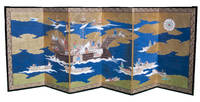
1700ABC_49540Japan 1700. 104 x 272 cm each illustrated panel: ca. 90.5 x 44.5 cm. Ink watercolours gold paint and gold leaf on paper. The image is surrounded by a frame of silk brocade a narrow frame in burgundy and gold and a wider frame in yellow gold and black with a clear floral pattern; together the frame is 5 cm wide the whole is mounted on six roiro black lacquered wood panels with gilt metal fittings on the outer corners of the outer panels. The panels are backed with decorative paper. A remarkable example of a Nanban byobu literal translation: Southern Barbarian screen a type of Japanese folding screen byobu depicting the arrival of Europeans especially the Portuguese in Japan during the late 16th- and early 17th centuries. It shows the vast expanse of the Portuguese seaborne empire. From their possessions along the coast of the Indian subcontinent and their lease of Macau individual Portuguese reached Japan in 1542 and were followed by traders and missionaries the most famous being Francis Xavier. Nanban art provides a unique glimpse into a period of significant cultural exchange and the Japanese perspective on the arrival of the Portuguese in their islands. While inspired by the arrival of and trade with the Portuguese in Japan before the enforcement of the isolationist foreign policy commonly known as Sakoku by the Japanese Tokugawa shogunate from 1633/1639 onwards it remained a popular subject to depict on these folding screens and in other artworks during the Edo period and beyond. The image on the present folding screen shows a large four-masted ship probably approaching the port of Nagasaki. Crew members both Portuguese and people from Portuguese possessions in the Indian subcontinent are seen furling the sails and performing remarkable acrobatic feats in the ship's rigging. The artist emphasises the balloon-like bagginess of their bombacha trousers typically associated with the Portuguese and other Europeans but focuses also on distinctive details such as heavy gold necklaces facial hair hats capes frilly white handkerchiefs and ruffled collars. The foreigners are depicted as being exotic but not scary or very "other" they are depicted as being different while still simply being human. The decoration and colours of the flags flown at the top of each mast are reminiscent of Christian symbols the Cross of Christ and Portugal's colours green and red. Cargo and passengers are offloaded into small boats that pull alongside the ship the top right corner shows a 12-point wind rose including a depiction of the globe. The whole scene is enschrouded in gold clouds.After the Sengoku period a period of practically consecutive and almost continuous civil wars and social upheavals in the 15th- and 16th centuries Japan entered a more peaceful and prosperous period. Folding screens such as the present example were used to divide larger homes and generally show of the growing wealth and prosperity of the warrior and merchant classes. The screens are finely executed in detail and using vibrant colours and copious amounts of gold paint and/or gold leaf. Thematically the painting here continues a tradition of now-lost screens of Chinese trade ships that were in vogue during the 15th- and 16th centuries at the peak of the Sino-Japanese tribute missions that brought entourages numbering in the thousands from the Ming court. The precise subject of these paintings had since shifted from Chinese trade ships to Chinese- or more general Southeast Asian-style ships carrying European including men from the European possessions in Africa and Asia crews. The scene illustrates the dynamic convergence of Eastern and Western cultures through trade around 1600. Portuguese traders first arrived in Japan in 1543 and by 1570 they had established the Bay of Nagasaki as a strategic hub for their commercial operations which were largely unregulated. They generated significant profits by exchanging Chinese silk for Japanese silver although some European goods were also part of the trade. The Portuguese carracks massive three-decked vessels weighing up to 1600 tons captivated local observers with their impressive scale unfamiliar crews and exotic cargo.Alongside these traders Jesuit missionaries sought to spread Christianity finding particular success in Kyushu where many local daimyo converted. However a Christian-led rebellion in 1638 alarmed the Tokugawa authorities raising fears of European colonial interference. As a result the Portuguese were expelled in 1639. When a Portuguese delegation attempted to restore diplomatic relations the following year all sixty members were executed. In 1640 the shogunate instituted a policy of national seclusion restricting foreign contact to limited trade with Chinese merchants a small number of Dutch traders and occasional Korean envoys. By 1650 Christianity was outlawed and any missionary work was punishable by death. The present screen is a slightly later example and the focus of the scene lies mostly on trade and the ship's crew itself and not directly on any Christian identity of the foreigners arriving on Japanese shores.This screen belongs to approximately ninety surviving Nanban screens ranking second only to capital city scenes in popularity among Japanese patrons. The earliest examples date to the 1590s and their continued production throughout the Edo period demonstrates the lasting impact of the Portuguese encounter on Japanese culture.Some minor flaking of the gold paint/gold leaf barely any soiling the decorative paper back of the work shows some traces of wear and use. The image remains clear and the colours vibrant. Overall in very good condition. This exceptional screen offers collectors an important historical document that captures both Portuguese maritime exploration and the Jesuit mission to Japan-a unique period of cultural exchange between East and West. unknown
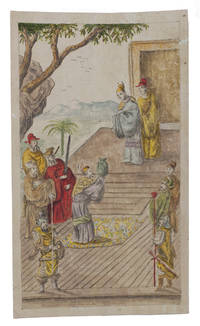
1670E9PF9I9C81WOChina 1670. A series of 8 Chinese drawings ca. 24 x 14.5 cm: 5 coloured 1 also highlighted in gold showing scenes from a Chinese novel many military or diplomatic plus a Chinese watercolour drawing and a Japanese woodblock print. A series of 8 pen and ink drawings 5 coloured 1 also highlighted in gold drawn from Chinese books possibly the 14th-century Sanguo yanyi or Romance of the Three Kingdoms. All mounted on European paper 6 on 3 different patterns of decorated paper. The paper of the drawings ranges from 23.5 x 14 cm to 24 x 15 cm. They show the following outdoor and indoor scenes:1 2 warriors on horseback one of whom has just beheaded the other and carries his head away the beheaded warrior has not yet fallen from his horse while his superior watches on horseback with 2 attendants.2 a man standing with a spear in the prow of a boat while 2 men and a woman sit at a tea table in the boat which flies a flag and pennant.3 5 people on 2 boats one flying a flag and pennant.4 4 soldiers bringing a woman to a dignitary at his house.5 a delegation visiting a dignitary.6 2 men playing go with 4 attendants and a guard.7 a dignitary at a writing table with attendants and visitors.8 a seated dignitary with 6 standing figures 1 with a document at a table.In the backing paper of number 7 one can make out an Amsterdam coat of arms watermark. It is difficult to see clearly but seems to follow the general style of Laurentius 71-95 1662-1675. The 3 patterns of decorated backing paper show: a flower pattern printed in gold on green; 2 patterns with more abstract decorations in a diamond pattern printed in gold on white.With this series we include a watercolour drawing and a woodblock print:9 watercolour drawing of irises along a stream with hills in the background 17 x 22.5 cm.10 rectangular woodblock print of a Samurai at a tea ceremony 14 x 10 cm possibly derived from a Japanese book.Some edges of the drawings a little frayed but otherwise in very good condition. unknown
1670038283Circa 1670-1674: Giovanni. Battista Hacque/ Hacque Johann Baptist 1670. 1st Edition 1st Printing. No Binding. Very Good. Original Engraving Unsigned Engraved By Meyssens For A Collection Of Portraits. Part Of A Large Collection Of Original Antique Engravings Formed By A Southern California Artist In The Early To Middle Twentieth Century. Each Plate Has Small Glue Marks On Reverse Where They Were Tipped In To An Album. Pope Alexander Vii 13 February 1599 - 22 May 1667 Born Fabio Chigi Was Pope From 7 April 1655 To His Death In 1667. As A Bishop Chigi Was Named Nuncio In Cologne 1639-1651 On 11 June 1639. There He Supported Urban Viii's Condemnation Of The Heretical Book Augustinus By Cornelius Jansen Bishop Of Ypres In The Papal Bull In Eminenti Of 1642. Though Expected To Take Part In The Negotiations Which Led In 1648 To The Peace Of Westphalia Bishop Chigi And Other Catholic Delegates Declined To Deliberate With Persons Whom The Catholic Church Considered Heretics. Negotiations Therefore Took Place In Two Cities Osnabrück And Münster In Westphalia With Intermediaries Travelling Back And Forth Between The Protestant And The Catholic Delegates. Chigi Of Course Protested On Behalf Of The Papacy Against The Treaty Of Westphalia Once The Instruments Were Finally Completed. Pope Innocent Himself Stated That The Peace "Is Null Void Invalid Unjust Damnable Reprobate Inane Empty Of Meaning And Effect For All Time." The Peace Ended The Thirty Years' War 1618-1648 And Established The Balance Of European Power That Lasted Until The Wars Of The French Revolution 1789. <br/> <br/> Giovanni. Battista Hacque/ Hacque, Johann Baptist unknown
168010841Amsterdam Jacob de Meurs 1680 -in-folio plein-veau 2 parties reliées en un volume, reliure plein veau havane (binding full calfskin) in-folio (359 x 240mm), dos à nerfs (spine with raised bands) décoré or (gilt decoration) filets or (gilt line) et filets à froid (blind-stamping line decoration), entre-nerfs à compartiments or à fleuron central dans un encadrement d'un filet or et un filet perlé or avec rinceaux aux angles, titre frappé or (gilt title), pièce de titre sur fond rouge-foncé (label of title) avec filet or (label of title with gilt line), coiffes anciennement restaurées mais proprement (head and tail of the spine restored), dos frotté avec manques de dorure, plats décorés à froid (cover blind-stamping) d'un double filet à froid en encadrement, angles et charnières anciennement restaurées (corners and joints renovated), toutes tranches lisses (all edges smoothes), orné d'un Titre frontispice gravé (with 1 engraved frontispiece) papier restauré en marge + une gravure en bas de la page de titre + 25 gravures hors-texte (full page engraving) en noir sur 26 (manque la gravure page 222/223 "le temple de Dayro" dont j'ai mis une photocopie à la place) et 70 gravures in-texte en noir + lettrines et fronts de chapitres gravés sur bois en noir (engraved initials and head-pieces), la gravure : "Le Chateau d'Osacca" qui devait se trouver initialement page 220/221 à été reliée page 120/121 avec la gravure du "palais de Dayro à Miaco", autre erreur : le relieur à inséré la gravure : " Entrée des Ambassadeurs à Mia" page 138/139 alors qu'il aurait du la placer page 138/139 de la 2ème partie ou c'était sa place, présence d'une tache brune claire n'empéchant a aucun moment la compréhension du texte de la page 63 à la page 70 sur une surface de 3 centimètres carrés environ, réparation ancienne du bas de la page 79/80 une partie du texte de la page 80 est manuscrit à l'encre brune, quelques reparations anciennes en bas de page n'atteignant pas le texte ou au dos de certaines gravures mais n'atteignant jamais la gravure, très rares et légères rousseurs (rares and lights redness marks), (4 p. de préface + 227 + 8 pages de tables + un page blanche) + (146 + 6 pages de tables) Pages avec Approbation & Privilège du Roy, 1680 Amsterdam Jacob de Meurs Editeur,
1675025095London: Richard Davis 1675. Eighth Edition Revised . Hardcover. Fine. 20 Cm Tall. Eighth Edition Revised 1675. 12 349 9 Nicely Rebound In Antique Style Full Calf Tooled In Antique Style To Resemble Paneled Leather Four Bands Gilt Lettering And Date On Spine New Endpapers Plus Two Original Free Endpapers In Front And Another At Rear. Contents Clean Light Foxing Without Spotting Pages Nearly Square 19.2 Cm Binding 20 Cm Tall. No Names Or Marks Or Bookplates. <br/> <br/> Richard Davis hardcover
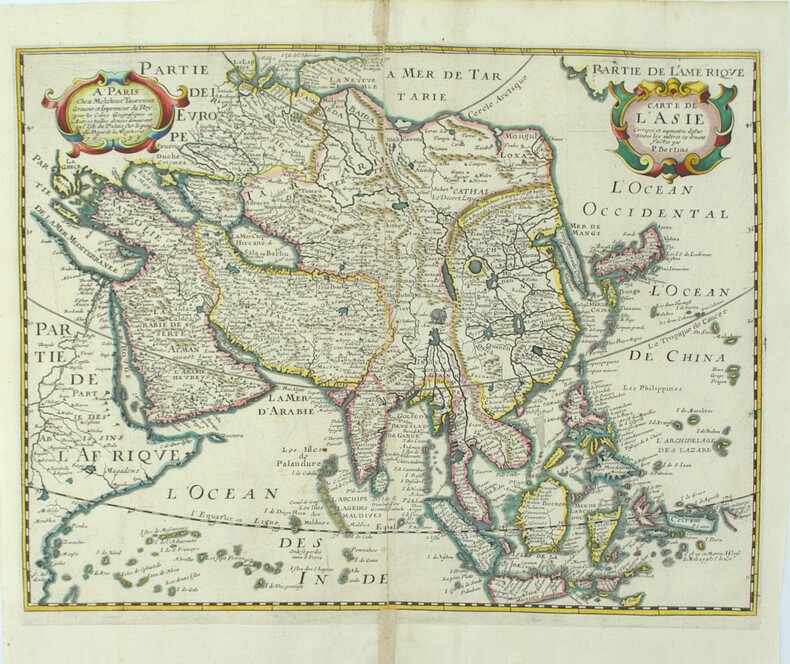
1639PHO-2226Paris, Melchior Tavernier, 1639, 378x345mm, cuvette 360x280mm, renfort au pli, manque 1mm au centre
1670038290Circa 1670-1674: Giovanni. Battista Hacque/ Hacque Johann Baptist 1670. 1st Edition 1st Printing. No Binding. Very Good. Original Engraving Unsigned Engraved By Meyssens For A Collection Of Portraits. Part Of A Large Collection Of Original Antique Engravings Formed By A Southern California Artist In The Early To Middle Twentieth Century. Each Plate Has Small Glue Marks On Reverse Where They Were Tipped In To An Album. Carlo Carafa Della Spina 1611 - 1680 Was An Italian Cardinal . He Was The Son Of Girolamo Carafa Marquis Of Castelvetere Nephew Of Pope Paolo V. He Was Also The Brother Of Cardinal Fortunato Ilario Carafa Della Spina. He Graduated In Rome In Utroque Iure . He Was Appointed Bishop Of Aversa In 1644 The Year In Which He Also Received Episcopal Consecration. He Was Apostolic Nuncio In Catholic Switzerland In 1653 At The Republic Of Venice In 1654 And In Austria From 1658 To 1664. Pope Alexander Vii Elevated Him To The Rank Of Cardinal In The Consistory Of 14 January 1664 Assigning Him The Title Of Cardinal Presbyter Of Santa Susanna In 1665 . In 1675 He Opted For The Title Of Santa Maria In Via . He Was A Chamberlain Of The College Of Cardinals 1676-1678. An Earlier Carlo Carafa 1571-1561 Was Born At Naples Into One Of The City's Most Ancient And Distinguished Families A Younger Son Of Giovanni Alfonso Carafa Count Of Montorio And His Countess Caterina Cantelma. One Brother Was Giovanni Carafa Duke Of Palianoanother Antonio Carafa 1520-1588 Was Made Marchese Di Montebello. Without Making A Name For Himself He Had A Long And Dubious Career As A Mercenary Soldier In Italy And Germany. He Entered The Household Of Cardinal Pompeo Colonna At An Early Age As A Page And Was Enrolled In The Order Of St John Of Jerusalem Later That Of Pierluigi Farnese Duke Of Castro Later Duke Of Parma The Son Of Paul Iii. He Then Fought Under The Alfonso D'avalos Marchese Del Vasto In Lombardy And Piedmont And Under Ottavio Farnese Duke Of Parma In Flanders And Germany Fighting Protestants In The Name Of The Emperor. Here An Incident Occurred That Reinforced Perceptions Among Contemporaries For Greed Arrogance And A Violent Nature: His Possession Of A Captive Gentleman Worth A Considerable Ransom Was Challenged By A Spaniard Whose Right Was Upheld By His Compatriot The Duke Of Alba; And In The Aftermath Carlo Pursuing His Adversary To Provoke A Duel Was Incarcerated At Trento Until He Agreed Not To Pursue The Vendetta. He Was Subsequently Exiled From Naples In 1545 For Murder And Banditry And Having Withdrawn To Benevento Was Embroiled In Another AssassinationAnd Was Then Alleged To Have Perpetrated The Massacre Of Spanish Soldiers As They Recuperated In A Hospital In Corsica. Two Weeks After Giovanni Pietro Carafa Was Elected Pope As Paul Iv He Raised Carlo To The Cardinalate On 7 June 1555. His Tenure As Cardinal Nephew Was Not A Great Success And He And Paul Iv Effectively Brought The Papacy To A Humiliating Defeat Against The Spanish That Nearly Resulted In Another Sack Of Rome. Carlo's Government Proved Unpopular And He Developed A Reputation For Avarice Cruelty And Licentiousness As Well As For Homosexual Sodomy Paul Had Chastised Cardinal Ghisleri For Not Sharing His Suspicions On This Latter Point. In January 1559 Paul Finally Accepted The Accuracy Of The Accusations Made And Exiled Both His Nephews From Rome And Replaced Carlo As Cardinal Nephew With Carlo's Own Nephew Alfonso Carafa Cardinal Archbishop Of Naples. In June 1560 Paul's Successor Pope Pius Iv Arrested The Leading Members Of The Family - Carlo His Brother Duke Govanni And Their Nephew The Cardinal Archbishop Of Naples Seizing Their Papers And Levying A Range Of Charges Relating To Abuses Of Power. Carlo Was Charged With Murder Sodomy And The Promotion Of Protestantism. After A Nine-Month Trial He Was Condemned Along With His Brother And Was Executed By Strangulation At Castel Sant' Angelo On The Night Of 6 March 1561. His Execution Was Considered At The Time To Have Been Motivated Primarily By Politics. <br/> <br/> Giovanni. Battista Hacque/ Hacque, Johann Baptist unknown
1670038281Circa 1670-1674: Giovanni. Battista Hacque/ Hacque Johann Baptist 1670. 1st Edition 1st Printing. No Binding. Very Good. Original Engraving Unsigned Engraved By Meyssens For A Collection Of Portraits. Part Of A Large Collection Of Original Antique Engravings Formed By A Southern California Artist In The Early To Middle Twentieth Century. Each Plate Has Small Glue Marks On Reverse Where They Were Tipped In To An Album. Pope Clement X Latin: Clemens X; 1590 - 1676 Born Emilio Bonaventura Altieri Was Pope From 29 April 1670 To His Death In 1676. Emilio Boneventura Altieri Was Born In Rome In 1590 The Son Of Lorenzo Altieri And Victoria Delfin A Noble Venetian Lady Sister Of Flaminio Delfin Commander General Of The Papal Armies And Of Gentile Delfin Bishop Of Camerino. His Brother Was Giambattista Altieri. The Altieri Family Belonged To The Ancient Roman Nobility And Had Enjoyed The Highest Consideration At Rome For Several Centuries; They Had Occasionally Contracted Alliances With The Colonnas And The Orsinis. During Earlier Pontificates The Altieri Held Many Important Offices And Had Been Entrusted With Several Delicate Missions. All But One Of The Male Scions Of The Altieri Family Had Chosen The Ecclesiastical Career. On His Accession To The Papacy Clement X In Order To Save The Altieri Name From Extinction Adopted The Paoluzzi Family And Proposed That One Of The Paluzzi Should Marry Laura Caterina Altieri The Sole Heiress Of The Family. In Exchange For Adopting The Altieri Surname He Would Make One Of The Paoluzzi A Cardinal. Following The Wedding Which He Officiated He Appointed His Relative By Marriage Cardinal Paoluzzi-Altieri The Uncle Of Laura's New Husband To The Office Of Cardinal Nephew To Take On The Duties Which He Was Prevented From Doing By Age. The Main Activity Was To Invest The Church's Money And With Advancing Years Gradually Entrusted To Him The Management Of Affairs To Such An Extent That The Romans Said He Had Reserved To Himself Only The Episcopal Functions Of Benedicere Et Sanctificare Resigning In Favour Of The Cardinal The Administrative Duties Of Regere Et Gubernare. In 1671 The Pope Published An Edict By Which He Declared That A Noble Might Be A Merchant Without Loss Of His Nobility Provided Always That He Did Not Sell By Retail. Queen Christina Of Sweden Who Had Become A Catholic And Moved To Rome In December 1655 Made Clement X Prohibit The Custom Of Chasing Jews Through The Streets During The Carnival. In 1686 She Issued A Declaration That Roman Jews Stood Under Her Protection Signed La Regina - The Queen. <br/> <br/> Giovanni. Battista Hacque/ Hacque, Johann Baptist unknown
1670038278Circa 1670-1674: Giovanni. Battista Hacque/ Hacque Johann Baptist 1670. 1st Edition 1st Printing. No Binding. Very Good. Original Engraving Unsigned Engraved By Meyssens For A Collection Of Portraits. Part Of A Large Collection Of Original Antique Engravings Formed By A Southern California Artist In The Early To Middle Twentieth Century. Each Plate Has Small Glue Marks On Reverse Where They Were Tipped In To An Album. Annibale Gonzaga 1602 - Vienna 2 August 1668 Was Commander Of The City Of Vienna Imperial Field Marshal And President Of The Hofkriegsrat. He Was The Son Of Ferrante De Gazzuolo And Isabella Gonzaga And Thus A Member Of The Italian Ducal Family Gonzaga. He Joined The Imperial Army. In 1634 He Was Already Colonel Of A Regiment. He Rose Quickly Through The Ranks Partly By His Competences Partly By His Family Name Eleonora Gonzaga Was The Empress Of The Holy Roman Empire Wife Of Emperor Ferdinand Ii. Gonzaga Was One Of The Commanders At The Battle Of Nördlingen 1634. In 1640 He Became Commander Of The City Of Vienna. Two Bastions He Built Were Named After Him. In 1642 He Commanded With Count Bruay The Right Wing Of The Imperial Army In The Disastrous Battle Of Breitenfeld. A Year Later He Commanded An Imperial Army In Hungary. Gonzaga Also Commanded Troops That The Emperor Had Sent To Hungary In 1658. In 1660 He Became General Of Artillery Field Marshal And Privy Council. He Was A Member Of A Delegation That Negotiated The Treaty Of Oliva In Berlin With Frederick William Elector Of Brandenburg. Since 1666 He Was President Of The Imperial War Council Hofkriegsrat And High Steward Of The Widowed Empress Eleanora To Whom He Was Related. <br/> <br/> Giovanni. Battista Hacque/ Hacque, Johann Baptist unknown
168225409Lyon Ant. Molin 1682 in-12 basane brune, dos à nerfs cloisonné et fleuronné, tranches mouchetées de rouge [Rel. de l'époque], reliure frottée, manques de cuir aux coiffes
1670038291Circa 1670-1674: Giovanni. Battista Hacque/ Hacque Johann Baptist 1670. 1st Edition 1st Printing. No Binding. Very Good. Original Engraving Engraved By Meyssens For A Collection Of Portraits. Part Of A Large Collection Of Original Antique Engravings Formed By A Southern California Artist In The Early To Middle Twentieth Century. Each Plate Has Small Glue Marks On Reverse Where They Were Tipped In To An Album. Count Ernst Adalbert Von Harrach 4 November 1598 - 25 October 1667 Was An Austrian Catholic Cardinal Who Was Appointed Archbishop Of Prague And Prince-Bishop Of Trento. His Name In Czech Is Arnost Vojtech Hrabe Z Harrachu. Adalbert Von Harrach Was Born 1598 In Vienna Austria The Son Of Count Karl Von Harrach And Maria Elisabeth Von Schrattenbach. He Was Educated By Nikolaus Walther And Was Later Thanks To His Family's Connection To Italian Aristocratic Families Including The Borghese And Barberini Admitted To The Collegio Teutonico In 1616. In 1621 He Was Ordained A Priest At Age 22 And Became Privy Chamberlain To Pope Gregory Xv. In 1622 At Only 24 Years Of Age Adalbert Von Harrach Was Elected Archbishop Of Prague With Dispensation For Not Having Yet Reached The Canonical Age. He Was Consecrated And Ordained In 1623 In The Sistine Chapel By Cardinal Marcantonio Gozzadini. In 1626 He Was Elevated To Cardinal By Pope Urban Viii And In 1632 He Was Appointed Cardinal-Priest Of Santa Maria Degli Angeli E Dei Martiri Where He Served For 12 Years. He Was Appointed Cardinal-Priest Of Santa Prassede In 1644 And Participated In The Papal Conclave Of 1644 Which Elected Pope Innocent X. Adalbert Von Harrach Participated In The Papal Conclave Of 1655 Which Elected Pope Alexander Vii And In 1663 He Was Elected Bishop Of Trento With Permission To Retain Both Bishoprics The Other Being Prague Which He Had Retained. Upon Being Elevated To Cardinal In 1626 He Was Made Primate Of The Kingdom Of Bohemia And Crowned Eleonora Gonzaga Wife Of Emperor Ferdinand Ii Of Austria The Following Year In 1627. He Became Privy Counsellor To Emperor Ferdinand Iii In 1637 And Crowned The Emperor's First Wife Empress Marie-Anne. He Was Named Grand Master Of The Order Of The Cross With The Red Star In Bohemia Silesia And Poland And Chancellor Of The University Of Prague. Adalbert Von Harrach Was Arrested At His Palace When The Swedish Took Over A Section Of Prague In The Precursor Conflict To The Battle Of Prague And Lost A Significant Part Of His Wealth. He Was Eventually Released After Intercession By Cardinal Jules Mazarin Before Queen Christina Of Sweden With 15000 Écus And A Letter Written By Him Promising Not To Take Revenge For Adalbert Von Harrach's Losses. The Face And Reverse Of A Medal Struck For Adalbert Von Harrach In 1629 He Visited Rome Rarely; So Much So That When He Did In 1643 Pope Urban Viii Is Said To Have Considered It A Bad Omen As The Cardinal Would Only Otherwise Have Visited Had The Pope Died Requiring A Papal Conclave. As It Turned Out The Pope Wasn't Far From Being Correct And Died The Following Year. He Became A Representative Of The New Pope And The Church To A Number Of Royal Courts. On Behalf Of The Pope He Also Crowned Ferdinand Iv King Of The Romans 1646; Leopold And Eleonora Gonzaga Junior Third Wife Of Ferdinand Ii As King And Queen Of Bohemia 1655; And Leopold I Holy Roman Emperor 1656. He Also Blessed The Marriage Of King Philip Iv Of Spain With Mariana Of Austria Daughter Of Emperor Ferdinand Iii 1648 And Accompanied The New Queen In The Name Of The Emperor To The Frontier With Italy. Although He Opposed The Merger Of The Charles-Ferdinand University He Participated In The Ceremonial Formalities Bringing The Two Academies Together In 1654. Adalbert Von Harrach Participated In The Papal Conclave Of 1667 Which Elected Pope Clement Ix And Upon The Election Of The New Pope He Was Appointed Cardinal-Priest Of San Lorenzo In Lucina. <br/> <br/> Giovanni. Battista Hacque/ Hacque, Johann Baptist unknown
1657R119397Antverpiae [Antwerpen], Ex officina Plantiniana Balthasaris Moreti [Moretus] 1657 474 + [6] pp. + engrvaed full-page frontispiece (portrait of Fr. Xaverius), text and interior are clean and bright, small reference number on title page, well-preserved contemporary overlapping vellum with old handwritten titel on spine, 12x7cm., text in Latin, very good condition, [This edition is not mentioned in De Backer-Sommervogel], R119397
1670038285Circa 1670-1674: Giovanni. Battista Hacque/ Hacque Johann Baptist 1670. 1st Edition 1st Printing. No Binding. Very Good. Original Engraving Unsigned Engraved By Meyssens For A Collection Of Portraits. Part Of A Large Collection Of Original Antique Engravings Formed By A Southern California Artist In The Early To Middle Twentieth Century. Each Plate Has Small Glue Marks On Reverse Where They Were Tipped In To An Album. In 1514 The Habsburg Emperor Maximilian I Stuck In The War Of The League Of Cambrai Against Venice And Highly Indebted Sold Hollenburg To Lord Siegmund Of Dietrichstein Elevating Him To The Rank Of A Freiherr Baron. The House Of Dietrichstein Had The Castle Rebuilt In A Renaissance Style Finished In 1588. The Dietrichsteins Held The Castle Until The Extinction Of The Branch In 1861 It Was Acquired By The Wittgenstein Family In 1913. <br/> <br/> Giovanni. Battista Hacque/ Hacque, Johann Baptist unknown
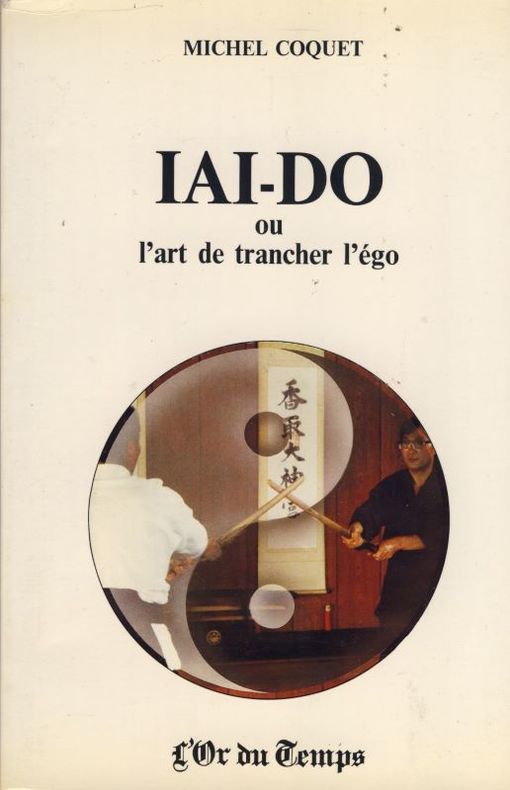
162448631624 16x24 cm, broché, 140 pages, état neuf, belle couverture glacée avec rabats, nombreuses photographies et idéogrammes en N&B, quelques photographies en couleurs, lexique et table des illustrations en fin d'ouvrage, ISBN : 2904112111
169455009Wien, Leopold Voigt, 1694. Fol. Mit illustr. Kupfertitel, Drucktitel in Rot u. Schwarz, einer Portraittafel, einem ganzs. Portrait im Text, einem Textholzschnitt u. 39 (dav. 1 ganzs.) Textkupfer. 6 Bll., 113 (1) S., Bll. 114-156, S. 157-946, 11 Bll., Ldr. d. Zt. a. 5 Bünden m. blindgepr. Rücken.
1700LBW-4948[1700]. 185 x 239 mm.
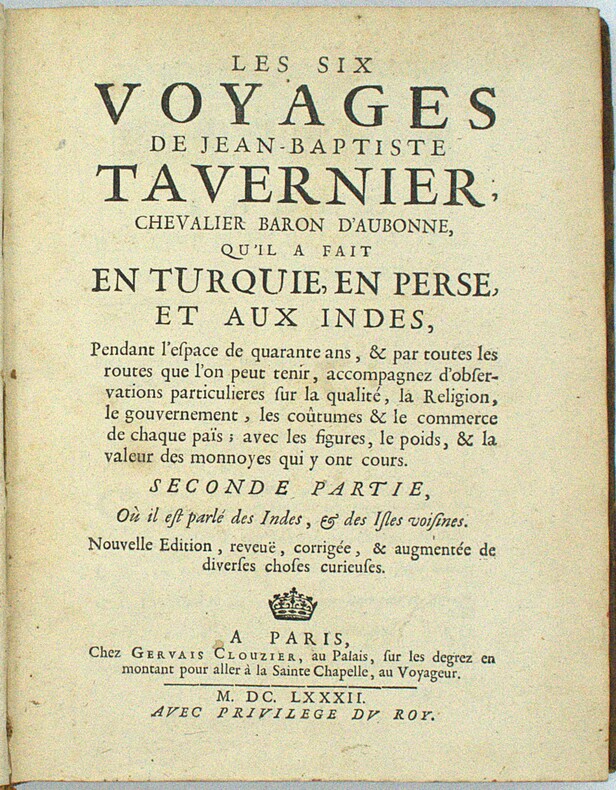
1676PHO-1352A Paris, Chez Gervais Clouzier, 1676-79, 2 volume in-4 (sur 3),30pp.- 698pp.-8pp.-2ff.,8 ff., 72 pp., 1 f., 156 pp.,2 ff., 96 pp. , 1 f., 178 pp., tome 1 ,illustré de 6 planches (7) et tome 3 ; 12 cartes et planches (complet), relié plein veau époque , dos à nerfs ornés avec titre et tomaison , tranches mouchetées , coins , coiffes et coupes usés , début de fente, manque de matière , tome 1 plus petit avec quelques rousseurs , plan d’Erevan coupé court , déchirures aux plis ,réparation carte du Tunquin , manque le tome 2.
1679PHO-1446Paris , 1679 , 3 vol. in-12, plein veau sous emboîtage, dos orné , filet sur les plats , 19ffn.-780pp.-4ff. , 6ff.-616pp. , 5ff.-564pp.4ff. , charnières faibles , 1 plat détaché , coupes , coins usés, coiffes sup. tome 2 et 3 abimées, réparation au titre tome 2 , manque de papier à l’épître tome 3 , une carte avec manque , déchirure au pli à la carte du Tunquin , trace de réparation avec adhésif sur une planche coupée court .
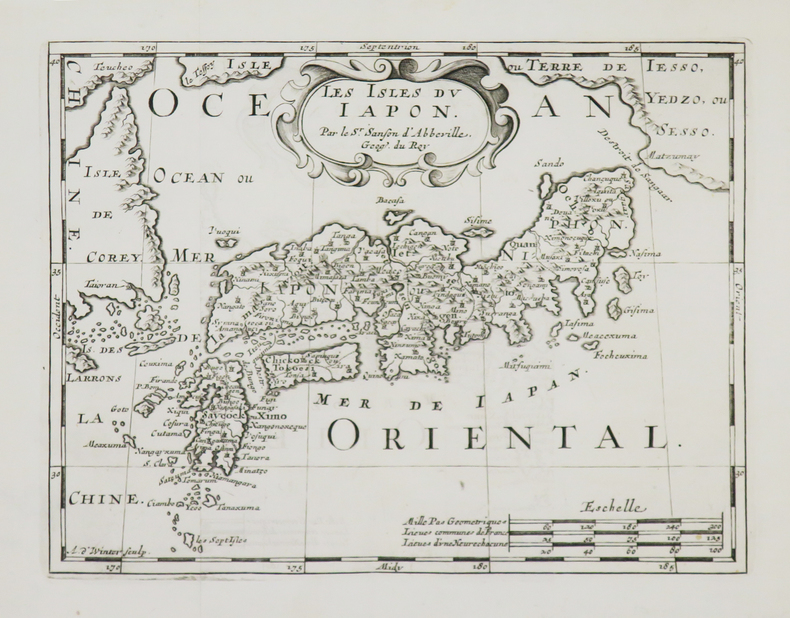
1680PHO-1964Paris, chez Gervais Clouzier, 1682-1680, 3 volumes in-4 (246x195mm), 14ff.-636pp., 4ff.-481pp., 8ff.-72pp.-1f.-156pp.-1f.-96pp.-4ff.-1f.-178pp., Illustration : Tome 1 ; 7 planches (6 dépliantes) sur 8, Tome 2 ; 26 planches dont 15 de monnaies, 5 de pierres et 4 gravures dans le texte, Tome 3 ; 2 grandes cartes (Japon, 79x56cm et Tunquin, 56x41cm) et 8 planches dépliantes. Basane époque, dos à nerfs avec titre et tomaison, frottements, griffures et épidermures, Tome 1 ; accroc au plat, coiffe sup. absente, 2 coins usés, rousseurs, mouillure en coin puis en marge, planches avec déchirures sans manque, page 431 déchirée avec manque. Tome 2 ; fente au dos et charnière, coins usés, rousseurs et brunissures, 1 planche déchirée sans manque. Tome 3 ; coins usés, coiffes arasées, carte du Japon volante, déchirure carte du Tunquin, carte du Japon légèrement oxydée, petites rousseurs.
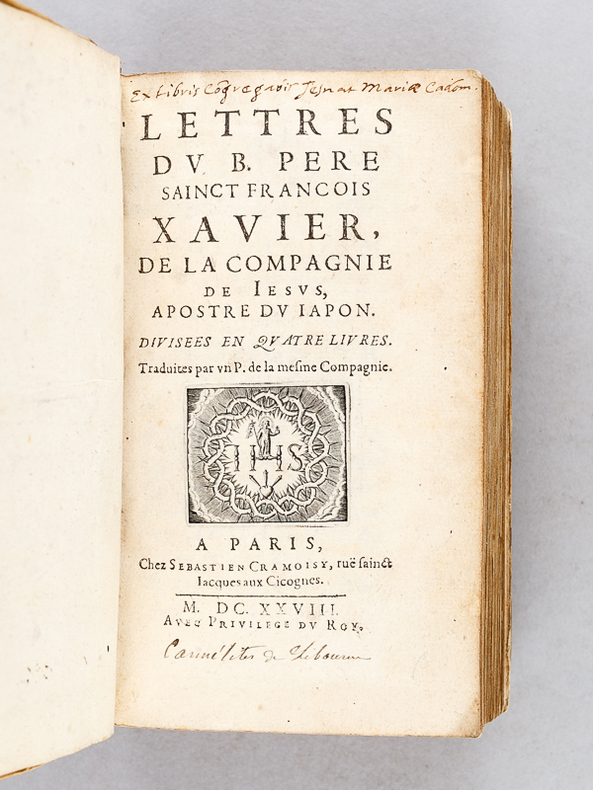
162855012Traduites par un P. de la mesme Compagnie, 1 vol. fort in-8 reliure de l'époque plein vélin blanc à lacets, Chez Sebastien Cramoisy, Paris, 1628, 20 ff., 907 pp., 11 ff. n. ch.. Rappel du titre complet : Lettres du B. Père Sainct François Xavier, de la Compagnie de Iesus, Apostre du Iapon [ Lettres du B. Père Saint François Xavier de la Compagnie de Jésus, Apostre du Japon ] [ Edition originale de la traduction française - First edition of the french translation]
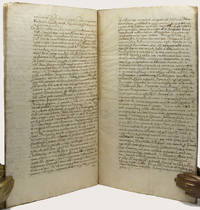
162134518Lisbon and Hangzhou China: Manuscripts ca.1623 and 1621. Very Rare A Similar Manuscript Exists in Brussels. We know of no others. The Latin text of both letters is written in a neat uniform cursive hand in brown. Folio leaves 33 x 20.5 cm The transcripts bound in 18th Century stiff blue wrappers the blank paste-downs and endpapers are late 18th century most likely the third quarter between 1745/1753 and 1776 since they contain a clear "lion/vryheit/pro patria" watermark with a crowned GR countermark which resembles Heawood 3148 3149 and 3154. The paper used for the manuscript contains a faint double-headed eagle watermark and it has been reinforced in the gutters. A very pleasing survival very well preserved edges slightly mellowed the wrappers show some signs of wear. VERY RARE MANUSCRIPT TRANSCRIPTS. Chrysostomus Johann Gall 1586-1643 was a German Jesuit and scholar. He left Ingolstadt Germany to teach astronomy mathematics and navigation in Lisbon fro 1620to 1627 before leaving to work in the Jesuit missions in India. The Colégio de Santo Antŕo benefitted from the arrival of many foreign mathematicians and other scholars as Lisbon serves as a gateway for all missionaries departing for Asia. The original letter by Gall was written in Lisbon September 1623 and concerns a newspaper style description of various events including details of the perseution of Christians in Japan particularly the execution of large numbers of the Christian community in Nagasaki in 1622.<br> The second letter in the present work is especially interesting as the original was written by Johannes Terentius also known as Johannes Schreck an Deng Yuhan Hanpo 1576-1630. Terentius was a prominent Jesuit scholar specialized in natural science and mathematics. Before joining the Jesuits as a novice1611 he already enjoyed a grea reputation in Germany as a scholar. In 1621 Terentius left for China to join the Jesuit mission. The original letter by Terentius was written in Hangzhou China on 30 August 1621 to the rector of teh Jesuit College in Munich Jakob Keller 1568-1631. He discusses his journey to China which he started in 1618 his intentions to participate in the planned calendar reform in China and his impressions of the city of Hangzhou which he reached in 1621 Terentius wrote several works on european medicine mathematics and technology in Chinese and together with Johann Adam Schall von Bell and G. Roho introduced European tigonometry and European astronomical instruments to China. In 1629 he began to reform the calendar which J.A. Schall von Bell ocmpleted after Terentius' early death a year later.<br><br>Backer & Sommervogel VII col. 1929-F<br> Manuscripts unknown