188 résultats
188064107New York: Harper & Brothers 1880. Tall 8vo. 421 1 pp. plus 2 pp. publ. ads. Colour chromolithograph frontisp. reproducing a Japanese Ukiyo-e woodcut swimming scene over 300 text engravings & woodcut engraved plates most with tissue guards. Pictorial red publisher’s cloth illustrated & decorated in black silver gilt & red illustrated gray clay-sized endpapers minor rubbing dustsoiling slight rubbing to lower fore-edge front cover still VG bright copy. First edition of this title in the Boy Travellers series. Of particular interest are the historically accurate descriptions of social customs history and travel details including overland trip to California participating in a whaling voyage climbing Mt. Fuji studying the culture and habits of Japanese women before trekking onto China. After surviving a Typhoon the pair experience the Tai-Ping Rebellion and travel to Shanghai Peking the Great Wall of China Hong Kong Canton and beyond. Knox 1835-1896 famed Civil War correspondent for the New York Herald later worked for the Russo-American Telegraph Company which inspired his Boy Travellers series featuring an industrialist father and two sons traveling the world. Harper & Brothers, hardcover
1881032313St. Louis: Denton J Snider 1881. 1st Edition 1st Printing. Hardcover. Very Good. 348 Pp. Olive Green Cloth Beveled Edges GiltYellow Endpapers "Privately Printed" And 1881 Date On Title Page. Inscribed To The Same Person Twice Same Date"With Friendly Regards" On Both Front And Rear Endpapers. Wear At Corners With A Few Small Losses Of Surface Of Cloth At Top And Bottom Of Spine And At Tips. Front And Rear Hinges Each Split About1 1/2" At Endpapers. Small Stamp Of The World Human Culture Foundation Mckay College Los Angeles Near Bottom Of Title Page No Other Marks Or Damage. Writer Educator And Literary Critic Denton Jacques Snider 1841-1925 Was One Of The Original Members Of The St. Louis Philosophical Society An Association Of Hegelians Founded In 1866 By William Torrey Harris And Henry C. Brockmeyer Whom Snider Met While Teaching In The St. Louis Schools. With His Knowledge Of Greek Latin French German And Italian Snider Brought A Love Of Literature A Fine Critical Sensibility And A Breadth Of Outlook To The St. Louis Group. He Spent Some Time Teaching Classics In Susan Blow's Kindergarten Training School. An Acrimonious Parting Of The Ways Resulted From Blow's Disapproval Of His Independence And Enthusiasm For Pagan Cultures. From 1884-97 Snider Wrote And Lectured Touring Extensively Mainly In The Midwest Including Speeches To The Grand Rapids Kindergarten Training School. According To The Dictionary Of American Biography Snider Would Move "Impetuously About The Stage Checking His Flow Of Eloquence Only To Chide Severely The Late-Comers." To Avoid The Commercialization Of His Work He Published His Writings Himself At His Own Expense Under The Imprint Of His Sigma Publishing Company. He Made Little If Any Money From The More Than Forty Volumes He Published And Often Gave Away Copies To People Attending His Lectures Who Wanted To Read Them. Snider's Earlier Works Many Of Them In Verse Deal With Greece And Rome A Walk In Hellas Homer In Chios Prorsus Retrorsus Agamemnon's Daughter. Between 1877 And 1897 He Produced Nine Volumes Of Commentary On "The Four Literary Bibles Of The Occident"-Shakespeare's Plays Goethe's Faust Homer's Works And Dante's Divine Comedy. Later He Embarked On An Ambitious Series Of Volumes Intended To Comprise A Grand Philosophic Or "Psychologic" System Which Included Works On History Science Psychology And Political Philosophy. Snider Also Wrote Poetry And Two Autobiographical Works A Writer Of Books In His Genesis 1910 And The St. Louis Movement In Philosophy Literature Education Psychology With Chapters Of Autobiography 1920. <br/> <br/> (Denton J Snider) hardcover
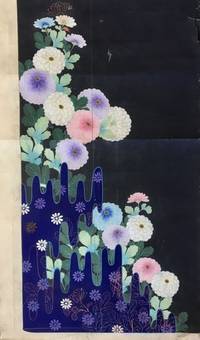
181956897Kyoto Japan: Marubeni Shoten Design Dept. Keimeikai Textile & Dyeing Studio Tanioka Shoten Design Dept. ca. 1918-1945. Folio. 61 original hand-painted inked and pencil designs with a few on a lightly toned but quality semi-translucent paper the majority on thick paper stock and still others with two pieces carefully pasted together with contiguous designs sized from 9 x 15 in. up to 19.25 x 38.5 in. with 13 of the pieces larger the larger size a number of them sized 18 x 32 in. and many in the 14.25 x 15.5 in. size colour painted; the majority feature the design studio chop or crest at lower corners throughout many w/ annotations in margins several w/ change orders neatly annotated or even the title of the design and still many others w/ Roman numeric inventory codes in margins as well two still retaining original small silk samples many with creasing or minor tears & edgewear or creasing to fore-edges a few w/ small & large closed tears while others show some creasing and thumbing from continued use still an exceptional group of manuscripts. This superb archive of 61 original hand-painted kimono designs furnishes an exceptional visual array of Taisho- and early Showa-era Japanese motifs and styles. A number of the designs evoke traditional Japanese Ukiyo-e woodblock prints with deep vivid colours and well rendered illustrations. Many of these designs incorporate floral patterns including Kiku Chrysanthemum Botan Mon Peony Pattern Manju Kiku Marigolds Japanese Irises Morning Glory Cockscomb Ivy Dahlias and many other botanical motifs. In addition there are many illustrating ornately embroidered designs austere bamboo mushrooms and intriguing landscapes some with a small portion fully painted in with brilliant colouring while the outline of the kimono fills out the drawing. Two of the designs still features their original small attached silk kimono sample more reminiscent of Western Design houses which often attached their chosen fabric samples to their clothing designs. A few of the designs are executed on translucent thin paper for the kimono draper to transfer the design to white silk or other fabrics via some type of carbon paper process. Another of the designs has been executed on a stunning silver metallic paper with palm or bamboo leaf fronds executed in vivid blues & browns. Some feature a nearly surrealist quality while several others include illustrations of doves or chickens. Two of the designs incorporate Art Deco representations of Chinese Junks and Japanese sailing vessels typical of the 1930’s prior to World War II. In the Taisho Era a new era opened for textile designers working with Kyoto drapers and department stores with many having trained at new art colleges and then working in the design studios of Marubeni Keimeikai Textile & Dyeing Studio and others. The Tachiki Artist design studio designs on thin translucent paper include one with designer stamp of character embedded within a skull. Some appear to have two different date stamps for the Marubeni Shoten Design and some are unsigned or stamped. The Taisho- and Showa-era kimonos featured brighter colours more groundbreaking designs as Japan’s designers embraced traditional dress and transformed it into a new garment equally appealing to the “Moga†or brazen “Modern Girl.†The designer notes include instructions to “leave a little more space between the fans;†“Drop the little fan crest;†“too much white bush clover†on the pine cones and even that Matsuo Taishichi had ordered a design for “clothes for paying a visit for a young person.†The Marubeni Shoten originated with Chubei Itho who began in 1858 as a salesman for linen cloth and by 1872 had opened his drapery store Benchu in Senba Osaka. By 1918 Chubei Itoh had expanded the business into Osaka and deciced to merge with Itochu Shoten Ltd. becoming Marubeni Shoten with their own drapers shops and many contracts with department stores. Later by the mid-1950s Marubeni merged with the company that operated the Takashimaya Dept. Store Chain all the while preserving their design studio and artists. See: Yuko Fukatsu-Fukuoka The Evolution of Yuzen-dyeing Techniques and Designs After the Meiji Restoration 2004; Arisa Shinko Tomikawa Hand Painted Kyo Yuzen Atelier “Arisa†A Brief Introduction 2020; Annie Van Asche Japanese Kimono Fashion of the Early Twentieth Century Textile Society of America Symposium Proceedings 2000; Our History Our Roots Marubeni Corporation 2020. Marubeni Shoten Design Dept., Keimeikai Textile & Dyeing Studio, Tanioka Shoten Design Dept., hardcover
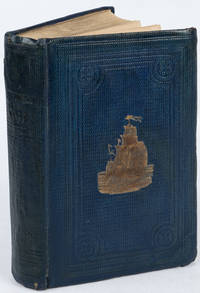
1861173654London.: Richard Bentley. 1861. First edition hand-coloured lithographed frontispiece and black and white text illustrations i-xxxii 350pp with a final advertisment leaf of Bentley's Standard Novels 19.4 x 13cm original blind-stamped blue cloth boards gilt-lettered spine dulled and gilt vignette of a ship with pennants a flutter to the top board slight spotting mainly limited to the endpapers and age toning to the edges of the text old varnish to the boards obscuring gilt lettering to spine and dulling the gilt to the ship vignette corners tender but a good clean example of a title scarce on the market. Written in the year Japan opened its doors to foreign trade but published three years later by the first British Consul to Nagasaki Christopher Pemberton Hodgson he also served as French Consul. As well as giving a key survey of a landmark period including the structure of society religion and Japanese attitudes to the West Hodgson importantly includes a catalogue of Japanese plants with an index prepared by the eminent botanist Sir William Hooker the work's dedicatee and his own on natural history. Pemberton noted his keen interest in botany and geology in an earlier work written after a turbulent five years on the Darling Downs in Australia. The present work also includes a lengthy chapter by Pemberton's wife taken from letters to her mother noting her experiences and impressions. . Richard Bentley. hardcover
1829018979London: G. Virtue 1829. First Edition . Hardcover. Good. 9" x 6" x 7. Plates at Front. Three Volumes. 713 Xv. 698 Xviii Index At End. 780 Xiii 2 P Directions For Placement Of Plates. Original Green Cloth Original Yellow Endpapers No Marks Not Institutional Copies. Vols. Ii And Iii Dated 1829 On Title Pages Vol. Iv No Such Date. Frayed At Top And Bottom Of Spines And At Upper Rear Tips Spine Gilt Strong Spine Cloth Aged To Brown. Hinges Neatly Broken. <br/> <br/> G. Virtue hardcover
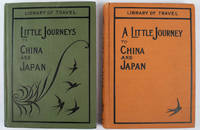
1900166942Chicago.: A. Flanagan Company. 1900. Coloured map of China Indochina and Korea and a coloured map of Japan containing insert maps of Formosa Ryukyu Island Ezo and Chishima and an Outline map of Japan. Coloured frontispiece and one other colour illustration together with black & white photographic illustrations engravings and line drawings throughout the text. Original green decorated cloth stamped & lettered in black. 90pp 79pp and 6 pages of book advertisements. Prior owner signature on front free endpaper. A particularly good copy offered together with the 1931 edition which omits any mention of the Boxer Rebellion. <br>The 1931 edition was published by A. Flanagan Company Chicago. 166pp Original tan cloth covered boards with a prior owner bookplate on the front pastedown. Written for intermediate and upper grade American schoolchildren the earlier of these two editions of this textbook published in 1900 contains a description of the Boxer rebellion that has been removed from later editions: <br> <br>" How we have longed to visit this wonderful country! A few months ago such a visit would not have been possible for China was at war with our nation and many of the nations of Europe. Our lives would have been in danger and the journey to China might have been the last we should ever have taken. <br> <br>You have heard of the Boxers of China who killed many foreigners and also many Christianized Chinese in the late revolution in that country. Do you know who these Boxers are They are members of a secret patriotic society. They love their country and want to prevent it from falling into the possession of foreigners. They believe that these foreigners have come to overthrow their government and to destroy their religion. They are opposed to the ruling family in China who are Manchus. These Manchus came from a territory outside of China Proper and Chinese Boxers have always disliked to have the rulers of their country chosen from Manchuria." There is a particularly gruesome illustration of Boxer heads in cages exposed as a warning to passers-by. <br> <br>The 1931 edition omits any reference to the Boxers and the illustration described above has also been removed. . A. Flanagan Company. hardcover
1889AQ33349Tokyo: Z. P. Maruya & Co. 1889. 2 v 1 248pp 4. Printed in double columns. With an engraved folding map and a tipped-in errata slip. Original publisher's blind-stamped limp red cloth lettered in gilt to spine. Lightly rubbed and marked. One preliminary leaf detached short tears to map at gutter scattered spotting. The first edition of a tourist guide to the roads railways and primary population centres of Japan compiled by American physician and interpreter of the U.S. legation at Tokyo Willis Norton Whitney 1855-1918 author of Notes on the history of medical progress in Japan 1885. . First edition. 8vo. Z. P. Maruya & Co. hardcover
1880613<p>Manuscript 12pp. of gouache paintings on fine cloth pages calligraphic labels in Japanese next to each specimen tipped into a modern binding with a gilt appliqué border 150 x 230mm c.1880</p><p>This album contains illustrations of moths butterflies dragonflies a spider a stag beetle a lady bird a wasp lizards frogs and toads cicadas grasshoppers hornets a cockroach a centipede and the full life cycle of a silkworm executed by a skilled artist in gouache.</p><p>This was produced during the Meiji period an important time for Japanese art. In 1868 the restoration of imperial rule in Japan brough the Edo shogunate to an end and marked the start of the Meiji era which would last until the death of Emperor Meiji in 1912. During this brief period Japan transformed itself from an isolated feudal nation to a world power. The historic skills of Japan's traditional arts played a vital part in the struggle to compete in international markets.</p><p>The masterpieces of Meiji art in a unique style blending the best of traditional design with prevailing international taste are unrivalled in the quality of their craftsmanship and were avidly sought by Western collectors. The blending of styles can be seen in this album of illustrations which were most likely produced for export. The addition of the european-style gilt border exemplifies this.</p> hardcover
18812091202133201037Shinshichi Okajima and others 1881. Soft Cover. Fine. Number of books: 50 books in total Shinshichi Okajima and others paperback
18852111902160200127Tokyo Genba Branch 1885. Soft Cover. Fine. Size: 23cmx15.2cm Number of books: 16 Tokyo Genba Branch paperback
1884859271884. PHOTO ALBUM - JAPAN. 25 OUTDOOR SCENES AND STUDIO POSED PHOTOS. Small late 19th century oblong 12 x 18.3 cm album of albumen photos of landscape and city scenes genre shots of trades and customs in the studio each about 9.5 x 13.5 cm image size. Brocade covered boards. The images are skillfully handcolored with very little fading. The covers have a bit of rubbing and the condition overall is very good. With the inscription of Capt. John C. Cooper from 1884 and hence a bit earlier than most albums one sees and certainly more interesting. unknown
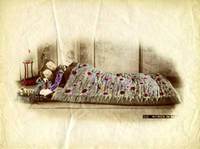
188015399Japan 1880. Very good overall. Original hand colored albumen photo titled '510 Women in Bed'. Showing two women eyes closed reclining under a floral patterned quilt. A small incense box rests on the floor in front of the futon with hanging wall prints in the background. 10 3/4 x 8 1/4". Image slt faint at lower right corner. unknown
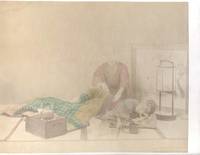
1880151061880. Ca. 1880 original hand colored albumen print titled 'Blind Shampoo'. Showing the traditional Japanese shampoo a form of massage performed by a blind person. The image shows a reclining woman in kimono under a green quilt with a blind shampooer dressed in a red robe behind her. A tea pot resting on a brazier is in the foreground. The lady rests on her side possibly reading or writing. 10 1/2 x 8 1/2 in mounted on board. Image slt faint at upper half of print o/w very good. HKD775. unknown