447 résultats
19292091502135421944Not Available 1929. Soft Cover. Fine. Volume: 56 Not Available paperback
19682081402109800259Not Available 1968. Soft Cover. Fine. Volume: 13 Not Available paperback
19732092902141600506Masterpiece publication 1973. Soft Cover. Fine. Size: 42.3x30.8 cm Number of books: 15 Masterpiece publication paperback
19392091502135500430Geumgangsan Electric Railway Co. Cheolwon-gun Gangwon-do Korea 1939. Soft Cover. Fine. Number of pages: Many photographs 181 text pages Size: 19 x 26 cm Geumgangsan Electric Railway Co., Cheolwon-gun, Gangwon-do, Korea paperback
19112092902138301906Not Available 1911. Soft Cover. Fine. Number of pages: 8242p Size: 23cm Not Available paperback
19182091502135420922Not Available 1918. Soft Cover. Fine. Number of books: 2 Not Available paperback
19372091502135421511Not Available 1937. Soft Cover. Fine. Volume: 11 Not Available paperback
19322091502135403752Not Available 1932. Soft Cover. Fine. Volume: 37 Not Available paperback
19842091502135421260Korea Seongsa 1984. Soft Cover. Fine. Volume: 11 (Korea) Seongsa paperback
19922110502151005369Kokusho Publishing Association 1992. Soft Cover. Fine. Number of books: 5 Kokusho Publishing Association paperback
19702091502135708598Institute of Ethnic Culture Korea University 1970. Soft Cover. Fine. The book is in fine condition. Institute of Ethnic Culture, Korea University paperback
19832091502135413933Research Institute of Publishing 1983. Soft Cover. Fine. Volume: 11 Research Institute of Publishing paperback
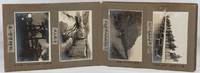
1923220274Taisho 12 1923. Over fifty black and white photographs annotated laid down in concertina style cloth covered photograph album 18 x 26.5cm most photographs measure 9.3 x 13.5cm nine measure 10 x 7cm. Some silvering of photographs but most are in very good condition. A fascinating concertina-folded album of high-quality photos dating from 1923 and showing Japanese military training exercises in northeastern Korea as well as scenes of everyday life in the surrounding region including the Ranam Cheongjin Hoeryong and Gando areas. Many of the photos appear to have been produced by a professional photographer but acquired by the soldier who has created this album who has added his own annotations based on personal experience. <br> <br>The first photo shows an inset portrait of a soldier named Takuuchi next to the flag of the Japanese Imperial Army's 75th Infantry Division. This is followed by a series of photos of Japanese colonial buildings in Korea including the military base of the 75th Infantry Base an overview of the city of Hoeryong on which the owner has placed a cross in ink marking the location of the recently contructed Hoeryong Shinto Shrine Heoryong's hospital and railway station and a street in the city centre an overview of Cheongjin and a panoramic overview of Ranam City also with the Ranam Shinto Shrine marked with a cross. The attention paid to these shrines which were crucial symbols of Japanese colonial rule emphasises the album creator's nationalist sentiment. There are two images of the landscape of the Tuman River and a photo of sacks of soy beans being unloaded in Gando. Other photos show scenes of everyday life including women washing clothes and grinding grain and two photos of a Korean wedding ceremony. A few of these photos including one of a village of thatched-roofed houses are in a smaller format than the images in the rest of the album and may have been taken by the album's owner himself. Twenty of the photos show 1923 training exercises conducted by the 75th Infantry Division in the Ranam area. These have also been annotated with the album owner's comments providing extra information about the content of the photos. The album concludes with two striking images of thick ice on a river probably the Tuman and of the Hoeryong Shinto Shrine in late evening. . hardcover
19282091502133900057Not Available 1928. Soft Cover. Fine. Volume: 1 Not Available paperback
19382092902143902097Not Available 1938. Soft Cover. Fine. Volume: 1 Not Available paperback
19382092902143802133Not Available 1938. Soft Cover. Fine. Volume: 1 Not Available paperback
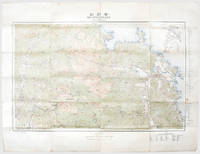
1917167697Tokyo: Rikuchi Sokuryobu 1917. First edition first printing of this bilingual tourist map of Mount Kumgang produced by the nascent Japanese colonial administration in Korea. In the 1910s politicized textbooks for Korean students singled out Fuji and Kumgang as the largest mountains in Japan and Korea while always stressing Fuji's status as the tallest. We have traced a single institutional copy at the National Diet Library. Kumgang was a popular destination for western travellers and naturalists. In 1917 the areas was visited by the legendary plant-hunter E. H. Wilson who discovered two species of maple as well as several new taxa on its slopes. In his notes he wrote how the mountain "drives a photographer to despair for no sooner has he taken one superb view than another seemingly more superb presents itself" quoted by Arnold Arboretum. Colour lithographed map 630 x 820 mm folding away to 209 x 110 mm as issued. Text in Japanese and English. Several contemporary ink circles and annotations. A few small splits along folds not affecting map area old brown paperclip mark a little creasing and soiling. A very good bright example. "1917-1919: Expedition to Eastern Asia" Arnold Arboretum available online. unknown
19342081002109002311Korea General-General Railway Bureau 1934. Soft Cover. Fine. Number of pages: 236 309p Size: 17cm Korea General-General Railway Bureau paperback
19302111902160200898Governor-General of Korea 1930. Soft Cover. Fine. Number of pages: 30 pages Size: 26.2cmx18.8cm 30p Number of books: 1 Governor-General of Korea paperback
19872091502135418900Not Available 1987. Soft Cover. Fine. Volume: 67 Not Available paperback
19292091502135403750Not Available 1929. Soft Cover. Fine. Number of books: 1 Not Available paperback
19912083002116300068Daigakudo Maruzen 1991. Soft Cover. Fine. The book is in fine condition. Daigakudo Maruzen paperback
19732091502135420913Hara shobo 1973. Soft Cover. Fine. Number of books: 2 Hara shobo paperback
1956215131956. African American Military History Korean War Unidentified photographer African American soldiers in South Korea 1956 documents Black military service within the early post armistice U.S. occupation of Korea and provides visual evidence of desegregation in practice following Executive Order 9981. Produced three years after the Korean Armistice Agreement the images situate African American enlisted men within the operational landscape of U.S. military engineering and logistical support during the Cold War consolidation of American presence on the Korean peninsula. The archive documents the role of Black soldiers in infrastructure maintenance transport and base security while also recording their proximity to Korean civilian life in a recovering war zone. The identification of the 376 Engineer Battalion places the material within the institutional framework of the U.S. Army Corps of Engineers whose work underpinned military mobility and reconstruction during this period.<br /> <br /> South Korea 1956. Archive of 22 black and white silver gelatin photographs most measuring approximately 5 x 4 inches depicting African American soldiers stationed near a U.S. military installation likely in the Uijeongbu or Dongducheon corridor north of Seoul where engineering and support units were concentrated. Multiple images include signage identifying the "376 Engineer Battalion" while others show mixed-race groups of soldiers gathered near convoys of M35 2½ ton cargo trucks and smaller support vehicles used for personnel and supply transport. One photograph includes a Fairchild C-119 Flying Boxcar aircraft in the background confirming the logistical environment of cargo movement and aerial supply. Soldiers appear in standard issue fatigues with visible non commissioned officer insignia engaged in routine duties such as transport checkpoint supervision and base operations. Several photographs depict Korean civilians moving through nearby marketplaces and village spaces including women wearing traditional hanbok passing through areas of visible economic strain characterized by unpaved roads and temporary structures. English and Hangul signage including a storefront labeled "Kind Shop" further situates the images within a localized commercial environment shaped by U.S. military presence.<br /> <br /> The archive documents a transitional period in both U.S. military policy and Korean society as the formal desegregation of the armed forces intersected with the realities of overseas deployment in a recently devastated region. While integrated units are visible the clustering of Black soldiers within shared duties and informal groupings indicates the persistence of racialized social structures within the ranks. At the same time the photographs establish the everyday presence of American troops within civilian Korean spaces during early Cold War reconstruction linking military labor to broader geopolitical objectives in East Asia. Light surface wear including minor creasing and scattered abrasions; images remain clear with strong contrast. Overall very good condition. A cohesive visual record of African American military labor postwar occupation and cross cultural contact in Korea during a formative phase of U.S. global military expansion. unknown
19232082702114905137Korean Police Association 1923. Soft Cover. Fine. Number of pages: 189 pages Size: B6 size Korean Police Association paperback