(Vietnam) Arnold, Robert WaiteBiblio.com

330 résultats
1989300300N.p. 1989. Special Edition 1989. Etching on artist's board. 17 x 12 cm image. Fine. Matted. Special Edition 1989". Etching on artist's board. 17 x 12 cm image. Inscribed beneath the image: "To James H. Heineman -- a true friend of mine and of our nation". Affixed to the rear of the board is a letter of presentation to Heineman dated June 22 1989. unknown
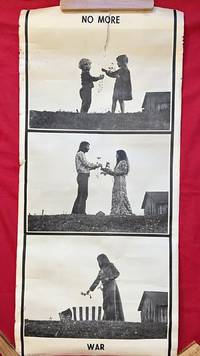
1970190631970. Anti-WarVietnam War "NO MORE WAR". Designed and photographed by Terry and Dennis Newell 1970. Measures 35" × 16" on offset tan lithographic paper. This monochromatic anti-war poster illustrates three scenes of a man and woman in three stages of their lives. In the first photo a young girl innocently gifts a young boy flowers on a grassy field. The following image conveys the young girl and boy in their adulthood---dressed in typical 1970's attire---as the woman hands flowers to the man in great despair. As her partner leaves to fight in the war she is left on the field longing for his return. Yet in the last image she is left lying flowers atop his coffin wrapped in the American flag. The Vietnam anti-war movement from 1960-1970 was one of the most pervasive displays of opposition to the government policy in modern times as protests raged all over the country. As a result posters like these were just one of the mediums used to highlight anti-war narratives. Five inch tear on the top margin minorly affecting the title text. Signs of foxing and discoloration to due to age otherwise in very good condition. unknown
1977044863NAM POWs. very nice copy; larger-format . Near Fine. Hardcover. 1st Edition. 1977. NAM POWs hardcover
37042601Saigon ca. 1950-60's. Group of 22 hand-made papers hand hand-printed in Cholon various colors gold & silver foils various kinds & sizes all in excellent condition fine Joss examples of "after life" offerings by surviving relatives. . . . A COLLECTION OF 22 AUTHENTIC CHINESE-VIETNAMESE . . . JOSS PAPERS INCLUDING GOLD BARS COINS & CLOTHING . . . WITH HUNDREDS OF SHEETS OF PAPER EXAMPLES . WHAT IS JOSS: Venerating the ancestors is based on the belief that the spirits of the dead continue to dwell in the natural world and have the power to influence the fortune and fate of the living. The goal of ancestor worship is to ensure the ancestor's continued well-being and positive disposition towards the living and sometimes to ask for special favors or assistance. . Rituals of ancestor worship most commonly consist of offerings to the deceased to provide for their welfare in the afterlife which is envisioned to be similar to the earthly life. The burning of spirit money enables the ancestor to purchase luxuries and necessities needed for a comfortable afterlife. . WHAT IS JOSS PAPER: Jin Zhi or Xiang Zhi is Pinyin for Chinese Joss Paper meaning "Gold Paper" or "Fragrant Paper." They have also been called "Yinsizhi" Netherworld paper "Zhiqian" paper money "Ming bi" "Shade/Dark money" and several other similar names has been used over the centuries. . These papers have been burnt as offerings common in Chinese ancestral worship to venerate deceased family members and relatives on holidays and special occasions. They were also used as offerings in the worship of gods using similar Joss papers. . These papers were in two categories: 1. Paper representations of Chinese coins or currency some called: "Hell Notes" being large tied stacks of money. . b. Three-dimensional paper-crafts & papier-mâché made into items of daily use sent to the deceased ancestors or Gods for use in the "after life." These objects were made into objects of daily use such as food clothing daily use objects burned "to ensure that the spirit of the deceased has lots of good things in the afterlife." These are often called "Jingyi" "threads and clothes" which is a type of Joss paper with printed images of items needed by the dead in "daily life" such as clothes shoes cups and scissors &c. . THREE TYPES OF SPIRIT MONEY: Different types of spirit money are given to distinct categories of spirits. The three main types of spirit money are copper cash silver and gold. Cash monies are given to newly deceased spirits and spirits of the unknown. . Gold Jin spirit money is given to both the deceased and higher gods such as the Jade Emperor. . Silver spirit money Yin is given exclusively to ancestral spirits as well as spirits of local deities. These distinctions between the three categories of spirit money must be followed precisely to avoid confusing or insulting the spirits. . HAND-MADE PAPERS: Joss paper is traditionally made from coarse bamboo-fiber paper which has a handmade quality in variable coarseness with many natural imperfections. It is often mistakenly called "rice paper." . Traditional joss is cut into individual squares or rectangles. Depending on the region Joss paper may be decorated with seals stamps pieces of contrasting paper engraved designs or other motifs including gold & silver colors representation gold & silver. Red stamped decorations are also used red being festive or color of good luck and fortune. . The above liberally extricated from the Wikipedia article. . THE COLLECTION: The collection consists of the following examples the count of each individual packet is an approximate count. The lucky colors in Chinese culture are red and yellow gold. . Photographs of each item is posted to our website. . Each example is made of rough Chinese hand-made paper smooth on the verso rough on the recto. All examples are in excellent unused condition. . There are rare some examples of tin foil papers appearing either 'silver' or 'gold' in color. These are some of the most expensive obscure and important offerings. . a. "SHOU" or the Chinese Hanzi character for "Live a Long Life." Red printed over buff paper with a central square of silver tinfoil paper over which is yellow lacquered to make it appear as gold over printed by a red ink "SHOU." The size is 13 x 13 cm. about 100 sheet packet. With good luck texts. See images posted to our website: spine.jpg & illus04.jpg lower half left side. . b. A large yellow sheet gently two-folded not sharp folds 31 x 24.3 cm. showing 4 columns of Chinese 'cash' bronze or copper coins with central text. There are about 75 sheets see our illus01.jpg. . c. Yellow printed with red text and illustrations over buff paper. Contains 7 packs tied with a yellow paper plus 3 packs tied with a pink paper. Shows lucky days with two donkey carts. About 7-8 sheets per pack 10 packs in all. Size is 9.5 x 12.9 cm. See illus02.jpg. . d. Yellow printed with red Chinese cash coins printed over buff paper. It illustrates 9 lines of 7 coins for a total of 63 coins per sheet. There are 10 packets in all 3 in pink wrapper 7 in yellow wrapper about 8 sheets per pack. Size is 9.5 x 13.1 cm. See illus03.jpg . e. Yellow printed with red over printed text and illustrations. With 10 packets 7 in yellow wrapper 3 in pink wrapper. Auspicious text with illustrated circular chart of lucky symbols Size is 9.7 x 13 cm. about 8 pages per pack. See illus04.jpg upper half. . f. Black printed Chinese cash coins over white paper. 9 x 7 columns of coins = 63 in all. With 10 packets of about 10 sheets per packet yellow wrapper. Size is12 x 12.8 cm. see illus04.jpg lower right. . g. Two packs of Vietnamese Dong paper currency 50000 Dong gray printed on buff paper showing a Chinese Emperor: "Tien Dia Phu" "Heavenly Bank" about 50 sheets. With red printed currency: 5000 Dong "Dia Phu" "Heavenly Bank" with Chinese emperor illustration signed by Yin Low about 100 sheets in plain paper wrapper. Size is about 14.4 x 6.5 cm. See illus05.jpg left size. . h. A pair of red printed paper with black images over buff paper. Each is an image of a man & a woman with Hanzi Nu woman & Nan man. Inside each is a second sheet of the same image printed on white paper with black ink. Inside of each again is darker buff sheet with black printed illustrations of a tiger and several images of men and women a house and various household domesticated animals: chicken goat dog water buffalo pig cat donkey along with a dragon flat hammock junk ship vessel scissors combs tea sets medicine bottle fan pen & related household items. Essentially a list of commonly used and needed items to be sent to the ancestors for use in the 'after life.' With 11 woman & 9 men packets. Size is opens to 9 x 19 cm the outer cover & first identical page is a bit smaller with the 3rd sheet being 15 x 16 cm. folded. See illus05.jpg top right & just below that for page 3. Also illus08.jpg. . i. Two Kinds of Gold Bars: 1. KIM-THANH SAIGON HONG KONG HANOI PHOM PENN OR PUR with translation into Hanzi of the above. Orange gold tinfoil bar 4.1 x 9 cm. Ten each 9 in plastic protector stapled. . 2. KIM-THANH SAIGON HONG KONG HANOI PHOM PENN OR PUR with translation into Hanzi of the above. Gold yellow color tinfoil bar 3.2 x 8.3 cm. Seventeen 16 in plastic protector stapled. Please see bottom of illus05.jpg for 2 images. . j. Four Kinds of Gold & Silver Foil Papers: 1. Silver foil paper overlaid on buff paper 9.8 x 11.3 cm. about 50 sheets. . 2. Gold foil paper. Please see illus05.jpg . k. Red ink over buff/green rough paper clothing for adults the larger and children/women the smaller. Each contains 10 packets of about 10 sheets three dimensional cut out head and sides of clothing 'v' cutouts. See illus07.jpg . l. Red tissue paper good luck & long life charm three dimensional with cut outs 21 x 25.5 cm. each sheet illustrates 100 identical images 10 columns across by 10 vertical. center folded opens to be double the image posted illus08.jpg. . m. Two paper fans over babmoo: . 1. This is a lovely fan with colored decorations the dragon at left phoenix at right with the Chinese Hanzi character "FU" meaning good fortune. Opens to about 40.5 closes to 24.5 cm. long. . . 2. The same kind of fan pure white the color of mourning a death. Opens to about 44.5 closes to 25 cm. long. . Both are nicely hand-made using hand-made Vietnamese papers with a metal fastner at the heel. See illus09.jpg & illus10.jpg posted to our website. . Please visit our webiste we may have copies of the below references. . REFERENCE: . GOODRICH Anne S.: PEKING PAPER GODS: A Look at Home Worship. Nettetal 1991 Steyler Verlag. WANG Shucun.: PAPER JOSS: Deity Worship Through Folk Prints. ALEXEIEV Basil M.: THE CHINESE GODS OF WEALTH. DAY Clarence B.: CHINESE PEASANT CULTS: Being A Study of Chinese Paper Gods. Shanghai 194019691975. He gives a particularly good list of various gods by Chinese romanized name and function organized by subjects. RUDOVA Maria.: CHINESE POPULAR PRINTS see p.2 #2 Zao Wang our #1; pp.3-47-9 figures 3-610-16 et al. for identical or similar examples. DORE Henry.: RESEARCHES INTO CHINESE SUPERSTITIONS. DU BOSE Hampden C.: THE DRAGON IMAGE AND DEMON OR THE THREE RELIGIONS OF CHINA: Confucianism Buddhism and Taoism. Giving an Account Of the Mythology Idolatry And Demonolatry of the Chinese. HUNTER Dard.: PAPERMAKING IN INDO-CHINA. VALE J.: CHINESE SUPERSTITIONS. WERNER E.T.C.: DICTIONARY OF CHINESE MYTHOLOGY. HEJZLAR Josef.: EARLY CHINESE GRAPHICS. pedia-org/wiki/Joss_Chinese_Statue . . unknown
19671877BB1967. First Edition. Santa Barbara Unicorn Press 1967. 145 x 215 cm. 18 pages. Original Softcover in protective Mylar. Near Fine condition. Signed by Philip Levine on page 9. Minimal discoloration on the cover only. paperback
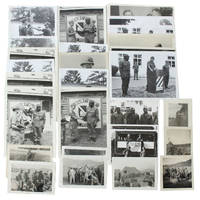
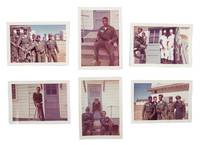
1950186871950. Barber Command Sergeant Major. U.S. Army 17th Field Artillery Battalion photographs circa 1960s to 1970s document integrated military training and the advancement of an African American senior noncommissioned officer within the post-desegregation Army. The images center on activities at a Noncommissioned Officer Academy and within field environments placing the archive within the period following the formal integration of the U.S. military and during the era of the Vietnam War. The repeated presence of Barber in both instructional and ceremonial contexts situates him within the upper ranks of enlisted leadership documenting the visibility and authority of Black noncommissioned officers at a time when opportunities for advancement had only recently expanded following mid-twentieth-century reforms.<br /> <br /> Archive of 30 black and white silver gelatin photographs. United States circa 1960s to 1970s. Photographs range in size from approximately 7 x 5 inches to 4 x 3 inches. Images depict integrated groups of soldiers within the 17th Field Artillery Battalion known as "The Persuaders" engaged in training and daily activities. Scenes include artillery instruction trench digging weapons handling camp life chapel gatherings and a graduation ceremony in which soldiers take an oath and pass a unit flag. Several photographs show Barber prominently including moments that appear to document formal oath-taking or advancement within the noncommissioned officer structure. The photographs appear to have been taken across multiple locations including a more rugged field setting and a separate academy environment.<br /> <br /> Following the desegregation of the U.S. armed forces in 1948 African American soldiers increasingly assumed leadership roles within enlisted ranks particularly during the Cold War and Vietnam War periods. The position of Command Sergeant Major represents one of the highest enlisted leadership roles in the Army responsible for discipline training and the welfare of soldiers. This archive provides visual evidence of integrated unit cohesion professional training systems and the presence of Black leadership within those structures. The combination of field exercises and formal ceremonies offers material for examining race hierarchy and institutional culture within the modern U.S. Army. Light wear consistent with handling; overall very good condition. unknown
1973185751973. Cooper Howard L. Vietnam War photographs and promotion letter circa 1970s document African American noncommissioned officer service within an integrated U.S. Army and the formal evaluation structures governing advancement during and immediately after the conflict. The material centers on Sergeant Cooper's presence within a deployed unit in Vietnam alongside fellow soldiers and local civilians and extends into the postwar administrative process through a typed recommendation for promotion dated 1973. Together the photographs and letter situate the archive within the broader context of African American military participation during a period marked by both expanded combat roles and documented racial disparities in discipline assignment and promotion within the armed forces.<br /> <br /> Archive of 20 vernacular photographs and one typed letter. Vietnam and United States circa 1970s. Photographs include 15 color Kodak snapshots measuring approximately 5 x 3.5 inches or smaller depicting Sergeant Cooper and fellow soldiers primarily in uniform in Vietnam. Four black and white Agfa snapshots measuring approximately 5.5 x 3.5 inches show Cooper other servicemen and Vietnamese children. One Polaroid photograph includes two African American men standing beside Cooper with handwritten captions. Additional images depict base life and group interactions within the unit. Accompanying the photographs is a typed letter recommending Sergeant Howard L. Cooper for promotion signed by Transportation Supervisor Alice J. Griffin Fort Ord California dated 14 November 1973 one page measuring approximately 8 x 10 3/8 inches.<br /> <br /> African American soldiers served in large numbers during the Vietnam War with many attaining noncommissioned officer roles that required both leadership within units and navigation of institutional structures that did not always provide equitable advancement. The inclusion of a formal recommendation letter alongside the photographs connects personal service to bureaucratic recognition documenting how military authority evaluated performance in the postwar period. The combined visual and documentary record offers material for examining race leadership and military administration in the Vietnam era. Photographs show light wear; letter with pinholes discoloration and minor ink smear at upper edge; overall very good condition. unknown
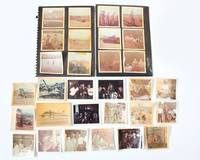
1970185581970. Vandergriff Sergeant. Vietnam War photographs 1970 to 1971 document integrated U.S. Army service during a period when African American troops were serving in substantial numbers in combat units and negotiating both military duty and racial dynamics within the ranks. The images record a tour of duty from basic training through the final days before return home placing the archive within the later phase of the Vietnam War when troop morale racial tension and antiwar sentiment were all intensifying within the U.S. military. The presence of a visibly multiracial unit with many African American soldiers situates the photographs within the post-desegregation military structure established after World War II offering direct visual evidence of daily life interpersonal relationships and combat readiness in an officially integrated force.<br /> <br /> Archive of 68 color Polaroid photographs. Vietnam 1970 to 1971. Images measure approximately 3.5 x 3.5 inches to 3.5 x 4.5 inches with approximately one quarter mounted to black board and the remainder loose. Several loose photographs include handwritten captions and soldiers' names on verso. The sequence follows Sergeant Vandergriff's service from training through deployment with scenes including soldiers smoking drinking and posing with standard-issue M16 rifles and M1911 sidearms. Additional images show helicopter interiors and aerial views a destroyed grounded helicopter tanks aircraft drill formations and encampments. Photographs also depict Vietnamese villages and local civilians including two children bathing in a river. Unit identification is not explicitly stated in the archive. Other photos depict aircraft drill marches tanks weaponry villages and locals including two Vietnamese children bathing in a river. It is not clear which unit these troops belong to. It is possible they are in the 101st Airborne which was prominent at both Birmingham and Evans.<br /> <br /> During the Vietnam War African American soldiers served in disproportionately high numbers in combat roles particularly in airborne and front-line units at a time when the U.S. military was confronting internal racial conflict alongside external war. This archive documents the lived experience of a multiracial unit operating within that structure showing informal social interaction alongside military activity and equipment. The combination of candid personal imagery and operational context provides material for examining race military culture and everyday life in a late-stage U.S. combat theater. Some photographs show minor staining and image degradation; overall very good condition. unknown
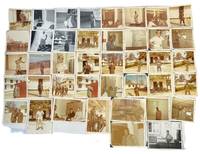
1968197531968. Photographic archive 1968-1969 documenting African American enlisted personnel in the United States Army Transportation Corps during the Vietnam War era with emphasis on training environments unit structure and daily life on base prior to overseas deployment. The material captures soldiers in both formal and informal settings providing visual evidence of military preparation racial composition within units and interpersonal dynamics among predominantly Black troops during a period of significant racial tension within the U.S. armed forces. The archive supports research into African American military service segregation and integration practices and the lived experience of soldiers during the late 1960s.<br /> <br /> Archive of 41 original vintage photographs primarily color with several black-and-white images ranging in size from approximately 3.5 x 3.5 inches to 3.5 x 5 inches. The photographs depict soldiers in a range of uniform styles including standard fatigues seasonal dress variations and Transportation Corps-specific elements such as white belts shoulder cords red scarves and helmets with distinctive markings. Several images show troops in formation with rifles raised while others capture training environments featuring sandbag trenches artillery placements and fortified structures resembling pillboxes. Interior scenes document barracks life including soldiers playing cards maintaining uniforms and interacting in relaxed settings. A black-and-white image shows an African American soldier posed near signage for a "Leadership School and Honor Guard" at a U.S. Transportation Center while another identifies a seated "battery clerk" labeled informally as "Johnny my Running Mate." Additional photographs include racially integrated groupings with Black and white soldiers appearing together in casual and structured contexts.<br /> <br /> Produced during the height of the Vietnam War this archive provides insight into the transitional phase between training and deployment emphasizing both institutional structure and personal experience within military life. The presence of both formal drills and informal social scenes allows for examination of hierarchy camaraderie and daily routine among enlisted men. Light handling wear and minor surface marks; overall very good condition. A substantial visual record of African American military experience within the U.S. Army during a pivotal period of twentieth-century conflict. unknown
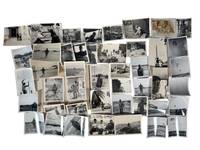
1965212871965. Archive of original photographs documenting African American soldiers serving in the Vietnam War during the early phase of large-scale United States military escalation in Southeast Asia. The material captures the daily experiences military operations and interpersonal relationships of Black servicemen stationed at Bien Hoa Air Base circa 1965 including members of the 173rd Airborne Brigade Combat Team. The photographs provide primary-source visual evidence of integrated military life during a period when African American troops served disproportionately in frontline combat roles while racial inequality and civil rights struggles intensified in the United States. Particularly significant is the candid nature of the images which were apparently taken by an African American serviceman identified by the surname Thomas offering an unusually personal perspective on Black military experience during the Vietnam conflict.<br /> Collection consists of 56 original black-and-white silver gelatin photographs measuring approximately 3.5 x 3.5 to 3.5 x 5.5 inches primarily loose with two mounted to an album page. The photographs depict African American soldiers at Bien Hoa Air Base near Saigon identifiable through a photographed base sign and visible 173rd Airborne Brigade insignia on soldiers' uniforms. Numerous images portray Black servicemen posing casually outside tents reading letters socializing in small groups smoking resting and interacting with fellow soldiers emphasizing camaraderie and the routines of military life between operations. Several photographs document airborne training exercises with parachutists descending beneath open canopies over the surrounding landscape. Other images depict military infrastructure and equipment including jeeps sandbag fortifications stacked munitions barracks areas and transport zones associated with the logistical operations of the base. The archive also includes photographs taken during off-duty excursions into Vietnamese civilian areas including a riverside marketplace crowded with vendors boats and local residents. Additional images show soldiers posed before local monuments and religious sites including one photograph of Thomas with a white serviceman in front of a Buddhist temple and another featuring a tall obelisk monument surrounded by military statuary.<br /> The archive documents the lived experience of African American servicemen within integrated combat units during one of the most consequential military conflicts of the twentieth century. Bien Hoa Air Base served as a major operational center for airborne and aerial missions during the early years of sustained U.S. intervention and the presence of Black paratroopers within these photographs provides important visual evidence of African American military participation during the Civil Rights era. Unlike official military photography the informal and personal nature of the images preserves moments of friendship boredom training and interaction with Vietnamese civilians that are often absent from institutional wartime records. Minor edge wear and light handling wear throughout; photographs remain sharp and well-preserved overall in very good condition. A substantial and historically valuable photographic record of African American military life in Vietnam during the mid-1960s. unknown
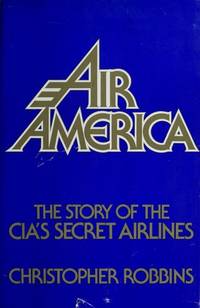
1979007565New York: Putnam 1979. 323pp. This is the story of the CIA's secret airline that emerged out Claire Chenault's Flying Tigers in Southeast Asia during the Second World War through years of secret missions in Burma Tibet Indonesia Laos Cambodia and eventually the Vietnam War. The author has put this story together from interviews with scores of ex-Air America pilots. This is the first published account of the organization's top secret activities. DJ has several tears. Text clean. First Printing. Cloth. Very Good/Very Good-. 8vo - over 7¾" - 9¾" tall. Putnam hardcover
1966728908PN. New. 1966. Soft Cover. Date is original print. This is a reprint edition. . PN paperback
1964724846PN. New. 1964. Soft Cover. Date is original print. This is a reprint edition. . PN paperback
0982618026.Gpaperback. Good. Access codes and supplements are not guaranteed with used items. May be an ex-library book. paperback
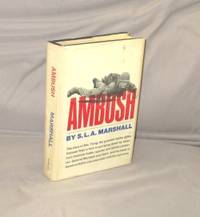
196929025<p>New York:: Cowles 1969. First Printing of the First Edition. A Near Fine copy in a Very Good price clipped dust jacket with a chip missing from the rear fold. This is Marshall's reenactment of the battle of Dau Tieng which like his other accounts is based on after action reports and battle-site interviews with the survivors. General Marshall is the author of over 30 books related to military topics and in Ambush he focuses on US engagement with Vietcong forces poised to attack an American basecamp in an effort to influence American elections. With his unequaled eye for detail Marshall tells the story rich in drama and excitement.</p> Cowles, hardcover
19932090502113700790Not Available 1993. Soft Cover. Fine. The book is in fine condition. Not Available paperback
20002081502111901662Chinese book office 2000. Soft Cover. Fine. Number of pages: 140p Size: A5 Soft Cover book Chinese book office paperback
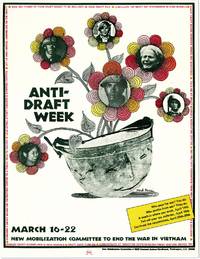
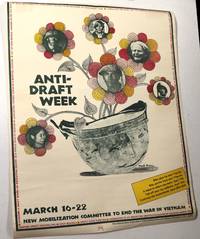
197082861Washington DC: New Mobilization Committee 1970. First Edition. Original illustrated poster offset printed in colors on white stock measuring 39cm x 50.5cm 15.25" x 20". Subtle toning along lower edge some trivial wear to extremities; unbacked very Near Fine. Striking anti-draft poster designed by Mark Morris featuring a combat helmet-turned-flower pot with the center of each flower containing the faces of men women children and soldiers. The border of the poster details specific actions civilians could take to resist the draft: bar military recruiters from high school and college campuses draft card turn-ins demanding draft counselors in high schools picketing the homes and businesses of draft board members and talk-ins et al. Not found in OCLC though we note examples held at OMCA CSPG and Minneapolis Institute of Art. 82861. New Mobilization Committee unknown
1970000015255Washington D.C.: New Mobilization Committee to End the War in Vietnam / The Philadelphia Resistance Press 1970. Poster. Very Good. 19.75" x 15.5". Poster. Color lithograph. Army green font and a multi-colored illustration with a caption spanning the poster's border. The illustration done by Mark Morris: a bouquet of wildflowers sprouting from an overturned soldier's helmet each flower's center with an image of an expressive person's face a grandmother a child three soldiers and a Vietnamese woman included in these images. The flowers petals printed in pink red and yellow. The border caption printed in red. It reads: Condemn a draft board or recruiting center as a public health hazard leafleting - street corners & shopping centers set up high school assemblies on the draft mail big things to your draft board to be included in your draft file circulate "we won't go" statements in high schools picket draft board members' homes and businesses talk-ins at draft boards & recruiting centers bar military recruiters from high schools & colleges demand draft counselors in high schools draft card turn-ins demonstrate at induction centers/recruitment centers - March 19th. With a black caption blocked in yellow: Who pays for war You do. / Who profits from war They do. / A teach-in where you work April 14th / Tell off your tax collector April 15th / Confront the corporations April 20th-30th. An address for the New Mobilization Committee is printed under the red border: 1029 Vermont Avenue Northeast Washington D.C. 20005. A truly striking image from the anti-war protest movement the people's countenances springing from a soldier's helmet perfectly demonstrates the human cost of war. North Carolina State University "New Mobilization Committee to End the War in Vietnam New Mobe March on Washington Map". The committee that commissioned this poster's printing was known colloquially as the New Mobe founded in 1969. The New Mobe was one of many student groups that advocated for resisting the draft during the Vietnam War. Groups like the New Mobe shed light on the often-predatory practices of the draft and on the damage the war inflicted on American and on Vietnamese lives. This poster provides a wealth of information on the kinds of actions the New Mobe and other groups performed in order to voice their opposition to the draft and to the war. Light wear to the poster's surface four pieces of masking tape on the poster's verso these were likely applied to the verso shortly after the poster was printed. New Mobilization Committee to End the War in Vietnam / The Philadelphia Resistance Press unknown
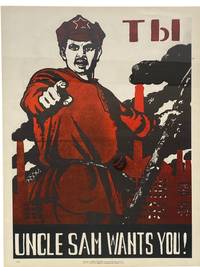
1968220901968. PropagandaCounterculture Ты / Uncle Sam Wants You! New York: International Poster Corp. 1968. Offset lithographic poster in red black and cream tones measuring 21 x 29 inches. A striking Cold War-era visual pastiche that fuses Soviet revolutionary imagery with American military propaganda this poster was issued during a peak moment of political unrest in the U.S. amid the Vietnam War and domestic resistance movements.<br /> <br /> This design is a bold recontextualization of the iconic 1920 Soviet recruitment poster "Ты запиÑалÑÑ Ð´Ð¾Ð±Ñ€Ð¾Ð²Ð¾Ð»ÑŒÑ†ÐµÐ¼" "Did you volunteer" by Dmitry Moor repurposed here with the English slogan "Uncle Sam Wants You!" emblazoned below in tall confrontational type. The juxtaposition of Soviet iconography-complete with red army uniform factory smokestacks and Cyrillic lettering-with a phrase universally associated with U.S. enlistment efforts delivers a searing critique of militarism nationalism and ideological doublespeak on both sides of the Cold War divide. Produced by the International Poster Corp. a commercial publisher in the late 1960s known for distributing countercultural and revolutionary imagery this poster was marketed to radical bookstores and student groups across North America. It exemplifies the era's politically charged appropriation of state propaganda styles as a vehicle for anti-war New Left and student movement critiques. The figure's accusatory point lifted directly from Moor's original underscores a shared visual vocabulary of coercion that transcended ideological boundaries. Very good condition with strong color retention and no visible tears small surface abrasion on recto not affecting images. Printed copyright and publishing line along bottom margin. An evocative artifact of 1960s countercultural print culture merging international iconographies of enlistment and resistance. unknown
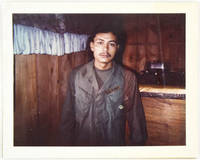
197018470N.p. N.p. c. 1970. Prints in uniformly near fine to very good condition with some curling to the edges. Collection of twenty-five 3 3/8 X 4 1/4 inch Polaroid snapshots mostly in color taken during an American soldier's deployment in An Khê Vietnam. Features images of soldiers grilling drinking and sitting in their bunkers with a few double exposures and a couple of photographs of female civilians. Prints have been adhered to cards with in several instances notes penned on the versos. Fascinating vernacular document of soldier life in one of the most strategically significant military zones of the Vietnam conflict. N.p. N.p. unknown
1963722937PN. New. 1963. Soft Cover. Date is original print. This is a reprint edition. . PN paperback
1963721952PN. New. 1963. Soft Cover. Date is original print. This is a reprint edition. . PN paperback
1965725912PN. New. 1965. Soft Cover. Date is original print. This is a reprint edition. . PN paperback
1963721265PN. New. 1963. Soft Cover. Date is original print. This is a reprint edition. . PN paperback