PREVOST ABBÉ.Livre Rare Book
55 résultats
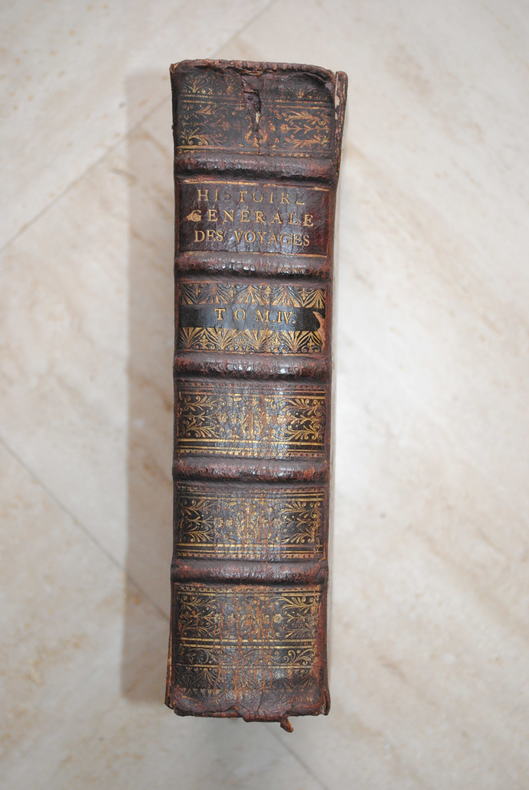
1747P1-26-5HISTOIRE GÉNÉRALE DES VOYAGES, OU NOUVELLE COLLECTION DE TOUTES LES RELATIONS DE VOYAGES PAR MER ET PAR TERRE, QUI ONT ÉTÉ PUBLIÉES JUSQU'À PRÉSENT DANS LES DIFFÉRENTES LANGUES DE TOUTES LES NATIONS CONNUES [.]. TOME QUATRIÈME (…). Paris, Didot, 1747. In-4°, (265x205mm), relié plein veau, pièce de titre, dos orné, page de titre imprimée en rouge et noir, tranches marbrées. Plats frottés, reliure défraichie, intérieur en bon état. 4ff.-1 carte dépliante-648pp.-3ff.(1ff. avis au relieur). Cet ouvrage est illustré de 50 planches : 1 carte dépliante déchirée sans manque, 13 planches dépliantes, 31 planches, 1 carte et 4 cartes dépliantes. Le tome 4 contient : - Suite du Livre Neuvième, & de la Description de la Guinée. - Livre X : Contenant la description des Côtes, depuis Rio da Volta jusqu’au Cap Lopez-Consalvo. - Livre XI : Voyages dans la Guinée & au Royaume de Benin ; contenant la description du Royaume de Benin et de toute la Côte, jusqu’au Royaume de Congo. - Livre XII : Voyages dans les Royaumes de Congo & d’Angola. - Livre XIII : Description des Royaumes de Loango, de Congo, d’Angola, de Benguela & des Pays voisins. Bon exemplaire.
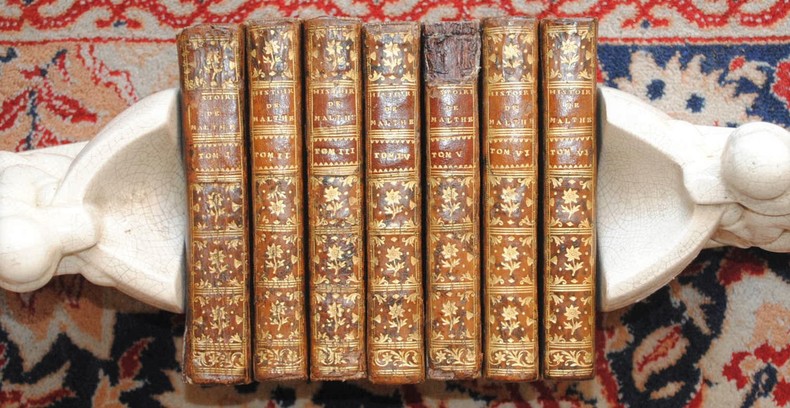
1772P2-6B-aPARIS (Durand) 1772. 7 volumes 12 (17x10 cm), reliure plein veau dos lisse orné, charniers faibles à 2 volumes. Mouillure à un coin. [12]-522, [4]-413-[1 bl.], [4]-458, [4]-440, [4]-430, 480, 444 pp. Cet ouvrage connut un grand succès.
1707BB0368Amsterdam: Chez Thomas Lombrail marchand libraire dans le Beurs-Straat 1707. Full Calf. Near Fine. First French-language Edition another French language edition was printed in Orleans but bearing a Paris imprint the same year with no priority definitively established translated from the English of the first history of the Virginia colony "and the best contemporary account of its aboriginal tribes and the life of its early settlers." Howes 12mo 159 x 92mm: 643316pp with engraved title page featuring coat of arms of Virginia14 finely executed numbered plates based on engravings from De Bry's Grand Voyages and folding table p. 433. Contemporary calf spine richly gilt in six compartments between raised bands red morocco lettering piece gilt. A handsome well-preserved copy tightly bound and clean throughout. This edition was in Thomas Jefferson's library at Monticello. Sabin 5116. Howe B-410. Church 821. JCB I 93. Goldsmiths'-Kress 4396. Geology Emerging 212. European Americana V p. 436. While in London in 1705 Robert Beverley wrote and published The History and Present State of Virginia one of the earliest printed English-language histories about North America by an author born there. Beverley was a scion of Virginia's planter elite at odds with royal governors in the colony. As a native-born American—most famously claiming "I am an Indian"—he provided English readers with the first thoroughgoing account of the province's past natural history Indians and current politics and society. Sabin calls Beverley the "best authority" affording the "most vivid comprehensive instructive and entertaining picture of Virginia at the date of his writing." N. B. With few exceptions always identified we only stock books in exceptional condition carefully preserved in archival removable mylar sleeves. All orders are packaged with care and posted promptly. Satisfaction guaranteed. Fine Editions Ltd is a member of the Independent Online Booksellers Association and we subscribe to its codes of ethics. Chez Thomas Lombrail, marchand libraire, dans le Beurs-Straat unknown
1733E0553<p>2 volumes. 8xxiv616471 pages with 4 maps ad view one folding and 3 plates one folding; 2693892 pages with 1 map and 6 plates. Quarto 10 1/4" x 10 1/4" bound in half leather with raised spine bands and gilt lettering to spine over marbled boards. Borba de Moraes page I:453; European Americana 733/146; Sabin 38591 First edition.<br /><br />Joseph-François Lafitau was a French Jesuit missionary ethnologist and naturalist. He is best known for his use of the comparative method in the field of scientific anthropology the discovery of ginseng and his writings on the Iroquois. Lafitau was the first of the Jesuit missionaries in Canada to have a scientific point of view. Lafitau is considered the first of the modern ethnographers and a precursor of scientific ethnology for his work on the Iroquois. He developed a model of studying peoples that involved describing existing cultures on their own terms—not in comparison to European society. He distinguished generic and specific traits transforming the "generic savage" into specific tribal groups. He explained that "only from specific identities can genetic relations be inferred." Furthermore he was the first to declare "contemporary primitive cultures throw light upon the culture of ancient people and vice versa. Lafitau is remembered for applying the comparative method with a greater level of competency than any of his contemporaries. Through original field observations he was able to critique the works of earlier writers on Primitive peoples. By using the Comparative Method Lafitau rejected all theories of social and cultural change and instead used his study to demonstrate the similarities in customs practices and usages of the Native North Americans with diverse peoples from different continents and centuries. He consistently relied on the doctrine of degeneration: all men originally shared one religion with one God but over time as people migrated to separate margins of the earth where they then lost touch with the values and traditions of this one true religion and culture. Therefore Lafitau believed in the "psychic unity of mankind" and the doctrine of primitive monotheism. His major work written in French was first published in 1724 in Paris. It is entitled <em>Customs of the American Indians Compared with the Customs of Primitive Times</em> <em>Moeurs des Sauvages Amériquains Comparées aux Moeurs des Premiers Temps</em> and is 1100 pages in total. In 1974 William Fenton and Elizabeth Moore made the first translation into English available.</p><p>Lafitau published two other works. One <em>Histoire de Jean de Brienne Roy de Jérusalem et Empereur de Constantinople</em> Paris 1727 was released before he returned to Canada; it is little known and seldom seen. A two-volume <em>Histoire des découvertes et conquestes des Portugais dons le Nouveau Monde . . .</em> 1733 appeared after he came home to France. Frequently found in libraries it is not just a compilation of original sources but an attempt to make available to French readers a story of exploration and adventure otherwise denied to them; in the chronicles he sees a long development of customs hitherto unnoticed such as he had reported in the <em>Mœurs</em>; from them understood only he says in the original languages of the people who practice them he builds his "system" or philosophy of history and once more he is concerned too with the relation between custom and natural history or ecology.<br /><br /><strong>Condition:</strong><br /><br />Beautifully rebound in half leather. Faint dampening to second volume; early owner's signatures on title pages inked stamps of St Charles Borromeo Seminary on front paste-downs and first title page lacks frontispiece else a very good to fine set.</p> Chez Saugrain pere, quai des Augustins, au coin de la rue Chez Saugrain pere, quai des Augustins, au coin de la rue Pavee, a la hardcover
1733E05532 volumes. 8xxiv616471 pages with 4 maps ad view one folding and 3 plates one folding; 2693892 pages with 1 map and 6 plates. Quarto 10 1/4" x 10 1/4" bound in half leather with raised spine bands and gilt lettering to spine over marbled boards. Borba de Moraes page I:453; European Americana 733/146; Sabin 38591 First edition.<br /><br />Joseph-François Lafitau was a French Jesuit missionary ethnologist and naturalist. He is best known for his use of the comparative method in the field of scientific anthropology the discovery of ginseng and his writings on the Iroquois. Lafitau was the first of the Jesuit missionaries in Canada to have a scientific point of view. Lafitau is considered the first of the modern ethnographers and a precursor of scientific ethnology for his work on the Iroquois. He developed a model of studying peoples that involved describing existing cultures on their own terms—not in comparison to European society. He distinguished generic and specific traits transforming the "generic savage" into specific tribal groups. He explained that "only from specific identities can genetic relations be inferred."5 Furthermore he was the first to declare "contemporary primitive cultures throw light upon the culture of ancient people and vice versa. Lafitau is remembered for applying the comparative method with a greater level of competency than any of his contemporaries. Through original field observations he was able to critique the works of earlier writers on Primitive peoples. By using the Comparative Method Lafitau rejected all theories of social and cultural change and instead used his study to demonstrate the similarities in customs practices and usages of the Native North Americans with diverse peoples from different continents and centuries. He consistently relied on the doctrine of degeneration: all men originally shared one religion with one God but over time as people migrated to separate margins of the earth where they then lost touch with the values and traditions of this one true religion and culture. Therefore Lafitau believed in the "psychic unity of mankind" and the doctrine of primitive monotheism. His major work written in French was first published in 1724 in Paris. It is entitled <i>Customs of the American Indians Compared with the Customs of Primitive Times</i> <i>Moeurs des Sauvages Amériquains Comparées aux Moeurs des Premiers Temps</i> and is 1100 pages in total. In 1974 William Fenton and Elizabeth Moore made the first translation into English available. Lafitau published two other works. One <i>Histoire de Jean de Brienne Roy de Jérusalem et Empereur de Constantinople</i> Paris 1727 was released before he returned to Canada; it is little known and seldom seen. A two-volume <i>Histoire des découvertes et conquestes des Portugais dons le Nouveau Monde . . .</i> 1733 appeared after he came home to France. Frequently found in libraries it is not just a compilation of original sources but an attempt to make available to French readers a story of exploration and adventure otherwise denied to them; in the chronicles he sees a long development of customs hitherto unnoticed such as he had reported in the <i>Mœurs</i>; from them understood only he says in the original languages of the people who practice them he builds his "system" or philosophy of history and once more he is concerned too with the relation between custom and natural history or ecology.<br /><br /><b>Condition:</b><br /><br />Beautifully rebound in half leather. Faint dampening to second volume; early owner's signatures on title pages inked stamps of St Charles Borromeo Seminary on front paste-downs and first title page lacks frontispiece else a very good to fine set.<br /> Chez Saugrain pere, quai des Augustins, au coin de la rue Chez Saugrain pere, quai des Augustins, au coin de la rue Pavee, a la hardcover books
1763P2-7B-14Paris, Guillyn, 1763. In-12 (17x10) relié plein veau époque, dos à nerfs orné, pièce de titre, XXXVI-380pp-2ff. Illustré de figures dans le texte. Carte dépliante en déficit , un cahier mal placé (p168-192 relié p.216)
1779BOOKS000337<p>4282 pages lacking the map. Small quarto 10" x 7½" rebound in ¾ morocco & marbled boards spine lettered in gilt top edges gilt. Sabin 22572 First edition.<br /><br />Rare account of travels into the arctic most notably Nova Zemblya to the north of Europe. Twelve years earlier Engel wrote his notable work on explorations on the other side of the Arctic Circle Memoires et observations geographiques et critiques sur la situation des pays septentrionaux de l'Asie et de l'Amerique. Lausanne 1765. <br /><br /><strong>Condition: </strong>Rubbing to joints and extremities; some minor staining and soiling within hinge professionally repaired else a very good copy. Only five copies found on worldcat.</p> F Sanuel Fetscherin hardcover
1779BOOKS0003374282 pages lacking the map. Small quarto 10" x 7½" rebound in ¾ morocco & marbled boards spine lettered in gilt top edges gilt. Sabin 22572 First edition.<br /><br />Rare account of travels into the arctic most notably Nova Zemblya to the north of Europe. Twelve years earlier Engel wrote his notable work on explorations on the other side of the Arctic Circle Memoires et observations geographiques et critiques sur la situation des pays septentrionaux de l'Asie et de l'Amerique. Lausanne 1765. <br /><br />Condition:<br /><br />Rubbing to joints and extremities; some minor staining and soiling within hinge professionally repaired else a very good copy. Only five copies found on worldcat.<br /> F Sanuel Fetscherin hardcover books
1787E00402 volumes: 576xv pages; 499xv pages. Octavo 8 3/4" x 5 1/2" bound in 3/4 period leather. Translated from the first German edition 1781 which includes a chapter entitled: "Observations and additions to by Johann Gottlob Theaenus Schneider". Translated with additional notes and reviews by Jean Baptiste Lefebvre Villebrune. First Spanish edition published in 1772 Madrid. Sabin 36805 First French edition.<br /><br />Antonio de Ulloa 12 January 1716 – 3 July 1795 was a Spanish general explorer author astronomer colonial administrator and the first Spanish governor of Louisiana. He was born in Seville the son of an economist. Ulloa entered the navy in 1733. In 1735 he was appointed with fellow Spaniard Jorge Juan a member of the French Geodesic Mission a scientific expedition which the French Academy of Sciences was sending to Ecuador to measure a degree of meridian arc at the equator led by Pierre Bouguer. He remained there from 1736 to 1744 during which time the two Spaniards discovered the element platinum. In 1745 having finished their scientific labors Ulloa and Jorge Juan prepared to return to Spain agreeing to travel on different ships in order to minimize the danger of losing the important fruits of their labors. The ship upon which Ulloa was traveling was captured by the British and he was taken as a prisoner to England. In that country through his scientific attainments he gained the friendship of the men of science and was made a Fellow of the Royal Society of London. In a short time through the influence of the president of this society he was released and was able to return to Spain. He published an account of the people and the countries they have met 1748 which was translated into English as A Voyage to South America. He became prominent as a scientist and was appointed to serve on various important scientific commissions. He is to be credited with the establishment of the first museum of natural history the first metallurgical laboratory in Spain and the observatory of Cadiz. In 1758 he returned to South America as governor of Huancavelica in Peru and the general manager of the quicksilver mines there. He held this position until 1764. He arrived on 5 March 1766 in New Orleans to serve as the first Spanish governor of West Louisiana. The French colonists refused to recognize Spanish rule and de Ulloa was expelled from Louisiana by a Creole uprising during the Louisiana Rebellion of 1768. For the remainder of his life he served as a naval officer. In 1779 he became lieutenant-general of the naval forces. As a result of his scientific work in Peru he published Madrid 1784 Relación histórica del viaje á la América Meridional which contains a full accurate and clear description of the greater part of South America geographically and of its inhabitants and natural history. In collaboration with the Jorge Juan mentioned above he also wrote Noticias secretas de América giving valuable information regarding the early religious orders in Spanish America.<br /><br />Condition:<br /><br />Sever worming to spines exterior hinges cracked point chipped library stamps to title pages else a good copy of a scarce item. Chez Buisson hardcover
1787E00402 volumes: 576xv pages; 499xv pages. Octavo 8 3/4" x 5 1/2" bound in 3/4 period leather. Translated from the first German edition 1781 which includes a chapter entitled: "Observations and additions to by Johann Gottlob Theaenus Schneider". Translated with additional notes and reviews by Jean Baptiste Lefebvre Villebrune. First Spanish edition published in 1772 Madrid. Sabin 36805 First French edition.<br /><br />Antonio de Ulloa 12 January 1716 – 3 July 1795 was a Spanish general explorer author astronomer colonial administrator and the first Spanish governor of Louisiana. He was born in Seville the son of an economist. Ulloa entered the navy in 1733. In 1735 he was appointed with fellow Spaniard Jorge Juan a member of the French Geodesic Mission a scientific expedition which the French Academy of Sciences was sending to Ecuador to measure a degree of meridian arc at the equator led by Pierre Bouguer. He remained there from 1736 to 1744 during which time the two Spaniards discovered the element platinum. In 1745 having finished their scientific labors Ulloa and Jorge Juan prepared to return to Spain agreeing to travel on different ships in order to minimize the danger of losing the important fruits of their labors. The ship upon which Ulloa was traveling was captured by the British and he was taken as a prisoner to England. In that country through his scientific attainments he gained the friendship of the men of science and was made a Fellow of the Royal Society of London. In a short time through the influence of the president of this society he was released and was able to return to Spain. He published an account of the people and the countries they have met 1748 which was translated into English as A Voyage to South America. He became prominent as a scientist and was appointed to serve on various important scientific commissions. He is to be credited with the establishment of the first museum of natural history the first metallurgical laboratory in Spain and the observatory of Cadiz. In 1758 he returned to South America as governor of Huancavelica in Peru and the general manager of the quicksilver mines there. He held this position until 1764. He arrived on 5 March 1766 in New Orleans to serve as the first Spanish governor of West Louisiana. The French colonists refused to recognize Spanish rule and de Ulloa was expelled from Louisiana by a Creole uprising during the Louisiana Rebellion of 1768. For the remainder of his life he served as a naval officer. In 1779 he became lieutenant-general of the naval forces. As a result of his scientific work in Peru he published Madrid 1784 Relación histórica del viaje á la América Meridional which contains a full accurate and clear description of the greater part of South America geographically and of its inhabitants and natural history. In collaboration with the Jorge Juan mentioned above he also wrote Noticias secretas de América giving valuable information regarding the early religious orders in Spanish America.<br /><br />Condition:<br /><br />Sever worming to spines exterior hinges cracked point chipped library stamps to title pages else a good copy of a scarce item. Chez Buisson hardcover books
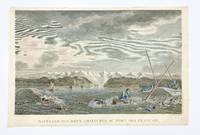
1797406875Paris: L'Imprimerie de la Republique 1797. Tape remnants from mounting along upper edge verso some foxing overall good condition and color. Hand-colored engraving by Dequevauviler after Nicolas Marie Ozanne. 9 7/8 x 15 3/4 inches image 11 x 17 inches sheet. A fine print from 'Atlas du voyage de la Perouse' depicting the capsizing of two rowboats in Alaska during La Perouse's 1786 expedition. The wreck took place off of the Port des Francais today known as Lituya Bay in Glacier Bay National Park Alaska. <br/><br/> [L'Imprimerie de la Republique] unknown books
178927184Leiden: Etienne Luzac 1789. Small 4to. 8 1/2 x 6 1/4 inches. Woodcut arms of the Netherlands at the head of the first sheet. 4pp. With a 4pp. "Supplement aux Nouvelles Extraordinaires de Divers Endroits du Numero LXXV" inserted. Together 8pp. Unbound.<br/> <br/>Extremely rare broadsheet containing news of the Malaspina expedition: among the earliest printed records of Spain's greatest scientific voyage to the Pacific Ocean California and the Northwest Coast of America in the 18th century.<br/> <br/>The extract under the above heading continues: ". Les Corvettes de la Marine Royage la Découverte & l'Entreprenante commandées par Don Alexandre Malespina Capitaine de Frégate ont mìs à la voile de Cadix le 30 Juillet dernier. L'Expédition dont elles son chargées ayant pour objet les progrès des Sciences & de la Géographie elles ont été munies de tout ce qui est nécessaire pour faire un voyage autour du Monde; & outre des Oficiers d'une habilité reconnuë elles ont à bord des Astronomes des Naturalistes des Botanistes des Peintres de Perspective & de Botanique pourvus d'une Collection ample & précieuse d'Instruments de Mathématiques de Physique & Astronomie." Other news in the broadsheet concerns revolutionary events in France including a lengthy speech from Necker given at the National Assembly as well as news from Russia Stockholm the Hague and elsewhere. In 1789 Malaspina and Bustamente drew up plans for this scientific circumnavigation which was to rival Captain Cook the purposes being to chart the most remote regions of America and to observe the political state of America relative to Spain. Alexander Dalrymple assisted them with scientific instruments a brilliant team of scientists was assembled and ships specially constructed. Surveys were made of the east and west coasts of South America they fixed the exact position of Cape Horn correcting Cook's reading. On receipt of orders to investigate the apocryphal Strait of Anian they sailed for Alaska and entered Yakutat Bay at the supposed latitude of the strait where the Malaspina Glacier flows into the sea and followed the coast to Prince William Sound and Nootka. Malaspina surveyed the coast south to California at Monterey Bay and crossed the Pacific in 1791. Two of his officers and Jose de Espinosa y Tello returned north in search of a North-West Passage and published the charts and account of this secondary voyage in 1802. In the Philippines New Zealand and New South Wales Malaspina continued charting before making an easterly passage around the Horn for Spain. "In spite of having commanded Spain's greatest scientific voyage of exploration to the South Seas in the eighteenth century Malaspina is virtually unknown. He had enemies in the Spanish court who suppressed his reports which were not printed until.1885. Some scholars consider the exploits of his five-year voyage as great as those of La Pérouse or of Captain Cook" Hill. Eighteenth century material concerning the voyage is of the utmost rarity.<br/> <br/>Howgego M26; Cf. Hill 1068. Etienne Luzac unknown books
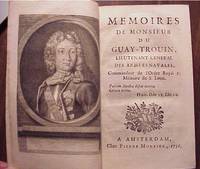
1756BB0491Amsterdam: Chez Pierre Mortier 1756. Full Calf. Fine. Later edition of the memoirs of one of the most illustrious French corsairs including descriptions of his spectacular attacks on Rio de Janeiro. 12mo 166 x 92mm: xxxix312pp with engraved frontispiece and five of six folding plates absent plate opposite p. 120 apparently never bound in. Full mottled calf flat richly gilt spine divided into six compartments by triple rules red morocco gilt label all edges stained red marbled end papers book label of P. Gaingnot-P. au Mans. The highly accomplished engravings by J. P. Le Bas and A. Coquart include frontispiece portrait of the author view of a French man-of-war with parts labeled three of four folding views of naval engagements and the magnificent folding plan of Rio de Janeiro. Also included are lists of ships and crews under Du Guay-Trouin's command in various campaigns. Lower joint skillfully repaired else Fine with pages and plates pristine. STCN 305337807. Keynes Bibliotheca Bibliographici p. 117. Borba de Moraes 272. Gibson's Library p. 115. Sabin 29198 quoting Borba 272: "Pierre Mortier the well-known Amsterdam book dealer published several editions of the Memoires beginning 1740 continuing 1746 1748 1756 1769 and 1773 all of which contain the author's portrait five plates and the map.". First published in Amsterdam in 1730 in a pirated edition extracted from an unfinished manuscript. The first official and complete edition was published posthumously in Paris in 1740. Admiral Du Guay-Trouin noted for his exploits during the War of the Spanish Succession from 1699 to 1712 sailed American and Caribbean waters as a privateer. In 1711 he led a French expedition against Rio de Janeiro then considered impregnable and after an eleven day siege he occupied the city for some two months holding the governor for ransom and ransacking the churches and plundering their treasures. N. B. With few exceptions always identified we only stock books in exceptional condition carefully preserved in archival removable mylar sleeves. All orders are packaged with care and posted promptly. Satisfaction guaranteed. Fine Editions Ltd is a member of the Independent Online Booksellers Association and we subscribe to its codes of ethics. Chez Pierre Mortier unknown
1725P1-3K-2Amsterdam, Etienne Roger, 1725-1726. 2 volumes in-12 (15.5x9.5cm) reliés maroquin du levant, cerise époque, dos lisse orné, pièce de titre et de tomaison, filets d’or sur les plats, dentelles or sur les plats intérieurs, tranches dorées. Relié par ANGUERRAND de la Bibliothèque de LAMOIGNON avec le numéro de référence, cachet à la première page. 663pp.-17ff, illustré de 6 planches dépliantes. TOME 5 en 2 parties comprenant Voyage à Formose. TRÈS BEL EXEMPLAIRE, PROVENANCE PRESTIGIEUSE. Chrétien-François de Lamoignon (1735-1789), président à mortier du Parlement de Paris, fut le dernier gardien d’une collection familiale de près de 5000 ouvrages commencée au milieu du XVIIe siècle. Ces livres sont caractérisés par un numéro d’inventaire au dos, un ex-libris imprimé Bibliotheca Lamoniana au contre plat supérieur, avec une côte manuscrite, et un timbre humide L couronné dans la marge de la page 3 du texte. Etienne II Anguerrand, reçu maître en 1747, nommé relieur du Roi en 1767, habilla nombre de ses volumes en maroquin.
1751SB-22550Göttingen, Vandenhoeck, 1751. 13 Bl., 467 S. Neuerer brauner Halblederband mit Lederecken und dreiseitigem Farbschnitt.. Mit 2 Kupfertafeln. Reisebeschreibung des Botanikers und Forschungsreisenden Johann Georg Gmelin (1709 - 1755) über seine Teilnahme an der "Großen Nordischen Expedition" bzw. "Zweiten Kamtschatkaexpedition" in den Jahren 1733 bis 1743. Ziel dieser unter der Leitung des Marineoffiziers Vitus Bering ("Kolumbus des Zaren", 1681 - 1741) unternommenen Expedition war vor allem die nähere Erkundung des bis dahin wenig erforschten Sibiriens und der nördlichen Küsten Rußland sowie der Seewege von Ostsibirien nach Nordamerika und Japan. Gmelin, der 1728 im Alter von erst 19 Jahren an der Universität Tübingen in den Fächern Medizin und Naturwissenschaften promoviert hatte, erlangte zur Fortsetzung seiner Studien ein Stipendium der Russischen Akademie der Wissenschaften in St. Petersburg und 1731 eine Professur für Chemie und Naturgeschichte an der dortigen Universität. Ein Jahr darauf wurde er auf seine Bewerbung hin von Zarin Anna Iwanowna für die große Expedition ausgewählt. Die zehnjährige Reise bildete die Grundlage für Gmelins einschlägiges, in vier Bänden herausgegebenes Werk "Flora Sibirica sive Historia plantarum Sibiriae". Im hier vorliegenden Band 1 seines umfangreichen Berichtes beschreibt Gmelin den ersten Teil seiner Reise, die ihn über die Stationen Jaroslawl, Kasan, Tobolsk, Semipalatinsk, Ust-Kamenogorsk (Öskemen), Tomsk, Jenisseisk und Irkutsk bis Jakutsk führen sollte, von 1733 bis zum Mai 1735.
179974583Berlin, Haude und Spener, 1799. VII, (1), 325, (1) S., 1 Bl. Mit gestoch. Frontispiz (Porträt) u. 5 teilw. gefalt. Kupfertafeln. HLdr. d. Zt. mit Rückenschild u. linearen Fileten.
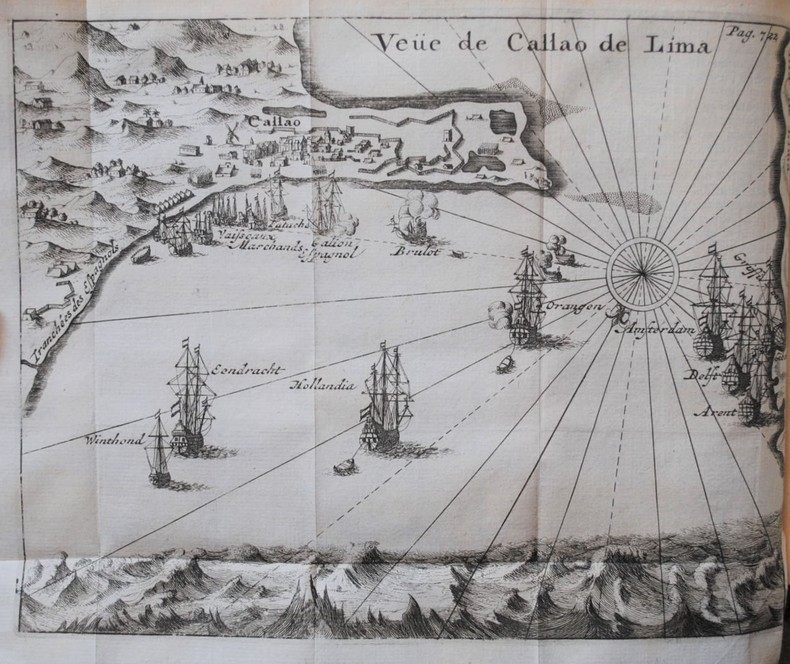
1716BB0841Paris: chez Jean-Geoffroy Nyon quay de Conti au coin de la rue Guenegaud au Nom de Jesus Etienne Ganeau rue Saint Jacques aux Armes de Dombes vis-à-vis la Fontaine de S. Severin Jacque Quillau imprimeur-juré-libraire rue Galande aux Armes de l'Université 1716. First Edition. A defective first edition missing one map and one plate of this classic in the literature of Pacific voyages of exploration. 4to: xiv2982pp with 35 of 37 maps plans and plates 18 of which are folding; ornamental engraved vignettes and woodcut musical notation in the text never bound in were the map of Détroit de le Maire no. v and the plate of Indiens en habits simples no. ix; plate xvi was bound in twice. Contemporary calf spine richly gilt in six compartments brown leather lettering piece gilt "Caissotti" in gilt script on upper board all edges stained red marbled end papers red silk page marker. An exceptional wide-margined copy text maps and plates fresh and clean marred only by a stain in the gutter of first three leaves. Provenance: copper-engraved bookplate "Il Cittadino / Carlo Giac. Caissotti." Sabin 25924. Borba de Moraes 328. Hill p. 115. Leclerc 1736. Palau 94964. Gibson's Library p. 128. Item #BB0841. Frézier set sail in 1712 with a French commission to assess the strength of Spanish settlements on the Pacific coast and to revise existing charts. According to Hill he "brought back information of considerable geographical and scientific value" to later navigators and his account is today appreciated for its keen observations of the customs commerce and natural history—including the cotton and strawberry plants—of Chile Peru and Tierra del Fuego. It's interesting to note that Frezier's surname was itself derived from fraise the French for strawberry. The chapters on Indian and Creole life include descriptions of costume and architecture as well as musical instruments. The folding plans of cities visited are often enhanced by panoramic views as in the case of Callao Concepción Valparaíso La Serena Salvador de Bahía and Angra Azores. Amongst the most important plates are the general map of the expedition the Strait of Lemaire Valdivia Bahía de an Vicente Santiago de Chile Lima and Bahía de Todos los Santos. An immediate success the work was soon translated into English and German and republished several times in the eighteenth century. N. B. With few exceptions always identified we only stock books in exceptional condition with dust jackets carefully preserved in archival removable mylar sleeves. All orders are packaged with care and posted promptly. Satisfaction guaranteed. Fine Editions Ltd is a member of the Independent Online Booksellers Association and we subscribe to its codes of ethics. chez Jean-Geoffroy Nyon, quay de Conti, au coin de la rue Guenegaud, au Nom de Jesus, Etienne Ganeau, rue Saint Jacques, aux Arm unknown
1796P2-6DParis, Jansen, 1796. 2volumes in-4° (270x220mm), cartonnage d’attente d’époque, manques au dos , plat du tome 2 détaché. TOME 1: 9ff., 224pp., manque pp. 224-228, illustré de 7 planches Hors-Texte dont 4 dépliantes. TOME 2 : 373pp., 1f., 18 planches. Exemplaire non rogné, bon état intérieur, page de titre du T.2 effrangé. Rare édition in-4 du second voyage de LEVAILLANT.
1756BB0568London: Printed by H. Woodfall 1756. Quarter-bound Leather. Near Fine. First Edition "printed for presentation only and not sold." DNB. The more common second edition published in octavo appeared the following year. 4to: 62015203-3611pp with engraved frontispiece and engraved plate opposite the divisional title to the Essay on Tea both by Thomas Major after Samuel Wale. Modern quarter-calf over plain paper-covered boards flat spine in six compartments between decorative gilt bands red morocco lettering piece gilt; all edges stained red end papers renewed. Title page and preliminaries lightly foxed but contents otherwise clean and bright the binding tight and firm. A splendid wide-margined copy. ESTC Citation No. T127188. Gibson's Library p. 144. Goldsmiths'-Kress 9083. Cox I p. 19. Hanway was both a widely traveled merchant with connections to the Russia Company and a philanthropist whose causes included foundlings prostitutes and the climbing apprentices of chimney sweeps. His mother's death in 1755 prompted him to return to Portsmouth where she was buried that sojourn served as inspiration for this his second book to which he appended An Essay on Tea. Hanway describes many of the places he visited including Salisbury with its great cathedral and Stonehenge with digressions on tombstones sacred music and oratorios divine poetry temperance lapdogs false grief the ruling passion of women and much else. His Essay on Tea indicts the beverage for causing everything from insomnia weak nerves and scurvy to bad teeth and proposes 'Herbs of our own growth in lieu of tea.' Oliver Goldsmith Samuel Johnson and other ardent tea-drinkers criticized these eccentric views in The Idler and other publications. N. B. With few exceptions always identified we only stock books in exceptional condition. All orders are packaged with care and posted promptly. Satisfaction guaranteed. Fine Editions Ltd is a member of the Independent Online Booksellers Association and we subscribe to its codes of ethics. Printed by H. Woodfall unknown
1777BB0796London: printed for T. Durham at Charing-Cross; and G. Kearsly at No. 46 in Fleet-Street 1777. First Edition. Quarter-bound Leather. Near Fine. First Edition in English of this novelized first-person account of a young English lord's debauched sojourn—prostitutes gambling horse-racing drink—in the French capitol. Crown 8vo 206 x 121mm: 2x222pp. Contemporary leather spine in six compartments between raised bands recent red morocco lettering piece gilt marbled sides and end papers. Joints skillfully reinforced marbled sides heavily rubbed top of title page including word 'The' supplied in excellent facsimile. Internally a Fine bright copy pages fresh and free of foxing browning and stains. ESTC Citation No. N31079 distinct from ESTC T131522 which Durham and Kearsly brought out the same year in duodecimo and which does not have the following note below the date on the title page present in our copy: "This work may be had of the above booksellers in French printed from the Paris edition which was suppressed in that country.". Translated by the author from his La quinzaine angloise à Paris first published the previous year. Rutledge was the grandson of an Irish Jacobite who settled in France and son of Walter Rutledge a banker and ship owner at Dunkirk who assisted the Pretender in his expedition of 1715 and in consequence was named a baronet. "This sketch which depicts the rapidity with which a ‘plunger’ may be reduced to destitution by the harpies of Paris and purports to be a posthumous work by Sterne to whose works it bears no sort of resemblance . . . The writer states that attempts had been made to suppress the work in Paris. A species of sequel entitled ‘Le Second Voyage de milord ——’ appeared in 1779." DNB N. B. With few exceptions always identified we only stock books in exceptional condition carefully preserved in archival removable mylar sleeves. All orders are packaged with care and posted promptly. Satisfaction guaranteed. Fine Editions Ltd is a member of the Independent Online Booksellers Association and we subscribe to its codes of ethics. printed for T. Durham, at Charing-Cross; and G. Kearsly, at No. 46, in Fleet-Street unknown
1790029884<p>London: J. Johnson 1790. Volume I: folding map xvi 283 pages; volume 2: viii 408 pages. De Lesseps accompanied La Perouse on the first part of his attempted circumnavigation of the globe. After investigation of the west coast of North America La Perouse sent de Lesseps overland to take the journals and maps of the expedition to Paris. La Perouse and his ships subsequently were lost after they left Australia and the journals carried by de Lesseps assumed great historical significance when published. Even more scarce than those records today are de Lesseps' report of his own overland travels through the Kamtschatka peninsula. The report also includes 25 pages of vocabulary translating common English words into Russian Kamtschadale Koriac Tchouktchi and Lamont languages. Internally clean with only minor foxing the two volumes in 3/4 leather over marbled paper covered boards have recently been sympathetically rebacked original title and volume patches retained. Very attractive example of a quite scarce title. Howes L269 Howes & Hartley rate this item dd "superlatively rare". First English Language Edition. Hardcover. Collectible-Very Good . 8vo - over 7¾" - 9¾" tall. Book.</p> J. Johnson hardcover
1787E0052<p>Two volumes: xv462 pages with two folding maps; xv430 pages with three folding plates. Octavo 8 1/4" x 5 1/4" bound in original full leather with black and red labels to spine lettered in gilt. translated from the French by an English gentleman who resided in America at that period ; with notes by the translator. Translated by G. Grieve Watt and Sabin ascribe the translation to J. Kent. Sabin 12229 First Irish edition.<br /><br />Chastellux was a military officer who served during the War of American Independence as a major general in the French expeditionary forces led by general Comte de Rochambeau. Being on general Rochambeau's staff for the duration of the war Chastellux acted as the principal liaison officer between the French commander in chief and George Washington. However the Chevalier de Chastellux was also widely recognized at the time of his campaigns in America as a highly talented man of letters and a member of the French Academy. After arriving in America in July 1780 Chastellux participated to the American Revolutionary War as Major General in the French expeditionary force led by general Rochambeau. During the following year he was third in command of the French forces engaged at the decisive Siege of Yorktown in 1781 where the British were ultimately defeated. Major General de Chastellux was fluent in English and with his strong ideological support of the American cause he served the alliance well. During the latter part of the campaign he was the principal liaison officer between George Washington and French general Rochambeau. Thereafter Chastellux remained a personal friend of George Washington for life. Furthermore the College of William and Mary and the University of Pennsylvania also awarded Chastellux with honorary degrees. After his return to France Chastellux also remained in contact with Thomas Jefferson now the American representative in Paris whom he had previously visited on his Virginia estate at Monticello.<br /><br /><strong>Condition:</strong><br /><br />Title page clipped at top corner first fold out map repaired map edges repaired hinges repaired previous owner's names on front paste downs and content pages else a good set.</p> Printed for Messrs. Colles, Moncrieffe, White, H. Whitestone, Byrne, Cash, Marchbank, Heery, and Moore hardcover
1789100092317Maradan 1789 in4. 1789. Relié. iconographie en noir et blanc nombreux documents illustrations cartes dépliantes 498 pages de texte + 46 pages d'appendices eux aussi agrémentés de tableaux et illustrations + 2 pages: approbation privilège du Roi
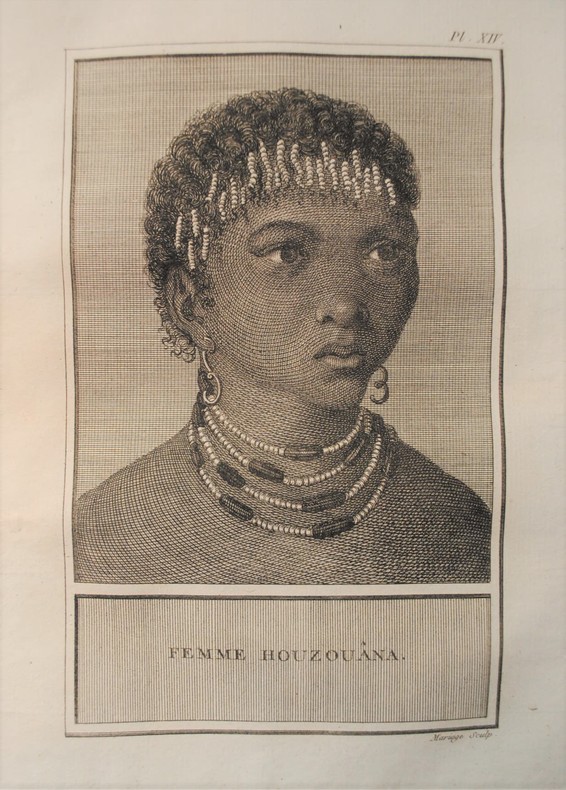
1790P1-3J-0PARIS (LEROY) 1790. 2 volumes In 8° (200 x 130) relié plein veau époque. Faux titres, titre frontispice XXIV - 381 pp. Faux titres, titre 399 pp. illustré de 12 planches dont le Hottentote à tablier. Bon état, peu de rousseurs.
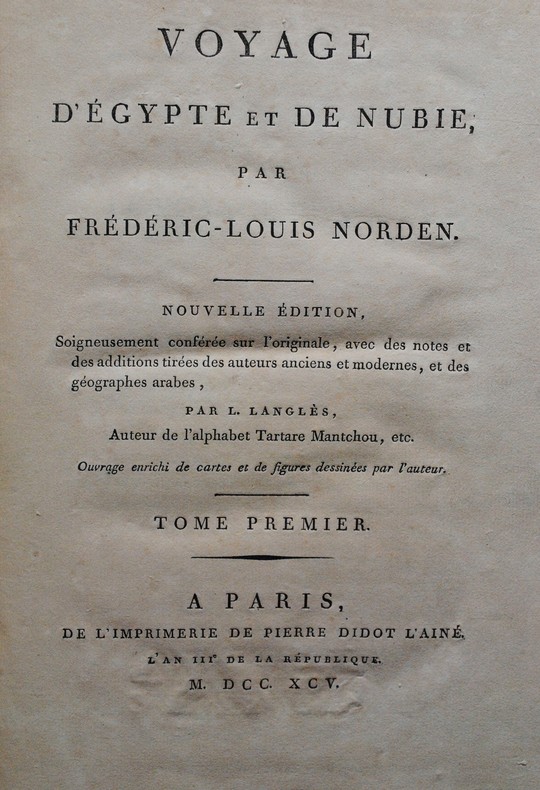
1795P1-2M-2Paris, Pierre Didot l’Ainé, 1795. Un volume in-4 (320x240mm), pleine percaline rouge, un portrait et deux gravures en frontispice, LV-176pp, 59 planches. Non rogné, imprimé sur papier vergé à la cuve. TOME 1 SEUL SUR 3. Bel état. Etude sur l’Egypte la plus complète avant la « Description de l’Egypte » ordonnée par Bonaparte. Second edition of the famous work of the Danish explorer, illustrated with a frontispiece, a portrait of Norden and 59 full page engraving. Modern red cloth. First volume only.