Philippe RochotLivre Rare Book
4 751 résultats
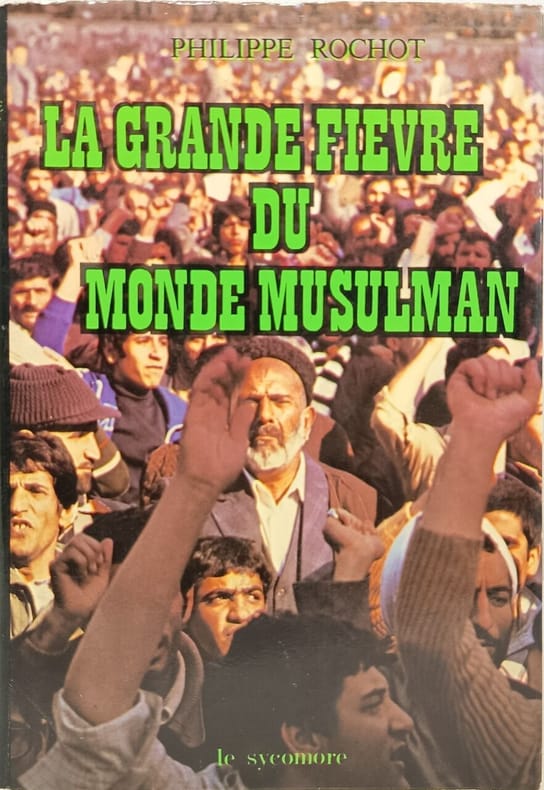
19817678Le Sycomore 1981 215 pages in8. 1981. broché jaquette. 215 pages. Cet essai analyse l'émergence et l'influence des forces islamiques à la fin du XXe siècle en examinant notamment leur rôle dans la chute du Shah d'Iran et les répercussions de la République islamique en Irak au Pakistan et au Liban. L'auteur étudie également les antécédents historiques de ces mouvements
189246719Calmann-Lévy | Paris 1892 | 18.50 x 28 cm | reliure de l'éditeur
4438aafParis, Félix Alcan, 1930, in-8°, IV + 264 p., non coupé, brochure muette.
No marks or inscriptions to contents. A very clean very tight copy with bright unmarked boards, faint marking to page fore-edges and no bumping to corners. Dust jacket not price clipped or marked or torn with minor creasing to lower rear edge. 216pp. A comprehensive and accessible account of the Dead Sea Scrolls, with numerous factfiles, reconstructions, scroll photographs and a wealth of other illustrations.
4to. XIX pp., one blank page, 485, (1) pp. With photographic frontispiece, 46 photographic plates (1 of which double-page), 1 folding map of southern Arabia, and several photographic illustrations in the text. Publisher's full cloth with giltstamped title and ornament to spine. First edition. Travel account by the first European to cross the Rub' al-Khali (Empty Quarter) of Arabia from east to west, the Arabist, explorer, writer, and British colonial office intelligence officer St. John Philby (1885-1960), also known by his Arabian name "Sheikh Abdullah". Educated at Trinity College, Cambridge, he studied oriental languages and was a friend and classmate of Jawaharlal Nehru, later prime Minister of India. Philby settled in Jeddah and became famous as an international writer and explorer. He personally mapped on camelback what is now the Saudi-Yemeni border on the Rub' al Khali; in 1932, while searching for the lost city of Ubar, he was the first Westerner to visit and describe the Wabar craters. At this time, Philby also became Ibn Saud's chief adviser in dealing with the British Empire and Western powers. He converted to Islam in 1930. The personal contacts between the United States and Saudi Arabia were largely channeled through the person of Philby. - From the collection of the Dutch traveller and collector Ruud Verkerk. With 2 inserted colour photographs mounted on the plates facing p. 314 and 318, showing Verkerk standing beside rock inscriptions on the old fort at 'Uqla - south face, as well as standing before the Rock fort of 'Uqla, both dated in pencil 18 December 1997. Light damage to head of spine. Paper occasionally foxed and a slightly creased. Overall a good copy. Macro 1801. OCLC 4836861.
8vo. XVI, 336 pp. With a portrait of the author as a frontispiece and 24 double-sided plates. Blue cloth. First edition, second impression. The autobiography of the noted British Arabist, explorer, writer, officer and adviser to Ibn Saud, Harry St John Bridger Philby (1885-1960). In the preface Philby states that he mainly describes the essential and most notable features and events of his public life. He began writing this work in 1934, but the next decade was filled with activity and adventure, both in Britain and abroad, which kept him from writing and publishing the work until after the Second World War. During this time, he was asked by King Ibn Sa'ud of Saudi Arabia to map the border between his newly formed kingdom and the Yemen. This gave Philby the opportunity to explore Southern Arabia, where he also made archaeological discoveries. - Philby undertook his first journey to Arabia in 1917 in order to complete a mission to Ibn Sa'ud; once there he formed a lifelong acquaintanceship with the future king of Saudi Arabia. In 1930 Philby officially converted to Islam. - The present copy is the second impression of the first edition which were published mere months apart in the same year. Philby's descriptions of his many experiences in Britain, India and the Middle East are accompanied by numerous images of him, his family, King Ibn Sa'ud, government officials, and buildings and landscapes he encountered. - Binding shows very slight signs of wear, small inscription in blue ink to the verso of the first flyleaf, very slight browning throughout. Howgego IV, P 31. Macro 1776. Shapero, The Islamic World (2003), 394. Sotheby's, Burrell sale, lot 623.
8vo. XIV, 280 pp. With a portrait of King 'Abdul-'Aziz Ibn Sa'ud as the frontispiece, 1 map of Arabia in 1950, and 16 double-sided plates. Black cloth. First edition of this biography of Saudi Arabian King HRH Abdul-Aziz bin Abdul Rahman al Sa'ud by his adviser Harry St John Bridger Philby. Ibn Sa'ud was the founder of modern Saudi Arabia, when after a conquest spanning 30 years he united most of the Arabian Peninsula under his rule. He reigned from 1932 until his death in 1953, but had previously (since 1902) ruled parts of what was to become Saudi Arabia as Emir, Sultan, King of Nejd, and King of Hejaz. The present work is not a complete and final biography: at the time of writing and publication the king was still alive, and Philby states in the preface that "it is rather a pageant of his [Ibn Sa'ud's] achievement, set forth in a series of tableaux illustrating characteristic phases of his career". The descriptions of these phases contain not only information relating to the king, but also inform the reader about the country as a whole and are enlivened by accounts and other small details of court life and Islamic customs, including a pilgrimage to Mecca. The work is illustrated with numerous images of the king and his family, and important landmarks in Saudi Arabia. - Binding shows slight signs of wear, spine is slightly discoloured, slight foxing to edges, very slight browning throughout, several newspaper clippings in a small paper pocket on the lower pastedown. Overall in good condition. Howgego IV, P 31. Cf. (other ed.) Shapero, The Islamic World (2003), 395; Sotheby's, Burrell sale, lot 623.
8vo. 115-124 pp. Contemporary blue cloth with giltstamped title to upper cover: "Philby - Yaman". First edition. A brief investigation of Joseph Halévy's journey through the Jawf region of Yemen, comparing the account given by Hayyim Habshush, recently published, with Halévy's own. - St John Philby (1885-1960), also known by his Arabian name "Sheikh Abdullah", was an Arabist, explorer, writer, and British colonial office intelligence officer. Educated at Trinity College, Cambridge, he studied oriental languages and was a friend and classmate of Jawaharlal Nehru, later prime Minister of India. Philby settled in Jeddah and became famous as an international writer and explorer. He personally mapped on camelback what is now the Saudi-Yemeni border on the Rub' al Khali; in 1932, while searching for the lost city of Ubar, he was the first Westerner to visit and describe the Wabar craters. At this time, Philby also became Ibn Saud's chief adviser in dealing with the British Empire and Western powers. He converted to Islam in 1930. The personal contacts between the United States and Saudi Arabia were largely channeled through the person of Philby. - Very slight browning, a few minor stains to the first page. Macro 1782. Smith, The Yemens, 84.
Colour-printed map (30 x 44 cm). Map showing Philby’s route. Inset of Central Arabia. Not in Ankary; Al-Qasimi.
Colour-printed map (56 x 36 cm). Not in Al Ankary; Al-Qasimi.
8vo. XXIV, 433, (1) pp. With 3 folding maps an 47 illustrations on 32 plates. Publisher's original giltstamped green cloth. First edition. St. John Philby (1885-1960), also known by his Arabian name "Sheikh Abdullah", was an Arabist, explorer, writer, and British colonial office intelligence officer. Educated at Trinity College, Cambridge, he studied oriental languages and was a friend and classmate of Jawaharlal Nehru, later prime Minister of India. Philby settled in Jeddah and became famous as an international writer and explorer. He personally mapped on camelback what is now the Saudi-Yemeni border on the Rub' al Khali; in 1932, while searching for the lost city of Ubar, he was the first Westerner to visit and describe the Wabar craters. At this time, Philby also became Ibn Saud's chief adviser in dealing with the British Empire and Western powers. He converted to Islam in 1930. The personal contacts between the United States and Saudi Arabia were largely channeled through the person of Philby. - An excellent copy, with very insignificant foxing to first and last few pages. Macro 1781. Ghani 302.
8vo. 21, (1), 107-132 pp. With 1 large folding, coloured map, 1 smaller, uncoloured folding map, and numerous photographs on 7 plates. Later half cloth over marbled paper boards with giltstamped title to spine. First edition. Important account of travels in southern Arabia performed in 1936, particularly in the Hadhramaut, by the Arabist, explorer, writer, and British colonial office intelligence officer St. John Philby (1885-1960), also known by his Arabian name "Sheikh Abdullah". It describes the longest of Philby's journeys, ostensibly to map the new frontier with Yemen, containing excellent photographs taken for the first time in that area by a European. Until the 1930s the highlands of the south-western corner of Arabia were among the world's few remaining lands not fully explored or charted. - Educated at Trinity College, Cambridge, Philby studied oriental languages and was a friend and classmate of Jawaharlal Nehru, later prime Minister of India. Philby settled in Jeddah and became famous as an international writer and explorer. He personally mapped on camelback what is now the Saudi-Yemeni border on the Rub' al Khali; in 1932, while searching for the lost city of Ubar, he was the first Westerner to visit and describe the Wabar craters. At this time, Philby also became Ibn Saud's chief adviser in dealing with the British Empire and Western powers. He converted to Islam in 1930. The personal contacts between the United States and Saudi Arabia were largely channeled through the person of Philby. - Clear tape on the first page, covering part of the title of the journal without affecting the page or legibility of the text; very slight foxing on the large coloured map (mainly on the back). In very good condition. Macro 1788.
4to. 141 pp., final blank page. With 8 coloured plates and numerous photographs (some in colour) in the text. Contemporary full cloth with giltstamped spine-title and illustrated dust jacket. First edition. Lavishly illustrated posthumous edition of an unpublished manuscript "by the great Arabian traveller, scholar and writer, H. St John Philby [...] charting his explorations into the bewildering thickets of the story [of the Queen of Sheba]" (publisher's blurb). With an introduction by the British military officer, Arabist, explorer, historian and diplomat Gerald de Gaury (1897-1984). - Dutch newspaper clipping about the analysis of an Ethiopian DNA sample supposedly going back to the legendary Queen of Sheba is loosely inserted. - In mint condition. OCLC 640352386.
Oblong folio. 440 pp. Illustrated with tipped-in reproductions in colour of paintings by various artists, including paintings by Anthony M. Alonso and from the collection of the National Museum of Racing, Inc. Original calf-backed pictorial cloth, giltstamped spine. In original cloth drop-back box with colour illustration mounted on lid. Limited edition. The original publisher was unable to complete the full 100 copies; only four are reported in OCLC. Illustrated with paintings from the National Museum of Racing. A large tome on race horses in North America, including the history and evolution of the sport and stories of the famous racers and racetracks. "Extremely detailed, especially the pedigrees, racing records and index. I've come to rely on it daily as a valued reference" (John Prather, review in Bloodstock Advisory). "Everyone in the thoroughbred industry should have a copy. The colour plates alone are enough to justify buying it" (Dr. William Reed, review in Mare's Haven). - In excellent condition. OCLC 41093209.
4to. (32) pp. With many woodcut type specimens. Disbound. Only edition; one of several variant issues. - A congratulatory publication by the prolific Saxon oriental scholar August Pfeiffer (1640-98) who was said to know seventy languages. The present rare work is dedicated to the Duke of Saxony Johann Georg II on the occasion of his 15th anniversary as Elector. It contains 15 celebratory poems in the world's principal languages German, Latin, Greek, Hebrew (with Latin literal translation), Chaldaic (with Latin transliteration and literal translation), in the Jerusalem dialect, in Syriac (with Latin literal translation), Samaritan, Arabic, Ethiopian, Farsi, Ottoman Turkish, Coptic, Armenian, and Chinese (all with Latin transliteration and literal translation). The end is brought up by a "fusa vacui" (or stopgap), namely verse 3 of Psalm 113 in no fewer than 35 different languages (Hebrew, Chaldaic, Syriac, Arabic, Ethiopian, Samaritan, Farsi, Ottoman Turkish, Armenian, Coptic, Iberian, Greej, Latin, Italian, Sardinian, Spanish, Portuguese, French, German, Saxon, Dutch, Danish, Norwegian, Swedish, English, Scots, Irish Gaelic, Hungarian, Polish, Czech, Serbo-Croatian, Chinese, Nahuatl, Inuit, and Quechua. - Browned throughout due to paper; binding loosened; old ownership to title-page and page numbers throughout, but trimmed rather closely. This copy was bound from a defective set of sheets: several leaves (3 and 4 in each gathering) show a hole through the middle of the page, resulting in loss of text to several poems (mainly affecting Chaldaic, Arabic, Turkish, and Coptic). VD 17, 12:161548X. Not in Jöcher or J./Adelung.
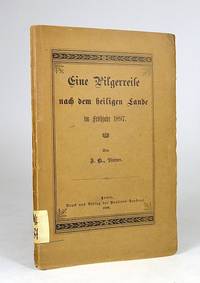
18980692Trier Paulinus 1898. 1st Edition . Soft cover. . ~ ~ NOTE: THE PRICE OF THIS BOOK IS CURRENTLY REDUCED! ~ ~ . Crown octavo. Pp. 100. Set in Gothic type. Original printed wrappers decorated in black shelf label to spine small institutional stamp. In a very good condition. ~ FIRST EDITION. Extremely rare travelogue to the Holy Land at the end of the 19th Century. It contains: Stations of the journey with daily reports; visits to Jaffa Jerusalem Bethlehem Nazareth Cairo Alexandria. Y-3 OUT <br/> <br/> Trier, Paulinus paperback
Small folio (238 x 298 mm). (4), XXVII, (1), 470, (2) pp. Later 19th century marbled half calf with giltstamped title to gilt spine. Marbled endpapers. First edition. - Since 1815 Peyron (1785-1870) taught oriental languages at the University of Turin. He was a specialist in the Coptic language, the latest stage of Egyptian and spoken in Egypt until at least the 17th century. His research in this field gained him an international renown that was consolidated by his Coptic dictionary, the earliest of its kind. It remained unsurpassed until Wilhelm Spiegelberg's "Koptisches Handwörterbuch" in 1921. - From the library of the Ducs de Luynes at the Château de Dampierre: their bookplate reproducing the arms of Charles Marie d'Albert de Luynes (1783-1839), 7th Duc de Luynes, on pastedown. An excellent copy. Ibrahim-Hilmy II, 113. Gay 2337. Zaunmüller 228. Vater/Jülg 209. Brunet IV, 584. Graesse V, 247. OCLC 2786885.
599826New York, The metropolitan museum of art, 2000. In-4 broché, couv. rempliée ill. en coul., XII-197 pp., frontispice, très nb. reprod. photogr. en n/b. in-t., texte en anglais sur 2 colonnes, 15 contributions.
4to. With 13 numbered lithographed plates (the first used as frontispiece), including 3 fully and 1 partially coloured by a contemporary hand, of which 2 highlighted in gold. Contemporary half calf, restored and rebacked with parts of the original backstrip laid down, with new tooling and title-label on spine, cloth sides, later endpapers. First edition of "the historic cornerstone of the study [of mummification] in English. For the time at which it appeared, the work was a monumental undertaking. Based on scholarly research and practical experience, Pettigrew's work was a summation of almost all that was known concerning Egyptian funerary practices. He compiled all the ancient sources and commented on them, as well as discussing many examples of mummified remains investigated by or known to him. The work is illustrated by [...] Georges Cruikshank (better known for his satirical drawings) that are the product of careful observation" (Peck). - With the bookplate of the British lawyer and politician Bernard John Seymour Coleridge, 2nd Baron Coleridge (1851-1927). Some foxing on the title-page and some spots and marginal waterstains on the plates, touching the last three illustrations, otherwise in good condition. Binding rebacked and restored. Brunet IV, 581. Gay 1565. W. H. Peck, "Mummies of ancient Egypt" in: Mummies, disease and ancient cultures (1998), p. 15.
8vo. 8 pp. With woodcut device on title page. Wrappers. An appeal, written in verse, to all religious orders and Christian laymen to take arms against the Ottomans. Apparently an early product of the Turkish-Venetian War of 1714-18, in which the new Grand Vizier Silahdar Damat Ali Pasha re-conquered Morea (the Peloponnesus) from the Venetians, who had held the peninsula since 1699. A different version (kept at the Biblioteca Civica Bertoliana in Vicenza), published by Giovanni Berno "in Venetia, Bassano, & in Verona", is dated 1715; this date of publication is also supported by the mention of Pope Clement XI (1700-21). However, the Marciana in Venice keeps an earlier publication of the same work produced for the Venetian Alessandro Cortesi, bearing the date 1663. Yet another, undated version in the Biblioteca Universitaria di Padova bears the imprint "In Venezia, per Domenico Lovisa à Rialto". No other copy with Remondini's imprint is known. - Some browning and waterstaining; old pagination in manuscript and stamped (apparently removed from an old collection).
2021500113269PETIT FUTE 2021 12x20 4x1 7cm. 2021. Broché.
2021500116935PETIT FUTE 2021 12x20 4x1 7cm. 2021. Broché.
2021500120298PETIT FUTE 2021 12x20 4x1 7cm. 2021. Broché.
2019500048259PETIT FUTE 2019 144 pages 10 4x15 2x1cm. 2019. Broché. 144 pages.
2019500048498PETIT FUTE 2019 144 pages 10 4x15 2x1cm. 2019. Broché. 144 pages.