4 751 résultats
In 16,, cm. 10,5 x 18, pp. 241, con 4 cartine geografiche nel testo. Brossura editoriale con normali segni d'uso. Serie politica 7. Ampiamente sottolineato a matita.
Oblong 4to (327 x 154 mm). Dedication leaf and 10 engraved leaves of alphabet specimens, lithographed throughout. In the publisher's original lithographed wrappers. Only edition of this collection of alphabet specimens, comprising Arabic, Syriac, Chaldaic, Hebrew (in two versions), Greek, "Illyric", "Egyptian", "Saracen", and "Indian". The author dedicated his effort to Conte Livio Benvenuti Clavello. - Slightly browned and brownstained throughout. Contemporary ink ownership "Biagio G..." on dedication leaf. Rare; only two copies in Italian libraries (Biblioteca statale di Cremona & Biblioteca nazionale Marciana, Venice). ICCU VEA\0176272.
8vo. (117)-127, (1) pp. Original printed wrappers. Offprint from the Journal of the Royal Asiatic Society. About the Mahmal, the closed rectangular pyramidal canopy taken along on camelback on Egyptian and Syrian pilgrimages to Mecca before Ibn Saud's conquest of the Hejaz in 1925 - a "very curious custom in Islam", the origin and purport of which the present essay undertakes to investigate. "It is very improbable that the Mahmal [...] will be seen in the Hejaz again [...] The Mahmal is heretical to Islam, and the Wahhabis [...] have declined to admit the Mahmal into the Hejaz" (p. 117). - Wrapper shows insignificant ruststains from staples, otherwise in perfect condition. OCLC 47931240. Not in Macro.
Double Crown folio (48 x 36.5 cm). [37] ff. including title-leaf and 7 blanks, plus 16 loosely inserted ff. Album containing 42 pencil and other drawings (a few partly coloured) and 3 squeezes, some on the album leaves and some loosely inserted, mostly of ancient Egyptian and Nubian architecture, sculpture, bas-reliefs and hieroglyphic inscriptions, but also with a few botanical drawings and landscapes with buildings. Most have English-language captions in brown ink and are signed and dated 1838 to 1839. New black half morocco, on recessed cords, title and double fillets in gold on spine, using mid-19th-century marbled paper for the sides (blue-green Spanish-marble with black and white veins). An album of drawings (and squeezes of bas reliefs) made by William Robertson on a journey from Cairo in December 1838 down the Nile into Nubia, reaching as far south as the present-day Egyptian-Sudanese border region, including the temples of Abu Simbel, in January 1839, then returning via Philae, Karnak and other sites to Thebes in February 1839. They give very detailed views of numerous buildings, sculptures, bas-reliefs and hieroglyphic inscriptions, as well as more distant views of landscapes with buildings and three botanical drawings. While Robertson made most of his drawings on site, he drew the Temple at Luxor after a drawing by Achille Émile Prisse d'Avennes (1807-1879) who began exploring and drawing the ancient Egyptian sites in 1836 and published many of his drawings in 1847. The squeezes of bas-reliefs are of special interest, for they preserve a very precise record of the original with little influence from personal interpretation: the paper was wetted, pressed into the relief and allowed to dry. In addition to the three clear squeezes, a couple of the drawings also seem to have been made on flattened squeezes (some of those that survive as squeezes also have some lines drawn over them them). Since many of the ancient Egyptian sites have been looted and damaged over the years, these early drawings and squeezes provide an important record of what was there in 1838/39 and how it was situated, before the first photographs were made. The building of the old Aswan dam in 1902 caused frequent flooding and damage at the site of Philae, now an island, and most of its treasures were removed before completion of the new Aswan dam in 1970. The album has no true title-page, but the leaf before the first drawing has a slip pasted to it giving the name of the artist, dated from Cairo, December 1838. We have not identified the artist. The clergyman and historian William Robertson and his son of the same name died before 1838 and the archaeologist William Robertson Smith was not born until 1846. Thieme & Becker notes two artists named William Robertson, active two or three decades before and after the present drawings, but provides so little information that we cannot link them to either. He may possibly be the Irish-born London architect William Robertson (1770-1850), who took an early interest in Egyptian revival, but he would have been nearly seventy when these drawings were made. The loosely inserted drawings and squeezes are made on at least 8 different paper stocks, wove and laid, one of the wove stocks machine-made (the "watermark" left by the papermaking machine's belt seam appears in one sheet). A few of the original album leaves are now detached and may have been removed by the artist himself. The squeezes have inevitably been flattened in the album, but they still show the contours of the original bas-reliefs very clearly. One inserted drawing is severely foxed and one inserted floor plan is rather dirty, but in general the drawings are in very good condition. A detailed graphic record of ancient Egyptian art, architecture and hieroglyphic inscriptions, made before many of the worst depredations.
8vo (223 x 148 mm). 40 engraved plates, some with vignette at foot, engraved index leaf. Modern olive green morocco gilt by Eighton, covers with triple gilt fillet, spine in six compartments, gilt lettered direct in second, others richly gilt, raised bands, top edge gilt. Fine series of plates, each depicting a famous horse with his rider or stable-hand, and recording its pedigree, qualities and racing record, together with the owner's name. The final plate shows the most famous of all, the Godolphin Arabian (here called the "Bay Arabian, the property of the Right Hon.ble the Earl of Godolphin"), foaled in Yemen around 1724: "This extraordinary horse became a private stallion soon after his arrival in this kingdom, and got a greater number of fine horses of just temper with superior speed than any Arab ever did. He was the Sire of Lath, Dismal, Cade, Bajazet, Babraham, Phenix, Dormouse, Regulus, Skewball, Sultan, Blanck, Slugg, Noble, Tarquin, Blossom, the Godolphin Gelding, Shepherdess, Amelia, and many others besides stallions and brood mares, all in the highest esteem; he died at Hogmagogg Hills, Dec. 1753, in the 29th year of his age". - Among the other horses are Lath, the Godolphin Arabian's offspring by Roxana; Basto (son of the Byerly Turk); Old Scar, whose ancestry included the Oglethorpe Arabian and Darcy's Yellow Turk, etc. The horses pictured all ran between 1708 and 1755. The first edition was published in about 1760. Rare, only two copies recorded in ABPC/AE Online. ESTC records two issues, one published and sold by Henry Roberts, the other printed for R. and R. Baldwin (as here): just one location is given for the first issue (Winterthur), and one for the second (BL). Huth records the work under a variant title, and also notes an 1820 edition. - Plate 12 shorter at margins, some spotting and browning, heavier at margins. A most handsome copy. Huth 38.
8vo. Letterpress title page and 40 engr. plates by James and Henry Roberts, engr. index leaf, and publisher's 4-page catalogue (with woodcut image of cocks fighting). Stitched in wrappers. Fine series of plates, each depicting a famous horse with his rider or stable-hand, and recording its pedigree, qualities and racing record, together with the owner's name. The final plate shows the most famous of all, the Godolphin Arabian (here called the "Bay Arabian, the property of the Right Hon.ble the Earl of Godolphin"), foaled in Yemen around 1724: "This extraordinary horse became a private stallion soon after his arrival in this kingdom, and got a greater number of fine horses of just temper with superior speed than any Arab ever did. He was the Sire of Lath, Dismal, Cade, Bajazet, Babraham, Phenix, Dormouse, Regulus, Skewball, Sultan, Blanck, Slugg, Noble, Tarquin, Blossom, the Godolphin Gelding, Shepherdess, Amelia, and many others besides stallions and brood mares, all in the highest esteem; he dies at Hogmagogg Hills, Dec. 1753, in the 29th year of his age". - Among the other horses are Lath, the Godolphin Arabian's offspring by Roxana; Basto (son of the Byerly Turk); Old Scar, whose ancestry included the Oglethorpe Arabian and Darcy's Yellow Turk, etc. The horses pictured all ran between 1708 and 1755. The first edition was published in about 1760, and this Barker edition some forty years later. This copy has no watermarks, but the books listed in J. Barker's catalogue of publications were mostly published in the 1790s. - Spine rubbed and bumped; slight wear to edges and corners. An excellent copy with two small tears imperceptibly restored. Of the utmost rarity: the only copy recorded at auction during the last decades is the Gloucester copy (Christie's, Jan. 27, 2006, lot 592). Huth, p. 38. Cf. Podeschi 54.
8vo. 36 ff., printed on rectos only. Original printed wrappers with oval portrait of the author in Arabic costume. Stapled. First edition, very rare. Extraordinary guide to the Kingdom of Hejaz, "the most frequented pilgrim country in the world" (f. 36). It comprises accounts of Jeddah and Mecca and includes a chapter on King Abd al-Aziz ibn Saud (1875-1953), "undoubtedly the strongest and ablest ruler Arabia has produced for many many years" (f. 29). - Describing the journey from Egypt across the Red Sea, the booklet discusses the travel documents required to enter Hejaz, as well as the enormous economic benefit of the pilgrimage to the Kingdom, and gives a report of the crossing from Suez to Jeddah including stops at El Tor, "the most attractive and beautiful of the Red Sea towns" (f. 11), Wedja and Yambo. It includes a description of the Mount Sinai monastery as well as the wrecked pilgrim ship "Asia", which caught fire in the Jeddah port in 1929. On the one hand deeming Jeddah "a place for work and no play" (p. 24), the guide laments the prohibition of alcohol, cigarettes and gramophones, as well as the lack of hotels, cafés, restaurants, cinemas, and fresh water, and criticises the general state of many houses in the city. On the other hand, the booklet admires the low crime rate of Hejaz as well as recent improvements in public transportation. An uncommonly frank account of a Westerner's stay in Hejaz, not hesitating to speak out on the hardships of pilgrimage. - Covers loosened; somewhat soiled. A few pages slightly wrinkled. Contemporary ownership inscribed to title-page in blue ballpoint. Not a single copy traceable in libraries worldwide.
8vo. 1 p. on bifolium. To his son-in-law Henry Bicknell, making arrangements to meet: "I have unfortunately accepted an invitation to dine with Lord Tenterden on Wednesday, had it been an other I would have endeavoured to get off - as it is I have done as you desired an pop'd Marochetti into the fire. With the exception of that and Saturday I am disengaged the rest of the week [...]". - In a postscript, he adds that "Turner called on Monday to say he would dine with you tomorrow having mistaken the day - he is to dine with your Governor [Henry Bicknell's father, the art collector Elhanan Bicknell] on Saturday". - Roberts enjoyed a close and warm relationship with his daughter and her husband, no doubt a compensation for his own unhappy marriage.
Large 8vo (300 x 220 mm). 6 vols. bound as 3. With 250 numbered plates (image size 120 x 170 to 150 x 220 mm), including a tinted lithographed portrait of the artist, 6 tinted lithographed title-pages, 2 stone-engraved maps and 239 tinted and double-tinted lithographed and 2 chromolithographed views. Contemporary, richly gold-tooled reddish-brown morocco, side-stitched and oversewn, then sewn on 5 recessed cords, with a hollow back, 5 false bands on the spine, gold-tooled turn-ins, combed and curled marbled endpapers, headbands in red and yellow, gilt and gauffered edges. With thin paper guard leaves facing each plate. Second edition, with reduced illustrations but with more of them double-tinted or chromolithographed, of one of the most splendid and historically important visual records of the Middle East, after drawings by David Roberts (1796-1864) from the sketches he made from life during his travels through what is now Egypt, Israel, Jordan, Saudi Arabia, Syria and Lebanon in 1838 and 1839. In Egypt he ventured up the Nile as far as the Nubian temples at Abu Simbel, near the present border with Sudan and travelled by camel through the Sinai to the extraordinary carved-rock buildings of Petra. These had been unknown to Europeans until Burckhardt discovered them in 1812 and 1813, so Roberts's views are among the earliest and are in many ways better than the few predecessors. In Lebanon he ventured as far as Baalbek, which had seen few European visitors before Egypt annexed it in 1832. Other sites he visited and drew include Cairo, Suez, Gaza, Jerusalem and Beirut. He was one of the first Europeans allowed to make drawings of the interior of mosques, so even in well-known cities these too opened a new world to European eyes. His views also provide a very detailed visual record of many sites that were afterward destroyed or disturbed. He drew them during the infancy of photography, before it reached the Middle East and long before it reached maturity there. His views of the modern cities also preserve records of both their architecture and their daily life and he shows spectacular landscapes in the mountains, around the Dead Sea and along the Nile and the Jordan. Roberts, born to a poor (Welsh?) family in Edinburgh, was apprenticed as a house painter, moved to London and worked his way up to paint sets for the Drury Lane Theatre and others. Thanks to patrons who appreciated his talents and hard work he was able to make the expensive and dangerous voyage through the Middle East. George Croly (in volumes 1-3) and William Brockedon (in volumes 4-6) provided explanatory and historical notes on the sites shown in Roberts's views. - Roberts's views were originally published in two separate works, issued in parts in the years 1842 to 1849 and often found together. One centred on the Holy Land, though also including views in other parts of the Middle East, while the other was devoted to Egypt and Nubia. The views in the former were made with only a single tint block and even the latter used fewer tint blocks than the present second edition and only one chromolithograph. The present edition, with sometimes very intricate double tints and two chromolithographs (with black and three tint blocks) is a masterpiece of tinted lithography. Since the lithographers used photographic reductions of the lithographic views of the first edition as an aid to their work, the book also pioneered the use of photography in graphic reproduction. The lithographed title-pages are dated 1855 except for those of vol. 3 (from the simultaneous New York issue, undated) and 6 (1856) but volumes 2-6 include plates dated 1856. The dates of the plates in all six volumes range from 16 April 1855 to 15 December 1856. - The title-page of volume 3 was intended for the simultaneous New York issue, but appears to have always been part of the present copy. In very good condition, with occasional light foxing, mostly on the backs of the plates, and with a faint marginal water stain in the lower outside corner of many plates in volumes 3 and 4, not approaching the printed image. The inside front hinge of the second volume as bound has separated from the book block and the bindings show some wear at the hinges and extremities, but they are otherwise also very good. 250 mostly tinted and double-tinted lithographs providing stunning early views of the Middle East, including Petra, Abu Simbel and the interiors of several mosques. Abbey, Travel 388 (lacking vols. 5-6). Blackmer 1432 (note). Gay 25. Hiler 205. Cf. Hamilton, Europe and the Arab world 66 (1842-49 ed.); Lipperheide, Lc 12 & Ma 27 (1842-49 ed.); Tooley 401f. (1842-49 ed.); not in Colas.
Small 8vo. (8), 252 [but 254], (2) pp. (includes final leaf of ads). Contemporary calf, rebacked. First edition of this extraordinary account of an Englishman’s capture by Barbary pirates and subsequent adventures as a slave in Algeria. The narrative is framed as an authentic journal of a deceased traveller, prepared for the press by a friend of the departed. Through this mechanism the reader is taken into a proto-novelistic fantasy, albeit one that must have been informed by genuine experience of Eastern travel. As a slave under numerous masters the author tricks his way variously into employment as the cook to the King of Algiers, is then demoted to Keeper of the King’s Bath and secretly fathers a daughter with one of the King’s wives. After an unsuccessful stint as a gardener’s assistant he journeys in the service of an officer, collecting tribute money with the Algerian army and offers his services as an advisor to the Ottoman governor of Tlemcen. He recounts observations on the various peoples encountered and their customs and peculiarities, marvelling at flying serpents, lions and ostriches and skirmishing with an army of Arabs. Against a backdrop of mosques, minarets and palaces, the narrative is peppered with anecdotes of meetings with Barbary pirates, European renegados, and dalliances with alluring women of the Maghreb. - The author takes particular relish in recounting the details of his sexual adventures: "the women in this country keep much at home, but their minds and affections are more wandering abroad, because they are so recluse; whereas if they had as much liberty as in other countries they would not be so furiously debauch’d: their husbands keep strict guard over them, that when they can escape their eyes, they give the reins to their passion, and labour to satisfy themselves more abundantly; stolen waters are sweet: the more they are forbidden and hindered from variety, the more pleasure and satisfaction they fancy in it [...] had my design been to make conquests in the Empire of Love, I think none could have been more happy [...] this good opinion of my ability spread & increased wonderfully in the town [...]". A separate appended section offers directions for navigating the Barbary coast. The work is of value both as a travel narrative and as a proto-novel reflecting the European fascination with the Orient. This is one of four journeys undertaken by Englishmen in the Ottoman Mediterranean analysed recently by Gerald Maclean in his 2004 study "The rise of Oriental travel: English visitors to the Ottoman Empire, 1580-1720". - Provenance: small stamp of Bibliothèque Generale, Rabat, to title, first leaf of dedication, and first leaf of text. Small ownership stamp of Alexander Gardyne, 1883, to verso of title. Manuscript bookplate of Henry White, Lichfield, 1820, to pastedown. A very good copy. Playfair, Morocco, 244. Playfair, Algeria, 155. Pforzheimer, 846. Wing S152. Not in Blackmer or Atabey.
1975004075Washington, American Enterprise Institute, 1975. -- Broschiert -- 8°
1982004692Cambridge, IFPA - Institute for Foreign Policy Analysis Inc., 1982. Broschiert Gr. 8° 0
193145477Société anonyme de l'imprimerie rapide de Tunis | Tunis 1931 | 16 x 24.50 cm | broché
193313587Librairie Gallimard 1933 297 pages in12. 1933. broché. 297 pages. Cette biographie de T.E. Lawrence écrite par Robert Graves retrace le parcours du célèbre officier britannique qui a organisé la révolte arabe contre l'occupant turc pendant la Première Guerre mondiale. Le livre décrit ses actions clés notamment la prise d'Aqaba l'entrée à Jérusalem et à Damas faisant de Lawrence une figure mythique du XXe siècle
191419772Extrait de La Revue des deux mondes | s. l. [Paris] 1914 | 15.50 x 25 cm | agrafé
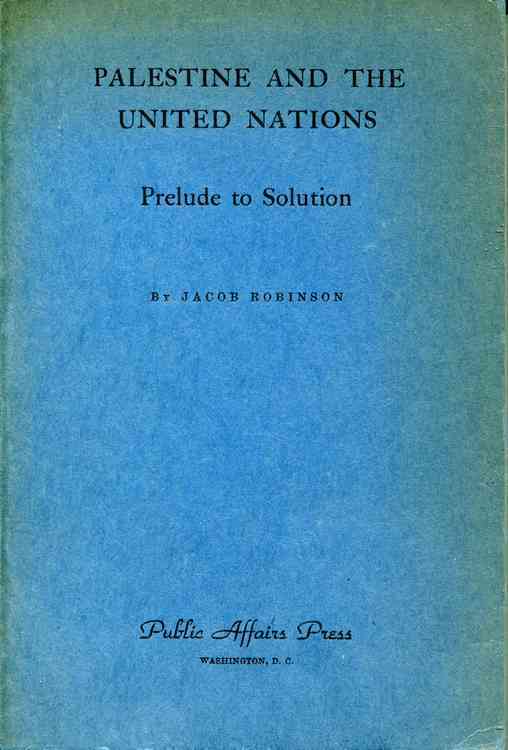
11055,Washington, D. C., Public Affairs Press 1947, viii-269 pp., 1 vol. in 8 br.
19747343New York et Jérusalem, 1974, fort gr. in-8°, xxxix-616 pp, biblio, index, reliure toile éditeur, jaquette, bon état. Texte en anglais
8vo. 32 pp. in paper cover, illustrated title page. Numerous illustrations in the text Shortened Italian version of this account of a journey made from Port Said, down the Red Sea to Mascate, and then along the Arabian Gulf ending in Baghdad (Obock, Mascate, Bouchire, Bassorah. Paris 1883). No. 61 of the famous "Biblioteca illustrata dei viaggi intorno al mondo per terra e per mare" series, published 1899-1904. - Some wear, but altogether well preserved. OCLC 799578383.
12mo. (4), 292 pp. With woodcut vignette on title page, 13 plates and a folding map. Original printed wrappers. First edition of this account of a journey made from Port Said, down the Red Sea to Mascate, and then along the Arabian Gulf ending in Baghdad. - Some foxing. OCLC 254176761.
Imperial folio (405 x 474 mm). 2 vols. (10), 12, (2) pp. With 10 colour illustrations in the the text and 100 full-page coloured illustrations mounted on plates. Sumptuous dark brown contemporary full calf, gilt, covers lined in silk, with silk endpapers. First edition of this monumental publication on Islamic pottery, no. 107 of 200 copies printed. All ceramics pictured within the two volumes are described in detail with place and date of origin as well as the current owner (mostly French noble or institutional collections). Includes a bibliography on the subject and list of plates. - Union Club bookplate. Contemporary bindings somewhat rubbed; hinges professionally repaired, otherwise a fine copy, clean throughout. Rare. Not in Arntzen/Rainwater.
1884102891884 1 P., E. Plon, Nourrit et Cie, 1884, in-12 broché de 320 pages -2 ff. n.ch., sous couverture gris-bleu imprimée ; quelques piqûres, exemplaire plutôt agréable.
1884vj1220Paris, Librairie Plon, E. Plon, Nourrit et Cie, imprimeurs-éditeurs, rue Garancière, 10 Relié 1884 In-12 (12,5 x 18,6 cm), reliure demi-toile, dos lisse, 320 pages, bien complet des 11 planches hors texte et de la carte ; rousseurs à l'intérieur, par ailleurs bon état général. Livraison a domicile (La Poste) ou en Mondial Relay sur simple demande.
Red/white octavo; 255 p : b&w ill/maps ; 24 cm. Middle East -- Emigration and immigration; Laws; Policies.
8vo. XII, 400 pp. Contemporary full blue calf, the spine elaborately gilt, blue silk page-marker, all edges gilt. Neat contemporary ownership inscription to front free-endpaper. Second edition. "The author, a Christian Arab from Lebanon, gives a very interesting account of life among the native Christian population. The work consists of a mixture of autobiographical anecdotes, travels and information on Syria and Lebanon. There is also an amusing chapter on how a young Syrian sees England, plus a very interesting account of silk-worn culture" (Blackmer, 1427). - Minor wear to extremities of spine, corners slightly bumped, otherwise very good. Cf. Blackmer 1427 (first edition).
8vo. X, (2), 364 pp. With a pictorial map as frontispiece, 31 photographic plates and a full-page map in text. Original publisher's black cloth, with title in gold on spine. First edition, British issue, of a travelogue by the distinguished Lebanese Arab-American writer Ameen Rihani (1876-1940). Divided into five parts, it describes his time with King Husein in the Hijaz, the Idrisi in Asir, Aal Sabah, the sheiks of Kuwait, Aal Kalifah, the sheiks of Bahrein, and Aden and the protectorates. It is one of the most important sources for the historical background of the Idrisid Emirate of Asir. - Rihani, who moved to New York when he was twelve, is considered the founding father of Arab-American literature. His early English writings mark the beginning of a school of literature that is Arab in its concern, culture and characteristic, English in language, and American in spirit and platform. - A few occasional spots, but otherwise in very good condition.