481 résultats
20132-0615929559LexNoir Foundation 2013. Paperback. New. 72 pages. 9.00x6.00x0.17 inches. LexNoir Foundation paperback
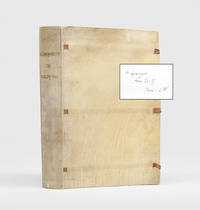
1893000338<p><strong>The most over-decorated of the Kelmscott books surpassing in this respect even the 'Chaucer' Peterson 1991 141. A very good copy of 300 printed on paper from a total edition of 306 copies.</strong></p><p><strong>Description:</strong> Original full limp vellum with yapped fore-edges and cloth ties. Titled horizontally in gilt on spine. Quarto: 29 × 21 cm; pp.: xxii i 1 450 2. With double page woodcut title and numerous ornaments and initials. Printed from 'Troy' type list of chapter headings and glossary in 'Chaucer' type. Printed in black and red on Batchelor handmade paper.</p><p><strong>Provenance:</strong> Small bookplate of Wilfred Merton to upper pastedown. Wilfred Merton 1888–1957 was a passionate collector of books and manuscripts The Merton Papyri and publisher of books Homer's Odyssey 1932 in translation by T.E. Lawrence with Bruce Rogers and Emery Walker. Merton was elected a Fellow of the Society of Antiquaries in 1938.</p><p><strong>Ref.:</strong> Sparling 15; Walsdorf 15; Peterson 15</p><p><strong>Condition:</strong> Front cover shows a few naturally occurring variations in the surface colour of the vellum slight bow to front board as often; only two of the six ties are preserved. Internally bright and clean no browning to endpapers.</p><p><strong>Notes:</strong> This is the fifth and last of the Caxton reprints and the first book published and sold at the Kelmscott Press. lt also contains a new printer's mark after the colophon followed by the words "Sold by William Morris at the Kelmscott Press." Walsdorf 1983 29. Reprinted from Caxton's edition of 1481. Edited by H. Halliday Sparling.</p> Kelmscott Press
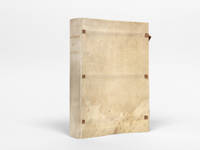
1893178340Hammersmith: The Kelmscott Press 1893. Presentation copy to Georgiana Burne-Jones First Kelmscott edition presentation copy inscribed by Morris on the second blank nine days after publication "To Georgie from W.M. June 2nd". Georgiana Burne-Jones met Morris decades earlier through her future husband Edward Burne-Jones sparking a creative collaboration and close personal friendship that lasted for the rest of Morris's life. Georgiana 1840-1920 "was the woman to whom Morris addressed himself most openly and fully on all occasions with whom he shared his interests and concerns and not least his political ones. She was the woman that is whom he trusted as a friend before all others" Kelvin p. xxxix. In the early years of their marriage Georgiana and Edward Burne-Jones spent summer holidays with William and Jane Morris at Red House. When Jane Morris turned her affections towards Rossetti William Morris increasingly relied on his friendship with Georgiana and for a time spent every Sunday breakfast in the Burne-Jones household The Grange in Fulham. Morris frequently sought Georgiana's opinions on his books. "If you only knew what I expect of my friends. Such close attention such anxiety on their parts such sincerity withal - O the cross-questioning of them after a reading! Only ask Georgie" Letters I p. 150. As an artist Georgiana was employed in painting tiles at the decorative firm Morris Marshall Faulkner & Co. est. 1861 and she was a trustee of the South London Gallery. Following Morris's death in 1896 Georgiana encouraged her son-in-law J. W. Mackail to publish the first biography of Morris in 1899. This history of the First Crusade and the victorious first ruler of the Kingdom of Jerusalem is here based on William Caxton's translation of 1481 its text newly revised by Henry Halliday Sparling. Morris stated of the work "This book must from a literary point of view be considered one of Caxton's most important works. It is not a 'romance'. but a very serious piece of history the original of which is William of Tyre's Historia Rerum in partibus transmarinis Gestarum; from the French translation of which Caxton made his English version bringing it to an end just after the death of Godfrey. The style of Caxton's book is vigourous and agreeable and often reads like the most dramatic of all historic works Lord Berner's translation of Froissart and altogether it is a delightful book to read" cited in Peterson p. 43. One of 306 copies this Kelmscott production used the printer's larger device for the first time. Quarto. Elaborate woodcut border to title page and facing first page of contents ornamental initials and borders throughout. Chapter titles printed in red contents in Troy type table of contents and glossary in Chaucer type. Printed on handmade paper. Original limp vellum with yapp edges spine lettered in gilt top edge untrimmed fore and bottom edges uncut four of six brown silk ties a fifth detached and loosely inserted. Housed in a black quarter morocco solander box by the Chelsea Bindery. Ticket of bookseller Maruzen tipped to rear pastedown. Front cover bowed a couple of spots to vellum foxing to edges and outer leaves contents otherwise clean. A near-fine copy. Franklin p. 202; Peterson A15 this copy listed as copy "r"; Ransom 15; Tomkinson 15. Norman Kelvin ed. The Collected Letters of William Morris 2014. hardcover
2016100136383Princeton University Press 2016 262 pages in8. 2016. Cartonné jaquette. 262 pages.
0939084309.Gpaperback. Good. Access codes and supplements are not guaranteed with used items. May be an ex-library book. paperback
21484541like new. unknown
B9780615995113Paperback / softback. New. paperback
1969d80dlDoubleday 1969. First Edition. Hardcover. Fair/Poor. the jacket is worn torn and creased. edge wear on the book. some markings. text and illustrations remain clear and presentable. SK. Our orders are shipped using tracked courier delivery services. Doubleday hardcover
1966000113<p>Doubleday 1966 First edition of the 1966 version. Octavo original half cloth illustrated by Anthony Ravielli. Very good tight binding in fair to good jacket with wear at the edges. Illus. by Anthony Ravielli. 1st Edition. Hardcover. Good.</p> Doubleday hardcover
1966151724New York: Doubleday 1966. 1st edition. Nice copy. octavo. hardback with dust jacket xviii 246pp. text ills. Bookplate removed from front paste-down & a little edge-wear to dust jacket o/w a nice copy of the uncommon first US edition Doubleday hardcover
1966230855New York: Doubleday & Company Inc. 1966. Hardcover. Very Good/Very Good. Foreword by Charles Price. 246 pp. Green endpapers. Green cloth with gilt titles. Corners bumped. White DJ with black titles and colour photo. Spine and edges slightly yellowed. VG/VG <br/> <br/> Doubleday & Company, Inc. hardcover
1960GB00WDFXO1CI5N11Doubleday & Company 1960. Hardcover. Acceptable. Former library book; Missing dust jacket; Readable copy. Pages may have considerable notes/highlighting. ~ ThriftBooks: Read More Spend Less.Dust jacket quality is not guaranteed. Doubleday & Company hardcover
1960GB00I50N7YII3N00Doubleday & Co 1960. Hardcover. Good. Disclaimer:A copy that has been read but remains in clean condition. All pages are intact and the cover is intact. The spine may show signs of wear. Pages can include limited notes and highlighting and the copy can include previous owner inscriptions. At ThriftBooks our motto is: Read More Spend Less.Dust jacket quality is not guaranteed. Doubleday & Co hardcover
19541000471954. Attractive signed large color portrait of golfer Bobby Jones swinging his driver. Boldly inscribed by Bobby Jones "For Will Grimsley with best regards Bob Jones." Annotated below the portrait "Reproduced from a painting by Thomas E. Stephens and presented by ninety-nine members of the Augusta National Golf Club Augusta Georgia. Number 282 of a limited edition." In fine condition. Matted and framed the entire piece measures 33.5 inches by 29.5 inches. Robert T. Jones was an American golfer who was one of the most influential figures in the history of the sport. Jones founded and helped design the Augusta National Golf Club and co-founded the Masters Tournament. The innovations that he introduced at the Masters have been copied by virtually every professional golf tournament in the world. Jones was the most successful amateur golfer ever to compete at a national and international level. During his peak from 1923 to 1930 he dominated top-level amateur competition and competed very successfully against the world's best professional golfers. Jones often beat stars such as Walter Hagen and Gene Sarazen the era's top pros. Jones earned his living mainly as a lawyer and competed in golf only as an amateur primarily on a part-time basis and chose to retire from competition at age 28 though he earned significant money from golf after that as an instructor and equipment designer. Explaining his decision to retire Jones said "It championship golf is something like a cage. First you are expected to get into it and then you are expected to stay there. But of course nobody can stay there." Jones is most famous for his unique "Grand Slam" consisting of his victory in all four major golf tournaments of his era the open and amateur championships in both the U.S. & the U.K. in a single calendar year 1930. In all Jones played in 31 majors winning 13 and placing among the top ten finishers 27 times. After retiring from competitive golf in 1930 Jones founded and helped design the Augusta National Golf Club soon afterwards in 1933. He also co-founded the Masters Tournament which has been annually staged by the club since 1934 except for 1943–45 when it was canceled due to World War II. The Masters evolved into one of golf's four major championships. Jones came out of retirement in 1934 to play in the Masters on an exhibition basis through 1948. Jones played his last round of golf at East Lake Golf Club his home course in Atlanta on August 18 1948. A picture commemorating the event now sits in the clubhouse at East Lake. Citing health reasons he quit golf permanently thereafter. unknown
92769Photograph of Bobby Jones boldly inscribed by him "For Dave Christensen with warmest regards Bob Jones." The photograph measures 7 inches by 9 inches. Double matted and framed. The entire piece measures 15.5 inches by 18 inches. Robert T. Jones was an American golfer who was one of the most influential figures in the history of the sport. Jones founded and helped design the Augusta National Golf Club and co-founded the Masters Tournament. The innovations that he introduced at the Masters have been copied by virtually every professional golf tournament in the world. Jones was the most successful amateur golfer ever to compete at a national and international level. During his peak from 1923 to 1930 he dominated top-level amateur competition and competed very successfully against the world's best professional golfers. Jones often beat stars such as Walter Hagen and Gene Sarazen the era's top pros. Jones earned his living mainly as a lawyer and competed in golf only as an amateur primarily on a part-time basis and chose to retire from competition at age 28 though he earned significant money from golf after that as an instructor and equipment designer. Explaining his decision to retire Jones said "It championship golf is something like a cage. First you are expected to get into it and then you are expected to stay there. But of course nobody can stay there." Jones is most famous for his unique "Grand Slam" consisting of his victory in all four major golf tournaments of his era the open and amateur championships in both the U.S. & the U.K. in a single calendar year 1930. In all Jones played in 31 majors winning 13 and placing among the top ten finishers 27 times. After retiring from competitive golf in 1930 Jones founded and helped design the Augusta National Golf Club soon afterwards in 1933. He also co-founded the Masters Tournament which has been annually staged by the club since 1934 except for 1943–45 when it was canceled due to World War II. The Masters evolved into one of golf's four major championships. Jones came out of retirement in 1934 to play in the Masters on an exhibition basis through 1948. Jones played his last round of golf at East Lake Golf Club his home course in Atlanta on August 18 1948. A picture commemorating the event now sits in the clubhouse at East Lake. Citing health reasons he quit golf permanently thereafter. unknown
81016Original photograph of Bobby Jones swinging a wood on the fairway. Boldly and warmly inscribed by Bobby Jones. The photograph measures 7.5 inches by 9.25 inches. Triple matted and framed. The entire piece measures 15.5 inches by 18 inches. Photographs signed by Bobby Jones are uncommon. Robert T. Jones was an American golfer who was one of the most influential figures in the history of the sport. Jones founded and helped design the Augusta National Golf Club and co-founded the Masters Tournament. The innovations that he introduced at the Masters have been copied by virtually every professional golf tournament in the world. Jones was the most successful amateur golfer ever to compete at a national and international level. During his peak from 1923 to 1930 he dominated top-level amateur competition and competed very successfully against the world's best professional golfers. Jones often beat stars such as Walter Hagen and Gene Sarazen the era's top pros. Jones earned his living mainly as a lawyer and competed in golf only as an amateur primarily on a part-time basis and chose to retire from competition at age 28 though he earned significant money from golf after that as an instructor and equipment designer. Explaining his decision to retire Jones said "It championship golf is something like a cage. First you are expected to get into it and then you are expected to stay there. But of course nobody can stay there." Jones is most famous for his unique "Grand Slam" consisting of his victory in all four major golf tournaments of his era the open and amateur championships in both the U.S. & the U.K. in a single calendar year 1930. In all Jones played in 31 majors winning 13 and placing among the top ten finishers 27 times. After retiring from competitive golf in 1930 Jones founded and helped design the Augusta National Golf Club soon afterwards in 1933. He also co-founded the Masters Tournament which has been annually staged by the club since 1934 except for 1943–45 when it was canceled due to World War II. The Masters evolved into one of golf's four major championships. Jones came out of retirement in 1934 to play in the Masters on an exhibition basis through 1948. Jones played his last round of golf at East Lake Golf Club his home course in Atlanta on August 18 1948. A picture commemorating the event now sits in the clubhouse at East Lake. Citing health reasons he quit golf permanently thereafter. unknown
19651140121965. Autograph letter signed by Bobby Jones to golfing rival and friend Walter Hagen. One page typescript the letter is dated December 17 1965 and reads "Dear Walter: A little bird not to be confused with birdie whispered to me that on December 21st you are celebrating your seventy-third birthday. I very definitely want to be counted among those sending best regards and best wishes for many happy returns. I hope you will live to be a hundred because guys like you come along so seldom. I sent a message to you not long ago by young Walter. I hope he remembered to deliver it. I was much concerned about you while you were in the hospital and have been thinking of you very often since that time. My wife Mary last February had an operation similar to yours. I am happy to say her results have been most satisfactory but at least I got an education in these matters to know something of what you went through. I see nothing in all this to interfere with your enjoyment of those lakes and big pines you once told me about. Knowing you as I do I am sure you will not miss a minute of this enjoyment. My warmest regards and all best wishes. Sincerely "Bob."' In near fine condition. Accompanied by the original transmittal envelope. A fine association. Two of the greatest golfers in the history of the sport American golfers Bobby Jones and Walter Hagen dominated top-level amateur competition in the 1920s. Hagen won the U.S. Open twice and in 1922 he became the first native-born American to win the British Open. During his peak from 1923 to 1930 Jones won thirteen major championships including five U.S. Amateurs four U.S. Opens three British Opens and one British Amateur. After his grand slam in 1930 Jones co-founded the Masters Tournament with investment banker Clifford Roberts. unknown books
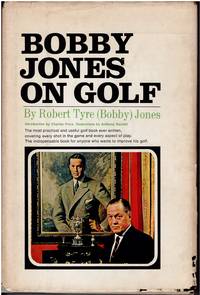
1966100288Garden City NY: Doubleday & Company 1966. First edition of "the most practical and useful golf book ever written covering every shot in the game and every aspect of play." Octavo original half cloth illustrated by Anthony Ravielli. Presentation copy inscribed by the author on the half-title page "For Gene Ballard With best regards Bob Jones." The recipient was a member of The Peachtree Golf Club which was designed by Bobby Jones. Bookplate of the recipient fine in a near fine price-clipped dust jacket. Introduction by Charles Price. One of the more uncommon titles to find signed and inscribed as Jones passed away in 1971. Bobby Jones left an enduring legacy of athletic prowess and exemplary personal characteristics. No one is likely to break his records of thirteen U.S. and British national championships and four in one year he won the U.S. Open a total of four times the U.S. Amateur five times the British Open three times and the British Amateur one time. The Masters seems to have a secure place in the pantheon of golf; and the name Bobby Jones will continue to represent the highest standards of amateurism sportsmanship and self-mastery" ANB. Doubleday & Company hardcover books
19541000471954. Attractive signed large color portrait of golfer Bobby Jones swinging his driver. Boldly inscribed by Bobby Jones "For Will Grimsley with best regards Bob Jones." Annotated below the portrait "Reproduced from a painting by Thomas E. Stephens and presented by ninety-nine members of the Augusta National Golf Club Augusta Georgia. Number 282 of a limited edition." In fine condition. Matted and framed the entire piece measures 33.5 inches by 29.5 inches. Robert T. Jones was an American golfer who was one of the most influential figures in the history of the sport. Jones founded and helped design the Augusta National Golf Club and co-founded the Masters Tournament. The innovations that he introduced at the Masters have been copied by virtually every professional golf tournament in the world. Jones was the most successful amateur golfer ever to compete at a national and international level. During his peak from 1923 to 1930 he dominated top-level amateur competition and competed very successfully against the world's best professional golfers. Jones often beat stars such as Walter Hagen and Gene Sarazen the era's top pros. Jones earned his living mainly as a lawyer and competed in golf only as an amateur primarily on a part-time basis and chose to retire from competition at age 28 though he earned significant money from golf after that as an instructor and equipment designer. Explaining his decision to retire Jones said "It championship golf is something like a cage. First you are expected to get into it and then you are expected to stay there. But of course nobody can stay there." Jones is most famous for his unique "Grand Slam" consisting of his victory in all four major golf tournaments of his era the open and amateur championships in both the U.S. & the U.K. in a single calendar year 1930. In all Jones played in 31 majors winning 13 and placing among the top ten finishers 27 times. After retiring from competitive golf in 1930 Jones founded and helped design the Augusta National Golf Club soon afterwards in 1933. He also co-founded the Masters Tournament which has been annually staged by the club since 1934 except for 1943-45 when it was canceled due to World War II. The Masters evolved into one of golf's four major championships. Jones came out of retirement in 1934 to play in the Masters on an exhibition basis through 1948. Jones played his last round of golf at East Lake Golf Club his home course in Atlanta on August 18 1948. A picture commemorating the event now sits in the clubhouse at East Lake. Citing health reasons he quit golf permanently thereafter. unknown books
196639109NY: Doubleday 1966. Hardcover. Very good. xviii 246pp. Tiny ink gift inscription at top of front free endpaper else a very good hardback in a rubbed and slightly darkened jacket a small spot of loss to the head of the spine and a few closed tears. <br/><br/> Doubleday hardcover books
196056255Garden City:: Doubleday. Very Good in Very Good dust jacket. 1960. Hardcover. Black and white photographs. First edition. Very good in a good age toning and some light soiling dust jacket. . Doubleday, hardcover books
102464Black and white photograph of Bobby Jones swinging a wood on the fairway. Boldly inscribed by Jones in his earlier signature "For Art With best wishes Robert T. Jones Jr." Double matted and framed. The entire piece measures 16.25 inches by 18.25 inches. Robert T. Jones was an American golfer who was one of the most influential figures in the history of the sport. Jones founded and helped design the Augusta National Golf Club and co-founded the Masters Tournament. The innovations that he introduced at the Masters have been copied by virtually every professional golf tournament in the world. Jones was the most successful amateur golfer ever to compete at a national and international level. During his peak from 1923 to 1930 he dominated top-level amateur competition and competed very successfully against the world's best professional golfers. Jones often beat stars such as Walter Hagen and Gene Sarazen the era's top pros. Jones earned his living mainly as a lawyer and competed in golf only as an amateur primarily on a part-time basis and chose to retire from competition at age 28 though he earned significant money from golf after that as an instructor and equipment designer. Explaining his decision to retire Jones said "It championship golf is something like a cage. First you are expected to get into it and then you are expected to stay there. But of course nobody can stay there." Jones is most famous for his unique "Grand Slam" consisting of his victory in all four major golf tournaments of his era the open and amateur championships in both the U.S. & the U.K. in a single calendar year 1930. In all Jones played in 31 majors winning 13 and placing among the top ten finishers 27 times. After retiring from competitive golf in 1930 Jones founded and helped design the Augusta National Golf Club soon afterwards in 1933. He also co-founded the Masters Tournament which has been annually staged by the club since 1934 except for 1943-45 when it was canceled due to World War II. The Masters evolved into one of golf's four major championships. Jones came out of retirement in 1934 to play in the Masters on an exhibition basis through 1948. Jones played his last round of golf at East Lake Golf Club his home course in Atlanta on August 18 1948. A picture commemorating the event now sits in the clubhouse at East Lake. Citing health reasons he quit golf permanently thereafter. unknown books
92769Photograph of Bobby Jones boldly inscribed by him "For Dave Christensen with warmest regards Bob Jones." The photograph measures 7 inches by 9 inches. Double matted and framed. The entire piece measures 15.5 inches by 18 inches. Robert T. Jones was an American golfer who was one of the most influential figures in the history of the sport. Jones founded and helped design the Augusta National Golf Club and co-founded the Masters Tournament. The innovations that he introduced at the Masters have been copied by virtually every professional golf tournament in the world. Jones was the most successful amateur golfer ever to compete at a national and international level. During his peak from 1923 to 1930 he dominated top-level amateur competition and competed very successfully against the world's best professional golfers. Jones often beat stars such as Walter Hagen and Gene Sarazen the era's top pros. Jones earned his living mainly as a lawyer and competed in golf only as an amateur primarily on a part-time basis and chose to retire from competition at age 28 though he earned significant money from golf after that as an instructor and equipment designer. Explaining his decision to retire Jones said "It championship golf is something like a cage. First you are expected to get into it and then you are expected to stay there. But of course nobody can stay there." Jones is most famous for his unique "Grand Slam" consisting of his victory in all four major golf tournaments of his era the open and amateur championships in both the U.S. & the U.K. in a single calendar year 1930. In all Jones played in 31 majors winning 13 and placing among the top ten finishers 27 times. After retiring from competitive golf in 1930 Jones founded and helped design the Augusta National Golf Club soon afterwards in 1933. He also co-founded the Masters Tournament which has been annually staged by the club since 1934 except for 1943-45 when it was canceled due to World War II. The Masters evolved into one of golf's four major championships. Jones came out of retirement in 1934 to play in the Masters on an exhibition basis through 1948. Jones played his last round of golf at East Lake Golf Club his home course in Atlanta on August 18 1948. A picture commemorating the event now sits in the clubhouse at East Lake. Citing health reasons he quit golf permanently thereafter. unknown books
87895Photograph of Bobby Jones swinging a wood on the fairway. Boldly inscribed by Bobby Jones "For Dave my best as ever Bob." The photograph measures 7 inches by 9 inches. Bouble matted and framed. The entire piece measures 16.25 inches by 18.25 inches. Photographs signed by Bobby Jones are uncommon. Robert T. Jones was an American golfer who was one of the most influential figures in the history of the sport. Jones founded and helped design the Augusta National Golf Club and co-founded the Masters Tournament. The innovations that he introduced at the Masters have been copied by virtually every professional golf tournament in the world. Jones was the most successful amateur golfer ever to compete at a national and international level. During his peak from 1923 to 1930 he dominated top-level amateur competition and competed very successfully against the world's best professional golfers. Jones often beat stars such as Walter Hagen and Gene Sarazen the era's top pros. Jones earned his living mainly as a lawyer and competed in golf only as an amateur primarily on a part-time basis and chose to retire from competition at age 28 though he earned significant money from golf after that as an instructor and equipment designer. Explaining his decision to retire Jones said "It championship golf is something like a cage. First you are expected to get into it and then you are expected to stay there. But of course nobody can stay there." Jones is most famous for his unique "Grand Slam" consisting of his victory in all four major golf tournaments of his era the open and amateur championships in both the U.S. & the U.K. in a single calendar year 1930. In all Jones played in 31 majors winning 13 and placing among the top ten finishers 27 times. After retiring from competitive golf in 1930 Jones founded and helped design the Augusta National Golf Club soon afterwards in 1933. He also co-founded the Masters Tournament which has been annually staged by the club since 1934 except for 1943-45 when it was canceled due to World War II. The Masters evolved into one of golf's four major championships. Jones came out of retirement in 1934 to play in the Masters on an exhibition basis through 1948. Jones played his last round of golf at East Lake Golf Club his home course in Atlanta on August 18 1948. A picture commemorating the event now sits in the clubhouse at East Lake. Citing health reasons he quit golf permanently thereafter. unknown books
81016Original photograph of Bobby Jones swinging a wood on the fairway. Boldly inscribed by Bobby Jones. The photograph measures 7.5 inches by 9.25 inches. Triple matted and framed. The entire piece measures 15.5 inches by 18 inches. Photographs signed by Bobby Jones are uncommon. Robert T. Jones was an American golfer who was one of the most influential figures in the history of the sport. Jones founded and helped design the Augusta National Golf Club and co-founded the Masters Tournament. The innovations that he introduced at the Masters have been copied by virtually every professional golf tournament in the world. Jones was the most successful amateur golfer ever to compete at a national and international level. During his peak from 1923 to 1930 he dominated top-level amateur competition and competed very successfully against the world's best professional golfers. Jones often beat stars such as Walter Hagen and Gene Sarazen the era's top pros. Jones earned his living mainly as a lawyer and competed in golf only as an amateur primarily on a part-time basis and chose to retire from competition at age 28 though he earned significant money from golf after that as an instructor and equipment designer. Explaining his decision to retire Jones said "It championship golf is something like a cage. First you are expected to get into it and then you are expected to stay there. But of course nobody can stay there." Jones is most famous for his unique "Grand Slam" consisting of his victory in all four major golf tournaments of his era the open and amateur championships in both the U.S. & the U.K. in a single calendar year 1930. In all Jones played in 31 majors winning 13 and placing among the top ten finishers 27 times. After retiring from competitive golf in 1930 Jones founded and helped design the Augusta National Golf Club soon afterwards in 1933. He also co-founded the Masters Tournament which has been annually staged by the club since 1934 except for 1943-45 when it was canceled due to World War II. The Masters evolved into one of golf's four major championships. Jones came out of retirement in 1934 to play in the Masters on an exhibition basis through 1948. Jones played his last round of golf at East Lake Golf Club his home course in Atlanta on August 18 1948. A picture commemorating the event now sits in the clubhouse at East Lake. Citing health reasons he quit golf permanently thereafter. unknown books