143 résultats
185317061853 Ed. V. Lecou, Paris, 1853. In-12, demi-chagrin, au chiffre de Meissonnier. 382 pages
1986LIT21007Weinheim. Beltz & Gelberg. 1986. 249 S. Kartoniert. Nachwort. Glossar. Zeittafel zur Nationalisierung des iranischen Öls von 1950 - 1953. Buchrücken leicht berieben. Kanten leicht bestoßen. Exemplar ohne Stempel oder Anstreichungen. Gut erhalten.
27849Milaan/Wenen, Skira/Kunsthistorisches Museum Wien, 2000 softcover originele kartonnen uitgeversomslag geillustreerd in kleur, 28x24.5 cm., 341 pp., geillustreerd in kleur en z/w. ISBN 9789057790287.
199321340ABFrankfurt am Main, Fischer-Taschenbuch-Verl., 1993. 18 cm. 172 S. Taschenbuch (Softcover). Dt. Erstausg. Neuwertiges Exemplar. [Fischer-Taschenbücher] ; 11295.
ria9780323917742_inpPaperback / softback. New. New Book; Fast Shipping from UK; Not signed; Not First Edition; N/A paperback
50 pages. Features: Full-page ad for 'Network'; Photo-illustrated interview with Producer-Director Martin Ritt; 'The Seven Percent Solution' - photos; Article on the decline (and fall?) of the Roman (film) Empire; 'Desert of the Tartars' - photos; 'Ashes and Diamonds' - photo-illustrated article on this cult film; 'The Last Tycoon' - photos; Photos of Elia Kazan directing 'The Last Tycoon'; Tehran 1976 (article); 'Rocky' - photos; Reviews - 'The Last Tycoon', 'Victory at Entebbe', 'Next Stop, Greenwich Village', 'Norman... Is That You?', 'The Enforcer', 'The Shootist', 'A Nous Les Petites Anglaises', 'Two-Minute Warning'; 'The Sentinel' - photos; and more. Average wear. Unmarked. A sound vintage copy. Magazine
New Persian Original bdg. HC. Folio. (34 x 24 cm). In Persian with abstracts in English. 392 p., color and b/w ills. Tehran became a major city of Iran after 1554 A.D. during the Safavid period when Shah Tahmasb I, son of Shah Ismail, ordered the implementation of two large-scale public works. The first project was the construction of ramparts and moats surrounding the entire city, which defined the city's perimeters and increased its defense. The rampart consisted of 114 towers, representing the 114 chapters within the Holy Quran and enclosed an area of 4.35 km2. The second project was the establishment of the bazaar, the heart of the industrial and commercial activities of the city, surrounded by numerous holy shrines. However, it was 240 years later in the Spring of 1796 A.D. that Tehran became the national capital of Iran, during Agha Mohammad Khan Qajar's reign. 2016 A.D. actually marks the 220th year since Tehran became the political centre of Iran. The first known map of Tehran (page 18), a Russian spy map, dates back to 1826 A.D. The next Russian map of Tehran (page 24) from 1852 A.D. was translated into Persian and presented as a gift to Naser al-Din Shah Qajar (page 29). After the establishment of the military polytechnic school in 1851 A.D. and the arrival of Europe an military instructors, the importance of accurate topographical maps was recognized by the nation's leaders. The Austrian artillery trainer for cannons, August Karl Krziz, coordinated in 1858 A.D. the preparation of the maps of Tehran (page 39) and its surrounding area (page 35). This was the beginning of scientific cartography in Iran. By 1863 A.D., maps of Tehran Province for the purpose of tax collection (page 58) were being produced by engineer Abdul Rasool Khan. Tehran dramatically expanded after a huge flood in 1867 A.D. destroyed a large portion of the Safavid period ramparts and moats, after which Alexander Bohler, a French military instructor, designed a new and enlarged rampart and moat enclosure. Within four years between 1867 A.D. and 1871 A.D., Tehran grew from 4 .35 km2 to 19.75 km2 with these new constructions. By 1891 A.D., a highly detailed and technical map of Tehran (page 64) had been produced by Abdul Ghafar Najmolmoq. During the reigning years of Mozafar al-Din Shah, Mohammad Ali Shah, and Ahmad Shah, maps for Tehran postal services (page 126) and Tehran provincial delineation (page 127) were produced. During these years, the Russian, British and French prepared several geopolitical maps of the region including Tehran. For example, the map on page 323 reproduces a map prepared in 1892 A.D. by the British Survey of India at the scale of 1:506,880. In 1914 A.D., German publisher Wagner & Debes prepared a touristic map of Tehran (page 134). In 1922 A.D. the Ministry of Culture's Investigation Section prepared a map of schools in Tehran (page 138). During the Pahlavi I period (1925~1941 A.D.), modernization of Tehran became a national priority. By 1930 A.D. a map for street enlargement in Tehran (page 158) had been published. In 1932 A.D., the demolition of the Naser al-Din Shah Qajar period ramparts began simultaneous to further expansion of urbanized Tehran. The 1936 A.D. military map of Tehran (page 169) is testimony to the changes in the urban morphology of this period. The creation of a dedicated military cartographic service in 1935 A.D. marked an important milestone in the history of cartography in Iran. The 1937 A.D. urban development plan of Tehran (page 170) clearly shows the new streets, squares and urban development envisioned. The first known aerial photograph of Tehran dating from 1940 A.D. (page 177) displays the realization of this urban development plan. After the invasions by the Russians, British and Americans in 1941 A.D., cartographic activities in Iran suddenly increased. Sergeant Mohammad Reza Ghaffari privately published maps of Tehran [.] The above mentioned maps are a few representative samples of the over 270 maps
185099923551revue des deux mondes Paris Au Bureau de la Revue des Deux Mondes 1850, In-8 broché, 192 pages. Bon état.
Paris Au Bureau de la Revue des Deux Mondes 1850, In-8 broché, 192 pages. Bon état. LA COUR DE TEHERAN EN 1845 OU NE REVEILLEZ PAS LE CHAT QUI DORT, PROVERBE, par Haçan MEHEMET-KHAN - GUILLAUME III ET LE ROI LOUIS PHILIPPE. 1688 - 1830 par L. LAVERGNE - LES RECITS DE LA MUSE POPULAIRE. LES HUITTIERS ET LES CABANIERS DU MARAIS par Emile SOUVESTRE - PEINTRES ET SCULPTEURS MODERNES DE LA FRANCE. JEAN GOUJON par Gustave PLANCHE - ETUDES SUR LES QUESTIONS POLITIQUES ET SOCIALES. DES MOYENS DE DIMINUER LA MISERE par Michel CHEVALIER - CUBA ET LA PROPAGANDE ANNEXIONISTE - DE LA LEGISLATION MUSULMANE EN ALGERIE Etc...
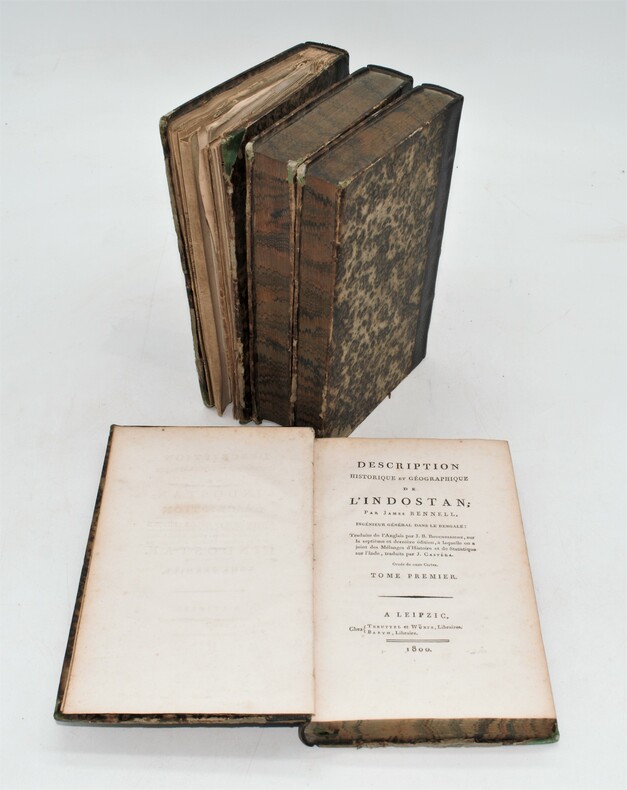
1800P2-8BLeipzic, Treuttel & Wurtz ,1800. 4 volumes in-8 , relié demi basane , dos à nerfs avec auteur , titre et tomaison , tranches et gardes peignées , coupes et coins usés , petites rousseurs . Complet en 3 volumes de texte et 1 volume d’Atlas , de XXXVIII pp., 302 pp. - 2 ff., 410 pp. - 2 ff., 362 pp. - Atlas, 39 pp., 11 cartes dépliantes. Première édition française, traduite par Jean-Baptiste Boucheseiche sur la septième édition anglaise. Elle est illustrée de 11 cartes repliées réunies dans un atlas séparé
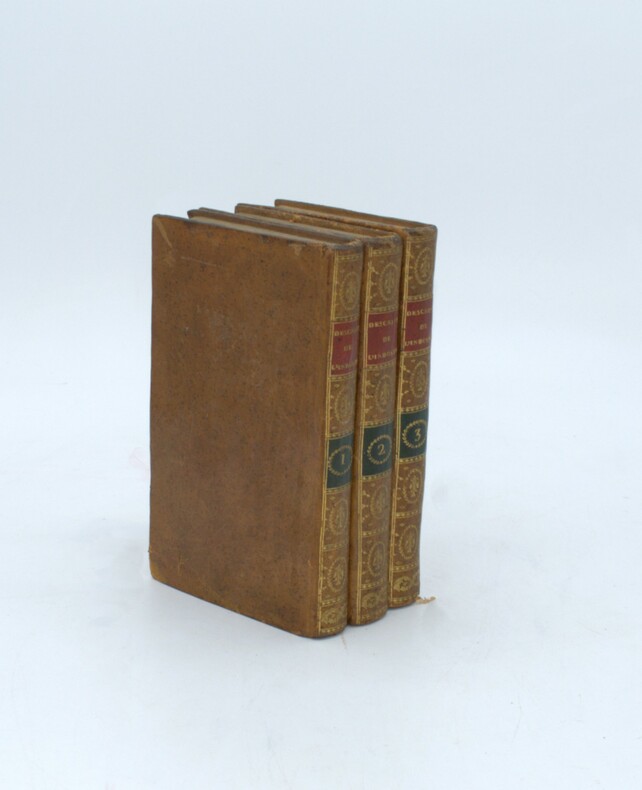
1800PHO-1521Paris, imprimerie de Poignée,1800. 3 volumes in-8 (4), relié pleine basane, dos lisse orné avec pièce de titre rouge et tomaison verte titre et tomaison, une coiffe accidentée, petites rousseurs XXXVIII pp., 302 pp. - 2 ff., 410 pp. - 2 ff., 362 pp..
1991LFA-126734736Un ouvrage de 203 pages, format 140 x 210 mm, illustré, relié cartonnage sous jaquette couleurs, publié en 1991, bon état
1991LFA-126745052Un ouvrage de 252 pages, format 150 x 235 mm, illustré, broché couverture couleurs rempliée, publié en 1991, Edition°1 / Editions Michel Lafon, bon état
2601918 May 1917; on letterhead of the Russian Consulate San Francisco California United States. 2pp 4to. 41 lines including postscript in green ink. On aged and brittle air mail paper with chipping and discoloration at the head resulting in some loss to printed letterhead but with text clear and entire. Addressed to ‘Mon cher ami’ and with valediction from ‘Ton très dévoué ami’. The recipient is unidentified but would appear to have been a former colleague at the Russian legation in Tehran Persia. Signed ‘Geo. S. Romanovsky’. He begins by thanking him for his congratulations. The recipient is right: ‘les choses ont changé’. Life has become less complicated: ‘l’âme ne cherche plus de choses extraordinaires la ‘might sic for ‘night’ life’ fatigue. C’est le commencement de la vieillesse nom de Dieu!’ Reference to ‘les Himenes triomphant sic’. Later an intriguing reference: ‘Il y a quelques jours je pensais à une nuit que nous avons passée sic ensemble avec le hashish deux types de dervish et cette canaille autrichienne de Consul rappele toi de lui il est mort à Tauris. Je me rappelais comme c’était drôle toute cette nuit chaude ce “beng†ces poètes cités ses cigarettes fumées . Et le fantôme de l’Orient m’etait venu dans la chambre du “University Club†et les mûrs hyppocrytes sic ont rougi. Je rêve de l’orient encore mais je doute qu’il y aie des possibilités d’y retourner. Il ne faux jamais oublir le proverbe latin “non bis in idem.†’ He continues with a comment on the heart and emotions concluding ‘Les meilleurs roses sont celles que le jardinier a pantées sur du fumier!’ He ends with a conversation urging a ‘longue Conversation’ with the recipient. It will be a pleasure in ‘la tourbillon de la vie nous nous trouverons réuni’. A book will have to be written ‘ainsi que nous partîmes à Tehran’. Postscript signed ‘Geo.’ suggests that he and the recipient should write often. 18 May 1917; on letterhead of the Russian Consulate, San Francisco, California [United States]. unknown
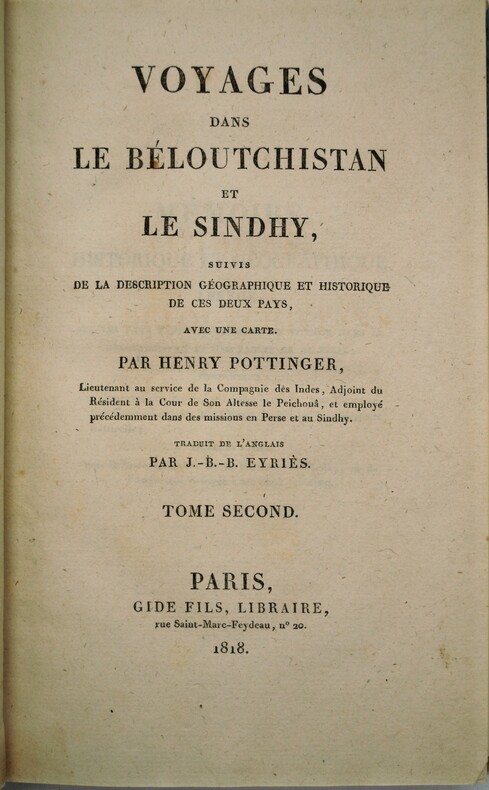
1818PHO-1148Paris, Gide fils, 1818. 2 vol. in-8, demi-veau vert glacé, dos estampé à froid de motifs (lyre, bateau) - Coiffes usagées- VIII, VI, 465, 352 pp. carte dépliante in fine
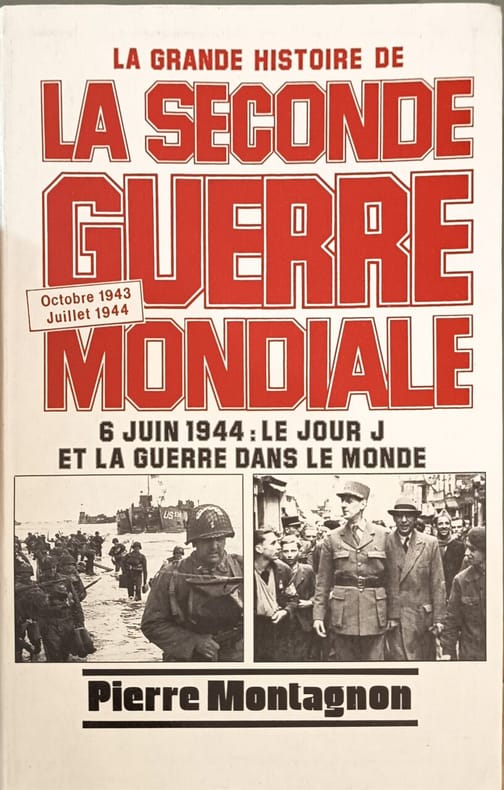
19949674Le grand du mois 1994 319 pages in8. 1994. broché. 319 pages. Ce livre est le sixième tome de la série 'La Grande Histoire de la Seconde Guerre mondiale' de Pierre Montagnon. Il couvre la période cruciale d'octobre 1943 à juillet 1944 en se concentrant sur des événements majeurs comme l'opération Overlord décidée à la conférence de Téhéran le débarquement du 6 juin 1944 en Normandie (le Jour J) l'attentat contre Hitler et la percée décisive d'Avranches. L'ouvrage propose une vision globale et approfondie de ce volet décisif du conflit
78 pages. Articles: Traffic Traps for Tourists - unjust arrests in many parts of the U.S.; Red Clouds over Olympus - Life in Greek village of Magoula is miserable under the Communists; The Secret Papers of Harry L. Hopkins (part 13) - from Cairo to Teheran - the first meeting with Stalin;.Sunday Dinner - lady in the kitchen; Pot Shots by One Shot Ross - Boxing Manager Wirt Ross; "There Goes Rusty" - one of the world's fastest greyhounds. Fiction: Plenty of Time for Love; The Inspector had a Wife; The Fugitive; The Logger and the Lady; River Crossing; An Affair of State (part 3 of 4). Ads include: Studebaker cars; Vitalis (with Bob Feller); Philco radio-phonographs; Firestone "Super-Balloon" tires; Gillette Blue Blades (2-pages in color); Kaiser-Frazer cars (centerfold); Pllymouth; "Good Sam" movie with Gary Cooper; Schlitz beer; GM Electro-motive division; Coke - shows Coke machine at gas station; Texaco - shows young lady water skiing; Rice-Stix; U.S. Army; Lucky Strike cigarettes (back cover). Unmarked with moderate wear and minor bits of moisture exposure to top and bottom edges. A sound vintage copy. Book
1987LFA-126728085Un ouvrage de 315 pages, format 140 x 220 mm, illustré de cartes, publié en 1987, Editions Anthropos, bon état
2001LFA-126741907Un ouvrage de 432 pages, format 130 x 185 mm, illustré, broché couverture couleurs, publié en 2001, Lonely Planet, bon état
14535Vintage Colored Albumen Photograph of Inside the Palace in Teheran Iran. Printed in 1887 by E. Sangleboeuf. 6.7" x 9." glued on cardboard. This photograph of inside the Iranian palace is heightened with gouache a versatile painting technique which uses dense intensive colors. The gouache paint enhances the photo with a quiet brilliancy making the features of the room pop with subtle color. In the photograph we can see the geometric details of the window etchings standout in hues of blue and green while the furniture rugs and floral arrangements are lightly stroked with colors in red brown blue gold and grey. The room itself is richly furnished with various sitting areas candelabras seven floral arrangments and what appears to be a small pond in the center of the room. With some areas of age related foxing. Overall a rare and beautiful vintage photograph in very good condition. unknown books
1887145351887. Vintage Colored Albumen Photograph of Inside the Palace in Teheran Iran. Printed in 1887 by E. Sangleboeuf. 6.7" x 9." glued on cardboard. This photograph of inside the Iranian palace is heightened with gouache a versatile painting technique which uses dense intensive colors. The gouache paint enhances the photo with a quiet brilliancy making the features of the room pop with subtle color. In the photograph we can see the geometric details of the window etchings standout in hues of blue and green while the furniture rugs and floral arrangements are lightly stroked with colors in red brown blue gold and grey. The room itself is richly furnished with various sitting areas candelabras seven floral arrangments and what appears to be a small pond in the center of the room. With some areas of age related foxing. Overall a rare and beautiful vintage photograph in very good condition. unknown
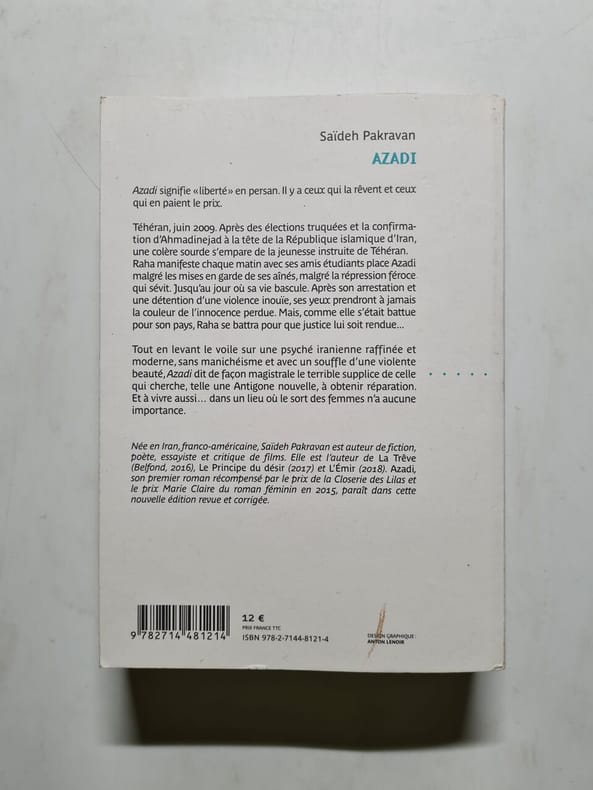
2019500261045Belfond 2019 441 pages 13 6x19x3 4cm. 2019. Broché. 441 pages.
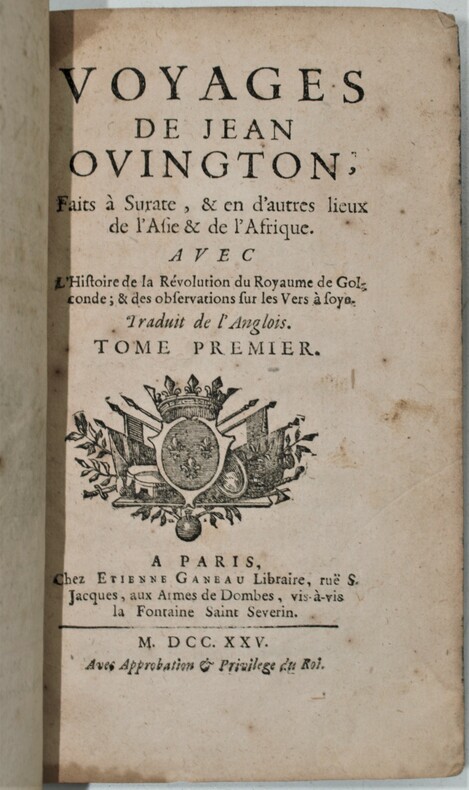
1725PHO-1251Paris, Étienne Ganeau, 1725. 2 volumes in-12, (160x100), xxiv-323p-errata , vi-318p . Relié plein basane marbré , dos lisse orné, pièces de titre et de tomaison rouges, tranches marbrées , dos frotté avec manque des pièces de titre et tomaison tome 2, coins , charnières et coiffes usés , petites rousseurs.
1992IRAN79La Documentation Française, "Les médias et l'évènement", 1992, 16 x 24, 128 p. br. sous couverture illustrée. Iconographie n&b.
LONGANESI 1970 465 PP. FONDO DI MAGAZZINO: SEGNI DEL TEMPO, UN PICCOLISSIMO STRAPPO AL FONDO DELLA SOVRACCOPERTA, VOLUME MAI SFOGLIATO. Questa non è soltanto la biografia di un uomo: è anche la storia di un paese. Wladyslaw Gomulka è un paradosso. È allo stesso tempo un innegabile, fervido patriota polacco, e un comunista, in un paese dove il comunismo viene dettato dalla Russia, nemica tradizionale della Polonia. Nel '56 si adoperò per ottenere una certa indipendenza dall'URSS, attirando su di sé non solo le simpatie dei connazionali, ma anche quelle di tutto il mondo. Eppure, nel '68, si preparò a mandare truppe polacche in Cecoslovacchia perché dessero man forte ai carri armati sovietici. Che cosa si cela dietro queste posizioni inconciliabili sotto tutti i punti di vista: politico, diplomatico e umano? Basterebbe la risposta che Bethell offre a questa domanda (forse la prima completa sino a oggi) per indurre il lettore aggiornato a sfogliare avidamente il volume. Bethell, tuttavia, ci rivela fatti di altrettanta importanza, accaduti durante gli ultimi quarant'anni della turbolenta storia della Polonia; ricerca le tracce della carriera di Gomulka nel periodo confuso tra il 20 e il 30, dopo la proclamazione dell'in- dipendenza polacca e la formazione del primo partito comunista in quel paese; ricorda inoltre l'invasione nazista che provocò il secondo conflitto mondiale e l'ascesa di Gomulka nel movimento di resistenza; si sofferma sullo stalinismo, sulle luminose promesse del "56 e sulle oscure delusioni del suo regime dopo quella data. Nicholas Bethell è un esperto della storia polacca e russa, educato al Penbroke College. Oltre a esse redattore del Times Literary Supplement, è traduttore dal russo di Solženicyn e dal polacco di Slawomir Mrozek. Ed ecco alcuni giudizi sul suo Gomulka: «Il pri mo libro che spieghi al lettore occidentale le contraddizioni della vita di Gomulkae la sua politica» (Financial Times). «Lord Bethell ha scritto un libro avvincente che ha fa di Gomulka un punto di partenza anziché di arrivo» (Tribune). «Una lucida narrazione degli eventi drammatici, a volte eroici e sinistri, che hanno accompagnato Gomulka fin dalla gioventù» (The Tablet).