[ABU DHABI STATE VISITS TO PAKISTAN].Biblio.com
765 résultats
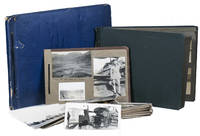
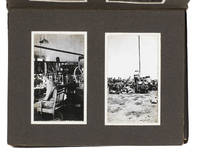
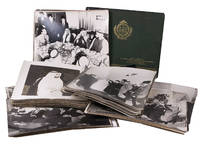
1967L2SFGIMNES3FPakistan 1967. Original black half morocco album green cloth sides with title and emblem of the United Bank Limited Pakistan on the front board. An archive of 183 photographs: 133 loose black and white photographic prints ca. 30 x 25 cm 30 smaller ones ca. 5 x 6 cm numbered and mounted together on a single sheet of paper and 20 additional prints in the album. Further with numerous rolls of original medium format negatives. A trove of unpublished photographs depicting two official visits to Pakistan by HH Sheikh Zayed bin Sultan Al Nahyan. The earlier visit in 1967 is documented by a separate photo album containing images of the visit to Lahore the second largest city of Pakistan from 16 to 28 November 1967. The album opens with a picture of HH Sheikh Zayed arriving in his car; later pictures show him being honoured and presented with an album very similar to the present one and in the company of officials representing Pakistans United Bank Limited UBL. Almost 20 years later in 1986 Sheikh Zayed would donate a hospital to the city now the "Shaikh Zayed Medical Complex" one of the leading medical institutions in Pakistan.The 30 small photographs show an audience with Sheikh Zayed as well as a banquet in his honour attended by various Pakistani dignitaries including Agha Hasan Abedi 1922-1995 the illustrious founder of UBL. These photos apparently clipped from a set of medium format contact prints are mounted on a sheet of coated black photographic paper.The largest set in size and number shows the state visit that took place on 20-22 January 1970 at the invitation of President Yahya Khan 1917-1980. It provides extensive documentation of the large Abu Dhabi delegation being formally received by Yahya Khan who served as president of Pakistan from March 1969 to December 1971. Many show HH Sheikh Zayed shaking hands with and speaking to President Yahya; others show the airport reception formal dinners speeches but also informal conversations members of the delegation handling falcons and numerous high-ranking Abu Dhabi retainers. Among the persons depicted is again Agha Hasan Abedi but there are also several pictures of Butti bin Bishr secretary to Sheikh Zayed and Ahmed bin Khalifa Al Suwaidi the first Minister of Foreign Affairs of the UAE and personal representative of Sheikh Zayed. President Yahya Khan had been "one of the very first international leaders to reach out to Sheikh Zayed after the UAE had been founded and had prior to this in July 1970 been instrumental in creating an agreement to provide technical assistance to the then Trucial States. With the December 1971 union agreement approaching Pakistan was quick to forge even closer ties and Khan had been one of the first foreign leaders to offer his congratulations and reiterate his countrys support when the UAE was born. Full diplomatic ties were then quickly established and Pakistan became one of the first to extend recognition to the new country . All his life Sheikh Zayed had held a personal affinity for Pakistan. He had hunted there extensively came to know the people its culture and lands and enjoyed close ties with leaders" Wilson.From the estate of Azhar Abbas Hashmi 1940-2016 Pakistani financial manager and eminent literary patron with close ties to Karachi University. Hashmi served the UBL for many years becoming its vice-president before founding several important cultural organisations and becoming known as a man of letters in his own right. Thanks to his close connections with the Gulf states Abu Dhabi provided funds to build Karachi Universitys faculty of Islamic studies as well as its Sheikh Zayed Islamic Centre and it mosque Jamiya Masjid Ibrahim.The majority of the photographs are entirely unmarked but they occasionally show an Arabic inscription or stamp on the reverse. Some of the loose photographs slightly scuffed along the edges with an occasional nick or small tear but otherwise in fine condition. Binding of the album slightly rubbed. An important collection of at least largely unpublished photographs concerning the Sheikh of Abu Dhabis visits to Pakistan in the last years before the formation of the UAE entirely unknown and without counterparts in the UAEhistory Keystone or Hulton/Getty press photo archives.l Cf. G.H. Wilson Zayed: man who built a nation pp. 111-112. hardcover
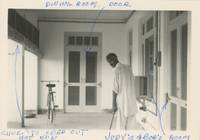
1929ABC_46121India and Pakistan especially their border region 1929. A collection of photographic silver-gelatin prints of aircraft the squadron aerial reconnaissance etc. made and compiled by Thomas William George Eady flying officer of the no. 28 Squadron of the RAF. It comprises 3 photo albums contemporary with the photos 53 loose photos 20 x 15 cm some with manuscript comments on the back 5 related documents dated 1928-1932 and a separate photographic portrait of Eady in total nearly 2000 prints. The first and largest album covers 1929 oblong folio 30 x 39.5 cm in blue cloth with brown cord ties contains 183 prints in various sizes mounted on 16 brown paper leaves with India ink captions by Eady in English. The second album oblong 4to 33.5 x 24 cm in green cloth with brown cord ties contains 72 prints made during the Afridi Redshirt Rebellion in various sizes and mounted on 20 brown paper leaves with neat India ink captions in English by Eady. The small third album oblong small 4to 19 x 27 cm consisting of 4 brown paper leaves tied together with black cord ties contains 33 prints in various sizes mounted on the leaves some duplicating prints in the largest album with larger captions in black ink probably not by Eady. A collection of photographs made and compiled by Thomas William George Eady flying officer in the no. 28 squadron of the British Royal Air Force. The squadron was at that moment based at Risalpur an aerodrome near Peshawar in Northern Pakistan. The collection contains silver-gelatin prints photographic snapshots and aerial reconnaissance photographs he made in 1929-1930 during his stay in the North West Frontier region on the India-Pakistan border. They show the men in their daily activities and the places they visited in their leisure such as a music saloon in Narkunda and Eadys family while staying at "Uncle Joey" in Madras. It further includes many views of the region especially of Attock and Risalpur but also of Bombay Madras The Malakand Pass Bara Valley snow at Drosh etc. and shows glimpses of Indian culture. The collection therefore gives many insights into the life of a British Royal Air Force officer in the Indian North West Frontier.Also interesting are the five related documents in the collection including a letter from the Air Ministry in London addressed to Eady and dated 25 May 1928 informing him about practical matters such as his luggage the amount of money he should take with him and whether he needs a passport.Eadys extensive photographic archive coming from a flying officer for the British Royal Air Force not only provides highly interesting insights into the Afridi Redshirt Rebellion but also a detailed record in images and captions of the courageous pilots of the no. 28 squadron of the British Royal Air Force their aircrafts activities and pastimes on the Indian North West Frontier.Cloth of the blue album worn around the edges head and foot of the spine of the green album slightly damaged some edges of the paper documents a little frayed and some documents slightly foxed and stained but otherwise a highly interesting collection of photographs in good condition. hardcover
1923ABC_45756Waziristan/Pakistan 1923. Contemporary cloth. 4to album 22.5 x 17.5 cm. With 97 black & white photographs each ca. 11 x 6.5 cm inserted in frames on 24 paperboard leaves with 2 "frames" on each page 1 frame has 2 photos in it. Unique album with 97 photographs compiled in Rawalpindi Islamabad by British Corporal G.W. Curtis during his service as "no. 2 wireless boy" in Waziristan Pakistan from at least 1923 to around the time of Pinks War March to May 1925.In the 1920s the British and Indians conducted military campaigns against tribesmen in and around Waziristan. At one point a permanent garrison of British troops was maintained in the region at Razmak. Pinks War was a bombardment campaign carried out by the RAF against the Mahsud tribesmen in South Waziristan in the spring of 1925. Images include pack stations military transports wireless equipment tented military camps soldiers crossing the River Indus a ferry crossing in 1923 soldiers posed in deep snow barracks and other soldiers quarters aircraft transport by horse camel elephant and cart; as well as soldiers at leisure - riding bicycles at a beach and at a zoo. One image depicts an airplane crash at Razmak. Only one aircraft was lost during Pinks War so this may well be a rare photo of it. Some of the places shown include Tauda China Pakistan; Rawalpindi Pakistan; Bannu City Waziristan; and Murree a hill station in Pakistan. Military stations were positioned at Damdil Bannu and Razmak. Many images of local scenes including people grinding corn and washing clothes a bazaar soldiers home dairy farm football field city scenes of Rawalpindi Murree and Bannu and more.Owner's inscription on the front pastedown: "Corporal. G.W. Curtis no. 2 wireless boy Rawalpindi". With manuscript captions below most photographs describing the scene. 22 of the photographs are somewhat faded otherwise all in very good condition. Back cover spotted corners rubbed. hardcover
1894169511894. 8°, 227 S., Originalleder, Goldschnitt. Das der Verfasser Hauptmann Credner ist, ergibt sich aus dem Text. Major Hermann Credner, geboren am 28.10.1859 in Münster / 1877 Eintritt in den Militärdienst / 1892 Lehrer am Kadettenhaus in Karlsruhe / 1897 Hauptmann und Kompagniechef im Inf-Rgt. 137 / 1900/01 Teilnahme am Feldzug in China / 1907 Kommandeur des III. Seebataillons / 1909 Ausscheiden aus der Marine-Infanterie. Der Bericht teilt sich in sieben Kapitel auf: Von Carlsruhe nach Colombo / Colombo / Calcutta, Darjeeling, Benares, Lucknow / Agra, Gwalior, Dehli, Lahore, Umritsar, Peshawar, Indus-Fahrt, Rawal Pindi / Waziristan, Tochi-Thal / Multan, Quetta, Kurachee, Bombay / Rückfahrt Cairo. Beiliegend ein 5-seitiger Brief von General Konsul Freiherr von Gärtner-Griebenow vom 27.1.(18)95 aus Calcutta. Hermann Credner plante seine Reise mit Reisebüro Cook und war mit einem Empfehlungsschreiben des badischen Ministers von Brauer an den Generalkonsul Gärtner-Griebenow in Calcutta ausgestattet. Von diesem erhielt er weitere Empfehlungen an Mitglieder der englischen Kolonie in Indien. Auf seiner Reise trifft er z.B. Konsul Freudenberg in Colombo / Geheimrat Zirkel / die schwedische Gräfin Wachtmeister / Oberst Thuillier - Chef der indischen Landesaufnahme / Major Davidson - Direktor der Münze in Calcutta / Captain Batten - Deputy Assistant Adjutant / General Morton / General William Lockhart / Oberst Dyce / Kapitän von der Groeben / Familie Denso aus Erfurt / die Töchter von Charles Kingsley / Generalkonsul Freiherr von Heyking / ua. Hauptmann Credner beschreibt anschaulich zahlreiche Sehenswürdigkeiten und Bräuche der "Eingeborenen". Unter anderem die Totenverbrennung der Parsis (Parsen - Anhänger des Zoroaster) in Bombay. Neben diesen interessanten Schilderungen ist sicherlich seine Teilnahme an der ersten Expedition in das Tochi-Tal der Höhepunkt seiner Reise. Auf der Rückreise nach Karlsruhe besuchte er die Pyramiden in Ägypten und schildert seine Eindrücke. Nach meinen Recherchen ist der Verfasser am 28.10.1859 in Münster/Westfalen geboren, war seit 1892 Lehrer am Kadettenhaus in Karlsruhe, wurde 1900 zum 4. Ostasiatischen Inf.-Rgt. versetzt und verließ 1909 die Marine-Infanterie. Eine kleine Textpassage: Dem von Italien nach Indien Reisenden, stehen mehrere gute Dampferlinien zur Verfügung. Von Triest aus der Österreichische Lloyd, von Genua und Neapel aus der Norddeutsche Lloyd, der jedoch nur nach Colombo zu benutzen ist, von Neapel und Brindissi aus, die Peninsular- und Oriental-Kompagnie. Für mich kam nur diese letzte englische Linie in Betracht, da ich so schnell als möglich Indien erreichen wollte, mein Urlaub am 1. Dezember 1894 begann und am 2. die 'Khedive' von Neapel nach Calcutta ging, während mit allen anderen Linien ich erst 1 bis 2 Wochen später hätte fahren können. Am 29.11. vormittags verließ ich Karlsruhe; in einigen Stunden in Freiburg Aufenthalt um mich von meinen Angehörigen zu verabschieden, und fuhr dann direkt von Freiburg bis Neapel. Die Zollrevision in Basel vollzieht sich glatt, und im Schlafwagen passiere ich die Gotthardt Berge in tiefem Schlafe; um sechs Uhr morgens weckt mich der Schaffner, wir sind gleich in Chiasso, wo mir von neuem der Paß über alle Unbequemlichkeiten der Zollrevision hinweghilft. 30.11. Eine Stunde später bin ich in Mailand, wo ein kurzer Aufenthalt zur Erfrischung benutzt wird. Die Fahrt nach Genua bietet ein wundervolles Alpenpanorama von Novi an, bis die Bahn selbst in das Gebirge, den Appenin tritt, der in vielen Tunneln und schönen Blicken in das Thal überschritten wird. Handschrift Unikat
19620871Lahore, Nisar Art Press, 1962. Erste Ausgabe. - Vorderer Innendeckel mit Exlibris. Stellenweise etwas braunfleckig, 1 Farbtafel gelockert. - Großformatiges und reich illustriertes Werk über den Dichter und Philosophen Muhammad Iqbal (1877-1938), der als Nationaldichter und Gründungsvater des modernen Pakistan gilt. - In Englisch und Urdu, mit einer Einführung in Englisch von S.A. Rahman. - In guter Gesamterhaltung. - Selten.
1904259905British India Simla and elsewhere 1904. Various paginations with numerous genealogical appendices some folding. Many works in blue or red editorial pencil or with marginal notes. 1 vols. Small folio. Contemporary Indian cloth-covered boards. Boards scuffed and rubbed; text with some staining and occasional old repairs; some folding tables shaved with loss. Various paginations with numerous genealogical appendices some folding. Many works in blue or red editorial pencil or with marginal notes. 1 vols. Small folio. A sequence of reports and first hand accounts of local conditions in Mekran Kalat Baluchistan Northwest India now Pakistan and relations with with the Khan of Kalat and his family. An uncommon glimpse of politics of and life in a frontier state of British India. This is a series of eleven internal reports many of them from the pen of Herbert Showers 1862-1916 whose career as a Political Officer took him to Kalat Quetta Jaipur Alwar Katmandu Udaipur. He died relatively young at 54 in 1916. The reports are candid: "As recent events show important events seriously affecting the peace and well-being of the country may be passing and no information of them reach the Political Agent except accidentally from an unofficial source. And as can readily be understood the difficulties are greatly enhanced by our having such a man as Pasand Khan for the Jhallawan Sirdar." A marginal note in pencil indicates "resigned in favour of his son in 1911".<br /> <br /> Comprising:<br /> <br /> a No. 371. From Lieutenant E. Le Mesurier Officiating Political Agent in Kalat To Major-General Sir James Browne . Agent to the Governor-General in Baluchistan. 15th May 1896 . report on the recent tour made by His Highness the Khan of Kalat in the Mekran sic. country. 1-41 pp.<br /> <br /> b No. 280. From Lieutenant E. Le Mesurier Officiating Political Agent in Kalat To Major-General Sir James Browne . Agent to the Governor-General in Baluchistan. Dated Camp Mustung the 24th April 1896. report on the recent tour of His Highness the Khan of Kalat through Kech-Mekran and the arrangements made by His Highness for the future administration of the country. 1-25 pp. "Vara 2." in manuscript at head of p.1.<br /> <br /> c No. 93. Dated Camp Quetta the 15th May 1897. From Lieut. R.A.E. Benn Military Adviser and Assistant His Highness the Khan of Kalat To the Political Agent Kalat . report in connection with the relief of the detachments of the Kalat State troops which was carried out by me . during my recent visit to Mekran. 1-25 pp.<br /> <br /> d Baluchistan. D. No. 308. No. 3389 dated Quetta the 17th May 1898. From- Colonel Henry Wylie C.S.I Officiating Agent to the Governor-General in Baluchistan To-The Secretary to the Government of India Foreign Department Simla . the following report with its enclosures regarding the recent disturbances in Makran for the information of the Government of India. 1-38 pp. "Corrected copy" in manuscript at head of p.1 and some other small notes and underlining. Imprint: G.C. Press Simla - No 286 F.D. - 4-6-98 - 95. <br /> <br /> e No. 4126 dated Quetta the 26th May 1899. From - Colonel Heny Wylie G.L.I. C.S.I . To - The Sectretary to the Government of India Foreign Department . refers to your letter No. 1548-E.A. dated the 1st November 1898 conveying the orders of the Governor-General in Council regarding the future of Mekran. 1-39 pp. Imprint: G.C. Press Simla. - No. 24F. D. - 6.6.99.-80. <br /> <br /> f No. 1367 of 1900. Dated Camp Quetta the 17th April 1900. From the Political Agent S.G.Knox Kalat To the Agent to the Governor General in Baluchistan Quetta . report on my tour in the Jhalawan hills and my visit to Mashkai. 1-34 pp. <br /> <br /> g Showers Col. Herbert Lionel. No. 5926 dated Quetta the 31st May 1901. From - The Hon'ble Lieutenant-Colonel C.E. Yate C.S.I. C.M.G. Agent to the Governor-General in Baluchistan. To - H.S. Barnes Esq. C.S.I. I.C.S. Secretary to the Government of India Foreign Department . the report of Captain H.L. Showers Political Agent Kalat on his tour in Mekran together with a subsequent letter from him to my address. 1-49 pp. "11/ Makran. 50 A / 1901". Imprint: G.C. Press Simla. - No. 364 F. D. - 28 6 1901 - 80.<br /> <br /> h Showers Col. Herbert Lionel. Major Showers' report . Part I. Confidential. No. 217 Confidential dated Camp Ziarat the 14th June 1902. From - The Hon'ble Colonel C.E. Yate C.S.I. C.M.G. Agent to the Governor-General in Baluchistan To - The Secretary to the Government of India in the Foreign Department. .I. forward herewith Major Showers's report . on his recent tour in Makran and Mashkel.1-43 pp. Imprint: G.I.C.P.O. - No. 123 F.D. - 5-7-1902 - 114 - Exd. B.M.<br /> <br /> i Showers Col. Herbert Lionel. Major Showers' report . Part II. No. 400-C. dated Camp Ziarat the 17th June 1902. From - The Hon'ble Colonel C.E. Yate C.S.I. C.M.G. Agent to the Governor-General and Chief Commissioner in Baluchistan To - The Secretary to the Government of India in the Foreign Department. .I. submit herewith Major Showers's report on his operations in Persia in co-operation with the Governor-General of Kerman for the purpose of obtaining compensation for the losses caused to Kej in the raids committed by Muhammad Umar Nausherwani and his Persian confederates. 1-78 pp. Imprint: G.I.C.P.O. - No. 129 F.D. - 11-7-1902 - 114 - P.K.B. <br /> <br /> j Showers Col. Herbert Lionel. No. 907-Z. dated Ziarat the 19th June 1903. From - The Hon'ble Colonel C.E. Yate C.S.I. C.M.G. Agent to the Governor-General in Baluchistan To - L.W . Dane Esq. Secretary to the Government of India Foreign Department. . re. the desirability or not of appointing a Native Assistant for the Jhallawan country .I have now the honour to submit Major Showers's report on his late tour. 1-68 pp. Imprint: G.C. Press Simla. - No. 773 F.D. - 31-7-03. - 62. - E. A.deS.<br /> <br /> k Showers Col. Herbert Lionel. No. 2655 dated Quetta. The 6th May 1904. From - The Hon'ble Colonel C.E. Yate C.S.I. C.M.G. Agent to the Governor-General in Baluchistan To - The Secretary to the Government of India in the Foreign Department. . I have now the honour to forward . Major Showers's report . on his recent tour in Makran between October 1903 and January 1904 1-20 pp. At head: "P.olitical A.gent Kalat / 7.6.04" and in a different hand "11/6/04" Imprint: Foreign Office Press - No. 297 - 27-5-04. - 59. Provenance: Herbert Lionel Showers 1862-1916 political agent Kalat see note in item k with signature at head "P. A. Kalat / 7.6.04" unknown
Very Good Urdu Paperback. Cr. 8vo. (18 x 13 cm). In Urdu. 12 p. Lithographed edition. Ali was an Indian Muslim leader of the Khilafat Movement that erupted in response to the fall of the Ottoman Empire. He was the elder brother of the renowned political leader Mohammad Ali Jouhar. Shaukat Ali was born in 1873 in Rampur state in what is today Uttar Pradesh in India but later played role in partition of India on religious lines. He was educated at the Aligarh Muslim University. He was extremely fond of playing cricket, captaining the university team. Shaukat Ali helped his younger brother Mohammad Ali Jouhar publish the Urdu weekly Hamdard and the English weekly Comrade. In 1915 he published an article which said Turks were right to fight the British. These two weekly magazines played a key role in shaping the political policy of Muslim India back then. In 1919, while jailed for publishing what the British charged as seditious materials and organizing protests, he was elected as the last president of the Khilafat conference. He was re-arrested and imprisoned from 1921 to 1923 for his support to Mahatma Gandhi and the Indian National Congress during the Non-Cooperation Movement (1919-1922). His fans accorded him and his brother the title of Maulana. In March 1922, he was in Rajkot jail and was later released in 1923. While still a supporter of Congress and its non-violent ethos, Ali even surpassed some of his colleagues in also providing support to the revolutionary independence movement. To this end, he supplied guns to Sachindranath Sanyal. He opposed the 1928 Nehru Report. Instead, he demanded separate electorates for Muslims and finally the Khilafat Committee rejected the Nehru Report. Shaukat Ali attended the first and second Round Table Conferences (India) in London in 1930-31. His brother Jouhar died in 1931, and Shaukat Ali continued on and organized the World Muslim Conference in Jerusalem. In 1936, Ali became a member of the All India Muslim League and became a close political ally of and campaigner for Muhammad Ali Jinnah, the future founder of Pakistan. He served as member of the 'Central Assembly' in British India from 1934 to 1938. He travelled all over the Middle East, building support for India's Muslims and the struggle for independence from the British rule in India. (Source: Wikipedia).
Very Good Turkish, Ottoman (1500-1928) Original wrappers. No bdg. Wear spine, dispersed pages. Roy. 8vo. (24 x 17 cm). In Ottoman script (Old Turkish with Arabic letters). 197, 6 p., 5 panoramic folded huge b/w plates (Including the photographic plts.; 1-) Turkish Convention May, 13, 1923, Detroit, Mich by Photo Craft Byallen -23x39 cm-; 2-) [Among the Young Turks in Detroit, -23x106 cm-; 3-) In the White House with the President, -23x106 cm-; 4-) Islamic Society in the US, -32x40 cm-; 5-) Among the Young Turkish people in Chicago, -23x26 cm-). First and only edition of this exceedingly rare travel account of America by Dr. Mehmed Fuad [Umay], (1885-1963), who was a Turkish doctor and the founder of Himâye-i Etfâl [i.e. Society for the Protection of Orphans], a society that was established in 1921 to provide orphanages to children of the deceased soldiers in the Turkish War of Independence; began visiting many of the Turkish colonies in the US, giving lectures and raising a considerable amount of money for the establishment of these orphanages in Turkey. On 21 March 1923, Fuad Bey was granted permission from the Grand National Assembly of Turkey to go to the US in order to raise funds among the Ottoman immigrants for immediate war relief. Thus, for the first time, humanitarian action became an organized effort by fostering diaspora mobilization. Fuad Bey arrived in Ellis Island on 6 April 1923 on a ship named SS Aquitania and headed to the Ottoman Welfare Association at 35 Rivington Street. In the first meeting held by the Ottoman Welfare Association for the benefit of Turkish Orphan Society, Fuad Bey notes that a total of USD 17,500 was raised in just six hours. To those who donated over USD 1,000, a personally autographed picture of Mustafa Kemal was given by Fuad Bey. He visited the Turkish colonies in Wisconsin, Illinois, Michigan, New York, New Jersey, Massachusetts and Rhode Island. He lectured about the Turkish War of Independence (1919-1922) and the success of the struggle, and many Turkish and Kurdish workers residing in these cities donated their life savings to support the construction of orphanages and the reconstruction of the entire country. Fuad's visit to Peabody, Massachusetts aroused exceptional excitement among the Turkish and Kurdish immigrants. It was the first chance for the Muslim Anatolian immigrants to manifest their national pride and attachment to the homeland. At the same time, their socioeconomic achievement was evidenced with the arrival of Fuad Bey in Peabody in an auto decorated with a large American flag and followed by a dozen autos filled with Turks, the machines decorated with American and Turkish flags.". A day before his arrival, the Turks refrained from work and "went around with badges in honor of his coming. Mehmed Fuad noted that there were around 600 Turks when he visited Peabody in 1923. Despite their small number, they had established Kizilay [i.e. Turkish Red Crescent] society. After being shown some of the tanneries in Peabody and Salem, Fuad gave an address to the Turks and Kurds at the Peabody Institute. The scene was described as: "All the Turks in town were present. They made a spectacle of the doctor's visit, many of them taking a day off. They wore badges in his honor and displayed in front of the Institute the American and Turkish flags. Great enthusiasm was shown. Baskets of roses were carried down the aisles and the flowers were bought at any price, bunches of money being put in the baskets. It was said that USD 8,000 was raised among the Turks of this city for Dr. Fuad Bey to take back with him.". Fuad Bey visited Peabody for a second time on 14 August 1925, as he came for the National Conference of Social Workers held in Denver, Colorado in June, 1925. When he arrived in Massachusetts, he was met by a delegation of Turkish people from [.]". (Source: Ottoman Immigrants and the Formation of Turkish Red Crescent Societies in the United States). No printed copy in OCLC.; Özege 727.; TBTK 11126.
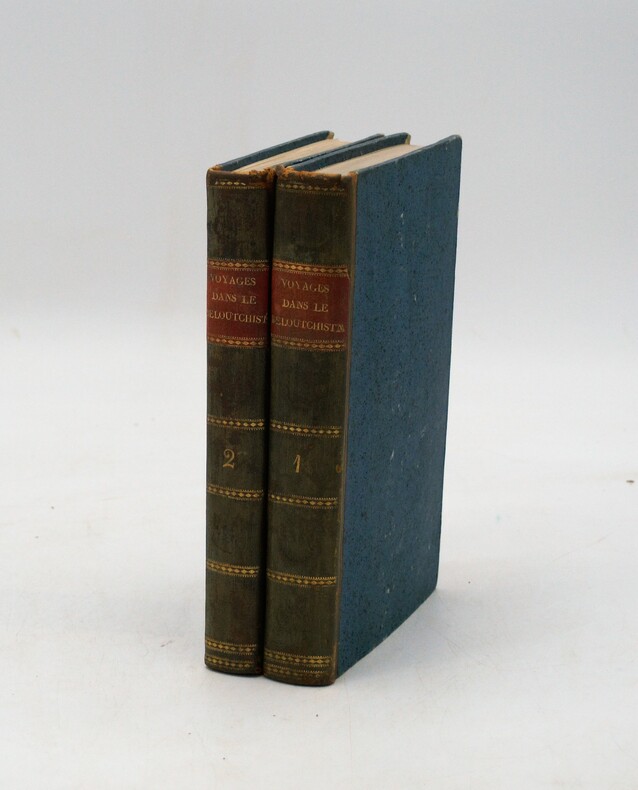
1818REIS0640Paris, Gide fils 1818. 8°. VIII, 465(1) S., 1 Bl. (Errata) u. 381(1) S. Mit 1 gest. Front. in Bd. 1 ('Fantassins du Sindhy dans leur habit du guerre') u. 1 gef., gest. Karte (64,5 x 47 cm; gravée par Lemaître). Dekorative, marmorierte Lederbände der Zeit mit 2 Rückenschildern u. goldgepr. Rückenverzierung, Stehkantenvergoldung u. marmor. Vorsatzpapieren. Bd. 1 am unt. Kapital lädiert, Ecken bestoßen, Kanten berieben, Bd. 2 m. 2 Beschädigungen im Leder durch Wurmfraß, vereinz. stockfl., im Text sehr sauberer u. guter Zustand, Karte m. kl. Einriss. Quérard VII, 300; Chadenat 5112; zur engl. Ausg. vgl. Henze IV, 421 f. Erste französche Ausgabe dieser erstmals 1816 in englischer Sprache erschienenen Reisebeschreibung ('Travels in Beloochistan and Sinde'). - Henry Pottinger (1789-1856) war britischer Offizier, im Dienst der East India Company. In deren Auftrag reiste er gemeinsam mit Capt. Charles Christies im J. 1810 von Indien durch Belutschistan nach Kirman und Schiras, Süd-Persien, "mithin durch ein Ländergebiet - das alte Gedrosien und Carmanien - von dem seit der Zeit Alexander des Grossen kein europäischer Augenzeuge mehr gekündet hatte". (Henze). Sie gaben sich als Agenten eines reichen Pferdehändlers aus. In Bampur verknüpfte P. seine Route mit der seines Landmannes W. P. Grant. "Grant und Pottinger sind die ersten neuzeitlichen Erheller des inneren Belutschistan zwischen dem Indo-persischen Grenzgebirge und Bender Abbas." - In den Zwanziger und Dreißiger Jahren hatte Pottinger diverse Posten der britischen Kolonialverwaltung in Indien inne, u. a. in Sindh, Poona und Hyderabad. Im Zuge des Ersten Opiumkriegs wurde Pottinger 1841 als Generalbevollmächtigter nach China entsandt. Weltgeschichtliche Bedeutung erlangte er durch die Aushandlung und Unterzeichnung des Vertrags von Nanking am 29. September 1842, der den Krieg beenden und Englands Aufstieg zur führenden Imperialmacht in Ostasien einläuten sollte. (Differenzbesteuert).
1965List3236Lahore Pakistan 1965. Ninety-four photographs measuring 5 x 3 ½ inches to 2 x 2 inches. Many with manuscript captions verso and some marked recto. Overall excellent to Near Fine. Photos taken by Denverite Lyman R. Flook Jr. and his family with many captioned by his wife Dorothy documenting their time living in Lahore from 1960 to 1965. Lyman Flook 1921–1993 worked at the engineering firm of Tipton & Kalmach which in 1960 won a contract to design and construct a link canal system in Pakistan. This was likely related to the 1960 Indus Waters Treaty which determined which Indus Basin rivers would supply water to India and which to Pakistan and allowed a ten year transition period in which India would supply some of Pakistan’s water while Pakistan built its canal system. While Lyman Flook worked on the canal Dorothy 1921–2020 taught at the Lahore American School. They and the other American families in Lahore with Tipton & Kalmach left in 1965 after the outbreak of the Indo-Pakistani War.<br /> <br /> The Flooks lived in a large stylish house likely in the upscale WAPDA i.e. Water And Power Development Authority Town neighborhood of Lahore. The shots include many of the other American engineers’ families typically identified by full or at least last name including the Thiel Troxler and Rockwell families. There are Christmas events with Santa and even a child’s birthday party featuring a dancing bear. Most interesting though are those of local people and life in Lahore—some portraits of the locals are quite competently and compellingly shot. Most of the Pakistani subjects depicted are servants of the American families: chowkidars watchmen ayahs nursemaids dhobis washers sweepers and groundskeepers. They are identified by first name in Dorothy Flook’s extensive captions which also illustrate the relationship between the Americans and their hired labor. For instance she writes:<br /> <br /> “Our New Chowkidar. He was sent over by the Rockwells who wanted to save money doing without one. As soon as it was known they had no chowkidar things started disappearing from their garage. The locals are always trying to create jobs for each other.â€<br /> <br /> Of the ayahs she relates:<br /> <br /> “Norma said her ayah asked for overtime pay saying ‘Mrs Flook her boss’s wife was giving it’ — a dead lie. She and Edie told me to be plenty mean so they won’t be always getting that club for their servants.â€<br /> <br /> And in one of the most unfriendly captions she describes their washerman:<br /> <br /> “Our Dhobi Boksh. He used to come every day; now he comes every other day. Dumbest looking character you ever saw but he’s surprisingly faithful.â€<br /> <br /> Others are described as “always underfoot†“doing nothing†and “Stealing yet!â€.<br /> <br /> Of interest to historians of US activities in Pakistan in the 1960s and relationships between Americans and Pakistanis on the ground. unknown
Very Good Persian Original brown half-leather. Light chipping on top of binding. Otherwise a very good copy. Roy. 8vo. (24 x 17 cm). In Persian. [2], 460, [3] p. Scarce first edition of this fifth and the last volume of the dictionary including a detailed "glossary of difficult words used in the text", which is an invaluable resource in the Persian language, of corpus titled "Dâstân-e turktâzân-i Hind, girdâvarde-e khâma-e" [i.e. History of Muslim and Turkish rule in India] written by Mirzâ Nasru'llâh Khân Fidâiî at the end of the 19th century. This volume is the fifth and the last of Nasrullah Khan's five-volume work on the Muslim period in the Indian subcontinent up to the British Raj (1858-1947), conventionally said to start in 712, after the conquest of Sindh and Multan by the Umayyad caliphate. From the late 12th century onwards, Muslim empires dominated the subcontinent, most notably the Delhi Sultanate and Mughal Empire.
Very Good Urdu Extremely rare first and only edition (not in institutional catalogues and market) of this travel book to America in the mid 20th century by Pakistani journalist and intellectual Sharif Farooq, who was invited to visit the USA on the Leader Specialist Programme in 1958. Sharif Farooq visited America in 1958. In his travelogue, he highlights the lifestyle, educational system, and foreign policy of America in detail. He also introduces the economical situation of the country, economical trends, and the condition of different institutions. Reports of press conferences are also a part of this travelogue. (Source: Travelogues of America in the Urdu Language: Trends and Tradition). "Wherever the Americans deserve appreciation for their intense patriotism and enthusiasm for labor, the author has given unstinted praise but where criticism is due he has not spared them, though the language used is very sober and moderate. I am confident that this book will be widely read and aimed as one of the good travel books written about America". (From the preface of the book by advocate-general Muhammad Ali). In original boards with lettering in both Latin and Arabic, spine missing. Otherwise a good copy. Demy 8vo. (22 x 14 cm). Text is in Urdu with a one-page English preface. 387, [1] p. In the Land of Lincoln. First Edition. No copy in OCLC.
In-8 gr., 2 volumi, mz. pelle mod. con ang., titolo oro al dorso, conserv. copp. originali con ill. fotografica in b.n. applicata al piatto anter., pp. VIII,291; (4),pp. 323; con un ritratto dell’A. al frontespizio, 168 tavv. f.t. ciascuna con 2 ill. fotografiche, e 4 carte topografiche più volte ripieg. (inserite in una tasca in fine ai volumi) che raffigurano il “Cashmir e regioni limitrofe” (scala di 1:750 000). "Prima edizione". “Giotto Dainelli (1878-1968), esploratore, geologo, paleontologo e geografo di altissimo livello, dalla personalità vivacissima.. Nel 1913-14 partecipò alla spedizione De Filippi al Karakorum, la più importante missione esplorativa italiana in Asia del nostro secolo. Essa si proponeva un duplice scopo: esplorare il grande ghiacciaio Rimu, nel Karakorum orientale, e raccogliere il maggior numero possibile di informazioni geofisiche, geologiche, metereologiche e, in via subordinata, anche naturalistiche, su quella regione. Entrambi gli scopi furono brillantemente raggiunti. Al D. fu lasciata libertà di movimento: con l'amico Marinelli, che l'aveva raggiunto, poté compiere escursioni al di fuori dell'itinerario principale della spedizione, esplorando un'area assai più ampia e giungendo, sulla via del ritorno, fino al Tien Shan”. Così Diz. Biograf. Ital.,XXXI, p. 693. Firma di appartenenza ai frontespizi, altrimenti ben conservato.
1818PHO-1148Paris, Gide fils, 1818. 2 vol. in-8, demi-veau vert glacé, dos estampé à froid de motifs (lyre, bateau) - Coiffes usagées- VIII, VI, 465, 352 pp. carte dépliante in fine
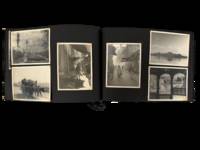
1960232021960. Pakistan travel album recordingstreet life mountain excursions landscapes military ceremony and local custom in the 1960s with particular strength in its photographs depicting everyday culture and public life of Pakistany rural people. Photographer identified in an inscription as "Pech." The album focuses on a Life in Pakistan showing men in regional dress military regiments animal handling agricultural labor roadside and market activity mountain travel and formal as well as informal gathering. References to Rawalakot Many scenes of upland terrain and military units place part of the album in northern Pakistan.<br /> <br /> Photo album of over 120 corner mounted and loose silver gelatin photographs arranged across black paper leaves with many loose prints inscribed in French. Photos measure primarily between 2.5" x 3.5" to 3.5" x 5". Album measures 7.5" x 11". Visible scenes include men in celebratory flower garlands gathered in mountain settings groups posed in rugged terrain and photographs of men standing beside lakes rivers and highland roads suggesting travel or climbing excursions that were socially marked as memorable events rather than casual tourism. One photo of a man's portrait is inscribed to "Pech" en verso and mentions Rawalakot and their participation in climbing "6000 feet" he signs off as "M. MacDonald / Rockhampton Queensland." Other photographs turn to daily life and custom showing men in turbans and traditional dress rural figures with cattle agricultural work village architecture street scenes and portraits of children and families. Several images show snake charmers one seated with cobras raised before him others posed with baskets and spectators nearby preserving a form of public performance long circulated in South Asian spectacle. Urban views include crowded market lanes mixed traffic and building fronts while architectural photographs show mosques domed structures gardens and formal compounds placing devotional civic and residential space within the traveler's route. A handful of photos show military images of uniformed men in camp and review settings one caption identifying a brigade parade ground and another a general showing the compiler's access to official environments alongside civilian ones. Multiple photos depict dinner settings with the compiler seated with friends family and his "amour" also seen throughout the album. Most images from Pakistan with a small handful in Egypt and Lebanon circa 1960s. One dinner scene shows him and three other individuals with the en verso inscribed "Beruit - 1962." <br /> <br /> In the 1960s Pakistan was a young post-Partition state shaped by military visibility frontier administration and conflict especially in Kashmir where UN observers operated. Foreign travelers and officials moved through the country alongside local communities recording mountain travel public ceremony village life and everyday custom with Rawalakot being part of a borderland where military oversight diplomacy and travel intersected. Chipping to album covers photos exhibit some corner and edge wear overall very good condition. A mid-century photo album of a traveler's view of Pakistan through a distinctly outsider lens shaped by transnational movement official access and cultural encounter. unknown
19785266(Kyoto), Dohoso, 1978. XVIII, 164, XIII S. Zahlr. Abb. und Plänen auf Tafeln. Gr.-4°. OLwd. (etw. bestoßen).
16375Paris, Imprimatur, 1955. In-4, 307 pp., simili-maroquin rouge de l'éditeur, dos lisse, auteur et titres dorés au dos, étui (petits frottements).
Pages 273-360, plus 24 pages of great ads. Features: The Black Hand - a curious story of the abortive Egyptian revolution; The Land of Model Husbands - In the Marshall Islands women are the queen of all they survey - fascinating article with many wonderful photos; "Blue Mary's" Last Run; Photo of petrified forest in Arizona; The Trials of a Naturalist's Wife - Part 2; The Smallest Republic in the World - interesting photo-illustrated article on San Marino; In Quest of Cannibals - Part 4 - Exploration and Adventure in Unknown New Guinea; The Ship That Sought Adventure - The skipper of the "Zodiac" was a glutton for excitement during the anxious days of the submarine campaign during WWI; Cave-Dwellers of Today - article with wonderful photos of cave-homes around the world; Blue Bandits - Part 2 - criminals who operated near the Italian/French border murder the Abbe Rossignol of La Bessee; On Foot Through South America - Part 3 - the wilds of northern Peru; My Two Years' Captivity Among the Turks - Part 2 - the adventures and daring escape of airman Capt. T.W. White; A Human Tiger - a man in British Baluchistan declares war on the government; Photo of airplane caught high in a tree near Coshocton, Ohio. Moderate wear. Unmarked. A quality copy of this great vintage issue. Book
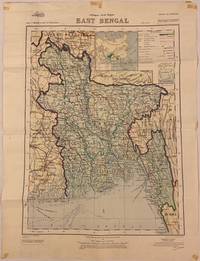
1954324445Murree: Surveyor General of Pakistan 1954. First. unbound. Map. Color lithograph. First edition. Sheet measures 26" x 34 1/4"<br/> <br/> This map of East Bengal known as present-day Bangladesh was published by the Government of Pakistan in 1954. The province of East Bengal existed from 1947 to 1955 when it was dissolved and renamed as "East Pakistan". This map provides fascinating insight into this brief historical period of the region. Shows roads railways cities towns and villages as well as places of archeological interest. An inset map in the upper center margin is titled "Pakistan and Surrounding Countries" showing the entire Asian continent with Pakistan and East Bengal in green. The map is in good condition with tape residue and pin holes to corners some staining in the Bay of Bengal and overall creasing and wear. Misfolded.<br/> <br/> Surveyor General of Pakistan unknown
1833PHO-1026Paris, H. Fournier, 1833. 2 volumes in-8, demi-veau fauve, dos lisse orné, tranches marbrées (Reliure de l'époque). Édition originale, illustrée d'une grande carte de l'Inde repliée en fin d'ouvrage.très rares rousseurs, portions de la carte légèrement brunies.
Features: General Dynamics F-111; Indian Air Force at War; Flying Jeep; Around the Airlines; No. 115 Squadron History; Fokker Fellowship; Between the Wars; Bridging the Production Gap; Below Zero Flying; Pakistan Air Force; Air League on Defense; Vickers Windsor; Stratoliner up to date; "The Blue Max"; No. 205 Squadron History; Power for the Concorde; The Spey-Mirage; Swissair in 1966; Kavochkins over Slovakia; British Production; LTV A-7A Corsair II; Skyways Coach Air; The British Spads; Beagle joins the R.A.F.; Bolkow Junior Air-Test; R.A.F. in the Far East; Britain's Defense Plans; Soviet Stratospheric Aircraft; Concorde Takes Shape; Supermarine Attacker; "Southern Cross" - Sir Charles Kingsfors Smith's Fokker Monoplane; British Spads - Part 2; Alpavia R.F.3 Air-Test; German Aircraft Industry; Aircraft Carriers after the 1966 Defence White Paper; Ancestor Airline No. 2; "Winter Express"; U.S.A.A.F. Paintwork - I; Sud Horizon Air-Test; Death of a Squadron; German Naval Air Arm; R.A.F. 'Nav.' Training; Aer Lungus History; U.S.A.A.F. Paintwork - 2; Potez 41; No. 114 Squadron History; West Country Museums; Dornier Do 28 Air Test; The European Airbus; Report from Hanover; U.S.A.F. Displays; Biggin Hill Air Fair; U.S.A.A.F. Paintwork - 3; Gliding Championships; Lufthansa Pilot Training; Sunderland at Pembroke; Military Miscellany; H.M.S. Theseus in Korean War; Reconnaissance Victors; Aircraft Oil Engines; 'Mods' to the Belfast; Brazilian Photo Review; VARIG, Brazilian airline; Atlantic Crossing 1922; Centre Est DR 250; Sheila Scott's Flight; Britain's Aircraft Industry - at the crossroads; What to see at Farnboro'; Tiger Meet; R.A.F. Persian Gulf; R.A.F. Strength 3/9/39; R.Ae.S. Centenary; Slingsby Dart 17R; Farnborough Report; Farnborough checklist; Argentine Airlines; Boulton Paul Overstrand; U.S.A.F. "Airevac"; No. 72 Squadron History; Slovak Air Force; Airshipping in 1966; Spanish Fighters; Ancestor Airlines - 3; Strike on Farnborough; Holland's Air Museum; Swedish Mustangs; Alon A-2 Aircoupe; Another look at the U.S.A.F.; South African Airways; Indian Air Power; Wassmer Super IV Baladou; and much more. Includes index . Gilt lettering to front board and backstrip. Moderate wear. Partial slant to spine. Book
Pages 97-192, plus 32 pages of wonderful vintage ads. Many black and white photos and illustrations. Contents include: A Fall From the Clouds; A Woman Alone in China - part 1; Blackmailing a Railway; Interviewing Mount Robson; Imprisoned Beneath the Sea; Short Stories - Farringway's Luck, Catching a Tartar; Eight Thousand Dollars; Insect Oddities; Byways in Sind and Baluchistan; The Pirates of the "Tai On"; Odds and Ends. Bits of clear tape at each end of spine. Unmarked with average wear. Binding intact. A sound copy of this vintage issue. Magazine
19715241Kyoto, Kyoto University Press, 1971. Text- und Tafelbd. XVII, 127, XI S. mit zahlr. Abb. im Text und auf Tafeln. Fol. Lwd. mit Rücken- und Deckeltitel (Gebrssprn.).
19625251Kyoto, Kyoto University, 1962. XVII, 107, X S., 1 Bl. mit zahlr. Abb. im Text und auf Tafeln. 13 Pläne. Fol. OLwd. der Zeit (kl. Gebrssprn., etw. bestoßen).
19675252Kyoto, Kyoto University, 1967. XV, 77, VIII S. mit zahlr. Abb. im Text und auf Tafeln. 11 Faltpläne. Fol. OLwd. der Zeit (kl. Gebrssprn., etw. bestoßen).