YEMEN FROM THE AIRBiblio.com
27 résultats
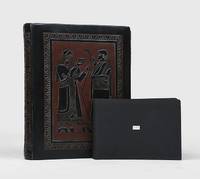
1935169367Aden: 1935-36. A superb window onto Yemen in the 1930s Two albums depicting the experiences of British servicemen stationed in Yemen around the time of the Second Italo-Abyssinian War 1935-7 mixing the documentary and the personal. The images include very rare contemporary aerial photographs of towns including Aden Ta'izz and Shibam graphic pictures of war in Addis Ababa urban military and agricultural scenes and records of free time on the RAF base at Khormaksar. Nearly all carry explanatory manuscript captions. Aden was of crucial strategic importance to the British Empire having been brought under the control of the East India Company in 1839. After the opening of the Suez Canal in 1869 it became one of the world's busiest ports. The RAF maintained a base at Khormaksar now Aden International Airport which played host to numerous squadrons throughout the 1930s. Of these No. 8 Squadron was stationed at Khormaksar for the longest period of time maintaining a policing and day-bombing role. Photographs of military aircraft belonging to No. 8 Squadron can be seen in these albums alongside pictures of planes flown by Nos 203 41 and 55 Squadrons. The photographs give a vivid impression of the volume of air and maritime traffic - mostly British but also French and Dutch - which passed through Aden after Mussolini's invasion of Ethiopia. Aerial shots show Fairey MK IIIs and Vickers Vincent planes flying in formation as well as night and day bombers and flying boats. There are also detailed close-ups of ships including British aircraft carriers. It seems probable that the photographer who assembled these albums was involved in surveying: there are fine aerial shots of Aden and Crater the Sultan's palace at Lahij Shuqra Shibam Tarim Ibb al-Mukalla and Ta'izz giving an outstanding sense of how these towns looked in the early 20th century. The pictures of Ethiopia include one aerial photograph of Addis Ababa a number of ground shots of an execution the wounded and the dead and images of buildings on fire. There is only one photograph captioned as having been taken in Somaliland but this provides a further clue that the photographer was sent from Yemen to the Horn of Africa with the intention of documenting Italian military activities there. As a result of the Second Italo-Abyssinian War Ethiopia was incorporated into Italian East Africa consisting of Italian Somalia Ethiopia and Eritrea. Britain ruled British Somaliland and France controlled French Somaliland Djibouti. Many of the images may have been taken when the photographer was off duty. There are several almost touristic shots of everyday life in Crater showing children playing and Friday prayers images taken on the beach and in the salt pans around Aden pictures of Yemeni pastoralists with their cattle and photographs of Yemeni Indian and Somali women. A significant minority of the pictures show downtime at Khormaksar with a string of images depicting airmen in fancy dress playing football and drinking. There are even two photos of the squadron's dog in a cap and glasses and with a pipe in its mouth. 2 albums. Album I with 175 silver print photographs of various dimensions 100 x 65 mm - 240 x 180 mm mounted on card. Album II with 55 silver print photographs all c.100 x 150 mm or c.75 x 100 mm. Almost all photographs with period ink captions. Album I: quarto 290 x 230 mm. Original cloth covers spine and sides decorated with pictorial designs in relief marbled endpapers 36 card stock leaves. Album II: landscape octavo 130 x 187 mm. Contemporary black card wrappers "Aden" title sticker on front cover 22 card stock leaves. Album I: superficial rubbing to spine and rear cover short splits to inner hinges fore edges nicked. Album II: rear inner hinge split glue residue to gutters. Photographs all in very good condition. hardcover
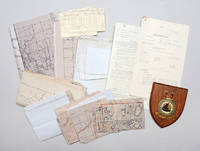
1950141716Aden & Yemen: 1950s. Into the remote places" - policing tribal disturbances in the Arabian Peninsula from the air A compelling archive of rare documents and maps. RAF operations in Aden and Yemen represented a late phase of the imperial air-policing strategy advanced by Churchill in the 1920s in response to post-Great War demobilization and Britain's expanding responsibilities in the Middle East and Africa. Claimed as a naval base on the East India route in 1839 and strengthened after the opening of the Suez Canal Aden relied on tribal treaties but as the Protectorate expanded over-stretched ground forces prompted RAF deployment from 1928 as an economical means of control. Airstrips centred on RAF Khormaksar - motto "Into the Remote Places" - supported reconnaissance leaflet-dropping and punitive strikes that helped secure the Anglo-Yemen Treaty of Friendship 1934 and later frontier policing. Reversal followed in 1954-55 with the loss of Robat while the Suez Crisis intensified unrest and Yemeni pressure leading to air attacks covert tribal agitation intervention in Oman and escalation of the frontier war into Yemen during 1958-59. The present material belongs to this volatile final phase preceding federation in 1963. Central to these operations were maps produced by the Joint Air Reconnaissance Intelligence Centre a discreet intelligence organization rooted in pre-war MI6 work. It was formalized during the Second World War and renamed in 1953 following the adoption of radar-scope photography. Headquartered at RAF Brampton and having Middle East offices in Cyprus and a detachment at Aden JARIC processed high-altitude imagery from Canberra PR9 and Victor aircraft. The archive comprises secret air-liaison instructions annotated operational maps a frontier-war-marked sketch map of Ahwar a Middle East Air Force memorandum on oxygen-mask trials RAF pilot log cards and a Khormaksar wall shield - rare survivals of evident operational use and a tangible record of Britain's final armed presence in southern Arabia. Small archive of maps memos and other documentation as detailed above. General signs of handling commensurate with active service use but overall very good. Major Michael A. Longoria "A Historical View of Air Policing Doctrine: Lessons from the British Experience Between the Wars 1919-1939" School of Advanced Airpower Studies May 1992. unknown