Palestine Exploration FundBiblio.com
660 résultats
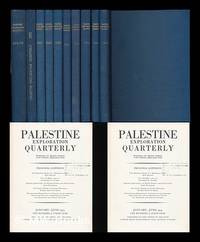
1962202311London : Palestine Exploration Fund 1962-1975 1962. First Edition. Hardback. 24 issues of the Palestine exploration quarterly published semi-annually between 1963 and 1975. 20 issues professionally bound in 10 fine gilt-blocked cloth bindings; 4 issues in the original near fine stiff-card wrappers with some very slight edge nicks and dust-dulling. Some minor library marks remain. Overall remains particularly well-preserved; tight bright clean and strong. ; 8vo 8"" - 9"" tall; Physical description: 24v. : illus. some fold. maps plates elevations plans ; 25 cm. Subjects: Palestine Exploration Fund - Periodicals. Excavations Archaeology - Periodicals - Palestine. Palestine - Archaeology - Antiquities - History - Periodicals - Lebanon - Syria - Israel - Jordan - Middle East. Notes: ""Embodying the Quarterly statement of the Palestine Exploration Fund."" --title page of each issue. Contents: Frequency: published semi-annually. Continues: Quarterly of the Palestine Exploration Fund. Referenced by: Art index 0004-3222. Referenced by: New Testament abstracts 0028-6877. Referenced by: Old Testament abstracts 0364-8591. Referenced by: Religion index one. Periodicals 0149-8428 1949- . London : Palestine Exploration Fund, 1962-1975 hardcover
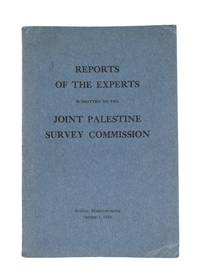
1928353963Boston: Daniels Printing Co 1928. Folding map folding tables illustrations. 741 1pp. 8vo. Publisher's blue wrappers. Laid into a cloth dropbox. Folding map folding tables illustrations. 741 1pp. 8vo. Daniels Printing Co unknown
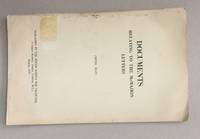
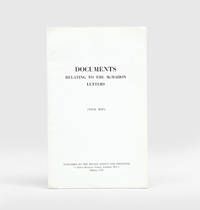
1939N4584<p>London: Massada Press 1939 Second impression. Original Wrappers. Very Good. 8vo . 20pp . T<strong>HE JEWISH RESPONSE of the JEWISH AGENCY FOR PALESTINE to the British Government's publication of the " McMahon Letters "</strong> published earlier the same month March 16th 1939. <strong>The McMahon Letters include the correspondence between Sir Henry McMahon His Majesty's High Commissioner in Egypt and Hussein Sharif of Mecca between 1915 and 1916 and represent a series of letters that were exchanged during World War I in which the British government agreed to recognize Arab independence after the war in exchange for Hussein's launching the Arab Revolt against the Ottoman Empire.</strong> These alleged promises to the Arab side given before the later BALFOUR DECLARATION OF 1917 were therefore considered by the supporters of the JEWISH CAUSE as being without legal validity. <strong>THIS VERY RARE PUBLICATION includes among its documents a STATEMENT BY MCMAHON that the area in which Arab independence was promised DID NOT INCLUDE PALESTINE.</strong> - With a folding coloured map of the ARAB TERRITORIES AND PALESTINE. Lower part of the booklet with 2cm wide strip of water stain NOT AFFECTING THE MAP outside cover with some markings on spine and remains of label removed. OTHERWISE A VERY GOOD COPY. VERY RARE AND IMPORTANT PUBLICATION. <br /><br /></p> Massada Press
198646686Paris Gallimard 1986 1 vol. Broché in-8, broché, couverture à rabats, non coupé, 503 pp. Édition originale. Un des 70 exemplaires numérotés sur vélin pur chiffon de Rives, seul grand papier. En bonne condition.
198646686Paris Gallimard 1986 1 vol. Broché in-8, broché, couverture à rabats, non coupé, 503 pp. Édition originale. Un des 70 exemplaires numérotés sur vélin pur chiffon de Rives, seul grand papier. En bonne condition.
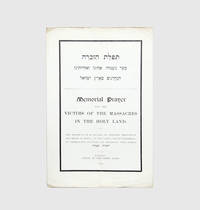
1929187341London: Office of the Chief Rabbi 1929. First edition of the Chief Rabbi's prayers following the 1929 Hebron massacre in Palestine in which 67 Jews were killed issued as an order of service for synagogues. The massacre was a seminal moment prompting the creation of the Haganah paramilitary organization which became the core of the Israel defence Forces. Along with other riots that year the massacre led to the Shaw Commission which recommended restricting further Jewish immigration to Palestine. Octavo bifolium. Text in Hebrew and English. Creased and a little soiled. A good copy. unknown
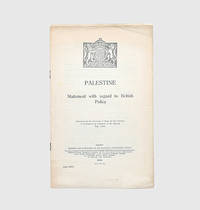
1930182213London: His Majesty's Stationery Office 1930. First separate edition transmitting the text of a statement by Drummond Shiels Britain's representative to the Permanent Mandates Commission following the publication of the Shaw Report into the 1929 Palestine disturbances. Shiels's statement while accepting of Shaw's findings displays the same equivocation that characterized Whitehall's approach to Palestine in the early 1930s. After 1929 "for the first time the British government publicly began to evaluate the socioeconomic impact of its policy on the Palestinian population. In October 1930 the Colonial Office issued a new statement of policy on Palestine the Passfield White Paper which went a long way toward meeting Arab demands for limitations on Jewish immigration" Miller p. 9. This paper was almost immediately retracted by Downing Street Ramsay MacDonald making reassuring overtures to Chaim Weizmann and "in the end the manner in which the British responded to the events of 1929 created greater suspicion of their intentions among Jews as well as Arabs" Miller p. 10. Octavo pp. 10. Original self-wrappers wire-stitched with pp. 5-6 leaf loosely inserted as issued. Toning and creasing: very good. Ylana Miller Government and Society in Rural Palestine 1920-1948 2014. unknown
19803755DBMünchen, Idion-Verlag, 1980. Schmall-Folio (18() Blatt mit zahlreichen Illustrationen. Pergamentband mit drei Schliessen.
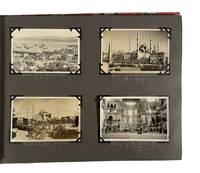
1927208311927. Photo album documenting a multi country group यातà¥à¤°à¤¾ in 1927 records interwar travel across southern Europe and the eastern Mediterranean including regions under colonial administration and recent political transition. The album follows a group of travelers moving from France through Italy Greece Turkey British administered Palestine and Egypt capturing urban landmarks archaeological sites and local populations encountered along the route. The sequence provides visual evidence of tourism infrastructure mobility and cross cultural observation during a period when former imperial territories such as Constantinople were undergoing redefinition following the dissolution of the Ottoman Empire and the establishment of modern nation states.<br /> <br /> Album contains 93 black and white silver gelatin photographs and four real photo postcards with images ranging approximately from 2.5 x 4 inches to 3.5 x 5.5 inches and one larger group photograph measuring about 9 x 7 inches. Photographs are mounted on black paper boards with handwritten captions in white pencil and interleaved tissue guards; string bound in patterned cloth boards. The album opens in Avignon with views of St. Pierre's Church and the Palais des Papes then continues through Italy with scenes of Naples and Pompeii as well as shipboard images captioned S.S. Adriatic. Subsequent sections include Athens with views of the Parthenon followed by Constantinople where four postcards depict the harbor the Sultan Ahmed Mosque and the Hagia Sophia shortly after the end of the Ottoman Empire. In British Mandate Palestine images show street scenes in Nazareth and Jerusalem including sites along the River Jordan the Western Wall and the Garden of Gethsemane alongside a captioned portrait labeled "A Jewish Maiden." The album concludes in Egypt with extensive views of archaeological and urban sites at Thebes Memphis Cairo and Luxor including the Obelisk of Hatshepsut Edfu Temple the tomb of Amenhotep II the Colossi of Memnon and the pyramids and Great Sphinx at Giza where the final group portrait shows the travelers posed on camels.<br /> <br /> Produced during the interwar period the album reflects expanding international tourism networks alongside ongoing European influence in the eastern Mediterranean and Middle East. The juxtaposition of ancient sites modern transport and local populations situates the material within broader histories of archaeology empire and travel culture in the early twentieth century. Light general wear to album and mounts; images well preserved with clear captions; overall very good condition. unknown
19803755DBMünchen, Idion-Verlag, 1980. Schmall-Folio (18() Blatt mit zahlreichen Illustrationen. Pergamentband mit drei Schliessen. + Wichtig: Für unsere Kunden in der EU erfolgt der Versand alle 14 Tage verzollt ab Deutschland / Postbank-Konto in Deutschland vorhanden +, A|B [2 Warenabbildungen]
1910053731The Ottoman Empire: Ottoman Directorate of Mapping. c. 1910 1910. No Binding. Very Good. Original lithograph map with brown white and blue tons. 81x57 cm. In Ottoman script Old Turkish with Arabic letters. All toponyms are in Ottoman Turkish and Arabic. Scale: 1:500000. Shows Mediterranean shores on the north Bahr-i Lût i.e. the Dead Sea Aqaba Bay areas of Arabic tribes in very detail in addition special huge lands like 'Al-Hism Land'. Also it shows holy places antiquities fortresses rivers; and Turkish Sanjaks Qazas Nahiyes Qariyes based on the Ottoman administrative system. Cartographer is not indicated but it's composed for military purposes in the last period of the Imperial Ottoman especially for showing Arabian tribes spreading over vast areas in its period just before World War 1 date of the printing of this map such as 'Houtat Tribe'. A very detailed and attractive map of Palestine and Quds area and their topography. Following the Muslim conquest of Palestine in 636-640 several Muslim ruling dynasties succeeded each other as they wrestled control of Palestine: the Rashiduns; the Umayyads who built the Dome of the Rock and the al-Aqsa Mosque in Jerusalem; the Abbasids; the semi-independent Tulunids and the Ikhshidids; the Fatimids; and the Seljuks. In 1099 the Crusaders established the Kingdom of Jerusalem in Palestine which the Ayyubid Sultanate conquered in 1187. The Crusaders failed to retake Palestine despite further attempts. The Egyptian Mamluks took Palestine from the Mongols who had conquered the Ayyubid Sultanate in 1260. The Ottomans captured Palestine in 1516 and ruled it until Egypt took it in 1832. Eight years later the United Kingdom intervened and returned the region to the Ottomans. Considerable demographic changes happened during the 19th century and with the regional migrations of Druze Circassians and Bedouin tribes. The emergence of Zionism also brought many Jewish immigrants from Europe and the revival of the Hebrew language. Arabs in Palestine both Christian and Muslim settled and Bedouin were historically split between the Qays and Yaman factions. These divisions had their origins in pre-Islamic tribal feuds between Northern Arabians Qaysis and Southern Arabians Yamanis. The strife between the two tribal confederacies spread throughout the Arab world with their conquests subsuming even uninvolved families so that the population of Palestine identified with one or the other. Their conflicts continued after the 8th-century Civil war in Palestine until the early 20th century and gave rise to differences in customs tradition and dialect which remain to this day. Beit Sahour was first settled in the 14th century by a handful of Christian and Muslim clans hamula from Wadi Musa in Jordan the Christian Jaraisa and the Muslim Shaybat and Jubran who came to work as shepherds for Bethlehem's Christian landowners and they were subsequently joined by other Greek Orthodox immigrants from Egypt in the 17th-18th centuries. Due to the legacy of the Ottoman period the ethnic origins of some rural and urban Palestinians are either Albanian Circassian or from other non-Arab populations. <br/> <br/> [Ottoman Directorate of Mapping]., [c. 1910] unknown
1929R118589Quaracchi, Collegio di S. Bonaventura 1929-1936 Complete in 5 volumes, cxxxi,383 + 363 + 352 + xx,189 + 371 pp., 27cm., in the series "Bibliotheca bio-bibliografica della Terra Santa e dell'Oriente Francescano. Nuova serie: Documenti" volumes 6-7-8-9-10, uniform solid hardcover bindings, small stamp on recto and verso of title pages, text is clean and bright except for few occasional foxing, text in Italian, good condition, weight: 5.2 kg., R118589
19605326DBJerusalem, Abteilung für Erziehung und Jugend des jüdischen Nationalfonds (Keren Kayemet), ca. 1960. Folio (48 x 34 cm). Mappe mit 20 farbingen Illustrationen. Mappen mit losen Blättern.
1930182214London: His Majesty's Stationery Office 1930. First separate edition one of 500 copies only printed in March 1931 of the controversial Passfield White Paper which was issued in the wake of the 1929 disturbances and the Shaw and Hope-Simpson reports. The paper imposed restrictions on Jewish immigration into Palestine and criticized Zionist organizations leading to an outcry and its almost immediate watering down by Ramsay MacDonald. "In the end the manner in which the British responded to the events of 1929 created greater suspicion of their intentions among Jews as well as Arabs" Miller p. 10. Octavo pp. 23 1. Original printed self-wrappers wire-stitched as issued. Self-wrappers coming away from upper staple front cover toned at fore edge rust marks pp. 5-6 with production crease: very good. Ylana Miller Government and Society in Rural Palestine 1920-1948 2014. unknown
193047228Tel Aviv: Tel Aviv Publishing House 1930. First edition. Softcover. poor to vg. Quartos. Vol.1: 100pp. Vol.2: 68pp. Vol.3: 92pp. Vol.4: 109pp. Vol.5: 96pp. Vol.6: 120pp. Vol.7: 175pp. 2. Photo-illustrated tanned wrappers with dark blue or black lettering on the covers. Pages uncut and unopened. The full and conclusive text of the historically important Shaw Report aka the Shaw Comission Report of the Commission on the Palestine Disturbances of August 1929 consisting of the commission's findings regarding the events and causes of the infamous 1929 Palestine Riots. The text of these volumes was taken from transcripts appearing in the reports of three major newspapers in Palestine - Davar Haaretz and The Palestine Bulletin now the Jerusalem Post in addition to other submitted documents. The commission which investigated and held hearings from October - December 1929 was chaired by Sir Walter Shaw the highly regarded British jurist and included three other members British politicians Henry Snell 1865-1944 Sir Rhys Hopkin Morris 1888-1956 and Henry Bucknall Betterton 1872-1949. The final page of the last volume credits the text to these four men. The front cover of the first volume shows Betterton and Shaw in suits. It scarce to find the complete set of these publications.<br /> <br /> Text in Hebrew.<br /> <br /> Most wrappers with with some minor to light chipping rubbing and/or creasing to extremities as well as foxing to the edges. Most of the images on the covers are unaffected. Vol.1 with cover detached but present. Foxing to edges of book blocks. Interior with some sporadic minor to light water stains to pages. Most pages clean and bright. Book blocks tight overall. These copies seem to have never been read as they for the most part contain unopened pages. Wrappers in poor to very good interiors in good to very good condition overall. Hebrew title: דין וחשבון ×ž×œ× : מעבודת ועדת החקירה ×”×¤×¨×œ×ž× ×˜×¨×™×ª ×‘×™×¨×•×©×œ×™× ×”×—×œ ×ž×™×•× 24 ב×וקטובר 1929<br /> Alternate: ועדת החקירה. Tel Aviv Publishing House unknown
1939186857London: Issued by the Jewish Agency for Palestine 1939. Second impression of the Jewish Agency's response to the publication of the McMahon Letters correspondence purportedly showing Britain agreeing to Arab independence including over Palestine prior to the Balfour Declaration. The agency interpreted the letters as confirmation that Palestine was always treated separately and not included in territory to be granted to the Arabs. The McMahon Letters were published by the British Government early in 1939 in an attempt to clarify Britain's historical position. This response cites substantiating documents including government statements and T. E. Lawrence's 18 November 1922 draft preface for Seven Pillars of Wisdom. The colour map emphasizes that Palestine amounts to only one per cent of territory under Arab rule. The second impression was published the same year as the first. Octavo pp. 20. With colour folding map of "Arab Territories and Palestine" text on verso. Original printed wrappers wire-stitched as issued front cover lettered in black. A hint of soiling to wrappers and light stain at foot of contents. A very good copy. unknown
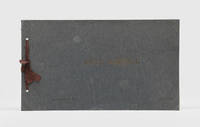
1933176262Likely Palestine: Palestine Goverment c.1933. Sole edition traced in only one Middle Eastern library issued at the opening of Palestine's new "lynchpin in the entire regional system of sea and land communications" Herbert & Sosnovsky p. 51. By 1936 the harbour was handling almost one million tons of goods per year. Construction of the harbour began in 1929 under the direct supervision of the Government of Palestine and 115 acres were dredged to allow for an entrance 600 feet in width. The main line of the Palestine Railways was also diverted onto reclaimed land affording new opportunities for trade in fruit and other agricultural commodities. Guest of honour at the opening ceremony was Sir Arthur Grenfell Wauchope 1874-1947 High Commissioner for Palestine. The copy in the Middle East is held at the National Library of Israel. WorldCat records a further nine including one in the UK British Library. Landscape quarto pp. 30. With 17 photographic half-tones 2 colour harbour plans. Original grey card wrappers sewn with brown ribbon through punch holes as issued front cover lettered in gilt. Lightly worn and creased a few chips and small closed tears all marginal except one touching title of second plan. A very good copy. Gilbert Herbert & Silvina Sosnovsky Bauhaus on the Carmel and the Crossroads of Empire: Architecture and Planning in Haifa During the British Mandate 1933. unknown
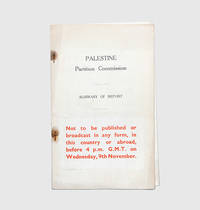
1938182152London: His Majesty's Stationery Office 1938. First edition of this press summary "Not to be published or broadcast in any form in this country or abroad before 4 p.m. G.M.T. on Wednesday 9th November." The two maps show the workings of two proposed partition plans including that favoured by the majority of the partition commission: the creation of northern and southern mandates and the carving out of Jewish and Arab states in the centre. Of the 3775 copies printed none are recorded in institutional libraries the full report being much more common. Octavo pp. 12. With 2 folding maps outlined in red. Original self-wrappers wire-stitched as issued front cover lettered in black red embargo notice on laid-down label. Staining at staples as usual map coming away from lower staple: near-fine. This summary not in Khalidi & Khadduri 1656 for the full report. unknown
1942N4644Jerusalem: Government Printer 1942. First Edition . Half Cloth. Very Good. 8vo . Some 1400pp to 2000pp for each year. Half cloth binding. Each volume with owner's stamp at the first page only MODAI ADVOCATES TEL AVIV The two volumes for 1944 have a spelling mistake on the spine for the word "Palestine". Some mild spotting on end papers and some spines. One volume with some more spotting on end paper One volume with ear endpaper margins with minimal loss. Please see photographs- ENGLISH TEXT WITH A FEW HEBREW PAGES. A VERY GOOD AND RARE COLLECTION OF THIS OFFICIAL MANDATORY PALESTINE PUBLICATION <br/> <br/> Government Printer hardcover
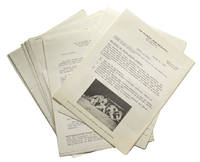
1970304787New York 1970. 26 single-sided press releases plus three pamphlets. 4to and folio. Generally fine condition. Pamphlets are stapled. 26 single-sided press releases plus three pamphlets. 4to and folio. The Palestine Arab Delegation came to prominence through their demand that the Balfour Declaration be abrogated. With the advent of the United Nations they established themselves in New York City and continued to lobby for the interests of Palestinians. <br/><br/>This collection provides a in depth look into the concerns and strategies of the group. The heart of it naturallyis devoted to the Six Day War in June 1967 and includes a substantial press release dated 29 July 1968. Nine pages of which are "A Diary of Crimes by Zionist Jews in the Gaza Strip."<br/><br/>Pamphlets include:<br/>1. Proof of Guilt. Zionist in Occupied Palestine are Guilty of War Crimes and Crimes Against Humanity. 19 August 1963. Illustrated. 12pp<br/>2. A Statement submitted by the Palestine Arab Delegation to the Fifth Emergency Special Session of the General Assembly. 28 June 1967. 12pp<br/>3. Proof of Guilt. The War Criminals: Dayan Allon Begin Rabin Bar-Lev Hod Eban Carmel Galili Ben Gurion are Guilty of War Crimes. March 1969. Illustrated. 30 pp<br/><br/>Although most of the press releases are untitled some bear the following: "Mayor of Jerusalem Exposes Jewish Crimes and Atrocities Hails Commando Action" "Security council Debate" "The Zionist Gemini in the Security Council" "Jewish War Crimes: Israel Resorting to More Presure to Drive Arabs from Occupied Lands. unknown books
195125321<p><b>AMERCAN CHRISTIAN PALESTINE COMMITEE.</b>Scrapbook compiled by Harrison Fry Religion Editor of the Philadelphia <i>Evening Bulletin</i> one of the twenty-two tour participants. April 1951. Items glued or stapled to several pages with additional papers laid in. In green leatherette boards rules and decorations in yellow. 120 pp. 9½ x 11¾ x 1 in. </p><br /><p>The <b>American Christian Palestine Committee</b> ACPC was created in 1946 by merger of the American Palestine Committee 1931-1946 and the Christian Council on Palestine 1942-1946. Its purpose was to educate American Christian leaders about the post-Holocaust need for a Jewish state to publicize the new states' accomplishments to fight anti-Semitism and to support the country's existence. Over 20000 Christian leaders mostly Protestants were members. The ACPC sponsored seminars published educational materials created a speaker's bureau and conducted study tours taking religious leaders and journalists to Israel and adjoining Arab lands.</p><p>This scrapbook documents a trip from March 31 - April 28 1951. Its goals include making a "comprehensive study of Arab-Israel problems" including finding "suggested solutions for the resettlement of these tragic victims of the Arab-Israel War of 1948." The tour visited Israel Jordan and Lebanon and was the first ACPC group to visit to Palestinian refugee camps.</p><p>The group met Israeli Prime Minister David Ben-Gurion; Hashemite Kingdom of Jordan Foreign Minister Achmed Tooqan; Rabbi Jaacov Herzog son of the Chief Rabbi of Jerusalem; and American Ambassador to Israel Monnet Davis as well as other government and university officials and mayors. Early items in the scrapbook are typed copies of their itinerary including stops in Beyrouth Beirut Jerusalem Tel Aviv Haifa and Nazareth; a list of participants with their affiliations; and memoranda. It also includes airline tickets postcards hotel reservations including the King David Hotel and ephemera. Of particular interest is a printed pamphlet with basic information about the Knesset that includes Fry's notes of the group's meeting with Ben-Gurion 1886-1973. After about two weeks in the Middle East Fry also briefly visited Rome Paris and London. He used his notes for an article in the Philadelphia <i>Evening Bulletin</i>.</p><p>The scrapbook collects printed ephemera that illustrate Israel presented itself including a large color "tourist guide map" of Tel-Aviv 13½ x 9½ in. a 24- x 17-inch folding color "motor map" of Israel laid in with their route highlighted in red and with tourist information on each city on the verso; and a small program for a production of "Carmen" by the Hebrew National Opera. Other items include a Vocabulary for Visitors to Israel; and the post-return typed or handwritten letters Fry received including messages of friendship from other tour attendees.</p><p>Black-and-white photographs include an 8 x 10-inch photo of the group of travelers boarding their PanAm plane; a 5 x 7-inch photo of them at the Mosque of Omar; a photograph of settlers at the "future site of 'Kfar Truman'"; and photographs of the group at other sites that they visited such as the Garden of Gethsemane.</p><p><b>Excerpts:</b></p><p>Harrison W. Fry "People of Israel and Neighboring Nations Hope for Peace Despite Border Quarrels" <i>Evening Bulletin </i> Philadelphia April 22 1951</p><p>"<i>In Jerusalem—which means City of Peace—there is much talk of peace. In the Arab countries of Lebanon and Jordan there is more talk of co-operation than of hate. It may be a hopeful index. But no one agrees as to where it will start…</i> <i>if you look carefully there is the desire for peace down at the grass roots among Arabs living as displaced persons in caves and tents and among Israelis living under an austere program.</i>"</p><p>Harrison W. Fry "Ben-Gurion Wants U.S. Help to Bring Peace in Near East" <i>Evening Bulletin</i> Philadelphia April 25 1951</p><p>"<i>Prime Minister David Ben-Gurion of Israel would welcome the good offices of the United States in establishing peace in the Near East. Israel and the Arab states are now operating under an uneasy armistice with frequent border incidents</i>… <i>The shaggy white-haired leader of the modern miracle that is the State of Israel interrupted conferences in connection with the meeting of the Knesset Israel's Parliament now in session to greet the members of the American Christian Palestine Committee study group of which the writer is a member. With all the frankness of a long-time friend he talked of Israel's plans and problems and answered questions with a refreshing frankness free of diplomatic double talk.</i>"</p><p>Harrison W. Fry "Architects of New Israel Are Building Up from Soil" <i>Evening Bulletin</i> Philadelphia April 27 1951</p><p>"<i>In the valley of the Armageddon the old Biblical plains of Esdraelon the scene of many ancient victories and disasters of the Jews the modern Jews won their first victory of the land in the early twenties when the drained the malarial swamps. Today the valley is a Garden of Eden of fragrant orange citrus and olive groves and garden crops—a delight to the eyes after days of traveling in the eroded dust-storm swept Arab lands to the east of Israel… In the Hula Lake section north of the Sea of Galilee and Capernaum where Christ performed his miracles the Jews are today performing modern miracles by reclaiming further swamp areas.</i>"</p><p>Harrison W. Fry "Debris of Intolerance Bears Fruit of Freedom in Israel" <i>Evening Bulletin</i> Philadelphia May 2 1951</p><p>"<i>In a cave on Mt. Zion ancient citadel of Jerusalem are the ashes of thousands of Jewish martyrs to Nazi intolerance—a symbol of 6000000 who so perished. About them are the sacred scrolls desecrated by the Nazis. One of these had been made into a house coat by a Nazi who apparently did not read Hebrew because it bears on its back the warning that the Lord will wreak vengeance upon those who persecute his people… Atop a tower on this hill which borders no-man's land in the uneasy truce with the Arab kingdom of Jordan an Israeli soldier keeps vigil above these shrines that appeal for peace and tolerance. The Jews have put the terrible evidence of intolerance underground and are building a new tomorrow. They want to talk of peace in the Near East the whole refugee problem including the Arabs.</i>"</p><p>Carl Herman Voss to Members of ACPC Study Tour May 11 1951</p><p>"<i>I want to express appreciation for the cooperative spirit all of you manifested on the Tour. You were really a wonderful crew! Thanks too to all of you once again for the lovely Menorah and plate for Hanukkah with which you surprised me during our last evening together in Israel</i>."</p><p>"Assignment Well Covered" <i>Jewish Exponent</i> May 11 1951</p><p>"<i>Harrison W. Fry seasoned newspaperman and religious editor of the</i> Evening Bulletin<i> did a splendid job in reporting and interpreting the events in Israel as he observed them during his two weeks' tour of the country at the invitation of the American Christian Palestine Committee. His articles that have appeared in the</i> Evening Bulletin <i>during these past few weeks have given the readers of the</i> Bulletin <i>a clear insight into some of the problems concerning the country and the manner in which the Government and the people of Israel are grappling with these problems.</i>"</p><p>Carl Hermann Voss to Harrison Fry July 6 1951</p><p>"<i>I did have a chance to hear from my friends that you have given some excellent reports since you returned from the Middle East and that you were as stimulated and thrilled by the trip as was I… I was a bit disappointed not to have your assent to our reiterated invitation to be listed among the speakers for the Club Program Service the speakers' bureau of the American Christian Palestine Committee but I presume that compelling reasons determined your decision. Won't you still reconsider We would look upon your addition to the list of speakers for Club Program Service as a real boon for the ACPC.</i>"</p><p>Memo of Harrison W. Fry to Walter Lister n.d.</p><p>"<i>Judge Levinthal called me late yesterday to say that he and some of his friends were thinking of nominating me as a member of a small party of Christian clergymen from all parts of the United States who are being sent expenses paid to visit Palestine and get first had information of conditions there. Would I accept if the full committee approved. Had I been to Palestine.</i>"</p><p>"<i>I told him the prospect thrilled me as I had never been to Palestine. I told him that Fry disassociated form The Bulletin did not mean anything and much as I would like to go on my own I felt I should not unless the matter was cleared through The Bulletin.</i>"</p><p><b>Harrison W. Fry</b> 1892-1973 was born in Pottstown Pennsylvania and married Laura V. Umstead 1894-1967 in 1918. He entered journalism before World War I with the <i>Public Ledger</i> and then served as religion and education editor for the Philadelphia <i>Evening Bulletin</i>for forty-two years. Fry interviewed every president from Theodore Roosevelt to Harry S. Truman. He served as a charter member and later president of the Education Writers Association in 1948-1949 and was a founding member of the Religion Newswriters Association in 1949.</p><p><b>Carl Hermann Voss</b> 1911-1995 was a Congregational minister who served in Brooklyn; Pittsburgh; Raleigh North Carolina; and Saratoga Springs New York. During World War II he founded and led the Christian Council on Palestine before becoming one of the founding members of the American Christian Palestine Committee.</p><p><b>Louis E. Levinthal</b> 1892-1976 received three degrees from the University of Pennsylvania and was a judge of the Court of Common Pleas for Philadelphia County from 1937 to 1959. He was president of the Zionist Organization of America from 1941 to 1943 and special adviser for Jewish affairs to the postwar European Command in 1947-1948. He served as chairman of the board of governors of Hebrew University in Jerusalem from 1962 to 1968.</p><p>Starting in 1951 the group's activities were opposed by the pro-Arab American Friends of the Middle East later proven to be funded in part by the CIA. The ACPC wound down in the early 1960s when the Israeli embassy and consulates took over the task.</p> hardcover
195125321<p><b>AMERCAN CHRISTIAN PALESTINE COMMITEE.</b>Scrapbook compiled by Harrison Fry Religion Editor of the Philadelphia <i>Evening Bulletin</i> one of the twenty-two tour participants. April 1951. Items glued or stapled to several pages with additional papers laid in. In green leatherette boards rules and decorations in yellow. 120 pp. 9½ x 11¾ x 1 in. </p><br /><p>The <b>American Christian Palestine Committee</b> ACPC was created in 1946 by merger of the American Palestine Committee 1931-1946 and the Christian Council on Palestine 1942-1946. Its purpose was to educate American Christian leaders about the post-Holocaust need for a Jewish state to publicize the new states' accomplishments to fight anti-Semitism and to support the country's existence. Over 20000 Christian leaders mostly Protestants were members. The ACPC sponsored seminars published educational materials created a speaker's bureau and conducted study tours taking religious leaders and journalists to Israel and adjoining Arab lands.</p><p>This scrapbook documents a trip from March 31 - April 28 1951. Its goals include making a "comprehensive study of Arab-Israel problems" including finding "suggested solutions for the resettlement of these tragic victims of the Arab-Israel War of 1948." The tour visited Israel Jordan and Lebanon and was the first ACPC group to visit to Palestinian refugee camps.</p><p>The group met Israeli Prime Minister David Ben-Gurion; Hashemite Kingdom of Jordan Foreign Minister Achmed Tooqan; Rabbi Jaacov Herzog son of the Chief Rabbi of Jerusalem; and American Ambassador to Israel Monnet Davis as well as other government and university officials and mayors. Early items in the scrapbook are typed copies of their itinerary including stops in Beyrouth Beirut Jerusalem Tel Aviv Haifa and Nazareth; a list of participants with their affiliations; and memoranda. It also includes airline tickets postcards hotel reservations including the King David Hotel and ephemera. Of particular interest is a printed pamphlet with basic information about the Knesset that includes Fry's notes of the group's meeting with Ben-Gurion 1886-1973. After about two weeks in the Middle East Fry also briefly visited Rome Paris and London. He used his notes for an article in the Philadelphia <i>Evening Bulletin</i>.</p><p>The scrapbook collects printed ephemera that illustrate Israel presented itself including a large color "tourist guide map" of Tel-Aviv 13½ x 9½ in. a 24- x 17-inch folding color "motor map" of Israel laid in with their route highlighted in red and with tourist information on each city on the verso; and a small program for a production of "Carmen" by the Hebrew National Opera. Other items include a Vocabulary for Visitors to Israel; and the post-return typed or handwritten letters Fry received including messages of friendship from other tour attendees.</p><p>Black-and-white photographs include an 8 x 10-inch photo of the group of travelers boarding their PanAm plane; a 5 x 7-inch photo of them at the Mosque of Omar; a photograph of settlers at the "future site of 'Kfar Truman'"; and photographs of the group at other sites that they visited such as the Garden of Gethsemane.</p><p><b>Excerpts:</b></p><p>Harrison W. Fry "People of Israel and Neighboring Nations Hope for Peace Despite Border Quarrels" <i>Evening Bulletin </i> Philadelphia April 22 1951</p><p>"<i>In Jerusalem—which means City of Peace—there is much talk of peace. In the Arab countries of Lebanon and Jordan there is more talk of co-operation than of hate. It may be a hopeful index. But no one agrees as to where it will start…</i> <i>if you look carefully there is the desire for peace down at the grass roots among Arabs living as displaced persons in caves and tents and among Israelis living under an austere program.</i>"</p><p>Harrison W. Fry "Ben-Gurion Wants U.S. Help to Bring Peace in Near East" <i>Evening Bulletin</i> Philadelphia April 25 1951</p><p>"<i>Prime Minister David Ben-Gurion of Israel would welcome the good offices of the United States in establishing peace in the Near East. Israel and the Arab states are now operating under an uneasy armistice with frequent border incidents</i>… <i>The shaggy white-haired leader of the modern miracle that is the State of Israel interrupted conferences in connection with the meeting of the Knesset Israel's Parliament now in session to greet the members of the American Christian Palestine Committee study group of which the writer is a member. With all the frankness of a long-time friend he talked of Israel's plans and problems and answered questions with a refreshing frankness free of diplomatic double talk.</i>"</p><p>Harrison W. Fry "Architects of New Israel Are Building Up from Soil" <i>Evening Bulletin</i> Philadelphia April 27 1951</p><p>"<i>In the valley of the Armageddon the old Biblical plains of Esdraelon the scene of many ancient victories and disasters of the Jews the modern Jews won their first victory of the land in the early twenties when the drained the malarial swamps. Today the valley is a Garden of Eden of fragrant orange citrus and olive groves and garden crops—a delight to the eyes after days of traveling in the eroded dust-storm swept Arab lands to the east of Israel… In the Hula Lake section north of the Sea of Galilee and Capernaum where Christ performed his miracles the Jews are today performing modern miracles by reclaiming further swamp areas.</i>"</p><p>Harrison W. Fry "Debris of Intolerance Bears Fruit of Freedom in Israel" <i>Evening Bulletin</i> Philadelphia May 2 1951</p><p>"<i>In a cave on Mt. Zion ancient citadel of Jerusalem are the ashes of thousands of Jewish martyrs to Nazi intolerance—a symbol of 6000000 who so perished. About them are the sacred scrolls desecrated by the Nazis. One of these had been made into a house coat by a Nazi who apparently did not read Hebrew because it bears on its back the warning that the Lord will wreak vengeance upon those who persecute his people… Atop a tower on this hill which borders no-man's land in the uneasy truce with the Arab kingdom of Jordan an Israeli soldier keeps vigil above these shrines that appeal for peace and tolerance. The Jews have put the terrible evidence of intolerance underground and are building a new tomorrow. They want to talk of peace in the Near East the whole refugee problem including the Arabs.</i>"</p><p>Carl Herman Voss to Members of ACPC Study Tour May 11 1951</p><p>"<i>I want to express appreciation for the cooperative spirit all of you manifested on the Tour. You were really a wonderful crew! Thanks too to all of you once again for the lovely Menorah and plate for Hanukkah with which you surprised me during our last evening together in Israel</i>."</p><p>"Assignment Well Covered" <i>Jewish Exponent</i> May 11 1951</p><p>"<i>Harrison W. Fry seasoned newspaperman and religious editor of the</i> Evening Bulletin<i> did a splendid job in reporting and interpreting the events in Israel as he observed them during his two weeks' tour of the country at the invitation of the American Christian Palestine Committee. His articles that have appeared in the</i> Evening Bulletin <i>during these past few weeks have given the readers of the</i> Bulletin <i>a clear insight into some of the problems concerning the country and the manner in which the Government and the people of Israel are grappling with these problems.</i>"</p><p>Carl Hermann Voss to Harrison Fry July 6 1951</p><p>"<i>I did have a chance to hear from my friends that you have given some excellent reports since you returned from the Middle East and that you were as stimulated and thrilled by the trip as was I… I was a bit disappointed not to have your assent to our reiterated invitation to be listed among the speakers for the Club Program Service the speakers' bureau of the American Christian Palestine Committee but I presume that compelling reasons determined your decision. Won't you still reconsider We would look upon your addition to the list of speakers for Club Program Service as a real boon for the ACPC.</i>"</p><p>Memo of Harrison W. Fry to Walter Lister n.d.</p><p>"<i>Judge Levinthal called me late yesterday to say that he and some of his friends were thinking of nominating me as a member of a small party of Christian clergymen from all parts of the United States who are being sent expenses paid to visit Palestine and get first had information of conditions there. Would I accept if the full committee approved. Had I been to Palestine.</i>"</p><p>"<i>I told him the prospect thrilled me as I had never been to Palestine. I told him that Fry disassociated form The Bulletin did not mean anything and much as I would like to go on my own I felt I should not unless the matter was cleared through The Bulletin.</i>"</p><p><b>Harrison W. Fry</b> 1892-1973 was born in Pottstown Pennsylvania and married Laura V. Umstead 1894-1967 in 1918. He entered journalism before World War I with the <i>Public Ledger</i> and then served as religion and education editor for the Philadelphia <i>Evening Bulletin</i>for forty-two years. Fry interviewed every president from Theodore Roosevelt to Harry S. Truman. He served as a charter member and later president of the Education Writers Association in 1948-1949 and was a founding member of the Religion Newswriters Association in 1949.</p><p><b>Carl Hermann Voss</b> 1911-1995 was a Congregational minister who served in Brooklyn; Pittsburgh; Raleigh North Carolina; and Saratoga Springs New York. During World War II he founded and led the Christian Council on Palestine before becoming one of the founding members of the American Christian Palestine Committee.</p><p><b>Louis E. Levinthal</b> 1892-1976 received three degrees from the University of Pennsylvania and was a judge of the Court of Common Pleas for Philadelphia County from 1937 to 1959. He was president of the Zionist Organization of America from 1941 to 1943 and special adviser for Jewish affairs to the postwar European Command in 1947-1948. He served as chairman of the board of governors of Hebrew University in Jerusalem from 1962 to 1968.</p><p>Starting in 1951 the group's activities were opposed by the pro-Arab American Friends of the Middle East later proven to be funded in part by the CIA. The ACPC wound down in the early 1960s when the Israeli embassy and consulates took over the task.</p> hardcover books
1939N4645Jerusalem: Government Printer 1939. First Edition . Half Cloth. Very Good. 8vo. Some 12000pp for the 14 volumes. HEBREW LANGUAGE. Each colume with owner's stamp on the firtst page MODAI ADVOCATES -TEL AVIV Some spotting on edges and front end papers. A few pages loose. General minimal wear. UNIFORM HALF CLOTH BINDING. A VERY GOOD COPY OF THIS RARE OFFFICIAL PUBLICATION FO THE PALESTINE MANDATE. <br/> <br/> Government Printer hardcover
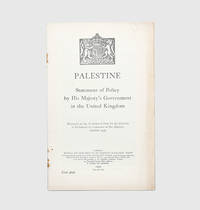
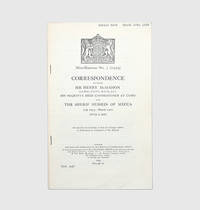
1939184044London: His Majesty's Stationery Office 1939. I am empowered in the name of the Government of Great Britain to give the following assurances First edition representing the first official publication of the deeply contentious McMahon-Hussein correspondence which cast a shadow over the future of Palestine for decades. The British Government released the full letters during the St James's Palace Conference in response to mounting pressure over the precise wording of McMahon's commitments. Shortly after the release a committee was formed to examine the precise implications of the letters. It concluded that "His Majesty's Government were not free to dispose of Palestine without regard for the wishes and interests of the inhabitants of Palestine". British representatives on the committee maintained that Palestine was excluded from McMahon's commitments but agreed that "the language in which its exclusion was expressed was not so specific and unmistakable as it was thought to be at the time" p. 10. Octavo pp. 18. With colour folding map. Original printed self-wrappers wire-stitched as issued. 15 March 1939 ownership mark of Harold Meek 1922-2016 architectural historian typed at head of title page. Light toning and creasing: near-fine. unknown
1938PALESTIN010092His Majesty's Stationery Office London. 1938. First edition. Royal octavo. 310 pages. Thirteen maps the first being opposite page 53 the next ten folded and tipped in at the rear the final two folded and tipped onto rear endpaper. Originally issued in blue wrappers with the last two maps in a pocket. Recently rebound in blue cloth not retaining the original wrappers. This report was commissioned by the Prime Minister Neville Chamberlain to supersede and thereby bury the Peel Report which had found the Mandate to be unworkable and had set out partition boundaries. Woodhead duly dismissed the idea of partition.Staining tea to inner margins of first 20 pages. Some creasing to edges and corners of maps. Very good. His Majesty's Stationery Office, London. hardcover