AMERCAN CHRISTIAN PALESTINE COMMITEEBiblio.com

277 résultats
195125321<p><b>AMERCAN CHRISTIAN PALESTINE COMMITEE.</b>Scrapbook compiled by Harrison Fry Religion Editor of the Philadelphia <i>Evening Bulletin</i> one of the twenty-two tour participants. April 1951. Items glued or stapled to several pages with additional papers laid in. In green leatherette boards rules and decorations in yellow. 120 pp. 9½ x 11¾ x 1 in. </p><br /><p>The <b>American Christian Palestine Committee</b> ACPC was created in 1946 by merger of the American Palestine Committee 1931-1946 and the Christian Council on Palestine 1942-1946. Its purpose was to educate American Christian leaders about the post-Holocaust need for a Jewish state to publicize the new states' accomplishments to fight anti-Semitism and to support the country's existence. Over 20000 Christian leaders mostly Protestants were members. The ACPC sponsored seminars published educational materials created a speaker's bureau and conducted study tours taking religious leaders and journalists to Israel and adjoining Arab lands.</p><p>This scrapbook documents a trip from March 31 - April 28 1951. Its goals include making a "comprehensive study of Arab-Israel problems" including finding "suggested solutions for the resettlement of these tragic victims of the Arab-Israel War of 1948." The tour visited Israel Jordan and Lebanon and was the first ACPC group to visit to Palestinian refugee camps.</p><p>The group met Israeli Prime Minister David Ben-Gurion; Hashemite Kingdom of Jordan Foreign Minister Achmed Tooqan; Rabbi Jaacov Herzog son of the Chief Rabbi of Jerusalem; and American Ambassador to Israel Monnet Davis as well as other government and university officials and mayors. Early items in the scrapbook are typed copies of their itinerary including stops in Beyrouth Beirut Jerusalem Tel Aviv Haifa and Nazareth; a list of participants with their affiliations; and memoranda. It also includes airline tickets postcards hotel reservations including the King David Hotel and ephemera. Of particular interest is a printed pamphlet with basic information about the Knesset that includes Fry's notes of the group's meeting with Ben-Gurion 1886-1973. After about two weeks in the Middle East Fry also briefly visited Rome Paris and London. He used his notes for an article in the Philadelphia <i>Evening Bulletin</i>.</p><p>The scrapbook collects printed ephemera that illustrate Israel presented itself including a large color "tourist guide map" of Tel-Aviv 13½ x 9½ in. a 24- x 17-inch folding color "motor map" of Israel laid in with their route highlighted in red and with tourist information on each city on the verso; and a small program for a production of "Carmen" by the Hebrew National Opera. Other items include a Vocabulary for Visitors to Israel; and the post-return typed or handwritten letters Fry received including messages of friendship from other tour attendees.</p><p>Black-and-white photographs include an 8 x 10-inch photo of the group of travelers boarding their PanAm plane; a 5 x 7-inch photo of them at the Mosque of Omar; a photograph of settlers at the "future site of 'Kfar Truman'"; and photographs of the group at other sites that they visited such as the Garden of Gethsemane.</p><p><b>Excerpts:</b></p><p>Harrison W. Fry "People of Israel and Neighboring Nations Hope for Peace Despite Border Quarrels" <i>Evening Bulletin </i> Philadelphia April 22 1951</p><p>"<i>In Jerusalem—which means City of Peace—there is much talk of peace. In the Arab countries of Lebanon and Jordan there is more talk of co-operation than of hate. It may be a hopeful index. But no one agrees as to where it will start…</i> <i>if you look carefully there is the desire for peace down at the grass roots among Arabs living as displaced persons in caves and tents and among Israelis living under an austere program.</i>"</p><p>Harrison W. Fry "Ben-Gurion Wants U.S. Help to Bring Peace in Near East" <i>Evening Bulletin</i> Philadelphia April 25 1951</p><p>"<i>Prime Minister David Ben-Gurion of Israel would welcome the good offices of the United States in establishing peace in the Near East. Israel and the Arab states are now operating under an uneasy armistice with frequent border incidents</i>… <i>The shaggy white-haired leader of the modern miracle that is the State of Israel interrupted conferences in connection with the meeting of the Knesset Israel's Parliament now in session to greet the members of the American Christian Palestine Committee study group of which the writer is a member. With all the frankness of a long-time friend he talked of Israel's plans and problems and answered questions with a refreshing frankness free of diplomatic double talk.</i>"</p><p>Harrison W. Fry "Architects of New Israel Are Building Up from Soil" <i>Evening Bulletin</i> Philadelphia April 27 1951</p><p>"<i>In the valley of the Armageddon the old Biblical plains of Esdraelon the scene of many ancient victories and disasters of the Jews the modern Jews won their first victory of the land in the early twenties when the drained the malarial swamps. Today the valley is a Garden of Eden of fragrant orange citrus and olive groves and garden crops—a delight to the eyes after days of traveling in the eroded dust-storm swept Arab lands to the east of Israel… In the Hula Lake section north of the Sea of Galilee and Capernaum where Christ performed his miracles the Jews are today performing modern miracles by reclaiming further swamp areas.</i>"</p><p>Harrison W. Fry "Debris of Intolerance Bears Fruit of Freedom in Israel" <i>Evening Bulletin</i> Philadelphia May 2 1951</p><p>"<i>In a cave on Mt. Zion ancient citadel of Jerusalem are the ashes of thousands of Jewish martyrs to Nazi intolerance—a symbol of 6000000 who so perished. About them are the sacred scrolls desecrated by the Nazis. One of these had been made into a house coat by a Nazi who apparently did not read Hebrew because it bears on its back the warning that the Lord will wreak vengeance upon those who persecute his people… Atop a tower on this hill which borders no-man's land in the uneasy truce with the Arab kingdom of Jordan an Israeli soldier keeps vigil above these shrines that appeal for peace and tolerance. The Jews have put the terrible evidence of intolerance underground and are building a new tomorrow. They want to talk of peace in the Near East the whole refugee problem including the Arabs.</i>"</p><p>Carl Herman Voss to Members of ACPC Study Tour May 11 1951</p><p>"<i>I want to express appreciation for the cooperative spirit all of you manifested on the Tour. You were really a wonderful crew! Thanks too to all of you once again for the lovely Menorah and plate for Hanukkah with which you surprised me during our last evening together in Israel</i>."</p><p>"Assignment Well Covered" <i>Jewish Exponent</i> May 11 1951</p><p>"<i>Harrison W. Fry seasoned newspaperman and religious editor of the</i> Evening Bulletin<i> did a splendid job in reporting and interpreting the events in Israel as he observed them during his two weeks' tour of the country at the invitation of the American Christian Palestine Committee. His articles that have appeared in the</i> Evening Bulletin <i>during these past few weeks have given the readers of the</i> Bulletin <i>a clear insight into some of the problems concerning the country and the manner in which the Government and the people of Israel are grappling with these problems.</i>"</p><p>Carl Hermann Voss to Harrison Fry July 6 1951</p><p>"<i>I did have a chance to hear from my friends that you have given some excellent reports since you returned from the Middle East and that you were as stimulated and thrilled by the trip as was I… I was a bit disappointed not to have your assent to our reiterated invitation to be listed among the speakers for the Club Program Service the speakers' bureau of the American Christian Palestine Committee but I presume that compelling reasons determined your decision. Won't you still reconsider We would look upon your addition to the list of speakers for Club Program Service as a real boon for the ACPC.</i>"</p><p>Memo of Harrison W. Fry to Walter Lister n.d.</p><p>"<i>Judge Levinthal called me late yesterday to say that he and some of his friends were thinking of nominating me as a member of a small party of Christian clergymen from all parts of the United States who are being sent expenses paid to visit Palestine and get first had information of conditions there. Would I accept if the full committee approved. Had I been to Palestine.</i>"</p><p>"<i>I told him the prospect thrilled me as I had never been to Palestine. I told him that Fry disassociated form The Bulletin did not mean anything and much as I would like to go on my own I felt I should not unless the matter was cleared through The Bulletin.</i>"</p><p><b>Harrison W. Fry</b> 1892-1973 was born in Pottstown Pennsylvania and married Laura V. Umstead 1894-1967 in 1918. He entered journalism before World War I with the <i>Public Ledger</i> and then served as religion and education editor for the Philadelphia <i>Evening Bulletin</i>for forty-two years. Fry interviewed every president from Theodore Roosevelt to Harry S. Truman. He served as a charter member and later president of the Education Writers Association in 1948-1949 and was a founding member of the Religion Newswriters Association in 1949.</p><p><b>Carl Hermann Voss</b> 1911-1995 was a Congregational minister who served in Brooklyn; Pittsburgh; Raleigh North Carolina; and Saratoga Springs New York. During World War II he founded and led the Christian Council on Palestine before becoming one of the founding members of the American Christian Palestine Committee.</p><p><b>Louis E. Levinthal</b> 1892-1976 received three degrees from the University of Pennsylvania and was a judge of the Court of Common Pleas for Philadelphia County from 1937 to 1959. He was president of the Zionist Organization of America from 1941 to 1943 and special adviser for Jewish affairs to the postwar European Command in 1947-1948. He served as chairman of the board of governors of Hebrew University in Jerusalem from 1962 to 1968.</p><p>Starting in 1951 the group's activities were opposed by the pro-Arab American Friends of the Middle East later proven to be funded in part by the CIA. The ACPC wound down in the early 1960s when the Israeli embassy and consulates took over the task.</p> hardcover
1950003798New York: American Christian Palestine Committee 1950. Very good. A pamphlet and a gathering of mimeographed sheets 1940s - 1950s; pamphlet - 8 x 5 1/4; pp. 6; illustrated with photographs; stapled mimeographed sheets - 14 x 8 1/2; pp. 8 text to recto only; minor wear and creasing and light age-toning - in very good condition. The American Palestine Committee was founded in 1932 as a political lobby group with the aim of influencing American policy towards establishing a Jewish national homeland in Palestine. It would later merge with the Christian Council on Palestine to become the American Christian Palestine Committee in 1946. By that time its members numbered over 15 000 many of them prominent American figures. In the 1950s after the successful creation of Israel in 1948 the organization felt its work was done and it ceased to exist. The pamphlet presented its history and goals while the mimeographed document contained a list of films from the organization's lending library which depicted various phases of Israel's birth and growth. American Christian Palestine Committee unknown
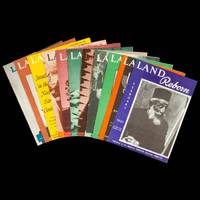
44827New York : American Christian Palestine Committee 1951 - 1954. Quarto eleven issues quarto illustrated self wrappers each approx. 16 pp. illustrated. An early American Christian Zionist publication active in the years following the creation of the state of Israel. Includes articles on Arab refugees kibbutzes the United Nations etc. Contributors include B. Burgoyne Chapman 'Australian born Christian minister who has lived for several years in Israel on kibbutz Mishear Haemek'. ' The American Palestine Committee was a political lobby group in the United States founded in 1932 to influence American policy towards the establishment of a Jewish national home in Palestine an aim achieved in 1948 with U.S. support for the Partition of Palestine and subsequent recognition of the new state of Israel.' - Wikipedia Volume two No. one February 1951 Volume two No. two March - April 1951 Volume two No. three May - June 1951 Volume three No. six November - December 1952 Volume four No. four July - August 1953 Volume four No. five September - October 1953 Volume four No. six November - December 1953 Volume five No. one January - February 1954 Volume five No. two March - April - May 1954 Volume five No. three June - July - August 1954 No volume number October 1954 Â Â unknown
S02OS-00348The Institute for Palestine Studies. Used - Good. Good condition. Good dust jacket. Three book set: Volumes 1 2 and supplement. middle east palestine history NOT AVAILABLE FOR SHIPMENT OUTSIDE OF THE UNITED STATES. The Institute for Palestine Studies unknown
18902Undated 1920s and with place not stated. 4to 71 pp with one 12mo page at end. In poor condition damp damaged and detached from green cloth covers but with texts legible and complete. Manuscript table of contents on recto of first leaf describes nine tales in German told by Ascher Horowitz and T. Holpern on first 51 pp: 'Jewish Tales from Jerusalem 1 Dear Aschmadai 2 Reb Itzchak Alchonon der Heilige 3 Ein Brief zu Gott 4 Die Hyaene 5 Die Hungersnoth in Jerusalem 6 Der Reich Mann mit seinen Soehnen 7 Der Mann der neimals sorgte 8 Der Edelmann Ahron beim Graefen von Polen 9 Wie ein Rabbiner seine Tochter verheiratete.' These are followed by 'King Artus' in English apparently transcribed from 'Magazin ed. Berliner XII 1885 Hebrew p. I-II'. The 8vo leaf carries a manuscript page of translation into English. For the mediaeval tale 'King Artus' the only known copy of which is in the Vatican Library see Curt Leviant 'King Artus: A Hebrew Arthurian Romance of 1279' Syracuse University Press 2003. No record of any of the other nine pieces in this collection or of Ascher Horowtiz or T. Halpern on COPAC. Undated (1920s?) and with place not stated. hardcover
0282241914.Gpaperback. Good. Access codes and supplements are not guaranteed with used items. May be an ex-library book. paperback
2014110726Valiz. New. 2014. Hardcover. 9078088729 . FREE UPGRADE to Courier/Priority Shipping Upon Request - IN STOCK AND IMMEDIATELY AVAILABLE FOR SHIPMENT - Flawless copy brand new pristine never opened - -- with a bonus offer-- . Valiz hardcover
1920218041920. Early views of life under British colonial rule in Mandatory Palestine. 1920s photo archive consisting of 12 silver gelatin photographs measuring around 3.5" x 2.5" each. Circa 1920s. An evocative and unusually varied visual archive from 1920s Mandatory Palestine this collection captures everyday life and social hierarchies during the British occupation of the Levant. Taken during a critical era following the fall of the Ottoman Empire and before the full thrust of Zionist settlement these images offer rare glimpses of Palestinian Arab communities-including women clerics children merchants and street workers-across both rural and urban landscapes. Several photos appear to depict scenes in and around Jerusalem including a striking street portrait of an elder man in traditional Arab dress with a keffiyeh and striped abaya standing beside a fez-capped official or guard in front of a stone façade possibly in the Old City. Another image shows a procession of clergy and camel handlers near what appears to be a medieval gate or fortress wall-indicative of pilgrimage traffic or religious observance with camels loaded for transport. A powerful composition captures three women in dark veils and flowing garments speaking beneath a tree with rural hills and a village in the distance.<br /> Street life and labor are emphasized in one image where a young boy and several veiled women draw water at a stone cistern; one woman balances a large vessel on her head her face and body almost entirely obscured. A separate print shows a group of women-some in Western dress and hats others in religious garb-posing together at the edge of a sea or lake possibly near Tiberias or the Sea of Galilee. . Another photograph depicts a group of men in keffiyehs and Western suits gathered in what may be a town square-possibly Amman or Ramleh-with modern construction visible in the background illustrating the mixing of colonial infrastructure and traditional society. Photographs of Mandatory Palestine from this transitional decade-between Ottoman defeat and the Arab Revolt -are increasingly rare especially those depicting ordinary Palestinians rather than military or Zionist institutions. Very good condition overall. unknown
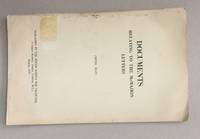
1939N4584<p>London: Massada Press 1939 Second impression. Original Wrappers. Very Good. 8vo . 20pp . T<strong>HE JEWISH RESPONSE of the JEWISH AGENCY FOR PALESTINE to the British Government's publication of the " McMahon Letters "</strong> published earlier the same month March 16th 1939. <strong>The McMahon Letters include the correspondence between Sir Henry McMahon His Majesty's High Commissioner in Egypt and Hussein Sharif of Mecca between 1915 and 1916 and represent a series of letters that were exchanged during World War I in which the British government agreed to recognize Arab independence after the war in exchange for Hussein's launching the Arab Revolt against the Ottoman Empire.</strong> These alleged promises to the Arab side given before the later BALFOUR DECLARATION OF 1917 were therefore considered by the supporters of the JEWISH CAUSE as being without legal validity. <strong>THIS VERY RARE PUBLICATION includes among its documents a STATEMENT BY MCMAHON that the area in which Arab independence was promised DID NOT INCLUDE PALESTINE.</strong> - With a folding coloured map of the ARAB TERRITORIES AND PALESTINE. Lower part of the booklet with 2cm wide strip of water stain NOT AFFECTING THE MAP outside cover with some markings on spine and remains of label removed. OTHERWISE A VERY GOOD COPY. VERY RARE AND IMPORTANT PUBLICATION. <br /><br /></p> Massada Press
1940228911940. An early Zionist cigarette card photo album during the British Mandate period documenting Jewish paramilitary forces settlement defense athletics and infrastructure development in Mandatory Palestine likely produced in the 1930s-1940s as an educational and propaganda tool. The images illustrate the development of defense forces collective agricultural settlements and youth training movements that formed the institutional foundation of Jewish state building in the region.<br /> <br /> British Mandatory Palestine c. 1940s. 200 black-and-white silver gelatin photographic cigarette cards mounted in original printed album with Hebrew captions and descriptions. Folio. Original illustrated stiff wraps featuring a soldier in a sun helmet scanning the horizon rifle slung over his shoulder. A rare Zionist cigarette card photo album documenting the military security and athletic institutions of the Yishuv the Jewish community in pre-state Palestine during the British Mandate period. The album serves as both propaganda and educational material designed to instill national pride and discipline among the Jewish population particularly youth involved in the Haganah the Palmach and other proto-military defense organizations. The imagery and text emphasize the dual ethos of physical preparedness and self-defense alongside agricultural labor and nation-building. The album consists of photographic cigarette cards depicting key aspects of Zionist security forces settlement defense and sporting achievements in Mandate Palestine. The first sections focus on military training featuring members of the Jewish Settlement Police Notrim Jewish auxiliary police under the British and early paramilitary forces. Uniformed men in sun helmets keffiyehs or British-style caps are shown patrolling rural roads manning watchtowers practicing marksmanship and training in hand-to-hand combat. The inclusion of women in certain images suggests their role in auxiliary units foreshadowing the integration of women in the Israeli military. Several images capture women in agricultural labor construction and fishing industries highlighting their integral role in building and sustaining early Jewish settlements particularly within the kibbutz movement. Additionally photographs of women in aviation training including piloting gliders showcase early efforts to integrate them into technical and military fields.<br /> <br /> A later section transitions into the "Wall and Tower" Homa U'Migdal settlements-strategically built fortified agricultural outposts constructed overnight to establish a Jewish presence in contested areas. Photographs show men and women erecting wooden watchtowers carrying supplies and working cooperatively to secure land under hostile conditions. These images capture the pioneering spirit of the Yishuv where defense and agriculture were inseparable components of state-building. The final third of the album focuses on athletics reflecting the Zionist ideal of the "New Jew"-physically strong self-sufficient and ready to defend the homeland. Included are images of Jewish sports leagues fencing boxing wrestling weightlifting and track and field with a notable photograph of a female athlete wearing a "Ramah" Maccabi shirt symbolizing Jewish participation in international sports and the Maccabiah Games. The album also features aviation imagery including early Jewish pilots training in gliders an essential precursor to the formation of the Israeli Air Force.<br /> <br /> Covers show mild wear with minor foxing and wear to spine. Interior pages exhibit mild creasing to margins pages and photographs clean. Some cigarette cards are slightly lifting at the edges but all appear present. Overall very good condition. A visually rich artifact of Zionist history this cigarette card album offers rare photographic documentation of Jewish military organization settlement defense and athletic prowess during a crucial period leading to Israeli statehood. Complete or near-complete examples of such albums are scarce and highly sought after. unknown
199466231Washington DC: Center for Policy Analysis on Palestine 1994. Presumed first edition/first printing. Wraps. Good. Back cover has some wear and scuffing. Front cover also has slight wear and soiling. 33 3 p.; 28 cm. Appendices. Tables. Recommended Reading. Papers from a symposium sponsored by the Center for Policy Analysis on Palestine Oct. 6 1994 in Washington D.C. Authors include: Marc Ellis; Muhammad Hallaj; Don Peretz; and Rashid Khalidi. Center for Policy Analysis on Palestine paperback
1901033791.Gpaperback. Good. Access codes and supplements are not guaranteed with used items. May be an ex-library book. paperback
25271. Coin Collection from Israel approx 50 mounted on card inc. Special Issues. Comes complete with a copy of Bertram - Catalogue of Israel's Coins and Currency. 1968. G. . unknown
1881mon0004027789D. Appleton and Company 1/1/1881 12:00:00 AM. leather_bound. Very Good. . 2-volume set complete. half-leather cover with raised bands and gilt shows moderate wear tear rubbing to the extremities. pages tanned and clean. all edges gilt. profusely illustrated. D. Appleton and Company hardcover
18830828378New York: D. Appleton 1883. First Edition. Hardcover. Fair/No Dust Jacket. b/w Illustrations. Folio - between 12" - 15" Tall. Rebound in 3/4 leather over original cloth boards with pictorial cover labels folio 472pp. Illustrated with two color maps and several engravings. . A fair reading/reference copy with heavy wear rubbing scoffing and some fraying to board edges spine &tc; inner hinges broken/cracked - textblock detached; several pages loosened/shaken; stains from previous damp to first ten pages at lower edge and foredge; staining to last 12 pages at upper 1.5 inches of upper tip affecting margins of last map; toning and browning to pages from age; note to endpaper in ink and pencil. D. Appleton hardcover
1873000922<p>London: Bentley & Son 1873. 1st Edition. Hardcover. Good/No Jacket. Publisher's original green boards with black titling to upper board and gilt titling to spine. Corners and spine ends rubbed. Bookplate to front pastedown partially concealing prev owner's details. 343pp. unmarked and undiscoloured. Binding good.</p> Bentley & Son hardcover
HISTORY BOX12/RS1/29.05.2Very Good. BOOK IS IN VERY GOOD CONDITION. Sold by the U.K Charity Kisharon Langdon. Offering Opportunities and Support for People within the Autism and Learning Disability Community. unknown
100130London Richard Bentley & Son 1878 1st. Hardback 9 x 5.75 inches. Green cloth with gilt lettering to spine and black lettering to front with gilt pictorial vignette. Blind embossed on rear. Brown endpapers. In good condition. Corners a little bumped nicks to cloth at ends of spine. Bookplate to front endpaper “Alfred Manners Drummond.” Further inscription to halftitle page “Wm. Roger Rowlatt-Jones.” Some minor mild foxing to back-sides of endpapers/prelims. Frontis plate tissue guarded. Page edges rough cut. A couple of areas of underlining to text p.117 & 151 and appendix. Note to p292. Else a clean and tight copy. viii 352pp. With 15 B&W illustrations by J.W. Whymper including 3 full-page plates and a sketch map at rear. With decorative chapter headings and tailpieces. Volume 2 only. London, Richard Bentley & Son, 1878 1st hardcover
18385116<b>1</b> Dr. Conradus Leemans <i>Lettre a M. Francois Salvolini sur les Monumens Egyptiens portant des legendes royales dans musees d'antiquites de leide de londres et dans quelques collections particulieres en angleterre</i> 1838. Chez H. W. Hazenberg et Comp. Leide. 160 pp. XXXII 32 plates<br /><b>2</b> Palestine Exploration Society <i>No. 2 Second Statement </i>September 1873 Hackensack N.J. 76 pp. vi<br /><b>3</b> Henrico Brugsch <i>De Natura et Indole Linguae Popularis Aegyptiorum. Fasciculus prior de Nomine de Dialectis de Litterarum Sonis</i> 1850. Prostat in Libraria Dummleriana Berolini. 40 pp.<br /><b>4</b> Dr. Heinrich Brugsch <i>Die Adonisklage und das Linoslied</i> 1852. Ferd. Dummler's Verlagsbuchhandlung Berlin. 33 pp.<br /><b>5</b> Heinrich Hubschmann <i>Die Umschreibung der Iranischen Sprachen un des Armenischen</i> 1882. Druck und Verlag von Breitkopf und Hartel Leipzig. 44 pp. <br /><b>6</b> Dr. Martin Haug <i>Das achtzehnte Kapitel des Wendidad ubersetzt und erklart</i> 1869. F. Straub Munchen. 54 pp.<br /><b>7</b> Dr. Richard Lepsius <i>Das Allgemeine Linguistische Alphabet. Grundsatze der ubertragung fremder schriftsysteme und bisher noch ungeschriebener sprachen in Europaische Buchstaben</i> 1855. Wilhelm Hertz Berlin. 64 pp.<br />Majority are first editions. Text in French English German and Latin. Quarter cloth over marbled boards. 4 fold-out reproductions of Egyptian tablets and/or hieroglyphs; 4th fold-out has a large tear at first interior fold still intact p. 76 of Palestine Exploration Society. 1 fold-out illustration. Some occasional spotting throughout. Loss to cloth of spine and rubbing to exterior edges of covers. 160 pp. XXXII 32 plates; 76 pp. vi; 40 pp.; 33 pp.; 44 pp.; 54 pp.; 64 pp.; ~503 pp. total. 6 x 8 1/2 inches. Chez H. W. Hazenberg et Comp.; Hackensack; Prostat in Libraria Dummleriana; Breitkopf und Hartel; F. Straub; Wilhelm Hertz hardcover
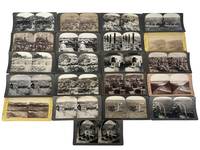
1900206431900. Unidentified photographers Palestine stereoview archive ca. 1900-1930 documents religious geography pilgrimage activity and daily life in Palestine during the late Ottoman and British Mandatory periods supporting research into colonial visual culture Western educational media and representations of the Holy Land. The archive reflects the widespread use of stereoscopic imagery in classrooms and lecture circuits where photographic views of biblical sites and contemporary inhabitants were circulated to shape Western understanding of the region. The images foreground Christian pilgrimage locations while also incorporating local populations and landscapes offering a layered record of how Palestine was visually interpreted for foreign audiences in the early twentieth century.<br /> Twenty-one albumen stereoview photographs primarily produced by Keystone View Company and Underwood & Underwood depicting locations across Palestine including Jerusalem Bethlehem Nazareth and surrounding regions. Views include the Mount of Olives pilgrims walking along the Via Dolorosa the Garden of Gethsemane and the village of Siloam Silwan. Landscape images show the plains of Jericho the Sharon plain and the hills of Samaria with visible architectural ruins including freestanding stone columns. Several images depict daily activity including a Samaritan woman drawing water from Jacob's Well a cattle drive moving through the Valley of Hinnom and individuals traveling mountainous terrain with pack animals. Interiors and urban edges are suggested through narrow streets and clustered buildings. Many mounts include printed captions on the verso in multiple languages. One Keystone stereoview dated 1909 describes the view from the Mount of Olives overlooking Jerusalem referencing the Valley of Jehoshaphat the Golden Gate and the city's religious divisions. Another caption provides a descriptive overview of Jerusalem's population industries and urban conditions framing the city for an արտաքին educational audience.<br /> <br /> Produced during a period of transition from Ottoman to British control the archive reflects how Palestine was mediated through commercial photography for Western consumption particularly emphasizing biblical associations and pilgrimage routes while presenting local populations within ethnographic and orientalist frameworks. The stereoview format itself functioned as both entertainment and instruction reinforcing spatial and cultural narratives through three-dimensional illusion. Light edge wear and minor surface handling consistent with use; images remain clear with well-preserved contrast. Overall in very good condition. unknown
1872016537London: James Nisbet & Co. 1872. Book. Hardcover. First Edition. 18cm x 12.5cm. Sturdily rebound using original deep-orange spine label and cloth boards with gilt chinese emblem yin yang now on verso and with textured brown endpapers and black buckram spine. 124pp. Appendix pages 121-124 in Hebrew. Errata slip tipped-in explaining that the Chinese characters on the title-page form the name of the city Kae Fung Foo and that the chinese emblem on the outside cover signifies the active and passive principles of nature. Rubbing to covers and spine label affecting gilt lettering; light foxing to text block. Text block clean and very solid. James Nisbet & Co. Hardcover
1343479630.Ghardcover. Good. Access codes and supplements are not guaranteed with used items. May be an ex-library book. hardcover
1356322611.Ghardcover. Good. Access codes and supplements are not guaranteed with used items. May be an ex-library book. hardcover
0282387099.Gpaperback. Good. Access codes and supplements are not guaranteed with used items. May be an ex-library book. paperback
1149971339.Gpaperback. Good. Access codes and supplements are not guaranteed with used items. May be an ex-library book. paperback