[Buccaneers] Ure, JohnBiblio.com
21 résultats
198329249London:: Constable 1983. First Printing of the First UK Edition. A Fine tight copy in a Fine bright unclipped dust jacket. Sir Henry Morgan buccaneering exploits took him to many corners of the Caribbean particularly parts of Mexico Cuba and Panama. Three hundred years after Morgan's reign of terror British Ambassador to Cuba John Ure decided to retraced Morgan's exploits on both land and sea. He visited Cuba's offshore cays where Morgan assembled his raiding parties. He penetrated the jungles of Tabasco Mexico to try an discover what route he took. He sailed up the Chagres River in Panama and walked the Las Cruces trail upon which treasure was transported. Rich in historical background as well as literary connections. Constable, unknown
8458Paris, Payot (Bibliothèque historique), (novembre) 1934. In-8, broché.
195210233Paris Grasset 1952 Grand In-12 Écu 222 pp, Présentés par A. T'Serstevens ; frontispice, illustration couleurs sur la 1ère de couv. Pas de rousseurs
8vo., with a neat contemporary signature on front free endpaper, free endpapers lightly browned at margins; blue cloth, upper board blocked in gilt, gilt back, uncut, covers mildly age-marked and faded, a good, clean copy in unclipped dustwrapper.
A clean, unmarked book with a tight binding. Slightly bumped front corner of book and dust jacket. 8 5/8"w x10 1/4"h. 296 pages. Full purple cloth boards. More than 300 illustrations. Previous owner's stamp inside.
[11], 12-274 pages. Glossary, bibliography, index. Fourteen monotone maps and illustrations. "This study is confined to piratical and other foreign incursions on the Pacific coast from Panama north, beginning in 1575 or 1576 and continuing for the next 167 years." - Preface. Above-average external wear. Usual library markings. Binding intact. Contents clean. A worthy reading copy. Book
1987LFA-126744836Un ouvrage de 238 pages, format 140 x 205 mm, broché couverture couleurs rempliée, publié en 1987, Editions Phébus, collection "D'Ailleurs", bon état
Paris, Payot 1992. In-12 broché de 234 pages. Bon état
200922920CBNew York, Anchor Books, 2009. 8°, XI, 324 S., Text: englisch, farbig illustr. original Kartonage (Paperback), erste Auflage dieser Ausgabe Einbandecken minimal bestoßen, wenige Seiten mit ausradierten Bleistiftanstreichungen, sonst gutes, sauberes Exemplar.
1992126000Payot Paris, Payot 1992. In-12 broché de 234 pages. Bon état
236p. Hardcover Good condition in good d.j. good
195922136Paris Grasset 1959 Petit In-8 carré 487 pp illustrées
QWA-16320Louviers, L'Ancre de Marine, 2005, in-8 br. (15 x 22), 253 p., planches de gravures h.-t., très bon état.
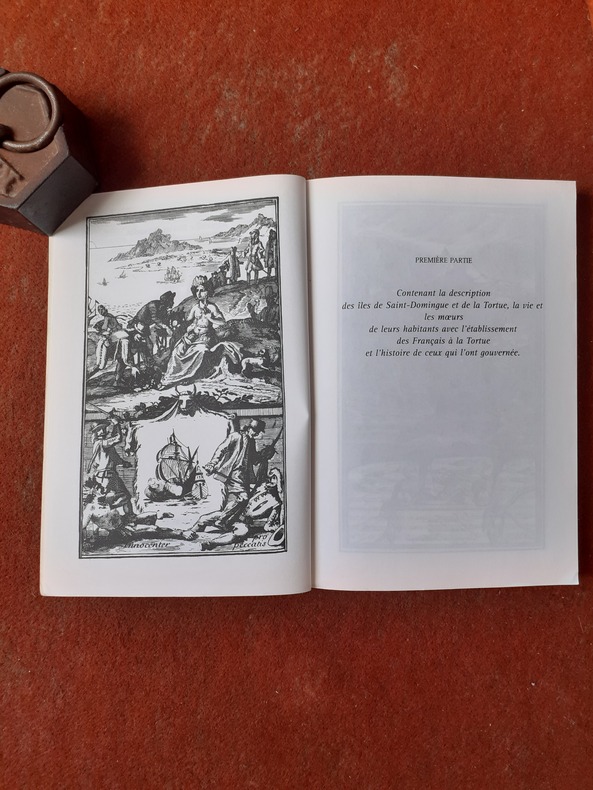
QWA-13312Librairie Commerciale Et Artistique, 1967, in-8 rel. basane marron (14 x 21), 257 p., nouvelle édition corrigée et enrichie de fines reproductions de figures en taille-douce, illustrations et cartes en noir et blanc in-t. et hors-texte dont certaines dépliantes, lettrines, bandeaux et culs-de-lampe, frontispice en noir et b., sous rhodoïd, ex-libris du baron Hubert de Turckeim, signet, minimes traces d'usure en coiffes, bon état.
192020735Paris Editions de la Sirène 1920 in-8 broché un volume, broché (agraphé) in-octavo Editeur (paperback in-octavo Editor) (19 x 12 cm), dos et couverture imprimés en noir, 1ère de couverture illustrée d'un bois gravé en noir, orné d'une gravure titre en noir + une carte en double page en noir + un plan en double page en noir + une gravure hors-texte en noir + 2 gravures in-texte en noir, 254 pages, 1920 Paris Editions de la Sirène Editeur,
193429051Paris Payot 1934 In-8 rare exemplaire relié, état d'usage pour la reliure, première couverture conservée, 249 pp, traduit de l'Anglais par André Cogniet, capitaine de corvette en retraite
1931126091931 demi-reliure en toile rouge imitation chagrin grand in-octavo (red half cloth-boun in-octavo), dos long (spine without raised band) - titre frappé or - dorure estompée (gilt title - shaded off gilt), papier marbré aux plats (cover with marbled paper), tranches lisses (smooth edges), 16 illustrations, 421 pages, 1931 à Paris Payot,
Single sheet, 8vo., a near fine copy. Signed simply 'Tedder' in the writer's usual manner, the letter is written to Geoffrey Moore, founder of the Buccaneers Cricket Club, and demonstrates the airman's keen and continuing interest in the sport. Tedder was President of Surrey County Cricket Club from 1953 to 1958. The letter regretfully declines Moore's invitation to attend the Buccaneer's annual dinner (held at Lords): 'I've already got a date I can't budge!'. Marshal of the RAF Arthur William Tedder, 1st Baron Tedder (1890-1967) was one of Britain's most distinguished air commanders. Educated at Whitgift School and Magdalene College, Cambridge, he transferred from the Dorsetshire Regiment to the Royal Flying Corps in 1916, serving in France from 1915- to 1917 and in Egypt from 1918 to 1919. He was then commissioned in to the (new) Royal Air Force where was appointed Director of Training from 1934 to 1936, after which he became Commander RAF Far Eastern Forces. During WWII he was head of RAF Middle East Command, controlling Allied air operations in the Mediterranean and North Africa, including the evacuation of Crete and the defeat of Rommel; his air power was a vital component of Montgomery's victory at El Alamein. Having been promoted to Air Marshal, Tedder then took part in the early planning for D-Day, and was subsequently appointed Deputy Supreme Commander Allied Forces Europe (the most senior such British position) immediately beneath General Eisenhower, on whose behalf he signed at the German Surrender in 1945. In 1947 he delivered the Lees Knowles lecture, afterwards published as 'Air Power in War'. Following his retirement he served as Chancellor of Cambridge University and Vice-Chairman of the Board of Governors of the BBC. Founded in 1930, The Buccaneers is one of the oldest and most famous 'wandering' clubs in English cricket (a 'wandering' club has no fixed home ground but plays consistently as an 'away' team relying on the hospitality of the 'home' clubs against which it competes). The Club's history has been written twice, by Clifford Bax in 1956 and more recently by Howard Spencer. ORIGINAL DOCUMENTS SIGNED BY TEDDER ARE EXTREMELY SCARCE.
Single sheet, 8vo., a near fine copy. Signed simply 'Tedder' in the writer's usual manner, the letter is written to Geoffrey Moore, founder of the Buccaneers Cricket Club, and demonstrates the airman's keen and continuing interest in the sport. Tedder was President of Surrey County Cricket Club from 1953 to 1958. The letter regretfully declines Moore's invitation to attend the Buccaneer's annual dinner (held at Lords). Marshal of the RAF Arthur William Tedder, 1st Baron Tedder (1890-1967) was one of Britain's most distinguished air commanders. Educated at Whitgift School and Magdalene College, Cambridge, he transferred from the Dorsetshire Regiment to the Royal Flying Corps in 1916, serving in France from 1915- to 1917 and in Egypt from 1918 to 1919. He was then commissioned in to the (new) Royal Air Force where was appointed Director of Training from 1934 to 1936, after which he became Commander RAF Far Eastern Forces. During WWII he was head of RAF Middle East Command, controlling Allied air operations in the Mediterranean and North Africa, including the evacuation of Crete and the defeat of Rommel; his air power was a vital component of Montgomery's victory at El Alamein. Having been promoted to Air Marshal, Tedder then took part in the early planning for D-Day, and was subsequently appointed Deputy Supreme Commander Allied Forces Europe (the most senior such British position) immediately beneath General Eisenhower, on whose behalf he signed at the German Surrender in 1945. In 1947 he delivered the Lees Knowles lecture, afterwards published as 'Air Power in War'. Following his retirement he served as Chancellor of Cambridge University and Vice-Chairman of the Board of Governors of the BBC. Founded in 1930, The Buccaneers is one of the oldest and most famous 'wandering' clubs in English cricket (a 'wandering' club has no fixed home ground but plays consistently as an 'away' team relying on the hospitality of the 'home' clubs against which it competes). The Club's history has been written twice, by Clifford Bax in 1956 and more recently by Howard Spencer. ORIGINAL DOCUMENTS SIGNED BY TEDDER ARE EXTREMELY SCARCE.
Single sheet, a near fine copy. Signed simply 'Wavell' in the writer's usual manner, the letter is written to Geoffrey Moore, founder of the Buccaneers Cricket Club, and demonstrates the soldier's keen and continuing interest in the sport. It is noteworthy that Wavell was particularly proud of his membership of the MCC at Lords. The letter confirms that Wavell will propose the toast at the Buccaneers' annual dinner (held at Lords). Field-Marshal Earl Wavell (1883-1950) was one of the twentieth century's most distinguished British soldiers. Following considerable success against the Italians in North Africa, his career reached its peak with his appointment as Supreme Allied Commander, South West Pacific, ABDA (American, British, Dutch and Australian) Command in 1942 and subsequently as an outstanding Viceroy and Governor General of India from 1943-1947. He was recognised also as a scholar, compiling the well-known anthology of poetry 'Other Mens's Flowers' (1944). The bulk of Wavell's papers are now housed in the Liddell Hart Centre for Military Archives at King's College, London. Founded in 1930, The Buccaneers is one of the oldest and most famous 'wandering' clubs in English cricket (a 'wandering' club has no fixed home ground but plays as an away team relying on the hospitality of the home clubs against which it competes). The Club's history has been written twice, by Clifford Bax in 1956 and more recently by Howard Spencer. ORIGINAL DOCUMENTS SIGNED BY WAVELL ARE EXTREMELY SCARCE.
Single sheet, a near fine copy. Signed simply 'Wavell' in the writer's usual manner, the letter is written to Geoffrey Moore, founder of the Buccaneers Cricket Club, and demonstrates the soldier's keen and continuing interest in the sport. It is noteworthy that Wavell was particularly proud of his membership of the MCC at Lords. The letter declines Moore's invitation to attend the annual dinner, but carries Wavell's best wishes for the Club for the coming year during which he hopes to see tham in action. Field-Marshal Earl Wavell (1883-1950) was one of the twentieth century's most distinguished soldiers. Following considerable success against the Italians in North Africa, his career reached its peak with his appointment as Supreme Allied Commander, South West Pacific, ABDA (American, British, Dutch and Australian) Command in 1942 and subsequently as an outstanding Viceroy and Governor General of India from 1943-1947. He was recognised also as a scholar, compiling the well-known anthology of poetry 'Other Mens's Flowers' (1944). The bulk of Wavell's papers are now housed in the Liddell Hart Centre for Military Archives at King's College, London. Founded in 1930, The Buccaneers is one of the oldest and most famous 'wandering' clubs in English cricket (a 'wandering' club has no fixed home ground but plays consistently as an 'away' team relying on the hospitality of the 'home' clubs against which it competes). The Club's history has been written twice, by Clifford Bax in 1956 and more recently by Howard Spencer. ORIGINAL DOCUMENTS SIGNED BY WAVELL ARE EXTREMELY SCARCE.