469 résultats
1972745463PN. New. 1972. Soft Cover. Date is original print. This is a reprint edition. . PN paperback
1972745466PN. New. 1972. Soft Cover. Date is original print. This is a reprint edition. . PN paperback
1972745457PN. New. 1972. Soft Cover. Date is original print. This is a reprint edition. . PN paperback
1972745464PN. New. 1972. Soft Cover. Date is original print. This is a reprint edition. . PN paperback
1972745456PN. New. 1972. Soft Cover. Date is original print. This is a reprint edition. . PN paperback
1972745455PN. New. 1972. Soft Cover. Date is original print. This is a reprint edition. . PN paperback
193160944Syracuse NY: Empire New England Company Inc. 1931. One large 6-panel dissected colour linen-backed map featuring one hemisphere map of Pacific Ocean 34 inches in diameter within larger 40 x 52 in. colour-printed wall map with scale at Equator of 1:23300000 folding down to 19.5 x 17.25 brass grommets mounted for hanging at upper fore-edge minor edgewear rubbing at crease folds minor age toning light fraying to the linen still VG copy. Second printing of this scarce linen-backed dissected wall map reflecting the extent of Imperialist Colonial spheres of influence in the Pacific just 10 years before the outbreak of World War II. These educational maps served as key instructional tools for detailing Japanese British Dutch French Portuguese and U.S. colonies dependencies and mandated territories demarcated here in respective colours spanning from Asia to the Americas and include British holdings in Antarctica. Worldcat locates 1 copy Boston Public. Empire New England Company, Inc., unknown
19266543New York: Compagnie Generale Transatlantique 1926. First Thus. Printed Wrappers Stapled. Very Good. Although undated we've posited 1926 as publication date based on the style of the cover and photographs. 8vo measures 6 x 9.25 inches. Unpaginated 24 pp. Promotional brochure intended for American travelers. Frontis. illustration. Substantially illustrated with black-and-white photography mostly interior shots along with a couple exterior views featuring passengers strolling on decks. Borders of photos are enhanced with line drawings. Bound in folded blue stock with three-color design printed on the front cover. Saddle-stapled with staples oxidized at the centerfold with slight migration of rust. A well preserved copy. A superb brochure for one of the fabled ocean liners of the Jazz Age the S.S. France of the French Line fleet operated by Compagnie Generale Transatlantique. She entered into service the week following the sinking of the Titanic. Following WWI the France was "Weekly Express Service" between New York and England or France. Published in New York for discriminating Yank travelers many of whom enjoyed transatlantic travel as an escape from Prohibition constricts and indeed showed a club-like allegiance to The France. <p>In somewhat breathless prose "she isn't as big as the biggest but neither is the Ritz . In speed she is one of the fastest liners on the Atlantic - and one of the most luxurious" the swanky attributes of the ship are extolled as well as the refined company one would keep among fellow passengers. Photos promote first class cabins staterooms and suites the grand salon dining salon smoking room children's playroom gymnasium and deck activity including a tennis match. The cover is an exquisite exercise in restrained French styling presenting an art-deco porthole vignette of the ship's red funnels. A charming publication quite scarce: No copies were located by OCLC. Now housed in a removable clear archival sleeve with an acid-free backing.</p> . Compagnie Generale Transatlantique unknown

197277592Washington DC: United States Department of the Navy Maury Center for Ocean Science 1972. Presumed First Edition First printing. Spiral bound. Good. 4 210 pages. Consists of data graphically displayed. Arrival Angle. DB Loss Noise DB and Depth in meters. This is part of the Long Range Acoustic Propagation Project. There is a distribution limitation statement at the bottom of the front cover "This document may be further distributed by the holder only with the specific prior approval of the Director Long Range Acoustic Propagation Project ONR Code 102-OS" However it is understood that this limitation no longer applies due to the passage of time and advances in technology. Passive Sonar is a device that detects the source of acoustic vibrations or noise and determines the direction or bearing to the source. It is used as a hydroacoustic direction finder. Passive sonars operate in the range of sonic ultrasonic and infrasonic frequencies. They are used on submarines on surface vessels in containers lowered from helicopters and on buoys Passive sonars consist of sonic detector compensator filter amplifier and display device. Anti-submarine warfare ASW or in older form A/S is a branch of underwater warfare that uses surface warships aircraft or other submarines to find track and deter damage or destroy enemy submarines. Successful anti-submarine warfare depends on a mix of sensor and weapon technology training and experience. Sophisticated sonar equipment for first detecting then classifying locating and tracking the target submarine is a key element of ASW. To destroy submarines both torpedoes and naval mines are used launched from air surface and underwater platforms. ASW also involves protecting friendly ships. United States, Department of the Navy, Maury Center for Ocean Science unknown
197277594Washington DC: United States Department of the Navy Maury Center for Ocean Science 1972. Presumed First Edition First printing. Spiral bound. Good. 4 180 pages. Consists of data graphically displayed. Arrival Angle. DB Loss Noise DB and Depth in meters. This is part of the Long Range Acoustic Propagation Project. There is a distribution limitation statement at the bottom of the front cover "This document may be further distributed by the holder only with the specific prior approval of the Director Long Range Acoustic Propagation Project ONR Code 102-OS" However it is understood that this limitation no longer applies due to the passage of time and advances in technology. Passive Sonar is a device that detects the source of acoustic vibrations or noise and determines the direction or bearing to the source. It is used as a hydroacoustic direction finder. Passive sonars operate in the range of sonic ultrasonic and infrasonic frequencies. They are used on submarines on surface vessels in containers lowered from helicopters and on buoys Passive sonars consist of sonic detector compensator filter amplifier and display device. Anti-submarine warfare ASW or in older form A/S is a branch of underwater warfare that uses surface warships aircraft or other submarines to find track and deter damage or destroy enemy submarines. Successful anti-submarine warfare depends on a mix of sensor and weapon technology training and experience. Sophisticated sonar equipment for first detecting then classifying locating and tracking the target submarine is a key element of ASW. To destroy submarines both torpedoes and naval mines are used launched from air surface and underwater platforms. ASW also involves protecting friendly ships. United States, Department of the Navy, Maury Center for Ocean Science unknown
197277591Washington DC: United States Department of the Navy Maury Center for Ocean Science 1972. Presumed First Edition First printing. Spiral bound. Good. 4 240 pages. Consists of data graphically displayed. Arrival Angle. DB Loss Noise DB and Depth in meters. This is part of the Long Range Acoustic Propagation Project. There is a distribution limitation statement at the bottom of the front cover "This document may be further distributed by the holder only with the specific prior approval of the Director Long Range Acoustic Propagation Project ONR Code 102-OS" However it is understood that this limitation no longer applies due to the passage of time and advances in technology. Passive Sonar is a device that detects the source of acoustic vibrations or noise and determines the direction or bearing to the source. It is used as a hydroacoustic direction finder. Passive sonars operate in the range of sonic ultrasonic and infrasonic frequencies. They are used on submarines on surface vessels in containers lowered from helicopters and on buoys Passive sonars consist of sonic detector compensator filter amplifier and display device. Anti-submarine warfare ASW or in older form A/S is a branch of underwater warfare that uses surface warships aircraft or other submarines to find track and deter damage or destroy enemy submarines. Successful anti-submarine warfare depends on a mix of sensor and weapon technology training and experience. Sophisticated sonar equipment for first detecting then classifying locating and tracking the target submarine is a key element of ASW. To destroy submarines both torpedoes and naval mines are used launched from air surface and underwater platforms. ASW also involves protecting friendly ships. United States, Department of the Navy, Maury Center for Ocean Science unknown
197277593Washington DC: United States Department of the Navy Maury Center for Ocean Science 1972. Presumed First Edition First printing. Spiral bound. Good. 4 240 pages. Consists of data graphically displayed. Arrival Angle. DB Loss Noise DB and Depth in meters. This is part of the Long Range Acoustic Propagation Project. There is a distribution limitation statement at the bottom of the front cover "This document may be further distributed by the holder only with the specific prior approval of the Director Long Range Acoustic Propagation Project ONR Code 102-OS" However it is understood that this limitation no longer applies due to the passage of time and advances in technology. Passive Sonar is a device that detects the source of acoustic vibrations or noise and determines the direction or bearing to the source. It is used as a hydroacoustic direction finder. Passive sonars operate in the range of sonic ultrasonic and infrasonic frequencies. They are used on submarines on surface vessels in containers lowered from helicopters and on buoys Passive sonars consist of sonic detector compensator filter amplifier and display device. Anti-submarine warfare ASW or in older form A/S is a branch of underwater warfare that uses surface warships aircraft or other submarines to find track and deter damage or destroy enemy submarines. Successful anti-submarine warfare depends on a mix of sensor and weapon technology training and experience. Sophisticated sonar equipment for first detecting then classifying locating and tracking the target submarine is a key element of ASW. To destroy submarines both torpedoes and naval mines are used launched from air surface and underwater platforms. ASW also involves protecting friendly ships. United States, Department of the Navy, Maury Center for Ocean Science unknown
197277590Washington DC: United States Department of the Navy Maury Center for Ocean Science 1972. Presumed First Edition First printing. Spiral bound. Good. 4 240 pages. Consists of data graphically displayed. Arrival Angle. DB Loss Noise DB and Depth in meters. This is part of the Long Range Acoustic Propagation Project. There is a distribution limitation statement at the bottom of the front cover "This document may be further distributed by the holder only with the specific prior approval of the Director Long Range Acoustic Propagation Project ONR Code 102-OS" However it is understood that this limitation no longer applies due to the passage of time and advances in technology. Passive Sonar is a device that detects the source of acoustic vibrations or noise and determines the direction or bearing to the source. It is used as a hydroacoustic direction finder. Passive sonars operate in the range of sonic ultrasonic and infrasonic frequencies. They are used on submarines on surface vessels in containers lowered from helicopters and on buoys Passive sonars consist of sonic detector compensator filter amplifier and display device. Anti-submarine warfare ASW or in older form A/S is a branch of underwater warfare that uses surface warships aircraft or other submarines to find track and deter damage or destroy enemy submarines. Successful anti-submarine warfare depends on a mix of sensor and weapon technology training and experience. Sophisticated sonar equipment for first detecting then classifying locating and tracking the target submarine is a key element of ASW. To destroy submarines both torpedoes and naval mines are used launched from air surface and underwater platforms. ASW also involves protecting friendly ships. United States, Department of the Navy, Maury Center for Ocean Science unknown
197277589Washington DC: United States Department of the Navy Maury Center for Ocean Science 1972. Presumed First Edition First printing. Spiral bound. Good. 4 189 1 pages. Consists of data graphically displayed. Arrival Angle. DB Loss Noise DB and Depth in meters This is part of the Long Range Acoustic Propagation Project. There is a distribution limitation statement at the bottom of the front cover "This document may be further distributed by the holder only with the specific prior approval of the Director Long Range Acoustic Propagation Project ONR Code 102-OS" However it is understood that this limitation no longer applies due to the passage of time and advances in technology. Passive Sonar is a device that detects the source of acoustic vibrations or noise and determines the direction or bearing to the source. It is used as a hydroacoustic direction finder. Passive sonars operate in the range of sonic ultrasonic and infrasonic frequencies. They are used on submarines on surface vessels in containers lowered from helicopters and on buoys Passive sonars consist of sonic detector compensator filter amplifier and display device. Anti-submarine warfare ASW or in older form A/S is a branch of underwater warfare that uses surface warships aircraft or other submarines to find track and deter damage or destroy enemy submarines. Successful anti-submarine warfare depends on a mix of sensor and weapon technology training and experience. Sophisticated sonar equipment for first detecting then classifying locating and tracking the target submarine is a key element of ASW. To destroy submarines both torpedoes and naval mines are used launched from air surface and underwater platforms. ASW also involves protecting friendly ships. United States, Department of the Navy, Maury Center for Ocean Science unknown
197277595Washington DC: United States Department of the Navy Maury Center for Ocean Science 1972. Presumed First Edition First printing. Spiral bound. Good. 4 150 pages. Consists of data graphically displayed. Arrival Angle. DB Loss Noise DB and Depth in meters. This is part of the Long Range Acoustic Propagation Project. There is a distribution limitation statement at the bottom of the front cover "This document may be further distributed by the holder only with the specific prior approval of the Director Long Range Acoustic Propagation Project ONR Code 102-OS" However it is understood that this limitation no longer applies due to the passage of time and advances in technology. Passive Sonar is a device that detects the source of acoustic vibrations or noise and determines the direction or bearing to the source. It is used as a hydroacoustic direction finder. Passive sonars operate in the range of sonic ultrasonic and infrasonic frequencies. They are used on submarines on surface vessels in containers lowered from helicopters and on buoys Passive sonars consist of sonic detector compensator filter amplifier and display device. Anti-submarine warfare ASW or in older form A/S is a branch of underwater warfare that uses surface warships aircraft or other submarines to find track and deter damage or destroy enemy submarines. Successful anti-submarine warfare depends on a mix of sensor and weapon technology training and experience. Sophisticated sonar equipment for first detecting then classifying locating and tracking the target submarine is a key element of ASW. To destroy submarines both torpedoes and naval mines are used launched from air surface and underwater platforms. ASW also involves protecting friendly ships. United States, Department of the Navy, Maury Center for Ocean Science unknown
197277588Washington DC: United States Department of the Navy Maury Center for Ocean Science 1972. Presumed First Edition First printing. Spiral bound. Good. 4 240 pages. Consists of data graphically displayed. Arrival Angle. DB Loss Noise DB and Depth in meters. Rear cover & last page has tear. This is part of the Long Range Acoustic Propagation Project. There is a distribution limitation at the bottom of the front cover "This document may be further distributed by the holder only with the specific prior approval of the Director Long Range Acoustic Propagation Project ONR Code 102-OS" It is understood that this limitation no longer applies due to the passage of time and technology advances. Passive Sonar detects the source of acoustic vibrations or noise and determines the direction or bearing to the source. It is used as a hydroacoustic direction finder. Passive sonars operate in the range of sonic ultrasonic and infrasonic frequencies. They are used on submarines on surface vessels in containers lowered from helicopters and on buoys Passive sonars consist of sonic detector compensator filter amplifier and display device. Anti-submarine warfare ASW or in older form A/S is a branch of underwater warfare that uses surface warships aircraft or other submarines to find track and deter damage or destroy enemy submarines. Successful anti-submarine warfare depends on a mix of sensor and weapon technology training and experience. Sophisticated sonar equipment for first detecting then classifying locating and tracking the target submarine is a key element of ASW. To destroy submarines both torpedoes and naval mines are used launched from air surface and underwater platforms. ASW also involves protecting friendly ships. United States, Department of the Navy, Maury Center for Ocean Science unknown
1969737552PN. New. 1969. Soft Cover. Date is original print. This is a reprint edition. . PN paperback
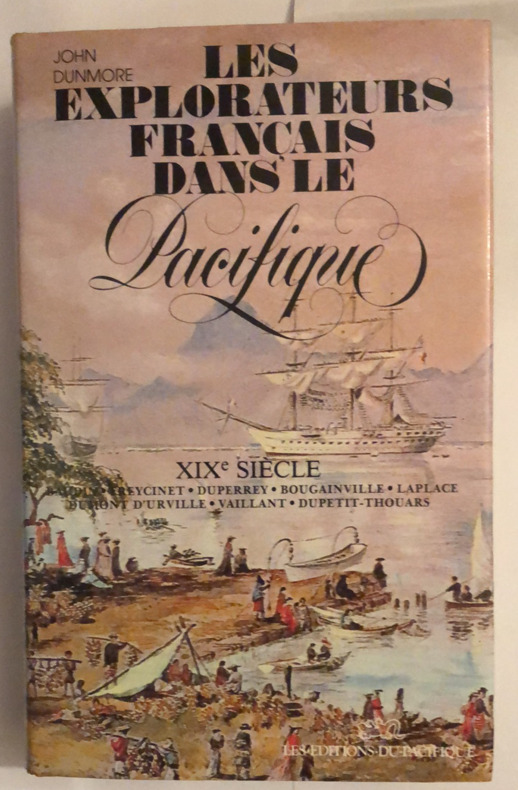
1983yam00442 forts volumes reliures éditeur sous jaquettes illustrées tranches jaunies sinon très bon état 380 et 390 pages + illustrations hors texte édités par les éditions du Pacifique
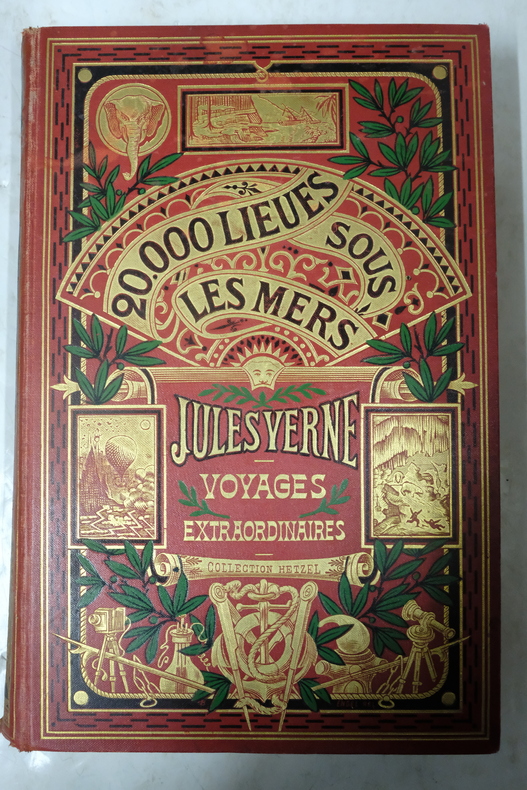
1905LIT9659M1905, J. Hetzel et Cie, relié, 434 pages, tranches dorées, bon état général, quelques légères marques du temps et rousseurs.
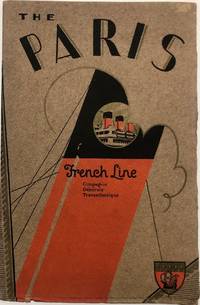
19266542New York: Compagnie Generale Transatlantique 1926. First Thus. Printed Wrappers Stapled. Very Good. Although undated we've posited 1926 as publication date based on the styles of the cover and photographs and the history of the ship. 8vo measures 6 x 9.25 inches. Unpaginated 24 pp. Promotional brochure intended for American travelers. Frontis. illustration. Substantially illustrated with black-and-white photography mostly interior shots along with a couple exterior views featuring passengers strolling on decks. Borders of photos are enhanced with line drawings. Bound in folded brown stock with two-color art-deco design printed on the front cover. Slight edge-wear light dampstain spanning the gutter of all leaves and with slight abrasion smaller than a US dime at the top right corner of the cover. A well preserved copy. A superb art deco brochure for one of the fabled ocean liners of the Jazz Age the S.S. Paris of the French Line fleet operated by Compagnie Generale Transatlantique. We suspect this brochure was produced prior to sinking after a 1929 fire; although refloated activity was chastened by the Great Depression; promoting luxurious travel with lavish collateral was likely limited. However in the mid- to late-'20s she was providing "Weekly Express Service" between New York and England or France. Published in New York for discriminating Yank travelers many of whom enjoyed transatlantic travel as an escape from Prohibition constricts. <p>In somewhat breathless prose "how delightfully life is arranged on the Paris! You Madame may desire to entertain in the exclusive individuality of your own luxe suite . " the swanky attributes of the ship are extolled as well as the refined company one would keep among fellow passengers. Photos promote first class cabins staterooms and suites the grand salon dining salon smoking room children's playroom gymnasium and deck activity. The cover is an exquisite exercise in restrained art-deco styling presenting a porthole glimpse of the ship set as a vignette within a single funnel amid wispy smoke and rigging lines. A charming publication quite scarce: No institutional copies are located by OCLC. Now housed in a removable clear archival sleeve with an acid-free backing.</p> . Compagnie Generale Transatlantique unknown
19892801989 - broché - Published by CTA - Produced and designed by Chayce Publications - Printed by E.P. Lowe Ltd. - 1989 - In-8 (24 x 18 cm) broché - 93 pages- ISBN-10 : 9290810572 ISBN-13 : 9789290810575 - Ouvrage en anglais - This volume is one of nine agricultural bibliographies. Other books in the Agricultural development in SADCC countries include: Botswana, Lesotho, Malawi, Mozambique, Swaziland, Tanzania, Zambia, Zimbabwe - The Southern African Centre for Cooperation in Agricultural Research (SACCAR) is a unit of the Southern African Development Coordination Conference (SADCC). It was established at Gaborone, Botswana in 1984 to provide a centre for the promotion of regional cooperation in agricultural research and the development of research manpower and training.
19455514<p>Set of 17 issues of Brief all from 1945. Each issue includes a full page photo of a pin-up girl on the back cover. Models include: Marguerite Chapman Virginia de Luce Lana Turner Belita Dorothy Morris Ava Gardner and many others. In addition to being a news and information publication Brief also strives to acquaint the men with the accomplishments of the personnel of AAFPOA. Creasing and occasional fold lines down middle a few have some water staining to back wrap see images. 18 pp. 9 x 12 inches. Complete list of issue dates: 9 Jan 6 Feb 13 Feb 20 Feb 27 Feb 6 March 13 March 5 June 12 June 19 June 26 June 3 July 10 July 24 July 7 Aug 14 Aug 28 Aug.</p> Information and Education Division of AAFPOA paperback
197965988United States 1979. Presumed first edition/first printing. Hardcover. Very good. No dust jacket. viii 801-1333 p. Includes: illustrations diagrams. Volume 2 ONLY. This sumposium was cosponsored by the Defense Mapping Agency and the National Ocean Survey. It was hosted by the Aplied Research Laboratories and held at the University of Texas at Austin. Volume II includes Session IV on Terrestrial Adjustments Session V on Advanced Systems the Closing Session and the Symposium Scrapbook of photographs countries representated and the list of attendees. United States hardcover
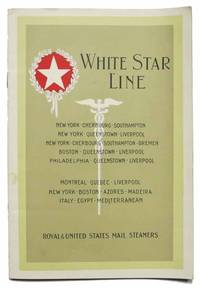
192442801New York: The White Star Line 1924. 1st printing. List with printed glossy stock covers stapled. Map to rear cover. Curl to List fore-edge. Newspaper offset to pp 10-11. Plan with stamped manicule indicating the assignment of passenger cabin C99 as well as an agent stamp McGrade & Benton Kansas City MO to Plan title panel. Both - VG. Passenger List: Unpaginated though 20 pp. Cabin Plan: one sheet printed both sides folded 5x to form an 18 panel brochure. Accompanied by numerous newspaper extracts most documenting the trip including one New York Herald Paris edition Friday August 29 1924 in 5 copies announcing the arrival of Ms Talley in Cherbourg announcing her destination as Milan. Passenger List illustrated with 2 photographic images both of the Olympic. Cabin Plan with five colored deck plans. List: 7-5/8" x 5-1/4". Plan: 21-7/8" x 22-3/4"unfolded; 7-1/4" x 3-13/16" folded. <br/><br/>Marion Nevada Talley was an American opera coloratura soprano. While her first audition in 1923 for the Metropolitan Opera was unsuccessful the Opera's general manager Giulio Gatti-Casazza did subsequently hire Talley for the 1925/26 season. On February 17 1926 she made her debut there as Gilda the daughter of the title character in Giuseppe Verdi's Rigoletto. At the time and at the age of 19 Talley was the youngest prima donna to ever sing at the Metropolitan Opera. Her pending debut caused a media sensation contrary to Gatti-Casazza's hopes that it would remain low-key. A delegation of two hundred leading citizens of Kansas City her home town arrived via a special train. Tickets were being resold at astronomical prices. A telegraph was set up backstage so her father could send dispatches to the Associated Press. Her performance prompted multiple ovations from the crowd but critics were less enthusiastic. While they thought her debut promising it did not live up to the expectations caused by the media frenzy and her ensuing musical career with the company lasted but a few more years. This White Star Line ephemera no doubt retained as a souvenir of Talley's 1924 journey to Milan where Gatti-Casazza had sent her to continue her music training with Mme Marcella Sembrich 1858 - 1935. The White Star Line unknown books
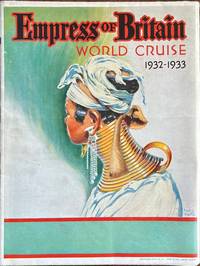
193260328Montreal Canada & Liverpool UK: Canadian Pacific 1932. 4to. which opens into Double Atlas Folio. 42 x 50 in. colour-illustrated on recto and verso with large colour deck plans delineating decks amenities cabins for 1st class and Tourist Class folding map at lower portion indicating the route large colour plate of Empress of Britain on verso numerous photo illustrations. Self-printed colour-illustrated softcovers striking cover art of Southeast Asian woman with neck elongated by gold rings front & back by Frederick J. Hoertz minor edgewear light creasing to folds very slight closed tears at a couple folds still VG bright copy. First edition of this very uncommon and large deck plan for the famed Empress of Empress of Britain a 42000 ton ocean liner specifically built and constructed with double-hull construction for the Northern Trans-Atlantic Route between Quebec and the UK who entered service in 1931. She was the first cruise ship designed for Winter routes when the St. Lawrence River was frozen and when converted for her Round the World cruises she was converted with more luxury cabins. At the height of the Great Depression and following a price increase only 283 passengers sailed in the 1932-1933 Round the World Cruise with 100 leaving the ship in India. Notables included Baron F. De Marwicz 1907-1990 hockey player who led England’s National Team in the 1930 & 1934 World Championships Sir Walter Preston 1875-1946 inventor & engineer Cornelius Vanderbilt IV and famed British author George Bernard Shaw with his wife Charlotte who spent most of the cruise writing rather than taking the port excursions. No copies located in Worldcat of this giant version 2 copies located of smaller piece at Wolfsonian measuring 10 x 11.5 in. Canadian Pacific, paperback