Panama Canal Photograph AlbumBiblio.com
813 résultats
1904182051904. Photograph album circa 1904-1914 documenting maritime activity canal construction and social life in Panama during the period of American engineering control of the Panama Canal project. The images center on a group of American men traveling aboard a small yacht identified in several photographs by the presence of the American yacht ensign indicating a private pleasure vessel rather than a military or commercial ship. Several photographs appear to show large-scale excavation and infrastructure consistent with canal construction situating the album within the decade of intensive labor and engineering that culminated in the canal's completion in 1914. Alongside these scenes are numerous images of local life including Indigenous children and adults along coastal and riverine environments as well as built landscapes featuring plantation-style houses adapted to tropical climates. The album provides visual evidence of the intersection of American presence large-scale infrastructure development and local communities in early twentieth-century Panama.<br /> <br /> Photograph album containing images mounted on black pages within a black leather-bound volume measuring approximately 10 x 7 inches and comprising 86 pages. The photographs depict shipboard life including crew members steering and managing vessels group portraits of men in bathing attire and social gatherings such as shared meals. Additional images show coastal scenes with canoes swimmers and shoreline activity as well as occasional figures in military dress. The composition of the album reflects both travel documentation and informal social photography capturing a range of maritime domestic and environmental subjects.<br /> <br /> 86-page album with photographs mounted throughout; one page partially clipped and one page removed with small tears to several pages not affecting images. Light sunning to some photographs; overall very good condition. A cohesive visual record of American maritime travel and canal-era activity in Panama documenting both infrastructure development and everyday life in the region. unknown
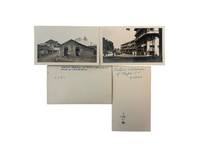
1915224481915. Unknown photographer Panama Canal Zone and local life photo archive 1915 documents Panama during the first year after the canal's opening to traffic and supports research into U.S. imperial administration Canal Zone settlement travel photography military protection of infrastructure and the visual ordering of colonial space. The Panama Canal opened to traffic on August 15 1914 after U.S. construction created a strategic interoceanic route administered through the Canal Zone and Balboa Heights became a key administrative and residential center for the U.S.-controlled canal system. These photographs capture the built and natural environment through which American authority was made visible: locks river landscapes official buildings hilltop housing city views and naval practice appear together as evidence of a recently completed engineering project becoming an occupied administrative territory.<br /> <br /> Twenty-four original silver gelatin photographs including two real photo postcards dated 1915 with some undated images several with handwritten inscriptions in English on versos and some with printed captions on rectos. Photographs measure approximately 3½ x 5 inches to 5½ x 7 inches. The archive includes views of the Chagres River the largest river in the Panama Canal drainage basin and a major part of the canal water system together with photographs of the Gatun Locks canal gates aerial views of Panama City the main city plaza a bull ring and Balboa Heights. The Balboa Heights images show American-style bungalows arranged along curving terraced roads with broad verandas raised foundations and landscaped grounds visual evidence of the residential hierarchy attached to U.S. canal administration. Additional images show the Administration Building at Balboa Heights completed in 1914 and positioned above the town as a central administrative landmark while a real photo postcard captioned "Ready to Fire-Division Practice" shows U.S. naval boats in formation off the coast connecting sightseeing views to the military protection of the newly opened canal.<br /> <br /> The archive's research value lies in its combination of personal travel documentation official-looking captioned views urban and infrastructural scenes and military imagery from the early Canal Zone era. Its views of Balboa Heights are especially significant because U.S. canal society was organized through racialized and occupational distinctions including the "gold roll" and "silver roll" labor categories that separated white American workers from largely Black Caribbean and Latin American workers and shaped housing pay and privilege within the zone. Light edge wear legible inscriptions and preserved image surfaces very good overall. Cohesive Panama Canal Zone photo archive documenting the immediate post-opening landscape of U.S. power in Panama through canal infrastructure river systems segregated administrative space urban views and naval readiness. unknown
190710701Paris, Dunod et Pinat, 1907 ; in-8, broché ; (4), 305, (3) pp., grande planche dépliante (profils en long des 3 projets), figures et 11 planches hors-texte dont 2 plans et 9 photographies, couverture brique imprimée.
PARIS, Hachette, 1886 - In-4 - Reliure 1/2 basane à coins - Dos à nerfs - 1 plat fragilisé - Couverture conservée - Envoi manuscrit de l'auteur au Colonel Marchand (*) - frontispice, 399 pages + Table - Bien complet des cartes plans et tableau synoptique des divers projets PARIS, Lib. A. Heymann - 1891 - Couverture conservée - Grande carte dépliante in-fine - 154 pages - rousseurs éparses POISSY, imp; Typ. de S. Lejay & cie - 1893 - couverture conservée - 54 pages - Bon exemplaire - Envoi rapide et soigné (*) Jean-Baptiste Marchand , Thoissey, 22 novembre 1863 , Paris, 13 janvier 1934, Mlitaire et Explorateur, célèbre pour avoir commandé la mission Congo-Nil.
27874PARIS, Hachette, 1886 - In-4 - Reliure 1/2 basane à coins - Dos à nerfs - 1 plat fragilisé - Couverture conservée - Envoi manuscrit de l'auteur au Colonel Marchand (*) - frontispice, 399 pages + Table - Bien complet des cartes plans et tableau synoptique des divers projetsPARIS, Lib. A. Heymann - 1891 - Couverture conservée - Grande carte dépliante in-fine - 154 pages - rousseurs éparses POISSY, imp; Typ. de S. Lejay & cie - 1893 - couverture conservée - 54 pages - Bon exemplaire - Envoi rapide et soigné
136457aafs.d. (ca. 1882 ?), photo: 26 x 39 cm. construction avec locomotif et ouvriers (noirs), sans aucun indication. montées sur carton gris (36 x 49 cm.)
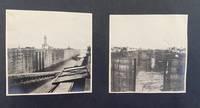
1920217831920. Archive of photographs documenting the Panama Canal and Indigenous communities in Panama in the early twentieth century ranging from the industrial landscape of the canal's construction and operation to the daily lives of Indigenous Panamanian peoples. The photographs reflect two intertwined yet often contrasting aspects of Panamanian history: the rise of industrial imperialism and the endurance of Indigenous culture. Archive of 33 silver gelatin photographs. Each measure between 4.5" x 2.5" to 3.5" x 2.25". <br /> <br /> The series prominently features engineering achievements along the canal route. Images include multiple angles of locks and lift bridges such as the Miraflores Pedro Miguel and Gatun Locks as well as steamships and freighters navigating through the canal and moored along its edges. Several views capture drawbridges in operation mechanical infrastructures like lock control houses and long rail-lined chambers used to elevate ships across Panama's central isthmus. A few aerial or elevated shots emphasize the canal's monumental scale revealing vast water channels and industrial zones carved through jungle terrain. A second subset of photographs focuses on the Welland Ship Canal in Ontario Canada suggesting a comparative or thematic link between North American waterway engineering and the Panama Canal project-possibly compiled by a traveler engineer or canal enthusiast.<br /> <br /> In contrast the ethnographic photographs document Indigenous Panamanian groups-most likely Guna Kuna and Emberá-Wounaan peoples-living in thatched-roof villages dressed in traditional textiles body paint and adornments. Several portraits show children and adults standing in front of woven bamboo huts while others portray groups in ceremonial or communal settings. The camera's perspective suggests a Western possibly touristic or anthropological gaze reflecting the era's colonial attitudes toward Indigenous populations. The Panama Canal completed in 1914 under U.S. control after a failed French attempt was one of the most ambitious engineering projects of the 20th century. It transformed global maritime trade by connecting the Atlantic and Pacific Oceans through Central America. The canal's construction required the displacement of communities massive deforestation and the recruitment of tens of thousands of laborers primarily from the Caribbean who worked under harsh and segregated conditions.<br /> <br /> Indigenous populations in the canal zone and surrounding regions were deeply affected by this transformation. Their lands were often appropriated for canal infrastructure military zones or settler expansion. Cultural disruptions ecological degradation and restricted access to traditional territories became ongoing challenges. At the same time Indigenous communities-especially the Guna-resisted assimilation and maintained distinct cultural practices leading to moments of organized resistance like the 1925 Guna Revolution which asserted political autonomy in the face of Panamanian and U.S. pressures. This archive preserves a multifaceted visual history of Panama at a time of profound transition. The industrial photographs document the ambitions and outcomes of a modern imperial project while the ethnographic images capture Indigenous identities that persisted despite external pressures. Together they offer insight into the tensions between modernization and tradition progress and displacement-narratives that continue to shape Panama's national story today. unknown
1910226891910. Unknown photographers early twentieth-century Panama photo archive circa 1910s to 1920s documents Panama during the decades surrounding the completion and early operation of the Panama Canal supporting research into U.S. engineering influence urban modernization Indigenous representation tourism waterfront labor and the transformation of Panama City and Colón into canal-era commercial spaces. The Panama Canal was completed and opened in 1914 linking the Atlantic and Pacific through one of the period's most consequential engineered waterways and the Gatun Locks formed part of the lock system that lifted vessels to Gatun Lake before lowering them at the opposite end of the route. These photographs record not only canal machinery and civic streets but also the human geography around the canal: tourists workers traders children waterfront activity ruins and leisure businesses appear together in a visual record of Panama's modernization under strong American commercial and infrastructural presence.<br /> <br /> Fifteen pieces comprising fourteen silver gelatin photographs and real photo postcards with one printed business advertisement card Panama circa 1910s to 1920s measuring approximately 2½ x 3¾ inches to 4 x 6 inches. The canal views include "Operating Emergency Dam Gatun Locks Panama Canal" and a view captioned "Gatun Locks" showing massive steel gates and early twentieth-century bridgework. Urban scenes include "Street Scene Panama City on Southern Cruise 1923" with American tourists Model T automobiles and colonial façades and "The Plaza Panama City" showing palm trees streetcar tracks and civic space. Local and historical subjects include a real photo postcard captioned "Circular Stairway in Old Panama ruins of Old Panama standing at the foot and looking directly up" documenting Panama Viejo the site of the original Panama City founded in 1519 and later recognized as part of a UNESCO World Heritage site. Other images include "Panama Water Front at High Tide" with fishing boats and market activity; dockworkers and traders near the canal's edge; and "Children in San Blas Panama" foregrounding Indigenous presence during the Canal era. The San Blas Islands are associated with the Guna an Indigenous people of Panama and Colombia whose communities are strongly identified with Guna Yala and the San Blas archipelago. <br /> <br /> The advertisement card reading "When in Colon Visit the Café Hollywood" places the photographic group within the leisure and service economy that grew around canal traffic tourism and foreign presence. Together the images clarify the different but connected worlds of early twentieth-century Panama: the engineered landscape of Gatun Locks the colonial and modern streets of Panama City the ruins of Old Panama the working waterfront Indigenous children in San Blas and the commercial culture of Colón. Minor corner wear and toning; images sharp and well preserved very good overall. Cohesive Panama Canal era archive documenting the intersection of American engineering urban transformation Indigenous life waterfront labor and tourist commerce in the early decades of the Canal Zone. unknown
Album fotografico cm 22,5 x 19,5, contenente 21 fotografie originali cm 17 x 12,5 applicate sui fogli dell'album. Legatura in tela con al piatto anteriore in oro la dicitura 'Album G. Manfredi'. Il nome G. Manfredi compare anche in calce a tutte le fotografie che hanno a loro volta una didascalia stampata sulla foto stessa. La raccolta presenta le immagini di: Lima (Puente de piedra; Plaza de S. Ana; Palacio Exposition; Puente Verrugas ferrovia de Oroya; Darsena Callao). Kingston, Giamaica (Parco Vittoria; Raccolta dei Banani; Vista generale; Via della Chiesa; Montegobay (3); Falmouth; Callerey (2); Panama (Calle de Soles; Costa; costruzioni e scavi probabilmente legati alla realizzazione del canale). Le fotografie presentano una uniforme sbiaditura che pero' non ne compromette la leggibilita'. Il fatto che a margine di un supporto in cartone sul quale non e' stata applicata alcuna fotografia, compaia a stampa l'indicazione: Foto G. Manfredi - Vestigne' (Ivrea), puo' far identificare l'autore in Giuseppe Manfredi, autore nel 1913 dei Ricordi storici di Vestigne'.
Abundant black and white illustrations and reproductions of photos. Features: Lost in the Pacific - John Edwin Hogg attempted to take a small boat to Panama from some islands 90 miles off the coast, but encountered treacherous seas; On Niagara's Brink - Orrin E. Dunlap, the unofficial historian of Niagara Falls, describes the area's most thrilling adventure, that of a barge and two men, Lofberg and Harris, who drifted to the verge of Horseshoe Falls - article with photos; An Englishwoman in Upper Egypt - Part I - Oxford Anthropology student Winifred S. Blackman relates her experiences in three winters of living with the people of Upper Egypt - article with photos; Captain Doudera's Bet - The amazing photo-illustrated story of Captain Frank Doudera, of Brooklyn, New York, and his quest to obtain a timber wolf pelt within six weeks; The Head-Hunters of the Sepik - Part II - Beatrice Grimshaw travelled up the Sepik River of New Guinea, where she dealt with the local cannibals - article with photos; Chippin' Paint - An amusing sea story; To Afghanistan in Disguise - Part II - A British officer's remarkable journey, disguised as an Oriental, across a large part of India and finally into forbidden Afghanistan and beyond, living among the natives as one of themselves; The Treasure of Tristan Da Cunha - Photo-illustrated article about a hoard of gold and jewels said to have been hidden here by pirates in 1810; Photo of a literal river full of logs in British Columbia; The Three Angleteers - Part IV - Three bored Englishmen travel to Europe for trouble and adventure; In the British Guiana Jungle - A vividly-written photo-illustrated account of an eventful boat-journey into the interior of British Guiana with a motion picture camera, culminating with a visit to the mighty Kaietuerk Falls, the greatest cataract in the world, five times higher than Niagara; The Secret of the Wilds - photos of wild animals which resemble those of prehistoric times; "Grip" and I - Part II - A bull-terrier spared from death by its new owner Count Nils Cronstedt returns the favour by saving him multiple times during his stay in West Africa as Commander of H.M.S. Heron and Assistant Marine Superintendent in Northern Nigeria; One Night - the story of a hunt in the darkness and a panther who stood his ground; and more. 88 pages plus 24 pages of nice vintage ads. Clean and unmarked with light wear. A quality copy of this excellent vintage issue. Book
Pages 354-440 plus 24 pages of nice vintage advertisements. Features: The Bullet-proof Scotchman - an adventure of John Mundell in the Pampas of Uruguay; ; A Woman's Travels in Unknown Asia - part I - wonderful photos in China; An Exciting Trading Trip - efforts to trade with a warlike tribe in East Africa; Some Strange WWI Escapes from Germany - part II; Interesting photo and short article of Dog Rib Indians in Canada receiving their annual grant of one pound, as well as presents, from the Canadian government; Among the Wild Tribes of Darien - exploring the native tribes of Panama - with great photos; Stories of the War - Thirty Hours in No Man's Land - in WWI an Australian trooper on the Western Front is wounded and must make his way back to his own lines; Siringa's Last Battle - a native boy helps in one of the first fights in German East Africa, A Week in a Lens Dungeon - McLean and Ebbs of the 87th Canadian Battalion hid in a cellar for a week before making their way back to their lines; Miraculous Escapes from Sunken Submarines; An Adventurous Hunt After Man-eating Crocodiles - in Victoria Nyanza; The Mountain Warriors of France - excellent photos; The Zulu Love Medicine - part II of what happend when Zulus killed an Englishman to use his body for love medicine; Wonders of Northern Syria - article with many great photos of architectural remains; Carter's Exoneration - a stirring story of the Australian Mounted Police. Great multi-page advertising feature on the Waterproof Products Corporation. Average wear. Small protective pieces of tape at each end of backstrip. Binding intact. Unmarked. A sound vintage copy. Book
Abundant black and white illustrations and reproductions of photos. Features: Kidnapped by the "Gavilleros"- the British administrator of a large sugar estate on the West Indian island of Santo Domingo is kidnapped; An Island Paradise - photo-illustrated article on the 'progress, civilized, and thoroughly lovable people' of Fiji; Looking Backwards - 25th Birthday of this publication; An Adventure With a Mad Buffalo; Jimmy's Reformation - Jimmy Boncelek used to be the terror of Stigler, Oklahoma; Seeking the Copper Mountain - photo-illustrated account of an eventful journey through the little-known province of Veraguas, part of the Republic of Panama; A Woman in Unknown Albania - Part II - Rose Wilder Lane describes her adventures among the remote northern mountains, a picturesque country where the tribal blood-feud still flourishes - article with photos; Three Asses in the Pyrenees - Part V - a tramp with a donkey cart, avoiding all modern luxuries; The Tobacco Smugglers of the Belgian Border - photo-illustrated report; A Soldier of Fortune - Part II - remarkable personal narrative smuggled from a man presently incarcerated in a French prison; Splitting the Herd - A cowboy adventure from the Texas plains; Photos of Chinese cave temple at Gunong Rapat in the federated Malay States; and more. 88 pages plus 16 pages of nostalgic ads. Clean and unmarked with light wear. A quality copy of this excellent vintage issue. Book
1900225611900. Latin America Panama City and the Canal Zone at the beginning of the 20th century photo archive featuring a range of architectural infrastructural and cultural subjects reflecting the western urbanization and colonial history of the area. Archive of 15 sepia toned real photo postcards. Each 3.5" x 5.5". The archive documents the transformation of Panama during the era of U.S. construction and administration of the Panama Canal and the subsequent urban growth of the capital. Many are captioned at the bottom in the negative.<br /> <br /> The collection includes multiple views of the Panama Canal itself such as "Opening Gates Pedro Miguel Locks" "Miraflores Locks Panama Canal" and a wide-angle vista from the Pacific side capturing the engineering marvel that reshaped global commerce. Urban scenes emphasize both civic life and colonial remnants: the "American Cabaret" façade crowded with pedestrians the Panama City railway station with carriages at its entrance and the Cathedral Plaza shown both from street-level and aerial perspectives. Religious heritage appears in the richly photographed "Golden Altar of San José" a baroque altar famously saved from pirate depredation by being painted black. Other views include the Old Spanish Fort tower ruins panoramic shots of the city grid ships moored in Balboa harbor and even the bullfighting ring situating Panama as both modernizing and deeply layered with colonial past. Minor handling wear and faint edge toning to some images remain crisp and clean. Overall very good condition. This archive offers a rich visual record of Panama at a pivotal historical moment combining imagery of U.S. imperial engineering with local cultural life and colonial heritage making it a valuable resource for scholars of Latin American history U.S.-Panama relations and the history of global infrastructure. unknown
208 pages. Bibliography and glossary. Sumptuously and profusely illustrated with colour photos and reproductions of archival maps and illustrations. Text in English. "Documents the tremendous impact the arrival of New World gold and silver had upon Europe and the world economy. Describes the routes followed by the galleons on their return to Spain, loaded with precious metals, and the techniques used for their extraction. Discusses how mining towns were established, and famous fairs held in Portobelo and Jalapa. From this we learn how several mints were founded." - from Prologue. Clean, bright, tight and unmarked with negligible wear. Dust jacket now preserved in archival-grade Brodart. A suberb copy of this beautifully-presented work. Gift quality. Book
Features: Are the Hill Lines Preparing to Invade California Territory?; Big Railway Systems of U.S. Cutting Expenses; Prepare for the Panama Canal! (Editorial); Nautical biography of Capt. James S. Gibson (with photo); What Should We Do To Be Prepared For the Opening of the Panama Canal?; Salvage of Steamer Spokane is Praised by Marine Experts - article with photo; Portland to have powerful fireboat; Review of Marine Insurance and Shipping Law; New Collier Neptune Takes on 13,000 tons of coal in One Day - article with photo; Floating Gridiron for Scows designed by George Francis Fay is built by the Drummond Lighterage Co. - feature article with two photos and three diagrams; News of Tacoma; Casualties to Pacific Coast Shipping; Largest scow on the Pacific Coast built by Nelson & Kelez of Seattle - brief article with photo; and more. 44 pages including several pages of nostalgic ads, some illustrated in black and white, featuring local marine and rail interests. Printed upon glossy coated stock. Average wear. Binding intact. Few library markings to front cover. A well-preserved copy of this highly-informative memento of Pacific Northwest transportation over a century ago. 12" x 9". Magazine
1911100851Souvenir pamphlet 8vo colored printed pictorial wrappers illustrated 16 pp. Folded and creased down the middle with a little wear at the fold some minor rubbing to wrappers normal aging; otherwise very good. This is a scarce piece of ephemera commemorating the 1911 groundbreaking ceremony by President William H. Taft for the exhibition in the Golden Gate Park. While the purpose of the exhibition was to celebrate the completion of the Panama Canal it seemed to function more as a worlds fair held in San Francisco. It took over three years to construct and the exhibition ran from February through December 1915. There are a number of black and white photographs in the booklet including a double page panoramic view of the city of San Francisco. The activities of the ceremony are recorded in this pamphlet which feature speakers songs marches and what they had for dinner Blair-Murdock Co.,
1911100851Souvenir pamphlet 8vo colored printed pictorial wrappers illustrated 16 pp. Folded and creased down the middle with a little wear at the fold some minor rubbing to wrappers normal aging; otherwise very good. This is a scarce piece of ephemera commemorating the 1911 groundbreaking ceremony by President William H. Taft for the exhibition in the Golden Gate Park. While the purpose of the exhibition was to celebrate the completion of the Panama Canal it seemed to function more as a worlds fair held in San Francisco. It took over three years to construct and the exhibition ran from February through December 1915. There are a number of black and white photographs in the booklet including a double page panoramic view of the city of San Francisco. The activities of the ceremony are recorded in this pamphlet which feature speakers songs marches and what they had for dinner Blair-Murdock Co., books
1967332687Morocco: Gnaoua Press 1967. First edition. 20 pp. viii. 8vo. Staple bound illustrated wrappers some sunning to spine and stain from price sticker else near fine. First edition. 20 pp. viii. 8vo. Panama Rose was the pen name of Rosalind Schwartz whose partner at the time was poet underground filmmaker publisher and photographer Ira Cohen. From around 1961-1965 they lived together in Tangier Morocco where they spent time with other ex-pats Paul Bowles William S. Burroughs and Brion Gysin and worked on music and publications. Schwartz wrote The Hashish Cookbook at the suggestion of Brion Gysin who years earlier had given Alice B. Toklas the hashish fudge recipe that appears in The Alice B. Toklas Cook Book. Often The Hashish Cookbook is wrongly attributed as being written by Cohen himself though he did publish it when he returned to New York in 1966. 10000 copies were printed and sold within six weeks. Cohen later sold the rights to a British publisher for a percentage of sales and subsequent reprints were made and some bootlegs are known to exist. Gnaoua Press unknown
187946867London, The Economist Office, 1879. Small folio. Bound in comtemporary half cloth. Entire volume 37, July - December, 1879, of The Economist. Minor wear to extremities and a few repairs to a few leaves, otherwise fine and clean. Pp. 761-1504.
187946867London The Economist Office 1879. Small folio. Bound in comtemporary half cloth. Entire volume 37 July - December 1879 of The Economist. Minor wear to extremities and a few repairs to a few leaves otherwise fine and clean. Pp. 761-1504. <br/><br/><em>Original printing of The Economist - the most important and influential economic journal worldwide - from the year 1879. The initial planning of the Panama Canal began in 1879. The enormous endeavor of digging the Canal was reflected in The Economist: "The canal proposed by M. de Lesseps and intended to pierce the Isthmus of Panama is in many respects a bolder enterprise even than the Suez Canal. The engineering difficulties are far greater the climate is a much more serious obstacle to labour and especially to that of Europeans and finally the possibility of a rival plan being carried out is much greater." </em> hardcover
1942221221942. Latin America Panama Life in both urban Panama and the rural town of Chepo during the 1940s photo archive with most prints dated to 1942. Archive of 17 items 16 silver gelatin photographs measure 3.5" x 2.5" with one panoramic photo mounted on cardstock measuring 2.25" x 11". This archive offers a visually rich record of everyday life across class racial and geographic boundaries. Multiple photographs feature captions in ink on the verso providing locations and dates. The archive is split between two geographic zones: the modest rural community of Chepo and a more metropolitan center-likely Panama City-showing large buildings post offices police headquarters cantinas and well-trafficked intersections. In one striking rural image captioned "Dorein sic Indian Mother and Child" a white American tourist likely one of the photo owners stands beside an Indigenous woman and her child on a stilted wooden platform. The Darien likely of either the Emberá Wounaan or Kuna tribes woman wears only a sarong while a toddler stands nude at her feet highlighting the tension between Western spectatorship and traditional village life. In another photo local children gather in front of a wooden building marked "Cantina La Favorita de Chepo" while boys play barefoot on an unpaved road. Women in housedresses stand along porches and Indigenous women in linen skirts and little else are seen emerging from thatched or wooded homes. An image marked "Cantina at Chepo - 3-29-42" shows two white men and a white woman smiling at a table in a roofed structure made of rough wooden beams likely serving as a makeshift bar during their travels. The photos from urban Panama offer a sharp contrast. A modern cantilevered government building identified as the "Police Headquarters" is captioned en verso "Building now has many bullet holes on the sides" possibly a reference to political unrest or postwar violence. Another image shows a broad intersection labeled "6th & 8th St" filled with pedestrians in Western clothing including men in white suits and hats women in modern dresses and a cyclist passing beneath a neocolonial archway connecting civic buildings. Other rural images feature homes elevated on stilts a forested footpath with American visitors walking alongside locals and a panoramic view mounted to board showing a wide aerial view of one of the region's larger towns. Minor wear to edges. Overall very good condition. A rare and intimate archive documenting contrasting experiences of daily life in Panama across rural Indigenous communities and modernizing urban zones in the early 1940s with strong documentary value in the areas of colonial tourism race and hemispheric wartime movement. unknown
Folio 219p., illus. Maps, folded maps and profiles throughout. U.S. House of Representatives, 47th Congress, 2d Sess., Ex Doc. 107 Hardcover Ex-Library in very good condition. 3/4 leather! rubbed
151 p. plates, 20 fold. maps (incl. diagrs.) 31 x 24 cm. Hardcover Very good condition, some closed tears repair with mending tissue
1956150115Los Angeles: Paramount Pictures 1956. Vintage promotional reference photograph of Al Capp from the 1956 film. "Culver Pictures Inc." and "131242" stamps and two later date "Culver Pictures Inc." labels on verso.<br /> <br /> Based on the 1954 Broadway play "King of Hearts" by Jean Kerr.<br /> <br /> Al Capp famed cartoonist for his long-running satirical comic strip "Li'l Abner" portrays himself in a cameo role as well as providing promotional art for the film.<br /> <br /> Divorced comic strip cartoonist Francis X. Dignan Bob Hope is hired as a ghost-writer for the pompous fiance George Sanders of his ex-wife Eva Marie Saint. <br /> <br /> Set in Port Huron Michigan and New York City. <br /> <br /> 8 x 10.25 inches. Very Good with creasing primarily to margin. Paramount Pictures unknown
1956150115Los Angeles: Paramount Pictures 1956. Vintage promotional reference photograph of Al Capp from the 1956 film. "Culver Pictures Inc." and "131242" stamps and two later date "Culver Pictures Inc." labels on verso.<br/><br/>Based on the 1954 Broadway play "King of Hearts" by Jean Kerr.<br/><br/>Al Capp famed cartoonist for his long-running satirical comic strip "Li'l Abner" portrays himself in a cameo role as well as providing promotional art for the film.<br/><br/>Divorced comic strip cartoonist Francis X. Dignan Bob Hope is hired as a ghost-writer for the pompous fiance George Sanders of his ex-wife Eva Marie Saint. <br/><br/>Set in Port Huron Michigan and New York City. <br/><br/>8 x 10.25 inches. Very Good with creasing primarily to margin. <br/><br/>Complete collation details available on request. Paramount Pictures unknown books