[Peru – Panama – Medicine] Burres, W TBiblio.com
811 résultats
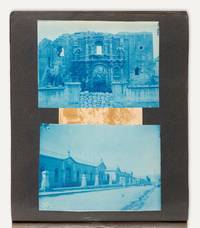
1918List2982Peru and Panama 1918. Approximately 364 photos; album and unmounted photos silver prints cyanotypes and printing-out-paper prints. Photos measure 3 x 4 to 8 x 10 inches with about half measuring 3 x 5 ½ inches. Some with photographer’s hand-stamp or credit in pencil; others with manuscript notations verso or recto; some captions to album pages. Offered in partnership with Daniel / Oliver.<br /> <br /> Rich and extensive photographic archive of Walton T. Burres of Stockton California showing his time in Peru c. 1904 as an amateur explorer and doctor for the Inca Mining and Rubber Company and his later work in Panama c. 1918 with the Rockefeller Foundation’s International Health Division.The collection consists of a large number of loose photos acquired by the gallery in 2021 and a recently discovered photo album showing some of the same subjects and containing a few duplicate images some printed in different sizes or formats as well as hundreds of previously unseen prints. Together this material makes up the largest extant archive of Burres’s photographic work. Though his work was published at the time both in Peruvian and American publications much of it was lost when he dropped it in a river that he was attempting to ford.<br /> <br /> Burres was educated at California’s Cooper Medical College the first school of medicine on the West Coast and was a prominent member of the Stockton community before sojourning to Peru around 1900 to help the Inca Mining and Rubber Company address the deadly diseases endemic to the region such as malaria and yellow fever. To encourage economic infrastructure in remote areas the Peruvian government began granting land concessions to any company that would build roads bridges or river ports. As a result the Inca Mining Company an American outfit based in Tirapata purchased the rights to mine gold along the upper Inambari River in 1896 and soon became the richest gold producer in Peru.<br /> <br /> A large portion of Burres’s Peruvian images document his 1903–1904 excursion from Arequipa 150 miles into “rubber country.†The journeys were well-recounted in U.S. papers and a number of the anecdotes described in print are seen in the present images.<br /> <br /> There are many dynamic views of Burres and his party trekking through the dense jungle and summiting the high mountains as well as shots of flora fauna and native Peruvians. Burres’s travel companions for this trip included the famed adventurer Harriet Chalmers Adams later dubbed “America’s greatest woman explorer†by the New York Times. Adams and her husband Frank both fellow Stocktonians joined up with Burres during their own multi-year expedition through South America. There are a number of portraits of a woman who bears a striking resemblance to Adams though it is possibly another person.<br /> <br /> Other Peruvian material includes numerous views of Cusco Arequipa and the surrounding environs including a beautiful interior of a chapel a Martin Chambi-esque detail shot of a stone wall and portraits of local townspeople some identified as Quechua people. There are a number of lush large-format cyanotypes rich printing-out-paper views and many handsome small-format panoramas. These were printed on Inca Mining Company surplus stationary which speaks to the makeshift nature of photo-development under the circumstances. One particularly striking image shows the top of Misti volcano barely visible above the clouds. This image was reproduced in Burres's account of his travels published in 1909 in Outing magazine.<br /> <br /> The photographs from Burres’s time in Panama document his more serious work as a virologist and health administrator in the area. One interesting photo shows a pair of recently-shot iguanas with a caption noting that “blood of these reptiles was found infected with Haemogregarina.†Another image is that of a new style of privy built from concrete and wire-mesh designed to better keep out rain water. There are also keenly-shot views of main streets and local culture in Los Santos Chiriquà and elsewhere including a number of humanistic group portraits taken at a girl’s school. unknown
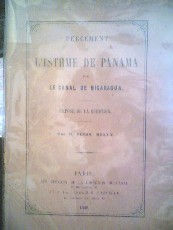
1858CCC0046capla5. Broché, Paris, Aux Bureaux de la direction du canal, 1858,177 pages avec les trois cartes dépliantes couleurs, couverture fatiguée A FAIRE RELIER, nombreusesss taches de rousseurs. Journaliste français, Félix Belly fut le premier concessionnaire du canal de Panama. C'est lors d'un voyage en 1858 au Costa-Rica qu'il rencontra le président Raphaël Mora, avant de s'entretenir avec le président Martinez au Nicaragua. Il signa avec eux la Convention de Rivas qui lui donnait une option sur le canal transocéanique via le lac Nicaragua. Il se rendit dans la foulée aux États-Unis afin de calmer les suceptibilités américaines et publia le présent ouvrage. Bientôt privé de ses soutiens en Europe, photos possibles
in-8, pp. 177, (3) di indici, 3 carte geografiche a colori, più volte ripiegate, in fine. Broch. in carta muta coeva rosa. Edizione originale, rara a trovarsi. Quest'opera, che si colloca a metà tra un saggio ed un racconto di viaggio, fu redatta da Belly, giornalista francese che visse alcuni mesi in America Centrale nella speranza di incoraggiare lo scavo di un canale in Nicaragua. Il progetto del canale non era nuovo; dieci anni prima, nel 1846, Napoleone III aveva già pubblicato a Londra un pamphlet intitolato "Canal de Nicaragua ou projet de jonction des océans Atlantique et Pacifique au moyen d'un canal". Secondo lo stesso Belly, Fernando Cortes aveva inviato nel 1528 un primo rapporto sulla possibilità di aprire una rotta tra i due oceani (non viene citata una fonte particolare ma si fa un piccolo riferimento a un testo). Belly sarebbe diventato famoso tra gli studiosi europei per i suoi scritti in difesa della "razza latinoamericana". Buon esemplare, assai fresco.. .
1858M624131858 P, Aux bureaux de la Direction du canal , 1858 , gr in8 br , 177pp , 3 cartes dépliantes couleur. Traces d' humidité marginales affectant les premières pages, dos muet. F Belly , journaliste - homme d' affaire , réussit à creer une société pour le percement d' un canal . L' instabilité politique régionale et son manque d' appuis financiers eurent raison de son projet. Langue: Français
1969RO80153192ANTHROPOS. 10 nov. 1969. In-12. Broché. Bon état, Couv. légèrement passée, Dos satisfaisant, Intérieur frais. XXVI + 226 pages.. . . . Classification Dewey : 986-Colombie, Panama, Equateur
195421550Hamburg, de Gruyter, 1954. X, 315 S. Zahlr. Abb. auf Tafeln. 4 gefalt. Karten. Kl.-4°. OKart. (Gebrsspn., etw. gebräunt, gering fleckig).
191069830Partitions sur la Politique et gouvernement,Partitions illustrées La SOCIÉTÉ ET SES LUTTES Triangle 1910 approx.
189830942Cahen 1898 approx.
192328406Mount Hope CZ: Panama Canal Press 1923. First edition. Stapled paper wrappers. A very good copy some sunning to the wrappers small tear along the fore edge of back wrapper and a few leaves. 12 pp. 8vo. A note states: "This information is provided for a handy reference and style guide for machine operators proof readers and reviewers employed at the Panama Canal Press." Includes ship names dimensions tonage etc. Scarce. OCLC shows no copies. Panama Canal Press unknown books
192328406Mount Hope CZ: Panama Canal Press 1923. First edition. Stapled paper wrappers. A very good copy some sunning to the wrappers small tear along the fore edge of back wrapper and a few leaves. 12 pp. 8vo. A note states: "This information is provided for a handy reference and style guide for machine operators proof readers and reviewers employed at the Panama Canal Press." Includes ship names dimensions tonage etc. Scarce. OCLC shows no copies. Panama Canal Press unknown
Esta obra se editó originariamente en Panamá, en abril de 1979. Indice: "CONTEXTO DE LA REALIDAD LATINOAMERICANA". "LA TRANSNACIONALIZACIÓN DE AMERICA LATINA". "ALGUNAS DE LAS ESTRUCTURAS DE OPRESIÓN EN AMÉRICA LATINA". "DOS ESTILOS DE DOMINACIÓN SOBRE AMÉRICA LATINA". "EL PROBLEMA DEL CONTROL DEL CONTINENTE". "EL CARIBE, AREA AISLADA Y OLVIDADA DE AMÉRICA LATINA". "ALGUNOS TEMAS FRONTERIZOS". "LA IGLESIA ANTE EL FUTURO DE AMÉRICA LATINA". "ANÁLISIS Y CONCLUSIONES SOBRE PUEBLA". "DOCUMENTOS Y ENTREVISTAS".
Milano, 1925, stralcio con copertina posticcia muta, pp. 761/772 con 2 cartine e 12 fotografie. - !! ATTENZIONE !!: Con il termine estratto (o stralcio) intendiamo riferirci ad un fascicolo contenente un articolo di rivista, sia che esso sia stato stampato a parte utilizzando la stessa composizione sia che provenga direttamente da una rivista. Le pagine sono indicate come "da/a", ad esempio: 229/231 significa che il testo è composto da tre pagine. Quando la rivista di provenienza non viene indicata é perchè ci è sconosciuta. - !! ATTENTION !!: : NOT A BOOK : “estratto” or “stralcio” means simply a few pages, original nonetheless, printed in a magazine. Pages are indicated as in "from” “to", for example: 229/231 means the text comprises three pages (229, 230 and 231). If the magazine that contained the pages is not mentioned, it is because it is unknown to us.
In 8°, pp. XX+568. Legatura originale in tela. Alcune gore nelle prime pagine. Tavole f.t. in nero. Un foglio parzialmente staccato. Per il resto buona copia.
Carta geografica scolastica murale raffigurante il Canale di Panama. Cromolitografia, cm. 90x190. Scala 1:400000. Qualche strappo abilmente restaurato. Alcune pieghe.
In-8° (23,5 x 16 cm). (6), II, 774 pp. Tav. fotografiche e 2 cartine ripiegate nel testo. Buon esemplare rilegato in piena tela, con titoli oro al dorso. Bunau-Varilla (1859-1940), ingegnere francese e soldato, si adoperò presso il governo degli Stati Uniti per la costruzione del Canale di Panama.
In-8 gr., brossura (piccole mancanze), pp. (6),II,774, con numerose tavole fotografiche in b.n. fuori testo e 2 cartine piu' volte ripieg. Storia del Canale di Panama a partire dal 1879 fino ai lavori quasi ultimati. Testo ben conservato.
54103P., Pierre Roger (Collection "Les Pays Modernes"), sans date, in 8° broché, 251 pages ; non coupé ; couverture illustrée.
In-16° (cm. 18,7x12,5), pp. (4), 251, (1) + 20 TAVOLE fotogr. + 1 CARTA ripiegata del canale b.n. fuori testo. Mezza tela coeva, tit. oro al dorso. Molte e diffuse fioriture alle pagine di testo. Importante storia, descrizione dei lavori, dettagli tecnici (dighe, ferrovie, canali, frane ecc.) ed economici (tra cui le tariffe di retribuzione e le condizioni degli sterratori e degli altri lavoratori, americani, neri, cinesi ecc., vitto e costi, alloggi, servizi, zanzare ecc).; vantaggi e previsioni alla soglia dell'inaugurazione (1914).
In-8 p., mz. pergam., tit. oro su tassello al dorso, pp. 148,(2), con 4 cartine geografiche nel t. e alc. ill. fotografiche in b.n. in tavv. f.t. Monografia geografica con cenni storici ed etnografici. Ben conservato.
193335792Berlin-Grunewald : Rothschild 1933. 579 S. ; 8 + Mit 6 Bildbeil. Broschiert, Exemplar in gutem Erhaltungszustand
191320017Sydicate Publ. Comp., New York 1913. 414 S. mit über 600 Fotos u. zahlr. Aquarell-Tafeln von E. J. read u. G. Grant., original farbig illustr. Leinen- gebundene Ausgabe, roter illustrierter Leinenband, goldgeprägter Deckel und Rücken, Gebrauchsspuren am Einband, sonst guter Zustand
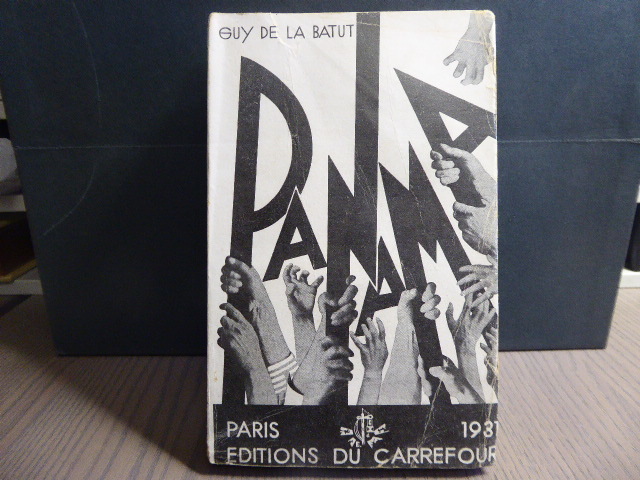
592952Editions Du Carrefour Paris 1931 In-12 ( 190 X 120 mm ) de 449 pages, broché sous couverture illustrée. Edition originale dont il n'a pas été tiré de grands papiers. Bon exemplaire.
R100075130Delroisse / Vilo. non daté. In-4. Relié. Bon état, Couv. convenable, Dos satisfaisant, Intérieur frais. 159 pages - nombreuses photos en couleurs hors texte - une étiquette collée sur le 1er plat de la jaquette - la jaquette est illustrée en couleurs - texte en espagnol, anglais, français et allemand.. Avec Jaquette. . . Classification Dewey : 986-Colombie, Panama, Equateur
7746Paris, Bernard Grasset, (27 décembre) 1933. Fort in-12, broché.
46542Paris, Bernard Grasset 1934, 180x115mm, 494pages, reliure demi-basane. Plats papier marbré. Pièces d’auteur et de titre rouge au dos. Très bel exemplaire.