Antonio FronteraBiblio.com

318 résultats
B9783036504643Hardback. New. hardcover
2019603985.Gpaperback. Good. Access codes and supplements are not guaranteed with used items. May be an ex-library book. paperback
19542082702114609114Moji Sotokai 1954. Soft Cover. Fine. Number of books: 1 Moji Sotokai paperback
1859418635.Gpaperback. Good. Access codes and supplements are not guaranteed with used items. May be an ex-library book. paperback
6350125Taylor & Francis Group pp. 200 . Papeback. New. Taylor & Francis Group unknown
2003x-1859418600Cavendish Pub Ltd 2003. Paperback. New. 2nd edition. 104 pages. 8.54x5.47x0.31 inches. Cavendish Pub Ltd paperback
1859418600.Gpaperback. Good. Access codes and supplements are not guaranteed with used items. May be an ex-library book. paperback
6350123Taylor & Francis Group pp. 104 . Papeback. New. Taylor & Francis Group unknown
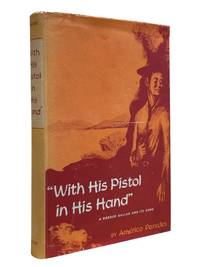
19589869Austin: The University of Texas Press 1958. First edition. Hardcover in illustrated jacket uncredited 282pp. Inscribed by Paredes to the former owner on the half title. Texas Folklore Society bookplate to front pastedown old tape residue to rear boards where jacket protector had been attached. Colorful jacket toned but with minimal edge wear. A nicely preserved very good copy. <br /> <br /> Scarce inscribed copy of this book on the Mexican border bandit Gregorio Cortez Lira. <br /> <br /> Six-Guns 1675. The University of Texas Press hardcover
19592082702114604094Fixed 311 yen Kadokawa Shoten 1959. Soft Cover. Fine. Number of books: 1 Fixed 311 yen Kadokawa Shoten paperback
1332211437.Gpaperback. Good. Access codes and supplements are not guaranteed with used items. May be an ex-library book. paperback
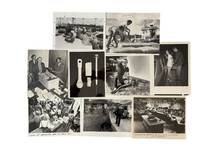
1970216021970. African American Latino History Criminal Justice Photography Unidentified press photographers War on Drugs photographs 1974 to 1992 document law enforcement operations arrests and media coverage of drug enforcement in Texas during the expansion of federal and local anti narcotics campaigns. Produced for newspaper circulation by the Houston Chronicle and the Associated Press the images provide direct evidence of policing practices surveillance and public presentation of drug enforcement activities across multiple decades. The archive supports research into racial disparities in policing the growth of coordinated federal and local enforcement systems and the role of press photography in shaping public understanding of crime and punishment during the late twentieth century.<br /> <br /> Texas primarily Houston and El Paso 1974 to 1992. Archive of 9 original silver gelatin press photographs with printed and typed captions on versos. Images include a 1974 photograph of Drug Enforcement Administration agents seizing a large marijuana cache from a tugboat; a 1975 Associated Press image displaying cocaine and heroin paraphernalia accompanied by a caption describing drug use in social settings; a 1979 photograph of the El Paso Intelligence Center identified as the control center of federal drug enforcement operations; and multiple photographs from the 1980s and early 1990s depicting arrests raids and evidence seizures. One image labeled "Operation Crackdown" shows a group of detainees with hands restrained behind their backs gathered at a temporary booking site surrounded by officers and paperwork processing tables. Another photograph captures an undercover officer restraining a young Black man outside an apartment complex during an arrest. A photograph dated April 27 1992 shows officers recovering firearms and suspected narcotics from a vehicle in a dealership parking lot accompanied by an assignment sheet describing a police chase and subsequent arrest. Additional images include a 1990 multi agency raid involving federal and local authorities using a trained detection dog identified as "Magnum" with annotations indicating restrictions on identifying agents.<br /> <br /> The archive situates drug enforcement within the broader expansion of the War on Drugs a policy framework that intensified policing surveillance and incarceration beginning in the 1970s and continuing through the end of the twentieth century. These photographs document the coordination between agencies such as the Drug Enforcement Administration U.S. Customs and the Federal Bureau of Investigation as well as the increasing visibility of enforcement through media distribution. The repeated depiction of arrests and controlled displays of seized materials underscores the public facing dimension of these operations while the imagery of detainees and targeted enforcement reflects documented disparities in how drug laws were applied across racial and socioeconomic groups. Light handling wear with minor surface marks typical of press photographs; captions remain legible. Overall very good condition. A concentrated visual record of law enforcement practice media representation and the social impact of drug policy in late twentieth century Texas. unknown
190770101X.Gpaperback. Good. Access codes and supplements are not guaranteed with used items. May be an ex-library book. paperback
848359031X.Gpaperback. Good. Access codes and supplements are not guaranteed with used items. May be an ex-library book. paperback
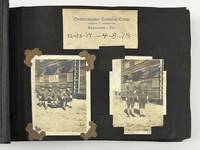
19182322Various locations in Texas 1918. Very good. Fifteen leaves illustrated with fifty-five mounted photographs and a few ephemeral clippings identifying locations. Oblong octavo. Contemporary black cloth string-tied. Light soiling to covers. Minor wear to some photographs but overall a handsome selection. A unique collection of vernacular photographs collected by a soldier in the 8th U.S. Cavalry identified simply as D. Watson serving in southwest Texas during the Mexican Border War. The first two pictures emanate from Quartermaster Training Camp in Jacksonville Florida. This is followed by one photo from Barron Field in Everman Texas. The remaining photographs document Watson's time in Ruidosa Texas an unincorporated Texas-Mexico border town in Presidio County about a hundred miles from Terlingua. Here Watson includes photographs of himself and other soldiers and their horses posed in front of old stone structures in orange groves amongst canyons in front of an automobile and more with images of Mexican adobes a wagon advertising an "electric light company" the cavalry preparing their horses scenes of the wilds of southwest Texas and the E.H. Carlton company store. E.H. Carlton was also a principal in the Carlton Van Loan Company an oil speculation firm active in the 1920s. An eclectic and intriguing selection of Texas-Mexico border images from an important period in history. unknown
19402082702114605345Fuchusha 17 1940. Soft Cover. Fine. Number of books: 1 Fuchusha 17 paperback
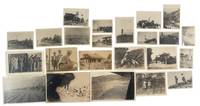
1910218961910. Large photograph archive circa 1910s-1930s documenting U.S. and Mexican military presence along the Rio Grande border and in Sinaloa during a period of revolution intervention and military modernization. The photographs depict soldiers fortifications and daily military activity across multiple locations providing primary-source visual evidence for the study of U.S.-Mexico border tensions the Mexican Revolution and interwar military development. One photograph identified en verso as taken at the "United States Immigration Station on the Rio Grande River - Border Service - 1916" situates the archive within the period of the Mexican Revolution and the U.S. Punitive Expedition while other images extend into the 1920s and 1930s reflecting continued military presence and surveillance.<br /> <br /> Archive comprises 22 vernacular silver gelatin photographs ranging from approximately 3.25 x 5.5 inches to 4.5 x 6.5 inches several with manuscript annotations en versos and studio stamps including "Laboratorio Vega Mazatlán Sin." and "La Foto Madero 42." Images include U.S. soldiers positioned atop sandbag fortifications with rifles standing at border outposts and posing beside military vehicles including an early Dodge touring car. Mexican Army scenes depict officers and enlisted men in varied uniforms including kepis and high-collared tunics assembled in formations occupying trenches and constructing earthen defenses. A photograph inscribed "12º Rgto. Mazatlán Sin. Marzo 1929" identifies the 12th Infantry Regiment during a coastal inspection. Additional images show cavalry units riding in formation across fields soldiers resting near agave plants and encampments along beaches with troops engaged in labor or recreation. One aerial photograph taken from a biplane captures a valley settlement while another image shows a rural structure marked "U.S. 19" on its roof suggesting identification or surveillance use. Across the archive soldiers appear in both formal and informal groupings sometimes posed in relaxed settings with visible gestures of camaraderie.<br /> <br /> These photographs document a period of sustained militarization along the U.S.-Mexico border and within northern Mexico following the upheaval of the Mexican Revolution and subsequent stabilization efforts. The presence of both U.S. Border Service personnel and Mexican Army units illustrates parallel and overlapping military activities including patrol construction and occupation of strategic terrain. The imagery of trenches transport and aerial observation reflects evolving military practices in the early twentieth century while the combination of formal and informal scenes provides insight into daily life within these environments. Surface wear to several prints; overall very good condition. A concentrated visual record of binational military activity and borderland conditions during a formative period of regional conflict and modernization. unknown
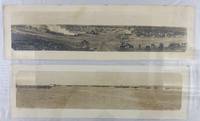
19163373McAllen: Photo. by Murff & Robinson 1916. Very good. Two panoramic photographs measuring 8 x 28 and 8 x 26.5 inches. Rolled. A couple of short closed tears and small perforations otherwise minor wear and soiling. Two detailed panoramic photographs that depict the First Cavalry Regiment of the New York National Guard one unit of the 15000 guardsmen from the state that were sent to garrison the Rio Grande in South Texas during the Border War with Mexican revolutionaries and Pershing's Punitive Expedition against Pancho Villa. The New Yorkers were stationed at inadequate parched camps in Mission McAllen and Pharr. The slightly larger of the two images here shows the camp of the First Cavalry at McAllen with field tents and temporary camp buildings on the left and the regiment's allotment of horses tethered together at right. The second images shows the unit on parade being reviewed by General Frederick Funston the commander of the border garrisons. The photos are each captioned in the negative and dated August 28 1916 and October 1 1916 respectively. Scarce images of New York's encampment in Texas during the Border War. Photo. by Murff & Robinson unknown
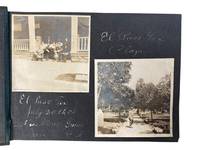
1905231541905. Texas HistoryBorderlands U.S.-Mexico borderlands photograph album 1905-1906 centered on El Paso and Juárez with additional views in New Mexico Arizona California Oregon and Alaska. The album documents an early twentieth-century traveler's movement through the southern border of the U.S. when El Paso and Ciudad Juárez were being promoted through rail travel tourism and cross-border entertainment and when American visitors regularly treated Mexican religious sites plazas bullrings and street life as part of a border excursion circuit. Its strongest historical value lies in the concentration of images tied to the Texas-Mexico border including Juárez bullfight and cockfight scenes street and church views and domestic group portraits in El Paso alongside a labeled photograph of a Santo Domingo Pueblo corn dance likely Kewa Pueblo north of Albuquerque showing non-Native travelers recording Indigenous life in the Southwest.<br /> <br /> Photograph album containing 81 original photographs most measuring approximately 2 x 3 to 4 x 5 inches mounted on thick black paper leaves in a cloth-bound album. Contemporary manuscript captions identify numerous locations and subjects including "El Paso Tex" "Juarez Mex" "Bull Fight" "Cock Fight" "Near Albuquerque 1906" "1906 New Mexico" "New Mexico 1905" "Juarez Mex Church over 350 years old" and "Corn Dance. Santo Domingo." Visible subjects include family and social group portraits posed on porches and in front of residences; women in white dresses and men in coats hats and ties; a tree-lined park path in El Paso; religious architecture and church interiors in Juárez; a fountain identified as Robinson Park in Albuquerque; river and landscape views labeled Rio Grande; a saguaro cactus study; a donkey; a seated elderly woman in a doorway; and multiple arena photographs showing matadors horses attendants spectators and ring action in Juárez. Several photographs bear later ink inscriptions including one later image of five men captioned "Alaska" en recto and with names on verso including "Mayor Goldstein" a prominent Jewish businessman and six time Juneau Mayor Isadore Goldstein.<br /> <br /> The album records border travel encompassing scenes of domestic life in El Paso tourism in Juárez and excursions into New Mexico and the wider West. The Juárez images are especially strong preserving direct vernacular views of public spectacle in the bullring and cockfight pit as well as church architecture and urban settings seen from the perspective of a visiting American observer. Photographs mounted throughout; some images faded or silvered with scattered surface wear corner wear occasional discoloration and a few later annotations or tape remnants visible. Overall very good condition. unknown
19162445Brownsville 1916. Very good. Panoramic photograph approximately 7.5 x 39.5 inches. Mounted on card manuscript identifications along foot. Light wear minor soiling. A large formal portrait of Troop C of the 1st Virginia Cavalry in camp at Fort Brown Brownsville Texas. National guard units were called up in 1916 to guard the border while General Pershing made his incursions into Mexico against revolutionary and regular military units involved in the Mexican revolution and civil war of the 1910s. The image depicts the entire troop mounted in a single file with the commissioned officers at far left sixty-six men in all. Although the photographer does not identify himself each man in the unit is named in clear manuscript along the foot of the photograph making the present image a valuable record of the Virginia Cavalry's service in Texas during the Border War. unknown
19752082702114605540Princess Road SL Club 1975. Soft Cover. Fine. Number of books: 1 Princess Road SL Club paperback
19532082702114607669Totsupan 1953. Soft Cover. Fine. Number of books: 1 Totsupan paperback
19462082702114609001Yoshida shobo 1946. Soft Cover. Fine. Number of books: 1 Yoshida shobo paperback
19702082702114607926Futosha 1970. Soft Cover. Fine. Number of books: 1 Futosha paperback
19163738N.p. probably Portland 1916. Near fine. 36pp. plus two multi-panel folding panoramic photographic plates. Original tan wrappers printed in brown accompanied by original printed mailing envelope reading "A Souvenir of The Third Oregon Infantry on the Mexican Border." Very light wear. A scarce work featuring the officers staff and soldiers of the Third Oregon Infantry while stationed on the Mexican border near San Diego during the conflict with Mexico just before World War I. The work includes field and staff lists rosters organized by company and a list of "men who have enlisted at Clackamas since the Regiment left" in the summer of 1916. The work is profusely illustrated with photographs of each company within the text usually on the recto facing the roster lists. Each inside cover includes a folding panoramic photographic plate - the first titled "First Battalion at San Diego Exposition July 9 1916" and the second featuring the "Third Battalion on the Border - Mexico in the Background." Both panoramic images were produced from photographs by O.A. Tunnell. unknown