[India].Biblio.com
2 832 résultats
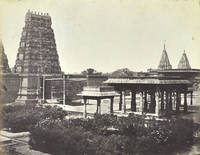
74891c.1880. . Albumen print. Good tonal range and in good condition pasted on original album page with title in pencil on manuscript. <br /> <br /> [c.1880]. unknown
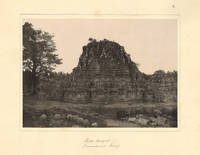
74892c.1880. . Albumen print. Good tonal range in good condition pasted on original album page titled in pencil on manuscript. <br /> <br /> [c.1880]. unknown
85475C. 1890. . Collection of 23 loose photos mounted on card. Some with pencil captions numbered; small marginal tears to card very light soiling.<br /> <br /> [C. 1890]. unknown
189753180London: Methuen & Co. 1897. Tall 8vo. x 2 361 pp. Photo frontisp. 15 photo plates 1 large folding colour map. Blue pebbled cloth gilt lettering on spine very minor shelfwear rubbing slight bumping to couple corners VG copy. First edition of this excellent work compiled from information collected during the course of the Ethnographical Survey of the Provinces Agra and Oudh in northwest India. Methuen & Co., hardcover
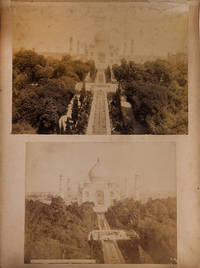
64137c. 1880s. . Landscape album 33 x 43 cm; 126 albumen prints app. from 7.5 x 7.2 cm to 22 x 27.5 cm some photographs with number and title in negative several with credit of Fry and Rahn Company in negative some light spotting some photographs faded; contemporary gilt ruled half black morocco spine joints professionally restored green pebbled cloth boards spine in five gilt compartments all edges gilt overall in very good condition.<br /> Photographic album depicting the diverse places and peoples of Northern India. Includes an extensive series presenting the prominent buildings of Agra - the Taj Mahal Tombs of I'tim d-ud-Daulah and Sheikh Salim Chisti and Fatehpur Sikri Palace - and Dehli - the Red Fort Jama Masjid and Mausoleum of Sufour Jung - from various viewpoints. <br /><br />The album's range of portraits documents India's social diversity featuring a mixture of Western colonists and Indian gentry cavalry and natives. This is highlighted in two extended series of images - one at outdoor festivities and the other presenting the erection of grand buildings by Indian workers overseen by colonists. Also included are thumbnails of Indian landscapes and curiously some engine blueprints and photographs.<br /> c. 1880s. hardcover
189849175London: James Bowden 1898. Tall 8vo. 159 1 pp. Photo frontisp. 13 photo plates 57 plates. Original khaki-coloured cloth illustration & brown lettering on front cover over beveled boards a.e.g. chipping wear soiling damage head & foot of spine bumping & wear to corners some minor soiling to endpapers still G- reference copy w/ Bookseller’s label on front pastedown for Queen City Book Co. Cincinnati OH and former ownership stamp. First edition of this scarce illustrated account of the relief of the British Garrison at Chakdara during the siege of Malakand by 10000 Pashtuns commanded by Saidullah. The British relief column was sent to assist General William Hope Meiklejohn and was accompanied by a young 2nd Lieutenant Winston Churchill who later published his Story of the Malakand Field Force. James Bowden, hardcover
189552526New York: Charles Scribner’s Sons 1895. 12mo. 390 2 pp. plus 16 pp. publisher’s catalogue. Frontisp. 11 plates 3 maps 1 large double-page colour map. Blue pictorial publisher’s cloth cover art image of figure in tuban holding sword tiger on spine in red white & black white red & gilt lettering decoration minor darkening dustsoiling minor wear to couple corners slight bumping to couple corners still VG bright copy. First edition of this rousing tale of privateers shipwreck and rescue in India during the third and fourth Anglo-Mysore Wars in Indian 1790-1799. Henty has focused on the failings of Lord Cornwallis as he describes the battles in which Tipu Sultan invaded the state of Travancore with French allies which ended in his defeat at the siege of Serigapatam and the signing of the Treaty which required him to surrender half his kingdom to the British East India Company. The Fourth Anglo-Mysore War resulted in the death of Tipu Sultan when the British won a decisive victory at the Siege of Seringapatam in 1799. William Henry Margeston 1861-1940 was a noted English painter and illustrator primarily known for his striking portraits of women. Charles Scribner’s Sons, hardcover
189848651London: S.W. Partridge 1898. 8vo. 320 pp. Frontisp. Contemporary full red calf prize binding raised bands on spine gilt decoration gilt dentelles gilt lettering on front cover gilt & green morocco spine label marbled fore-edges & endpapers minor edgewear rubbing to fore-edges very slight bumping to corners still a VG copy presented to H.I. Marriner as Prize for Latin Form I from The Old Ride School Branksome Park Bournemouth which was located in Martello Road between Branksome Park and Canford Cliffs. Second printing prize binding of this third volume in the Romance of Colonization series. S.W. Partridge, hardcover
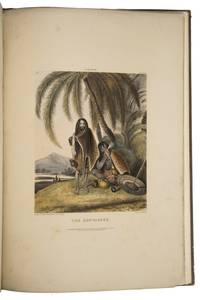
1842M2ACVI942UQXLondon: Thomas McLean 1842. Contemporary half calf with cloth sides gold tooled title on front cover. Large folio 545 x 375 cm. With 6 hand coloured lithograph plates and a lithographed title. First and only edition of an ethnographic study of native Indian people by William Tayler 1808-1892 who was at that time Acting Salt Agent of the Central Division of Cuttack for the East India Company. He dedicated his work to "Lady William Bentinck" born Lady Mary Acheson 1809-1850 who was the wife of the Governor-General of India. The illustrations were drawn by Tayler himself who was an amateur artist and drew much of the Indian daily life that he encountered. He selected the present 6 drawings to be published and had them lithographed by J. Bouvier. The first 3 plates not only show the ways of Indian people but even more so the luxurious life of the English in India. The first plate The Young Civilian's Toilet shows a young man relaxing while being treated by several servants who are named Anglo-Indians. The room is strewn with objects of leisure. The next 2 plates The Young Ladies Toilet & The Breakfast show equal scenes. The other 3 plates are more ethnographic in nature showing native Indians in their everyday life: Women grinding at the mill; the Sunyasees Sannyasis & The village barber. Tayler later became a controversial figure for his excessively harsh oppression of Indian people when he was the commissioner of Patna.Spine and covers slightly worn pages a little frayed some foxing on the text pages. Dedication page broened. Plate 2 detached and inserted loosely. Plates in good condition.l Abbey Travel 465; Bobins I 272; H.K. Kaul Early Writings on India 454; Prasannajit De Silva Colonial Self-Fashioning in British India c. 1785-1845 2018 pp. 116-119. Thomas McLean, hardcover
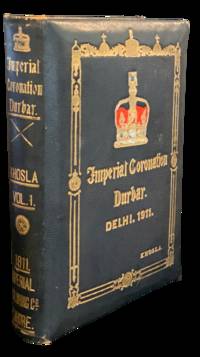
19114764Lahore Punjab: The Imperial Publishing Co. Khosla Bros. 1911. First edition. Folio 34 x 26cm 4 i iv 3 481 1pp. Presentation binding full black morocco over padded beveled edged boards stamped in gilt on covers and spine with lettering elaborate border and Imperial Crown g. e. Crown is hand painted in red blue and white. Gilt dentelles blue silk endpapers platinum photographs throughout printed red borders of different shades and black lettering on thick glossy paper. Letter of presentation from the publisher to The Hon'ble Sir Harvey Adamson K.C.S.I. M.A. L.L.D. Lieutenant-Governor of Burma printed in gilt on red silk and mounted to front free endpaper. Some rubbing to corners and spine ends some paint loss to the crown front endpaper lightly chipped along the lower edge with a few silk threads of the letter of presentation becoming unwound else clean internally. A large heavy volume in nearly fine condition. <br /> <br /> Printed as a memento of the historic Imperial Coronation Durbar at Delhi 1911 honoring King George V and Queen Mary as Emperor and Empress of India. In the presentation letter to Harvey Adamson the publishers lay out the intent of the volume which is "graced by Your Honor's portrait" as giving a "bird's-eye view of the present political condition of India" through "historical and biographical sketches of the various Ruling Chiefs and Princes of India.suitable memoirs of distinguished personages.and of men famous in Literature Science Art and other spheres of useful activity accompanied with their portraits as far as possible." The book is indeed lavishly produced and illustrated with roughly 600 biographical sketches most with photographs many of which are credited including several from Bourne and Shepherd of Calcutta the official photographers of the Durbar. <br /> <br /> The last of three Durbars the others in 1877 and 1903 the 1911 assembly was notable as only one attended by the King and Queen the first time a British monarch had visited India the crown jewel of empire. The event was held at Coronation Park in Delhi from December 7th-16th and was attended by the vast majority of ruling princes and noblemen making it the largest of its kind. Underneath the pomp and regalia however were the roots of resentment and stirrings of independence. The scandal of the Durbar came when the Gaekwar of Baroda Maharajah Sayajirao III briefly bowed only once instead of the required three times when approaching the emperor and then turned his back to walk to his seat instead of walking backwards. This and other happenings of the Durbar were captured on film most famously and in color by Charles Urban the British-American producer and film maker. "With Our King and Queen through India" became the first color cinematography to be viewed by the majority Western audiences. <br /> <br /> <br /> Sir Harvey Adamson served as Lieutenant Governor in Burma from 1910 when he was appointed Knight Commander of the Order of the Star of India until 1915. Of interesting note a steamship built for the British India Steam Navigation Company in 1914 and named after the General went missing at sea along with its 269 passengers in 1947. <br /> <br /> An immense trove of photographic evidence of a time and place being the crest of British Imperialism in India the book is institutionally scarce. Our research finds only a few copies of either volume held worldwide the book on offer with a tangible and important provenance. The Imperial Publishing Co. (Khosla Bros.) unknown
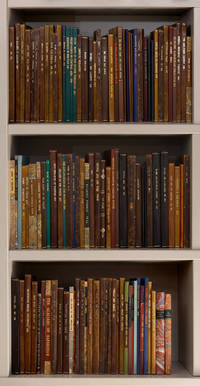
1837ABC_46027London Calcutta etc.: various publishers 1837. Half calf with marbled sides and lettering in gold on spine or cloth with marbled sides and a spine label. 8vo. Some illustrated with plates and maps. 107 volumes many containing multiple articles. Handsomely bound extraordinary collection of important scientific journal articles by 19th and 20th century Western explorers of Afghanistan Central Asia China the Himalayas India including Assam Bengal Kashmir and Punjab Karakoram Pakistan including Sindh and Tibet with content covering anthropology archaeology exploration geography geology glaciology history language and grammar mountaineering and politics. At the time these were the far outskirts of the world for Western science where a lot was yet to be learned. Often the maps in these journals are the first modern maps of such regions and findings were the first to be scientifically published.Generally in very good condition.Please inquire for a full list of contents. various publishers, hardcover
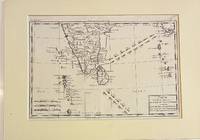
120757-030Attractive map of southern India Sri Lanka and the Maldives. The prevailing winds are shown between India and Malabar and marked with the months of the year. 235 x 370 mm. In passepartout 300 x 420 mm. With a stamp on the passepartout of G.J. Korteling Bennebroekerdreef 29 Bennebroek.Rigobert Bonne was an important Fr<span class=""match"">en</span>ch cartographer of the late 18th c<span class=""match"">en</span>tury. In 1773 he succeeded Jacques Bellin as the royal cartographer in the office of the Hydrographer at the Depot de la Marine. Working in his official capacity Bonne compiled some of the most detailed and accurate maps of the period. Refer<span class=""match"">en</span>ces: Gole India #83-2.3. Publication from Atlas de Toutes les Parties Connues <span class=""match"">du</span> Globe Terrestre.NL Decoratieve kaart van Zuidelijk deel van India de Malediven Ceylon Sri Lanka etc. Op de kaart de tekst: Golfde de Bengale Cormin Cote de Coromandel Is. Laquedives Isles Maldives Ligne Equinoctiale Mer des Indes etc. unknown
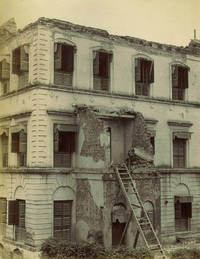
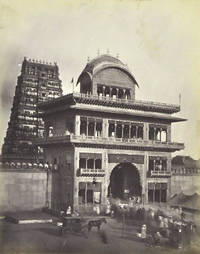
60927c.1880. . Albumen print. Good tonal range and in good condition; Dimensions: 190 x 150mm. 8 x 6 inches.<br /> A crumbling classical mansion<br /> [c.1880]. unknown
23810‘Trin. Coll. Sunday 12 o’clock’. 24 November 1839; Trinity College Cambridge. See Napier’s entry and that of his sister Maria’s husband John Gellibrand Hubbard 1805-1889 1st Baron Addington in the Oxford DNB. 3pp 4to. In good condition lightly aged and discoloured with small closed tear to a crease. Part of letter torn away on opening and now under small black wax seal good impression of crest with letter N. Folded four times. Addressed with three postmarks on reverse of second leaf to ‘The Rt Honble The Lady Napier Kew Green’. Minuted by Lady Napier: 'Cambridge Novr. 1838’. 64 lines of neatly-written text. He greets his mother as ‘My dear Mamma’ and begins by expressing delight at the arrival of his sister Maria on the previous day ‘though it happened at rather an unfortunate time for my occupations. I am glad to see her looking so very well and wearing her curls but I miss you very much and I wish you had been able to come along with them.’ Despite the fact that ‘Cambridge is particularly wet & dirty’ Maria and ‘Hubbard’ Maria had married John Hubbard the future Lord Addington in 1837 breakfasted with him that morning. ‘Sedgwick and we sat talking till Church time when we got squeezed into St Mary’s and heard Melville preach much worse than usual.’ The letter proceeds with references to ‘Whewell’ Trinity Chapel ‘Thorp’ ‘the Philosophical society’ ‘Ld & Lady Fitzalan’ ‘Lucy’ Lady Kinlock. He reports that ‘Cambridge was very much shocked by the Duke of Wellington's reported stroke and delighted to hear it was only a cold.’ Turning to personal matters he writes: ‘Maria is very much cut up about her cook who after appearing to be a pattern of culinary morality for some months has turned out a peculating thief besides having had several children in the house which she clandestinely conveyed out of the way in the dirty clothes basket’. One of Sedgwick’s dog’s five puppies is mousing for him. ‘Maria says that Sir Alexander has at last gone north and high time it was for I see Mr Ewart has gone down to stand for the boroughs he has been petting so long through Patrick.’ He ends by mentioning ‘Sir Thomas misfortunes whiuch are so very hard upon his old age but Maria declares that he seems to bear it very cheerfully.’ He concludes: ‘I write this dull letter late at night dear Mother it is only to announce Maria’s happy arrival and I intend to despatch a longer one to 9. this week. Lady Fitz. is pale and plain & Maria cust her out.’ The letter is signed ‘Napier / Trin. Coll. Sunday 12 o’clock’. ‘Trin. Coll. Sunday 12 o’clock’. [24 November 1839; Trinity College, Cambridge.] hardcover
23811‘The Hague / November 28th. 1860’. An excellent letter in which a serving Victorian ambassador discusses the nature of diplomacy and gives a vivid assessment of his former superior Sir Hamilton Seymour whom he jokingly characterizes ‘the great Elchee’. See both men’s entries in the Oxford DNB. 7pp 4to. On two bifoliums. In good condition lightly aged and with creases from folding into a packet. Minuted on reverse of last leaf. Addressed to ‘The Honble. George Elliot’ he received his KCB in 1862 and headed ‘Private’. Beginning on the subject of his brother-in-law Henry Lockwood 1825-1882 Napier writes: ‘My dear Elliott Many thanks for your kind letter informing me that Lord John Russell had moved Lockwood from Constantinople to Stockholm. It must be in many respects a great advantage to Lockwood and he will be very grateful to Lord John for the change. I hope that my brother in Law did not incur any blame from being involved in the dissensions of the Constantinople Embassy. I do not know all the circumstances indeed I have heard one side much more than the other. The malignant atmosphere of the place could not have been more strikingly shewn than in a musunderstanding between a most amiable Minister and a very devoted and agreeable subordinate. Such at least was Lumley to Sir Hamilton when I knew him.’ Napier had served as first secretary to Sir Hamilton Seymour in St Petersburg with John Lumley-Savile the future Lord Savile as second secretary. Napier considers Lumley as secretary to the Constantinople ambassador Sir Henry Bulwer is in Napier’s view ‘most in the wrong. Bulwer has a natural fondness for the twilight in business matters and this fanciful partiality for secrecy and winding may have led him to keep some things close from his Secretary’. After a comment on Lords Cowley and Shatford he continues: ‘The great Elchee never gave me a key or shewed me a Dispatch but when I wanted to know anything I would go to his room and talk to him about George Canning or the greek Revolution; or Sophocles or the Emperor Nicholas. Shaking such provocations in the face of that furious genius he would rowse up and open the flood gates of his conversation one thing led on another and at length he had disburdened himself of the past the present and the future. I was young and liked the humour of the thing besides I admired the old man angry so intense so handsome so austere so like Cato outside. And we cannot deny them generous sympathies and great services. Cowley Henry Wellesley 1st Earl Cowley who had been Minister Plenipotentiary was older and more than even on a foot of equality. He could not ever abide him. In fact your Secretary seems the natural enemy of his Chief. Please God I may not find it so if I ever become an Ambassador.’ Over two pages he discusses the ‘most just and wise regulations’ of the Foreign Office and what may happen ‘if your Ambassador is as wild as Nebuchadnezar and your Secretary not as discreet as Daniel’ before continuing: ‘You must have observed that Diplomacy is becoming a caste that we are a sort of Brahmins. Every man has a son in the possession. The diplomatic qualities will become progressive and hereditary. The Children will be wiser than their fathers. I have myself a son who is as smooth as Jacob and who never smiles unless he meets another young augur.’ He jokes: ‘You must be prepared to have an application soon for an unpaid attachéship. My second son is turbulent. I intend him for a naval reformer. I suppose your brother Henry has some of the same.’ This leads to a discussion of Elliot’s wider family the Mintos and the jesting reproach: ‘You are allowing Elcho and The Duke of Argyle to run away with the sympathies of Scotland. This must not be. There will not be a piece of bannock left in the land for a true Whig.’ ‘The Hague / November 28th. 1860’. unknown
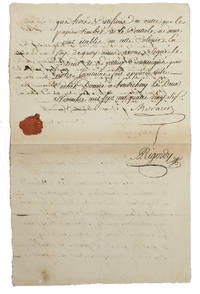
1786ABC_45537Puducherry Pondichéry 1786. Folio. Manuscript death certificate including a red wax seal of a former employee of the French East India Company who is buried in the cemetery of the Église Notre-Dame-des-Anges in Puducherry which was the capital of the Indian district and later also the larger union territory of the same name which was ruled by the French from 1673 to 1954. The certificate is signed by the reverend father Damas who was superior of Puducherry and was authenticated by the authorizing officer of the French East India Company Jean-François de Moracin who was also commissioner general of the ports and naval arsenals in the colonies.In good condition. unknown
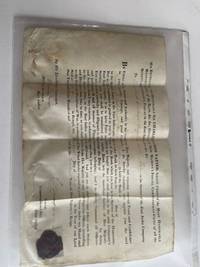
2687430 July 1850. Vellum Document 40 x 25cms bottom edge sl. crumpled faint water stin lright margin text clear and complete. With Seal. SIGNED by General Sir Charles James Napier Commander-in-Chief in India and J.P. Kennedy John Pitt Kennedy Military Secretary East Indies see Wikipedia entry a productive life. See Image. 30 July 1850. hardcover
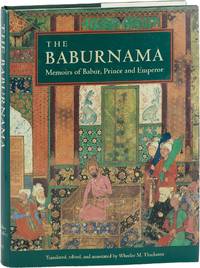
199685780Washington / New York: Freer Gallery / Oxford University Press 1996. First Thus. First printing of the Thackston translation. Quarto. Cloth hardcover; dustjacket; 472pp; illus. Tight clean and unmarked; about Fine. In the original dustwrapper mildly rubbed on rear panel still Very Good or better. An attractive copy. From the library of noted poet and translator Nathaniel Tarn with his printed bookplate to half-title. Authoritative translation annotated and with a foreword by Wheeler Thackston. Freer Gallery / Oxford University Press unknown
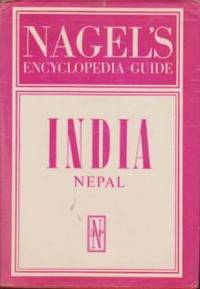
197718296Geneva: Nagel Publishers. 1977. Hardcover. Very Good in Very Good dust jacket. DJ with light wear to top spine. Small pen mark on half title page; 55 plans in black and white 8 maps and plans in colours; 16mo 6" - 7" tall; 832 pages . 2826300237 . Nagel Publishers hardcover
AQ25280s.i.: s.n. 1929-35 I: Oblong quarto. 30 photographs mounted on 30 leaves. Contemporary light green embossed cloth paper label to upper board title in manuscript 'Lahore Cricket Teams Khyber Pass and Family Groups'. Rubbed and marked joints split. II: Oblong quarto. 21 photographs mounted on 12 leaves bound with string in contemporary reversed half-calf beige cloth boards paper label to upper board titled in manuscript 'Kangra Valley'. Rubbed and marked. Two well-presented photograph albums featuring a total of fifty-one images depicting inter-war India. The first contains nine images of Himachal Pradesh state specifically the Uhl Valley and Lamba Dag River; eight photographs of the Khyber pass including Attock Bridge and the Khyber Valley Railway; three of 'The Unbendables' cricket team; two depicting Quetta in the aftermath of the 1935 earthquake; and three photographs of crowds taken at the Lahore session of the Indian National Congress at which was passed the historic 'Purna Swaraj' total independence resolution following the breakdown of negotiations between freedom movement leaders and the British government over the question of dominion status. The second album contains idyllic photographs of the Kangra Valley Himachal Pradesh predominantly of the Uhl and Banganga rivers including one of a gentleman fly fishing and two images of the Khyber Valley Railway. . [s.n.], [1929-35] hardcover
23624Printed by J. Edward Francis at the Athenaeum Press". See image for CONTENTS. Wraps paginated i-ii;105-144; iii-iv inc.wraps mainly good condition but rusty round staples one punch-hole with minor loss of text characteristic of material from the papers formerly held at the headquarters of the National Indian Association and the Northbrook Society 21 Cromwell Road later by its former Warden Roland Knaster. Note: "Founded in 1920 by the Australian Josephine Ransom the magazine Britain and India was set up for the Promotion of Friendliness Understanding and Sympathy between Britain and India.""A special interest magazine it included a range of articles on all aspects of Indian life thought and conditions especially related to Britain. Its specific endeavour was the promotion of Indian-British relations by highlighting the deep connection between both countries. It featured news articles features and special interviews with eminent people including the first Indian to win the Nobel Prize Rabindranath Tagore.The magazine also included a book reviews section and a regular round-up of events taking place in Britain of interest to those with a connection to India.The magazine was a small operation funded mainly by subscription but due to a lack of funds it folded at the end of the year." Scarce but four World Libraries appear to have one or more issues including the BL. Printed by J. Edward Francis at the Athenaeum Press". See image for CONTENTS. paperback
167333344London: Printed by the Author at his House in White-Friers 1673. First Edition. Illustrated throughout with 30 finely engraved copperplates generally a third of a folio page in size title page printed in red and black. Large Folio bound in contemporary calf. xii 253 15 A Table 1 pp. A well worn copy lacking the 5 map and the double-page or folding plates the text block and textual engravings all well preserved the paper crisp and unpressed some of the usual mellowing and evidence of age or use and old worm track to the bottom blank area of the leaves again not obtrusive the "Directions to the Binder" leaf not present at the end of the volume otherwise collated complete. FIRST EDITION. John Ogilby was a Scottish translator impresario publisher and cartographer. Ogilby established Ireland's first theatre in Werburgh Street Dublin and following the Restoration that country's first Theatre Royal. Ogilby played a significant part in arrangements for the coronation of King Charles II. Following the Great Fire of 1666 Ogilby's large-scale map of the City of London was founded on precise survey work and his Britannia is the first road atlas of England and Wales to be based on surveys and measurements and drawn to scale. <br> During the Great Fire of London in 1666 Ogilby's house in Shoe Lane together with its printing works and most of his stock was destroyed; he estimated he had lost Å3000. After the Great Fire the Corporation of London appointed Ogilby and his wife's grandson William Morgan as "sworn viewers" members of a group of four trustworthy gentlemen directed by Robert Hooke to plot disputed property in the city. Ogilby later made what he called "the most accurate Survey of the City of London and Libertyes therof that has ever been done". By 1668 he had a new house in Whitefriars and was ready to resume his printing and publishing work.<br> Ogilby's next major venture was a series of atlases of China Japan Africa Asia and America. The first of these was An Embassy from the East India Company of the United Provinces to the Grand Tartar Cham Emperor of China which was published in 1689. This book was substantially a translation of Johan Nieuhof's Dutch publication of the same name with English copies of the Dutch engravings. Ogilby's Africa appeared in 1670 and was followed in rapid succession by Atlas Japanennsis 1670 America 1671 Atlas Chinensis 1671 and Asia 1673. In 1671 in response to his proposal to make a detailed survey and atlas of Great Britain the King appointed Ogilby Royal Cosmographer. Thus at about the age of 70 and with the scientific advice of Robert Hooke58 Ogilby began work on Britannia the project for which he is best known among cartographers. Printed by the Author at his House in White-Friers unknown
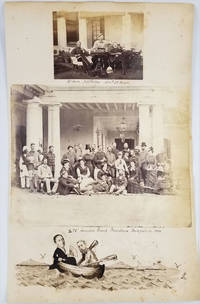
187724159Bangalore India 1877. Very good condition. Four large albumen photographs with pen and ink decoration surrounding them of the famed Victorian light cavalry regiment known as the Hussars in India. <br /> <br /> The albumen photographs on the front are: a portrait of three relaxed officers lounging in uniform on the terrace of a colonial building in India captioned in ink in a period hand "McBurn Capt. Malone and Hon.ble H. G. Gough". The two men at the left wear small round caps; the man at the right sits with one leg flung over the arm of his chair. <br /> <br /> The second image is a large group portrait of the regiment in civilian dress including wives and Indian servants at the colonnaded facade of an imposing building captioned "XIV Hussars Group Mess House Bangalore 1877". Below this image an unidentified member of the regiment and his wife are portrayed in a charming pen and ink cartoon of the couple in a row boat with a clipped photo of their faces pasted in.<br /> <br /> On the verso an impressive private residence with British women waiting in a horse drawn carriage at the portico and Indian servants is captioned in period ink "General Macintyre's House Secunderabad". Below is another image of a grand residence with a curved façade on which is painted a sign "The Deanery 1877". It is captioned in period hand "Mr. Dean's house. North Trimulgherry". Both of these large albumen photographs are decorated with hand drawn pen and ink borders.<br /> <br /> According to an autobiography by Edwin Mole entitled 'A King's Hussar: Being the Military Memoirs for Twenty-five Years of a Troop-sergeant-major of the 14th King's Hussars' the regiment's horses were being newly imported from Australia. The new hardier breed dubbed "Walers" were imported from New South Wales to replace the existing stock from England which was suffering in the harsh climate. Sgt. Mole was sent to Australia as part of a commission to supervise the breeding of the stock of "Walers".<br /> <br /> The four prints laid down on card stock 11 ½ x 18". 3 of the 4 albumen images 11 ¼ x 9; one image 5 1/2 x 4" unknown
1898ABC_457021898. 2 PARK Superintendent. 1898. Catalogue of photographs by Sergeant A.J. Clarke R.E. taken during Tirah Expedition 1897-1898. Kirkee Pune India Sappers and Miners' Press 1898. Small folio 22 x 14.5 cm 4 pp. With a lithographed title-page. Loosely inserted in the album. Collection of photographs taken by a British Indian Army officer who served in the Peshawar Column during the Tirah Expedition in the Northwest Frontier of India from June 1897 to April 1898 including a manuscript Key that identifies seven British officers that are in the first photo of the album and a list of captions to 10 photos in the album.The Tirah Expedition was aimed against the Afridi and Orakzai tribes in British Indias Northwest Frontier modern-day Khyber Pashtunkhwa province of Pakistan. One of many Northwest Frontier campaigns of British India the Tirah campaign concentrated on the area west and south of Peshawar in the mountainous region between the valleys of the Bara and Kohat Rivers. The album primarily documents the actions of the Tirah field forces Peshawar Column under command of Brigadier-General Arthur George Hammond 1843-1919 which followed the route of the Bara Valley.The present photo album contains 8 large albumen photos documenting the movement of the Peshawar Column. The large photos were taken by W. Rahn according to the memoirs of Peshawar Column officer Richard Thomsett we had a photographer named Rahn with the column and he accompanied us until we arrived at Ali Masjid in December 1897 when an accident necessitated his returning to India. Rahn was a German who had come out to the East some twenty years before and seemed to be ubiquitous for wherever we were there he was with his camera ready and I must say he took some very excellent pictures.The present album also includes 43 smaller gelatin photos with manuscript captions for 10 of them on a small piece of paper perfectly describing the photos on leaves 5 and 9 of the album. The album is supplemented with a rare 4-page brochure no doubt produced in a small print-run that lists 99 photos. About 20 have been marked by hand in pencil probably by the albums compiler. The brochure indicates that the present photos could be purchased from the Bombay Sappers and Miners.8 of the large photos have contemporary manuscript captions in ink on the mounts. 2 marks on the front paste-down reading "photographs by British Royal Engineers. Tirah Expedition 1897-1898 North India. Binding slightly rubbed on extremities the original 5 cords replaced with 3 new black cords hinged to stubs . A few images mildly faded. The additional manuscript leaves foxed and worn. Otherwise in good condition.l The navy and army illustrated V no. 53 24 December 1897 pp. 150-152 4 of the 8 large photographs & no. 57 18 February 1898 p. 275; R.G. Thomsett With the Peshawar olumn. Tirah expeditionary force London 1899 pp. 103-104. unknown
1874ABC_46925Calcutta 1874. Contemporary gold-tooled half red morocco brown cloth sides. Oblong 8vo. With 33 mounted sepia albumen prints ca. 15/15.5 x 10.5/11 cm all captioned. Manuscript title and captions of the pictures in English written in brown ink in a neat 19th-century cursive hand. Photograph album containing 33 albumen prints of buildings important places views and people in Calcutta in the 1870s. The album opens with some architectural photographs including the governor's house the new market the post office St. Paul's cathedral and the high court. Also included are views of roads and streets that are still important today such as Benting Street Chilpore Road Russell Street and Strand Road and 5 albumen prints of the B.Y. Docks. The album also contains views near Kalighat and Barnatore especially of the landscape but also of a Hindu temple. The album concludes with some photographs of people living in Calcutta showing beggars carpenters palki bearers a barber ending the album with a group of Rohillas.The album includes a photograph of the statue of Sir James Outram unveiled in Calcutta on 22 May 1874 an all photographs seem likely to have been made soon after that.Binding a little worn and scuffed endpapers a little dust-soiled some leaves marginally slightly dust-soiled some leaves slightly browned some occasional foxing paper of the last photograph slightly damaged not affecting the image some images a little faded but overall in good condition. A highly interesting album showing life in Calcutta in the 1870s.l For dating the statue of Sir James Outram: Catalogue of the sculpture of J.H. Foley in: Dublin Historical Record 32 3 1979 pp. 108-116. hardcover