142 résultats
18802880Calcutta: Office of the Superintendent of Government Printing. Very Good with no dust jacket. 1880. Hardcover. Brown cloth blind-stamped decoration gilt spine lettering. Early official compilation of local acts and regulations in force in Coorg/Kodagu including land-revenue regulation and related colonial administrative law. With two-page publishers advertisement at rear.; 7" x 10-1/4"; 99 pp; Ex-library with front bookplate and ownership markings on title page; no spine label or pocket. Covers edgeworn. . Office of the Superintendent of Government Printing hardcover
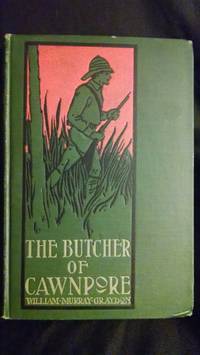
1900001070NEW YORK: STREET & SMITH 1900 NICE LOOKING GREEN COVER SOLDIER ON FRONT WITH GUN ORANGE AND BLACK DESIGN GOLD PRINT SPINE. FRONT LOWER RIGHT CORNER SLIGHTLY BUMPED. FORMER OWNERS LABEL IN FRONT JC PENNEY STICKER FRONT. NO OTHER MARKINGS TIGHT AND GOOD SHAPE. RARE BOOK. The Siege of Cawnpore was a key episode in the Indian rebellion of 1857. The besieged British in Cawnpore now Kanpur were unprepared for an extended siege and surrendered to rebel Indian forces under Nana Sahib in return for a safe passage to Allahabad. However under ambiguous circumstances their evacuation from Cawnpore turned into a massacre and most of them were killed. WILLIAM MURRAY GRAYDON- 1864¿1946 published fourteen books for boys from 1897 including The Fighting Lads of Devon or In the Days of the Armada 1900 The Jungle Trappers: A Tale of the Indian Jungle 1905 Lost in the Slave Land or The Mystery of the Sacred Lamp Rock 1902 On Winding Waters: A Tale of Adventure and Peril 1902 With Cossack and Convict: A Realistic Story 1903 and With Musketeer and Redskin: A Tale of New Plymouth 1904. ANTIQUE BOOKS DEN WHERE HISTORY LIVES. STREET & SMITH hardcover
1898510408Oxford University Press American Branch 1898. Leather. NEAR FINE. 48mo 2.75.4' xl 582pp. Fine binding on India Paper with Smyth-sewn binding in pebbled calfskin with ironed calfskin liner all edges art gilt gilt stamped spine lettering and black place ribbon. Owner's name and inscription to front flyleaf d. 1914 some very trivial rubbing to the spine ends ELSE FINE an exceedingly clean and sharp copy with no signs of wear. An uncommonly nice survival for a devotional book. Although this is listed as the American Branch with New York address we suspect this copy was printed in the UK at the Oxford Bible Press--the fine India paper has the distinct feel of the Wolvercote Mill paper that distinguishes Oxford's India Paper Bibles of this era. Oxford University Press American Branch unknown
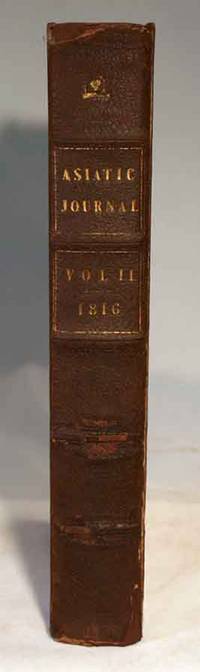
18161007220027Black Parbury & Allen 1816. Hardcover. Good. Black Parbury & Allen 1816 printing. 8vo. 1/2 leather marbled boards. 663 pp. Clean unmarked pages. Binding solid boards professionally reattached. Readable can be safely opened and used without fear of damaging book. Spine rebacked and missing part of the original leather. See pictures for appreciation. <br> <br> Sponsored by the East India Company the Asiatic Journal covered 1. Original Communications 2. Memoirs of Eminent Persons 3. History Antiquities Poetry 4. Natural History Geography 5. Review of New Publications 6. Debates at the East-India House 7. Proceedings at the East-India Colleges of Hertford and For William and Military Seminary 8. Appointments Promotions Resignations 9. Births Marriages and Deaths 10. East India Shipping Intelligence Arrivals and Departures 11. Lists of Passengers to and from India 12. Ship Letter-Mails 13. London Markets Prices Stocks etc. <br> The series provides a fascinating window into an earlier world of discovery imperialism and exploration. While primarily focused on British India the Journal connects seemingly disparate places and events from Cape Good Hope to Nagasaki and beyond and presents it for a contemporary British audience. The growth of American commerce in China in 1827 the news of the day from Bombay in 1829 Chinese musical instruments debates of the day dealing with the East India company a mission to Siam in 1822 an essay on the relative value of East and West Indies possessions early translations of Persian and Sanskrit poetry are but a few of the events chronicled. A must for all historians of 19th century Asia. Black, Parbury, & Allen hardcover
181215101AB1812. 12thyear second part off 2. Leipzig Fleischer 1812. 13 : 9 cm. XVII 306 pages with engraved title-page 9 7 folded engraved plates. Contemporary boards slipcase. This volume treats extensive with India culturell economicly historical etc. The plates show landscape temples plants people etc. - Binding a bit rubbed. - Text in German. hardcover
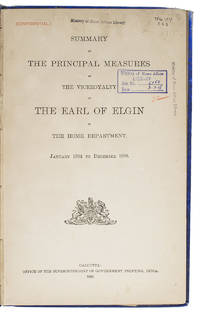
1898ABC_45361Calcutta: Office of the Superintendent of Government printing India 1898. Blind-stamped blue cloth title in gold on spine blue decorated endpapers. Folio. With armorial vignette on the title page. The official Summary always published at the end of a Viceroy-ship by the Office of the Superintendent of Government printing in Calcutta containing the narrative of proceedings of the Home Department in this case from January 1894 to December 1898 the time the 9th Earl of Elgin served in that function. The extensive contents pp. i-iv refers always to the pages in the appendices pp. 1-6156 ! not present.During his time as Viceroy famine broke out in India in which Elgin reportedly admitted that up to 4.5 million people died. Other estimates have put the death toll at 11 million people. His administration in India was otherwise notable for the Afridi frontier uprisings of 1897-1898.With the label of the Home Department Juridical Branche on the front board and a second label with the shelfmark and stamps of the Ministry of Home Affairs on the title page and elsewhere including a Confidential stamp. Head of both boards damaged and damp-stained front hinge worn front endpapers loose slightly browned throughout.l Bence-Jones Mark. The Viceroys of India London 1982. Office of the Superintendent of Government printing, India, hardcover
1866MDIanIND15<p>Simla: Printed At The Simla Advertiser Press; Wallace Cotton & Co. 1866. 1866. 8vo. pp. 3 p.l. 70 1 leafads on orange paper. tipped-in notice at p. 73. contemporary half roan leather label on upper cover binding worn & rubbed label chipped lacking rear flyleaf. several contemporary ms. notes. Hardcover.</p> Simla: Printed At The Simla Advertiser Press; Wallace, Cotton, & Co., 1866. hardcover
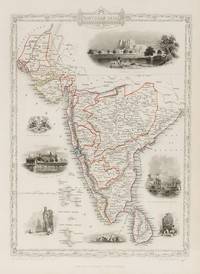
1851200109AG1851. London & New York John Tallis & Company 1851. Original steel engraving / Vintage map. Drawn and engraved by John Rapkin. Partly hand-coloured. Illustrations by A.H. Wray and Engraved by J.H. Kernot. Plate Size: 31.8 cm x 25.5 cm. Sheet Size: 37.2 cm x 27.2 cm. Vintage 19th century map in very good condition. Beautiful map of the southern Indian subcontinent from Sinde at the mouth of the Indus Estuary in the north down through Gujerat Bejapor and Mysore and down into the Carnatic region in the south. Hydrabad and Circars border the Bay of Bengal. Ceylon is also included in the map as are the Laccadive and Maldive islands in the Indian Ocean. Relief is depicting with hachuring. The major cities such as Bombay Sernigapatam and Madras are shown as are the rivers - including the Godavery and Beema rivers. This was an India dominated by the East India Company the British joint-stock company that came to rule large areas of India with its private armies exercising military power and seizing administrative functions. Formed in the early 1600s to compete with the Dutch for trade and commerce in the East the company rose to account for half of the world's trade at one point. Company rule in India lasted until 1858 when following the Indian Rebellion of 1857 the Government of India Act 1858 led to the British Crown's assuming direct control of the Indian subcontinent in the form of the new British Raj. The company was dissolved in 1874 as a result of the East India Stock Dividend Redemption Act passed one year earlier as the Government of India Act had by then rendered it vestigial powerless and obsolete. The official government machinery of British India assumed the East India Company's governmental functions and absorbed its navy and its armies in 1858. Wikipedia John Tallis 7 November 1817 3 June 1876 was an English cartographic publisher. His company John Tallis and Company published views maps and atlases in London from roughly 1838 to 1851. Tallis set up as a publisher with Frederick Tallis in Cripplegate in 1842; the business moved to Smithfield in 1846 and was dissolved in 1849. From 1851 to 1854 Tallis operated as John Tallis and Company. He started The illustrated news of the world and national portrait gallery of eminent personages in 1858 selling it for £1370 in 1861; it folded in 1863. Wikipedia The most important project John Tallis undertook was the 'Illustrated Atlas' from 1851. The original map we offer here was part of this exceptional Atlas and all the maps it contained are still today considered as the last reminder of an era of lavish map production. Tallis worked the project together with John Rapkin 1815-1876 and it was Rapkin's style and talent that we have to thank for when we marvel at these maps today. What makes these maps so special is the detail of engraved vignettes that surround the map and often show indigenous scenes people in their environment and even more so historical buildings or historical views of towns and cities architecture and landscape. The project of 'The Illustrated Atlas' was designed to be finished just in time for the anxiously awaited "Great Exhibition of the Works of Industry of All Nations" or The Great Exhibition sometimes referred to as the Crystal Palace Exhibition in reference to the temporary structure in which it was held was an international exhibition that took place in Hyde Park London from 1 May to 11 October 1851. It was the first in a series of World's Fairs exhibitions of culture and industry that became popular in the 19th century and it was a much anticipated event. The Great Exhibition was organized by Henry Cole and Prince Albert husband of the reigning monarch Queen Victoria. It was attended by numerous notable figures of the time including Charles Darwin Samuel Colt members of the Orléanist Royal Family and the writers Charlotte Brontë Charles Dickens Lewis Carroll George Eliot and Alfred Tennyson. Music for the opening was under the direction of Sir George Thomas Smart and the continuous music from the exhibited organs for the Queen's procession was "under the superintendence of William Sterndale Bennett". Wikipedia unknown
189849175London: James Bowden 1898. Tall 8vo. 159 1 pp. Photo frontisp. 13 photo plates 57 plates. Original khaki-coloured cloth illustration & brown lettering on front cover over beveled boards a.e.g. chipping wear soiling damage head & foot of spine bumping & wear to corners some minor soiling to endpapers still G- reference copy w/ Bookseller’s label on front pastedown for Queen City Book Co. Cincinnati OH and former ownership stamp. First edition of this scarce illustrated account of the relief of the British Garrison at Chakdara during the siege of Malakand by 10000 Pashtuns commanded by Saidullah. The British relief column was sent to assist General William Hope Meiklejohn and was accompanied by a young 2nd Lieutenant Winston Churchill who later published his Story of the Malakand Field Force. James Bowden, hardcover
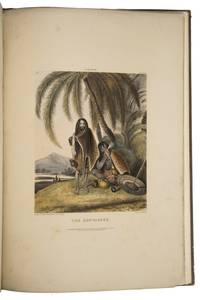
1842M2ACVI942UQXLondon: Thomas McLean 1842. Contemporary half calf with cloth sides gold tooled title on front cover. Large folio 545 x 375 cm. With 6 hand coloured lithograph plates and a lithographed title. First and only edition of an ethnographic study of native Indian people by William Tayler 1808-1892 who was at that time Acting Salt Agent of the Central Division of Cuttack for the East India Company. He dedicated his work to "Lady William Bentinck" born Lady Mary Acheson 1809-1850 who was the wife of the Governor-General of India. The illustrations were drawn by Tayler himself who was an amateur artist and drew much of the Indian daily life that he encountered. He selected the present 6 drawings to be published and had them lithographed by J. Bouvier. The first 3 plates not only show the ways of Indian people but even more so the luxurious life of the English in India. The first plate The Young Civilian's Toilet shows a young man relaxing while being treated by several servants who are named Anglo-Indians. The room is strewn with objects of leisure. The next 2 plates The Young Ladies Toilet & The Breakfast show equal scenes. The other 3 plates are more ethnographic in nature showing native Indians in their everyday life: Women grinding at the mill; the Sunyasees Sannyasis & The village barber. Tayler later became a controversial figure for his excessively harsh oppression of Indian people when he was the commissioner of Patna.Spine and covers slightly worn pages a little frayed some foxing on the text pages. Dedication page broened. Plate 2 detached and inserted loosely. Plates in good condition.l Abbey Travel 465; Bobins I 272; H.K. Kaul Early Writings on India 454; Prasannajit De Silva Colonial Self-Fashioning in British India c. 1785-1845 2018 pp. 116-119. Thomas McLean, hardcover
185633583circa 1856- 57. 1856- 57. Very good. - Signature on a piece of vellum approximately 1-3/4 inches high by 5-1/2 inches wide clipped from the close of a document. Signed "George Anson" beside his printed title "General / Commander-in-Chief / East Indies". Together with an engraved portrait of Anson 3-3/4 inches high by 2-1/4 inches wide. There is a tiny area of soiling to the portrait's bottom edge. Very good. <p>British army officer George Anson 1797-1857 was promoted to the rank of C in 1853. The following year he was appointed to the command of the Madras Army and in early 1856 became Commander-in-Chief in India. He caused resentment by his bias against the Indian Army and its sepoys. He was quoted as saying that he could never see a sepoy sentry "without turning away in disgust at his unsoldierlike appearance". Anson's appointment coincided with the tensions leading up to the Indian Mutiny of 1857. In May 1857 he sent troops to secure the arsenals in the Punjab. He intended to join the Meerut Brigade and to press on to retake Delhi but four days into the march he died of cholera at the age of 59. circa [1856- 57]. hardcover
184989449Agra: The Secundra Orphan Press 1849-51. First editions. Interesting collection of technical papers relating to the government of the North Western Provinces. Includes the description of a bridge built at Seoni by Major Boileau with plan; detailed plans for the cutting of a canal from the Sutlej at Tihara with excellent maps; an account of the "Oothaeegeeras" or Sunoreahs "professional thieves of Bundelcund" including a glossary of "Bolee" their argot; a important "Report upon the Tea Plantations in the North Western Provinces" by Robert Fortune noted botanist and plant collector for the HEIC; together with some revenue surveys of the region submitted by William Muir as secretary of the revenue board to John Thomason the lieutenant-governor. Attractive group of uncommon Indian imprints. Octavo 200 x 126 mm Twentieth-century blue cloth title gilt to the spine original upper wrappers bound in. pp. ii 66-108 3 folding lithographic maps with colour; pp. ii 213-250 folding lithographic map and 3 folding letter-press table; ii 251-286pp. folding letter-press table and tables to the text. Cloth clean and sound Patent Office Library ink-stamps to the wrappers maps and occasionally to the text light toning overall very good. hardcover
1851103London: Richard Bentley. 1851. First Edition. Hardcover. Near Fine. Very light foxing to first few pages vol. 1; This is Burtons' first book written while on active duty in modern-day India and Pakistan. Rebound in attractive blue full leather boards with gilt spine lettering and three raised bands. Marbled endpapers. Penzer 39 Casada 57 ; 12mo 7" - 7½" tall; 297 309 pages . Richard Bentley hardcover
183616845Philadelphia: Carey Lea & Blanchard 1836. Hardcover. Good. Philadelphia: Carey Lea & Blanchard 1836.<br /> <br /> FIRST AMERICAN EDITION.<br /> <br /> VOLUME II ONLY.<br /> <br /> Original cloth.<br /> 228 pages.<br /> <br /> Good. Binding somewhat shaken; cracked in front; some foxing; bookplate and name on front endpaper; scraping to spine label; some wear.<br /> <br /> Important memoirs of the author's life in India.<br /> <br /> SEE OUR OTHER LISTINGS FOR MORE INTERESTING RARE AND COLLECTIBLE BOOKS.<br /> . Philadelphia: Carey, Lea & Blanchard hardcover
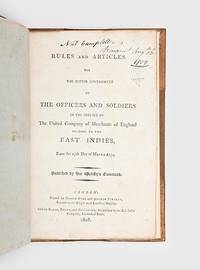
1808177936London: Printed by George Eyre and Andrew Strahan for Black Parry and Kingsbury 1808. Later edition following the first of 1754. This volume was owned by Lieutenant Colonel Neil Campbell 1788-1848 with his signature dated 12 August 1809 on the title page. Campbell joined the Bengal Army that same year and likely used it as part of his training. Nonetheless within six months he was tried by court martial. Soon after landing in India as an ensign Campbell was tried for ill-treating a civil Indian official imprisoned for eight months and fined. "This little incident does not however seem to have interfered with his military promotion for he was a Lieutenant in 1814 and retired as a Lieut.-Colonel in 1841 sharing in the Bhurtpore prize-money in 1825" Campbell p. lvi. In addition he volunteered for the campaign to annex Kalinfar Fort 1812 helped to hunt down the chief of Bundelkhand Gopal Singh and fought in the Anglo-Nepalese War 1814-16. He had 13 children with Isabella Campbell née Anne. The original front free endpaper is signed and inscribed: "This belonged to Major Neil Campbell Kilmartin of the H.E.I.C.S 1787-1848 my great grandfather". We have traced one copy in the Saraswathi Mahal Library. Octavo 181 x 115 mm pp. 48 bulked with blanks. With 4 pp. of publisher's advertisements following text. Modern sprinkled half calf black spine label brown cloth boards with borders tooled in blind original front free endpaper bound in ticket of Period Binders Bath tipped in at rear. Contents lightly browned: a very good copy. This edition not in NCSTC. Duncan Campbell Records of Clan Campbell in the Military Service of the Honourable East India Company 1600-1858 1925 hardcover
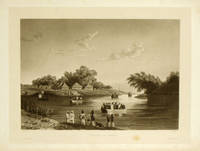
1835198166Paris.: A. Bertrand. 1835. Aquatint 27.1 x 36.3 cms; 32 x 47.6cms sheet trimmed including platemark margins outside the platemark toned and discoloured edge tears one encroaching on the platemark image unaffected small bloom of browning at the foot near caption the image a fine dark impression in very good condition. Tranquil river view by artist and draughtsman Barthelemy Lauvergne 1805-1875 from the official account of the Laplace voyage in the Favorite 1830-32. . A. Bertrand. unknown
1898011424Calcutta: Office of the Superintendent of Government Printing India 1898. Book measures 33.5x21.5.cm. ii316pp. Bound in original publishers printed boards. Boards rubbed dust marked spine sellotaped library label and withdrawal stamp binding slightly loose. Internally occasional library stamp or mark. Pages in very good clean condition. A good clean copy. . Hard Cover. Good. Quarto. Office of the Superintendent of Government Printing, India Hardcover
1897011404Calcutta: Office of the Superintendent of Government Printing India 1897. Book measures 33x21.cm. 126pp.Bound in original publishers printed boards. Boards lightly rubbed spine sellotaped library withdrawal stamp. Binding in good condition. Internmally ooccasional library stamp or mark. Pages in good clean condition. A good clean copy. . Good Plus. Quarto. Office of the Superintendent of Government Printing, India hardcover
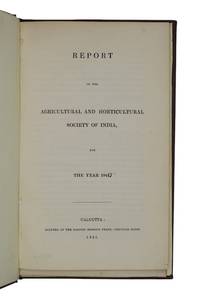
1841AQ32634Calcutta: Printed at the Baptist Mission Press 1841. 35pp 1. Bound with: Drop-head title: List of members of the Agricultural & Horticultural Society of India. January 1st 1841. Calcutta. Bishop's College Press 1841. 2 23pp 1. 8vo. Modern brown cloth lettered in gilt to spine. Two early manuscript corrections to first mentioned work title and drop-head title. The second located copy of the annual report of the Agricultural & Horticultural Society of India for the year 1840 together with a contemporary list of members printed at the Baptist Mission Press at Calcutta which operated from 1818 until the 1970s. The Society was founded by orientalist and missionary William Carey 1761-1834 in 1820. The report records the progress of the work done by the society including efforts to promote and improve cotton cultivation in the country the introduction of a new species of mulberry plant the promotion of tea culture in Assam and revision of discriminating duties on rum and tobacco. OCLC and COPAC record copies of each work at a single location BL. . First edition. Printed at the Baptist Mission Press hardcover
182420379First American Edition from the Second London Edition H. C. Carey & I. Lea - Chestnut Street hardcover
1844223122London.: J. Hatchard and Son. 1844. Two volumes hand-coloured chromolithograph portrait frontispiece to each volume 30 plates including 6 botanical plates in the second volume lacking the tissue guards: xii 475 pp ; vii List of Illustrations 459 pp; contemporary half calf spine gilt-ruled between compartments raised bands gilt lettered title labels edges fully gilt 23.5 x 16 cms professionally re-backed mounting the original spine corners a little rubbed and bumped title and frontispiece to each volume rather spotted and affecting a number of the plates some age toning but a good handsome copy. Sir William Henry Sleeman 1788–1856 was a British soldier and administrator in India and "his most memorable achievement was an exposure of the practices of the thugs an organised fraternity of professional murderers.In February 1839 additional duties being assigned to his office he became commissioner for the suppression of Thuggi and dacoity. During the next two years he was actively engaged in investigating and repressing criminal organisations in Upper India. During 1826 and 1835 over fourteen hundred thugs were hanged or transported for life." DNB. At the time of writing Sleeman was political resident in Gwalior. His readable observations touch on a myriad of subjects and places and illustrate many facets of Indian life including suttee witchcraft influence of electricity on vegetation corn dealers the Kohinoor diamond transit duties Delhi Indian Police and military discipline. . J. Hatchard and Son hardcover
1844022107London: J. Hatchard and Son 1844. First Edition. Hardcover. Partly unopened; scattered foxing but text and plates mostly clean. Some fraying along spine edges; gilt fairly bright. Easily Very Good in a Fine clamshell box. Two 6-1/2" x 9-3/4" volumes in publisher's gilt-decorated and lettered green cloth: xii 478; vii i 459 1 pages. Housed in a green cloth clamshell box. Illustrated with 32 color chromolithographic plates with tissue guards. Lieutenant-Colonel William Henry Sleeman who spent his entire career in India was best known for his fight to suppress the activities of "thugs" bands of criminals who attacked robbed and often murdered innocent travelers. In these volumes he describes his experiences doing so as well as his thoughts on various aspects of Indian life including Hinduism local festivals and folklore natural history governance military discipline and the justice system. In 1828 Sleeman made the first documented discovery of dinosaur fossils in Asia before the term "dinosaur" was even formally coined. ABBEY TRAVEL 466. <br/><br/> J. Hatchard and Son hardcover
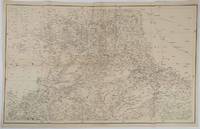
1859189711Calcutta.: Surveyor Generals Office. 1870. Reissue of 1859 edition. Lithographed map 57.2 x 93 cms; 61.1 x 96 cms sheet original folds old paper repairs to the verso and a sealed marginal tear central folds archivally strengthened some toning to the folds and creasing but the map in remarkably good clean condition. Impressive large Calcutta printing from the Survey of India showing Rajasthan Uttar Pradesh and surrounding states with extremely detailed delineation of settlements roads railways rivers and major points of interest the Taj Mahal is highlighted. . Surveyor Generals Office. unknown
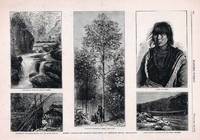
1872195548New York.: Harper's Weekly. 23 November1872. Five engravings in three columns 23.5 x 10 cms; on a single newspaper leaf 28.7 x 40.8 cm unrelated text on the verso lower margin creased with a small central tear affecting the caption no loss the image sin very good condition. Engravings from Harper's Weekly in November 1872 all centred on the quinine production in Darjeeling. Production began in the 1860s from seeds sent by the famed botanist Sir Joseph Dalton Hooker. Quinine proved indispensable to British rule in India and they invested heavily in plantations to sure up supply.The anti-malarial was vital for colonial expansion "quinine coursed through the bloodstream of empire" Townsend Middleton "Becoming after: The Lives and Politics of Quinine’s Remains" in Cultural Anthropology Vol. 36 Issue 2 pp. 282-311 2014 although probably known more to the readers of Harper's Weekly as an essential for gin and tonic. <br> <br>The five engravings: <br>Foot-Bridge over the River Rungbee <br>Buttress of Suspension Bridge over the River Teestah <br>Cinchona Succirubra Thirty Feet High signed but indecipherable <br>Native of Sikkim <br>Cane Suspension Bridge over the Great Runjeet. . Harper's Weekly. unknown
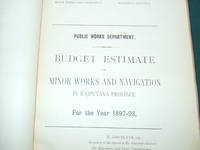
1898011601India: India 1898. 10 budget estimates of the Irrigation Branch for 1897-98. Rajputana. Baluchistan. Upper Burma. Lower Burma. Bengal. North-Western Province and Oudh. Punjab. Madras. Bombay. Bombay-Sind. Each section has a separate title page. 318pp in all. Bound in cloth backed printed boards. Spine sellotaped boards rubbed library stamp and number cancellation stamp. Although worn binding in good condition. Internally some tanning pages in good clean condition throughout. A good clean copy. Hardcover. Good Plus. Quarto. India Hardcover