Amorales, Carlos ; Patricia Ellis ; Cuauhtemoc Medina; Phillippe Vergne; Rein Wolfs; Gils StorkBiblio.com
248 résultats
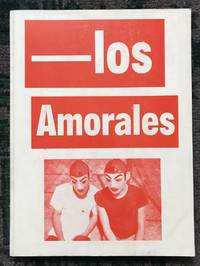
2001004051Amsterdam: Artimo 2001. Paperback. Very Good. Large 8vo. Unpaged. Bound in illustrated wrappers. Profusely illustrated. Includes a lucha libre dictionary and list of exhibitions. Very Good internally clean and sound light age-toning and soiling to wrappers light crease to spine. <br/><br/> [Artimo] paperback
19652221599<p>First edition. Small thin octavo. Preface by Felix B. Visillac. Original stiff tan wrappers stamped in black. Text browned due to paper quality. Very good. 54 pages.</p><p>Signed and inscribed by author to poet Alicia Ghiragossian on title page.</p> Direccion Lafuente paperback
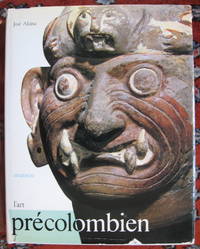
1978002152Paris: Editions D'art Lucien Mazenod 1978. Hardcover. Very Good /very good. 4to. 614 2 pp. Bound in full white cloth title stamped in blue on spine color illustration pasted to front cover. Full color and black and white illustrations most of the photographs are by Jean Mazenod. Includes bibliography and index. Text in French. Very Good internally clean and bright light soiling to extremities of text block and binding otherwise binding clean and bright in Very Good dust jacket with several short tears and wear to extremities overall minor age-toning and rubbing. Very attractive copy. <br/><br/> Editions D'art Lucien Mazenod hardcover
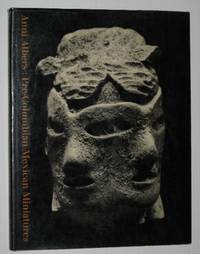
1970000206New York: Praeger 1970. First Edition. Hardcover. Very Good/Good. 4to. Unpaged. Bound in yellow cloth in black dust jacket printed in orange. Illustrated with black and white photographs by John T. Hill. Forward by Ignacio Bernal. Introduction by Michael D. Coe. Very Good 1/8" stain through first few pages minor age-toning to upper edge of several pages photographs sharp and clean in Good price-clipped dust jacket 1/2" closed tear and several small gouges to upper right corner of back cover light overall scuffing. <br/><br/> Praeger hardcover
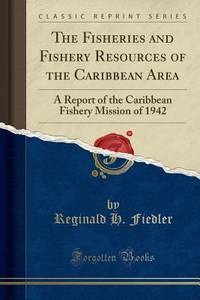
19012221928<p>First edition. Small octavo. Illustrated with b/w photos by V.K. Van De Venter Robin H. Ford John H. Rising L.E. Mayo and W.G. Spiker. Original grey pictorial cloth stamped in gilt black and green. No dust jacket. Very good small crack at rear joint. 220 pages 3 pages of ads. No signatures or bookplates. Scarce.</p> The Rumford Press hardcover
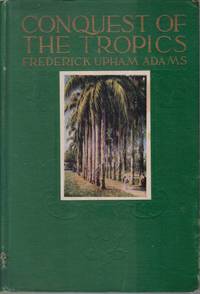
191420075Garden City: Doubleday Page & Company. 1914. Hardcover. Very Good. Boards with light rubbing to extremities. Former owner's name on front free endpaper. Front hinge with a bit of play ; The Caribbean as seen through the lens of the dealings of the United Fruit Company. ; Romance of Big Business Vol. 1; B&W Photographs; 8vo 8" - 9" tall; 368 pages . Doubleday, Page & Company hardcover
191419183Garden City: Doubleday Page & Company. 1914. Hardcover. Very Good. Binding not tight; The Caribbean as seen through the lens of the dealings of the United Fruit Company. ; Romance of Big Business Vol. 1; B&W Photographs; 8vo; 368 pages . Doubleday, Page & Company hardcover
18290005575Boston: Bowles and Dearborn 1829. First edition. Hardcover. Good. Octavo xv 256pp. original quarter linen & boards untrimmed 250mm x 145mm chipped paper label on spine shaken inked name on free endpaper needs some resewing. <br/><br/>Rev. Abbot went to Cuba to restore his fragile health. This eloquent Harvard graduate then traversed a thousand miles on horseback through Sumidero and Lemonal Matanzas a week in Havana etc. "The pictures he has given are of things which were immediately before him as exact in circumstances and as true to the life as his pencil could pourtray; and the statement of facts is correct according to his convictions - Preface." Sabin 14; Palau 519; Shaw & Shoemaker 37345. Abbot died on his return trip before reaching his Massachusetts home. Bowles and Dearborn hardcover
1334209413.Gpaperback. Good. Access codes and supplements are not guaranteed with used items. May be an ex-library book. paperback
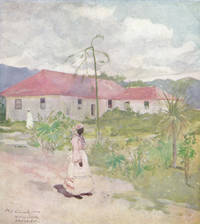
190530136London: Adam and Charles Black 1905. First edition. With 74 very fine and attractive colourplates from the paintings of Archibald Stevenson Forrest each with a captioned guard. Tall thick 8vo in the publisher's original pale blue cloth the upper cover and spine both decorated with ships craps clouds and sunbursts in brown ivory and gilt and with gilt lettering t.e.g. ix 272 4 ads pp. A handsome copy the plates all fine and bright some very occasional and light foxing within the text the lovely decorated binding is solid and firm with very little sign of wear but with a bit of mellowing to the spine front endpaper with cosmetic only spitting at the still-strong hinge. FIRST EDITION AND ONE OF THE MORE ELUSIVE TITLES IN BLACK'S TRAVEL SERIES A LOVELY BOOK IN FIRST AND ONLY EDITION. The blue seas and sun-drenched islands of the West Indies served as wonderful inspiration for both pen and paintbrush in this hard to find gem. Jamaica receives the lion's share of attention but other subjects include Barbadoes St. Lucia Dominica St. Thomas and Martinique. Archibald Forrest wonderfully captures the bright colourful scenery and colourful peoples of these tropic isles. Adam and Charles Black hardcover
193262783New York New Orleans Boston Chicago San Francisco & Miami: United Fruit Company Steamship Company Newcomb Printing Co. Inc. 1932. Tall 8vo. 7.2 x 9.5 in. 30 2 pp. printed in black & gold. With photo illustrations throughout gold borders decorations double-page centerfold pictorial map. Gold & black illustrated softcovers Art Deco cover art depicting a Great White Fleet ship minor rubbing shelfwear slight bumping to lower right corner still a VG bright copy. First edition of this beautifully illustrated Art Deco brochure for the Great White Fleet which featured spacious white yacht-like steamships offering dependable year-round service from New York New Orleans and Boston to Havana & Santiago Cuba; Kingston Jamaica; Cristobal Panama Canal Zone; Port Limon Costa Rica; Cartagena Puerto Colombia and Santa Marta Colombia; Puerto Barrios Guatemala and Honduras and British Honduras. United Fruit Company Steamship Company, [Newcomb Printing Co., Inc., paperback
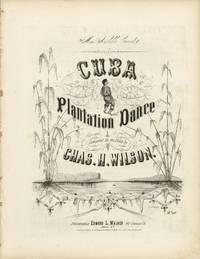
1855List3682Philadelphia: Edward L. Walker 142 Chestnut St. above 6th 1855. Folio sheet music pictorial lithographed cover approximately 13.5 × 10.5 inches. Light edge wear and minor toning; very good with a strong impression of the cover illustration. An antebellum piano dance reflecting the plantation imagery that circulated widely in mid-nineteenth-century American popular music. “Cuba Plantation Dance†was composed by Chas. H. Wilson a little-documented composer whose name appears chiefly in connection with this work and issued in Philadelphia during the early 1850s by Edward L. Walker the predecessor firm to the major publishing house Lee & Walker. A copy is recorded in the Levy Collection at Johns Hopkins which dates the publication to 1855.<br /> <br /> The cover presents a stylized plantation landscape framed by tall stalks of sugar cane with a small central vignette of a dancing Black figure. The use of Cuban plantation imagery reflects contemporary American fascination with the Caribbean sugar economy and with plantation life beyond the United States. During the 1850s Cuba was one of the largest slave societies in the Atlantic world. By the midcentury the island’s sugar plantations relied on hundreds of thousands of enslaved Africans and the enslaved population of Cuba was estimated at roughly 400000 people in the 1840s–1850s working primarily in the rapidly expanding sugar industry. Although Spain formally agreed to end the Atlantic slave trade in 1820 illegal importations of enslaved Africans into Cuba continued for decades supplying labor for the island’s plantations well into the 1850s. American publishers frequently borrowed such imagery for plantation-themed dance music marketed to the parlor trade. Pieces labeled “plantation dances†or “Ethiopian dances†formed part of the broader culture of minstrel and plantation entertainment. The title page bears a dedication to “Miss Arabelle Conrad†typical of mid-century sheet music addressed to amateur pianists. Along with the aforementioned copy in the Levy collection we find copies at Michigan and Temple. Edward L. Walker, 142 Chestnut St., above 6th unknown
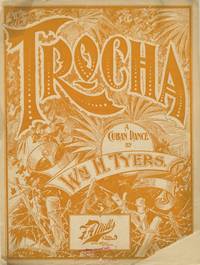
1890List3666New York: Jos. W. Stern & Co 1890. Folio sheet music illustrated pictorial cover printed in orange. 5 pp. including cover. Approximately 13 ½ x 10 ½ inches. Covers detached loss to front cover contents complete fair to good. A decorative late nineteenth-century dance publication for “Trocha†described on the cover as “A Cuban Dance†composed by the African American composer and bandleader W. H. Tyers. The elaborate pictorial cover incorporates stylized tropical foliage and island scenery rendered in a bold single-color design typical for the period’s fascination with exoticized musical forms. <br /> <br /> William H. Tyers 1870–1924 was an African American composer arranger and bandleader active in New York during the ragtime era. Born in Petersburg Virginia to Henry Tyers and Jane “Jennie†Jones both formerly enslaved he spent part of his youth in Richmond before his family relocated to New York City where he began studying piano. His early teachers recognized an aptitude for composition as well as performance and by the mid-1880s he was writing dance pieces including polkas and waltzes. Around the age of twenty Tyers secured employment as a music librarian and arranger with a touring concert company a position that brought him to Europe where he studied orchestration and arranging with Professor Gaspari in Hamburg.<br /> <br /> Returning to New York Tyers became active in the city’s rapidly expanding popular music trade working as an arranger and composer for publishers including F. A. Mills and Jos. W. Stern & Co. In 1896 he published “Sambo†a syncopated march sometimes considered to be one of the first instrumental rags.1 “Trocha†also released in the 1980s brought Tyers prominence for his ability to write Latin-style rhythms. It was re-issued in 1913 as a tango and its success led Tyers to work as an arranger with Joseph W. Stern in 1897.<br /> <br /> Tyers’ compositions blended contemporary American dance music with Caribbean and Latin themes a style reflected in pieces such as Trocha and later in his well-known ragtime composition Panama 1911 which remained a staple of early jazz and dance orchestras. OCLC finds two copies with different entries at the Cleveland Public Library and the British Museum Reference Collections. <br /> <br /> 1 “William Tyers Music Arranger†African American Registry https://aaregistry.org/story/william-tyers-born/ accessed March 10 2026. Jos. W. Stern & Co unknown
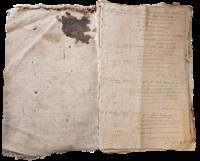
1898List2965United States and Caribbean 1898. Approximately twenty-nine pieces: logbook of eighty-four double-sided pages measuring 13 x 20 inches; eight letters seventeen documents and forms and three pieces of miscellany. Much wear and significant damage to logbook including water damage mildew and tearing; log book overall fair to good minus. Other materials good to very good. Overall good. William Higgins 1791–1872 was a farmer sea captain and owner of and investor in ships from Bowdoinham Maine. According to the Maine Maritime Museum which holds his family papers Higgins’ ships traded mainly in lumber which they took from Wilmington North Carolina to the Caribbean.<br /> <br /> Offered here is a logbook recording the travels of several of Higgins’ ships particularly the brigs Mary Jane and Llewellyn alongside related documents and personal letters. The logbook dating between 1832 and 1836 extensively documents the course wind data and weather remarks for travels of the ships between east coast US port cities and various locations in the Caribbean including Barbados St. Thomas and Martinique. The logbook also contains a copy of astronomer and mathematician Elijah Burritt’s illustration “A Plan of the Solar System Exhibiting its Relative Magnitudes and Distances†engraved by W. G Evans and printed in 1835 by F.J. Huntington.<br /> <br /> The letters and documents date from 1830 to 1867 and are also mostly business-related including an insurance document for the brig William Parrington a roll of sailors enlisted to work on a six-month journey between the Caribbean and the US in 1845 a bill of sale for ¼ stake in the brig Mary Jane and receipts and logs for items including various liquors sugar molasses casks and so on. One letter from a young man in Wilmington requests advice on how to start his own business in the style of Higgins’; other letters concern family matters. One interesting undated document is a writ addressed to the Marshal of the District of Maine concerning a lawsuit filed against Higgins and Rufus Carr master of the William Parrington by Zachrisson Nelson Co. The suit alleged that Carr acting as an agent for the ship’s owners that is Higgins had agreed to an affreightment involving shipping from Jamaica to Spain to New York but had then “wholly neglected and refused to do soâ€.<br /> <br /> Of interest to scholars of maritime history and trade in the mid-19th century. unknown
197147663Miami: Ediciones Universal 1971. First Edition. Octavo 20.5cm.; publisher's pictorial card wrappers; 263pp. Light shelf wear tiny dampstain to bottom fore-edge corner of textblock else Near Fine. Account of present-day Cuba by the exiled Cuban journalist who nearly twenty-five years earlier was nominated Vice President by the Socialist Revolutionary Movement with twenty-two-year-old Enrique Ovares as President. According to the author biography on the rear cover: "Ni un sólo minuto de sa vida no está dedicado a Cuba. Nadie lo aventaja en la lucha constante contra el régimen castrista y contra los malandrines que ofenden la dignidad nacional. Ediciones Universal unknown
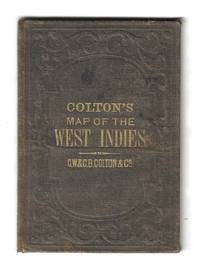
185578137New York: G.W. & C.B. Colton 1855. Hand-colored lithograph map of the Caribbean showing Florida and Central America with insets of Bermuda and the city and harbor of Havana. This example is colored according to national allegiance with British territories in red Spanish in yellow and so on.<br />  <br /> The map is printed on a 17†x 14 ¾†sheet of banknote paper and folds into brown cloth-covered boards with gilt titles. Some light foxing with a few small spots. There is a bit of creasing along the right margin not affecting the image. The boards are rubbed and faded with some light soiling as well. G.W. & C.B. Colton unknown
197344039London: Caribbean Situationist 1973. First Edition. thus. Very good. Poster reproducing translated text by Khayati originally published in Internationale Situationniste and subsequently as a brochure in 1971 Ford 167. Illustrated with black and white photographs of Kingston Jamaica; Trinidad; and Hungary. Lower right corner includes a blank space intended to advertise a record shop where an LP of the text apparently spurious would be available. Uncommon. OCLC odes not locate a copy though there does appear to be on at Michigan. Wraps. Poster folded into quarters 36" x 23" approx. unfolded. Verso lightly toned; moderate wear to edges and fold lines. Creasing to corners. Very good. Caribbean Situationist paperback
2008Q-0979728207Royal Caribbean and Make A Wish 2008-01-01. Hardcover. New. In shrink wrap. Looks like an interesting title! Royal Caribbean and Make A Wish hardcover
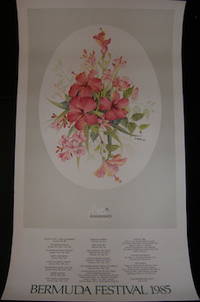
17-6279Bermuda The Caribbean: Bermuda Festival 1985. 62.5 x 35.5 cm. Poster announcing the annual Bermuda Festival. Offset color lithograph. Very Good. A horizontal crease in lower right quadrant and some smaller creases at lower left sheet edge. Bermuda, The Caribbean: Bermuda Festival, 1985. unknown
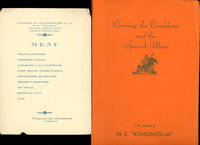
1938z08233New York: Swedish-American Line 1938. Paperback. Very Good. Lot of information and souvenirs from a 1938 cruise aboard Swedish-American Line's Kunsholm motor liner from New York City to the Caribbean and West Indies. Includes several menus invitations to cocktails of liner stationary addressed to the passenger a passenger list a list of shore excursions a letter of welcome from the Swedish-American Line director and a souvenir booklet of "reminiscences" from the cruise. Illustrated wraps 8vo. Varying paginations with illustrations. Very good. Bending and some edgewear to items predominately clean and unmarked. A nice lot of materials for the cruise and travel enthusiast. Digital images available upon request. Swedish-American Line paperback
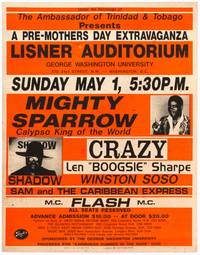
1988564096Landover Maryland / Washington D.C.: Special Effects Inc. / George Washington University 1988. Softcover. Very Good. Poster. Measuring 22" x 28". Printed in orange and black on thick coated card stock. Staple holes some foxing and soil a very good copy of a scarce poster advertising a 1988 performance by some of the world's greatest Calypso artists. Special Effects Inc. / George Washington University unknown
5300CARIBBEAN TRAVEL JOURNAL. Diary. 101 pages. The Caribbean. c. 1908-9. The handwritten journal belonging to C. B. Benson of Hudson New York. The diary recounts Bensons experience on an organized cruise group visit to Caribbean locations such as St. Thomas Puerto Rico Kingston Jamaica Caracas Venezuela Panama City Panama Port of Spain Trinidad and Martinique. Benson records his experiences in each location including his impressions of the town the locals sights he visited and local travel. He visited forts a school churches a mill a sugar plantation and Carnival celebrations. Benson took his tour during the era of colonial rule the attitudes of which infuse both his experiences and observations. Based on his mention of an earthquake in Kingston Jamaica taking place a year or two before he travelled in 1908 or 1909. St. Thomas where we arrived about 6 A.M. mid morning Jan 26 is one of the Virgin group and we found her framed and frescoed in the principal churches. Columbus in 1493 gave the group of 100 islands rocks andwhich comprise the group. St. Thomas is 13 miles in length and 3 miles in width at its broadest. And I guess we walked the length of it speaking broadly and in the abstract at this distance.The heat of the tropical sun also takes its toll and blurs our ideas of time and distance somewhat. The town of Charlotte Amelia contains 13000 inhabitants merchants and black babies and they are all dressed in their Sunday best to receive us properly.Thursday morning at 8 we went ashore at Porto sic Rico.Returning thro the village streets we stopped at the market place and noticed the display of fruits in baskets a couple of men seated on low stools with blacks in front of them.a native womanwas entertaining us in the middle of the road with a dance.When passing the island of Haiti.Do you know why we do not stop at the Island of Haiti No There are cannibals there there are so many fat people aboard you would lose your wife At St Thomas the American council held open house and received some of us who dared to invade this solitude.An hours railroad ride which was made interesting by stops at every littleand station where the bare legged boy with the oil gun in hand squirted oilbearings sic of the cars and engine. As it was before the 17 miles came to an end the rear axle of the parlor car so called because it had leather covered reclining seats caught fire. But when this happened we were nearly at the end of our journey and we were not delayed much. At the sugar plantation where we detrained we found we had some distance to walk downto the sugar mill. As there was no path and the sticky wet ground to soil made worse by the heavy rain of the night before.A sugar mill is never a clean place.The process is somewhat intricate but way he likened to the process of brewing.The cane piled up in the yard is boiled in a number of vats then is run off with barrels and in a black and solid state in shipped to the Refineries at New York. The fiber of the cane is then hardened and dried and is fed to the furnaces to boilcane. After return to the town San Juan we visited the shops. Walked out to the fort at the entrance of the harbor. The town is excellently policed and paved in the principal streets with telegram blocks.As this day was Thursday we concluded that every day was wash day for the native women and girls who for want of other diversions spend most of their time in this form of dissipation. Even the balconies of the main public street filled with traffic of street cars carriages and drays had their fill of wash some of which are found laying in the street having been carried down by the wind. No one had appropriated it as yet; and we did not add it to our collection of souvenirs. At the officers quarters I applied for a permit of the officer of the day to enter the fort San Cristobal the fort commanding the entrance to the harbor.The fort was like most forts. The high tower gave a commanding view of the town and harbor. Then we visited the Governors Palace. In the Reception Room hanging on opposite sides facing each other are life sized oil paintings of McKinley & Cleveland. In the garden were some large palms tropical ferns a fountain &.Jan 29. early in the morning we were at Kingston in Jamaica. The channel is narrow and tortuous but well Taking a local pilot we soonopposite itof three vessels one of which was the Princess Louise that was caught in the hurricane here three years ago andthe larger of the three vessels was trying to pick up the light from the light house which had been blown down. This destruction of the hurricane.After driving about a mile thru the city the destruction to the buildings & pavements made by the earthquake here a year or two ago half of the city seems to be in ruins and no attempt has been made apparently to rebuild & restore the city. Thousands of lives were lost here at that time which did immense damage to the fruits. Most of the uninhabitable part of the island belongs to the United Fruit Company a Boston Corporation who ships immense quantities of bananas from Port Antonio. Owing to recent destruction by fire of Hotel Litchfield our stop at the port of San Antonio and stay of night at the Hotel was omitted. An excursion across the island by train to Mandeville was arranged in its place.The town of Colon in its principle streets are paved with brick and appear clean. We noticed many buzzards. The air was clear and there was a delightful cool breeze blowing.We stopped at all of the stations going to Panama and noted the wonderful impressions made by the Sanitary Commission. The well ventilated and screened houses. The plan for disposal of garbage the open drainage the cleared landsBut of course the facts are here bug and drain all working to the mutual exclusion of some ideas to the American white employers. Therefore after a few months they must have a reaction in the States toand detach themselves from all absorbing facts. The fighting for life againstfires. Most things arebetween the white employers and the black employees. So we find the White Bar and the Black Bar The White Employees The Silver White Employees &c as signs on the cars intended to carry workmen back and forth from the works.Caracas the capital of Venezuela is about 3000 ft up but the sun in the middle of the day we found very hot.Plaza Bolivar was decorated with rows of colored electric lights. They are preparing for the Carnival season which ushers in Lent in Catholic countries. The market place had counters for dry goods highly colored handkerchiefs etc. Another section was devoted to fruits vegetables etc. We noticed some very large apricots. Mr. Bolivar apparently has done a great deal for his native town. He has given his name while the people furnished the funds for the largest parks a street and the coinage of the plutocrats.The Spaniard theHildago -in his easy subjugation of thepleasure loving tropical savage has replaced the native of simple taste and left in his place the mongrel half-breed with all the vices of the conqueror and none of the virtues of theIndian savage. The diary is in very good condition. It is mostly written in pencil but is quite legible. hardcover
1862030663Kjobenhavn Copenhagen: J H Schultz 1862. 1st Edition . Soft cover. Near Fine. 11 Pp. Original Printed Wrappers No Names Or Marks Minute Loss At Lower Tips Of Cover And First Page. Ex Copley Library Although Not Marked As Such. <br/> <br/> J H Schultz paperback