754 résultats
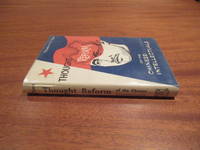
1960025662Hong Kong: Hong Kong University Press / Oxford University Press / Institute of Pacific relations 1960. First Edition First Printing . Hardcover. Near Fine/Near Fine Dustjacket. Xiii 247. Orange Cloth. One Of 2000 Copies Of The First Printing But This Copy With Printed $5 Us Price At Bottom Of Front Flap So Perhaps An American Issue. Slight Signs Of Usage To Book And Dj. Inscribed To Mr. And Mrs. Z. T. Nyi Zau Tsung Nyi Of Los Angeles "With High Esteem And Respect". Information From His Archives At Usc: Theodore H.E. Chen Ph.D. 1939 Was Chairman Of Usc's Department Of Asian Studies From 1940 To 1968 And From 1960 To 1971 He Directed The East Asian Studies Center In Support Of Which He Had Obtained The First Federal Grants. Chen Also Secured Outside Funding For A Project To Help Train And Advise High School Teachers Of Chinese And Japanese. A Native Of Fuzhou China Chen Was President Of Fukien Christian University In 1946 And 1947 While On Leave To Participate In Postwar Rehabilitation. He Also Helped Organize Tunghai University In Taiwan As A Representative Of The United Board Of Christian Colleges. He Was The Author Of Nine Books Including Thought Reform Of Chinese Intellectuals And Maoist Educational Revolution And Chinese Education. Dr Chen Hits An Easy Target; The Worst Governments Are Those Who Try To Control What And How People Think And How And Where They Communicate Because Their Leaders Have An Excess Of The Oldest Disease Of Officials Crap-In-The-Brain Which Prevents Them From Engaging In Exchanges Of Facts And Ideas. <br/> <br/> Hong Kong University Press / Oxford University Press / Institute of Pacific relations hardcover
2008500074105BUCHET CHASTEL 2008 444 pages 20 2x3x13 4cm. 2008. Broché. 444 pages.
182918501829 Imprimerie Royale, Paris, 1829. In-8 demi-veau. xii, 608 pages. Traduit de l'Espagnol. Supplément sur les "Courants de l'Océan Atlantique"
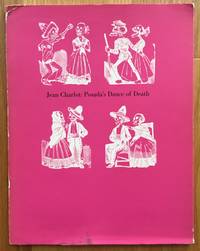
1964002757New York: Pratt Graphic Art Center 1964. Paperback. Very Good. Eichenberg Fritz. 8vo. 12 pp. 4 pages of plates. Bound in stapled dark pink wrappers with cover illustration in white and title in black. One wood engraving by Fritz Eichenberg on title page signed by him in pencil and four relief engravings by José Guadalupe Posada. Printed in an edition of 500 numbered copies signed by Charlot on colophon this is No. 67. Very Good internally clean and sound rubbing and wear to extremities - heaviest at spine 1/2" tear to head of spine 1" dark smudge to lower front cover. <br/><br/> Pratt Graphic Art Center paperback
2008022694New York: Spiegel & Grau 2008. First Edition First Printing . Grey Cloth / Boards. Fine/Fine DJ. Hardcover First Edition. First Printing. Signed And Dated By The Author In 2008 Otherwise As New. <br/> <br/> Spiegel & Grau hardcover
México, 1937. 4to.; 16 hojas sin paginar. Ejemplar corto de márgenes inferiores con pérdida de algunas letras en una hoja. Cubiertas mudas en cartulina.
38546317-75Ediciones B. Used - Very Good. Former library copy. Pages intact with possible writing/highlighting. Binding strong with minor wear. Dust jackets/supplements may not be included. Includes library markings. Stock photo provided. Product includes identifying sticker. Better World Books: Buy Books. Do Good. Ediciones B unknown
Madrid, 1954 ["Cuadernos de Historia de las Relaciones Internacionales y Política Exterior de España"]. 4to.; 84 pp. Cubiertas originales.
1965LFA00c5aUn ouvrage de 157 pages, format 280 x 215 mm, illustré + cartes, relié cartonnage couleurs, publié en 1965, Life, Collection "Autour du Monde"
1933biblio313Universidad Nacional de Tucuman. With autograph dedication from the author. 708 pp. Cover and spine have wear on edges. Binding is quite original interior in immaculate condition. A. Baiocco & Cia paperback
1998100139649Presses Universitaires de France 1998 in8. 1998. Broché.
241 p., illus. Hardcover Good condition; cloth boards faded
9788532658654VOZES. new. Description anavailable VOZES unknown
3639697065.Gpaperback. Good. Access codes and supplements are not guaranteed with used items. May be an ex-library book. paperback
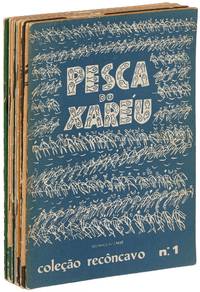
1955593625Bahia Brasil: Livraria Progresso 1955. Softcover. Very Good. First editions. Illustrated by Caribé. Nine volumes lacking the 10th Orixás. Slim octavos. Stapled wrappers. Text in Portuguese. Moderate tanning and wear wrappers with some foxing and soiling topedges with a small splash of white paint sound and near very good. Each volume prints illustrations by Caribé from the Bahia State Museum as well as text by Caribé Odorico Tavares Vasconcelos Main José Pedreira or Carlos Eduardo. Each also has a number stamp on the copyright page from an unknown limitation. The titles are: A pesca do xaréu; Pelourinho; O jogo da capoeira; Feira de água de meninos; Festa do bonfim; Conceicão da praia; Festa de yemanjá; Rampa do mercado; and Temas de candomblé. Livraria Progresso unknown
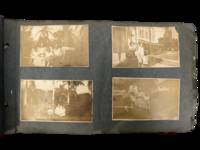
1914231551914. Caribbean photograph album likely compiled by a person connected to the Panama Canal Zone and the Caribbean documenting how steamship mobility port circulation and U.S. imperial presence linked Jamaica Venezuela Trinidad Barbados Cuba Puerto Rico the Bahamas Florida and Panama in the years after the canal opened. The felt cover lettered "PANAMA" and bearing the Seal of the Canal Zone places the album within the new travel geography created by U.S. control of the Canal Zone and the canal's 1914 opening when Panama became a central hinge between Atlantic and Pacific movement and a major point of contact between North American travelers and Caribbean port cities. Photos show passengers on steamers and docks markets and streets forts and government buildings and repeated encounters between white visitors and Afro Caribbean and mixed-heritage residents across multiple colonial and semi-colonial settings.<br /> <br /> Panama Canal Zone travel photograph album. Caribbean and circum-Caribbean locations including Kingston Jamaica; La Guaira and Caracas Venezuela; Trinidad; Key West and Palm Beach Florida; Havana Cuba; Barbados; Panama City Balboa and Colón Panama; Nassau Bahamas; and San Juan Puerto Rico. Likely circa mid 1910s to early 1920s. Oblong felt-covered album measuring 6.5" x 11" with "PANAMA" stitched in large letters on the front cover and photographs pasted to grey leaves. Contains more than 160 black-and-white photographs most approximately 2.5 x 4.5 inches many with handwritten captions identifying locations activities and occasional names. The sequence opens in Kingston with captions including "Kingston JA" and "on the steamer" then moves through island and mainland stops; "Port of Spain Trinidad" "Market at Barbados" "Rapid Transit Barbados" "Havana Cuba" "San Juan Porto Rico" "Morro Castle" "Balboa" and "Colon R.P." Repeated figures especially a young college-aged woman and an older woman appear throughout. Notable images include a group of locals in shallow water at Barbados sifting for tossed coins from rowboats; a large crowd scene in San Juan gathered for what appears to be a public speech or civic event; battlements cannon and stone defenses in Havana; vernacular dwellings and children in impoverished conditions in Balboa; posed visitor photographs in what is labeled a "bull ring"; and numerous street dockside market and architectural views that juxtapose local populations with hotels public buildings ruins and newer urban construction.<br /> <br /> The album's historical force comes from the way it captures the social landscape of Caribbean travel under early twentieth-century U.S. power. After 1914 the Canal Zone intensified Panama's role within a wider American maritime sphere while Caribbean travel increasingly moved through port infrastructures shaped by empire commerce military strategy and tourism; this album records that world at eye level with photographs of docks steamers fortifications government sites public squares and local street life rather than limiting themselves to family snapshots alone. At the same time the images preserve the unequal human encounters built into that system especially where visitors photograph Black children boatmen market crowds and working neighborhoods as part of the travel experience. Felt cover worn and soiled with losses at edges and stitching strain; leaves brittle with chipping and tears; photographs generally present and legible with silvering fading corner wear and occasional losses or lifting. Overall fair to good condition. A substantial early twentieth-century visual record of Canal Zone connected Caribbean travel with dense captioning and wide geographic reach from Jamaica and Barbados to Havana San Juan and Panama. unknown
9211212650.Gpaperback. Good. Access codes and supplements are not guaranteed with used items. May be an ex-library book. paperback
1528327918.Gpaperback. Good. Access codes and supplements are not guaranteed with used items. May be an ex-library book. paperback
5300CARIBBEAN TRAVEL JOURNAL. Diary. 101 pages. The Caribbean. c. 1908-9. The handwritten journal belonging to C. B. Benson of Hudson New York. The diary recounts Benson’s experience on an organized cruise group visit to Caribbean locations such as St. Thomas Puerto Rico Kingston Jamaica Caracas Venezuela Panama City Panama Port of Spain Trinidad and Martinique. Benson records his experiences in each location including his impressions of the town the locals sights he visited and local travel. He visited forts a school churches a mill a sugar plantation and Carnival celebrations. Benson took his tour during the era of colonial rule the attitudes of which infuse both his experiences and observations. Based on his mention of an earthquake in Kingston Jamaica taking place a year or two before he travelled in 1908 or 1909. “…St. Thomas where we arrived about 6 A.M. mid morning Jan 26 is one of the Virgin group and we found her framed and frescoed in the principal churches. Columbus in 1493 gave the group of 100 islands rocks and…which comprise the group. St. Thomas is 13 miles in length and 3 miles in width at its broadest. And I guess we walked the length of it speaking broadly and in the abstract at this distance.The heat of the tropical sun also takes its toll and blurs our ideas of time and distance somewhat. The town of Charlotte Amelia contains 13000 inhabitants – merchants and black babies and they are all dressed in their Sunday best to receive us properly.Thursday morning at 8 we went ashore at Porto sic Rico.Returning thro the village streets we stopped at the market place and noticed the display of fruits in baskets a couple of men seated on low stools with blacks in front of them.a native woman…was entertaining us in the middle of the road with a dance.When passing the island of Haiti.‘Do you know why we do not stop at the Island of Haiti’ ‘No’ There are cannibals there there are so many fat people aboard you would lose your wife’ At St Thomas the American council held open house and received some of us who dared to invade this solitude.An hour’s railroad ride which was made interesting by stops at every little…and station where the bare legged boy with the oil gun in hand squirted oil…bearings sic of the cars and engine. As it was before the 17 miles came to an end the rear axle of the parlor car so called because it had leather covered reclining seats caught fire. But when this happened we were nearly at the end of our journey and we were not delayed much. At the sugar plantation where we detrained we found we had some distance to walk down…to the sugar mill. As there was no path and the sticky wet ground to soil made worse by the heavy rain of the night before.A sugar mill is never a clean place.The process is somewhat intricate but way he likened to the process of brewing.The cane piled up in the yard is boiled in a number of vats then is run off with barrels and in a black and solid state in shipped to the Refineries at New York. The fiber of the cane is then hardened and dried and is fed to the furnaces to boil…cane. After return to the town San Juan we visited the shops. Walked out to the fort at the entrance of the harbor. The town is excellently policed and paved in the principal streets with telegram blocks.As this day was Thursday we concluded that every day was wash day for the native women and girls who for want of other diversions spend most of their time in this form of dissipation. Even the balconies of the main public street filled with traffic of street cars carriages and drays had their fill of wash some of which are found laying in the street having been carried down by the wind. No one had appropriated it as yet; and we did not add it to our collection of souvenirs. At the officers quarters I applied for a permit of the officer of the day to enter the fort ‘San Cristobal’ the fort commanding the entrance to the harbor.The fort was like most forts. The high tower gave a commanding view of the town and harbor. Then we visited the Governor’s Palace. In the Reception Room hanging on opposite sides facing each other are life sized oil paintings of McKinley & Cleveland. In the garden were some large palms tropical ferns a fountain &.Jan 29. early in the morning we were at Kingston in Jamaica. The channel is narrow and tortuous but well… Taking a local pilot we soon…opposite it…of three vessels one of which was the Princess Louise that was caught in the hurricane here three years ago and…the larger of the three vessels was trying to pick up the light from the light house which had been blown down. This destruction of the hurricane.After driving about a mile thru the city the destruction to the buildings & pavements made by the earthquake here a year or two ago half of the city seems to be in ruins and no attempt has been made apparently to rebuild & restore the city. Thousands of lives were lost here at that time which did immense damage to the fruits. Most of the uninhabitable part of the island belongs to the United Fruit Company a Boston Corporation who ships immense quantities of bananas from Port Antonio. Owing to recent destruction by fire of Hotel Litchfield our stop at the port of San Antonio and stay of night at the Hotel was omitted. An excursion across the island by train to Mandeville was arranged in its place.The town of Colon in its principle streets are paved with brick and appear clean. We noticed many buzzards. The air was clear and there was a delightful cool breeze blowing.We stopped at all of the stations going to Panama and noted the wonderful impressions made by the Sanitary Commission. The well ventilated and screened houses. The plan for disposal of garbage the open drainage the cleared lands…But of course the facts are here – bug and drain – all working to the mutual exclusion of some ideas to the American white employers. Therefore after a few months they must have a reaction in the States to…and detach themselves from all absorbing facts. The fighting for life against…fires. Most things are…between the white employers and the black employees. So we find the ‘White Bar’ and the ‘Black Bar’ ‘The White Employees’ ‘The Silver White Employees’ &c as signs on the cars intended to carry workmen back and forth from the works.Caracas the capital of Venezuela is about 3000 ft up but the sun in the middle of the day we found very hot.Plaza Bolivar was decorated with rows of colored electric lights. They are preparing for the Carnival season which ushers in Lent in Catholic countries. The market place had counters for dry goods highly colored handkerchiefs etc. Another section was devoted to fruits vegetables etc. We noticed some very large apricots. Mr. Bolivar apparently has done a great deal for his native town. He has given his name – while the people furnished the funds – for the largest parks a street and the coinage of the plutocrats.The Spaniard the…Hildago -in his easy subjugation of the…pleasure loving tropical savage has replaced the native of simple taste and left in his place the mongrel half-breed with all the vices of the conqueror and none of the virtues of the…Indian savage…â€. The diary is in very good condition. It is mostly written in pencil but is quite legible. hardcover books
First edition, [2], 78, [2]pp., slight foxing of first few leaves, folding table, disbound. In reply to "An Address to the Members of the New Parliament, on the proceedings of the Colonial Department.....", which held that if slaves were freed they would not work, and as a consequence the colonialist's properties would fall into decay through lack of labourers. This pamphlet denies that the proceedings of the Colonial Department on the matter of Caribbean slavery had been injudicious and unauthorised. Ragatz, p.451; Sabin, 69410.
197323404London: Caribbean Situationist July 1973. First edition thus. Wraps. Very good. Poster folded into quarters 36" x 23" approx. unfolded. Verso lightly toned; moderate wear to edges and fold lines. Creasing to corners. Very good. <br/><br/>Poster reproducing translated text by Khayati originally published in Internationale Situationniste and subsequently as a brochure in 1971 Ford 167. Illustrated with black and white photographs of Kingston Jamaica; Trinidad; and Hungary. Lower right corner includes a blank space intended to advertise a record shop where an LP of the text apparently spurious would be available. Uncommon. OCLC odes not locate a copy though there does appear to be on at Michigan. Caribbean Situationist paperback books
186246424Concord MA 1862. First Separate Edition. Octavo 24cm.; side-stitched self-wrappers; 15pp.; text printed in double columns. Wrappers separated and rather ragged along extremities the whole dust-soiled; Good only. Originally delivered as a lecture before being published in the abolitionist newspaper "The Pine and Palm" also known as the "Weekly Anglo-African". Sanborn a member of the "Secret Six" who provided funding to John Brown in the 1850s describes the effects of the emancipation of slaves in the West Indies noting that no violence broke out nor did it lead to an economic depression as had been predicted by Confederate propaganda. See "A Guide to the Study of British Caribbean History 1763-1834" 1932 p. 548; LCP AFRO-AMERICANA 9085; SABIN 76248. unknown books
19464801Washington: Caribbean Commission 1946. Paperback. Good. folding map index xi 148p. Original wrapper. Minor damping. Crop Inquiry Series No. 1. <br/><br/> Caribbean Commission paperback books