[Cuba]. Tennemann, Wilhelm GottliebBiblio.com
137 résultats
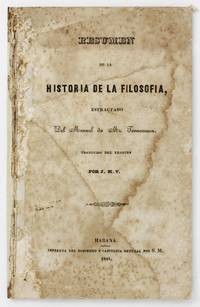
18455307Havana: Imprenta del Gobierno y Capitania General por S.M. 1845. Good. 684pp. Disbound. Some insect damage to gutter of title page ample staining throughout mostly minor foxing. A very rare mid-19th century Cuban imprint translating into Spanish a work by German philosophical historian Wilhelm Gottlieb Tennemann entitled Manual of the History of Philosophy. Tennemann originally published the work in 1812 as a much-abridged history of philosophy after authoring a massive multi-volume work on the subject. According to the translator's note at the beginning of the text the present work was produced in order to provide a text in Spanish for those studying the history of philosophy "at the Royal Academy and in the private schools of the island of Puerto Rico." The translator also notes that the history of philosophy is "one of the subjects.of the general plan of education that must be taught." The work itself is organized as a series of lectures detailing the history of philosophy chronologically from ancient Eastern and Egyptian times through the Greeks Pythagoras Socrates Plato Aristotle and many others concluding with modern thinkers such as Descartes Espinosa Hume Kant Hegel and others. The work ends with an Index and an Errata page.<br /> <br /> "Wilhelm Gottlieb Tennemann 1761–1819 German historian of philosophy was born at Erfurt. Educated at his native town he became lecturer on the history of philosophy at Jena in 1788. Ten years later he became professor at the same university where he remained till 1804. His great work is an eleven-volume history of philosophy which he began at Jena and finished at Marburg where he was professor of philosophy from 1804 till his death. He was one of the numerous German philosophers who accepted the Kantian theory as a revelation. In 1812 he published a shorter history of philosophy which was translated into English in 1852 under the title Manual of the History of Philosophy" - Encyclopedia Britannica. No copies located in the United States. Three copies found in OCLC -- two in Chile and one in Spain. Imprenta del Gobierno y Capitania General por S.M. unknown
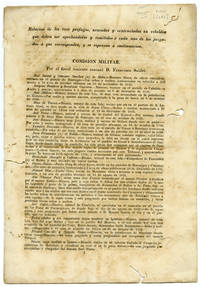
1832WRCAM51901Havana 1832. 18pp. Folio. Loose leaves. Heavy worming mostly marginal but somewhat affecting text in places. Light dampstaining and foxing. Good. An extensive list of fugitives from Cuban courts that covers the period from 1822 to 1832. Each section comprises a catalogue of men tried before a specific court and individual entries provide names brief descriptions mostly of skin color birthplaces likely places of residence and crimes committed together with the sentences handed down. Many men are condemned to the gallows or are facing long sentences in African or other overseas prison camps. This list was also printed as a part of the Oct. 9 1832 issue of DIARIO DE LA HABANA but a separate printing as in the present example is not found in OCLC or the relevant bibliographies. unknown books
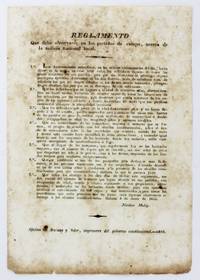
18223190Havana: January 5 1822. Good. Broadside 11.5 x 8 inches. Foxed faint signs of folding a few small wormholes not affecting text. An apparently unrecorded broadside order from the captain general of Cuba Nicolas Mahy directing all able-bodied men under the age of fifty to join up with their local militias in order to keep the peace. The local militias are directed to go out on nightly forays "en nùmero capaz de evitar las incursiones de los salteadores por los caminos y la desercion que pueda acontecer de los negros de los ingenios cafetales y demas haciendas." Additionally all men between the ages of fifty and seventy are told to report to “las casas mas fuertes de los pueblos" to form a garrison that can protect women children and the elderly in case of insurrection. By the formation of these militias and the establishment of "el uso de los pasaportes" it was hoped to identify and arrest "los vagos y mal entretenidos." All mayors within ten days of receipt of this regulation were to report the number of men they had enlisted along with their particulars. In the early 1820s much of Spanish colonial America was gripped by revolution and with these orders the Cuban government likely hoped to avoid similar unrest on the island. Several independence groups had been formed in Cuba as of the promulgation of this decree the largest of which was the Soles y Rayos de Bolívar established in 1821. Signed in print by Mahy; not in OCLC. January 5 unknown
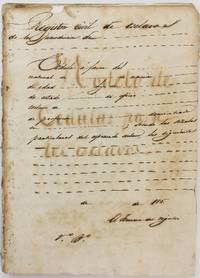
18503976Havana 1850. Good. 138pp. Folio. Stitched with remnants of leather binding along spine. A few blank leaves scattered throughout. Dampstaining and moisture damage at upper fore-edge of scattered leaves slightly affecting text. Moderate offsetting occasional ink burn. Light edge wear and tanning scattered foxing. An extensive list of slave owners in Cuba in the mid-19th century who were issued cedulas for their human property. Cedulas were integral documents for the identification and transportation of enslaved people in the bureaucracy of colonial Cuba and were usually required by the government. In the present manuscript the race and sex of the slaves being issued documents are usually identified -- Negra Negro mulata mulato Chino China e.g. -- though some are just entered as esclavos and there are several entries noted as dotaciones that is complements usually large of slaves on a plantation. The names of the owners are grouped alphabetically according to their first names generally though not in any strict order and the leaves of the manuscript are sometimes bound out of order. Often there are multiple listings of an owner most likely one for each slave in need of a cedula and in all there are approximately 2500 or more separate listings. The first leaf appears to be a model for the cedulas that were being issued to the listed slaveholders with dashes where the information on the slaves and slave owners is to be filled in. The entire document has the appearance of an index with numbers at the right side of each page indicating perhaps the page numbers in the master ledger where the original entry was made. Overall a fascinating and significant document. unknown
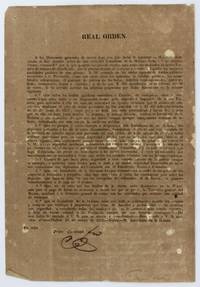
18183189Havana 1818. Good. Broadside 11.75 x 8 inches. Heavily tanned. An apparently unrecorded Havana imprint comprising a broadside authorization for increased funding to be extended to the superintendent of Havana so that he can maximize the potential of the island's tobacco plantations. This credit is matched by the superintendent’s promise to use the money "con el preciso destino de comprar y remitir á España las mayores cantidades posibles de este género." The superintendent must also swear to be vigilant and honest in his account-taking reports to Spain and "Avise con toda la anticipacion posible los acopios y compras que verifique à proporcion que tenga de hacerlos y probabilidad en las remesas con seguridad aprovechándo todas las ocasiones que se le presenten para remitir cigarros y hoja de buena calidad á la Peninsula aunque sea con bandera extrangera." Signed in print and rubricated in manuscript by Pedro Carambot a Cuban official of the late 1810s. Not in OCLC. unknown
189262697Chicago IL: Rand McNally & Co. 1892. One pocket map. 12mo. sized 3.75 x 6 in. which folds out into 21.5 x 15 in. colour-lithograph map printed index on verso. Brown embossed publisher’s cloth gilt lettering on front cover slight shelfwear very slight rubbing light toning & edgewear to map still a VG bright copy. First edition thus of this “Business†pocket map of Cuba issued by the Rand McNally Co. the same year that Jose Marti established the Cuban Revolutionary Party to organize independence of Cuba and Puerto Rico from Spain. The printed index on verso references islands lakes mountains provinces rivers and towns in Cuba. Although several different versions of this particular map were produced by Rand McNally along with the San Francisco Chronicle and versions including an inset map of Havana Harbor none located in Worldcat are the same maps as this pocket map. Rand McNally & Co., hardcover
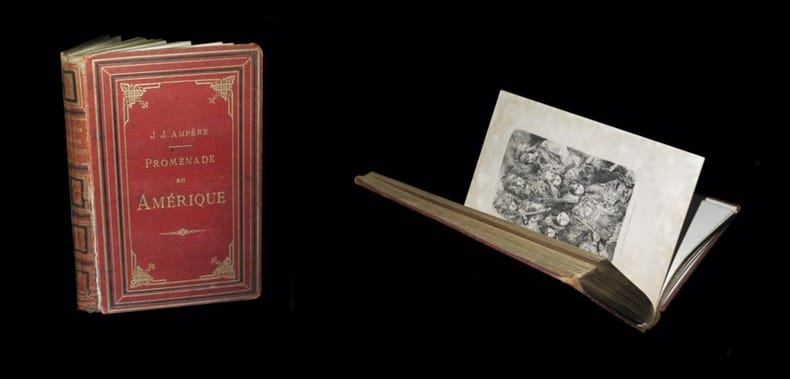
187427776Paris, Michel Lévy Frères / Librairie nouvelle, 1874. Un vol. au format in-4 étroit (268 x 178 mm) de 2 ff. n.fol., 1 frontispice gravé n.fol., xliii - 299 pp. Reliure d'édition de plein cartonnage cerise, septuples filets gras et maigres dorés et en noir encadrant les plats, lesquels s'ornent en outre de larges fleurons angulaires dorés, titre doré, dos lisse orné de triples filets gras et maigres en noir, septuples caissons d'encadrement gras et maigres dorés et en noir, doubles filets maigres dorés, titre doré, tranches dorées.
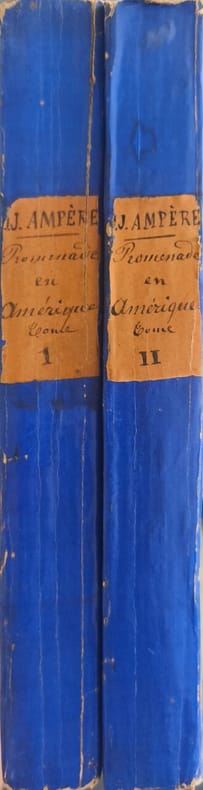
186013062Michel Lévy Frères Libraires-Éditeurs 1860 421-422 pages in8. 1860. broché. 2 volume(s). 421-422 pages. Ouvrage de Jean-Jacques Ampère décrivant son voyage aux États-Unis à Cuba et au Mexique publié en 1855 par Michel Lévy frères. Dédié à Tocqueville il offre un témoignage historique sur ces régions au milieu du XIXe siècle
186060111860 2 volumes (two books), reliure demi-chagrin havane (binding half shagreen) grand in-octavo, dos 5 nerfs ornés de filet (spine with raised bands illuminated with a gilt line) - titre frappé or (gilt title) et tomaison (volume numbering), papier marbré aux plats (cover with marbled paper), tête lisse (top edge smooth) - gouttière long papier (fore-edge great paper), pages de garde peignées à motif "caillouté" (painting flyleaf), marque-page en tissu (bookmark in tissue), sans illustration (no illustration), naissances de rousseurs sur le deuxième volume (beginning of the redness marks on the second book), XI+421 et 425 pages, 1860 à Paris Michel Lévy Frères Libraires-Editeurs,
18562026Remedios 1856. About very good. 4pp. on a large bifolium. Printed form completed in manuscript. Separated at fold repaired with tissue. Light wear at edges. Light tanning and foxing. Rare Cuban population census form listing the number of residents in and around the town of Remedios located on the northern central coast of Cuba in 1856. The present document completed in manuscript lists the population according to various categories such as ethnicity and race age range occupations marital status location of residence and several others. The census includes slaves of African origin newly arrived Chinese indentured servants "colonos Asiaticos" immigrant laborers from Yucatan freedmen and free white residents "Blancos". In all there are just over 2000 people living in and around Remedios at this time comprising just over 1300 free whites over 300 free people of color 460 slaves and 19 Chinese laborers. One of the most interesting sections records the population by place of residence which shows that the great majority people in the area lived on estancias with a good part of the remaining population living on livestock farms and sugar plantations. On the final page are two additional sections which enumerate the types of property farms and other enterprises in the regions and provide statistics on agricultural and industrial production and land usage along with some manuscript notes with the signatures of the census takers or local magistrates. An interesting document of slavery agriculture and population in rural Cuba during the mid-19th century. unknown books
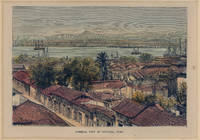
189044157London 1890. Matted. Old tape residue on verso tiny marginal spot excellent color. 1 sheet. 7 1/2 x 5 1/2 inches. Hand-colored engraving. Originally printed in "The Universal Geography" by Élisée Reclus edited by A.H. Keane published by J.S. Virtue & Co. London 1890. The image appeared in the World's Columbian Exposition Chicago Ill. 1893 item 25 of the West Indies exhibit of the Bureau of Americn Republics World's Columbian Exposition. Signed "Barklay" in the plate. unknown books
18981745655th Cong. 2d Sess.: HD326. 1898. 43 1 blank pp disbound loosening. Very Good. HD326. unknown books
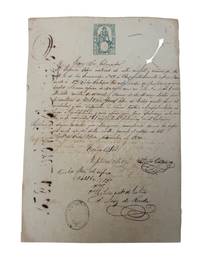
1870231221870. Slavery Cuba Spanish colonial slave sale manuscript recording the transfer of four enslaved individuals in Cuba in 1870. Produced within the official bureaucratic framework of Spanish colonial governance the document reflects the legal normalization of slavery in Cuba even as abolitionist pressures mounted across the Atlantic world. The document records the sale of four enslaved people described as "criollos" and African-born individuals situating the transaction within a labor system that combined locally born and imported enslaved populations. Created at a time when Spain had formally restricted the transatlantic slave trade but continued to permit slavery itself the manuscript demonstrates the persistence of legalized human commodification and the integration of enslaved labor into the island's economic structure sixteen years prior to abolition in 1886.<br /> <br /> Official Cuban slave contract documenting the sale of four enslaved individuals to Don Pedro Catasús by Don Enfemia Ochoa for the sum of 1100 pesos on November 29 1870. Single manuscript leaf written in Spanish cursive in black ink measuring 8.25" x 12". A green "50 cs de escudo" revenue stamp is affixed at the top center with a blind embossed Spanish crest at the upper left and a circular black ink government seal impressed at the lower left. Large vertical docketing appears on the verso. A stylized watermark is visible within the paper. The text organizes the enslaved individuals within a standardized transactional structure while the signatures of Enfemia Ochoa Pedro Catasús and A. Díaz de Rada authenticate the exchange and identify participants within the slaveholding economy.<br /> <br /> By 1870 Cuba remained a central node in the late Atlantic slave system with plantation agriculture especially sugar dependent on enslaved labor despite mounting abolitionist pressure. Although Spain had curtailed official slave imports earlier in the century illegal trafficking persisted into the 1860s and other coerced labor systems including the importation of Chinese indentured workers overlapped with slavery into the 1870s. The presence of both Creole and African individuals in this document reflects the layered composition of the enslaved population during this period. Light toning scattered foxing and edge wear visible. A closed wormhole extends from the upper right margin approximately five inches into the sheet resulting in partial loss of text. Evidence of prior tape reinforcement visible on the verso along with offsetting from previously adjacent material. Overall in very good condition. This document provides named transactional evidence of late-period slavery in Cuba offering concrete material for examining race labor and legal practice within Spanish colonial society. unknown
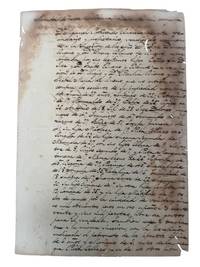
1875231241875. Slavery Cuba Spanish colonial slave sale manuscript recording the transfer of thirty-eight enslaved individuals in Cuba in 1875 materializing the sheer scale and organization of enslaved labor within the island's plantation economy during the final decade before abolition. The document enumerates a large group of enslaved people including multiple family units with young children demonstrating how slavery functioned as both an economic system and a hereditary condition sustained through the sale and reproduction of enslaved populations. Created eleven years prior to the abolition of slavery in Cuba in 1886 the manuscript documents the continued legality and normalization of large-scale slave transactions despite decades of international pressure and earlier prohibitions on the transatlantic trade offering concrete evidence of how internal markets sustained the institution in its final phase.<br /> <br /> Official Cuban slave contract documenting the sale of thirty-eight enslaved individuals for the sum of 126000 pesetas formalized before a public notary or legal authority. Single manuscript leaf written in Spanish cursive in black ink on both recto and verso densely filled with names ages and relational identifiers. Measures 8.5" x 12.25". The text lists individuals sequentially including men women and children with repeated references to kinship structures such as mothers with multiple children indicating the sale of family groupings rather than isolated individuals. The script reflects extended passages detailing ownership exclusions and conditions of transfer. A partial watermark of the official coat of arms of Cuba is visible. <br /> By 1875 Cuba remained one of the last major slave societies in the Atlantic world with sugar production driving demand for large controlled labor forces. Even after Spain curtailed the official slave trade earlier in the century illegal importation persisted into the 1860s and alternative systems of coerced labor including Chinese indenture supplemented plantation workforces. The scale of this transaction demonstrates the consolidation and redistribution of enslaved labor within domestic markets while the inclusion of children underscores the long-term economic logic of slavery as a self-reproducing system. Moderate toning and foxing concentrated along the edges with numerous small closed wormholes a few affecting portions of the text. Light edge wear present. Overall in good condition. This document provides unusually extensive nominal data on a large enslaved population encompassing the roles of kinship valuation and labor organization in late Spanish colonial Cuba. unknown
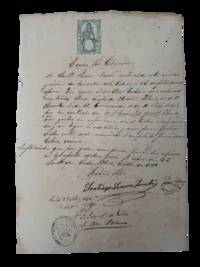
1870231191870. Slavery Cuba Spanish colonial manuscript documenting the late persistence of slavery in Cuba recording the sale of five enslaved Creole individuals including women and children 1870. Produced within the official bureaucratic framework of Spanish colonial governance the document reflects the legal normalization of slavery in Cuba even as abolitionist pressures mounted across the Atlantic world. The presence of multiple children within the transaction underscores the hereditary nature of enslavement and the commodification of family units offering direct material evidence of how slavery functioned socially and economically in its final decades on the island. Although Spain had formally ended the transatlantic slave trade earlier in the century illegal trafficking and internal slave markets persisted and slavery itself would not be abolished in Cuba until 1886 placing this document within a crucial transitional period marked by reform debates gradual emancipation laws and continued exploitation.<br /> <br /> Official Cuban slave contract recording the sale of five enslaved individuals identified as "criollos" including one adult woman and four children from Santiago Simón Fambi to Don Pedro Catasús for the sum of 1200 pesos on November 21 1870. Single page manuscript leaf measuring 8.25" x 12". The manuscript is written in Spanish cursive hand in black ink. The upper left bears a blind embossed crest of Spain while a circular black ink government seal is impressed at the lower left partially overlapping the text. The text enumerates the enslaved individuals with ages and names embedding human lives within the formulaic language of sale and valuation while the bold signatures of both seller Santiago Simón Fambi and buyer Pedro Catasús anchor the transaction in identifiable actors within the colonial economy.<br /> <br /> By 1870 slavery in Spanish Cuba remained central to the island's plantation economy particularly in sugar production which had expanded rapidly in the mid-19th century with industrialized mills and global demand. Enslaved people were primarily forced into agricultural labor under highly regimented and brutal conditions though others were used in urban domestic service skilled trades or as hired laborers generating income for their owners. This document exhibits light toning edge wear and scattered foxing throughout. A closed wormhole extends approximately two inches from the upper right margin inward not affecting legibility of the text. Minor losses and small tears along the edges. Overall in very good condition. Given that this document records a woman and four children the family was likely intended for a combination of field labor and domestic or auxiliary work with the children gradually incorporated into plantation labor as they aged reflecting the system's reliance on both immediate exploitation and the reproduction of enslaved labor over time. unknown
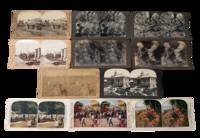
1890231711890. Stereoview archive of the post-emancipation Caribbean showing how the islands were marketed to western viewers through plantation labor export agriculture civic spectacle and catastrophe. As a group these photos function not only as an ethnographic travel archive but as evidence of the visual economy that followed slavery. The British West Indies moved through emancipation in 1834 to 1838 the French Caribbean in 1848 Puerto Rico in 1873 and Cuba in 1886 yet plantation production remained central to regional life well into the early twentieth century. These stereoviews preserve a colonial way of seeing in which Black and Afro-Caribbean labor rural discipline and extractive agriculture remained the background condition of "tropical" beauty and commercial modernity. Cuba's sugar economy in particular expanded through the nineteenth century and slavery was not abolished there until 1886 while Weyler's later reconcentration policy during the Cuban War of Independence violently reorganized rural life. Martinique after 1848 likewise shifted into new labor regimes including imported workers from India and China.<br /> <br /> Archive of 11 stereoview cards late 1890s to early 1900s depicting Cuba Jamaica Martinique Puerto Rico and the Dominican Republic. Most black and white with a few colorized. Each measure 3.5" x 7". All with captions on the margins. "Reconcentrado Farming Scene Province of Havana Cuba" links agricultural production to the brutal displacements of Spain's reconcentration campaign; "Cutting sugar cane Montego Bay Jamaica W.I." records cane labor in a colony where emancipation had not ended plantation dependency; and "Harvesting Coconuts Porto Rico" likewise frames Caribbean land through export work rather than local life. Other views extend that economic framing through cacao and coffee scenes while the paired Havana cards shift into urban leisure and public display including "Beautiful Central Park Havana Cuba" and "Holiday in Havana Cuba" the latter with both Cuban and American flags visible a telling image of the new imperial order after 1898. The disaster views from Martinique and the Lesser Antilles show how stereoview publishers also turned Caribbean destruction into consumable spectacle. the Morne Rouge card is accompanied on the reverse by the grim printed text "Dead bodies which were to be seen in Morne Rouge." while the wider context is the 1902 eruptions of Mount Pelée in Martinique and La Soufrière on Saint Vincent two catastrophes that killed roughly 30000 and 1600 people respectively and devastated local communities and agriculture.<br /> <br /> Some corner wear light toning scattered surface and edge wear. Overall very good condition. This collection gives direct visual representation of Caribbean history Atlantic slavery and emancipation plantation labor and U.S. imperial expansion in the circum-Caribbean preserving the transition from slavery to post-abolition labor. unknown
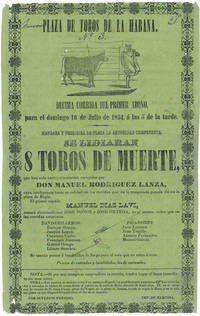
1854WRCAM46994Havana 1854. Broadside 12 1/2 x 8 inches. Printed on green paper. Old fold lines. Light wear and soiling minor separation at some folds. A few contemporary notations. Very good. Cuban broadside advertising a bullfight featuring matador Don Manuel Rodriguez Lanza and the "8 toros de muerte." The top of the sheet features a woodcut of a matador holding his cape out to a bull. The first swordsman for the fight is Manuel Diaz Lavi with two alternates listed. The names of the Banderilleros and Picadores for the fight are also noted. Bullfighting was a popular entertainment in Cuba during the Spanish colonial period though it was done away with after Cuban independence at the beginning of the 20th century. unknown books
1896100758Havana (Havanna), Edwin W. Wilson, o.J. (um 1896). 48 unpag. S. Mit 24 ganzseitigen s/w Abbildungen. Quer-Kl.-4°. Lwd. d. Z. mit mont. hs. Deckelschild u. eingeb. OU. mit goldgepr. Umschlagtitel.
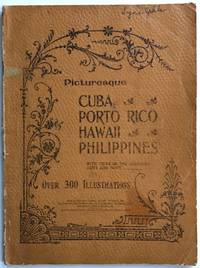
1898535Springfield Oh: Mast Crowell & Kirkpatrick 1898. Good. 121pp. Folio. Original orange printed wrappers. Light wear and soiling spine chipped with some glue repair. Ink ownership inscription at top of front cover. Minor internal soiling several leaves with tape repairs at edges. Extensively illustrated souvenir publication of the Spanish-American War. Images include local street scenes and landmarks photos of the native populations and the American military occupation. "Depicting the natives their costumes habitations and occupations; prominent buildings street scenes mountain and river scenery etc. Also life in the American Army and Navy with portraits of the chief actors in the Spanish-American War. Over three hundred illustrations. Mast, Crowell & Kirkpatrick unknown books
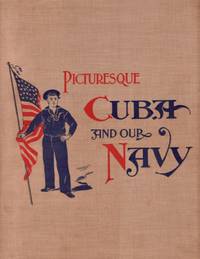
189832565Chicago: Published by Belford Middlebrook and Co. and Printed by Rand McNally and Co. Printers 1898. First Edition. Hardcover. Fair. Folio. Unpaginated. Illustrated. Light tan cloth hardcover with title and red blue and tan patriotic illustrated front cover. Restored. Front and rear hinges repaired with tissue. Tan cloth binding is soiled along the edges with a few spots on the rear cover. Published by Belford, Middlebrook and Co. and Printed by Rand, McNally and Co. Printers hardcover
190050718- Photographie 4 x 7, 5 cm. Notice biographique collée au dos.
190052322- Photographie 4 x 7, 5 cm collée sur carton.
190053606- Photographie 4 x 7, 5 cm. Notice biographique collée au dos.
18095958Havana 1809. Good. 1p. on a bifolium. Printed form completed in manuscript. Previously folded. Small portion of upper left corner torn away and some scattered worming neither affecting text. Upper right of blank conjugate leaf clipped. Some scattered staining and offsetting with even tanning. An early 19th-century bill of sale for four slaves in Havana. The form completed in manuscript approves the sale by Doña Dolores Hernandez of "quatros negros" who had been brought from the coast of Africa on the slave ship Juno captained by Jabez Gibbs 1360 reales. It further states that the enslaved men are "Con la calidad de bozal alma en boca huesos en costal à uso de férias sin asegurar de tachas ni enfermedades mal de corazon gota coral de S. Lazaro ni orta qualesquiera que puede paceder la humana naturaleza porque toas corren por cuenta del comprador." The document is signed by the relevant authorities and dated March 26 1809. A good document of the slave trade in Cuba during the early 1800s. unknown
1823145311823 A Paris chez Bechet 1823, in8, reliure demi chagrin, dos a nerfs, caissons ornés de fleurons dorés,nerfs soulignes de filets dorés, titre edoré, date dorée en queue du dos,254 pp , bon exemplaire dans sa reliure ancienne