Stanton, Elizabeth Cady et alBiblio.com
346 résultats
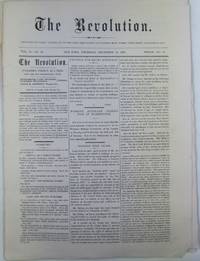
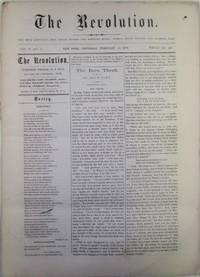
1869020899New York: Susan B. Anthony Proprietor; R.J. Johnson Publisher 1869. Wraps. Good. Side sewn journal. Approximately 12 ¼ by 9 inches. 16 pp. Early issue of the Revolution a groundbreaking and influential newspaper produced by Elizabeth Cady Stanton Susan B. Anthony and Parker Pillsbury. The paper was established to provide a voice to activists and suffragists such as Stanton and Anthony whose voices were marginalized by the mainstream press as well as many abolitionist publications with whom they had been previously allied. Anthony and Stanton advocated for an amendment giving suffrage to women along with the amendment sponsored by abolitionists that would give Black men the right to vote. Many abolitionists actively discouraged Stanton and Anthony from pursuing their amendment until the amendment enfranchising Black men passed creating a rift in the abolitionist movement as well as the women's suffrage movement. Feeling betrayed by abolitionists and Republicans who initially supported them they established the Revolution with financial help from George Francis Train a Democrat who supported women's rights but was openly racist. As the name indicates The Revolution adopted a combative radical tone with Stanton and others unafraid to take on critics. The paper openly discussed sexual and physical abuse in marriage and advocated better divorce laws that would offer women a way to escape abusive marriages. In 1869 the paper broke with Train who had supplied very little of the funding he initially offered. It published until 1872 struggling to make expenses along the way. This issue editorial correspondence and a letter addressing women and Black men by Elizabeth Cady Stanton many short pieces on women's rights and suffrage work and an anonymous xenophobic racist screed against Chinese and Jewish immigrants among others etc. GOOD condition. Several fold creases present with other general wrinkling. Minor toning and scattered soiling in the interior. Susan B. Anthony, Proprietor; R.J. Johnson, Publisher unknown
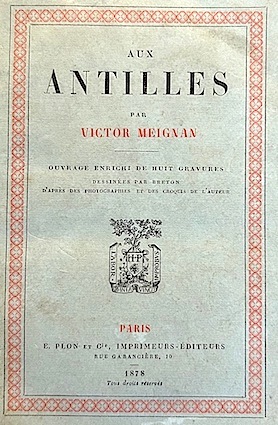
187814972Plon Paris 1878 1 vol. In-12 de XVI 344 pp.; demi-percaline récente, dos lisse orné, pièce de titre, premier plat de couverture conservée (reliure de Loutrel).
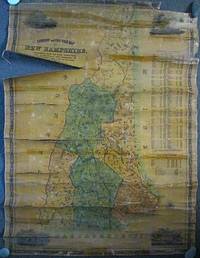
1854020858Nashua NH: Published for J.R. Dodge 1854. Unbound. Poor. Single sheet 34 ¾ by 24 ¼ inches. Linen backed varnished map. A map created primarily to depict the many railroad lines that were proliferating in the state of New Hampshire in the mid 1800s. Some of these lines ranged into to White Mountains to facilitate logging operations in the region. The counties of the state are prominent with towns also depicted. VERY POOR condition. Ex-library with a title label affixed to the reverse. Heavy creasing and tearing to the entire piece with some loss along the extremities and to the face of the map from the cracking/tearing. Map toned and faded with the varnish not doing it any favors. Some soiling and staining. The map is extremely fragile and will be prone to further deterioration with more handling. Any wear you can imagine it's probably on this map no pun intended. Sold as is. Published for J.R. Dodge unknown
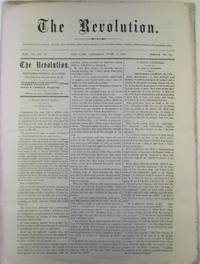
1869020935New York: Susan B. Anthony Proprietor; R.J. Johnson Publisher 1869. Wraps. Good. Side sewn journal. Approximately 12 ¼ by 9 inches. 16 pp. Early issue of the Revolution a groundbreaking and influential newspaper produced by Elizabeth Cady Stanton Susan B. Anthony and Parker Pillsbury. The paper was established to provide a voice to activists and suffragists such as Stanton and Anthony whose voices were marginalized by the mainstream press as well as many abolitionist publications with whom they had been previously allied. Anthony and Stanton advocated for an amendment giving suffrage to women along with the amendment sponsored by abolitionists that would give Black men the right to vote. Many abolitionists actively discouraged Stanton and Anthony from pursuing their amendment until the amendment enfranchising Black men passed creating a rift in the abolitionist movement as well as the women's suffrage movement. Feeling betrayed by abolitionists and Republicans who initially supported them they established the Revolution with financial help from George Francis Train a Democrat who supported women's rights but was openly racist. As the name indicates The Revolution adopted a combative radical tone with Stanton and others unafraid to take on critics. The paper openly discussed sexual and physical abuse in marriage and advocated better divorce laws that would offer women a way to escape abusive marriages. In 1869 the paper broke with Train who had supplied very little of the funding he initially offered. It published until 1872 struggling to make expenses along the way. This issue with a letter on taxes owed by Susan B. Anthony; two pieces by Elizabeth Cady Stanton "Women's privilege in Edinburgh" and a continuation of a piece on Reverend Henry Edgar. Also present is news on the American Equal Rights Association an essay on hygiene vs. fashion etc. GOOD condition. Several fold creases present with other general wrinkling. Minor toning and scattered soiling in the interior. Susan B. Anthony, Proprietor; R.J. Johnson, Publisher unknown
1855006607Washington: G. Bailey Publisher 1855. Pamphlet. Good. Buell and Blanchard Printers. Pamphlet disbound from a larger volume. Pagination runs 99-112. Double columned text. An anti-slavery pro-abolition pamphlet issued monthly with this number containing a speech of Governor William Seward addressing the dangers of extending slavery the privileged class of slaveholders and the 'Growth of Our Negro Aristocracy.' Also included is a look at the progress of the abolitionists and the efforts by the government to 'nationalize' the institution of slavery. Published and edited by Gamaliel Bailey a journalist publisher and ardent abolitionist. GOOD condition. Minor toning and very light soiling to the piece. Number 16 in pencil twice to the front page. Signature to the bottom of the last page. Minor wrinkling. Light creasing and tearing along the fore edge. Binding edge a bit rough. See Sabin 23625 for records on the entire run. G. Bailey, Publisher unknown
1874012747Hartford CT: Dustin Gilman and Co 1874. Cloth. Good. Light purple cloth with ornamentation and titling in blind. 603 pp. With a few illustrations MISSING illustration at page 433. An account of stock trading and finance on Wall Street including a 'secret history' of speculations since the 1857 crash a discussion of various rises and panics the black Friday of 1869 etc. With a chapter on whether women speculate and those women who keep their own accounts etc. GOOD condition missing one illustration. Ex-library with two or three blindstamps in the interior and a bookplate on the inside rear cover. No exterior marking. Heavy fading to the front cover and spine with the rear cover also rather faded. Minor to moderate scuffing to the covers with some mottling and minor soiling to the cloth. Endpapers foxed. Dustin, Gilman and Co unknown
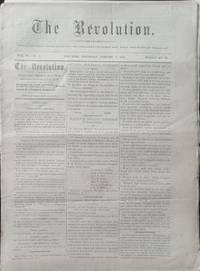
1868020422New York: Susan B. Anthony Proprietor; R.J. Johnson Publisher 1868. Wraps. Fair. Side sewn journal. Approximately 12 ¼ by 9 inches. 16 pp. Early issue of the Revolution a groundbreaking and influential newspaper produced by Elizabeth Cady Stanton Susan B. Anthony and Parker Pillsbury. The paper was established to provide a voice to activists and suffragists such as Stanton and Anthony whose voices were marginalized by the mainstream press as well as many abolitionist publications with whom they had been previously allied. Anthony and Stanton advocated for an amendment giving suffrage to women along with the amendment sponsored by abolitionists that would give Black men the right to vote. Many abolitionists actively discouraged Stanton and Anthony from pursuing their amendment until the amendment enfranchising Black men passed creating a rift in the abolitionist movement as well as the women's suffrage movement. Feeling betrayed by abolitionists and Republicans who initially supported them they established the Revolution with financial help from George Francis Train a Democrat who supported women's rights but was openly racist. As the name indicates The Revolution adopted a combative radical tone with Stanton and others unafraid to take on critics. The paper openly discussed sexual and physical abuse in marriage and advocated better divorce laws that would offer women a way to escape abusive marriages. In 1869 the paper broke with Train who had supplied very little of the funding he initially offered. It published until 1872 struggling to make expenses along the way. This with a lengthy editorial by Elizabeth Cady Stanton on a proposed amendment for manhood suffrage harshly criticizing the amendment. FAIR condition. Front and rear leaf very tenuously attached with the binding a bit fragile. Front leaf being held on by a torn small section of margin. Several fold creases present with other general wrinkling. Minor toning and scattered soiling in the interior. Susan B. Anthony, Proprietor; R.J. Johnson, Publisher unknown
1869020900New York: Susan B. Anthony Proprietor; R.J. Johnson Publisher 1869. Wraps. Good. Side sewn journal. Approximately 12 ¼ by 9 inches. 16 pp. Early issue of the Revolution a groundbreaking and influential newspaper produced by Elizabeth Cady Stanton Susan B. Anthony and Parker Pillsbury. The paper was established to provide a voice to activists and suffragists such as Stanton and Anthony whose voices were marginalized by the mainstream press as well as many abolitionist publications with whom they had been previously allied. Anthony and Stanton advocated for an amendment giving suffrage to women along with the amendment sponsored by abolitionists that would give Black men the right to vote. Many abolitionists actively discouraged Stanton and Anthony from pursuing their amendment until the amendment enfranchising Black men passed creating a rift in the abolitionist movement as well as the women's suffrage movement. Feeling betrayed by abolitionists and Republicans who initially supported them they established the Revolution with financial help from George Francis Train a Democrat who supported women's rights but was openly racist. As the name indicates The Revolution adopted a combative radical tone with Stanton and others unafraid to take on critics. The paper openly discussed sexual and physical abuse in marriage and advocated better divorce laws that would offer women a way to escape abusive marriages. In 1869 the paper broke with Train who had supplied very little of the funding he initially offered. It published until 1872 struggling to make expenses along the way. This issue with three pieces by Elizabeth Cady Stanton "I have all the Rights I want" "Hearth and Home" "Commencement of the Medical College for Women" etc. GOOD condition. Several fold creases present with other general wrinkling. Minor toning and scattered soiling in the interior. Susan B. Anthony, Proprietor; R.J. Johnson, Publisher unknown
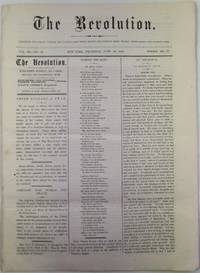
1869020906New York: Susan B. Anthony Proprietor; R.J. Johnson Publisher 1869. Wraps. Good. Side sewn journal. Approximately 12 ¼ by 9 inches. 16 pp. Early issue of the Revolution a groundbreaking and influential newspaper produced by Elizabeth Cady Stanton Susan B. Anthony and Parker Pillsbury. The paper was established to provide a voice to activists and suffragists such as Stanton and Anthony whose voices were marginalized by the mainstream press as well as many abolitionist publications with whom they had been previously allied. Anthony and Stanton advocated for an amendment giving suffrage to women along with the amendment sponsored by abolitionists that would give Black men the right to vote. Many abolitionists actively discouraged Stanton and Anthony from pursuing their amendment until the amendment enfranchising Black men passed creating a rift in the abolitionist movement as well as the women's suffrage movement. Feeling betrayed by abolitionists and Republicans who initially supported them they established the Revolution with financial help from George Francis Train a Democrat who supported women's rights but was openly racist. As the name indicates The Revolution adopted a combative radical tone with Stanton and others unafraid to take on critics. The paper openly discussed sexual and physical abuse in marriage and advocated better divorce laws that would offer women a way to escape abusive marriages. In 1869 the paper broke with Train who had supplied very little of the funding he initially offered. It published until 1872 struggling to make expenses along the way. This issue with a several page printing of an address by Elizabeth Cady Stanton at the Anniversary of the American Equal Rights Association; a letter from John Stuart Mill etc. GOOD condition. Several fold creases present with other general wrinkling. Minor toning and scattered soiling in the interior. Susan B. Anthony, Proprietor; R.J. Johnson, Publisher unknown
1869020908New York: Susan B. Anthony Proprietor; R.J. Johnson Publisher 1869. Wraps. Good. Side sewn journal. Approximately 12 ¼ by 9 inches. 16 pp. Early issue of the Revolution a groundbreaking and influential newspaper produced by Elizabeth Cady Stanton Susan B. Anthony and Parker Pillsbury. The paper was established to provide a voice to activists and suffragists such as Stanton and Anthony whose voices were marginalized by the mainstream press as well as many abolitionist publications with whom they had been previously allied. Anthony and Stanton advocated for an amendment giving suffrage to women along with the amendment sponsored by abolitionists that would give Black men the right to vote. Many abolitionists actively discouraged Stanton and Anthony from pursuing their amendment until the amendment enfranchising Black men passed creating a rift in the abolitionist movement as well as the women's suffrage movement. Feeling betrayed by abolitionists and Republicans who initially supported them they established the Revolution with financial help from George Francis Train a Democrat who supported women's rights but was openly racist. As the name indicates The Revolution adopted a combative radical tone with Stanton and others unafraid to take on critics. The paper openly discussed sexual and physical abuse in marriage and advocated better divorce laws that would offer women a way to escape abusive marriages. In 1869 the paper broke with Train who had supplied very little of the funding he initially offered. It published until 1872 struggling to make expenses along the way. This issue with six pieces by Elizabeth Cady Stanton "What Rev. Theodore Cuyler Says" "The Fifteenth Amendment" "The Convention" "The Tribune in Hysterics" "Anna E. Dickinson" and "Where is Mr. Greeley" Also present is news on the American Equal Rights Association etc. GOOD condition. Front cover almost detached from the rest of the piece. Several fold creases present with other general wrinkling. Minor toning and scattered soiling in the interior. Susan B. Anthony, Proprietor; R.J. Johnson, Publisher unknown
1869020901New York: Susan B. Anthony Proprietor; R.J. Johnson Publisher 1869. Wraps. Good. Side sewn journal. Approximately 12 ¼ by 9 inches. 16 pp. Early issue of the Revolution a groundbreaking and influential newspaper produced by Elizabeth Cady Stanton Susan B. Anthony and Parker Pillsbury. The paper was established to provide a voice to activists and suffragists such as Stanton and Anthony whose voices were marginalized by the mainstream press as well as many abolitionist publications with whom they had been previously allied. Anthony and Stanton advocated for an amendment giving suffrage to women along with the amendment sponsored by abolitionists that would give Black men the right to vote. Many abolitionists actively discouraged Stanton and Anthony from pursuing their amendment until the amendment enfranchising Black men passed creating a rift in the abolitionist movement as well as the women's suffrage movement. Feeling betrayed by abolitionists and Republicans who initially supported them they established the Revolution with financial help from George Francis Train a Democrat who supported women's rights but was openly racist. As the name indicates The Revolution adopted a combative radical tone with Stanton and others unafraid to take on critics. The paper openly discussed sexual and physical abuse in marriage and advocated better divorce laws that would offer women a way to escape abusive marriages. In 1869 the paper broke with Train who had supplied very little of the funding he initially offered. It published until 1872 struggling to make expenses along the way. This issue with four pieces by Elizabeth Cady Stanton "Editorial Correspondence" "The Man Marriage" "What Possible Value Would Suffrage be to Woman" "Women's Medical College" along with news on Kansas suffrage anniversary of the American Equal Rights Association. GOOD condition. Several fold creases present with other general wrinkling. Minor toning and scattered soiling in the interior. Susan B. Anthony, Proprietor; R.J. Johnson, Publisher unknown
1869020890New York: Susan B. Anthony Proprietor; R.J. Johnson Publisher 1869. Wraps. Good. Side sewn journal. Approximately 12 ¼ by 9 inches. 16 pp. Early issue of the Revolution a groundbreaking and influential newspaper produced by Elizabeth Cady Stanton Susan B. Anthony and Parker Pillsbury. The paper was established to provide a voice to activists and suffragists such as Stanton and Anthony whose voices were marginalized by the mainstream press as well as many abolitionist publications with whom they had been previously allied. Anthony and Stanton advocated for an amendment giving suffrage to women along with the amendment sponsored by abolitionists that would give Black men the right to vote. Many abolitionists actively discouraged Stanton and Anthony from pursuing their amendment until the amendment enfranchising Black men passed creating a rift in the abolitionist movement as well as the women's suffrage movement. Feeling betrayed by abolitionists and Republicans who initially supported them they established the Revolution with financial help from George Francis Train a Democrat who supported women's rights but was openly racist. As the name indicates The Revolution adopted a combative radical tone with Stanton and others unafraid to take on critics. The paper openly discussed sexual and physical abuse in marriage and advocated better divorce laws that would offer women a way to escape abusive marriages. In 1869 the paper broke with Train who had supplied very little of the funding he initially offered. It published until 1872 struggling to make expenses along the way. This issue with four pieces written by Elizabeth Cady Stanton: "The New Year" "Hons. Julian Wilson Pomeroy" "Prisons and Punishment" and "Providence Journal." Also present are pieces on rag pickers Suffrage in the Dakotas the "Ingratitude of Colored Men" a piece on the Universal Franchise Association etc. GOOD condition. Several fold creases present with other general wrinkling. Minor toning and scattered soiling in the interior. Some interior leaves essentially loose. Susan B. Anthony, Proprietor; R.J. Johnson, Publisher unknown
1869021006New York: Susan B. Anthony Proprietor; R.J. Johnson Publisher 1869. Wraps. Good. Side sewn journal. Approximately 12 ¼ by 9 inches. 16 pp. Early issue of the Revolution a groundbreaking and influential newspaper produced by Elizabeth Cady Stanton Susan B. Anthony and Parker Pillsbury. The paper was established to provide a voice to activists and suffragists such as Stanton and Anthony whose voices were marginalized by the mainstream press as well as many abolitionist publications with whom they had been previously allied. Anthony and Stanton advocated for an amendment giving suffrage to women along with the amendment sponsored by abolitionists that would give Black men the right to vote. Many abolitionists actively discouraged Stanton and Anthony from pursuing their amendment until the amendment enfranchising Black men passed creating a rift in the abolitionist movement as well as the women's suffrage movement. Feeling betrayed by abolitionists and Republicans who initially supported them they established the Revolution with financial help from George Francis Train a Democrat who supported women's rights but was openly racist. As the name indicates The Revolution adopted a combative radical tone with Stanton and others unafraid to take on critics. The paper openly discussed sexual and physical abuse in marriage and advocated better divorce laws that would offer women a way to escape abusive marriages. In 1869 the paper broke with Train who had supplied very little of the funding he initially offered. It published until 1872 struggling to make expenses along the way. This issue with two pieces by Elizabeth Cady Stanton "Too Many People Vote Now" and "Don't Unsex Yourself." Also present is news on the National Woman's Suffrage Association etc. GOOD condition. Several fold creases present with other general wrinkling. Minor toning and scattered soiling in the interior. Pages tearing along the lower hinge. Susan B. Anthony, Proprietor; R.J. Johnson, Publisher unknown
1870022282New York: Susan B. Anthony Proprietor; R.J. Johnson Publisher 1870. Tabloid. Good. Side sewn journal. Approximately 12 ¼ by 9 inches. 16 pp. Early issue of the Revolution a groundbreaking and influential newspaper produced by Elizabeth Cady Stanton Susan B. Anthony and Parker Pillsbury. The paper was established to provide a voice to activists and suffragists such as Stanton and Anthony whose voices were marginalized by the mainstream press as well as many abolitionist publications with whom they had been previously allied. Anthony and Stanton advocated for an amendment giving suffrage to women along with the amendment sponsored by abolitionists that would give Black men the right to vote. Many abolitionists actively discouraged Stanton and Anthony from pursuing their amendment until the amendment enfranchising Black men passed creating a rift in the abolitionist movement as well as the women's suffrage movement. Feeling betrayed by abolitionists and Republicans who initially supported them they established the Revolution with financial help from George Francis Train a Democrat who supported women's rights but was openly racist. As the name indicates The Revolution adopted a combative radical tone with Stanton and others unafraid to take on critics. The paper openly discussed sexual and physical abuse in marriage and advocated better divorce laws that would offer women a way to escape abusive marriages. In 1869 the paper broke with Train who had supplied very little of the funding he initially offered. It published until 1872 struggling to make expenses along the way. This issue with a piece by Elizabeth Cady Stanton being a letter to John Hooker in which she addresses her thoughts on the rights of women with regard to divorce mentioning that divorce laws were written by men thus benefitting them. This issue was published around Susan B. Anthony's 50th birthday and contains a short piece by Anthony on her birthday. Also present is a piece on women's suffrage in Utah; a piece on the anniversary of the National Woman's Suffrage Association; the convention in California; the printing of many letters written to Susan B. Anthony on the occasion of her birthday etc. GOOD condition. Several faint fold creases present with other general wrinkling and creasing. Chipping and tearing along the edges. Minor toning and scattered foxing and soiling. Susan B. Anthony, Proprietor; R.J. Johnson, Publisher unknown
1882016377Chicago: Victor F. Lawson and Co 1882. Tabloid. Good. Large format tabloid newspaper. Single sheet four pages. Single issue of this Chicago newspaper published three days after the killing of Jesse James. This includes a lengthy account of the day of the killing including quotes from Robert Bob Ford the wife of Jesse James and some background into the plot of the killing. Also in this issue is a short paragraph on Dick Liddle a member of the James Gang and his testimony as to robberies committed by the gang; and a lengthy account of the Blue Cut Train Robbery by John Land recalling the actions of the James Gang. Various items of news and commentary present including the suicide of Cornelius Vanderbilt and the hanging of an African-American in Virginia Doc Wright who apparently murdered Coleman Arthur and who was suspected of being part of a secret society called "The True Friends." GOOD condition. Horizontal and vertical fold creases present. Minor loss along the left edge presumably nibbled away. General toning some foxing soiling and minor staining. A few chips and tears along the extremities. Victor F. Lawson and Co unknown
1843006271New York: American Anti-Slavery Society Publisher 1843. Cloth. Fair/No Jacket. Stated second edition for the first part with the second part published in Albany in 1843. Dark brown ribbed cloth. Unpaginated. With many illustrations throughout. Sabin states that pagination varies among copies seen. This appears complete based on a counting of signatures 1-18 with 6 leaves 19 with 1 leaf and 20-32 with 6 leaves Signature 19 constitutes the title page to the Remonstrance section. Effectively two works in one. An anti-slavery work containing quotes and accounts of many important and minor anti-slavery figures and abolitionists. This also includes accounts of slavery mostly 3rd person reflections. The second section regards the Texas revolution containing quotes of political and other figures on the annexation of Texas by the United States taking a decidedly anti-Texas annexation stance. FAIR condition. The fold out map in the beginning is MISSING its right half being torn in two along the fold. Cloth backstrip MISSING from the spine. Moderate to heavy uneven fading to the covers with minor to moderate scuffing. Minor soiling and staining with a semicircular ring stain to the rear. Cloth very worn and bumped along the extremities. Binding shaken and text block weakened but holding. First signature almost detached. Scattered moderate to heavy foxing throughout with some staining and soiling. Previous owner's signature present. Howes L235 L236. Sabin 95097. American Anti-Slavery Society, Publisher unknown
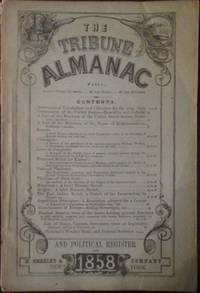
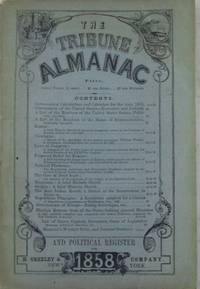
1858020712New York: H. Greeley and Company 1858. Wraps. Good. no date circa 1858. Light blue printed wraps. 68 pp. An almanac published by Horace Greeley that besides the usual monthly almanac information focuses on political subjects. This includes a look at the executive and judicial parts of the US government lists of the Senate and House of Representatives etc. Of note is a seven page look at the Case of Dred Scott mostly abstracts of court opinions; along with brief historic sketches of Minnesota and Oregon etc. GOOD condition. General toning and minor soiling to the covers. Minor curling and creasing at the corners. Paper toned in the interior. Small stain on the lower fore edge. H. Greeley and Company unknown
1858021511New York: H. Greeley and Company 1858. Wraps. Good. no date circa 1858. Light blue printed wraps. 68 pp. An almanac published by Horace Greeley that besides the usual monthly almanac information focuses on political subjects. This includes a look at the executive and judicial parts of the US government lists of the Senate and House of Representatives etc. Of note is a seven page look at the Case of Dred Scott mostly abstracts of court opinions; along with brief historic sketches of Minnesota and Oregon etc. GOOD condition. General toning and minor soiling to the covers. Minor curling and creasing at the corners. Paper toned in the interior. Small stain on the lower fore edge. H. Greeley and Company unknown
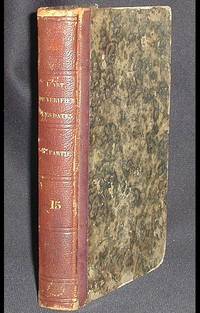
1834002351Paris: A.J. Dénaina 1834. Hardcover. Very Good. Volume 15 only of 16 volumes: 4 536 p.: tables 1 folded; 21 cm. Contemporary calf spine with gilt-tooled spine title; marbled paper over boards. Marbled endpapers. Running title: Chronologie Historique de l'Amérique. The folded table is not included in pagination. This volume covers the history of Guyana from 1770 to 1834. In Very Good Condition: ends of spine and corners rubbed; faint dampstain on upper corner of pages 273-370 not impacting text; minimal foxing; otherwise pages are clean and tight. A.J. Dénaina hardcover
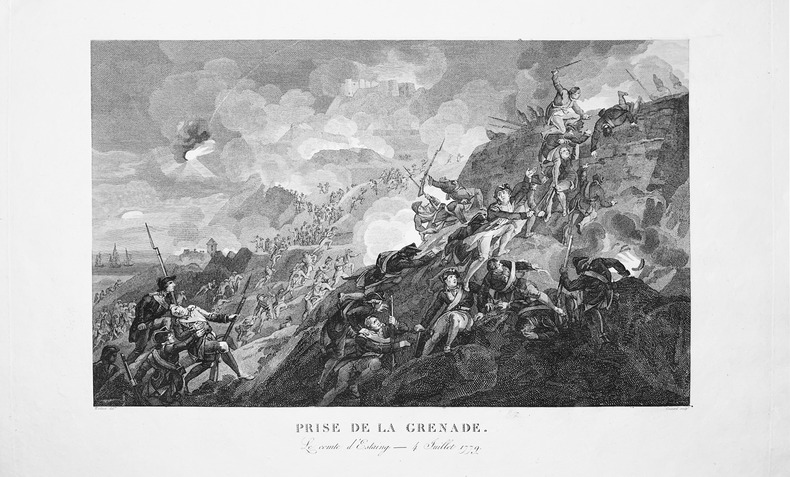
1820LBW-8490[Paris, 1820]. Gravure originale par Gossard d'après le dessin de François Nicolas Martinet ( 29 x 44,5 cm).
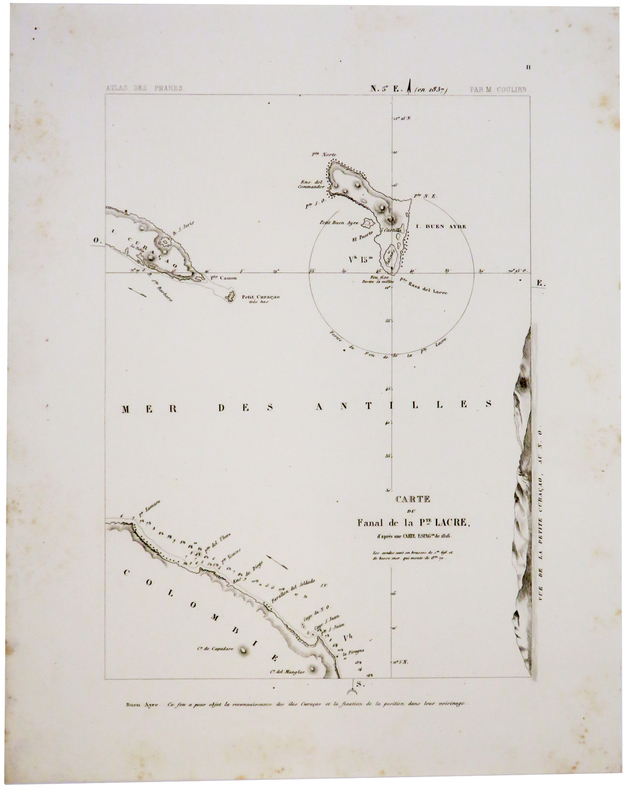
1844LBW-2415Paris, [1844-1848]. 276 x 200 mm.
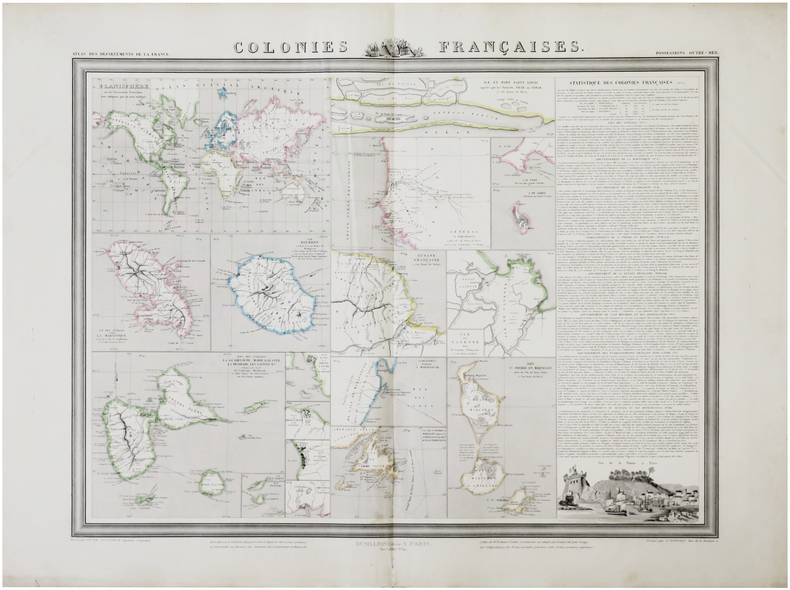
1841LBW-7277Paris, Dusillion, 1841. 515 x 654 mm.
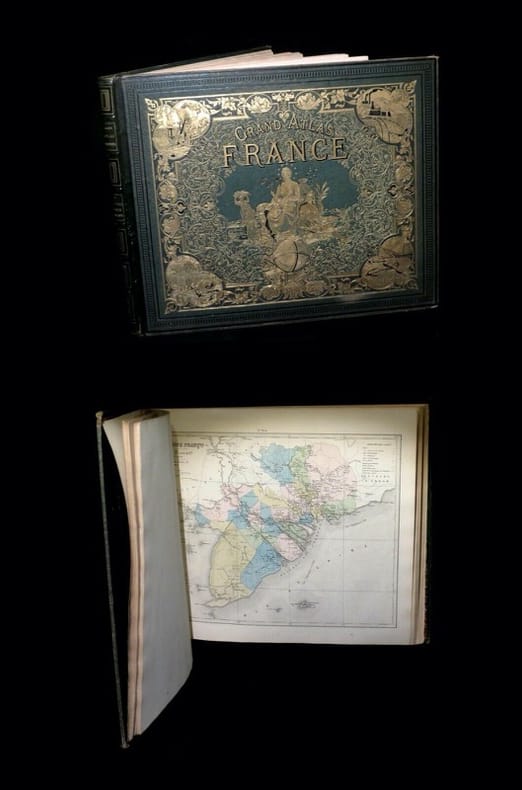
187523710Paris, Librairie Albert Pilon / A. Le Vasseur, s.d. [circa 1875]. Un vol. au format in-folio à l'italienne (453 x 377 mm) de 1 f. bl., 2 ff. n.fol., 12, 40, 13, 1 f. n.fol., 130, 18 pp. et 1 f. bl. Reliure d'édition de plein cartonnage émeraude à l'imitation de chagrin, filets gras et maigres en noir encadrant les plats, le premier s'orne en outre d'un jeu de petits filets verticaux en noir, filets d'encadrement stylisés dorés, importante composition allégorique dorée, entrelacs de filets maigres dorés, titre doré, dos à nerfs orné de filets gras à froid, quintuples caissons d'encadrement gras et maigres dorés et en noir, titre doré, filet doré en tête et queue, tranches mouchetées. (Charles Magnier et Auguste Souze).
190027860Paris, Librairie d'Education nationale, s.d. [circa 1900]. Un fort vol. au format in-4 (298 x 198 mm) de 1 frontispice n.fol., viii - 344 pp. et 1 f. bl. Reliure de l'époque de demi-chagrin maroquiné cerise, filets gras et maigres à froid encadrant les plats, le premier s'orne en son centre de larges armes institutionnelles dorées, dos à nerfs orné de filets gras à froid, doubles caissons d'encadrement dorés, important décor fleuronné doré, filets dorés, titre doré, tranches mouchetées.
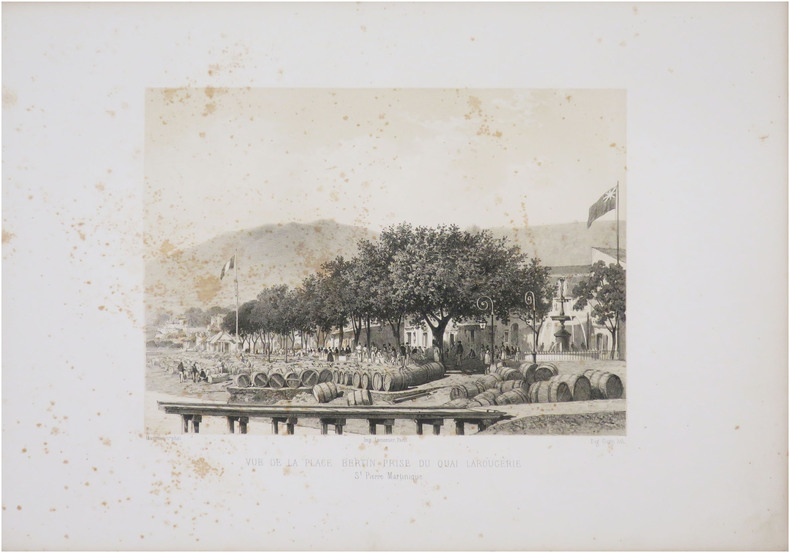
1860LBW-8878Paris, Lemercier, [1860]. 215 x 262 mm.