Ludwig Salvator, ErzherzogAntiquariat.de

363 résultats
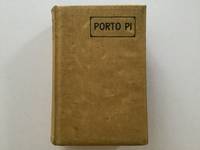
191419386ABPrag, Merci, 1914. 24 : 16,5 cm. XXXI, 709 páginas, 8 láminas, 2 mapas coloreadas plegadas. Original tela amarilla.
191419386AB1914. Prag Merci 1914. 24 : 165 cm. XXXI 709 páginas 8 láminas 2 mapas coloreadas plegadas. Original tela amarilla. Primera e unica edición. - Historia de las visicitudes del antiguo puerto de Palma abarca desde los tiempos de los romanos hasta principios del siglo XX. Cuenta con un bibliografia de 164 obras y citas textuales de las fuentes originales. - Con algun subrayado encuadernación un poco polvoriento. - Palau 288448; Schwendinger p. 228. hardcover
1961106416New York: Pierre Matisse Gallery 1961. Brossura wrappers. Ottimo Fine. Volume stampato in occasione della mostra di Joan Mirò presso la Pierre Matisse Gallery New York 31 ottobre - 25 novembre 1961. Testo in francese di Yvon Taillandier. 6 pochoirs sciolti a colori e 23 in bianco e nero. Elenco delle tavole. Allegato un fascicolo stampato su carta pesante azzurra con la traduzione in inglese dei testi e una tavola sciolta ripiegata con riproduzione di una ceramica dell'Artista. Una delle 1200 copie con 2 litografie originali a colori di cui una in copertina su quattro pagine cm 47x96 ed una sciolta su doppia pagina cm 31x47. 4to cm 31x24. pp. 32 non numerate tavole. Ottimo Fine. Edizione di XXV501200 es. numerati e firmati. Mirò Books Cramer 1989 Cramer Patrick Joan Mirò. The illustrated books: Catalogue raisonné. Geneva Cramer 1989. Pierre Matisse Gallery, unknown
17862000221786. An den Seitenrändern mit Rand um die Plattenkanten, am Ober- und Unterrand mit Rand um die Einfassungslinie. Darstellung: 56,5 x 81 cm. Papier: 60,5 x 97 cm.
057431Paris Ernest Leroux, éditeur 1892 in 8 (24,5x17) 2 volumes reliures demi basane bleue, dos à nerfs. Tome 1: XIV et 515 pages, avec 1 carte dépliante en couleurs en frontispice. Tome 2: 576 pages, et un tableau généalogique dépliant en frontispice du second. Bel exemplaire ( Photographies sur demande / We can send pictures of this book on simple request )
183063009Ohne Ort, o. J. (um 1830). 4° (30,2 x 24,3 cm). Titel in Gold, Rot u. Schwarz. 5 Bll. (davon 2 weiß), 140 S., 1 weißes Bl., Ldr. d. Zt. m. reicher Blind- u. Goldprägung, goldgepr. Deckeltitel, Steh- u. Innenkantenverg. u. dreiseitigem Goldschnitt.
17461450EN MALLORCA: Miguel Cerdà y Antich y Miquel Amorós 1746. Primera edición.- 4º.- Pleno pergamino de época lomera rotulada.- 12 páginas.- 92 páginas.- 500 páginas.- Ilustraciones entre texto en xilografía. La primera paginación corresponde a la Dedicatoria de la obra al VII Conde de Ayamans Señor de Lloseta. La segunda paginación es de la Censura y Aporbación por parte del cronista del Reyno de Mallorca Gerónimo Alemany y Moragues en la cual se da un gran número de datos históricos Mallorquines y especialmente de Lloseta Bover considera tan importante esta censura que la detalla como obra separadamente en su 'Biblioteca de Escritores Baleares' ver Tomo I p. 21 nº 27-IV. Las 500 páginas siguientes forman el núcleo de la obra de Padre Cayetano de Mallorca en la que se describe la Historia de Lloseta así como la parte religiosa de la Virgen y un gran número de citas genealógicas sobe el Condado de Ayamans. Obra sumamente rara y apreciada. Muy buen ejemplar muy limpio y con buenos márgenes. Ejemplar con apostillas marginales muy eruditas. Bover 642 I - Palau 148175 Miguel Cerdà y Antich y Miquel Amorós unknown
3867<p>Extremely rare first and sole edition of this Mallorcan festival book commemorating the festivities held in Palma on the occasion of Charles IV's accession to the throne. The description with its careful lists of the noblemen involved constitutes a snapshot of Mallorcan society at the end of the eighteenth century. The work is illustrated with two plates one a plan of the central square with the arrangement of ephemeral architecture and decorations the other a very large plate 49.5 x 33 cm overall 42.5 x 32 cm to platemark depicting the triumphal arc erected in honor of the new sovereign with his arms above those of Palma de Mallorca.The author estimates that between 34000 and 38000 citizens took part in the celebration with gentlemen on horseback dressed à la española antigua and ladies in such splendid finery that it "filled the spirit with extasty." B2r The central square was festively decorated with and portraits of the king and queen to which the assembled paid solemn respects.Mallorca had seen a growth in trade and prosperity under Charles III thanks to his policies of liberalizing trade with America. Churches and monasteries were brought under the aegis of the Spanish crown and the first postal service was created. The accession of his famously weak son at the very time of revolutionary unrest in France would have been a source of worry.Although printing began on Mallorca in the late sixteenth century work with the Palma imprint are rarely seen on the market.OCLC lists a single copy University of ConnecticutPalau II.35402;. 4to. 10 ff. with two folding plates. Bound in contemporary patterned wrappers in turn bound in modern quarter calf and marbled papers over boards. Ownership inscription of the Marquesa Axiany . Some bleeding of ownership inscription onto title but otherwise very good with good strikes of the plates.</p> hardcover
Paris, Arthus Bertrand & Gihaut Frères (en anteportada: Montpellier, Imp. de Boehm et Cie.), (1840), 25,5 x 17,5 cm., cartoné de época bien conservado, 2 hojas + III + 140 págs. + 53 láminas litografiadas fuera de texto, varias de ellas coloreadas, representando vistas, monumentos y tipos, impregnados del espíritu del romanticismo + 2 planchas con notas musicales de cantos locales. (Primera edición de esta rara obra que relata el viaje realizado en otoño de 1839 a la Isla de Mallorca por este artista francés. No hemos localizado ningún ejemplar de esta obra en bibliotecas españolas, incluso la Biblioteca Nacional).
3867Extremely rare first and sole edition of this Mallorcan festival book commemorating the festivities held in Palma on the occasion of Charles IVs accession to the throne. The description with its careful lists of the noblemen involved constitutes a snapshot of Mallorcan society at the end of the eighteenth century. The work is illustrated with two plates one a plan of the central square with the arrangement of ephemeral architecture and decorations the other a very large plate 49.5 x 33 cm overall 42.5 x 32 cm to platemark depicting the triumphal arc erected in honor of the new sovereign with his arms above those of Palma de Mallorca.The author estimates that between 34000 and 38000 citizens took part in the celebration with gentlemen on horseback dressed à la española antigua and ladies in such splendid finery that it filled the spirit with extasty. B2r The central square was festively decorated with and portraits of the king and queen to which the assembled paid solemn respects.Mallorca had seen a growth in trade and prosperity under Charles III thanks to his policies of liberalizing trade with America. Churches and monasteries were brought under the aegis of the Spanish crown and the first postal service was created. The accession of his famously weak son at the very time of revolutionary unrest in France would have been a source of worry.Although printing began on Mallorca in the late sixteenth century work with the Palma imprint are rarely seen on the market.OCLC lists a single copy University of ConnecticutPalau II.35402;. 4to. 10 ff. with two folding plates. Bound in contemporary patterned wrappers in turn bound in modern quarter calf and marbled papers over boards. Ownership inscription of the Marquesa Axiany . Some bleeding of ownership inscription onto title but otherwise very good with good strikes of the plates. hardcover books
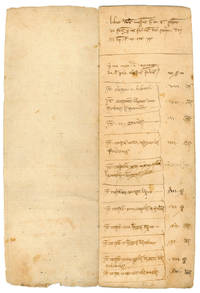
ABC_480011337. Small folio 21.8 x 30.2 cm. Stored in a custom-made half purple morocco case. The leaf is folded lenghtwise into two columns. 1 ll. An account of expenses incurred for the maintenance of the royal falcons of King Jaime III of Mallorca: "Aquastas són les masions fetas per los falcons del senyor rey. Primerament donam a 1 hom quils anà aspiar 3 s. 6. Ãtem per altra dia quils anà traura 20 s. Ãtem donam a 1 fadrà ab 1a bÃstia qui portà la exà rsia 2 s. Ãtem donam a 2 hòmons qui anaren ab nós con anam traura los falcons 4 s. Ãtem despenguem a vianda 13 s. 2. Ãtem costaren 2 pols que donam a manjar als falcons antra 2es vaguadas 22 d. Ãtem donam a 1 hom qui portà als falcons a la ciutat 5 s. Ãtem costà 1a bèstia en què anà cavalcant lo batla con anà traura los falcons 1 s. 6. Ãtem costà 1a senalla an quà vangueran los falcons 7 d. Suma per totas las ditas masions 51 s. 7 d.".The document is not dated. A note in the margin much later indicates the year 1337 which could be the year the account was written.Written in Mallorcan a dialectal variant of Catalan in a scribal hand on cotton paper manufactured in Mallorca by Arab paper makers. Under Muslim rule from 903 until 1229 Mallorca "Mayurqa" had formed one of the Eastern Islands of al-Andalus "al-jazaÂ’ir al-sharqiya li-l-andalus". The art of papermaking long mastered by the Arabs had reached the southern Spain only in the 12th century through the Muslim conquest at a time when most of western Europe still favoured vellum as a writing material. The Arab tradition of papermaking is still evident in this early 14th century insular specimen.An extraordinarily rare survival in excellent state of preservation. ABE CAT Falconry & Hunting hardcover
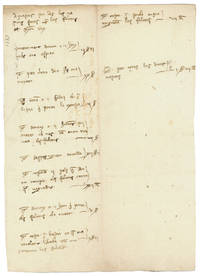
ABC_47792Mallorca 1330. 4to ca. 165 × 230. Catalan manuscript on cotton paper. 2 written pp. on a bifolium and a single leaf. An account of expenses incurred by Arnau Arnaldo Arracha a footman at the royal residence of Bellver Castle near Palma while transferring several falcons to Perpignan in southern France and during his return to Mallorca. The document was drawn up for the treasury of King Jaume III of Mallorca headed by Pere Pedro Burguès.The falconsÂ’ journey to Perpignan included stops in San Feliu de Guixols on the northern coast of Catalonia and Colliure in France. The foodstuffs purchased for this journey are listed as wine salted meat and cheeses as well as meat for the falcons ropes and cages. From Girona to Perpignan Arracha travelled on horseback and his expenses for wine horseshoes shoes paper etc. are itemized: “Memòria al senyor en Pere Burguès thesaurer que li fa Arnau Arracha servent del castel de Belver per lÂ’anada de Rocelló ab los falcons al senyor rey . Primerament comprà aquel dia meteys pa per metre a la mar per sos optes 4 s. Ãtem comprà 1 bota ab lo vi que costà 5 s. Ãtem comprà carn salada que costà 2 s. 4 d. Ãtem costaren formages per despensa 1 s. Soma 12 s. malorchins . Ãtem costà carn a Sent Feliu ad ops dels falcons 2 s. 5 d. Ãtem costaren los falcons a trer de la mar 1 s. Ãtem costaren cordes a ligar les gà bies 8 d. Ãtem costaren los bastays de beure qui portaren los falcons de Coqliure a Perpenyà 1 s. Soma 5 s. 1 d. barcelonès .”. While no year is stated June 12th was a Saturday “disapte” or dissabte in 1322 1333 1339 and 1344. A separate second leaf contains the account of various additional expenses incurred by Jaume Jaime Miafré some in Sineu Mallorca.Written in Mallorcan a dialectal variant of Catalan in a scribal hand on cotton paper manufactured in Mallorca by Arab paper makers. Under Muslim rule from 903 until 1229 Mallorca “Mayurqa” had formed one of the Eastern Islands of al-Andalus “al-jazaÂ’ir al-sharqiya li-l-andalus”. The art of papermaking long mastered by the Arabs had reached the southern Spain only in the 12th century through the Muslim conquest at a time when most of western Europe still favoured vellum as a writing material. The Arab tradition of papermaking is still evident in this early 14th-century insular specimen.An extraordinarily rare survival in excellent state of preservation. Includes full transcription.With the edges of the leaves slightly frayed some very slight browning and staining but overall in great condition. A remarkable document from the 14th-century excellently preserved. ABE CAT Falconry & Hunting hardcover
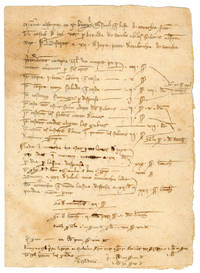
ABC_479971320. Folio folded lengthwise 11.2 x 32 cm. Stored in custom-made purple half morocco case. Catalan manuscript on cotton paper. 9 written pp. on 8 tall sewn leaves. An extensive account of the expenses incurred and payments received by Guillem Guillermo Esteve for the care of the falcons of King Sancho I of Mallorca between the months of March and May 1320. Sancho of Mallorca the Peaceful 1274-1324 was King of Mallorca Count of Roussillon and Cerdanya and Lord of Montpellier from 1311 to his death in Formiguères on 4 September 1324.The document includes information on the feeding and care of the falcons on the costs of the hoods jesses rings and other utensils and the loans and payments to various persons. The itemized transactions involve the purchase of several falcons: three from the castle of Pollensa two from the land of Palomera and three from the land of Alconzena; others from the Bishop of Mallorca from the land of Escorça from the married woman Valentina wife from the land of Calobra; further 12 pairs of pigeons and another 27 pairs of pigeons; other entries of pigeon purchases follow: "Llibre de les messions que en Guillem Stheve ha fetes per los falcons del senyor rey de lÂ’any de MCCCXX. Primo costà 1a exavegada de pala als dits falcons 4 s. 4. Ãtem costà 1 librel 8 d. Ãtem costaren de port 8 quarteres de forment 7 d. Ãtem 2 graneres 2 d. Ãtem costà veta a seyar los falcons 4 d. Ãtem costen 3 ganstz de serró 6 s. Ãtem costen 14 capels de falcons 6 s. Ãtem costen 4 longes de serró 12 d. Ãtem costen 10 longes dÂ’escodat 20 d. Ãtem costen 14 parels de getz dels falcons 4 s . Ãtem rebà dimarstz a 29 dÂ’abril falcons 1 prim e 1 tersol de lÂ’agre de la Palomera 3. Ãtem rebà digous primer jorn de mag falcons 2 prims e 1 tersol de lÂ’agre de lÂ’Alconzena e portà ’ls lo balle dÂ’Aleró 3 .".Written in Mallorcan a dialectal variant of Catalan in a scribal hand on cotton paper manufactured in Mallorca by Arab paper makers. Under Muslim rule from 903 until 1229 Mallorca "Mayurqa" had formed one of the Eastern Islands of al-Andalus "al-jazaÂ’ir al-sharqiya li-l-andalus". The art of papermaking long mastered by the Arabs had reached the southern Spain only in the 12th century through the Muslim conquest at a time when most of western Europe still favoured vellum as a writing material. The Arab tradition of papermaking is still evident in this early 14th century insular specimen.An extraordinarily rare survival in excellent state of preservation. Includes full transcription. ABE CAT Falconry & Hunting hardcover