2 192 résultats
1944514451944. Wise Maurice K. Requisition in France and Italy. The Treatment of National Private Property and Services. New York: Columbia University Press 1944. viii 207 pp. Ex-library with stamps rear card pocket lower spine label bookplate on front pastedown. Shelfworn cloth gilt stamped spine. $5. unknown books
UWINHIS00afMotilal Banarsidass no date. Very Good. Winternitz Maurice. A History of Indian Literature. 2 Volume set. Delhi: Motilal Banarsidass no date. 602 640pp. Indexed. 8vo. Cloth. Book condition: Very good. Former owner's brief pencil marks on volume 2 front endsheet. Dust Jacket Condition: Very good with flaps taped down. Faintly rubbed edges. Motilal Banarsidass hardcover books
193522907Chapel Hill: Univ. North Carolina 1935. First edition. Cloth. A very good crisp clean copy in a good dust jacket with a few chips and tears. xii 273 pp. 8vo. Univ. North Carolina hardcover books
1941105036Brussels: Academes 1941. paperback. very good. 263pp. tall 8vo printed wrappers; unopened. Bruxelles: Palais de Academes 1941. A very good copy.<br/><br/> Academes unknown books
1942044549Paris: Ancienne Librairie Furne Boivin & Cie 1942. 263 1p. original stiff printed wrappers with the glassine the glassine slightly chipped along the top edge. Ancienne Librairie Furne, Boivin & Cie unknown books
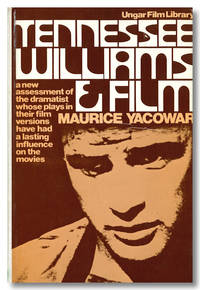
1977WRCLIT80090New York: Ungar 1977. Cloth. First edition published in the "Ungar Film Library." Photographs. Fine in very good slightly frayed dust jacket. Ungar hardcover books
1926140498Beverly Hills CA: Metro-Goldwyn-Mayer MGM 1926. Draft script for the 1927 Silent film. <br/><br/>Based on the 1913 yellow peril play by Henry Maurice Vernon and Harold Owen and previously adapted for the screen in 1919 directed by Maurice Elvey and starring Matheson Lang. Lon Chaney in full yellowface murders his daughter after discovering she loves the son of a British diplomat then seeks revenge on son and his the entire family. <br/><br/>Anna May Wong who has a small role in the film was originally considered for the role of the daughter but censorship of mixed race relationships on the screen caused the role going to a white actress a sadly all-too-familiar story in her career. Wong would leave Hollywood for Europe the following year after once again being denied the lead role in a film because of her race this time in "The Crimson City."<br/><br/>Tan titled wrappers rubber-stamped copy No. 543 and production No. 1589 dated Nov. 13 1926 with credits for story writer Louise Jordan Miln and screenwriter Lorna Moon. Title page integral with the first page of the text dated October 20 1926 with credits for screenwriter Moon and story writer Miln. 102 leaves with last page of text numbered 96. Ditto style mimeograph duplication. Pages Near Fine wrapper Very Good bound with two gold brads. Metro-Goldwyn-Mayer [MGM] unknown books
148040Vintage studio still photograph from the 1944 film. <br/><br/>Naive small-town girl Millie Baxter Kim Hunter travels to New York City to meet her newlywedded husband Paul Dean Jagger only to discover that he may be a murderer. <br/><br/>Set in New York City. <br/><br/>8 x 10 inches. Very Good plus with crease to left corner and small crease to top center. <br/><br/>Complete collation details available on request.<br/><br/>Selby US. Spicer US. Silver and Ward US. Grant US. Rosenbaum "1000 Essential Films. unknown books
1932282252Baltimore: Williams & Wilkins 1932. hardcover. near fine. 232 pages tall 8vo green cloth. Baltimore: Williams & Wilkins 1932. First Edition. Near Fine.<br/><br/> Williams & Wilkins unknown books
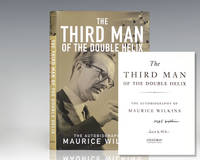
200353978London: Oxford University Press 2003. First edition of Wilkins' autobiography. Octavo original black cloth illustrated. Signed by Maurice Wilkins and James D. Watson on the title page. Watson along with Francis Crick and Wilkins were awarded the Nobel Prize in Medicine for their discovery of DNA. Fine in a fine dust jacket. New Zealand-born British physicist and molecular biologist Maurice Wilkins was awarded the Nobel Prize in Physiology or Medicine in 1962 along with Francis Crick and James Watson "for their discoveries concerning the molecular structure of nucleic acids and its significance for information transfer in living material." "No intelligent person who wishes to know how the universe works should fail to read this book. Not only is it completely understandable to the layman it is also often very amusing" Arthur C. Clarke. Oxford University Press hardcover books
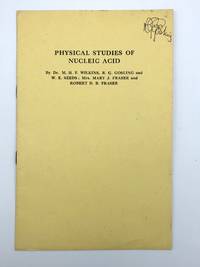
1951403316London: Nature 1951. 8vo. 7pp. Original printed wrappers. Lightly age-darkened. FIRST EDITION OFFPRINT ISSUE SIGNED by Gosling on the front wrapper. This important paper is illustrated with electron microscope photographs of fibers of sodium thymonucleate 4 copies of two side-by-side prints. Wilkins' studies of sodium thymonucleate led him to Raymond Gosling a graduate student working with outdated x-ray equipment. Despite the limitations of the technology they were able to produce several landmark pictures of proteins in crystalline forms. <br/><br/> Nature unknown books
1947S3313In: Proceedings of the Cambridge Philosophical Society Vol. 43 1947. Cambridge:: University Press 1947. 1947. 255 x 179 mm. Tall 8vo. Pages 220-231. Entire volume: iv 593 2 pp. 5 figs. Navy buckram gilt spine; spine lightly faded. Blind stamp of the Carnegie Institution of Washington Mount Wilson Observatory. Fine. This early paper on radar theory compares field observations with theoretical considerations of the behavior of scattered electromagnetic fields by Maurice Wilkes whose Cambridge University Mathematical Laboratory designed the EDSAC the first machine in the world to use the stored program. University Press, 1947. hardcover books
195108749Cambridge: Addson-Welsley Press Inc 1951. First Edition. Hard Cover. Near Fine. Octavo. With special reference to the EDSAC and the uses of a library of subroutines. 167 2pp Bound in original cloth. This was the first textbook written on the subject of computers computer programming and software. Wilkes Director of the Mathematical Laboratory of the University of Cambridge designed and built the EDSAC-the first storage program computer with the assistance of Wheeler and Gill for Cambridge University. A near fine copy with neat owner's name on front free endpaper. <br/><br/> Addson-Welsley Press, Inc hardcover books
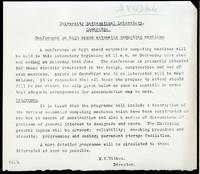
1949446761949. <p>University Mathematical Laboratory Cambridge. Conference on high speed automatic computing machines. Mimeographed typescript undated ca. 1949. 1 sheet. VG.</p> <p> "A conference on high speed automatic computing machines will be held in this laboratory beginning at 11 a.m. on Wednesday 22nd June and ending Saturday 25th June. The conference is primarily intended for those directly interested in the design construction and use of such machines. Anyone in Cambridge who is so interested will be most welcome. It is requested that all those who propose to attend should fill in and return the slip given below. . . ." The notice is signed in typescript by M. V. Wilkes; Hale's name is written in the upper margin in pencil. The lower portion of the announcement containing the application slip is not present here. Origins of Cyberspace 1020-1.</p> . unknown books
1956397361956. Wilkes Maurice V. and Willis D. W. A magnetic-tape auxiliary storage system for the EDSAC. Offprint from Proceedings of the Institution of Electrical Engineers 103 part B suppl. 2 1956. Original white printed wrappers. Signed by Wilkes on the front wrapper. 337-345 1pp. 281 x 217 mm. Provenance: Maurice Wilkes. Fine. First edition offprint issue. A description of the experimental magnetic-tape storage system developed for EDSAC which was the direct ancestor of the magnetic tape units on EDSAC 2. Spurred by the work then being done in the United States on the use of magnetic tape for computer purposes Wilkes became the first in Britain to pursue this line of research. "After some initial experiments I designed with the help of the workshop staff a magnetic tape unit of advanced specification. The tape was moved at 100 inches per second by means of a pair of pneumatic capstans one for each direction. . . . I had as a collaborator in this work D. W. Willis who had been on our staff in the early days and who had now rejoined the Laboratory. . . . We connected an early version of the tape unit to EDSAC 1 via a shift register. The system did not work particularly well and contributed little to the operation of the machine. It did however enable some practical experience to be obtained. In due course Willis joined Decca Radar taking with him the knowledge he had acquired while with us and the result was the Decca twin tape unit. We purchased two of these for the EDSAC 2 giving us four tape positions in all and they gave very good service" Wilkes 1985 190. Wilkes 1999 no. 40. Origins of Cyberspace 1037. unknown books
1940397431940. Wilkes Maurice Vincent 1913- . A method of solving second order simultaneous linear differential equations using the Mallock machine. Offprint from Proceedings of the Cambridge Philosophical Society 36 part II April 1940. Original buff printed wrappers. Signed by Wilkes on the front wrapper. 1 204-208 2pp. 257 x 184 mm. Provenance: Maurice Wilkes. <p>First edition offprint issue. Wilkes directed the design and construction of EDSAC the first readily usable full-scale stored-program computer. EDSAC was preceded in operation by the Manchester "Baby"prototype stored-program machine which ran for only a short time in 1948; in America BINAC was probably running programs about the same time but it too was a very short-lived machine.</p> <p>In addition to developing EDSAC Wilkes was responsible for a number of programming innovations such as labels macros and microprogramming that became standard in the computer industry. He studied physics at Cambridge University where he received his Ph.D. in 1936 with a thesis based on work performed in the Cavendish Laboratory on the propagation of very long radio waves in the ionosphere. While engaged in postgraduate research on this topic he was allowed to use Cambridge University's model differential analyzer to solve a difficult equation. This machine which Wilkes found "irresistible" Wilkes 1985 25 inspired an abiding interest in automatic computing. At the end of 1936 Wilkes was put in charge of Cambridge's model differential analyzer and the following year he joined the staff of the university's newly founded Mathematical Laboratory becoming its director after the close of World War II. The Mathematical Laboratory renamed the Computing Laboratory in the 1960s played a critical role in the development of the electronic digital computer.</p> <p>One of Wilkes's tasks during 1937 was to gather information about the special-purpose calculating machine invented by R. R. M. Mallock of Cambridge's Engineering Department which the Mathematical Laboratory was interested in purchasing. Wilkes described the machine as follows:</p> <p>The Mallock machine was an analogue device and was capable of solving ten simultaneous linear equations in ten unknowns. It was based on the use of tapped transformers with the windings connected to form a network. The accuracy obtainable from such an arrangement might be expected to be very low because of losses in the transformers. What made the Mallock machine give a useful accuracy-one part in 1000 in favourable cases-was the use of a highly ingenious feedback circuit known as a compensator associated with each transformer. As a piece of electronics this was well ahead of its time. . . .</p> <p>In order to solve a set of simultaneous equations one had first to set the coefficients on an array of digital switches. The roots were then obtained by adjusting another switch until a galvanometer showed zero. This had to be done for each root in turn. When I got to know him Mallock was experimenting with a device based on the use of telephone relays for performing this operation automatically and printing the result on a paper strip. Although this gear came with the Mallock machine it was not fully developed and we made no attempt to use it. However it gave me my first introduction to the use of telephone relays in computing or rather control circuits and to some of the tricks one can play with them Wilkes 1985 29. Wilkes 1999 no. 6. Origins of Cyberspace 1014</p> . unknown books
1956397501956. Wilkes Maurice V. A note on the use of automativsic adjustment of strip width in quadrature. Offprint from Nachrichtentechnische Fachberichte 4 1956. Unbound as issued. Light toning. Signed by Wilkes on the first leaf. 182-183pp. 297 x 210 mm. Provenance: Maurice Wilkes. First edition offprint issue. A follow-up to Wilkes' 1954 paper on Chapman's grazing incidence integral describing the preparation of the program for the table. Wilkes 1999 no. 43. Origins of Cyberspace 1038. unknown books
39735180. Wilkes Maurice V. A programmer's utility filing system. Offprint from The Computer Journal 7 October 1964. Unbound as issued. Signed by Wilkes on the first leaf. 180-183 4pp. 281 x 218 mm. Provenance: Maurice Wilkes. First edition offprint issue. "The object of the Programmer's Utility Filing System PUFS is to provide the programmer with a means of storing on magnetic tape or on a disc file all the programs and data that he is making use of in his current work and to reduce to a minimum the quantity of punched paper tape or punched cards that is used" p. 180. Wilkes 1999 no. 63. Origins of Cyberspace 1046. unknown books
1954397481954. Wilkes Maurice V. A table of Chapman's grazing indicence integral Chx . Offprint from Proceedings of the Physical Society B 67 1954. Original printed self-wrappers tiny rust-stains from staples. Signed by Wilkes on the verso of the first leaf. 1 304-308pp. 261 x 181 mm. Provenance: Maurice Wilkes. First edition offprint issue. The table was calculated on a digital computer using a program based on the use of Simpson's rule. Wilkes 1999 no. 38. Origins of Cyberspace 1035. unknown books
1991397521991. Wilkes Maurice V. Babbage's expectations for his engines. Offprint from Annals of the History of Computing 13 1991. Without wrappers as issued. Fine. 141-145pp. 281 x 217 mm. Provenance: Maurice Wilkes. First edition offprint issue. A brief account of the capabilities and limitations of Babbage's Difference Engine and his proposed but never completed Analytical Engine. Of the latter Wilkes stated that "the Analytical Engine would have been capable of evaluating an arbitrary formula in much the way that a modern digital computer can. Without question it would have been of immense value over a wide range of applications" p. 144. Wilkes 1999 no. 144. Origins of Cyberspace 1056. unknown books
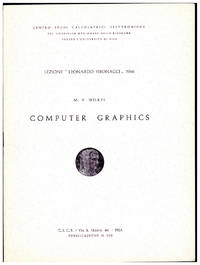
1966397471966. Wilkes Maurice V. Computer graphics. Pisa: Centro Studi Calcolatrici Elettroniche 1967. Original gray printed wrappers. Signed by Wilkes on the first leaf. 2 18 4pp. Text illustrations. 265 x 196 mm. Fine. Provenance: Maurice Wilkes. First edition olffprint issue. A review of the field of computer graphics which had enjoyed a period of explosive growth during the 1960s. Included are discussions of Ivan Sutherland's pioneering Sketchpad program developed at MIT in 1963; the representation of three-dimensional objects; and displays in a time-sharing environment. Most of the developments in computer graphics mentioned here took place at MIT both at the Lincoln Laboratory and at Project MAC. Wilkes 1999 no. 74. Origins of Cyberspace 1049. unknown books
1968397451968. Wilkes Maurice V. Computers then and now. Offprint from Jorunal of the Association for Computing Machinery 15 1968. Original blue wrappers. Signed by Wilkes on the first leaf. 7 1pp. 253 x 175 mm. Provenance: Maurice Wilkes. First edition offprint issue. A retrospective look at the development of electronic computers from the 1940s to the 1960s together with comments on the then-current state of the computer field. Randell 1982a 524. Wilkes 1999 no. 75. Origins of Cyberspace 1050. unknown books
1949397381949. Wilkes Maurice V. Electronic calculating-machine development in Cambridge. Offprint from Nature 164 October 1 1949. Unbound as issued. Signed by Wilkes on the first page. 4 2pp. Text illustrations. 211 x 141 mm. Provenance: Maurice Wilkes. First edition offprint issue. An illustrated general account of EDSAC amplifying the brief description published in Nature on August 27 1949. Included is an example of a problem-the evaluation of Airy's integral Ai -x-which could be solved by numerical methods with EDSAC. Randell 1982a 524. Wilkes 1999 no. 17. Origins of Cyberspace 1022. unknown books
1990397491990. Wilkes Maurice V. Herschel Peacock Babbage and the development of the Cambridge curriculum. Offprint from Notes and Records of the Royal Society London 44 1990. Without wrappers as issued. 205-219pp. 248 x 174 mm. Provenance: Maurice Wilkes. First edition offprint issue. A brief history of the attempt by Babbage Herschel and Peacock to reform the teaching of mathematics at Cambridge see no. 17. Wilkes 1999 no. 140. Origins of Cyberspace 1055. unknown books
1999397581999. Wilkes Maurice V. Historical studies in science and technology and the uses to which they can be put. Offprint from Notes and Records of the Royal Society of London 53 1999. Without wrappers as issued. 3-10pp. 248 x 175 mm. First edition offprint issue. The text of Wilkes's opening lecture delivered at a conference entitled "History of Science and Technology in Education and Training in Europe" held in Strasbourg in June 1998. Wilkes 1999 no. 162. Origins of Cyberspace 1061. unknown books