Jutland: An Analysis of the FightingBiblio.com
14 résultats
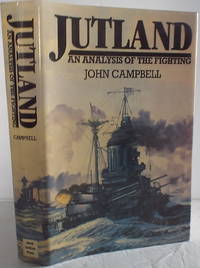
1986010785Annapolis: Naval Institute Press. First U.S. edition. Published Annapolis: Naval Institute Press 1986. 8vo. 439pp. illus with drawings and tables. Blue cloth with gilt titles. Very good in very good dust jacket. . Very Good. Hard. 1st. 1986. Naval Institute Press unknown
Gorm BenzonNot in perfect condition. unknown
19163649J B Lippincott PA 1916. Very good in green linen with gilt print and fine acetate dust jacket with fading to page edges. First edition first printing hardcover SIGNED BY EBBA KREBS H J KREBS WIFE AND INSCRIBED TO MERRITT COMMINGS CUMMINGS WAS FOR 35 YEARS CHAUFFEUR TO H J KREBS J B Lippincott, PA hardcover
19241615J B Lippincott PA 1924. Very good in green linen with gilt print and fine acetate dust jacket with fading to page edges . First edition first printing hardcover SIGNED BY MERRITT CUMMINGS AND ADDRESS 1819 LOVERING AVE WILMINGTON DELAWARE CUMMINGS WAS FOR 35 YEARS CHAUFFEUR TO H J KREBS J B Lippincott, PA hardcover
19263650J B Lippincott PA 1926. Very good in green linen with gilt print and fine acetate dust jacket with fading to page edges. First edition first printing hardcover SIGNED BY MERRITT CUMMINGS AND ADDRESS 1819 LOVERING AVE WILMINGTON DELAWARE CUMMINGS WAS FOR 35 YEARS CHAUFFEUR TO H J KREBS J B Lippincott, PA hardcover
Ryde, Aage Moesgaard; JenIn Pristine Condition. Limited edition numbered copy 225 unknown
Ove Mogensen, Birgit JenIn Pristine Condition. unknown
Rheinheimer, MartinIn Pristine Condition. unknown
Jepsen, Palle UhdNot in perfect condition. unknown
Ortmann, JytteIn Pristine Condition. unknown
Bak, Aase, Thomas Birket-In Pristine Condition. unknown
Bennett, GeoffreyIn Pristine Condition. unknown
6911In Pristine Condition. unknown
25892Christmas 1916. Underhill & Co. Printers & Publishers Plymouth. This is an extremely scarce item not held by the Imperial War Museum and significant for the five-page eye-witness account it contains pp.29-33: ‘‘H.M.S. “Ardent†and the Jutland Action. / By A. M.’ i.e. Lieutenant-Commander Arthur Marsden who was in command of the Ardent and one of only two survivors of its sinking. It is remarkable that he was allowed to disseminate such a candid account for the perusal of naval cadets! within months of the engagement. On cover: ‘The Britannia Magazine / Royal Naval College Dartmouth. / Christmas 1916.’ and printers’ slug. 4to 36pp and further three plates. On shiny paper and in brown printed wraps. Staples rusted and some leaves loose; some staining and wear but in fair condition for such a frail survival. Containing - after list of officers masters and cadets - editorial and ‘chapel’ notes correspondence articles cartoons reports of ‘Soccer’ and ‘Rugger’ ‘Beagling Notes’. But it is Marsden’s account that is of significance. Two extracts will convey the tone: ‘The enemy ships suddenly switched off lights and “ceased fire.†I could feel the ship was sinking and said so to my 1st Lieutenant Lieut. C. E. F. Egan who was also on the bridge and told him to get out the boats and rafts or what might be left of them. I tried to get down the starboard bridge ladder but that was shot away. The port one was hanging by a shred and I slid down that. The Leading Telegraphist came up to me in the quietest and most matter-of-fact way and asked if he should make any report. I told him what to make and he saluted disappeared and I never saw him again. The Leading Signalman came up and said in the most cheerful way “Well the old Argent done her bit all right Sir.†The ship was nearly gone; so it remained for us to try and save as many of the crew as possible.’ And: ‘I spoke to many men and saw most of them die one by one. Not a man of them showed any fear of death and there was never a murmur complaint or cry for help from a single soul. Their joy was andn they talked about it to the end that they and the Ardent had “done their bit†as they put it. While there were still many alive a German came close and fired a star-shell over us. I could see her distinctly and was all for giving her a hail but the men all said “Noâ€; they agreed that they would sooner take the remote chance of beig saved by an English ship rather than be a prisoner in Germany. I was nearly done in once or twice in the first hour by men hanging on to me in the last stages of exhaustion and I was separated from my lifebuoy and was pulled right over in the water but managed to recover myself and the buoy. None of the men seemed to suffer at all; they just seemed to lay back and go to sleep.’ Christmas 1916. Underhill & Co., Printers & Publishers, Plymouth. paperback