18 204 résultats
Note e riferimenti bibliografici. Dalle origini micenee alla polis. L'arte e l'intelletto nei giochi panellenici. Il fisico e l'intelletto: Equilibrio e supremazia nell'epoca ellenistica e greco-romana
S6167IME 2009. Brand new. Photographic album with three-dimensional photorealistic digital reconstructions of the buildings of the Ancient Agora in the Classical Period. It brings to life with excellent accuracy one of the most important sites of ancient hellenic culture and of the classical world. With respect to historical sources and with complete use of three-dimensional graphics the publication reconstructs both the areas and the objects and values that are directly related to the way of life and the values of that period: the judicial system celebratory rituals voting etc. In this way it demonstrates the multidimensional character of the Agora as a place where ideas were born where the intellect was cultivated and where artists created. Therefore it provides readers with the opportunity to experience virtually the most important location of ancient Athens perhaps in its most significant moment in history the Classical Period. // Also available in greek. IME 2009 unknown
25x17cm. X+492 pages. Gilt hardcover. Cover stained and rubbed. Cover edges and corners slightly worn. Spine worn. Stickers on inner cover. Binding visible between inner cover and pages. Pen inscription on white page. Pages rough cut, slightly wavy and slightly yellowing. In good reading condition.
2013122385Athènes, Academy of Athens, 2013, gr. in-8°, 303 pp, Introduction de Catherine Brégianni, 16 photos et fac-similés, tableaux et graphiques, broché, couv. illustrée à rabats, bon état. 14 études. Texte en anglais
1974RO80132285PLURIGRAF. 1974. In-4. Broché. Bon état, Couv. convenable, Dos satisfaisant, Intérieur frais. 94 pages. Nombreuses photos en couleurs, dans le texte et hors-texte.. . . . Classification Dewey : 949.5-Grèce
45894Genève, Edito-Service, 1986. 20 x 26, 70 pp., nombreuses illustrations en couleurs, quelques cartes, quelques illustrations en N/B, reliure d'édition carton imprimé, bon état.
br. Nella Grecia delle origini la follia non fu solo malattia, ma mezzo per forzare i limiti dell'anima e dilatare la personalità. Faceva parte dell'esperienza religiosa, stava alla base dell'attività di profeti e persino di politici, era la voce degli oracoli. C'era metodo in quella pazzia: ispirava poeti e cantori, né mancavano culti estatici, come quello di Dioniso, in cui gli adepti avevano esperienze visionarie, come tuttora avviene nei riti di possessione diffusi in numerose altre civiltà. In Grecia i pazzi non venivano reclusi: piuttosto la società era capace di modellare la follia al proprio interno, sfruttandola in modo creativo. Questo libro mostra quanto la stessa civiltà dell'Occidente debba alla non-ragione.
Padova, 1992, estratto, pp. 39/56 con 21 tav. f.t. - !! ATTENZIONE !!: Con il termine estratto (o stralcio) intendiamo riferirci ad un fascicolo contenente un articolo di rivista, sia che esso sia stato stampato a parte utilizzando la stessa composizione sia che provenga direttamente da una rivista. Le pagine sono indicate come "da/a", ad esempio: 229/231 significa che il testo è composto da tre pagine. Quando la rivista di provenienza non viene indicata é perchè ci è sconosciuta. - !! ATTENTION !!: : NOT A BOOK : “estratto” or “stralcio” means simply a few pages, original nonetheless, printed in a magazine. Pages are indicated as in "from” “to", for example: 229/231 means the text comprises three pages (229, 230 and 231). If the magazine that contained the pages is not mentioned, it is because it is unknown to us.
198416874-yg8180Stuttgart: Franz Steiner Verlag 1984. 22 Seiten. Orig. Broschur (minimal berieben und bestossen, sonst sehr gutes und sauberes Exemplar). Gr.-8°. broschiert/ Taschenbuch
2007127820<p><em><strong>Aiginion Pieria: Pottery from the Cemetery at Melissia</strong></em></p><p>In Greek. Soft cover 268 pp. ill. ISBN: 978-960-6681-11-0.</p><p> In northern Pieria Melissia 2 km northwest of the ancient Methone and 8 km northwest of ancient Pydna an ancient cemetery found in 1994; it belonged to a settlement established after the destruction of ancient Methone by Philip II in 354 B.C. The pottery presented in detail in this book come from 57 burials in this cemetery 354 B.C. to the early 2nd century B.C. illustrating the preferences of the inhabitants in the selection of ceramic offerings and the gradual cessation of domestic pottery workshops from the tradition of Attica and their progress towards a physiognomy of their own.</p><p>==================================================================</p><p><strong>IMPORTANT: The price does NOT include the shipping cost which depends on actual weight and destination. You will receive a message after placing the order with the exact cost and the options available; then you will have to approve / reject this cost; you may also ask about this cost before placing the order at siatras@hotmail.com .</strong></p> Sfakianakis paperback
1961F105130Padova, Cedam 1961 163pp., in the series "Universita di Padova. Pubblicazioni della Facolta di Lettere e Filosofia" volume 37, 26cm., softcover, text in Italian, good condition, F105130
163pp., in the series "Universita di Padova. Pubblicazioni della Facolta di Lettere e Filosofia" volume 37, 26cm., softcover, text in Italian, good condition, F105130
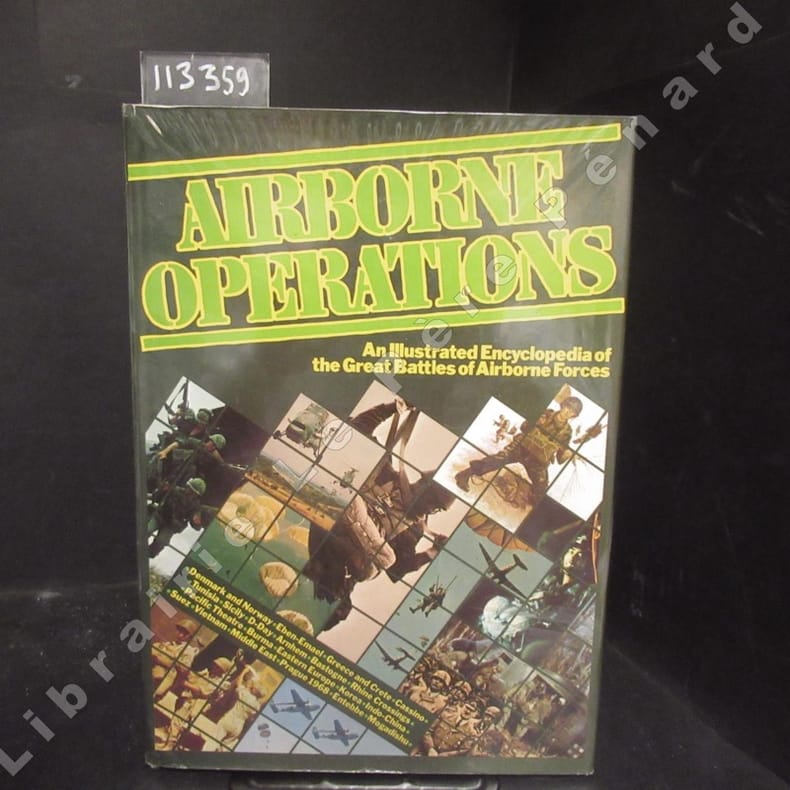
Features: The rise and fall of the VNAF - the rise and fall of the South Vietnamese Air Force, from 1951 to 1975; America's Spitfires - the USAAF was second only to the RAF as a major operator of the Supermarine Spitfire - a review of their operational history in American service; The RAF in Greece - 1940/41 - the fulfillment of Britain's treaty obligations; CW-21 - the St. Louis Lightweight - the story of the relatively unknown Curtiss-Wright CW-21 fighter in WWII; Sixes and Sevens - completing the story of the 4-engined Douglas transport family, begun in AE/15 - the DC-6 and DC-7; The Blenheim in Yugoslavia - two successful years of Blenheim operations in Yugoslavia were followed by eight days of disaster in 1941; F13 - the Pioneer from Dessau - first flown in 1919, the Junkers F 13 was still serving after WWII; Armstrong Whitworth's Flying Wings - Laminar flow research and boundary layer control, as applied to the A.W.52 flying wings; Walrus - amphibious angel of mercy - designed by Reginald Mitchell; PR Flying and the Spitfire - an account of war-time photographic reconnaissance operations in the Middle and Far East; "Britain Captures Schneider Trophy" - this 1931 headline summed up the culmination of an 18-year endeavour; The MiG Killers of Korea - the North American F-86 Sabre achieved the greatest success in air-to-air combat; Fokker's D VIII - the reluctant Razor - the world's first operational cantilever-winged fighter; Caught by the wing-tip - C.E. 'Bud' Anderson's experiences as a test pilot in the wing-tip coupling experiments; Bombay - Pegasus Draught, Bristol Dray - the flying characteristics and operational career of the Bristol Bomber-transport; Quest for Altitude - The First Generation MiGs - a comprehensive account of the first fighters to bear the MiG appellation; Return of the Razorbacks - the restoration and flight demonstrations of the only Allison-engined Mustangs now extant; A seversky in the Spanish War - the SEV-3; Stratocruiser - ending an airline era - the role of the Boeing Stratocruiser in post-war air transport evolution; Destination - Disaster - how 8 new Saab B 18Bs of the Swedish Air Force met their doom, and how they came back; Estonian Air Power, 1918-1945. Clean, bright and unmarked with negligible wear. A lovely copy. Book
This Australian journalist was a War Correspondent whose despatches were published in the Times and the and the Guardian. This book uses includes first hand accounts from some of the Australian and NZ troops who fought in Crete against the German paratroopers who invaded the island. xvi,152p. plates map.Neat clean copy but with sun-faded slightly scuffed spine, ffep missing. Book
19781133591978 Editions Salamandre - 1978 - In-4, cartonnage toilé vert kaki, titre doré au dos, sous jaquette illustrée en couleurs - 220 p. - Nombreuses reproductions photographiques en N&B in et hors-texte - Texte en anglais
18879HALLE, in der Renger'schen buchhandlung - 1822 - E.O. - In-8 - Cartonnage usagé - toutes tranches rouges - CXVI & 477 + Errata (1) - bon exemplaireEn grec & en allemand
HALLE, in der Renger'schen buchhandlung - 1822 - E.O. - In-8 - Cartonnage usagé - toutes tranches rouges - CXVI & 477 + Errata (1) - bon exemplaire En grec & en allemand
1 21.5x15.5 cm., 125, [3] pp., 24 illustrazioni , legatura in brossura, in francese, buone condizioni
pp. (14), 182, (18). The very thin paper used to cancel a4 and b4 has deteriorated - completely on a4. Text in Greek with Latin notes. Three engraved portraits have apparently been removed. ** Extensive manuscript translations into English. 8vo. (in 4). [18 5 x 113 mm.] Contemporary full calf binding. Boards tooled in blind with several frames. Cracked at joints. Early ownerships, including: Jacob Nash, Oxford and E.G. Davis, 1847. Dibdin I:487. Aeschine s (Ca. 390?314 B.C.), Athenian orator and polititian, was a great rival of Demosthenes (384??322 B.C.). He rose from humble circumstances and became powerful in politics because of his oratorical gift s. At first he opposed Philip II of Macedon, then later changed sides, arguing that resistance to Macedonian power was useless. Both he and Demosthenes were members of the embassy to Philip in 348 B.C ., and afterward Demosthenes bitterly and baselessly accused Aeschines of accepting Macedonian bribes. He was to have been joined in his action by Timarchus, but Aeschines prevented this by his oratio n Against Timarchus (345 B.C.). Aeschines defended himself well in his oration On the False Legation (342 B.C.)?a title also used by Demosthenes in his accusatory oration. The trouble between the orat ors grew and culminated in a dispute over a gold crown that the orator Ctesiphon proposed should be given Demosthenes in 330 B.C. Aeschines brought suit with Against Ctesiphon. Demosthenes replied wit h his sturdy defense On the Crown. Aeschines lost and was fined, and retired to Asia Minor where, according to Plutarch, he lived as a professional Sophist. This is offered as much for its manuscript interest as for it being an early printing. W120
2016S6676<p>In Greek and Italian. Soft cover 24 cm 416 pp. maps. ISBN: 978-960-7743-70-1. Contains documents of the era.</p><p>.</p><p>.</p><p>===================================================</p><p><strong>IMPORTANT: The shipping cost in not included in the price. You will have to approve it at confirmation of the order. Ιnsurance of the shipment may also be necessary for Canada and some other countries.</strong></p> Istituto Ellenico di Studi Bizantini e Postbizantini di Venezia paperback
Athens, TEDK, 1995, 8vo brossura editoriale con copertina illustrata a colori, pp. 128 con numerose illustrazioni a colori n.t.
cm. 17,5 x 25, 164 pp. Universit? di Padova - Pubblicazioni della Facolt? di lettere e filosofia 392 gr. 164 p.
2008135125<p><b><i>Ahikar - The "</i><i>Narration of Ahikar" in Ancient Greece</i><i></i></b></p><p>Athens: Stigme 2008-2013. In Greek. Three volumes. Soft cover 24 cm 336428616 pp. ISBNs: 978-960-269-207-3 978-960-269-208-0 978-960-269-250-9. Shipping weight 3.5 kg. Separate volumes also available.</p><p>Τόμος A: ΓÎνεση και αφηγηματικό υλικό</p><p>Τόμος B: Από τον ΔημόκÏιτο στους ΠεÏιπατητικοÏÏ‚</p><p>Τόμος Γ: Η διήγηση του Î‘Ï‡Î¹ÎºÎ¬Ï ÎºÎ±Î¹ η μυθιστοÏία του Αισώπου</p><p>The first volume of this book contains a few general points about the history and dissemination of "the Ahikar's narration" and an extensive study of the narrative material which is also the material of a big part of the "fiction" of Aesop. The author has also collected and summarized here unpublished data on puzzle games in ancient Greece. The second volume is dedicated to the Greek perception of "the Ahikar's narration" or material from the archaic to the hellenistic period <i>i.e.</i> before Aesop incorporates this material to his myths. The aim was to discuss in detail and to assess the evidence for the acquaintance of the ancient Greeks with the "narration" as a coherent literary text. Τhe third volume is consisted of a detailed comparison of Aesop's <i>Fables</i> with all the surviving variations of Achikar.</p><p><b>IMPORTANT: The price does NOT include the shipping cost which depends on actual weight and destination. You will receive a message after placing the order with the exact cost and the options available; then you will have to approve / reject this cost; you may also ask about this cost before placing the order at dem.siatras@gmail.com .</b></p> Stigme paperback
173pp., in the series "Göppinger Akademische Beiträge" volume 8, 21cm., softcover, good condition, F105186
19240524Paris, Éditions de la Pléiade / J. Schiffrin & Co, 1924. Tirage limité avec des eaux-fortes de D. Galanis, édition spéciale bibliophile de cette nouvelle du comte de Gobineau. Grand in-8 broché de 25 x 18 cm, 99 pages. Couverture brochée rempliée. Nombreuses eaux-fortes noir et blanc sur des pages hors-texte avec papier de soie. Nom de l'éditeur en filigrane de la page de faux-titre. L'un des 400 exemplaires sur vélin à la cuve, celui-ci portant le numéro 322. "Le capitaine Peter Gansemann avait, après un séjour d’un mois à Naxie, laissé entre les mains de M. Phrangopoulo un certificat par lequel il informait la postérité la plus reculée, dans le but de servir à tout ce que de raison, que M. Phrangopoulo était l’homme le plus honorable qu’il eût jamais rencontré, et l’avait nourri lui et son équipage pendant son séjour forcé dans l’île, générosité d’autant plus méritoire, ajoutait le reconnaissant capitaine, que ce digne consul lui avait paru vivre dans un état voisin de la misère." État moyen à bon : nombreuses rousseurs sans perte au texte ni aux illustrations, papier de soie décollés, plats un peu froissés, dos qui fait son âge. Intéressant exemplaire montrant que plus de 40 ans après la mort de Gobineau, sa littérature continuait à voyager au Brésil, pays où il avait représenté la France et s'était lié d'amitié avec l'empereur Dom Pedro II. D'abord publiée en 1872 dans le recueil "Souvenirs de voyage", la nouvelle Akrivie Phrangopoulo apparaît ici pour la première fois en édition propre.