Maurice Constantin-WeyerLivre Rare Book
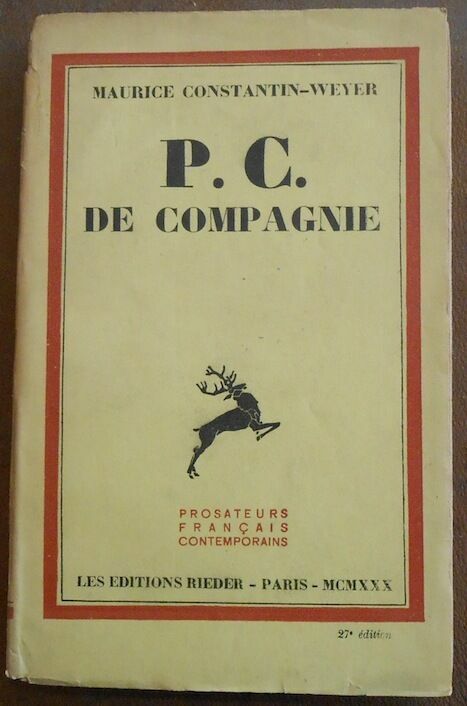
P.C. de Compagnie
1930116731930. Paris éd. Rieder 1930 - Broché 12 cm x 19 cm 231 pages - Texte de Maurice Constantin-Weyer - Dos restauré sinon bon état
Librairie Sedon · Rochefort, France20,00 €
144 résultats
Very Good Turkish, Ottoman (1500-1928) Original autograph letter handwritten signed by Mehmed Semseddin Pasha addressed to 'Kütahya Evkâf-i Humâyûn' [i.e. Kütahya Imperial Foundations]. It starts with 'Huve' traditionally. (29x21 cm). In Ottomsn script. Letterhead 'Nezâret-i Evkâf-i Humâyûn' [i.e. Ministry of foundations]. 1 p. including eight lines with additional annotation. Mehmed Semseddin was an Ottoman / Turkish statesman with Circassin (Adige - Shapsig) origin, descended from Tletseruk (or Tleseruk) family. Mehmed Semseddin Pasha was the son of Hacizade Osman Bey who was a Circassian chieftain. In 1864, his family emigrated to Samsun and then to Istanbul in the Great Immigration of Circassians. He was graduated from Galatasaray High School. He was also groom of Egypt Extraordinary Commissioner Circassian Rauf Pasha, a member of the Society Circassian Charity (Çerkes Teavun -Yardim- Cemiyeti), the manager and author of Guaze newspaper published in Turkey which was first published journal in Latin letters in Turkey.
Very Good Turkish, Ottoman (1500-1928) Original manuscript autograph document signed by Mehmed Said Pasha sent to Trabzon Vilayat, Ordu Kaza, Hasbamane Nahiya local manager, faziletlu 'Mehmed Ali Sevki Beyefendi'. 33,5x20 cm. Folded. 1 p. In Ottoman script. Mehmed Said Pasha was an Ottoman monarchist, senator, statesman and editor of the Turkish newspaper Jerid-i-Havadis. He supported the CUP, the political party which came to power after the Ottoman coup d'état of 1913. His origin comes from 'Sebazâde family' from Ankara. He became first secretary to Sultan Abdul Hamid II shortly after the Sultan's accession, and is said to have contributed to the realizations of his majesty's design of concentrating power in his own hands; later he became successively minister of the interior and then governor of Bursa, reaching the high post of grand vizier in 1879. He was grand vizier seven more times under Abdul Hamid II, and once under his successor, Mehmed V. He was known for his opposition to the extension of foreign influence in Turkey. n 1896, he took refuge at the British embassy in Constantinople, and, though then assured of his personal liberty and safety, remained practically a prisoner in his own house. He came into temporary prominence again during the revolution of 1908. On 22 July he succeeded Mehmed Ferid Pasha as grand vizier, but on the 6 August was replaced by the more liberal Kâmil Pasha, at the insistence of the Young Turks. Also during 1908, Mehmed Said Pasha bought the famed Istanbul arcade in the Beyoglu (Pera) district, today known as Çiçek Pasaji ("Flower Passage"). The modern name became common in the 1940s; during Mehmed Said Pasha's ownership in the 1900s and 1910s, the arcade was known as Sait Pasa Pasaji ("Said Pasha Passage"). During the Italian crisis in 1911-12, he was again called to the premiership. He was again removed from power by the Savior Officers (who backed the Freedom and Accord Party (Liberal Union) against the Committee of Union and Progress) and replaced by a new cabinet supported by the Officers and the Freedom and Accord Party. The CUP would return to power, however, the next year after the Ottoman coup d'état of 1913. (Source: Wikipedia). Seven lines on special paper with watermark 'Joynson Superfine'. Letter of request to provide teaching for some students in the region.
Very Good Turkish, Ottoman (1500-1928) Original paper autograph letter handwritten signed by Mehmed Refet Ülgen. 21x13,5 cm. In Ottoman script (Turkish with Arabic letters). 1 pp. Ink stains and chipped on margins. Folded. A good copy. Written with a unique riq'a script. Mehmed Refet Ülgen, (1888-1964), was a member of parliament from Urfa city, educator (he was manager of several Turkish schools), director of Ziraat Bank.
1930116731930. Paris éd. Rieder 1930 - Broché 12 cm x 19 cm 231 pages - Texte de Maurice Constantin-Weyer - Dos restauré sinon bon état
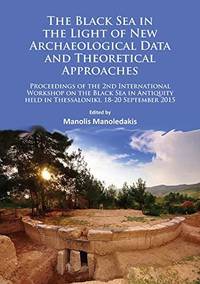
ria9781784915100_inpPaperback / softback. New. New Book; Fast Shipping from UK; Not signed; Not First Edition; The Black Sea in the Light of New Archaeological Data and Theoretical Approaches contains 19 papers on the archaeology and ancient history of the Black Sea region covering a vast period of time from the Early Iron Age until the Late R paperback
Very Good Turkish, Ottoman (1500-1928) Original autograph letter handwritten signed by Mahmud Sevket. (33x21 cm). In Ottoman script. 1 p. Case and its response by Mahmud Sevket when he was the governor of Kosovo. Document has 17 lines including the case of 'comitadjis' in Gjilan region of Kosovo. Report says that several comitadjis have been arrested and for them the court was expected to issue a death sentence. In his response, Mahmud Sevket Pasha has ordered that the death penalty should be converted to life rowing (hard labour). Mahmud Sevket's text: "Mabeyn-i Humayun Cenâb-i mülûkâne-i bas kitâbet celilesinden (?) celileden teblîg buyurulan telgrafane-i âlîsi sureti bilâde nakl-i (?) müebbeden kürek cezasi ile mahkûm edilerek idamlari cihetine gidilmemenin azâ-yi muhakemeye ettirilmeyeek ve muamelât-i muhakeme-i te'dib etmekte olan memuriye mucibiince dahi anlasilamayacak surette muhakeme-i fevkalâde re'isine bizzat sifâhen teblîg buyurulmus ve isbu muharebenin nezd-i âlîsinde hifz-i (?) müsarinileyhin emriyle müstesnâdir. Yevm-i muhakeme gayr-i mâlûm ise de bunun yarisinin bile icrâ olunmasi mahtumun bulunduguna göre teblîgâtin ihtiyâten teblîgi (?) baskaca beyân olunur efendim. Kosova Vâlisi Birinci Ferik Mahmud Sevket.".
Very Good Turkish, Ottoman (1500-1928) Original paper autograph letter handwritten signed by Mahmud Sevket, Izzeddin Çalislar. (33x21 cm). In Ottoman script. 2 p. Repaired back side. Request of a surgical operation by 'Said bin Mehmed' (Siroz Redif Taburu Efrâdindan) and Mahmud Sevket Pasha and Izzeddin's confirmations. Signed by Mahmud Shevket Pasha as "commander of Turkish countercoup of 1909 (Hareket Army)" and by Izzeddin [Çalislar] as "Erkân-i Harb Kolagasi (Batallion commander)". The Ottoman countercoup of 1909 (13 April 1909) was an attempt to dismantle the Second Constitutional Era of the Ottoman Empire and replace it with an autocracy under Sultan/Caliph Abdul Hamid II. Unfortunately for the advocates of representative parliamentary government, mutinous demonstrations by disenfranchised regimental officers broke out which led to the collapse of the Ottoman government. Characterized as a counterrevolution, chaos reigned briefly and several people were killed in the confusion. It was instigated by some parts of the Ottoman Army in a large part by a certain Cypriot Islamic extremist. Dervish Vahdeti reigned supreme in Istanbul for 11 days. The Countercoup was put down in the 31 March Incident, on 24 April 1909 by the Army of Action (Hareket Ordusu) which was the 11th Salonika Reserve Infantry Division of to the Third Army (Ottoman Empire) commanded by Mahmud Shevket Pasha. Extremely rare.
191813831918 Paris, Éditions Parisiana, sans date [1918]. 20 cartes postales protégées par une serpente. Format 14 x 8,5 cm, dont 15 ont pour sujet la prostitution. Une carte se détache sinon bon exemplaire. Légendes bilingues français-anglais.
20210Paris, L. Carteret, 1925. In-4, 228 pp., en feuilles, couverture originale illustrée, chemise et étui cartonnés de l'éditeur (étui déraîchi, petites taches à la chemise).
New English Paperback. Pbo. Roy. 8vo. (24 x 17 cm). In English. 172 p. Farewell to Ottoman Salonica.
839 pages plus author and keyword indeces. Sections include: Grain Boundaries Structure and Chemistry; Dynamical and Mechanical Properties; Heterophase Interfaces; Electrical Properties and Superconductors; Nanocrystalline Materials. Prior owner details blacked out upon half-title page else unmarked. Light wear. Clean. Tight and square. Nice copy in green card covers. Book
2001224280Weimar: VDG 2001. 226 S., 91 Abb. Lit.verz. Kart. *neuwertig*.
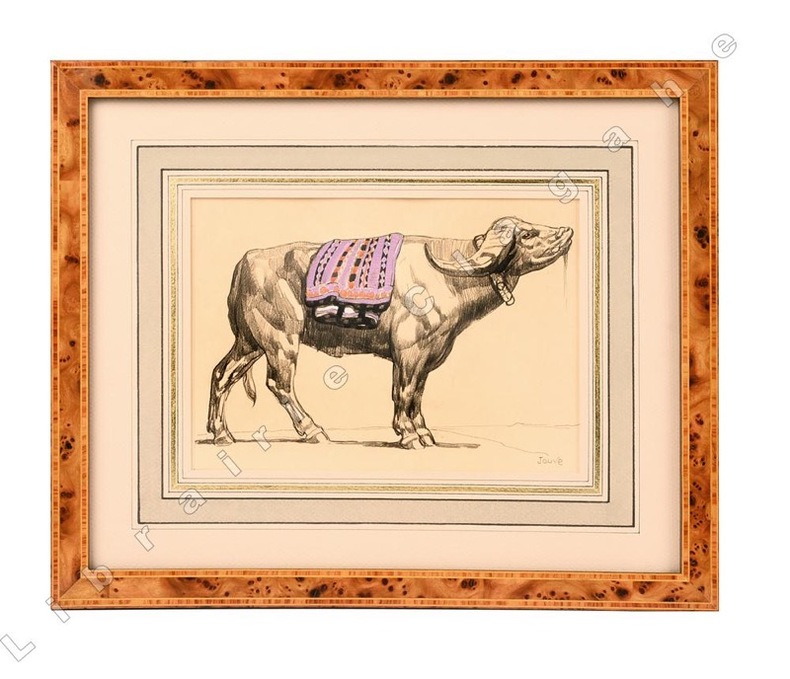
185221442Dessin original au crayon gras, gouache et aquarelle sur papier japon impérial (185 x 217 mm ; recadré 151 x 212), signé au crayon dans le coin inférieur droit ; passe-partout à large encadrement bicolore beige et vert et large filet doré, encadrement de loupe. Format total 295 x 355 mm. Au dos, partie de dessin au crayon et fusin, découpée.
Fine English Paperback. Pbo. Roy. 8vo. (24 x 17 cm). In English. 52 p. Winner of the Special Prize in the Ottoman Bank Archives and Research Centre's competition unveiling the history of Turkish banking and finance in 2001, John Karatzoglou's The Impreial Ottoman Bank in Salonica; The First 25 Years (1890-1890) reconstructs the atmosphere in this branch of the bank in the late nineteenth century. The second largest Ottoman city in the European part of the Empire, Salonica was a vibrant city where Muslims, Christians, and Jews lived and worked together. Like the city, the local branch of the Ottoman Bank reflected the cosmopolitan atmosphere of the Empire. Based on data from the Ottoman Bank's personnel archives from the Salonica branzch, Karatzoglou has pieced together profiles of the employees, their positions, and their experiences in the bank. He produces the flavor of a local society on the eve of momentous change.
Very Good English Paperback. Pbo. Roy. 8vo. (23 x 16 cm). In Turkish. [xii], 70, 33 p., 7 b/w plates. 33 p. facsimile of Latin script. Chronicle of the last siege of Salonica, a Byzantine source belongs to Sultan Murad II, the Ottoman Empire. Selânik (Thessaloniki)'in son zapti hakkinda bir tarih. Sultan II. Murad dönemine ait bir Bizans kaynagi. Translated and prep. by Melek Delilbasi.
New English Paperback. Pbo. Roy. 8vo. (24 x 17 cm). In French. 152 p. Memoires posthumes et inachevees de Jacques Abravanel, Juif Portugais, Salonicien de naissance, Stambouliote d'adoption. Texte revue par Alexandre Toumarkine.
PARIS, P.U.F. - Fondée en 1878 par Gabriel Monod, publiée avec le concours du CNRS et de la 6e section de l'Ecole des Hautes Etudes.- Revue historique N° 627, juillet 2003 - In-8, 15,5 x24 cm - Broché - paginé 475 à 734 - Propre - Envoi rapide et soigné La Revue historique, est une revue d’histoire française créée en 1876 par le protestant Gabriel Monod et le catholique Gustave Fagniez. Cette nouvelle revue s'inscrit en réaction contre La Revue des Questions historiques créée dix ans plus tôt et qui traduisait la pensée d'une droite ultramontaine et légitimiste. La Revue historique ne se réclame d'aucune religion, d'aucun parti, d'aucune doctrine Éditée à Paris par les Presses universitaires de France
27227PARIS, P.U.F. - Fondée en 1878 par Gabriel Monod, publiée avec le concours du CNRS et de la 6e section de l'Ecole des Hautes Etudes.- Revue historique N° 627, juillet 2003 - In-8, 15,5 x24 cm - Broché - paginé 475 à 734 - Propre - Envoi rapide et soigné
1917054904Istanbul: Ahmed Ihsan ve Sürekasi Matbaasi. AH 1333 1917. 1st Edition . Soft cover. Good. 8vo - over 7¾ - 9¾" tall. Original wrappers. Foolscap 8vco. 17 x 11 cm. In Ottoman script Old Turkish with Arabic letters. 126 p. 11 unnumbered b/w plates 8 numerous b/w ills. tables. Slight creasing on some pages and slight stains otherwise a good copy. First and only edition of this rare photography guide in Ottoman literature prepared and published by Ipekci Brothers. This richly illustrated guide tells how to use a camera to take good and artistic photographs and introduces parts of a camera. Some good photographic examples in this book as separate plates. The Ipekçi family who had been engaged in the silk business for several generations in Thessaloniki Greece continued the silk trade for a while in Constantinople where they migrated in 1893. The brothers who first opened a store called "Hüsn-i Intihap" in Istanbul and then the Thessaloniki Bonmarche one of the biggest stores of the period turned to filmmaking with Ihsan Ipekçi's initiative after the Thessaloniki Bonmarche was demolished during the arrangement of Eminönü Square. The family which started operating the Alhambra Cinema which was opened in 1923 converted "Paten Sarayi" i.e. Skating Palace into a movie theater and opened the Melek today's Emek cinema a year later. Ahmed Ihsan was an important figure of the late 19th century and also the founder of a current in Turkish literature "Servet-i Fünûn" i.e. The Wealth of Sciences or Knowledge. He established a prominent printing house in the Ottoman Empire and he is known as the translator of the first Jules Verne translation into Turkish. Three copies in OCLC 949475400: Bogaziçi University Library and UCLA and University of California Los Angeles Southern Regional Library Facility. <br/> <br/> Ahmed Ihsan ve Sürekasi Matbaasi., [AH 1333] paperback
Very Good Turkish, Ottoman (1500-1928) Original manuscript autograph letter signed 'Birinci Ferik Nâzim' by Hüseyin Nazim Pasa sent to 'Yanya Vali-i Sâbiki Süvâri Ferikânindan saâdetlü [Ferik -i.e. General-] Hamdi Pasha. 37x23 cm. With letterhead of 'Hassa Ordu-yi Humâyûn Dairesi'. In Ottoman Turkish. 1 p. Slightly chipped on folded margins. Otherwise a good manuscript paper. It starts as in elkâb section "Saâdetlü efendim hazretleri" and it goes on as "Hâs Ordu-yi Humâyûna mensûb Birinci Süvâri Firkasi Kumandanligi deruhde olunduk ifâ-yi vâzifeye mübâseret buyurulmasi tevci olunur efendim., Fî sene 27 Rübu'l-evvel [1]327 / ve fî sene 5 Nisan [1]325. ". [i.e. Nazim Pasha wants to take over the task of First Army Commandership]. Hegira: 1325 = Roumi: 1327 = Gregorian: 1909. This letter written in Balkan Peninsula before Balkan Wars (1912-1913). Nazim Pasha was the Minister of War of the Ottoman Empire from 8 January 1912 to 23 January 1913. His father was Circassian Ismail Pasha (Çerkes Ismail Pasa). He joined the war ['93 Harbi = 1877-78 War] as a young officer. Afterwards, he held various positions in the Ottoman armies, especially in Rumelia. He participated in military maneuvers in Russia and France and was later included in the 'Fahr-i Yaverân'. He served as the 2nd Army Command in Edirne during the Constitutional Monarchy period and was briefly appointed as the 1st Army Command in March 31 period. During this period, he was close to Ahrar Party and Prince Sabahattin. Later, the First Balkan War, in which he commanded the Ottoman army as the Commander-in-Chief, failed.
Very Good Turkish, Ottoman (1500-1928) Original manuscript autograph berat for preferment of Hüseyin Hüsnü Pasha in '93 Harbi ( Risso-Turco War, 1877-1878). 41,5x24 cm. In jali-diwani Ottoman script. Signed and sealed. Preferment of Hüseyin Hüsnü Pasha on his achievements in the Russo-Turkish War between the years of 1877-78.
A beautiful and epic novel that spans nearly a hundred years, The Thread is a magnificent story of a friendship and a love that endures through the catastrophes and upheavals of the twentieth century,both natural and man-made,in the turbulent city of Thessaloniki, Greece...sweeping historical events, from fire to civil war to Nazi brutality and economic collapse. Thessaloniki, Greece, 1917: As Dimitri Komninos is born, a fire sweeps through the thriving multicultural city where Christians, Jews, and Muslims live side by side. It is the first of many catastrophic events that will forever change this place and its people. Five years later, as the Turkish army pushes west through Asia Minor, young Katerina loses her mother in the crowd of refugees clambering for boats to Greece. Landing in Thessaloniki's harbor, she is at the mercy of strangers in an unknown city. For the next eighty years, the lives of Dimitri and Katerina will be entwined with each other and - through Nazi occupation, civil war, persecution, and economic collapse -with the story of their homeland. Thessaloniki, Greece, 2007: A young Anglo-Greek hears his grandparents' remarkable story for the first time and understands he has a decision to make. For decades, Dimitri and Katerina have looked after the treasures of those who have been forced from their beloved city. Should he stay and become their new custodian? See all Editorial Reviews Book
New English Paperback. 4to. (30 x 25 cm). In English. Color and b/w ills. [xvi], 231 p. In this study, Heath Lowry takes the reader on a series of fascinating journeys through the former Ottoman territories which today comprise northern Greece. Part travelogue and part history of a once key part of the discovery of destroyed and/or long forgotten Ottomans monuments, in combination with a detailed examination of the current status of those which survive today. Lowry approaches his subject by following the footsteps of the early 20th century British archeologist, F. W. Hasluck, who was the first scholar to examine the manner in which one time pagan sacred spaces in Anatolia and the Balkans had first been subsumed as Christian sites, and then in turn converted into Muslim sacred spaces. The question Lowry sets out to answer is: what happened to the Muslim sacred spaces in northern Greece following the collapse of the Ottoman Empire at the end of the First World War? His account traces the manner in which a surprisingly large number of such sites were subsequently converted (or reconverted as the case may be) into Christian sacred spaces. Running the gamut from major works of Ottoman architecture, such as the previously unstudied 14th century mosque of Yildirim Bayezid in Drama, to the mosque of the Ottoman 3rd Army Headquarters in Thessaloniki (Selanik), both of which today are Orthodox Churches, he traces the fate of not only mosques, but tombs, and even subjects as varied as tree cults and totem stones. This work, which reflects the author's travels in northern Greece throughout the past five years, is a must-read companion piece to his earlier: The Shaping of the Ottoman Balkans. Together these two works, which Bahçesehir University is proud to have published as parts of its Tenth Anniversary Commemorations, mark a major contribution to our knowledge of both the long neglected Ottoman architectural legacy in Greece and to the subsequent subsumption of many Muslim sacred spaces.
New English Paperback. 4to. (30 x 25 cm). In English. Color and b/w ills. [xvi], 286 p. Contents: Chapter 1: In the footsteps of Haci Evrenos: A reinterpretation of the 14th Century Ottoman Conquest of Western Thrace.; Chapter 2: The Role of Imarets (Soup Kitchens) & Zaviyes (Dervish Lodges) in the Settlement of the Greek Lands.; Chapter 3: Selanik's (Thessaloniki's) Fortress of the Seven Towers: What it Tells Us About the Post-Conquest History of the City.; Chapter 4: The Ottoman Architectural Legacy & Economic Life in the Western Macedonian City of Siroz (Serres).; Chapter 5: Searching for Ottoman Zihne: Archeology, Tahrir Defters & Travelers as Sources for the History of Northern Greece., Chapter 6: Ibrahim Pasha & the Making of Ottoman Kavala, ca. 1478-1536.; Chapter 7: The Ottoman Bath Culture: Or Two Little Known 15th Century Ottoman Kaplicas (Hot Springs) in Macedonia.
New English Paperback. Pbo. 4to. (30 x 25 cm). In English. Color and b/w ills. [xvi], 286 p. Contents: Chapter 1: In the footsteps of Haci Evrenos: A reinterpretation of the 14th Century Ottoman Conquest of Western Thrace.; Chapter 2: The Role of Imarets (Soup Kitchens) & Zaviyes (Dervish Lodges) in the Settlement of the Greek Lands.; Chapter 3: Selanik's (Thessaloniki's) Fortress of the Seven Towers: What it Tells Us About the Post-Conquest History of the City.; Chapter 4: The Ottoman Architectural Legacy & Economic Life in the Western Macedonian City of Siroz (Serres).; Chapter 5: Searching for Ottoman Zihne: Archeology, Tahrir Defters & Travelers as Sources for the History of Northern Greece., Chapter 6: Ibrahim Pasha & the Making of Ottoman Kavala, ca. 1478-1536.; Chapter 7: The Ottoman Bath Culture: Or Two Little Known 15th Century Ottoman Kaplicas (Hot Springs) in Macedonia.