2 025 résultats
Tusnad, Sfintu Gheorghe, 1998, in-8 formato album, br., pp. 234. Con ill. in b.n. (Testo plurilingue).
Bergamo, 1916, 8vo stralcio con copertina posticcia muta, pp. 426/438 con 16 illustrazioni. - !! ATTENZIONE !!: Con il termine estratto (o stralcio) intendiamo riferirci ad un fascicolo contenente un articolo, completo in se, sia che esso sia stato stampato a parte utilizzando la stessa composizione sia che provenga direttamente da una rivista. Le pagine sono indicate come "da/a", ad esempio: 229/231 significa che il testo è composto da tre pagine. Quando la rivista di provenienza non viene indicata é perché ci è sconosciuta. - !! ATTENTION !!: : NOT A BOOK : “extract” or “excerpt” means simply a few pages, original nonetheless, printed in a magazine. Pages are indicated as in "from” “to", for example: 229/231 means the text comprises three pages (229, 230 and 231). If the magazine that contained the pages is not mentioned, it is because it is unknown to us.
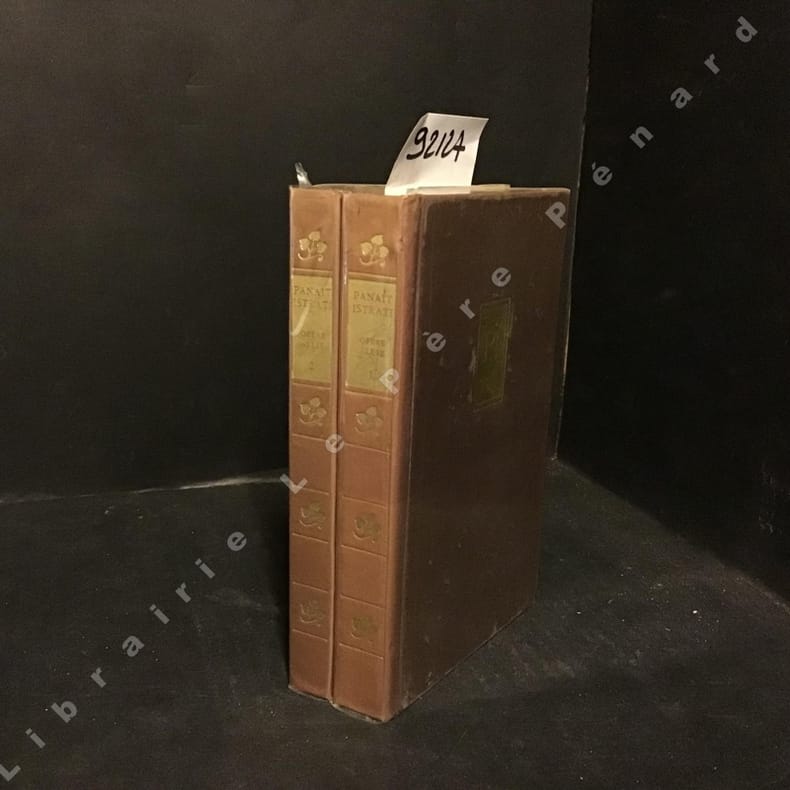
1966921271966 Editura Pentru Literatura 1966, Editions Bilingue français/roumain. 2 vol petit in-8, cartonnage éditeur pleine toile verte avec titre et auteur en doré. 335 + 334 pages
Pages unopened. Very light shelfwear else fine. ; En français. 15 pages of plates/planches at end. ; Collection Latomus Volume 123; 176 pages
17x12. 256p. Pequeño corte en cubierta. Trad. J. García Mercadal.
19664103806Giessen: Verlag Wilhelm Schmitz 1966. 131 Seiten. 8° (17,5-22,5 cm). Orig.-Broschur. [Softcover / Paperback].
196689581Gießen: Schmitz 1966. 131 Seiten. Gr. 8° (22,5-25 cm). Orig.-Broschur. [Softcover / Paperback].
Small octavo in white, color illus DJ; offwhite cloth boards; 172 p. ; 20 cm. In Czech. Uncommon. || Europe -- Description and travel -- 1971-1977.
(Roma, Ministero della Marina, 1927), stralcio con copertina posticcia muta, pp. 178/179 - !! ATTENZIONE !!: Con il termine estratto (o stralcio) intendiamo riferirci ad un fascicolo contenente un articolo di rivista, sia che esso sia stato stampato a parte utilizzando la stessa composizione sia che provenga direttamente da una rivista. Le pagine sono indicate come "da/a", ad esempio: 229/231 significa che il testo è composto da tre pagine. Quando la rivista di provenienza non viene indicata é perchè ci è sconosciuta. - !! ATTENTION !!: : NOT A BOOK : “estratto” or “stralcio” means simply a few pages, original nonetheless, printed in a magazine. Pages are indicated as in "from” “to", for example: 229/231 means the text comprises three pages (229, 230 and 231). If the magazine that contained the pages is not mentioned, it is because it is unknown to us.
1988OKKU1564Columbus, Ohio State University Press 1988. XXXIX, 288 S., OLn. mit OUmschlag.
267 pages. "Author left Roumania in May, 1940, for a brief visit to England. She was never able to return. All of her estates and personal property have been confiscated by the present government in Roumania. This book is the outcome of anxious days when, while she was living in England and time lay heavy on her hands, Princess Anne-Marie turned to the past and relived the carefree time of her youth - a way of life that has since vanished from Europe." - from dust jacket. Book clean, tight and unmarked with moderate wear. Binding intact. Above-average wear to dust jacket now preserved in archival-grade Brodart. A sound working copy. Book
In 8°, t.t. edit. con sovrac., pp. 309,(3); prima ed., copia molto buona, solo lievemente brunita. (x207)
[6], 3-241 pages. "Toyne's skillful acts of sabotage undoubtedly account for part of that inexplicable delay which saved Britain [in WWII]. Not only did his machinations reduce drastically the transport of oil to Germany, but his negotiations held up the manufacture of tires, so postponing Hitler's attack on Russia for eight precious months. The true account of the lonely and perilous work of a Secret Service agent described with dry humour and engaging understatement." - dust jacket. The title originated from Churchill's direction to the author to deny Romanian oil to the Nazis. Book tight, square and unmarked with moderate wear. Above-average wear to dust jacket now preserved in archival-grade Brodart. A sound copy of this historic account. Enser p.402. Book
Victoria Clark travelled across most of Eastern Europe to write Why Angels Fall. Having worked as a journalist in Romania, the former Yugoslavia and Russia for six years, she was fascinated by the Eastern Orthodox churches and keen to unravel their history and beliefs. To do so she journeyed from Mount Athos, to Serbia, Macedonia, Greece, Romania, Russia, Cyprus and finally Istanbul, interviewing clergy and other believers. We're treated to a series of vivid cameos, a few of whose subjects glow almost visibly with holiness, a few terrify and many show qualities rare and needed in the West. As Clark puts it, after the ancient split between eastern and western Christianity, "each side lost something it could not happily do without . at the risk of over-simplifying for the sake of clarity, western Christendom can be said to have lost its heart, eastern Christendom its mind." Her keenness to explain Orthodoxy to westerners stems from a fear that the continent is in the process of fracturing along a thousand-year-old fault line, between the Catholic and Protestant west and the Orthodox east. The book combines high quality, highly readable travel writing with a powerful mix of politics and religion. Perhaps, most of all, it demonstrates the power of history, and of different peoples' conflicting versions of history.460p.+ plates, map. bibliograpy.index Book
1915A111-104Wien, Kaiserlich-K?nigliches Milit?r-Geographisches Institut, 1915. Hochformat, ca. 42 x 55 cm, Ausgabe: mehrf?rbig; Zustand: gut
322pp. with illustrations in text + added: large folding map, text in German, 27cm., in the series "Acta Geographica Lovaniensia" volume 36, very good condition, A59089
Iosif Constantin Dragan .. was a Romanian and Italian businessman, writer, historian and [billionaire] also a publisher."According to historian Lucian Boia, Dragan promoted an extreme version of protochronism, which claimed that the Romania was the cradle of civilization, and the Romanian people the oldest in Europe: As the author of We, the Thracians (1976) and editor of the periodical of the same title (Noi, tracii) that was launched in 1974, he was the leading figure of an entire movement aimed at amplifying the role of the Thracians in European history, a movement supported by all sorts of amateurs (even a lawyers' group!) but also by some less than scrupulous professionals (among them the archaeologists Dumitru Berciu and Ion Horatiu Crisan)... to claim that the ancestors of the Romanians lived 100,000 years ago, eloquent proof that the Romanian people is the oldest in the continent, if not in the world. As for the extent of the Thracians' territory, Dragan generously allows them almost half of Europe, centered, evidently, on the present-day space of Romania" Note : Volume I ONLY.274p. plates maps. Publicity page and errata slip laid in. Paper has been exposed to damp. else near fine . Book
1941UNGA0182Bukarest, Dacia-Bücher 1941. 57 S., 1 gefalt. Tab., OKart., staubrandig, schwach stockfleck. am Einbd., leicht bestoß., Text papierbed. gebräunt.
69-6109Detroit Michigan: Contemporary Authors Gale Research Co 1960. Original Photograph. 11.5 cm x 15 cm. Submitted by the author or their agent for inclusion in the publication "Contemporary Authors". Very Good.Provenance: From the collection of Frederic Gale Ruffner Jr the founder of Gale Research Detroit. Detroit, Michigan: Contemporary Authors Gale Research Co, [1960] unknown
1880GRAP0014Bln., Lipperheide um 1880. Blattgr.: 20x28,5 cm, Darst.: 13x18 cm, handkol. Holzstich, stärker verstaubt, an re. Seitenkante u. Unterkante Einige Randrisse u. kl. Läsuren, re. außer Figur zwei Braunfl., in li. ob. Ecke hs. Vermerk. (aus "Bilder f. Kostümkunde". Neue Folge. 54. Bl.). Junge Frau seitlich stehend, Hände in den Hüften abgestützt, in weißem Kleid mit hellroten Borten an Rock und Ärmeln, Oberteil m. Spitzenkragen, seitl. offener, roter, gemusterter Überrock, hellblau, gelber Stoffgürtel, nach hinten gebund., rotes Kopftuch, seitlich hinter Ohr eine rosa Blüte. Im Hintergrund bäuerliches Anwesen, mit Zaun und großem Tor, am Horizont einige Berge.
Amsterdam, 1640 circa. Incisione in rame all'acquaforte, colore d'epoca, cm 38,2 x 51,4 (alla lastra), testo francese al verso. Tracce di umidità e difetti della carta.
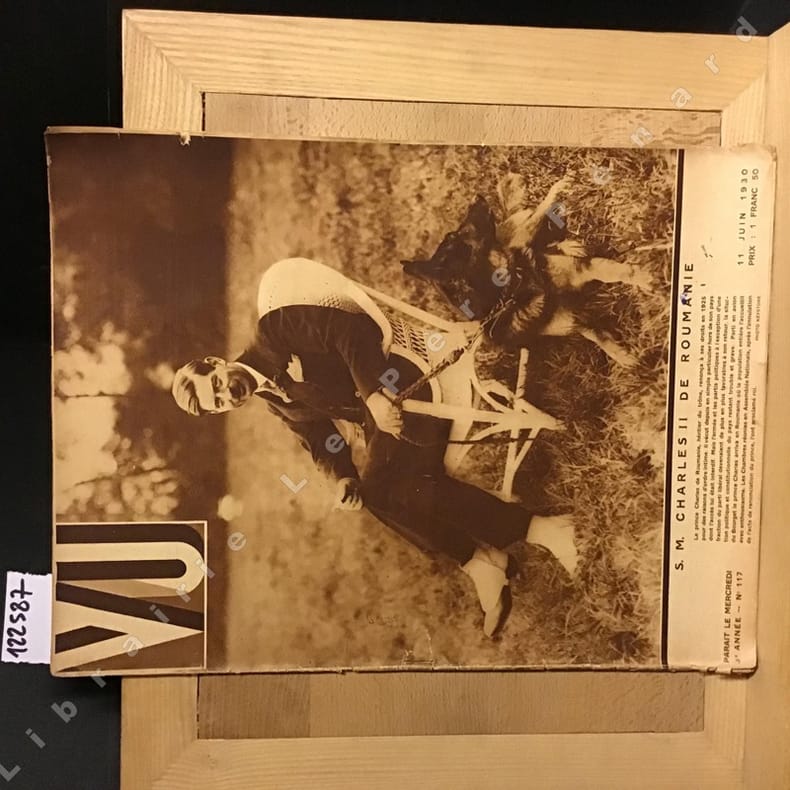
19301225871930 3e année - N° 117 - 11 juin 1930 - in-4 broché - revue hebdomadaire illustrée - sp - parait le mercredi
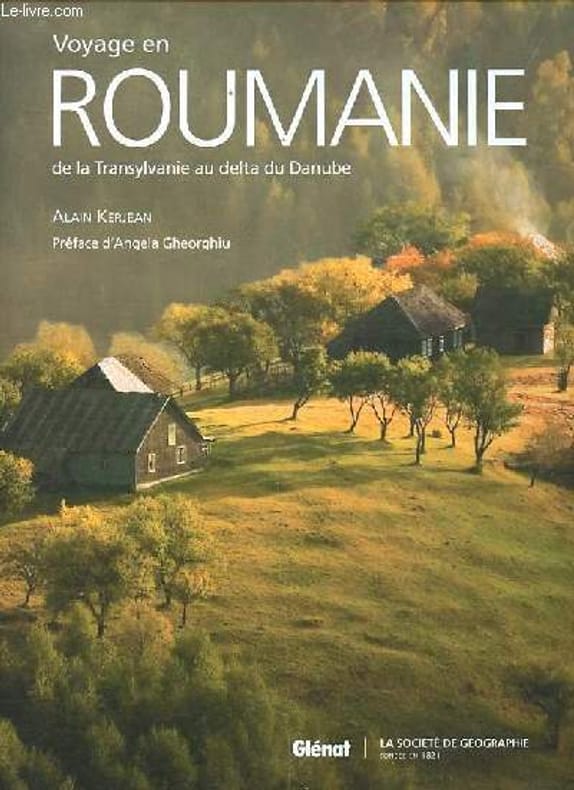
2007R200138969Glénat. 2007. In-Folio. Relié. Etat d'usage, Coins frottés, Dos satisfaisant, Intérieur frais. 158 pages, jaquette conservée, nombreuses photos en couleur dans et hors texte, texte en 2 colonnes.. Avec Jaquette. . . Classification Dewey : 949.8-Roumanie
Bruxelles, Société Belge de Librairie, Imprimerie de Hauman et Cie., 1841. Dos tomos en 8vo.; 2 hs., 315 pp. y 2 hs., 297 pp. Ejemplar falto de los tres últimos volúmenes, que contienen los viajes a Egipto,Turquía, Siria, Palestina, Malta y Sicilia, y del Atlas complementario. Encuadernación moderna en piel, con lomeras ornadas. El Mariscal Marmont, Duque de Ragusa, fue quien se enfrentó a Wellington en la Batalla de Arapiles. Cayó en desgracia en 1830 cuando fracasó al intentar contener la Revolución de Julio, su nombre fue borrado de las Listas del Ejército y hubo de exiliarse. Y a viajar. Los dos tomos ofrecidos contienen sus andanzas por Hungría, Transilvania y Rusia Meridional.
Broch?. 48 pages. 23x31 cm. Couverture factice.