MAUCLAIR Camille -Livre Rare Book
3 résultats
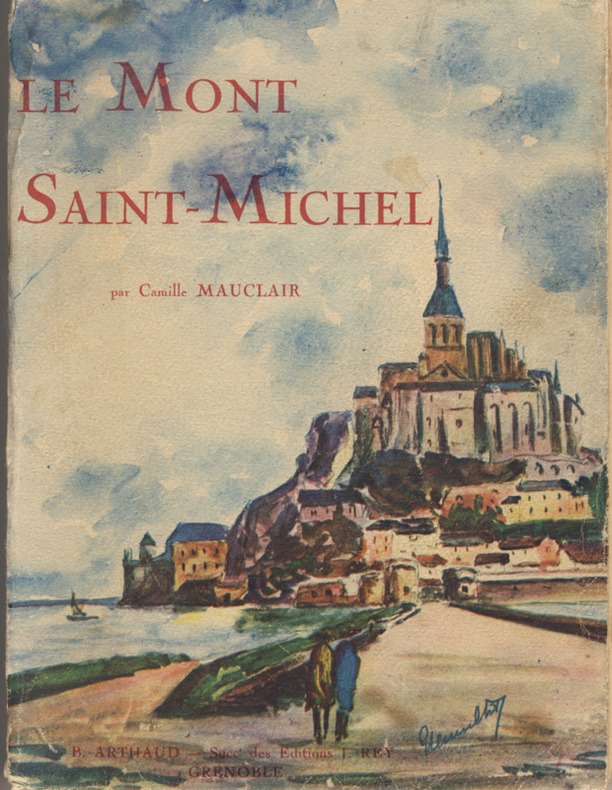
152041531520 15x20 cm, broché, 146 pages, état moyen, tout de même assez bon pour l'époque, manque un morceau au bas du dos sur 2 centimètres, couverture à rabat signée Gabriel Ducultit (aquarelliste de petit renom après-guerre), ouvrage orné de 107 héliogravures sépia, beau papier, relevés photographiques dus essentiellement à l'Abbé Gabriel Bretocq (de Rosay)
155642049In Venetia, Appresso Giordano Ziletti, all'insegna della Stella, 1556. Petit in-8 (15 x 10 cm) de (24)-316 pp., (signatures * * A-V7 - le dernier blanc) vélin souple, titre en capitales manuscrit sur le dos (reliure de l'époque).
15244376Lyon: Claude Nourry 1524. Small 8vo 131 x 93 mm.  16 leaves. Collation: A-B8 A1r title A1v blank A2r text B8r explicit Explicit iste liber gemmis qui charior extat B8v blank. Title in two lines Cura clericalis in very large type / Lege relege in the larger of the two text types title woodcut of a scribe at his pulpit 54 x 70 mm. break in left border; the cut worn or poorly printed. Rounded French gothic types in two sizes. Text type G76 27 lines and headline. One 5-line white on black floral initial. Printing flaw on B4v obscuring a couple of letters; traces of adhesion on same page opening else in fine condition. 19th-century dark blue morocco by Cuzin sides and spine blind-paneled with gilt fleurons spine lettered in gilt turn-ins gilt gilt edges ribbon marker. Provenance: Fernand Gaulthier armorial bookplate.<br /> <br /> A rare Lyonese edition of a popular pocket guidebook for priests.<br /> <br /> A succinct survey of every aspect of the priesthood the text opens with the meaning of sacerdos priest a definition of the job: the care and salvation of human souls and the requirements for fulfilling this office: basic literacy and the ability to express oneself correctly. From abstract concepts to practical applications the fundamental tenets of the Christian Church are methodically reviewed: the articles of faith seven deadly sins cardinal and theological virtues three keys of the church three parts of penitence etc. as are the different kinds of sacraments the materials used for them and their meanings and the various clerical offices. The telegraphically short entries with abundant use in this small format edition of abbreviations permitted the inclusion of a vast amount of indispensable knowledge for the practicing priest. The last third of the text is devoted to an equally condensed introduction to the Computus with headline Abbreviatio compoti the all-important calculation of time based on the yearly date of Easter; it includes mnemonic verses and syllables. <br /> <br /> “The Cura clericalis reflecting the received wisdom on the subject defined four rules for the priest. He was to be a celebrant of Masses and so needed to understand the basic texts and to be able to pronounce the Latin grammatically and clearly. He must be a minister of the other sacraments and so needed to know what and how many they were to grasp the essential matter of the sacrament and be able to distinguish it from the peripheral features and to know the proper mode of administration. He was to be a confessor and so must above all be able to distinguish venial from deadly sin . Finally he was to be a ‘plebis doctor’ the teacher of his people able to instruct them in the articles of faith and the other precepts of God†E. Duffy The Stripping of the Altars: Traditional Religion in England 1400–1580 New Haven 2005 p. 57. <br /> <br /> Dozens of editions are recorded most surviving in one or two copies and some with no currently known locations. ISTC records nine incunable editions printed from ca. 1492-4 to 1500 all but one undated of which 8 from Germany and one printed in Paris. In the next century the earliest editions appeared in the northern Rhine and France and later in England and Italy. Pettegree and Walsby list 30 editions printed in France from ca. 1511 to 1580 French Books III & IV: Books Published in France Before 1601 in Latin and Languages Other Than French 2011 637490-63778. <br /> <br /> The anonymous printer of this edition of which one other copy is known Besançon Municipal Library was Claude Nourry as recently identified by Dr. Helwi Blom whom we thank for her kind assistance. Much of Nourry’s output was published without his name and he printed many editions without the place or date of printing. He issued another edition with full colophon in 1524 Baudrier 12 129; Gültlingen 1 86: 113; USTC 130305 but no present locations for that edition are known. The title woodblock was used in other Nourry editions including his 1523 Beroaldo Carmen lugubre de dominicae Passionis die USTC 130303 and the initial C on A2r appeared in editions from 1520.<br /> <br /> Not in Baudrier Gültlingen or USTC. Helwi Blom “Le Profil du Prince: Tendances et évolutions dans la production imprimée de Claude Nourry d’après un nouveau recensement bibliographique†in H. Blom M. Clément F. Montorsi editors Du Calendrier des bergers au Pantagruel Geneva: Droz 2024 p. 53 no. 27. Claude Nourry unknown

