37 résultats
179944095Halle Rengerschen Buchhandlung 1799 1800. Without wrappers extracted from "Annalen der Physik. Herausgegeben von Ludwig Wilhelm Gilbert" Bd. 2. p. 483 one page. and Bd. 6 pp. 105-115. Some scattered brownspots. <br/><br/><em>First German translation of Davy's announcement the announcement on 1 page of his discovery of the unusual anaesthetic effects of nitrous oxide which on being inhaled gave rise to a giddy intoxicated feeling. On announcing his discovery he says that he will publish a paper discribing the experiments with the gas later. This is the paper offered here also in the first German version. Both the announcement and the paper were issued in the "Annalen" the same year as they appeared in Nicholson's Journal.The gas was first synthesized by English natural philosopher and chemist Joseph Priestley in 1772 who called it phlogisticated nitrous air."Following Priestley's discovery Humphry Davy of the Pneumatic Institute in Bristol England experimented with the physiological properties of the gas such as its effects upon respiration. He even administered the gas to visitors to the institute and after watching the amusing effects on people who inhaled it coined the term 'laughing gas'! Davy even noted the anaesthetic effects of the gas: "As nitrous oxide in its extensive operation appears capable of destroying physical pain it may probably be used with advantage during surgical operations in which no great effusion of blood takes place".Wikipedia."Davy discovered the anaesthetic properties of nitrous oxide and suggested its use during surgiical operations a suggestion which was not turned to useful account until 1844."Garrison & Morton 5646 not mentioning the announcing of its discovery in 1799. </em> unknown
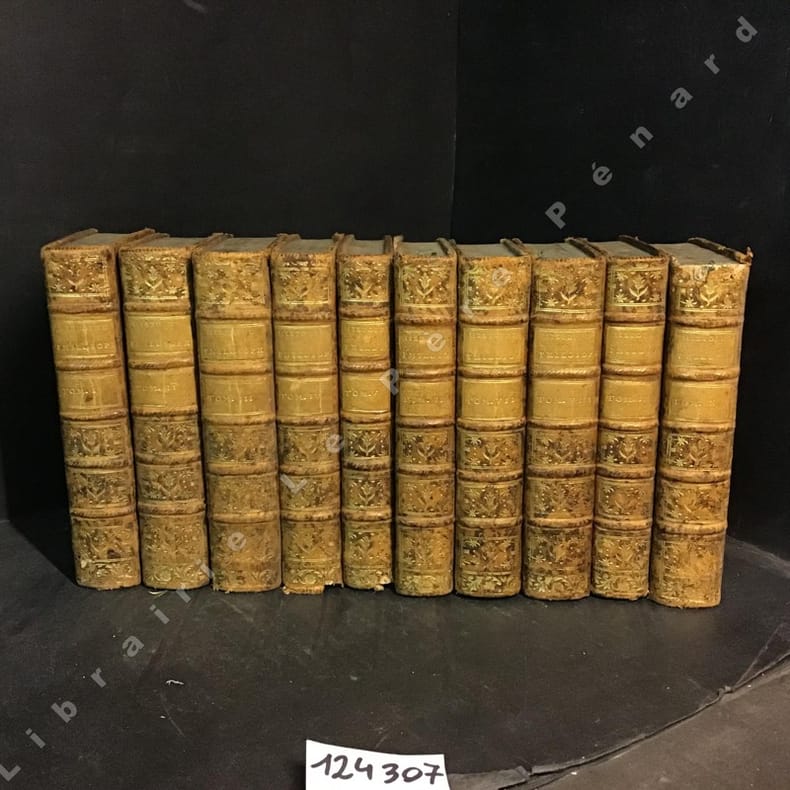
17801243071780 A Genève, Chez Jean-Léonard Pellet, Imprimeur de la Ville & de l'Académie - M. DCC. LXXX. (1780) - Dix volumes In-12, reliures pleine peau marbrée d'époque, dos à 5 nerfs avec pièce de titre et de tomaison sur fond marron clair, caissons ornés de fleurons en doré, toutes tranches marbrées, signet vert - xij-571 + 624 + 608 + 500 + 425 + 511 + 589 + 599 + 431 + 564 pages - Sans le volume d'Atlas
177746614London, W. Bowyer and J. Nichols, 1777. 4to. Extracted from ""Philosophical Transactions"", Year 1777. Vol. 67 - Part I. Pp. 260-265. Clean and fine, broadmargined.
177746614London W. Bowyer and J. Nichols 1777. 4to. Extracted from "Philosophical Transactions" Year 1777. Vol. 67 - Part I. Pp. 260-265. Clean and fine broadmargined. <br/><br/><em>First apperarance of this paper constituting the first reliable account of colour blindness.Usually Goethe or John Dalton - Huddart's case was cited in Dalton's paper of 1794 - is supposed to have discovered colourblindness. However the English oculist Joseph Huddart was the discoverer of this phenomenon. The first physiological explanation of it does come from Goethe.Garrison & Morton: 5832. </em> unknown
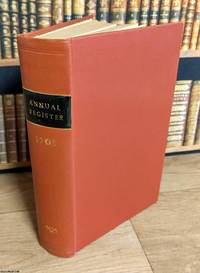
1793373234J. Dodsley London 1793. 5th Edition. Hardcover. Very Good Condition. 21 pages. This 1765 article published in The Annual Register provides a detailed account of John Harrison's groundbreaking work in solving the longitude problem at sea through the use of artificial time-keepers. Harrison an English clockmaker developed the marine chronometer a device that allowed sailors to accurately determine their longitude while at sea. His invention was crucial for safe navigation reducing the risk of ships becoming lost or wrecked due to miscalculations. The article outlines the proceedings and debates surrounding Harrison's work including his struggles with the Longitude Board which was reluctant to grant him the full 20000 prize promised under the 1714 Longitude Act. Despite proving the accuracy of his time-keepers Harrison faced political opposition and bureaucratic delays before finally receiving recognition for his achievements. Published at around the same time that Harrison's book of a similar title was published this contemporary 21 page account quotes Harrison extensively and represents the opinions and ideas regarding navigation from the perspective of the time. The whole volume extends to around 600 pages. Bound in modern but not recent brown buckram with a contrasting black leather lettering piece gilt title. Library label to the endpapers stamp on first blank and label to reverse of the title page. The first blank has a hand note stating "Given by Lt.Col. A.R. Hurst". Hurst has served with the Royal Field Artillery in the First World War. The whole volume is very clean with bright pages very firmly bound and in attractive condition. Size: 13.5 x 21 cms. Category: Antiquarian & Rare; Featured Items; Printed before 1800; Special Features. This item may require more postage than the rates shown for delivery outside the UK. If extra postage is required we will contact you before processing your order and you will be given the details and option to decline the extra cost. J. Dodsley hardcover
171745962(Paris, L'Imprimerie Royale, 1717). 4to. Without wrappers. Extracted from ""Mémoires de l'Academie des Sciences. Année 1714"". Pp.361-378 and 1 folded engraved plate.
171745962Paris L'Imprimerie Royale 1717. 4to. Without wrappers. Extracted from "Mémoires de l'Academie des Sciences. Année 1714". Pp.361-378 and 1 folded engraved plate. <br/><br/><em>First printing of the paper in which Cassini describes his discovery of the inclination of the orbit of Saturn's fifth satellite. </em> unknown
178910511Paris, Buisson, 1789 ; 2 tomes. Tome I : broché ; XXIV, 383 pp., 3 planches gravées dépliantes ; Tome II : plein veau havane marbré, dos lisse décoré et doré, pièce de titre rouge ; (4), 475 pp., 2 planches gravées dépliantes (accroc à la coiffe supérieure, mors fendu et usure aux coins).
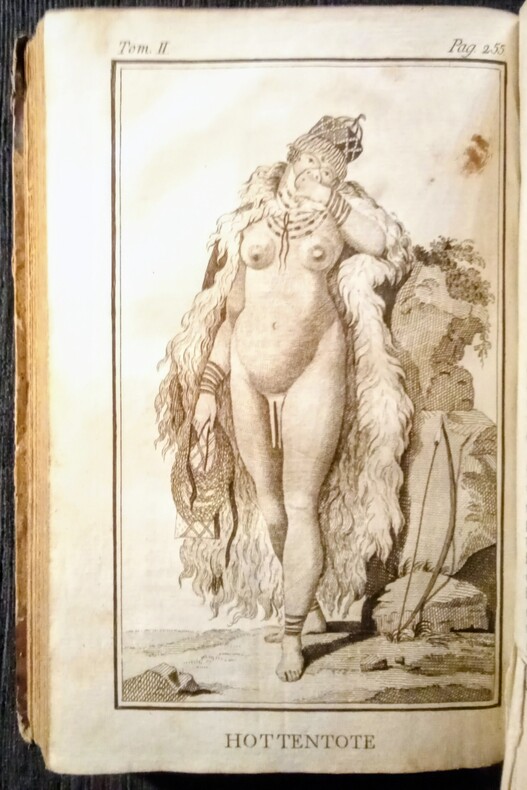
1790WOC-2456Nouvelle édition. Tome 2 seul, orné de 6 planches hors-texte et de 3 pages tableaux de Noms: François – Hollandois – Hottentots. Lausanne, Chez, Mourer, Libraire et Hignou & Compositeur Imprimeurs, 1790. In-8 (19,5x12,5cm) relié demi veau blond d'époque à coins, dos lisse orné de faux-nerfs dorés, titre doré sur maroquin rouge. 296pp.
1780816251780 A Paris, Hôtel de Thou, rue des Poitevins - 1780 - In-4 (environ 20 x 13,5 cm), demi basane brun clair, dos lisse, filets et caissons ornés à la cocarde, pièce de titre brun clair et tomaison dorés, tranches rouges - 510 pages - Cartes et gravures hors texte rempliées
1780816261780 A Paris, Hôtel de Thou, rue des Poitevins - 1780 - In-4 (environ 20 x 13,5 cm), demi basane brun clair, dos lisse, filets et caissons ornés à la cocarde, pièce de titre brun clair et tomaison dorés, tranches rouges - 671 pages - Carte rempliée et gravures hors texte
1786816281786 A Paris, Hôtel de Thou, rue des Poitevins - 1786 - In-4 (environ 20 x 13,5 cm), demi basane brun clair, dos lisse, filets et caissons ornés à la cocarde, pièce de titre brun clair et tomaison dorés, tranches rouges - 616 pages - Gravures hors texte rempliées