360 résultats
190542829Leipzig, S. Hirzel, 1905. No wrappers. Issued in ""Jahrbuch der Radioaktivität und Elekronik"", 2. Bd., Heft 3. Hahn's paper: pp. 233-264. Enntire issue: pp. 233-262 (= entire ""Heft 3""). Fine and clean.
190542829Leipzig S. Hirzel 1905. No wrappers. Issued in "Jahrbuch der Radioaktivität und Elekronik" 2. Bd. Heft 3. Hahn's paper: pp. 233-264. Enntire issue: pp. 233-262 = entire "Heft 3". Fine and clean. <br/><br/><em>First printing of this paper which is Hahn's Habilitation paper announcung his discovery of a new element in residues from a Ceylon mineral called Thorianite. He later showed that it is an intermediate disintegration product."Because the sample thorianite was small Ramsay proposed that Hahn confirm Marie Curie's determination of the atomic weight of radium by preparing it in some organic compounds thereby greatly increasing the total amount being examined and calculating the atomic weight from the measured molecular weights. Chance sometimes favors the unprepared mind and Hahn who familiarized himself with only the basic of radioactivity followed the prescribed separationss technique and found himself the discovere of a new radioelement: radiothorium. The explanation was that the material given him came from an ore which contained a large percentage of thorium in addition to the radium. Thus upon completion of the chemical procedure not all the activity was confined in the radium-containg fraction; indeed the nes subsyance in the remainder was several hundred thousand times more active than thorium and ultimately yielded the characteristic one.minute halflife of thorium emanation."DSB VI p. 15. - Weeks Discovery of the Elementsp. 308 ff. </em> unknown
198434121Paris Éditions La découverte 1984 Petit In-8 dos légèrement passé
1992wc508Electa Cartonné avec jaquette 1992 in-4 (29*22), cartonné avec jaquette, 166pp, nombreuses illustrations ; très bon état Livraison a domicile (La Poste) ou en Mondial Relay sur simple demande.
19722110502150403194Kodansha 1972. Soft Cover. Fine. Volume: 1 Kodansha paperback
1997Q-0756000289Teacher's Discovery 1997-01-01. Paperback. New. New. In shrink wrap. Looks like an interesting title! Teacher's Discovery paperback
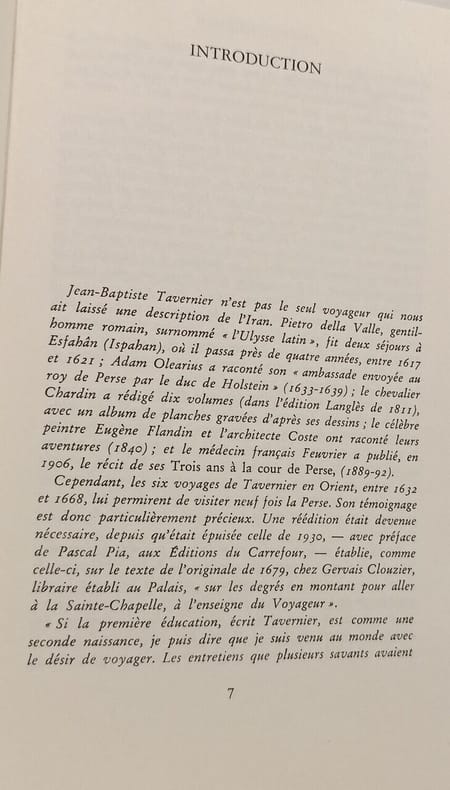
1970100148057Cercle du bibliophile 1970 in8. 1970. Relié. Il s'agit d'une édition illustrée des récits de voyage de Jean-Baptiste Tavernier en Perse publiée par le Cercle du Bibliophile. L'ouvrage d'environ 340-352 pages contient des gravures en noir et blanc et présente une reliure de qualité avec des décors dorés
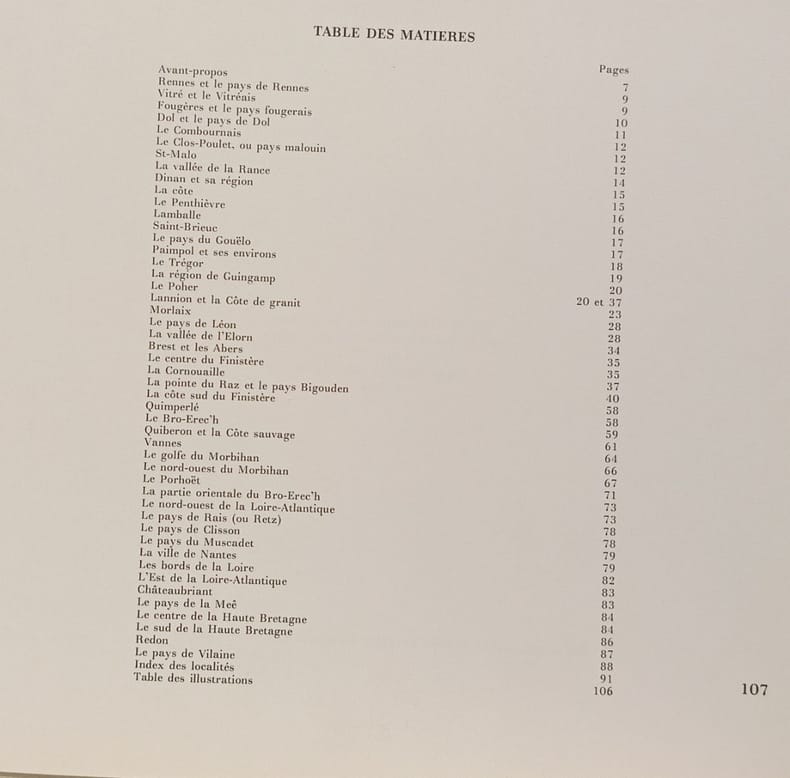
1974100152962saep 1974 in8. 1974. Cartonné. Cet ouvrage de Raymond Cornon publié par les Éditions S.A.E.P. en 1974 propose un voyage à travers la Bretagne. Il s'adresse aux promeneurs curieux souhaitant découvrir aussi bien les lieux célèbres que des coins ignorés et paisibles mettant en avant le charme des vacances et des promenades
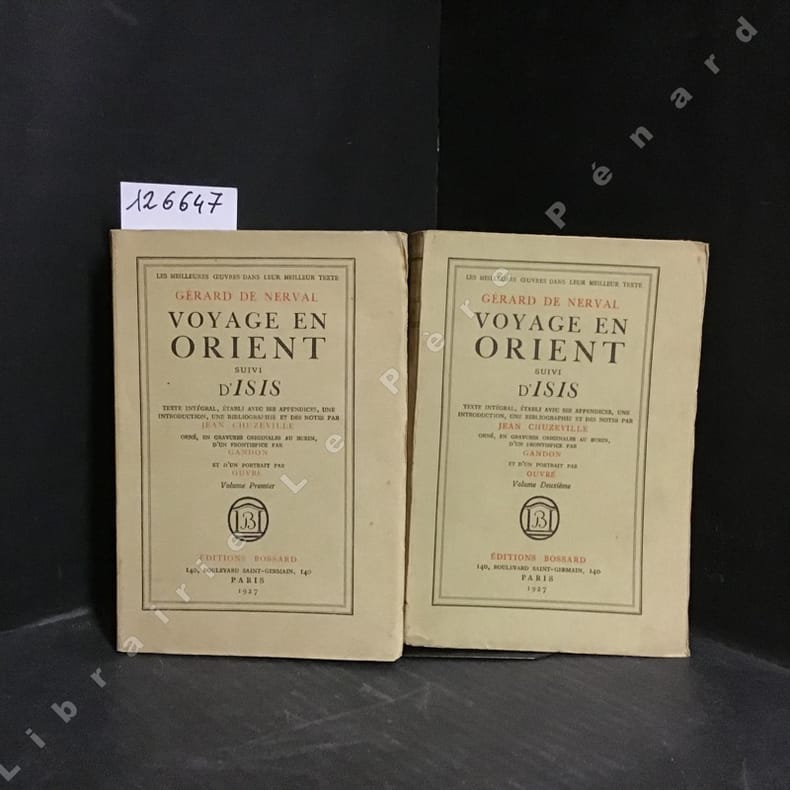
19271266471927 Editions Bossard, Paris - 1927 - Complet en 3 volumes in-8 brochés - 344 + 270 + 390 pages - L'un des 1850 exemplaires sur vélin de fil Lafuma de Voiron, numéroté 1721
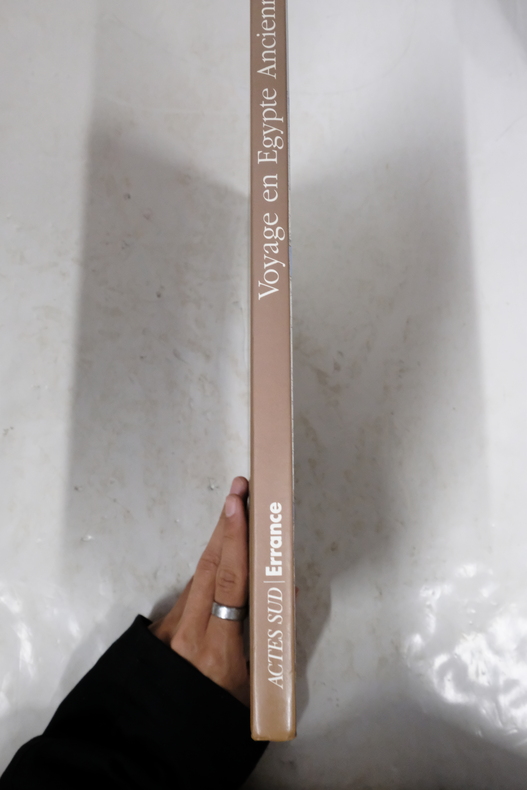
1999VOY4436MRelié, 189 pages, paru le 2 novembre 1999 chez Actes Sud, livre en très bon état général.
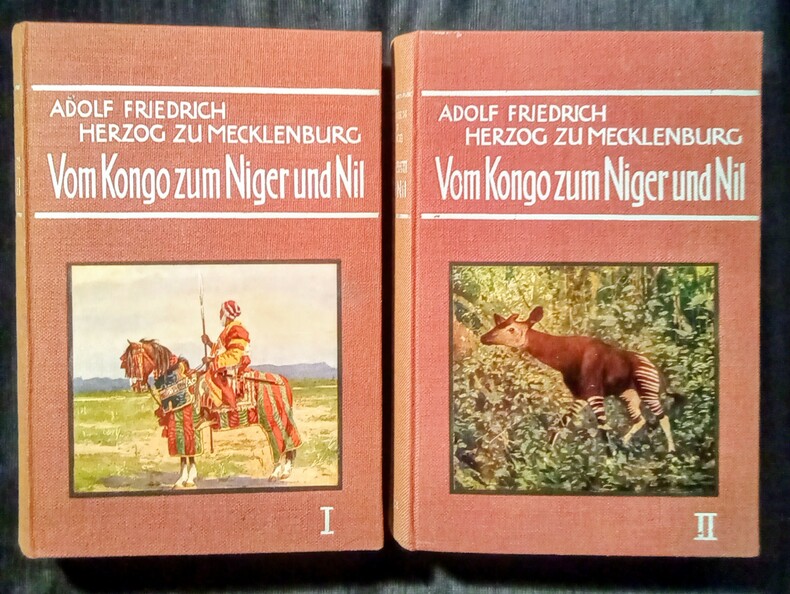
1914WOC-2234Berichte der deutschen Zentralafrica=Expedition 1910/1911. Mit 512 buten und einfarbigen Abbildungen nach Photographien und Zeichnugen, sowie mit 6 karten. Esther Band. Leipzig, F. A. Brocklaus, 1914. 2 volumes grands in-8 (23,5x4x16cm) pleine toile bordeaux, plats supérieurs imprimé en blanc et ornés de vignettes en couleurs, dos lisses imprimés et un peu passés. X,324pp. + X,398pp.
1979ROD0035062Chez l'auteur. 1979. In-8. Broché. Bon état, Couv. convenable, Dos satisfaisant, Intérieur bon état. 111p. Illustrations en noir et blanc.. . . . Classification Dewey : 530-Physique
1978ROD0035060Chez l'auteur. 1978. In-8. Broché. Bon état, Couv. convenable, Dos satisfaisant, Intérieur bon état. 103p. Illustrations en noir et blanc.. . . . Classification Dewey : 560-Paléontologie. Paléozoologie
1984ROD0035059Chez l'auteur. 1984. In-8. Broché. Bon état, Couv. convenable, Dos satisfaisant, Intérieur frais. 96p. Illustrations en noir et blanc.. . . . Classification Dewey : 0-GENERALITES
1983ROD0035061Chez l'auteur. 1983. In-8. Broché. Bon état, Couv. convenable, Dos satisfaisant, Intérieur bon état. 104p. Illustrations ennoir et blanc.. . . . Classification Dewey : 560-Paléontologie. Paléozoologie
1983ROD0035063Chez l'auteur. 1983. In-8. Broché. Bon état, Couv. convenable, Dos satisfaisant, Intérieur bon état. 80p. Nombreuses illustrations en noir et blanc.. . . . Classification Dewey : 553-Géologie économique
1973116867Stock 1973 In-8 broché 23,5 cm sur 15. 267 pages. Pelicullage desquamé. Bon état d’occasion.
1904166196London: The Bruton Galleries Bond Street 1904-36. The blockbuster Discovery exhibition of 1904 The original visitor's book for one of the stellar red-carpet events of the season: the Bruton Galleries exhibition of artefacts and artwork from Scott's Discovery expedition a landmark in polar exploration. It includes the signatures of numerous crew members including Ernest H. Shackleton Edward A. Wilson Charles Royds Reginald Skelton and Ernest E. Joyce alongside Clements Markham and Llewellyn Longstaff a financial angel of the expedition. The exhibition which opened in November 1904 was curated by Clements Markham who had organized the expedition and launched Scott's polar career. It was remarkably extensive the catalogue listing 484 items including 150 photographs by Reginald Skelton 200 watercolours and drawings by Edward A. Wilson equipment from the expedition a model of the Discovery rations and the South Polar Times. The photographs and artwork constituted a visual record of Antarctic conditions and documented gruelling conditions bringing home "the scale magic and danger of Antarctica with a compelling immediacy" Merwe & Michell p. 66. The show proved extraordinarily popular with "Bruton Street and New Bond Street lined with motorcars and carriages" Huxley p. 141. "Persons of rank and fashion were marshalled into a long queue by a policeman. Society folk were not used to queues in those days and they protested that they had tickets; so had everyone the constable replied and kept them in line" Huxley p. 141. It fuelled the public's growing excitement about polar exploration: "an exhibit of Wilson's Antarctic art attracted over ten thousand viewers to London's prestigious Bruton Gallery. Advertisements in the gallery catalogue touted paints and binoculars used by the artist in the Antarctic" Larson p 159. The Discovery crew received an exuberant homecoming hailed for their "British grit" and Edward VII awarded each man the Antarctic medal. "Indeed for many Scott and his men became the national heroes that the Boer War had failed to supply. The explorers became celebrities. Crowds packed their public appearances" Larson p. 158. The leading actress Ellen Terry attended the event. She had been present when the expedition docked in Portsmouth later writing a postcard to Scott thanking him for letting her see the Discovery. The members of the Discovery expedition who have signed include Ernest H. Shackleton third lieutenant Edward A. Wilson assistant surgeon and artist Charles Royds first lieutenant Reginald Skelton chief engineer and photographer Ernest E. Joyce petty officer Arthur Henry Blissett steward Jacob Cross petty officer Hartley T. Ferrar geologist and Reginald C. Ford chief steward and stores officer. Curiously Scott is not among them. This might be a consequence of his resolve "to keep as quiet as possible" after the expedition Huxley p. 158. Three Shackleton family members attended: Ernest H. Shackleton's sisters Gladys and Helen besides Eileen Shackleton of Bushey. Other noted polar explorers feature among the visitors such as Robert Rudmose-Brown of the Scottish National Antarctic Expedition Scotia 1902-4 alongside its honorary secretary James G. Ferrier. Another notable voyager is Charles Ede the assistant surgeon on HMS Assistance on the British Franklin Search Expedition 1850-1 and a "Mrs. Reynolds" the great-niece of Franklin. The visitor's book serves as a record of an early 20th-century red carpet event and contains approximately 1000 signatures including the writer Walter Jerrold alongside the artists Felix Moscheles and Marietta Pallis. Robert Baden-Powell the founder of the Boy Scout movement also attended. Princess Beatrice and Maria Amelia Queen of Portugal likewise attended. Successive pages record visitors from Lancashire Yorkshire and Scotland. Moreover there are numerous admirals and military men together with a collector of Egyptian art. Two further sections in the book relate to miscellaneous exhibitions held in later years. Folio 283 x 245 mm. Contemporary dark red skiver by Jas. Truscott & Sons of London flat spine gilt-lettered direct spine and covers decorated in gilt front cover lettered "Bruton Galleries/Visitor's Book" marbled endpapers all edges gilt; 115 lined pages signed bearing approximately 2000 names and addresses all recto of which 57 lined pages with approximately 1000 signatures pertaining to the Discovery expedition. Extremities with slight wear from handling some stripping of leather minor toning general finger soiling. A very good copy. Elspeth Huxley Scott 1990; Max Jones The Last Great Quest 2004; Edward J. Larson An Empire of Ice 2011; Pieter van der Merwe and Jeremy Michell eds South: The Race to the Pole 2018. hardcover
1951WOC-550Préface de Paul Lévy. Photo de Michel Huet, P. Verger, J.Y. Claeys et S. De Sacy. Lausanne, La Guilde du Livre, 1951. In-4 (28,5x22,5cm) broché et illustrée. Ouvrage non paginé.
1939723901939 Agence Parisienne de Distribution Editeur, collection "REX" N° 11 - 1939 - 1 fascicule in-8, broché couverture illustrée - 63 pages
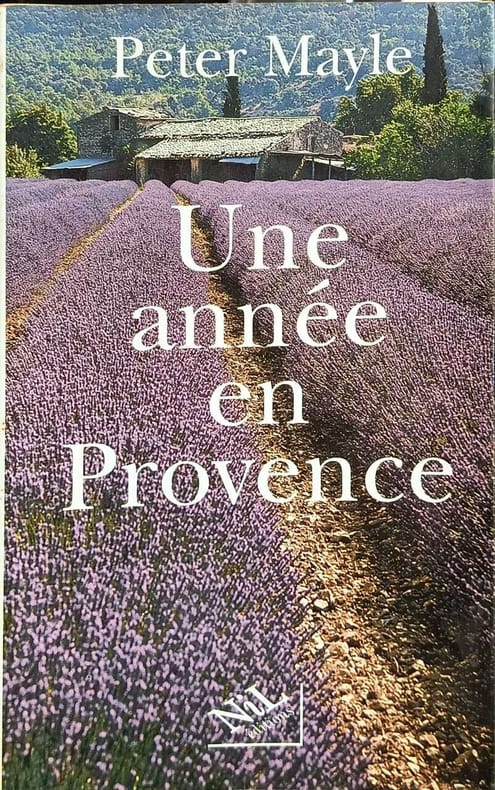
19948864Nil 1994 245 pages 13x22x2cm. 1994. Broché. 245 pages. Peter Mayle raconte avec humour et tendresse son expérience d'installation avec sa femme dans une ferme du Lubéron en Provence. Ce récit autobiographique décrit leur immersion dans la région ses traditions ses paysages et ses habitants offrant un voyage sensoriel entre délices culinaires et rencontres pittoresques
1961100149932Editions Albin Michel 1961 in8. 1961. Broché. Ce livre est le fruit d'un voyage à travers sept pays du Proche-Orient effectué par l'auteur. Il propose une analyse des événements du Printemps arabe début 2011 en les décryptant et en les resituant dans une perspective historique plus longue. L'ouvrage explore les mentalités la culture et les bouleversements politiques de la région contribuant à une meilleure compréhension de l'islam et des pays arabes
193447071Paris, Gauthier-Villars, 1934. 4to. No wrappers. In: ""Comptes Rendus Hebdomadaires des Séances de L'Academie des Sciences"", Tome 198 No 3. Titlepage to vol. 198. Pp. (213-) 292. (Entire issue offered). The joint paper: pp. 254-256 a. 1 photographic illustration in the text. Titlepage with a stamp on verso, 2 small tears and a tiny bit of upper right corner gone. Titlepage a bit browned.
19081193901908 A Genève, Atar, S. A., éditeur - Extrait de l'Annuaire du conservatoire et du jardin botaniques de Genève, 11ème et 12ème années, 1907-1908 - 1908 - In-8, broché - 8 p. - 2 planches hors texte en fin d'ouvrage
193447071Paris Gauthier-Villars 1934. 4to. No wrappers. In: "Comptes Rendus Hebdomadaires des Séances de L'Academie des Sciences" Tome 198 No 3. Titlepage to vol. 198. Pp. 213- 292. Entire issue offered. The joint paper: pp. 254-256 a. 1 photographic illustration in the text. Titlepage with a stamp on verso 2 small tears and a tiny bit of upper right corner gone. Titlepage a bit browned. <br/><br/><em>First appearance of this seminal paper in which artificial radioactivity was announced for the first time. Curie and Joliot were awarded the Nobel Prize in Chemistry 1935 "in recognition of their synthesis of new radioactive elements"."Until this date 1934 atomic nuclei emitting radiation were found in nature: it was called the natural radioactivity. It had been known since Rutherford that this natural radioactivity changed a nucleus into an other one: for instance radium becomes finally lead after many radioactive decays. We could say that lead does not become gold but gold becomes lead! But. this change of matter was not under control. It was not possible to construct the desired chemical element as the alchemist dreamed. But Irene and Frederic Joliot-Curie made the dream become almost reality.""Another very important development in the early 1934 by the Joliot-Curies in connection with irradiation of aluminum by alpha particles. The two French scientists detected the production of the recently discovered positrons. . However they soon realized that the positron activity continued after the alpha source was removed and that they had in fact discovered positive beta radioactivity. The importance of the discovery of artificial radioactivity was immediately recognized and resulted in a Nobel Prize in chemistry to the Joliot-Curies in 1935. The new phenomenon immediately became widely employed in nuclear physics chemistry biology and medicine." Kragh Quantum Generations p. 187"These elegant experiments which provided the first chemical proof of induced transmutations and showed the possibility of artificially creating radioisotopes of known stable elements were repeated and extended in the major nuclear physics laboratories of various countries " DSB.Born on 12 September 1897 in Paris Irène Curie was the daughter of Pierre and Marie Curie. "During World War I she worked as a nurse helping her mother operate radiography equipment and then studied physics and mathematics at the Sorbonne gaining a doctorate for studying the range of alpha particles. She then went to work for her mother at the Radium Institute. There she met Frédéric Joliot whom she married in 1926. Frédéric Joliot was born on 19 March 1900 in Paris - He joined the Radium Institute in 1925 and obtained his PhD in 1930. Together the Joliot-Curies worked on radioactivity and the transmutation of the elements. Twice they just missed major discoveries: in 1932 when Chadwick beat them to the neutron and in 1933 when Anderson discovered the positron. However in 1934 whilst bombarding light elements with alpha particles the Joliot-Curies noticed that although proton production stopped when the alpha particle bombardment stopped another form of radiation continued. The alpha particles had produced an isotope of phosphorus not found in nature. This isotope was radioactive and was decaying through beta-decay" DSB. </em> unknown