1 677 résultats
11788PARIS, Lib. de l'Encyclopédie du XIX è siècle - sd. (fin 19è) - complet 12 tomes en 12 volumes brochés ou débrochés - in 8 - Illustrées de 100 planches sur acier NB PP HT - Rousseurs éparses - Environ 370 pages par volume
in 16°, bross. edit. ill.
- Extrait de la Revue des deux mondes, s.l. (Paris) (1885), 15,5x25cm, agrafé. - First edition. Plain paper cover. Rare. [FRENCH VERSION FOLLOWS] Edition originale. Sous couverture muette. Rare.
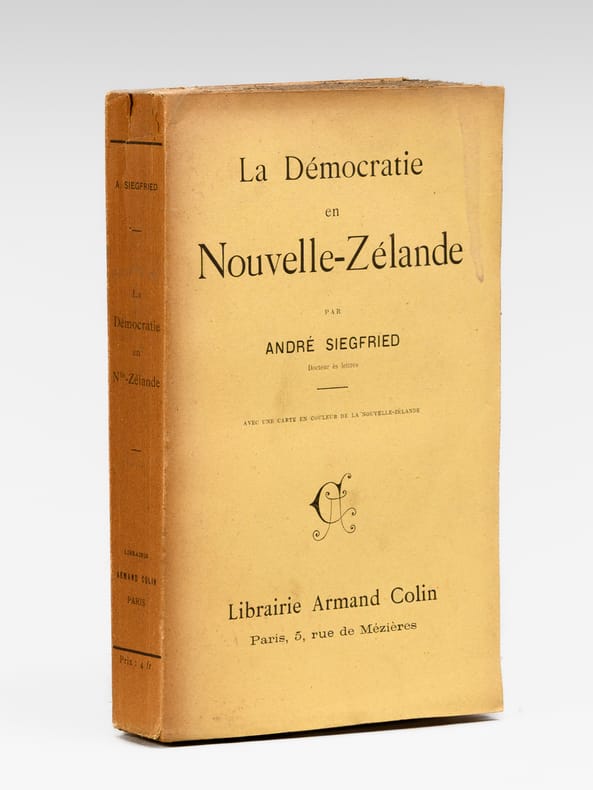
1904706611 vol. in-12 br., Librairie Armand Colin,; Paris, 1904, 360 pp.
bross. edit. ill. - prima edizione it. - trad. di Tommaso Gurrieri
in 16°, cartone edit. con sovrac. ill. - volume in lingua giapponese - sguardie illustrate, riccamente illustrato a colori nel testo
trad. di Giorgio Alberti bross. edit. ill., timbro di biblioteca estinta
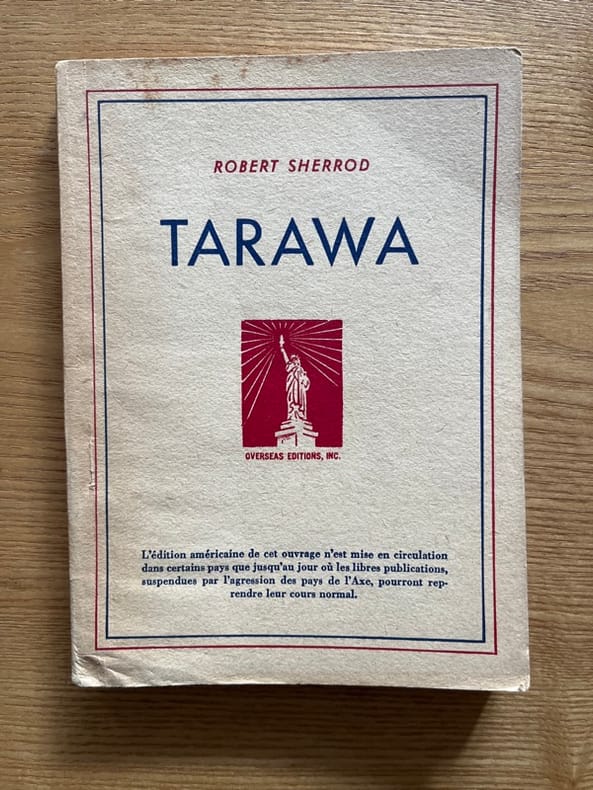
235228New York, Overseas Editions, 1944 in-12, 181 pp., broché.
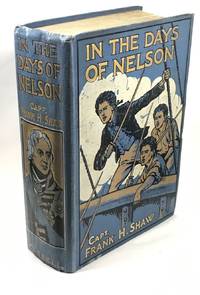
1910SB15463London: Cassell And Company Ltd. 1910. Undated. 1910 Christmas gift inscription on ffep usual age toning else textblock is clean and tight; Stamped illustration on front cover bumping to head and foot of spine creases and indentation on spine near head lightly sunned and character-soiled binding. Wear at the spine extremities; 344pp. Embossed Cloth. Very Good. 8vo - over 7¾" - 9¾" tall. Hardcover. Cassell And Company Ltd. Hardcover
trad. i Elena Spagnol Vaccari in 16°, bross. edit. ill., minime tracce d'uso
1968VOY1500MWashington: National Geographic Society, 1968. Overall well illustrated.. Hard Cover. Over 7" - 9" tall.
34083Bulletin de la Société des Etudes Océaniques. Février / Juin 2003. N° 296 / 297. In-8. Br. Nbrs ills. N&B. 318 p. BE.
trad. di Lydia Origlia in 16°, bross. edit. ill. con bandelle
trad. di Lidia Perria bross. edit. ill. con bandelle, piccola rottura e minime tracce d'uso in cop.
trad. di Massimo Birattari n. 594 tela edit. con sovrac. ill., minime tracce d'uso in sovrac., manca la sguardia libera posteriore
In-8° (cm.23,4x14,4), pp. 11 + 19 FIGURE di suppellettili in 2 TAVOLE litografiche fuori testo. Brossura coeva muta, piatto anteriore quasi staccato e con mende, manca il piatto post., ottimo l'interno. Questa seconda parte contiene: a. Polynesische voorwerpen. 2. Contnentale voorwerpen. Datato in foine, Leiden, 18 Februari
4109Barcelone, Ediciones Poligrafa, 1984. In-8 carré. Cartonnage sous jaquette illustrée. 216 pages (22 pages de texte + illustrations). Très nombreuses photographies en noir et en couleurs à pleine page, ainsi qu'un dépliant cartographique in-fine (carte de papua et Nouvelle-Guinée). Bon état.
198488769Barcelone Ediciones Poligrafa 1984 1 vol. relié in-8 carré, cartonnage sous jaquette illustrée, 22 + 214 pp., nombreuses photos en noir et en couleurs. Petites déchirures aux angles de la jaquette, sinon en très bon état.
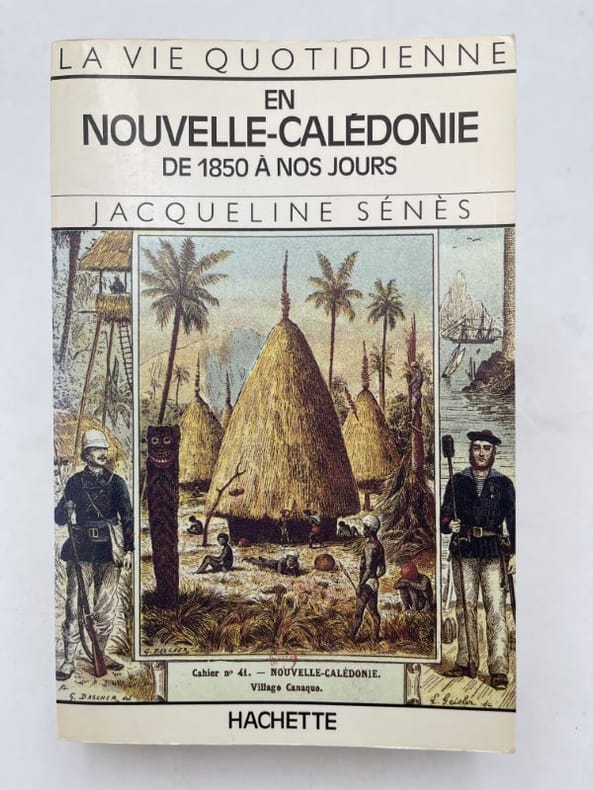
1985R200116476Hachette. 1985. In-8. Broché. Bon état, Couv. convenable, Dos satisfaisant, Intérieur frais. 363 pages. Quelques carte en noir et blanc, hors texte.. . . . Classification Dewey : 995-Océanie
1985179422Hachette Hachette, 1985. In-12 broché, 360 pages. Bon état
6567dressé sous la direction du conseil royal de l’inspection publique Géographie moderne actuelle.In folio,reliure postérieure demi-toile rouge à petits coins.Etiquette de titre imprimée sur le premier plat.Titre et suite de 16 cartes montées sur onglets,la plupart sur double page.1: mappemonde,2:Europe 1826,3:Asie 1824 4:Afrique 1823,5: Amérique septentrionale 1825,6:Amérique méridionale 1825, 7: France par départements 1824, 8: Pays Bas 1822, 9: Allemagne 10: Suisse, 11: Italie 1824, 12: Espagne et Portugal 1828, Iles Britanniques 1828, 14:Suède et Danemark 1828, 16:Turquie d’Europe 1824. A Paris imprimerie de H Seves lithographe de l’université rue de la Harpe n°35 1828. page de titre maniée avec renfort en marge extérieur.Quelques taches diverses,principalement encre.
19787292CBParis, Les Editions du Pacifique, 1978. 8°. 155 S. Neuerer Halblederband. + Wichtig: Für unsere Kunden in der EU erfolgt der Versand alle 14 Tage verzollt ab Deutschland / Postbank-Konto in Deutschland vorhanden +, 7292CB|7292CB_2
- Paris 18 mars 1905, 13,1x20,9cm, 3 pages sur un double feuillet. - Handwritten signed letter from Victor Segalen addressed to Emile Mignard: "Great success with my Gauguin unpacking" Paris 18 March 1905 | 13,1 x 20,9 cm | 3 pages on a double leaf Handwritten signed letter from Victor Segalen addressed to émile Mignard, three pages written in black ink on a double leaf of squared paper. Transverse folds from having been sent. One of the very rare letters recounting the extraordinary rescue of Gauguin's works by his "champion". Segalen left Tahiti, after having transited through Colombo, Port Said and Toulon, he is in Paris for a few days and tells his friend of the reactions to Gauguin's works that he brought back from Polynesia. The auction of Gauguin's goods and works, which remained in his Maison du Jouir after his death, took place in the autumn of 1903. One of the few purchasers present at the liquidation was Victor Segalen who thus made it possible to rescue several of the painter's capital pieces, which were at risk of being destroyed in general indifference. Segalen, who had hoped to arrive in time to meet Gauguin, revives his memory by trying to acquire - despite his low salary - as many works as possible from his late mentor. In his « Hommage à Gauguin » (preface to Lettres de Paul Gauguin à George-Daniel de Monfreid, 1918), he recounts this now incredible dispersion: "Then there is the judicial sale, in the most legal, most sordid forms. The 'useful' objects, clothing, cookware, preserves and wines were sold on site. Another auction sale took place in Papeete and included some paintings, two albums, the image of Satan and of the concubine Thérèse, the pediment and the panels of the Maison du Jouir, the painter's cane, his palette. For purchasers: merchants and civil servants; some naval officers; the reigning governor at the time; onlookers, a teacher of painting without pupils who became a public writer. [...] The palette fell to me for forty cents. I acquired at random everything that I could grasp on the run from the auction. A painting [Village breton sous la neige], presented upside down by the auctioneer who called it 'Niagara Falls', was met with great laughter. It became my property for the sum of seven francs. As for the woods - pediment and metopes from the Maison du Jouir, no one bid higher than my...one hundred cents! And they stayed with me. [...] The woods of the Maison du Jour, I then destined them to this Breton Mansion, at the other end of the world, that Saint-Pol-Roux also built as a final home, overlooking the Toulinguet bay, on the Atlantic peninsula. The palette, I could not decently pay better tribute to it than to the only one worthy of holding it, - not between his fingers, like a relic whose origin we assess with faith, - but passing the thumb through the oval to the double bevel which carries and presents the song of colors, ... to Georges Daniel de Monfreid. [...] This painting (Village breton sous la neige), I have kept. The gift itself would be insulting. Gauguin died painting it, it is a legacy." David Haziot's biography of Gauguin gives an accurate inventory of the works purchased by Segalen: "Segalen was able to acquire seven out of ten paintings. Among them the self-portrait Près du Golgotha [today at the Saõ Paulo Art Museum]. The sculptures Père Paillard and Thérèse disappeared, as did a second version of the three women by the sea including one breastfeeding at their feet. [...] Segalen [...] took away the sketchbook from Auckland, four of the five wooden panels that adorned the door of the Maison du Jouir (for 100 cents!), the photographs of Arosa, notably with the images of Borobudur and the Parthenon, and the Village breton sous la neige painted after the Concarneau disaster and which Gauguin took with him." These works, among the most famous of our artistic heritage, are today preserved at the Musée d'Orsay (Paris) and in other major world institutions. "Great succes
- Nouméa 15 juin 1904, 14x9cm, une carte postale. - War dance. Handwritten signed postcard sent from Nouméa and addressed to Émile Mignard: "...on demand, naturally" Nouméa 15 June 1904 | 14 x 9 cm | one postcard Handwritten signed postcard from Victor Segalen, sent from Nouméa and addressed to Émile Mignard. A few lines written in black ink below the black and white photographic reproduction of a war dance scene in the New Hebrides, handwritten address on the verso. Some minor stains. With humor, Segalen completes the caption of this post card: "[War dance] ...on demand, naturally. Affectionately, Victor Segalen Nouméa 15 June 1904". In 1904, Segalen took advantage of a short stay in Nouméa to continue the writing of Immémoriaux, a novel denouncing the agony of the Maori civilization decimated by the European presence, which was published under the pseudonym Max-Anély in 1907. [FRENCH VERSION FOLLOWS] Carte postale autographe signée de Victor Segalen, envoyée depuis Nouméa et adressée à Emile Mignard. Quelques lignes rédigées à l'encre noire en dessous de la reproduction photographique en noir et blanc d'une scène de danse guerrière aux Nouvelles-Hébrides, adresse manuscrite du correspondant au verso. Quelques taches sans gravité. Emile Mignard (1878-1966), lui aussi médecin et brestois, fut l'un des plus proches amis de jeunesse de Segalen qu'il rencontra au collège des Jésuites Notre-Dame-de-Bon-Secours, à Brest. L'écrivain entretint avec ce camarade une correspondance foisonnante et très suivie dans laquelle il décrivit avec humour et intimité son quotidien aux quatre coins du globe. C'est au mariage de Mignard, le 15 février 1905, que Segalen fit la connaissance de son épouse, Yvonne Hébert. Segalen complète avec humour la légende de cette carte postale : "[Danse guerrière] ...sur commande, bien entendu. Affectueusement, Victor Segalen Nouméa 15 juin 1904" En 1904, Segalen profite d'un court séjour à Nouméa pour poursuivre l'écriture des Immémoriaux, roman dénonçant l'agonie de la civilisation maorie décimée par la présence européenne, qui paraîtra sous le pseudonyme de Max-Anély en 1907.