[PEAKE, Archibald Henry]Biblio.com
3 315 résultats
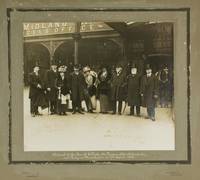
1913114191Manchester: Mack & Co. Photographers 1913. Very Good. Manchester Mack & Co. Photographers 1913. A gelatin silver photograph image size 240 × 283 mm on the original mount external dimensions 375 × 455 mm; the caption is in white ink in a calligraphic hand below the image; the details of the photographic studio are printed below an embossed printed border. The mount is a little rubbed and worn at the extremities with a small sealed crack to one margin; there is minor surface damage to the mount well clear of the image and caption where an old window mat has been removed; the photograph has a few tiny surface blemishes near the bottom edge but overall in excellent condition. At the time Archibald Henry Peake 1859-1920 was the Premier of South Australia a position he held on three occasions 1909-1910 1912-1915 and 1917-1920. He died in office on 6 April 1920. In 1912 'the Liberals won an eight-seat majority . Peake again became premier treasurer and minister of education. His government concentrated on constructing rural railway lines often against expert advice. Most proved uneconomic impoverishing the railways for years. In 1912 the government created the Industrial Arbitration Court; in return for the introduction by it of a minimum wage workers lost the right to strike or to engage in any activity which might prolong a strike. Six o'clock closing of hotels was carried at a plebiscite simultaneously with the 1915 election and remained for over fifty years. Peake's government liberalized the franchise for the Legislative Council. In London in 1913 Peake had an audience with King George V and recorded his experiences in "Notes from a Diary" 1914. The ministry's major achievement was its arrangement in 1914 with the Federal New South Wales and Victorian governments for the locking of the Murray River: the River Murray Commission carried out the co-ordinating agreement' 'Australian Dictionary of Biography'. The nature of this item and the fact that we purchased it with other photographs identified as such suggest strongly that it was originally in the possession of Peake himself. Mack & Co. [Photographers] unknown
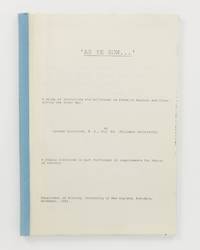
1995140223North Adelaide: The Author 1995. Very Good. North Adelaide The Author 1995. Foolscap folio v v 74 4 examiner's report pages of duplicated typescript with 18 xerographically reproduced illustrations. Quarter card and clear plastic covers; front cover and first leaf a little creased; an excellent copy. 'A thesis submitted in part fulfilment of requirements for Master of Letters. Department of History University of New England Armidale November 1993'. The Author unknown
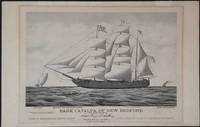
187623907Boston: Forbes Lith. Mfg. Co. 1876. First edition. This scarce tinted lithograph was issued to commemorate the escape of Irish political prisoners from Fremantle W.A. on April 17th 1876. The Fenians are shown rowing towards the bark which is under full sail. The Catalpa is flying a flag with the initials "J T R" - for John T Richardson the ship's agent. A pennant with the letter C the Fenian flag and the American flag are also flying. <br /> <br /> The police boat is in hot pursuit and the British steamship "Georgette" is steaming in from a distance. Among the Fenians freed in this effort was John Boyle O'Reilly who became a leading citizen in Boston and was later to edit the 'Boston Pilot'. <br /> <br /> Captain George Anthony an American whaling captain out of New Bedford Massachusetts recruited a crew for this mission and set sail for Western Australia where two Fenian agents John Breslin and Tom Desmond had already established themselves with aliases. With several delays the day for the escape was set for the 17th of April when most of the convict garrison was distracted by watching the Perth Yacht Club regatta.<br /> <br /> Captain Anthony who refused to surrender the escaped prisoners to the British later sold his story to Zephaniah W. Pease who published the account in 'The Catalpa Expedition'. See also Laubenstein 'The Emerald Whaler'.<br /> <br /> On its arrival in New York in August of 1876 the Catalpa was met with great crowds; jubilant celebrations were held in the US and Ireland.<br /> <br /> 17 x 13" on paper 22 x 14 1/4". For information on the artist E. N. Russell see Blasdale Artists of New Bedford pp 160-161; Kendall Prints 28; Ingalls 318. OCLC: 191908718 1 copy at the Boston Athenaeum. Trove 45254 at the Australian National Maritime Museum; and 57714676 at the State Library of Western Australia. Professionally deacidified. In very good condition. <br /> <br /> A rare print important for its depiction of an important Western Australian colonial event. Forbes Lith. Mfg. Co. unknown
106714The carte de visite an albumen paper photograph 55 x 91 mm was recently removed from an old album leaf and remounted on acid-free card; the title above was written in pencil on the verso of the image. The number '202' is pencilled on a fence-post in the foreground; in excellent condition. The photographer is unidentified; undated but possibly 1860s. unknown
102930Very Good. A vintage gelatin silver photograph matted glazed and framed visible image size 230 × 360 mm captioned and signed in pencil on the mat. The mat shows some acid discolouration and is a little foxed; the photograph and the original simple wooden frame are in excellent condition. Frederick Allen Joyner 1863-1945 was 'President of the South Australian Photographic Society at the height of its influence as a leading group in the fledgling nation and as an individual he had his own work shown and reproduced around the world. Later in the 1920s he was one of the first modern photographers to see and interpret the light and nuances of the Flinders Ranges' from the catalogue of the 1981 AGSA exhibition of F.A. Joyner's photographs. unknown
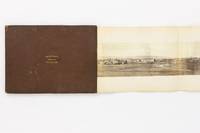
1866141595Adelaide: Townsend Duryea 1866. First Edition. Hardcover. Adelaide Townsend Duryea circa 1866. A photograph album 254 × 340 mm containing a magnificent panorama of Adelaide comprising five roughly uniform albumen paper photographs mounted as issued slightly overlapping to form a continuous image 124 × 880 mm on a linen-backed card mount 244 × 951 mm folded into three plus 12 albumen paper photographs nine of them around 130 × 200 mm or the reverse one 130 × 172 mm and the last two approximately 220 × 285 mm mounted on the rectos of stiff card leaves. Original russet pebble-grain cloth lettered in gilt on the front cover; cloth slightly flecked with minor wear to the extremities; endpapers foxed with slight loss to silverfish and the rear free endpaper is missing; leading edge ribbon ties appear never to have been inserted; mounts lightly cockled and occasionally lightly spotted and foxed; bottom margin of the final mount lightly stained with trifling loss to silverfish; minimal signs of age and use; overall a very pleasing copy with the photographs - and in particular the stunning panorama - in uniformly fine condition. The twelve individual photographs are captioned in pencil on the mounts: 'View in botanical gardens - showing Asylum' 'View in Botanical Gardens' 'View in Gardens' five captioned simply 'Botanical Gardens' 'Bridge between N & S Adelaide' 'near Willunga' and two captioned 'Willunga' both superb large-format prints. <p>New York-born Townsend Duryea 1823-1888 emigrated to Australia Melbourne in 1852 and commenced work as a photographer the following year. In 1855 he relocated his studio to Adelaide. By the early 1870s Duryea's panoramas royal portraits and prizes won in Society of Arts photographic competitions had made him famous 'Australian Dictionary of Biography'. Much more detail on Duryea may be had from the lengthy article in Joan Kerr's 'Dictionary of Australian Artists . to 1870'. However the panorama in this album is not the one described in Kerr 'a fold-out 360-degree panorama of Adelaide taken from the tower of Adelaide Town Hall in 1865 was the album's major feature' nor is it the larger panorama 'taken from the top of the GPO tower soon after it was completed in 1870'. The present panorama is taken from a local rise in North Adelaide and sweeps left to right from the hills towards the sea. All of these panoramas are very rare indeed not least because 'Duryea's studio and enormous collection of glass-plate negatives stated to number 50 000 were destroyed by fire in 1875'. This catastrophe effectively ended Duryea's career as a photographer. It must assuredly account for the genuine scarcity of material by Duryea on the open market other than bread-and-butter carte de visite portraits. <p>This album is very rare in our experience and if the available records are any guide for long before we came on the scene in the mid-1970s. Although this is the fourth example we have handled it is also only the fourth one we have seen on the open market in that time. We have inspected three other examples in institutions; all seven copies are bound similarly and contain the same panorama. However the balance of the contents varies in quantity and image selection in each instance. <p>Duryea began to advertise these albums in Adelaide newspapers in August 1866. One such from the 'South Australian Register' for 28 August 1866 reads: 'DURYEA'S VIEW ALBUMS. These Albums are neatly bound in cloth and form a beautiful acquisition either for the drawing-room table or transmission home. A PANORAMIC VIEW of the CITY of ADELAIDE and the SUBURBS three feet in length has been introduced as a Frontispiece; and as a further advantage purchasers have the privilege of choosing Photographs from a large Album containing 90 of the most interesting and picturesque Views of Adelaide and the Country. The above are open to the inspection of the public at Mr. Duryea's Studio 66 and 68 King William-street. Any of the Views mentioned above can be had separately. Photographs of Gentlemen's Country Seats Business Offices Shops &c. taken at the shortest notice by Ross's Improved Wide Angle Lens'. <p>Provenance: Edwin Ashby 1861-1941 South Australian property developer and naturalist; by descent. While Ashby was obviously not the first owner of this album its numerous images of the Botanical Gardens must have appealed to him. The fine gardens he established at his property 'Wittunga' at Blackwood in the Adelaide hills after the turn of the century were later donated to the State by his heirs and are now the Wittunga Botanic Garden. Townsend Duryea hardcover
96175Fine. An original etching 255 × 185 mm captioned within the image signed and editioned one of 60 in pencil below the image. In fine condition glazed within the original simple frame with the label of Richardson's Art Gallery 121 Liverpool St Hobart on the backing paper. Also mounted there is a gift label 'Presented to Mr J.M. Morris by Hobart Branch Staff Union Bank . 15th October 1934' signed by ten members of the staff with some silverfish damage to the signed portion of the label. unknown
101126An etching printed on card image size 183 × 232 mm; size of card 253 × 279 mm signed and dated in reverse in the plate 1935 with the edition number 7/50 title and artist's signature in pencil in the lower margin. In fine condition unmounted as issued. unknown
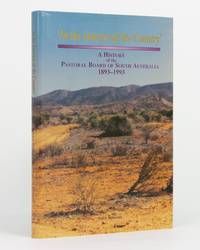
1995145280Adelaide: Pastoral Management Branch of the South Australian Department of Environment and Natural Resources 1995. First Edition. Hardcover. Fine/Fine. Adelaide Pastoral Management Branch of the South Australian Department of Environment and Natural Resources 1995. Octavo xii 236 pages with numerous illustrations. Papered boards; contemporary ownership details on the front free endpaper and title page; essentially a fine copy with the fine dustwrapper. Pastoral Management Branch of the South Australian Department of Environment and Natural Resources hardcover
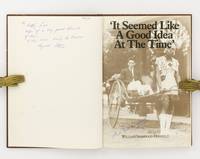
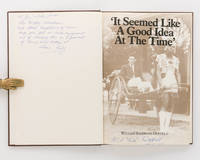
1988144166Mile End: The Author 1988. First Edition. Hardcover. Very Good. Mile End The Author 1988. Quarto ii 99 pages with numerous illustrations from photographs. Synthetic cloth a little flecked; an excellent copy. The title page is signed by the author; the verso of the front free endpaper is inscribed 'To Betty Lee Wife of a very good friend of mine A very nice lady to know Regards. Bill'. <p>The privately-published autobiography of a South Australian with a taste for adventure including travels in Africa and journeys by light aircraft in Australia. Bill Duffield died in 1989. The Author hardcover
1988117633Mile End: The Author 1988. First Edition. Hardcover. Fine. Mile End The Author 1988. Quarto ii 99 pages with numerous illustrations from photographs. Synthetic cloth; a fine copy. The privately-published autobiography of a South Australian with a taste for adventure including travels in Africa and journeys by light aircraft in Australia. The book is warmly inscribed in part 'Hope you get as much enjoyment out of reading this as I got out of living and writing it' and signed by the author who died in 1989; a small newspaper clipping of three short funeral notices is loosely inserted. The Author hardcover
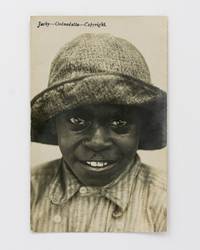
1900128025Unley: Chas P. Scott 1900. Very Good. Unley Chas P. Scott circa 1900s. A sepia-toned postcard-format gelatin silver photograph 138 × 87 mm blind-stamped with the photographer's details 'Chas P. Scott Unley S.A.'; the caption is inkstamped at the head of the recto and the verso is printed for use as a postcard. Tiny surface chip and crease to the top right-hand corner-tip; in excellent condition. Charles Scott 1878-1928 is 'Listed as photographer at 21A Waymouth Street Adelaide in directories from 1909 to 1915 his "private residence" being given as 10 Grace Street Goodwood Park' Photohistory SA website. The Art Gallery of SA gives the date '1903-04' for this image in its collection; this example with the address in Unley an Adelaide suburb near Goodwood Park would appear to have been produced prior to Scott's relocation to Waymouth Street. <p>The Adelaide 'Chronicle' for 8 September 1932 quotes a letter from F.W. Marsh formerly of Oodnadatta reminiscing about this portrait a copy of which hung 'in the strangers' room at Tattersalls Club. Well Jacky Rags when about three years old came with two other black boys early one morning to my place in Oodnadatta. When I asked what they wanted I was told that his father Charlie had killed his mother that night with a boomerang and that Jacky had come to me for protection. I kept him for a long time but when he was about 15 years old he was persuaded to ask me to allow him to go for a spell meaning he wanted to go to the camp in the bush. I let him go and later found that the older blacks had performed certain ceremonies on him from which he never recovered. He developed consumption and died a year or so later. I think living on the whites' food for so many years and then going to the bush where those to be initiated are starved until they are very weak so that the ceremony can be performed easily led to his early death. The name Jacky Rags was given him because whatever clothes he received in a day or two they would be in rags. He was a good lad'. Chas P. Scott unknown
109232The Hundred of Kappakoola sic derived from Kappakoola Hill near Wudinna on the Eyre Peninsula is the best we can do to give this item some context. The horse features at South Australian country races in a few issues of the 'Sporting News' in 1913 and 1914 information courtesy of Trove; apparently she photographed better than she raced. unknown
193025919Melbourne: Produced by Northfield Studios and J.E. Hackett 1930. Very good condition. Color lithograph travel poster depicting a mother koala with a cub clinging to her back in the top of a gum tree by the noted Australian illustrator James Northfield. Signed in the image at the lower right.<br /> <br /> Northfield 1887 - 1973 was the subject of the 2006 volume by the National Library of Australia Michelle Hetherington titled 'James Northfield and the Art of Selling Australia'. Northfield's work is prized for its draftsmanship & design and a distinctly Australian sense of color and light.<br /> <br /> Window card size 13 1/2 x 19 1/2". One small mark in margin only upper left corner left by old sticky tape. OCLC: 910601564 locates one copy only at the Library of Congress same image larger format. Trove 54841871 locates one copy at the National Library of Australia same image larger format. Produced by Northfield Studios and J.E. Hackett unknown
193025922Sydney: Australian National Travel Association 1930. Very good overall. Appealing b&w photo lithograph poster of a single koala clutching a tree branch gazing sweetly at the camera against a black background. <br /> <br /> Harold Cazneaux 1878 - 1953 was a noted Australian photographer who created some of the most memorable photographs of the early 1900s and a pioneer of the pictorialist movement. This poster photograph part of the Harold Cazneaux photograph collection 1910-1940 at the National Library of Australia is entitled 'Baby koala at the Koala Park Sanctuary Castle Hill Road Pennant Hills New South Wales 1930.<br /> <br /> Printed in black below the poster title is: "Particulars at Shipping Offices and Travel Agencies" and "Australian National Travel Association London San Francisco Toronto Wellington Melbourne Head Office". Photolithography by Troedel & Cooper of Melbourne. <br /> <br /> Window card size 12 1/2 x 20" printed on an orange ground with black and white printed text. A few short closed tears at edges some faint creasing; the numbers 21 and 96 hand written on verso. Trove 40597096 at the National Library of Australia. Australian National Travel Association unknown
101125A colour linocut on paper image size 151 × 230 mm; paper size 165 × 243 mm with the edition number 85/100 title and artist's signature in ink in the lower margin. The paper is moderately foxed but this is really only noticeable in the narrow margins because of the black olive green and brown colours of the print; in excellent condition unmounted as issued. 'In the late 1930s Warner designed a series of linocuts which were cut by his daughter and printed by his son. These works were signed "The Warners"' from the introduction by Roger Butler National Gallery of Australia to the catalogue of works by Warner published by Josef Lebovic Gallery in 2009. unknown
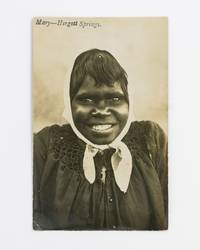
1900128024Unley: Chas P. Scott 1900. Very Good. Unley Chas P. Scott circa 1900s. A sepia-toned postcard-format gelatin silver photograph 139 × 88 mm with the caption inkstamped at the head of the recto and the verso printed for use as a postcard. Tiny crease to the bottom left-hand corner-tip; in excellent condition. We purchased this item with a similar portrait of a young Indigenous boy captioned 'Jacky - Oodnadatta' blindstamped with the photographer's details 'Chas P. Scott Unley S.A.'. The Art Gallery of SA dates that image '1903-04'. We have no hesitation in attributing this uncredited image and vintage print to him. Charles Scott 1878-1928 is 'Listed as photographer at 21A Waymouth Street Adelaide in directories from 1909 to 1915 his "private residence" being given as 10 Grace Street Goodwood Park' Photohistory SA website. We presume Scott worked from the address in Unley an Adelaide suburb near Goodwood Park prior to his relocation to Waymouth Street. Chas P. Scott unknown
1972109072Adelaide: Rigby Limited 1972. First Edition. Hardcover. Very Good/Very Good. Adelaide Rigby Limited 1972. Octavo viii 222 pages plus 16 pages of plates 30 images. Papered boards; top edge lightly foxed; an excellent copy with the excellent dustwrapper a little sunned on the spine. Inscribed and signed 'with much regards Monty'. Loosely inserted is a small quantity of interesting related ephemera: an invitation to the launch of this book and a newspaper review clipping; a photograph captioned 'Monty's Hon Ph.D Investiture Melbourne Uni' it was an honorary Litt.D. in 1973; his funeral notice clipped from a newspaper; and a remembrance card from Mountford's funeral inscribed in ink 'With special remembrance to you CPM's fellow worker'. Rigby Limited hardcover
180219812London: M. Jones 1802. Very good condition. An eagle wings outspread attacking a dog in a beautiful period hand colored copper engraving by V. Woodthorpe from Barrington's 'The History of New South Wales'. The book was very influential in building up the British public's impressions of the New Colony. Slightly marked right edge of print. Closed tear into margin restored from back. Page measures approximately 5 x 8 1/4". OCLC: 220785202. M. Jones unknown
101127An etching printed on card image size 237 × 184 mm; size of card 304 × 255 mm signed and dated in reverse in the plate 1935 with the edition number 10/50 title and artist's signature in pencil in the lower margin. A couple of spots of foxing to the lower margin otherwise in fine condition unmounted as issued. From the 'Australia at Work' series. unknown
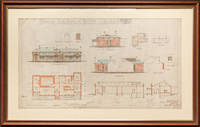
1907122957Adelaide: English & Soward Architects Cowra Chambers Grenfell Street 1907. First Edition. Hardcover. Very Good. Adelaide English & Soward Architects Cowra Chambers Grenfell Street 1907. A series of 13 architectural drawings 11 of them hand-coloured and several rough pencilled sketches overall visible image size 540 × 975 mm matted and behind glass in a later wooden frame external dimensions 755 × 1190 mm. The thick cartridge paper has a short 28 mm closed tear to the left-hand edge a semi-circular onlay of opaque drafting cloth over a large chip to the top edge covering most of the word 'Committee' and a few pinholes top and bottom; trifling signs of handing; overall a very attractive item in excellent condition. The main drawings in black ink and up to six different watercolours comprise the Front Elevation West South Elevation Ground Plan Back Elevation and Cellar; there are also four sections and a number of minor details. It has been signed by the contractor A.E. Kauffmann and dated 8 July 1907 and witnessed by Adelaide architect George Klewitz Soward who has also added elsewhere 'English & Soward Architects Cowra Chambers Grenfell Street Adelaide'. The fine building still stands in Tanunda today serving the same purpose for which it was constructed. <p>The Tanunda Club dates back to the last months of 1891 when 'there was a move to initiate discussion on how the local townspeople could best achieve convivial society as well as promote the products of the region. From its very beginning the club was a social centre for people from all walks of life where its members could relax partake of refreshments and enjoy discussions in the company of others. By May 1906 the Club's finances were in a very healthy state. It was perhaps with a sense of pride in the Club's achievements that Mr Adolph Schulz addressed a general meeting and mentioned that "according to the financial standing of the Club we might build a substantial front and proposed that a general meeting be called to test the feeling of the members". There was a spirit of prediction in Schulz's words. By October rough sketches for the proposed edifice had been prepared and were quickly approved - the grand new Clubhouse was underway! In January 1907 tenders for the proposed building were accepted after Mr Juncken had explained every detail of the work from the materials to be used to the dimension of the rooms. By December 1907 new furnishings for the rooms were being purchased. <p>The building itself was to be a credit not only to the Club but to the whole town of Tanunda. It was of fairly simple rectangular design topped by a roof with Dutch gables. The MacDonnell Street facade was plain yet superb. A steeply pitched verandah ran the entire length. It had turned wooden posts beautiful lacework at the timber joins and an impressive low fence and magnificently worked wrought-iron gateway. Above this verandah running like a ribbon down the facade was a rendered parapet. It had gables at either end and a central rounded feature with the words CLUBHOUSE inserted in large gold letters. The building's substantial size prominent position and fine construction made it one of Tanunda's outstanding features. It could be looked upon as an enormous asset. In one sense it changed the face of both the Club and its importance in the community' Rob Linn: 'The Tanunda Club - a Centenary History' 1991. English & Soward, Architects, Cowra Chambers, Grenfell Street hardcover
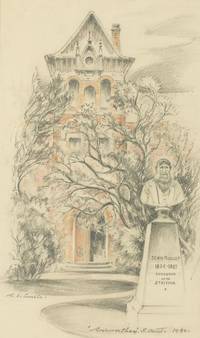
127206An original drawing in black and red pencil mounted and matted visible image size 332 × 197 mm; in fine condition signed and captioned in pencil along the bottom edge. The drawing features the central portion of the facade of Roseworthy Agricultural College Hall 'the most impressive building on campus. It was built between 1883-1884 to a design by Edward J Woods Chief Architect from the Department of Public Works and constructed of Tarlee stone and red brick with freestone mouldings and brick quoins and chimneys. It cost £7625 and contained accommodation for residential students a lecture room dining hall reading room staff room and offices. In front of the College Hall stands a bust of John Ridley 1806-1887 the man who invented the Ridley Stripper which was hugely important to the wheat industry. The bust was sculpted by Barsanti of Pisa Italy' Aussie Towns online. <p>Robert Emerson Curtis 1898-1996 English-born Australian artist architectural draftsman camouflage officer and official war artist emigrated to Queensland in 1914. In 1922 he 'travelled to the USA with his great friend the pioneer filmmaker Charles Chauvel. There he developed what was to become a lifelong interest in industrial modernism and on returning to Sydney in 1928 he set about documenting the construction of the Sydney Harbour Bridge. He painted murals and did industrial illustration in 1932-38 including the series "Australia at Work" which was syndicated in Australian newspapers. During WWII Curtis recorded working life in the Commonwealth Munition factories 1939-41 worked as Camouflage Officer in Australia and with the RAAF in New Guinea 1941-43 until he was finally appointed an official war artist to record the nation's industrial war-time production 1943-45. More than 200 works are in the Australian War Memorial AWM collection' Design & Art Australia Online. unknown
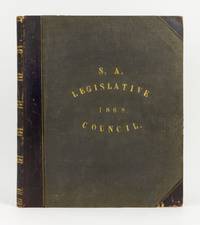
1868142860Adelaide: Townsend Duryea 1868. First Edition. Hardcover. Very Good. Adelaide Townsend Duryea 1868. A large quarto album approximately 415 × 365 mm containing 18 albumen paper portraits each approximately 280 × 210 mm mounted on the rectos of cloth-hinged thick card leaves interleaved with guards plus one leaf of letterpress see below. Contemporary half roan and cloth lettered and tooled in gilt with a binder's ticket on the front pastedown 'Bound at the "Register" Office Grenfell Street Adelaide'; covers slightly worn; leaves slightly cockled; one guard missing; most photographs lightly discoloured near the right-hand edge; a few light spots of foxing mainly to the guards and the versos of the mounts and some minor signs of age and handling but overall in excellent condition. The subjects include some of the most prominent figures in early colonial South Australia. In order of appearance the portraits depict John Morphett President Henry Ayers Charles Hervey Bagot John Henry Barrow Charles George Everard John Baker William Wedd Tuxford Thomas Elder William Peacock William Morgan Thomas Hogarth John Tuthill Bagot Thomas English Henry Mildred John Crozier William Parkin John Hodgkiss and Emanuel Solomon. <p>The 'South Australian Advertiser' for 20 August 1868 records that: 'Mr. Duryea is preparing a parliamentary group containing the members of both Houses of the Legislature which promises to be an effective affair. The members of the Council have already given him sittings and a fine series of portraits is the result'. In the subsequent months Duryea exhibited the photographs at his King William Street studio but most accounts refer to them assembled as a group around Morphett. This photo-collage with the portraits all heavily cropped is almost certainly the basis for a contemporary carte de visite published by Duryea see SLSA B 9258. However most of the images in this album appear to be rare or even unrecorded in their uncropped form; indeed the only other examples we located were of Henry Ayers and Charles Hervey Bagot. It is also rare to find photographs of early colonists at all let alone of this size quality and quantity. <p>The guard leaves for the portraits of Morphett Hogarth J.T. Bagot and Mildred contain manuscript biographical details in a single hand. Although we have not identified the writer it is likely to be one of the eighteen MLCs as he refers to 'our chamber' in the entry for Morphett. The portrait of C.H. Bagot is accompanied by a similar short biography but this time in letterpress and misspelling his middle name as 'Harvey'. C.H. Bagot English Mildred Crozier Parkin and Solomon are identified in another hand on the mounts beneath the image. Townsend Duryea] hardcover
189564096Adelaide: W.K. Thomas & Co. Printers 1895. First Edition. Paperback. Very Good. Adelaide W.K. Thomas & Co. Printers 1895. Octavo 15 pages. Title-wrappers sewn as issued; spine starting to split at the head and foot; an excellent copy. A separately-paginated offprint from the Proceedings of the Royal Geographical Society of Australasia South Australian Branch Session 1894-5. 'In this paper I shall not dilate upon the treatment of the aboriginal by the European in the past or dwell upon the course that in my opinion ought to be adopted in future. That some amends should be made some attempts to wipe out the dark stain on Australia's fair escutcheon is alike due to the few of the unfortunate people remaining and to the fame of our county and race.' Provenance: Tom Austen Brown with his pencilled ownership initials. W.K. Thomas & Co., Printers paperback
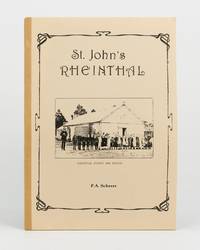
1991145726Tanunda: The Author 1991. First Edition. Paperback. Fine. Tanunda The Author 1991. Foolscap folio ii 52 leaves of processed typescript printed rectos only with a full-page map and numerous illustrations reproduced from photographs. Tape-backed pictorial wrappers as issued; a fine copy. A detailed history of the early German settlements in the Rhine River Valley in the Barossa Ranges south of Sedan. The Author paperback