526 résultats
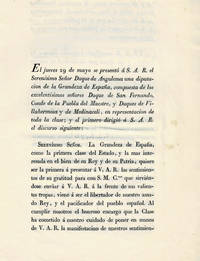
182399089<p>Madrid: Imprenta de D. Miguel de Burgos 1823. 1823. Very good. - Small folio 11-3/4 inches high by 8-1/4 inches wide. Softcover bound in plain brown wrappers. There is a short tear to the tail of the spine and the corners of the covers are creased. 6 unnumbered pages followed by a blank leaf. There are a couple of light spots to the front margin of the first leaf. A clean & bright pamphlet.</p><p>RARE First only edition.</p><p>When King Ferdinand VII of Spain returned to power in 1814 he repealed the liberal constitution of 1812 the Constitution of Cadiz. In 1820 soldiers preparing for an expedition to reclaim Spanish colonies in South America pledged loyalty to the 1812 Constitution and led by Rafael del Riego revolted against the King's absolute rule. On March 9 1820 Ferdinand accepted the constitution and gave power to the liberal ministers. The 3-year period that followed is known as the "Trienio Liberal". This period of liberal rule in Spain was marked by instability and a faltering Spanish economy. In January of 1823 a secret treaty was signed at the Congress of Verona by the United Kingdom France Russia Prussia and Austria. The treaty gave authority to France to invade Spain and restore Ferdinand VII as the absolute monarch. The King of France Louis XVIII put the Duke of Angouleme in charge of the Army of the Pyrenees also known as the "Hundred Thousand Sons of Saint Louis". It was his mission to overthrow the Constitutional government of Spain and restore Ferdinand VII to his full powers as was agreed to at the Congress of Verona. Angouleme and his army entered the capital of Spain on May 23 1823. There he formed a royalist regency presided over by Carlos Maria Isidro de Borbon the Infante of Spain. The pamphlet at hand is an exposition addressed to the Duke of Angouleme by the Grandee of Spain represented by 36 members of the Spanish nobility who have signed at the end. It is worthy of note that the Grandee's statement is dated May 27 the day after the regency was installed. The statement praises Angouleme and calls for him to quickly unite the King with the nations of Europe. "Ahora la oportunidad de desahogar nuestros pechos oprimidos y de reunir nuestros deseos y nuestras fuerzas para lograr la suspirada restauracion era el dia venturoso en que un hijo por el amor y heredero por la sangre del poderoso rey cristianisimo de Francia ha aparecido en esta capital misma rodeado de tantos miles de valientes anunciando el grandioso designio de poner en libertad a nuestro Rey y de hacer que reine de nuevo entre nosotros el orden la paz y la justicia.Acabad senor pronta y felizmente el desempeno de vuestro noble encargo; juntad la libertad de un Rey de vuestra sangre a las justas esperanzas de una nacion amiga de la Francia; que de los esfuerzos reunidos de estos dos pueblos generosos resulte el bien Comun y un nuevo y duradero lazo de amistad y de alianza; que ahuyentadas las mezquinas y funestas pasiones para hacer lugar a la benefica concordia formada una sola familia con un solo espiritu en rededor del regio trono; puestos enfin los Espanoles en honrosa y sabia armonia con las naciones cultas de la Europa tan lejos de las intrigas de la arbitrariedad precursora siempre de desastres como de la inquieta y destructora anarquia podamos un dia mas dichoso y puedan nuestros hijos decir con inefable y permanente jubilo."</p> Madrid: Imprenta de D. Miguel de Burgos, 1823. paperback