General Assembly of VirginiaBiblio.com
6 124 résultats
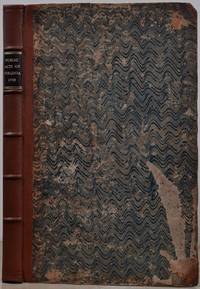
1785018940Richmond VA: Printed by Thomas Nicolson and William Prentis 1785. Book. Very good condition. Hardcover. First Edition. Folio - over 12 - 15" tall. 235 pages of text. The original patterned paper boards are worn stained and soiled but remain intact. Folio: measures 12 7/8 x 8 inches. The text was resewn and the spine was expertly rebacked in new leather with a leather spine label. The front endpaper and the title page were light-bleached by a conservator. Generally a clean copy with minor foxing and minor browning with a few minor creases and one corner with a small piece lacking. PROVENANCE: old ink ownership notation on board: B.W. Leigh Virginia politician Benjamin Watkins Leigh 1781-1849. Previous owner's name on the title page and first page of text: Thomas Edmunds circa 1750-1791 served in various Virginia Militia and became an officer in the Revolutionary War. He represented Sussex County in the Virginia Federal Convention a.k.a Virginia Ratifying Convention. A bookplate and pencil owner's name from 1910 are on the front pastedown and endpaper. BIBLIOGRAPHY: Evans 19351; Sabin 100392; Swem 7461. Printed by Thomas Nicolson and William Prentis Hardcover
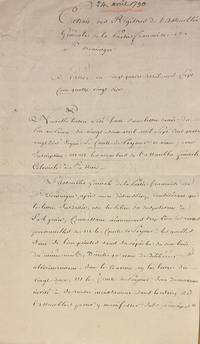
17903657Saint-Marc 1790. Manuscript on paper. 1 leaf written in a clear secretarial hand on both sides signed by Bacon La Chevalerie Hanus de Jumécourt Valentin de Cullion de Bourcel Vincendon Dutour and Guerin secretary. Light toning horizontal fold mark small crease at upper left corner. Otherwise clean and well preserved in fine condition. Manuscript on paper. 1 leaf written in a clear secretarial hand on both sides signed by Bacon La Chevalerie Hanus de Jumécourt Valentin de Cullion de Bourcel Vincendon Dutour and Guerin secretary. 2 pp. <p><br /> Signed manuscript document from the escalating confrontation between the colonial Assembly of Saint-Marc and the royal governor.<br /> <p><p><br /> The text records the resolution adopted by the Assemblée Générale de la Partie Française de Saint-Domingue during its session of 24 April 1790 following the reading of a letter sent two days earlier by Governor Louis Antoine de Thomassin comte de Peynier condemning the Assembly’s recent acts and asserting the supremacy of royal authority. The deputies declared the letter “the delirium of despotism and pride†while acknowledging Peynier’s personal virtues. Their decree invites him to appear before the Assembly “to make known his principles and his true opinion†appointing Caradeux et Caradeux de la Cayes to deliver this summons—members of the prominent planter family active in colonial politics cf. Généalogie et Histoire de la Caraïbe 2025 art. 63—and warning that his refusal might compel them to take “disagreeable measures.†Finally the Assembly resolves that the Governor-General shall occupy within it the same position as the King’s ministers in the National Assembly—an explicit limitation of his authority.<br /> <p><p><br /> Signed by several key figures of the early Saint-Domingue revolution: Bacon de La Chevalerie 1731–1821 president of the first provincial assembly of the northern part of the colony and later leader of the faction des Léopardins; Charles-Arnould-Ignace Hanus de Jumécourt 1749–1798 former artillery officer and mayor of La Croix-des-Bouquets; Valentin de Cullion 1734–1821 lawyer and planter later author of Examen de l’esclavage en général… Paris 1802; Louis-Nicolas-Antoine de Bourcel b. 1754 conseiller du roi and procureur général at the Conseil Supérieur du Port-au-Prince; and Étienne-Guillaume Vincendon-Dutour avocat at the Conseil Supérieur de Saint-Domingue and later president of the Western Provincial Committee who emigrated to the United States in 1798.<br /> <p><p><br /> The document reflects the mounting tension between the Assembly and the Governor in the spring of 1790—an assertion of colonial autonomy that foreshadowed Peynier’s decision to disperse the deputies by force during the night of 29–30 July 1790.<br /> <p>. unknown
144688hardcover. Began the 9th Day of April 1691; and Ended the 27th of September 1743. Vol. I. Published by Order of the General Assembly. title vignette. iv 840 2pp. folio contemporay calf; expertly rebacked in modern calf with leather labels; first few and last few leaves heavily foxed in margins; some light browning to text; binding moderately rubbed edges of corners worn small rubberstamp of a former owner on margin of t.p. N.Y.: Hugh Gaine 1764.<br/> <br/> "The largest issue of Gaine's press and the first piece of government printing he secured. The pp. 2 is `An Act of reversing the Attainder of Jacob Leisler and others' and is often lacking. The work was edited and the index made by Abraham Lott Junr." Ford The Journals of Hugh Gaine I p. 113 This work is complete in itself vol. II was published in 1766. Evans 9756.<br/> <br/> unknown
20072083002115801450Ehime Prefecture Assembly 2007. Soft Cover. Fine. Number of books: 9 Ehime Prefecture Assembly paperback
19632080402107100394Not Available 1963. Soft Cover. Fine. Number of books: 12 books set Not Available paperback
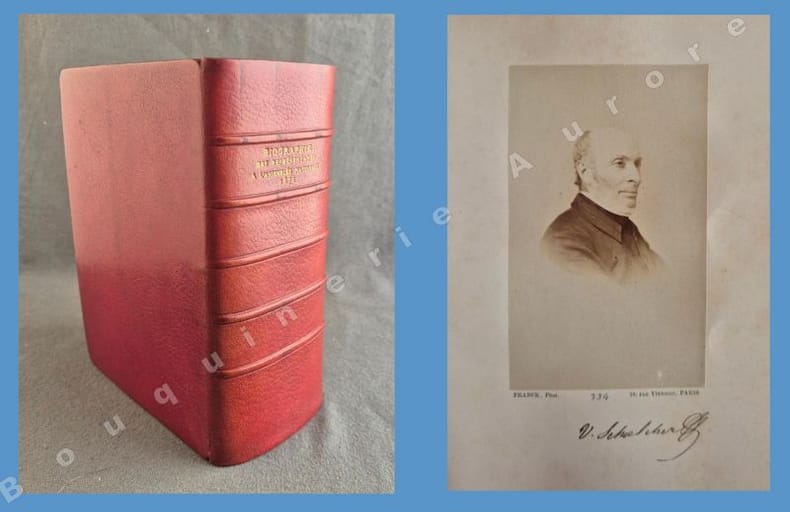
1871145981871 Angers, aux bureaux de la publication, 1871, 1 vol. fort in-8° (187 x 132 mm, épaisseur 85 mm !), relié plein maroquin rouge, dos à 5 nerfs, titre doré, double filet doré sur les coupes, riche guirlande dorée encadrant les plats intérieurs, toutes tranches dorées (BELZ-NIÉDRÉE), de 340 pp.Dos légèrement insolé, rousseurs éparses, quelques épidermures de surface au papier du texte, bel exemplaire luxueusement relié par Belz Niédrée par ailleurs.
xii, 119, 15 pp ads. Fifty-six illustrations including seven black and white photographic plates with frontis photo of a complete 12" apparatus. "An effort to place in the hands of advanced amateurs in electrical science a practical working manual on the construction of high-frequency coils, now so useful in scientific investigation." - from Introduction. Publisher's tag affixed to front free endpaper. Errata slip affixed to page 5. Tanning to outer half of each endpaper. Faint evidence something has been peeled from back of half-title page. Prior owner's inkstamp upon back of frontispiece. Prior owner's details written atop title page. Binding sound. Moderate wear to greenish-black boards. Some loss from white lettering upon front board. White lettering to backstrip is gone. A quality copy. Book
Ensemble de 9 volumes in-8 (204 x 125 mm), plein veau fauve moucheté de l'époque, dos lisses ornés de doubles filets dorés, pièces de titre et de tomaison de maroquin rouge, nom de "Boissy d'Anglas" doré en pied, filet à froid en encadrement des plats, roulette à froid sur les coupes. Ensemble complet de ce monumental ouvrage en 9 parties, devenu au fil des événements un périodique publié sur plus de dix années (1814 à 1824). "À l’origine de cet ouvrage, une commande de Bonaparte qui réclame à Montlosier un ouvrage établissant une continuité entre la monarchie, le Consulat et l’Empire, afin de fournir des arguments historiques à une réconciliation nationale. Montlosier retrace l’histoire de la monarchie en expliquant comment la noblesse a été progressivement écartée du pouvoir et dresse, en fait, un véritable réquisitoire contre la monarchie d’Ancien Régime. Napoléon refuse l’imprimatur en 1807 et l’ouvrage ne sera publié qu’en 1814. Seuls les trois premiers tomes composés entre 1804 et 1807 correspondent à la commande de Bonaparte; dans les suivants Montlosier développe l'idée d'une dégradation continue, depuis Hugues Capet de l’ancienne constitution de la France sous l’effet de l’usurpation progressive du pouvoir par le monarque au détriment des 'grands du royaume' (…). Dans ce renversement de perspective et des conséquences qu’il en tire pour analyser les causes profondes de la Révolution, Montlosier se montre novateur et amorce les nouvelles recherches du XIXe siècle, celles de Guizot et d’Augustin Thierry" (M.-F. Piguet, "Contre-révolution (…) Montlosier (1755-1838) penseur du conflit politique moderne", 'Astérion', 6 | 2009). Élu député aux États généraux de la noblesse, le comte de Montlosier (1755-1838) se montra favorable aux débuts de la Révolution avant de basculer dans la contre-révolution, à partir de 1791, aux côtés des monarchiens. S'il défendit toujours le régime monarchique, il était en revanche beaucoup moins fermement attaché au principe de légitimité dynastique. Il tenta un ralliement critique à Louis XVIII, puis à la Monarchie de Juillet qui le nomma Pair de France en 1832. Quelques accrocs à la reliure, sans gravité. Exemplaire de François-Antoine, comte de Boissy d'Anglas (1756-1826) avec son nom doré en pied de chaque volume. L'une des principales personnalités politiques de la période, girondin modéré, il participa à pratiquement tous les gouvernements depuis son élection au Tiers État en 1789, de la Révolution, de la république, de l'Empire puis de la Restauration où, rallié à Louis XVIII, il fut nommé pair de France. Bon exemplaire, frais, très bien conservé.
1658TS341London: PUBLISHED BY E.M. For Company of Stationers 1658. 2nd Edition . Hardback. Fine. 4to. xii inc. title-page with typographic border design and an errata page 108PP TOGETHER WITH THE HUMBLE ADVISE OF THE ASSEMBLY OF DIVINES Now By Authority of Parliament sitting at Westminster Concerning a Larger Catechism et PUb. by S. Griffiths for the Company of Stationers pp151-155 xii table pp BOUND WITH AN ORDINANCE OF THE LORDS AND COMMONS Assembled in Parliament 1658 viiipp. FULL TITLE; The Confession of Faith Together with the Larger and Shorter Catechisms composed by the Reverend Assembly of Divines sitting at Westminster presented to both Houses of Parliament again published with the Scriptures at large and the emphasis of the Scriptures in a different character together with the directory and all other additions that have been hitherto printed. FINE COPY with no cropping. REBOUND IN FULL CALF IN FINE QUALITY nineteenth century binding by Riviere. No ticket or stamp but in the quality and style often found in Riviere's work. Typical swirling marbled end-papers and rectangular black lines and decoration with raised bands and dentilles used by Riviere on bibles etc. PLEASE EMAIL FOR PHOTOS. Raised bands and blind ruled covers. Gilt morocco label to the spine. PLEASE EMAIL FOR PHOTOGRAPHS. WING C5796 <br/> <br/> PUBLISHED BY E.M. For Company of Stationers hardcover
20022083002115801120Ehime Prefecture Assembly 2002. Soft Cover. Fine. Number of books: 7 Ehime Prefecture Assembly paperback
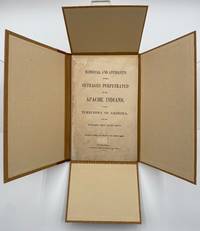
1871020376San Francisco CA: Francis & Valentine printers 1871. Book. Good condition. Paper Wrappers. First Edition. Octavo 8vo. 32 pages of text; complete. A very worn and ragged example of this rare imprint. Ex-library with rectangular ink stamp on the title page and five numbers handwritten on the blank verso. Title page and final page of text are chipped torn soiled. A couple other pages of text with smaller chips. Most but not all pages are discolored from exposure to damp. Three leaves have archival Japanese tissue repairs. Protected in archival mylar. Enclosed in a leather-backed four flap enclosure with gilt-stamped spine. On November 8 1870 Marcus D. Dobbins was elected to the House of Representatives of the Sixth Arizona Legislature and was elected as the Speaker of the House. Howes D372. First edition. Francis & Valentine, printers Paperback
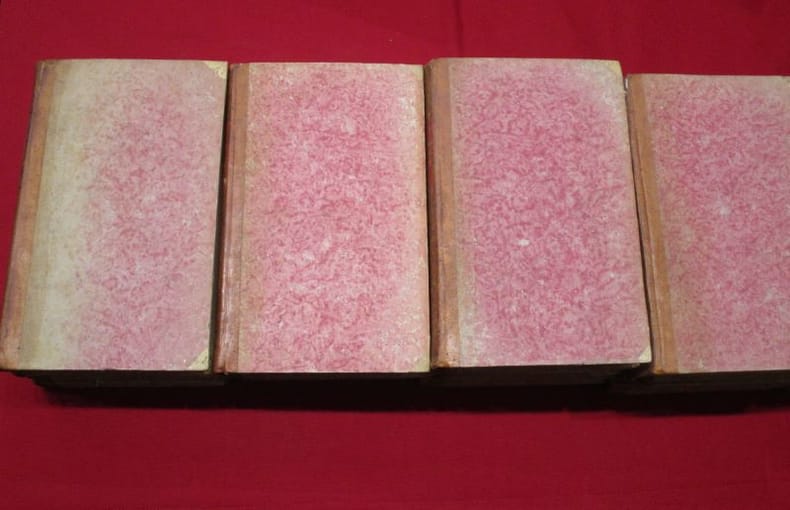
115124A Paris, chez Baudouin, Imprimeur de l'Assemblée nationale/De l'Imprimerie du Journal des décrets, [1789-1794], 26 volumes in-8 de 125x205 mm environ, de 200 à 600 pages par volume (environ 14 330 pages au total), Septembre 1791 en deux parties, pagination continue pour les volumes Août et Septembre 1793, 29 tableaux dépliants. Demi-basane havane mouchetée et papier à la colle rose, dos à faux-nerfs, titres et tomaisons dorés sur pièces de cuir rouge, tranches mouchetées, gardes blanches. Coiffes émoussées comme habituellement, griffures et décolorations sur les plats, pages de titres tamponnées, de nombreux feuillets répétés, quelques rousseurs, page de titre et d'avertissement déchirées au volume de Février 1791, travail de vers sur le volume Mars-Avril 1792, un volume avec des mouillures, sinon bon état général. Rare ensemble.
20022090202120101074Not Available 2002. Soft Cover. Fine. Number of books: 15 Not Available paperback
20022090202120301073Not Available 2002. Soft Cover. Fine. Number of books: 15 Not Available paperback
elala6217Toronto: M.Reynolds Printer to the Hon. the House of Assembly 1835. First Edition of this famous report an eloquent and forceful indictment of the Family Compact Government largely written by Scottish-Canadian journalist and politician William Lyon Mackenzie who chaired the committee. The grievances of the Reformers are listed in detail: concern regarding the excessive power of the executive branch in Upper Canada and the campaigning of government officials for Tory politicians during elections criticism of companies like the Welland Canal Company that mismanaged funds given to them by the government and the salaries of officials who received patronage appointments. Demands are made for an elective legislative council and responsible government. A landmark document in the political history of Upper Canada. Mackenzie represented York County in the Legislative Assembly of Upper Canada and was elected the first mayor of Toronto in 1834. He led the rebels in the Upper Canada Rebellion in 1837 and after its defeat he unsuccessfully rallied American support for an invasion of Upper Canada as part of the Patriot War against British imperialism. Interestingly this is a signed presentation copy given the year of publication by lawyer politician and later judge Archibald McLean who was a rising member of the Family Compact. As a colonel of the militia during the 1837 rebellion he was involved in routing the rebels in Toronto commanding the left flank of the loyalist forces under Colonel James Fitzgibbon in the attack on Montgomery’s Tavern. Fleming 892. Gagnon I 2196. Lande 859. Sabin 10577. TPL 1929. Watters p. 885. 8vo. pp. 6 p.l. 76index 2errata li 1 372 vi 26 A-I K-Y. with half-title. A very good copy in original cloth-backed bds. paper spine label chipped. Signed Presentation copy dated 1835 to Dr. Alexander Wylie Matilda from his friend Archibald McLean M.P.P. 1791-1865. elala6217 Toronto: M.Reynolds, Printer to the Hon. the House of Assembly, 1835 hardcover
19682080502106917719Not Available 1968. Soft Cover. Fine. The book is in fine condition. Not Available paperback
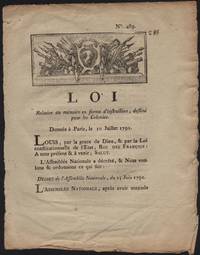
1791661Aix: Imprimerie de la Vauve d’André Adibert Imprimeur du Roi & du Départment vis-à-vis le College 1791. First edition. With a woodcut head piece. Published unbound. Numbered in ink on each recto. In fine condition. First edition. With a woodcut head piece. Published unbound. 3 1 p. <p><br /> Law by the National Assembly concerning the legislation at Saint-Domingue and the rights of the colonial assembly and the governor of the island.<br /> <p><p><br /> Scarce document. <br /> <p>. Imprimerie de la Vauve d’André Adibert, Imprimeur du Roi & du Départment, vis-à-vis le College unknown
1766363001New York: Printed by Hugh Gaine at his Book-Store and Printing Office at the Bible & Crown in Hanover-Square 1766. Hardcover. Good. First edition. Two volume set. Thick folios. Contemporary full calf. Binding is worn with the boards nearly detached small bookplate on the front pastedowns else a good sound set. Volume one prints the proceedings from April 1691–September 1743; volume two from November 1743–December 1765. This edition includes: "the act for reversing the attainder of Jacob Leisler and others" on the last leaf of volume one. An invaluable resource for the early political social and economic history of New York. ESTC W6332; Evans 9756 10418. Printed by Hugh Gaine, at his Book-Store and Printing Office, at the Bible & Crown, in Hanover-Square hardcover
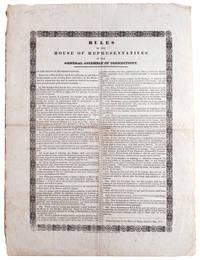
1832339004New Haven: Palladium and Republican Office 1832. First edition of Rules for 1832. Broadside 1 page. Printed recto only. Text is printed in two columns within elemental border; printed area including ornamental border. circa 11-1/4 by 1- 7/16 inches. Paper is moderately foxed folded twice with light wear along folds bit of creasing at corners else a very good copy of a scarce broadside. First edition of Rules for 1832. Broadside 1 page. Printed recto only. Text is printed in two columns within elemental border; printed area including ornamental border. circa 11-1/4 by 1- 7/16 inches. OCLC lists no worldwide holdings. Not in American Imprints; not in OCLC Palladium and Republican Office unknown
17698478Williamsburg VA: W. Rind A Purdie and J. Dixon 1769. Hard Cover. Good binding. Folio. 2 577 pp. First edition. Rebound in cloth. Serviceable binding with little shelfwear and soiling; early dampstaining throughout; some of the preliminary leaves including the title page are a bit worn at the fore-edge margin. This copy with early family library stamp to the preliminary blank as well as the contemporary owner name of George Hairston on the same leaf and title leaf. Hairston served as a Colonel in the Revolutionary War after which he represented Henry County in the Virginia House of Delegates. Two blanks at the rear with additional early notes and names including that of Peyton Hunter of Henry County VA. On the front pastedown of this copy is the bookplate of George Stovall Jun. <br /> <br /> A remarkable volume in its own right this is the third and final revision of the laws of Virginia during the colonial period C-T 359. Swem notes that only 1200 copies were ordered to be printed by the General Assembly. Clayton-Torrence 359; Evans 11511; Sabin 100391; Swem 22646. W. Rind, A Purdie, and J. Dixon unknown
Z1-V-009-01940Scholastic Paperbacks. Used - Good. Ships from UK in 48 hours or less usually same day. Your purchase helps support Sri Lankan Children's Charity 'The Rainbow Centre'. Ex-library so some stamps and wear but in good overall condition. 100% money back guarantee. We are a world class secondhand bookstore based in Hertfordshire United Kingdom and specialize in high quality textbooks across an enormous variety of subjects. We aim to provide a vast range of textbooks rare and collectible books at a great price. Our donations to The Rainbow Centre have helped provide an education and a safe haven to hundreds of children who live in appalling conditions. We provide a 100% money back guarantee and are dedicated to providing our customers with the highest standards of service in the bookselling industry. Scholastic Paperbacks paperback
1787030967Albany New York: J. Newlands P. Sim et al Printed By Charles R. Webster 1787. Published at Albany NY 1787. Rare. Plain gray softcover stitched binding 40 pages. Includes A Scheme of Prayer beginning at page 36. Covers worn creased and lightly chipped probably restitched long ago contents age-toned but clean with some minor edge chipping and minor dampstaining to upper edges of final few pages name Lucy Burn or Burk inside front cover. Evans 25030. Soft Cover. Fair. 16mo - over 5¾" - 6¾" tall. J. Newlands, P. Sim et al, Printed By Charles R. Webster Paperback
elala6098<p>8vo. pp. 6 p.l. 76index 2errata li 1 372 vi 26 A-I K-Y. with half-title. original cloth-backed bds. covers soiled & worn but binding solid spine label chipped scattered light foxing. <strong>First Edition </strong>of this famous report an eloquent and forceful indictment of the Family Compact Government inspired and largely written by William Lyon Mackenzie. The grievances of the Reformers are listed in detail: concern regarding the excessive power of the executive branch in Upper Canada and the campaigning of government officials for Tory politicians during elections criticism of companies like the Welland Canal Company that mismanaged funds given to them by the government and the salaries of officials who received patronage appointments. Demands are made for an elective legislative council and responsible government. A landmark document in the political history of Upper Canada. Fleming 892. Gagnon I 2196. Lande 859. Sabin 10577. TPL 1929. Watters p. 885.</p> Toronto: M.Reynolds, Printer to the Hon. the House of Assembly, 1835. hardcover
165841382London: The Company of Stationers E.M. Printer. Fair. 1658. Second Edition. Hardcover. Banded brown full leather binding rubbed/chipped at extremities; front board detached; 1.5" chip to spine head; boards & backstrip scuffed & abraded; feps missing; back hinge a few points in textblock cracked and one point separating; one signature detached but present; owners' names inked on title-page; outer leaves chipped at edges; leaf edges tp & some margins foxed else a complete very clean copy of this historic volume. ; "An Ordinance of the Lords and Commons Assembled at Parliament for the Calling of an Assembly." sixteen pages and "A Table of the Chief Points Spoken to in the Confession." eight pages bound in at rear. ; 8vo; 329ordinance & table pages . The Company of Stationers (E.M., Printer) hardcover
10234ou journal des Assemblées Nationales, depuis 1789 jusqu’en 1815. La narration des évènemens, les débats des assemblées, les discussions des principales sociétés populaires, et particulièrement des la société des Jacobins, les procès verbaux de la Commune de Paris, les séances du tribunal révolutionnaire, le compte rendu des principaux procès politiques, le détail des budgets annuels, le tableau du mouvement moral, extrait des journaux de chaque époque, etc. précédé d’une introduction sur l’histoire de France jusqu’à la convocation des Etats généraux. 40 tomes en 40 volume in 8 reliure demi-cuir noire d’époque, titre, tomaison, roulette, palmette, filets dorés. Fers filets à froid. Tome1 : faux-titre, titre, 486 pages, 2 pages explication du plan de la salle d’assemblée des notables à la séance présentée par le Roi, 1 plan. Une page d’explication du plan de la salle d’assemblée des notables présidée par Monsieur. Un plan. Tome 2 : faux-titre, titre, IV-475 pages. Tome 3 : faux-titre, VIII, titre, 480 pages. Tome 3 : faux-titre, titre, VIII, 480 pages. Tome 4 : faux-titre, VIII, titre, 478 pages. 3 pages de table. Tome 5 : faux-titre, titre VIII 480 pages. Tome 6 : faux-titre, titre, VIII, 479 pages. Tome 7 : faux-titre, titre VIII, 473 pages. 3 pages de catalogue. Tome 8 : faux-titre, titre, XV, 463 pages. Tome 9 : faux-titre, titre XII, 475 pages. Tome 10 faux-titre, titre, XII, 478 pages. Tome 11 : faux-titre, titre, X, 494 pages ; 1 page d’errata. Tome 12 : faux-titre, titre, XIII, 493 pages. Tome 13 : faux-titre, titre, XI, 455 pages. Tome 14 faux-titre, titre, XII ; 457 pages. Avec une liste des membres de la Société des amis de la Constitution séante à Paris A la maison des Jacobins dite des Jacobins Saint-Honoré. Tome15 : Faux-titre, titre, XV, 469 pages. Tome 16 : faux-titre, titre, XV, 470 pages. Tome 17 faux-titre, titre, XVI 479 pages. Tome 18 faux-titre, titre, XVI 480 pages. Tome 19 : faux-titre, titre ; XV, 469 pages. Tome 20 faux-titre, titre, XV, 469 pages. Tome 21 : faux-titre, titre ; XVI, 443 pages. Tome 22 : faux-titre, titre, XI, 479 pages. Tome 23 : faux-titre, titre, XV, 480 pages. Tome 24 : faux-titre, titre, XI, 479 pages. Tome 25 : faux-titre, titre, XV, 474 pages. Tome 26 faux-titre, titre, XV, 479 pages. Tome 27 : faux-titre, titre, XVI, 463 pages. Tome 28 : faux-titre, titre, XV, 508 pages. Tome 29 : faux-titre, titre, XVI, 480 pages. Tome 30 : faux-titre, titre, XV, 472 pages. Tome 31 : Faux-titre, titre, XV, 503 pages ; Tome 32 : faux-titre, titre, XV, 487 pages. Tome 33 : faux-titre, titre, XI, 461 pages. Tome 34 : Faux-titre, titre, 489 pages, 1 page d’errata. Tome 35 : faux-titre, titre, 508 pages. Tome 36 faux-titre, titre, 524 pages. Tome 37 : faux-titre, titre, 508 pages .Tome 38 : faux-titre, titre, 508 pages. Tome 39 : faux-titre, titre, 532 pages. Tome 40 : faux-titre, titre, V, 422 pages Une page d’avis. Paris PAULIN libraire 1834-1838. Edition originale. Fort rare complet, en reliure uniforme. Petites rousseurs, plus principalement concentrées en début et fin de volume. Sinon très bon état