VIDA (Marcus Hieronymus / Marco Girolamo).Livre Rare Book

31 résultats
155921611Lugduni [Lyon], apud Haered. Seb. [Sébastien] Gryphii [Gryphe], 1559. Un vol. au format in-16 (120 x 78 mm) de 575 pp. Reliure (XVIIIème) de pleine basane marbrée havane, plats jansénistes, dos lisse orné de doubles filets dorés, pièce de titre de maroquin caramel, titre doré, tranches rouges.
155717607(Lyon) Lugduni, apud Antonium Vincentum (AntoineVincent), 1557 (Excudelat Symphorianes Barbierus) ; in-8, demi-veau glacé, dos à quatre nerfs, titre et date dorés (reliure du XIXe) ; 253 pp. , (1) pp. imprimeur, absence dernier f. blanc. (a-q8)
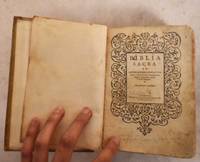
1558191250Lugduni: ap. Joan. Tornaesium 1558. Vellum. VG with occasional fragile edges or corners title-page has minute amount missing from center of leading edge soiling and very faint ink writing towards base of page. Other pages exhibit occassional inked notations variously bold and extremely faint overall a respectable copy of this original London edition. Random worming does not affect text and is very slight as is very light dampstaining towards the lower edges of the index sheets. Red stained edges as expected. Rear cover professionally re-attached. Full vellum. Title-page with Arabesque borders blank verso 14 pp preliminaries pp. 1-1152 followed by Index of 38 sheets 76 pp followed by sheet with only an Arabesque design on the verso. In Latin. This edition has 198 or 199 depending text woodcuts by Bernard Salomon of very decent quality. FIRST de TOURNES LATIN BIBLE based on Robert Estienne's text illustrated with an arabesque title-border and numerous woodcuts.by Bernard Salomon whose nickname was "Le petit Bernard" or "Little Bernard" antecedently and laterly used in other books. They show detailed scenes of the Old and New Testaments these last ones with arabesque strip borders at the sides. Text on two columns COMPLETE of the voluminous index closed by an arabesque ornament Henri Godts Auctions 2013. ap. Joan. Tornaesium hardcover
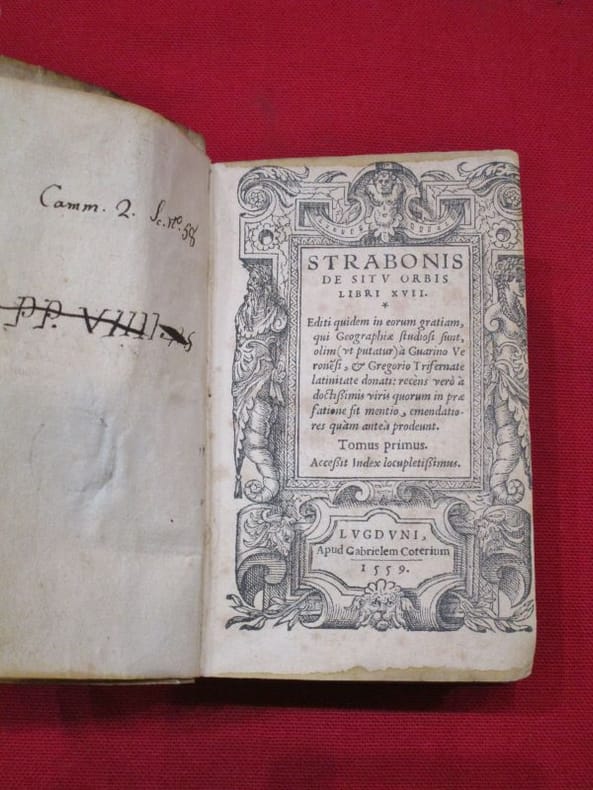
1559112586lyon gabrielum coterium 1559 parchemin Lugduni (Lyon), Apud Gabrielem Coterium (Gabriel Cotier), 1559, 1 volume in-16 de 70 x 115 mm environ, 878 pages, (30) ff. (Index), (1) f. Parchemin souple d'époque, dos portant titre et tomaison inscrits à l'encre. Reliure tachée par endroits, contregardes décollées (claies avec inscriptions en grec apparentes) apparentes, inscriptions manuscrites sur les gardes, pages brunies, fines mouillures marginales, bon exemplaire malgré les défauts signalés.
1567102271567 veau brun époque, motifs centraux sur les plats, encadrement à froid. (reliure à restaurer). in-folio, (20ff.), 539pp., Lugduni ad Salamandrae apud Claudium Sennetorium 1567,
1573LYONNNNNNNNN0922Lyon, Dioscor Editions, 1985, 15 x 21, deux textes de 460 et 119 pages sous une même couverture souple illustrée. Réimpression des textes parus chez Antoine Gryphius en 1573 et 1574.
156120809Paris, Vincent Sertenas, 1561 (marque d’imprimeur au titre) ; in-32 (115 mm), veau marbré, dos à nerfs décoré et doré, pièce de titre grenat, triple filet doré d’encadrement des plats avec fleurons d’angles, tranches marbrées (reliure du XVIIIe) ; [48], 882 pp. (sign. : A-C, a-z, A-Z, Aa- Ii 8, Kk 1, absence dernier f.bl.).
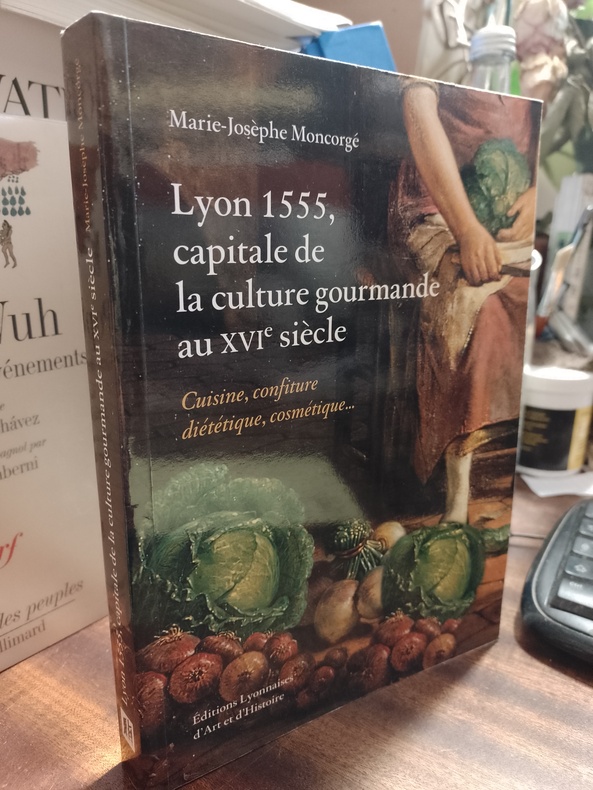
1555LYONNNN9516200425Lyon, Editions Lyonnaises d'Art de d'Histoire,2008, 17 x 23,5, 240 pages cousues sous couverture souple illustrée.
158311101Lyon, s.n. (François Conrard), 1583 ; in-8 ; demi-vélin à petits coins, étiquette orange titre manuscrit (reliure probablement de la mi-XIXe) ; (32), 362, (10) pp., *-2*-8 A-Z8 [croix]2 ; marque 2 au titre.
155817891558 ouest france 221 pages. Illustré de nombreux dessins en noir et blanc dans le texte et de photos en couleur hors texte. 'Le pêcheur de France' In-8 Broché. bel exemplaire
159214640Lyon, Q. Hug. A Porta, Fratres de Gabiano (Excudebat Guichardus Jullieron anno 1592), 1592 ; in-8 (164), plein vélin ivoire à recouvrements de l'époque ; (8), 312, (7) index, (1 bl.) ; 34 pp., (1) p., (1 bl.), 2 ff. blancs.
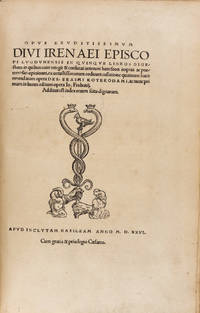
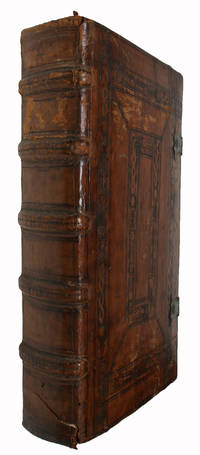
152642820865<p>FIRST EDITION of the works of Irenaeus "<strong>the father of Christian theology</strong>" as he is widely known.</p><p>Irenaeus is one of the most important of the early Church Fathers. Writing at the end of the second century with the authority of direct links to the followers of the original Apostles he defended the Church against existential threats and helped to establish its fundamental underpinnings.</p><p>Irenaeus's principal work is <em>Adversus Haereses</em> Against Heresies "<strong>one of the most precious remains of early Christian antiquity</strong>." The work comprises a refutation of the Gnostic heresies then a serious threat to the Church and exposition and defense of the Catholic faith" Roberts ed. Saint Irenaeus of Lyons <em>Against Heresies</em>. This is "the chief work of Irenaeus and truly of the highest importance; it … constitutes an invaluable source of information on the most ancient ecclesiastical literature from its beginnings to the end of the second century. In refuting the heterodox systems Irenaeus often opposes to them the true doctrine of the Church and in this way furnishes positive and very early evidence of high importance. Suffice it to mention the passages so often and so fully commented upon by theologians and polemical writers concerning the origin of the Gospel according to St. John the Holy Eucharist and the primacy of the Roman Church" <em>Catholic Encyclopedia</em>.</p><p><strong>Irenaeus is "one of the few really original and creative thinkers in the history of the church … He united the ethical and religious the legal and the mystical and so founded historic Catholicism … To no other Father does Catholic theology owe so much"</strong> McGiffert.</p><p>"Irenaeus asserted in a positive manner the validity of the Jewish Bible the Old Testament which the Gnostics denied claiming that it upheld the laws of the Creator God of wrath. Though Irenaeus did not actually refer to two testaments one old and one new he prepared the way for this terminology. He asserted the validity of the two testaments at a time when concern for the unity and the difference between the two parts of the Bible was developing. Many works claiming scriptural authority which included a large number by Gnostics flourished in the 2nd century; by his attacks on the Gnostics Irenaeus helped to diminish the importance of such works and to establish a canon of Scriptures" <em>Encyclopedia Britannica</em> 11th ed. Irenaeus the earliest witness to the four gospels as canon played a central role in establishing the canonical Christian Bible.</p><p>Edited by Erasmus this first edition of Irenaeus was central to Erasmus's effort to publish the works of the Church Fathers at the Froben Press at Basel. Erasmus was convinced that the Roman Catholic Church would only be fully reformed and renewed by turning again to the Bible as interpreted by the Fathers of the Church. More than any other single figure Erasmus brought to light the ancient writings of the Church Fathers. In the case of Irenaeus Erasmus crowed in his preface "Why should I not call him 'mine' since I found him almost buried and have done my best to clear away the dust of ages and restore him to the light"</p><p>The first edition of Irenaeus is very scarce in collector's condition. No example has appeared for public sale in the past thirty years.</p><p>Bound with the following work which is first in the volume:</p><p>CLEMENT I Pope. <em>Divi Clementis Recognitionvm Libri X. Ad Iacobvm Fratrem Domini Rvfino Torano Aqvileiense Interprete…</em> Basel: Froben 1526.</p><p>First edition. This work once attributed to Pope Clement I concerns on St. Peter and his disciple Clement. The ornamental borders are designed by Hans Holbein.</p><p>Folio. Contemporary blind-tooled pigskin over wooden boards stained and with some wear and scratches clasps manuscript title on spine. Early inscriptions including marginalia and underlining h4 repaired small wormhole to last leaf. A very good copy.</p> Froben hardcover
15553478Lugduni, apud Ant. Vincentium, 1555 Fort in-12 (16,2 X 11 cm), 39 ff. (titre, index), 540 pp., veau brun, dos orné à cinq nerfs, pièce de titre maroquin rouge, triple filet orencadrant les plats), filet de coupes, tranches rouges (reliure du dix-huitième siècle habilement restaurée)(petite décchirure angulaire sur un feuillet, sans perte de texte). In fine : LUGDUNI EXCUDEBAT, PETRUS FRADIN M.L.III.
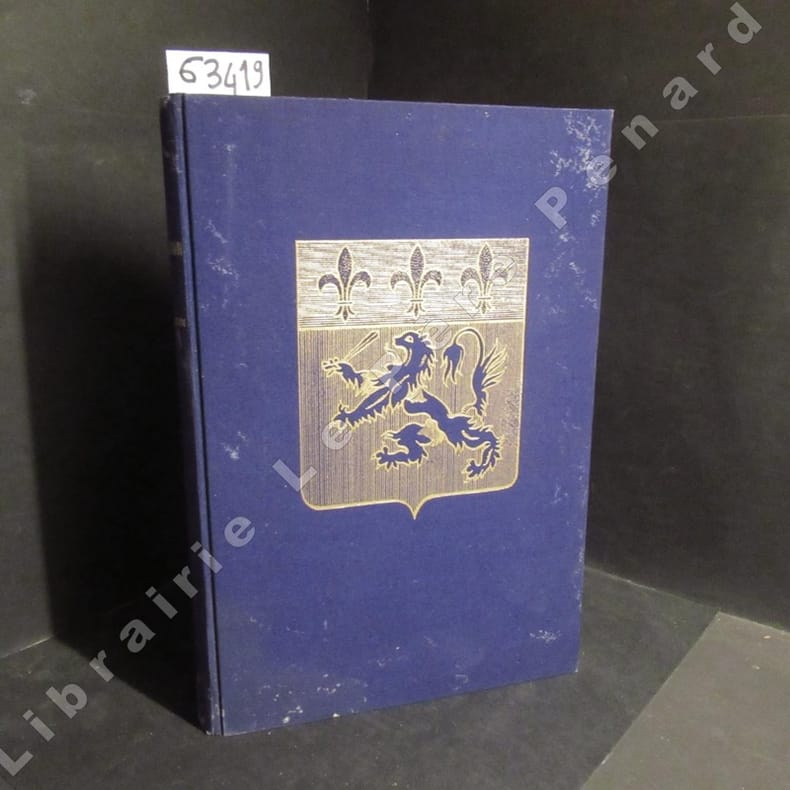
1573634191573 Editions Horvath, Roanne, Réimpression faite à partir de l'édition originale de 1573, 1 volume de 24x35.5 cm environ, 444 pages + table, reliure pleine toile bleu roi, armoiries dorées sur le premier plat, titres dorés sur le dos. Exemplaire N° 55, un des 250 sur Vergé Ingres, des papeteries royales van Gelder.
155597661555 velin époque à recouvrement , restes de lies. 2 tomes en 1 vol. in-8, 375pp., 413pp. (mq. le dernier feuillet), Lyon Seb. Gryphe 1555,
15551186Lyon, Jean de Tournes et Guillaume Gazeau, 1555, in-16 ; plein vélin ivoire, titre manuscrit (reliure de l'époque) ; (24) feuillets (titre, dédicace, index des plantes en grec, latin, français, italien), 976 pages, (8) feuillets d’explications.
153147178Basel, Froben, 1531 + Coloniae, Petrus Quentell, 1536. Folio. Bound together in a beautiful contemporary full calf binding over wooden boards. Blindstamped ornamental frames to boards. Five raised bands to spine. Remains of brass clasps to boards. Brass at corners of boards and brass strips to bottom edges of boards. A tear through the letter at the lower capital, no loss. Some scrathing of leather, mostly to back board and upper part of spine. The titles of the two works written in contemporary hand to the outer edge. The strong vellum cords, which go through the the wooden boards can be seen on the inside of the wooden boards, which also have some initials in red and blue paint, possibly from a painted leaf that has rubbed off? First title-page a bit dusty, otherwise very nice, clean, and crisp throughout. [Eucherius:] Froben printer's device to title-page, to final leaf of the first part, to the half-title of the second part (Episcopi Commentariorum in libros Regum ad Veranium & Salonium) and to the last leaf of that part. Beautiful large woodcut initial at beginning of each new work. (8), 194, (2)" 310, (2) pp.[Radulphus:] Woodcut device to title-page. Numerous beautiful woodcut, allegorical initials, both large and smaller, throughout. (4 - title, dedications), (14 - index), (6), 314 pp.
153147178Basel Froben 1531 Coloniae Petrus Quentell 1536. Folio. Bound together in a beautiful contemporary full calf binding over wooden boards. Blindstamped ornamental frames to boards. Five raised bands to spine. Remains of brass clasps to boards. Brass at corners of boards and brass strips to bottom edges of boards. A tear through the letter at the lower capital no loss. Some scrathing of leather mostly to back board and upper part of spine. The titles of the two works written in contemporary hand to the outer edge. The strong vellum cords which go through the the wooden boards can be seen on the inside of the wooden boards which also have some initials in red and blue paint possibly from a painted leaf that has rubbed off First title-page a bit dusty otherwise very nice clean and crisp throughout. Eucherius: Froben printer's device to title-page to final leaf of the first part to the half-title of the second part Episcopi Commentariorum in libros Regum ad Veranium & Salonium and to the last leaf of that part. Beautiful large woodcut initial at beginning of each new work. 8 194 2; 310 2 pp.Radulphus: Woodcut device to title-page. Numerous beautiful woodcut allegorical initials both large and smaller throughout. 4 - title dedications 14 - index 6 314 pp. <br/><br/><em>First editions of both works being the first edition of the works "Several Studies" of St. Eucharius most of them printed for the first time here as well as the first edition of Rodulfus Tortarius' or Radulphus Flaviacensis commentaries of Leviticus the third of the Books of Moses written in Latin in 20 books. Saint Eucherius bishop of Lyon ca. 380 - ca. 449 was a high-born and high-ranking ecclesiastic in the Christian Church of Gaul. He is remembered for his letters advocating extreme self-abnegation. Henry Wace ranked him "except perhaps St. Irenaeus the most distinguished occupant of that see"."St. Eucherius Bishop of Lyons theologian born in the latter half of the fourth century; died about 449. On the death of his wife he withdrew to the monastery of Lérins where his sons Veranius and Salonius lived and soon afterward to the neighbouring island of Lerona now Sainte-Marguerite where he devoted his time to study and mortification. Desirous of joining the anchorites in the deserts of the East he consulted John Cassian who in reply sent him some of his "Collationes" describing the daily lives of the hermits of the Thebaid. It was at this time that Eucherius wrote his beautiful letter "De laude Eremi" to St. Hilary of Arles c. 428. Though imitating the virtues of the Egyptian solitaries he kept in touch with men renowned for learning and piety e.g. Cassian St. Hilary of Arles St. Honoratus later Bishop of Marseilles and Valerian to whom he wrote his "Epistola parænetica de contemptu mundi". The fame of Eucherius was soon so widespread in southeastern Gaul that he was chosen Bishop of Lyons. This was probably in 434; it is certain at least that he attended the First Council of Orange 441 as Metropolitan of Lyons and that he retained this dignity until his death. In addition to the above-mentioned letters Eucherius wrote "Formularium spiritualis intelligentiæ ad Veranium" and "Institutiones ad Salonium" besides many homilies. His works have been published both separately and among the writings of the Fathers." Catholic Encyclopedia. His "Epistola paraenetica ad Valerianum cognatum de contemptu mundi "Epistle of exhortation to his kinsman Valerian On the contempt of the world" is an expression of the despair for the present and future of the world in its last throes shared by many educated men of Late Antiquity with hope for a world to come. Erasmus thought so highly of its Latin style that he edited and published it at Basel in 1520. His commentaries on the work are also included here. His "Liber formularum spiritalis intelligentiae" which is addressed to his son Veranius is a defence of the lawfulness of reading an allegorical sense in Scripture bringing to bear the metaphors in Psalms and such phrases as "the hand of God" The term anagoge in Greek is employed for the application of Scripture to the heavenly Jerusalem to come and there are other examples of what would become classic Medieval hermeneutics.Rodulfus Tortarius also known as Raoul of Tourtier Raoul de La Tourte Radulphus Flaviacensis c.1063 - c.1122 was a French Benedictine monk of the Abbey of Fleury-sur-Loire and a poet writing in Latin. He is known both for his style of writing his biblical commentaries and religious works and his literary and comic tales. His commentary on "Leviticus" is considered important and influential. The first edition of the work is rare. </em> hardcover
1571D10980Basel: Eusebius Episcopius & heirs of his brother Nicolaus 1571. Hardcover. Very Good. 8vo 165 x 104mm. 36 621 63 pages including final leaf with printers device of the word EPISCOP. Episcopus separated by stork surmounting bishops crozier on verso. Edited by Desiderius Erasmus; revised by Johann Jacob Grynaeus. Contemporary calf over wooden boards with blind-stamped arabesque centerpiece on covers brass catches lacking clasps rebacked spine gilt labeled IRENAEI HAERESES 1571; front joint cracked but cords intact; dark stain on opening leaves paper cracks and small holes in title not affecting text some light dampstaining in hinge toward end. 17th-century signature of Robert Baillie to title the famous Covenanter according to pencil note on front endpaper. 19th-century Chiesa Libera stamp on title; and pictorial bookplate of Douglas and Mildred Horton dated 1962 to front pastedown. Reverend Dr. Douglas Horton married Mildred née McAfee in 1945 who was a prominent female captain in the United States Naval Reserve and later the president of Wellesley College. <br/><br/>Irenaeus theological treatise written c. 180 attacked contemporary Christian heresies particularly Gnosticism and the system devised by Valentinus c. 100-c. 160. Irenaeus treatise also supported the idea that bishops maintained apostolic ties to the era of Christ and that a bishop was the best guide to understanding scripture. Given the very bishop-centric message of this work perhaps it is not curious at all that the Episcopius press expressed interest in printing it In Latin Episcopus is bishop. It was not until the 16th century that Irenaeus Opus eruditissimum was widely disseminated first published in Latin by Froben of Basel in 1526 and in the original Greek in 1570. Erasmus famously edited this Latin edition which appeared a year after the first Greek. In it he removed two annotations which referred to baptism and purgatory and also corrected a passage concerning the fault of Adam. The text itself is a new translation of the first book with an extensive dedication to the Basel Mayor Bernhard Brand and the founder of the Basel Reformed Orthodoxy Church Johann Jacob Grynaeus. Irenaeus Opus appears in 10 editions before this one published in both Basel 1528 1534 1548 1554 1560 and Paris 1541 1545 1563 1567 1570. This volume once belonged to Robert Baillie 1602-1662 a Glaswegian and Presbyterian minister and writer known for his Letters which faithfully recorded public events and his participation via correspondence. Baillie was a leader in the 17th century movement that rejected the Church of Englands Book of Common Prayer. From a reformative point of view Baillie would have found interest in Irenaeus work which recognized the canonical character of the gospels. For a work against the Gnostics it is said to contain valuable historical information and a great many New Testament quotations which are a witness to the New Testament text long prior to any extant manuscript; it is the first systematic exposition of Christian theology--Sarton I 294. Hoffmann II 466. Eusebius Episcopius & heirs of his brother Nicolaus hardcover
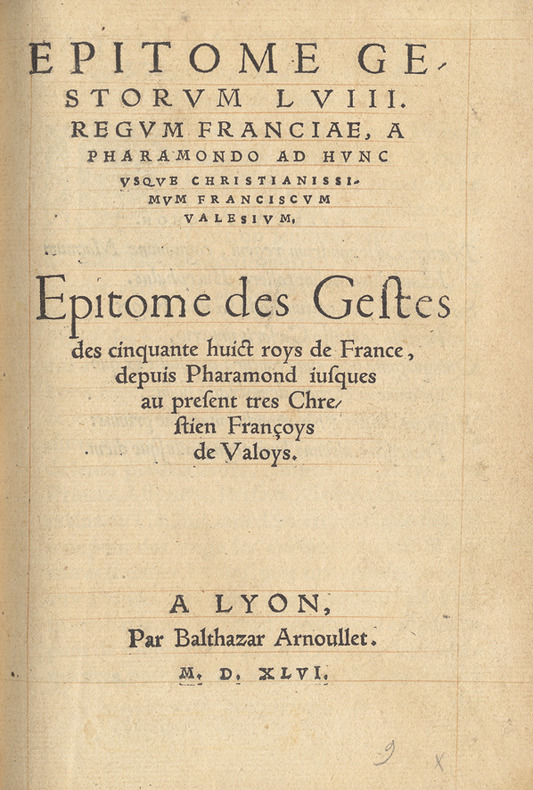
154616173Lyon, Balthazar Arnoullet, 1546 ; in-4 (178x124mm) ; maroquin lavallière, dos à nerfs pincés, titre doré, filets dorés sur les coupes, roulette intérieure, tranches dorées sur marbrure (R. Petit) ; 159, (1) pp., 58 portraits signés CC (Claude Corneille) ; exemplaire entièrement réglé (A-V4).
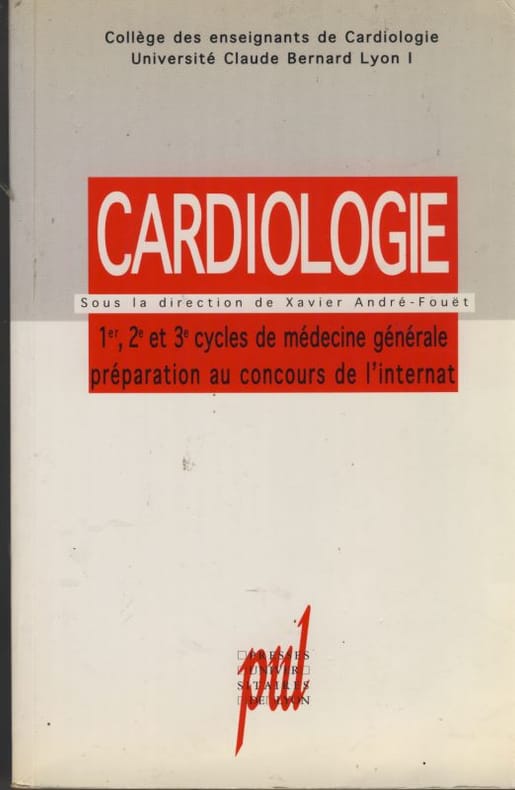
155258221552 Broché,excellent état, 155x235, 1446 gr, 903 pages, Sous le direction de Xavier André-Fouët, préface du professeur Marc Dechavane, ISBN: 2729706364 - 9782729706364
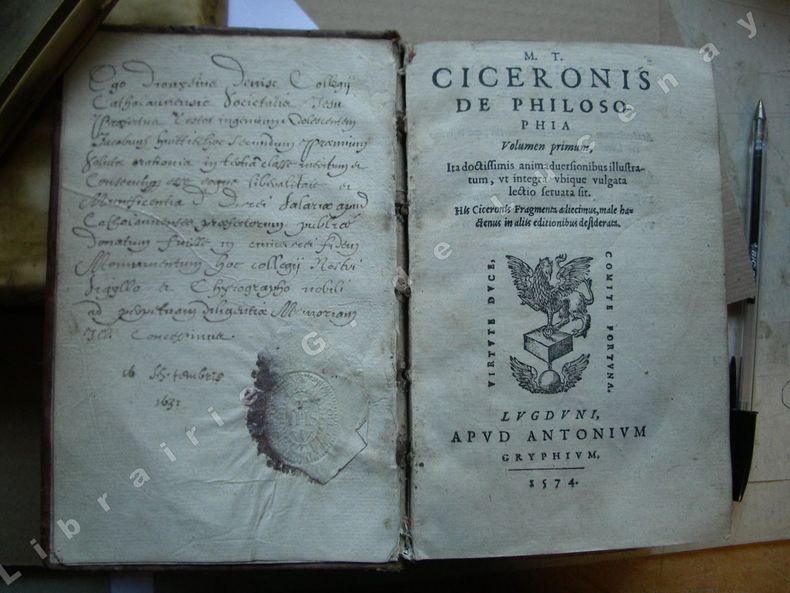
157499451574 Veau brun rouge, encadrements filets et motif central sur les plats, sur le Ier devise latine "Sapit sine sale / non ipsa / Minerva ". (1 coin et 1 coiffe très soigneusement restaurés), tranches dor. 3 tomes en 1 vol. in-8, 482pp., (34ff.) et 377pp., (59ff. marque de Gryphe au v° du dernier f.) ; 141pp., (7ff.), Lugduni apud Antonium Gryphium 1574,
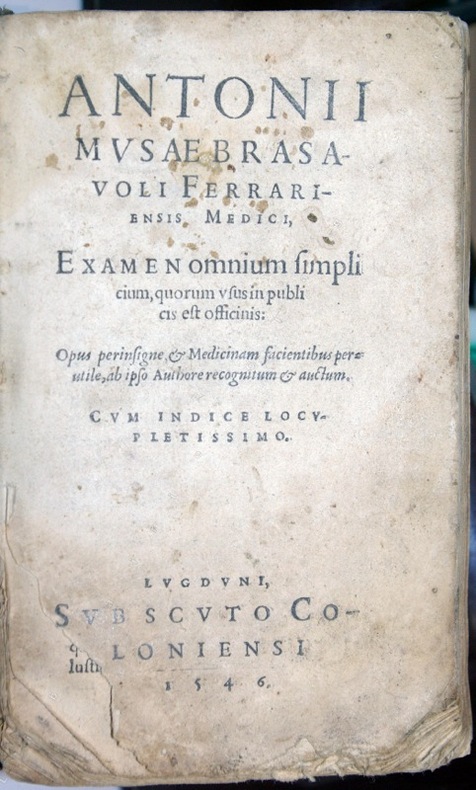
15466335Lyon, Sub scuto Coloniensi (Joannes et Franciscus Frellonii fratres), 1546 ; in-16 ; vélin souple de l'époque ; 862 pp., (29) ff. d'index, la dernière page "Lugduniexcudebant Ioannes et Franciscus Frellonii fratres 1546".
154299471542 veau brun veau brun époque, filets sur les plats, fleurons dorés (dos refait et tranchefile sup. - bonne restauration). pet. in-16, 544ff., Lugduni Antonium Vincentium 1542,
154299481542 veau brun époque, filets sur les plats, fleurons dorés (dos refait - bonne restauration). 2 tomes en 1 vol. pet. in-16, 387ff. et 88ff., Lugduni Apud Antonium Vincentium 1542,