Transnational Trajectories in East Asia: Nation Citizenship and Region
21756923-nnew. unknown

GreatBookPrices · États-Unis255,00 $US≈ 215,76 €
272 résultats
19902110502150600177Kyoritsu shuppan 1990. Soft Cover. Fine. Number of pages: 332p310p Size: 26cm Number of books: 2 Kyoritsu shuppan paperback
21756923-nnew. unknown
1998d1131998 Food & Agriculture Organization 1998 CD ROM A BRAND NEW CD ROM UNUSED STILL IN UNOPENED CELLO WRAPPING. Full refund if not satisfied. 24 hour despatch. Audio Book CD. New. unknown
BN164165Antikomplex. Tragische Erinnerungsorte: Ein Führer durch die Geschichte einer Region 1938-1945 Paperback <br/><br/>Tragische Erinnerungsorte: Ein Führer durch die Geschichte einer Region 1938-1945 Paperback Tragische Erinnerungsorte: Ein Führer durch die Geschichte einer Region 1938-1945 Paperback Antikomplex paperback
91115801Paris n.d. c.17th century Bertrand. Single sheet extracted from a book copper engraving of the Japanese Shogun with Portuguese text describing Japan & noting Jesuits there.RARE A handsome portrait of the Shogun sheet size about 19.5 x 28 cm. matted with a crest below the portrait. A bit of mild foxing but a very early and suitble work for framing and library display. unknown
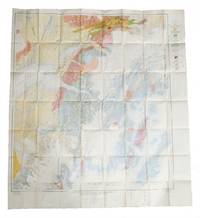
526001940. 3 original colour maps each c. 110 x 110 cm 40 x 45 inches folding to 20 x 12.5 cm. Natural fold creases generally very fresh and clean. Shows anchorage Big delta Blying Sound Circle fairbanks Gulkana Healy Kantishna River Kenai Livengood Mount Hayes Mount McKinley Seldovia Seward Talkeetna Talketna Mountains Tanan Tyonek Valdez etc. 1940 unknown
1993x-0792323254Kluwer Academic Pub 1993. Hardcover. New. 422 pages. 9.53x6.38x1.34 inches. Kluwer Academic Pub hardcover
19892090202120411539Hiroshima Prefecture 1989. Soft Cover. Fine. Number of books: 1 Hiroshima Prefecture paperback
1956009487Urbana Il: University of Illinois Press 1956. Book. Near Fine. Spiral Binding. First Edition. Oblong Elephant Folio. 11" h x 17 1/2" w oblong colo pictorial paper front wrapper with white spiral binding 22 pp. plus numerous home design possibilities illustrated. Near Fine small scrape rear white wrapper. The first 22 pages of text are followed by 24 pp. of farmhouse floor plans that are split down the middle ."Notice that the divided sheets are made so that any one of the plan sections on the left side can be put together with any one of the plan sections on the right side to form a complete floor plan. Since there are 24 sections on each side you can choose from a total of 576 possible house plan combinations. In addition you can reverse the whole plan or either half sheet independently of the other and still have a workable floor plan. Still more variations are possible because most of the combinations offer alternatives in the choice of basement garage or porch. Among so many arrangements you are almost sure to find one that you like.". University of Illinois Press Hardcover
20212081502111906051Bunbutsu 2021. Soft Cover. Fine. The book is in fine condition. Bunbutsu paperback
2081502111907721Lingnan Art Publishing House N.A. Soft Cover. Fine. The book is in fine condition. Lingnan Art Publishing House paperback
19962080302106808795Kyushu Region Active Layer Study Group 1996. Soft Cover. Fine. Number of books: one Kyushu Region Active Layer Study Group paperback
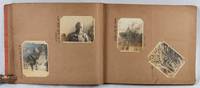
1938220261Japan. 1938 -1942. Thirty-seven black and white photographs laid down in a Fuji Photo Film Co. Ltd album with fifteen black and white photographs loosely inserted sizes vary between 5 x 5.8cm to 16.5 x 11.3cm a number of photographs are missing Japanese captions neatly written on leaves 22.5 x 31cm 58pp. Last eleven leaves five photographs and the lower cover damp stained. Covers marked and chipped. Titled "Remembering Huzhou" this photographic album contains thirty-seven black and white photographs mounted within together with a further fifteen loose photographs inserted. Most of the images appear to have been taken while the compiler’s unit was stationed in southern China. The owner was most likely an infantry soldier posted to the Huzhou region around 1938. Although thirty-seven photographs now remain attached and fifteen loosely inserted it is evident that others have been removed possibly to obscure the owner’s identity. The surviving captions indicate the nature of the missing images. <br> <br>The photographs present a notably peaceful atmosphere during the period of occupation in the Guangdong and Huzhou areas with no depictions of conflict or fighting. The compiler evidently had access to a personal camera and developing facilities during his time in China. It appears that the unit may at one stage have been stationed on the campus of Sun Yat-sen University in Guangdong. Towards the end of the album a family photograph of four children on a beach is included. The captions throughout are often humorous and convey a sense of familiarity with the subjects. The inserted photographs extend the chronological range slightly dating to approximately 1942. . unknown
BN104872La Documentation française. Softcover. Puéricultrice Cat A - Infirmier Cat B - Edition 2009-2010 <br/><br/>Puéricultrice Cat A - Infirmier Cat B - Edition 2009-2010 La Documentation française paperback
19892090202122801579Not Available 1989. Soft Cover. Fine. Volume: 1 Not Available paperback
20182081502111904591china map 2018. Soft Cover. Fine. The book is in fine condition. china map paperback
189471028Washington: United States Geological Survey 1894-1900. First edition of all seven folios. 21 2/4 x 18 1/2 inches each. Folio 3 Placerville. 3 maps. 1894. Folio 5 Sacramento. 2 maps. 1894. Folio 29 Nevada City Special. 9 maps. 1896. Folio 41 Sonora. 4 maps. 14x4" portion of rear wrapper torn off affecting lettering on inside rear wrapper; plates and text fine. 1897. Folio 51 Big Trees. 3 maps & 1 plate reproducing 5 photographs. 1898. Folio 63 Mother Lode District. 8 maps. 1900. Folio 66 Colfax. 3 maps. 1900. All in original printed wrappers and cloth spines. Cursive stamp of Chas. S. Sawyer to each volume. Bit of soiling ad corner wear but altogether a very good collection of this attractive group of atlases. United States Geological Survey hardcover
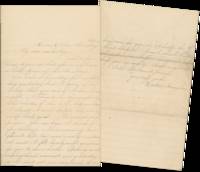
1909List3421Ohio Illinois Michigan and Ontario 1909. Seventy-four letters in thirty-seven envelopes mainly dating between 1885 and 1895. With two undated and one empty envelope. Conditions vary with a few letters having damage intersecting with significant amounts of text and others Near Fine. Overall excellent. A collection of letters mainly sent between Captain William Faragher 1842–1921 and his second wife Harriet Chamberlin 1853–1920 with several from Faragher’s children from his first marriage Burton 1872–1961 and Maude 1875–1952. Most letters are from Chamberlin to Faragher with fourteen from Faragher to Chamberlin.<br /> <br /> Faragher owned and captained several merchant ships in Lake Erie and Lake St. Clair—presumably sailboats as he frequently complains of having been stuck without wind. He also describes more severe weather out on the lake writing from St. Clair Michigan:<br /> <br /> “I am anxious to get down from here but as the day advanced the wind began to frisken and it began to snow hard and as it was freezing hard it had rained then snowed and then froze hard saturday night so the poor Venture was in a sad plight but she was in a worse one when we got to where we lay run as it breezed up fresh and the wind dead ahead the water was flying over her in all directions and froze wherever it fell and besides it had turned into a blinding snow storm but we had a certain point to make . she seemed as anxious to get to a place of safety as I did and as the boys say she got there and none too soon as it has been blowing a gale ever since and snowing and freezing but we are in the lee and at a good dock and are comfortable but oh the wind is whistling through the rigging .†November 20 1887<br /> <br /> In the 1880s steamships were increasing in popularity on the Great Lakes primarily because of sailboats’ susceptibility to both calm and weather; steamboats were bulky for their capacity and slow but more reliable whereas sailboats could carry overall more cargo.1 Generally steamers took packaged goods and passengers and sailboats mainly schooners took bulk cargo. The Great Lakes were the site of much shipping innovation; Faragher’s fleet was not yet behind the times but steam would overtake sail in the 1880s and 90s.<br /> <br /> Faragher’s cargo was mainly produce—apples and grapes—though he does mention picking up salt and other materials. His letters indicate that his business involved both shipping and mercantile aspects: he chose and bought the products shipped them to their destination and then also had to find and sell to customers. The grapes in particular seem to cause a lot of trouble:<br /> <br /> “We left Lorain Sunday morning early and had a nice trip to the Island got there at 4 PM bustled around monday morning and bought 400 baskets of grapes and had them all aboard by dark . it commenced to snow just as we got to Marine City bad bad omen for grapes but imagine my chagrin when I went up town and not a store or commission house wanted a grape folks were full of grapes and there was no sale for them and they said that I had got left and if the truth were known they were glad of it but its a cold day when I get left if trying will lit me out but one thing certain the weather and the lateness of the season were against me but you know I never cross a bridge before I get to it well we hauled up to our old Island Saturday morning and I sold out to my old friend . we had sold since 11 am 190 baskets of grapes . only half our cargo and at a good margin too. People would ask are you the man that was arrested here for selling grapes when told yes they seldom failed to buy but the strangest part was the number of ladies that came to buyâ€. October 28 1887<br /> <br /> Though he does not narrate the incident in which he was arrested for grape peddling—nor does it appear to have made the paper—he later mentions yet another grape-related debacle this time at Port Huron:<br /> <br /> “Sander and I went to town to sell the grapes today . when down came a city official and wanted to know if I had a license to sell . well I couldent sell another grape without paying 5.00 a day license that was a stormer you see the whole sale men were going to drive me out of the market . but they were not as sharp as they thought they were I went and gave a bill of sale of my whole cargo to a citizen here and he appointed one of his agents to sell the grapes†September 20 1888<br /> <br /> Faragher’s letters here do not discuss the financial state of his business but given Chamberlin’s statements it cannot have been all too positive. Chamberlin’s letters depict a woman struggling with her financial circumstances and with how the era’s expectations of her gender intersected with them. In one illustrative letter she writes:<br /> <br /> “A man drove by here Sat. asking for you. Ms. Lawler has given him her note to collect. He says the interest brings it to nearly fifty dollars. I told him I thought you could not meet it just at present but he said he must have the money and would give you just one week and if it was not paid then he would let the law settle it. Marvin and Laird are his lawyers. Mr. Laird is the one who helped get my money from father’s estate. I would not have them connected in this way about you for – O a great deal!! I have thought and planned till it seems as though my brain would burst. I have inquired about that law regarding taking any more married women as teachers. If Mr. Day would work for me it might perhaps be broken. There will be a vacancy in the Detroit building this fall. Will if I possibly can I want to commence teaching in Sept. The children would have to learn to do more about the house and with both of us earning it seems as though some of these harassing debts must be settled after a time. The frequent calls of men with bills against you have taken away all my pride and I believe I am humble enough to do most anything now.†July 11 1887<br /> <br /> In 1887 Ohio passed the Married Women’s Property Act which allowed married women to keep their own property separate from their husbands’—in fact Chamberlin occasionally mentions “her†money in her correspondence. At the same time the state’s Board of Education was debating passing an act that would not only ban school districts from hiring married women as teachers but also fire all the married women it then employed. Newspaper reporting at the time indicates that this measure was not particularly popular not the least because married women tended to be older and more experienced with the job.<br /> <br /> Chamberlin clearly perceives her role as a wife in a rather more progressive way at one point writing to Faragher that “a true wife†is “not a doll-baby to be kept in finery†N.d. after he had taken out a loan to send her money for a new hat. Throughout their correspondence Chamberlin is perhaps surprisingly open with Faragher about her opinions particularly on his work and their financial affairs; for instance:<br /> <br /> “I should like to examine your pocket-book after that $25 tax money left it. What are you going to live on up there while you are hunting for freight Sawdust won’t put any fat on your bones. Sailing up and down past Saginaw bay won’t prolong your life or lessen your grey hairs. What are you sailing for anyway For the sake of wearing yourself out and giving employment to two or three men and keeping the Root from rusting out I guess I am naughty!†May 25 1894<br /> <br /> She also frequently provides her opinion on whether and at what rate Faragher should sell his two other ships besides the Root the Venture and the Sassacus. She continues in the same letter:<br /> <br /> “I know I almost had a regular fight yesterday morning right there on the lounge. I wanted to do my housework and I couldn’t. I wanted to sew and I couldn’t sit up long for that. I wanted to help you and I couldn’t. I wanted to earn money and whereas I used to earn fifty-five cents for every hour I worked now I can not earn anything. Then if I could not do for self and family I wanted to make church and S.S. calls but I couldn’t walk for that.†<br /> <br /> Of course she was at that time prevented from these activities by her health not by gendered standards but she clearly had financial ambitions for herself. After her time as a regular school teacher Chamberlin taught at a Sunday school where she earned a few cents per student and in one letter reported having eighty-one students in a single session. <br /> <br /> Chamberlin also struggles with the expectations of her as step-mother to Faragher’s two children from his first marriage to Emma Humphrey 1848–1880. She writes:<br /> <br /> “I get so discouraged sometimes and it seems as though I am in the wrong place as mother. I think of Emma as my sister. I want to do as she would have me. I look upon my work as sacred. And yet sometimes I feel as though life was not worth living.†November 5 1886<br /> <br /> She frequently describes conflict with Burt who was then in his late teens to early twenties writing that she could not “have quite the very own mother-love for him†though she is “sure that Emma was not more conscientious in her desires to do right by him than I am†May 20 1891. As it still is today the role of step-mother was a difficult and frequently demonized one with the trauma of losing a mother and wife often in conflict with the feminine duty of maintaining perfect domestic harmony. In general Chamberlin seems to have been somewhat out of step with the feminine ideal of the time even telling Faragher in a letter describing the death of an acquaintance’s baby how glad she was to not have any children of her own.<br /> <br /> Overall a look at the private lives and difficulties of a middle-class Ohio household as despite the relative prestige of its head being a captain-owner it struggled with debt. Of interest to both historians of Great Lakes trade and those of women’s roles in the late nineteenth century.<br /> <br /> 1 Dina M. Bazzill “The Missing Link Between Sail and Steam: Steambarges and the Joys of Door County Wisconsin†East Carolina University Program in Maritime Studies Research Report no. 19 2007. unknown
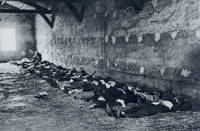
194545674Lyon 1945. Limited First edition. Softcover. g- to vg. 1/1000. Small folio 12 x 9 1/2". 16 185 3pp Text xxxii 32pp Plates. Original printed wrappers with yellow and white lettering to front cover. Laid in is a typed and handsigned letter from Noël Monod treasurer of the United Nations from 1946 to 1971 to a Mr. Fred L. Hadsel and dated New York February 1947. In this letter Noël Monod explains how this book came into existence and how he got it. Upper margin of title page inscribed and signed by Prof. Pierre Mazel who wrote the foreword to Mr. Noël Monod and dated July 1945.<br /> <br /> This first issue of the "Memorial of the Oppression" is a detailed and pictorial account of German atrocities that occured in the Rhône-Alpes region of Nazi-occupied France during World War II.<br /> <br /> This volume is illustrated throughout with 32 pages of photogravures depicting the various atrocities mentioned in this work. It is important to note that many of the photographs show graphic views of mutilated bodies corpses being retrieved from mass graves etc.<br /> <br /> One of 1000 copies of which this is No. 171.<br /> <br /> Wrappers rubbed along edges with some abrasion to spine. Text in French. Wrappers in overall good- interior in very good condition. unknown
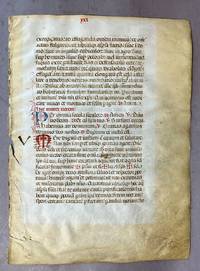
007112Upper Rhine region probably Alemannic Germany or northern Switzerland 1000. No Binding. Good. Single parchment leaf recto and verso 245 x 182 mm written in a fine mature Caroline minuscule in dark brown ink 29 lines per page single column. Rubrics in red; simple pen-flourished initials in red and blue marking textual divisions. Pricklings and ruling faintly visible. The text comprises the Exorcism and Blessing of Water Exorcismus aquae with extended invocations against unclean spirits and prayers for purification healing and protection. These texts form part of the Roman ritual tradition as transmitted in Germanic regions during the 10th century and are characteristic of Rituals or Sacramentaries rather than Missals or biblical codices. The hand is confident and regular with well-proportioned Caroline letterforms and consistent word separation. Decoration is restrained and functional reflecting a working liturgical manuscript produced for clerical rather than a luxury commission. Palaeographical and textual features point to production in the Alemannic sphere of the Upper Rhine an area renowned for conservative preservation of Carolingian liturgical practice. In good bur well-used medieval condition. The parchment is supple but heavily toned at margins with cockling and surface wear consistent with prolonged liturgical handling. There are tears at binding edge with evidence of modern tape repair. Occasional later marginal notations present. Ink and decoration remain clear and legible. Early litugical manuscripts of this early date are increasingly scarce on the market. Leaves containing exorcistic and ritual texts are especially sought after for their historical and theological interest offering insights into early medieval concepts of sanctification healing and spiritual protection. Ships unmatted and unframed <br/> <br/> unknown
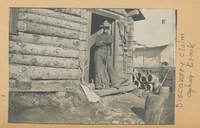
1901List2108Alaska 1901. Oblong folio 12 ½ x 9 inches. Twelve leaves with 89 photographs rebound in modern cloth. Binding in fine condition photographs generally excellent some leaves with clear tape repairs. A well preserved album of photographs showing mining operations in the Golovin Bay region about fifty to seventy-five miles northwest of Nome during the tail end of the Klondike Gold Rush period in 1900-1901. The album shows the operations of the Pioneer Company in Alaska in great detail including the travel by boat and the camps along Opher Creek as well as many photographs of the mining operation itself. According to a caption in one of the photographs $12000 worth of gold was taken out of the “Discovery Claim†on Ophir Creek. The album also includes several photographs of the indigenous population. The compiler of the book appears to have been a student at a mining college at some point as some of the photographs show a “Class of ‘04’†sign. The photographs are dated from 1897 to 1901. Interior scenes and a particularly broad portrayal of mining life and operations make this an uncommonly informative photographic document of Alaskan mining operations during this period. <br /> <br /> Lowny J.D. The Golovin Bay Region of Northwestern Alaska. In: The Engineering and Mining Journal Vol. 71 pp. 781-782. June 15 1901. Accessed online 6/23. unknown
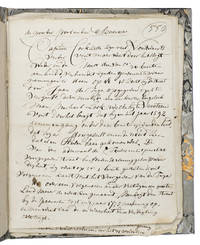
1790ABC_482931790. 4to. Modern artificial brown leather marbled pastedowns with the late-18th-century decorated paper wrappers bound in. Manuscript written in Dutch in black ink in one clear although not very sophisticated hand on paper sheets varying in origin and size ca. 20-21 x 14-16 cm. 17 ll. Fascinating travel report including short descriptions of the northern regions of Europe and America which were visited by the anonymous Dutch author probably to explore the possibilities for whaling. They also shortly described the fish stocks especially of whales and birds to be found in the waters of these Northern and Arctic regions.The first part of the report titled "de noorder poolanden ! America" starts with a history of the Northwest Passage and the expeditions explorers undertook in order to find a waterway through the Arctic linking the Atlantic and Pacific Oceans.Following the description of the Northwest Passage the manuscript contains a description of Norways flora and fauna its fishery and fishing industry followed by a description of the Baltic Sea and Lapland including a list of 19 fishes living in that sea. Greenland is treated next with the author referring to the famous scholarly work Fauna Groenlandica 1780. The anonymous author of the present manuscript tells us about his encounters with indigenous peoples of the Arctic and subarctic regions the various whales narwhals seals etc. about whaling huge icebergs the climate John Davis explorations in 1585-1587 flora fauna including polar bears and concluding with a list of the land- and water-birds.Several leaves have been reinforced in the gutters with strips of paper in order to be able to bind them. The original paper wrappers are slightly rubbed the uneven edges of the leaves are slightly frayed and the bottom outer corner of the leaves shows a light water stain. Otherwise in good condition. ABE CAT Alaska Canada & Greenland hardcover