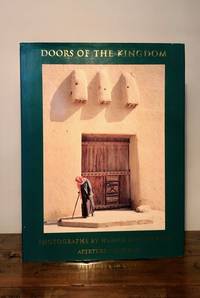
Afterword by Dr Khaled Azzam Introduction to the Region by Sultan Ghalib Al-Qu'ati and Gray HenryBiblio.com
272 résultats
19989015New York: Aperture 1998. First Edition. Hardcover with dust jacket. Near Fine/Near Fine. Large 4to. Pp. 93 3. color illustrations. Errata slip laid in. Green cloth spine lettered in gilt. Near Fine damp stain lower edge of rear cover in Near Fine dust jacket. Haajar Gouverneur traveled throughout the Arabian Peninsula photographing each region's distinctive doorways and the remaining artisans who make them. Dust jacket is now housed in a removable clear archival sleeve. Aperture hardcover
1989793714PN. New. 1989. Soft Cover. Date is original print. This is a reprint edition. . PN paperback
1989793720PN. New. 1989. Soft Cover. Date is original print. This is a reprint edition. . PN paperback
1989793718PN. New. 1989. Soft Cover. Date is original print. This is a reprint edition. . PN paperback
1989794446PN. New. 1989. Soft Cover. Date is original print. This is a reprint edition. . PN paperback
1989793715PN. New. 1989. Soft Cover. Date is original print. This is a reprint edition. . PN paperback
1989795677PN. New. 1989. Soft Cover. Date is original print. This is a reprint edition. . PN paperback
1989794449PN. New. 1989. Soft Cover. Date is original print. This is a reprint edition. . PN paperback
1989794447PN. New. 1989. Soft Cover. Date is original print. This is a reprint edition. . PN paperback
1989796536PN. New. 1989. Soft Cover. Date is original print. This is a reprint edition. . PN paperback
1989794439PN. New. 1989. Soft Cover. Date is original print. This is a reprint edition. . PN paperback
197528886Peking: Wenwu Press 1975. First edition. Softcover. g. Folio. 141 5 29pp. Original red cloth with white and gold lettering on front cover and decoration in gilt on spine. Pictorial endpapers. Laid in a slim softcover folio being a translation in English and French of the main volume. The main volume has text in Chinese and Uighur. Books preserved in original publisher's slipcase with Chinese and Uighur lettering on front cover. Situated on China's northwestern highlands where the natural conditions are favorable to the preservation of historical objects Sinkiang has an extremely rich cultural heritage and a wealth of historical relics. There archaeologists have carried out numerous excavations and investigations. The present work displays in numerous color and b/w photographic reproductions mainly cultural relics sites and ruins of various periods prior to the Ming Dynasty. Edges of slipcase and softcover folio age-toned. Spine of main volume slightly yellowed. Slipcase in overall good softcover folio in good binding and interior in good to very good condition. Wenwu Press unknown
19870754389Washington DC: US Department of the Interior. 1987. 4to - over 9¾" - 12" tall. First Thus Used. S Boxed. Very Good. A boxed set of 33 large color maps covering the Correlation of Cenozoic Sediments: Gulf of Mexico Outer Continental Shelf: Part 1: Galveston Area Offshore Texas Through Vermilion Area Offshore Louisiana Texas- louisiana line. OCS Report MMS 87-0026. Scarce set of geologic and minineral maps for the recently Hurricane battered Gulf coast area near the Texas-Louisiana border. boxed maps only US Department of the Interior unknown
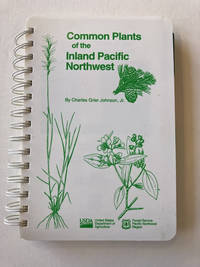
mon0000000661United States Department of Agri 9/1/2015 12:00:00 AM. spiral_bound. Good. 0.3900 10.9800 8.5800. GOOD - Moderate corner dings and/or curled corners LIKE NEW / VERY GOOD - Cover has no visible damage and minimal wear and tear LIKE NEW / VERY GOOD - No creases or tears on spine and/or cover LIKE NEW / VERY GOOD - No missing or damaged pages LIKE NEW / VERY GOOD - No text or writing on the pages or in the margins LIKE NEW / VERY GOOD - No underlining or highlighting of text United States Department of Agri unknown
0666724075.Ghardcover. Good. Access codes and supplements are not guaranteed with used items. May be an ex-library book. hardcover
1330302044.Gpaperback. Good. Access codes and supplements are not guaranteed with used items. May be an ex-library book. paperback
0332332225.Gpaperback. Good. Access codes and supplements are not guaranteed with used items. May be an ex-library book. paperback
1956009487Urbana Il: University of Illinois Press 1956. Book. Near Fine. Spiral Binding. First Edition. Oblong Elephant Folio. 11" h x 17 1/2" w oblong colo pictorial paper front wrapper with white spiral binding 22 pp. plus numerous home design possibilities illustrated. Near Fine small scrape rear white wrapper. The first 22 pages of text are followed by 24 pp. of farmhouse floor plans that are split down the middle ."Notice that the divided sheets are made so that any one of the plan sections on the left side can be put together with any one of the plan sections on the right side to form a complete floor plan. Since there are 24 sections on each side you can choose from a total of 576 possible house plan combinations. In addition you can reverse the whole plan or either half sheet independently of the other and still have a workable floor plan. Still more variations are possible because most of the combinations offer alternatives in the choice of basement garage or porch. Among so many arrangements you are almost sure to find one that you like.". University of Illinois Press Hardcover
19712090502113718193Not Available 1971. Soft Cover. Fine. The book is in fine condition. Not Available paperback
19922091502133533881Toho shuppan 1992. Soft Cover. Fine. Number of books: 1 Toho shuppan paperback
1971741748PN. New. 1971. Soft Cover. Date is original print. This is a reprint edition. . PN paperback
1998348<p>Spiral binding remains sound. Clean unmarked interior. Only very gentle shelf-wear. Generously illustrated with full-color plates and B&W spot illustrations. Includes bibliographical references pp. 376-377 and index. 394 pp. Natural History.</p> USDA Forest Service, Pacific Northwest Region
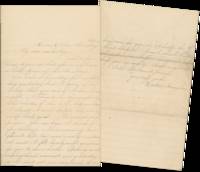
1909List3421Ohio Illinois Michigan and Ontario 1909. Seventy-four letters in thirty-seven envelopes mainly dating between 1885 and 1895. With two undated and one empty envelope. Conditions vary with a few letters having damage intersecting with significant amounts of text and others Near Fine. Overall excellent. A collection of letters mainly sent between Captain William Faragher 1842–1921 and his second wife Harriet Chamberlin 1853–1920 with several from Faragher’s children from his first marriage Burton 1872–1961 and Maude 1875–1952. Most letters are from Chamberlin to Faragher with fourteen from Faragher to Chamberlin.<br /> <br /> Faragher owned and captained several merchant ships in Lake Erie and Lake St. Clair—presumably sailboats as he frequently complains of having been stuck without wind. He also describes more severe weather out on the lake writing from St. Clair Michigan:<br /> <br /> “I am anxious to get down from here but as the day advanced the wind began to frisken and it began to snow hard and as it was freezing hard it had rained then snowed and then froze hard saturday night so the poor Venture was in a sad plight but she was in a worse one when we got to where we lay run as it breezed up fresh and the wind dead ahead the water was flying over her in all directions and froze wherever it fell and besides it had turned into a blinding snow storm but we had a certain point to make . she seemed as anxious to get to a place of safety as I did and as the boys say she got there and none too soon as it has been blowing a gale ever since and snowing and freezing but we are in the lee and at a good dock and are comfortable but oh the wind is whistling through the rigging .†November 20 1887<br /> <br /> In the 1880s steamships were increasing in popularity on the Great Lakes primarily because of sailboats’ susceptibility to both calm and weather; steamboats were bulky for their capacity and slow but more reliable whereas sailboats could carry overall more cargo.1 Generally steamers took packaged goods and passengers and sailboats mainly schooners took bulk cargo. The Great Lakes were the site of much shipping innovation; Faragher’s fleet was not yet behind the times but steam would overtake sail in the 1880s and 90s.<br /> <br /> Faragher’s cargo was mainly produce—apples and grapes—though he does mention picking up salt and other materials. His letters indicate that his business involved both shipping and mercantile aspects: he chose and bought the products shipped them to their destination and then also had to find and sell to customers. The grapes in particular seem to cause a lot of trouble:<br /> <br /> “We left Lorain Sunday morning early and had a nice trip to the Island got there at 4 PM bustled around monday morning and bought 400 baskets of grapes and had them all aboard by dark . it commenced to snow just as we got to Marine City bad bad omen for grapes but imagine my chagrin when I went up town and not a store or commission house wanted a grape folks were full of grapes and there was no sale for them and they said that I had got left and if the truth were known they were glad of it but its a cold day when I get left if trying will lit me out but one thing certain the weather and the lateness of the season were against me but you know I never cross a bridge before I get to it well we hauled up to our old Island Saturday morning and I sold out to my old friend . we had sold since 11 am 190 baskets of grapes . only half our cargo and at a good margin too. People would ask are you the man that was arrested here for selling grapes when told yes they seldom failed to buy but the strangest part was the number of ladies that came to buyâ€. October 28 1887<br /> <br /> Though he does not narrate the incident in which he was arrested for grape peddling—nor does it appear to have made the paper—he later mentions yet another grape-related debacle this time at Port Huron:<br /> <br /> “Sander and I went to town to sell the grapes today . when down came a city official and wanted to know if I had a license to sell . well I couldent sell another grape without paying 5.00 a day license that was a stormer you see the whole sale men were going to drive me out of the market . but they were not as sharp as they thought they were I went and gave a bill of sale of my whole cargo to a citizen here and he appointed one of his agents to sell the grapes†September 20 1888<br /> <br /> Faragher’s letters here do not discuss the financial state of his business but given Chamberlin’s statements it cannot have been all too positive. Chamberlin’s letters depict a woman struggling with her financial circumstances and with how the era’s expectations of her gender intersected with them. In one illustrative letter she writes:<br /> <br /> “A man drove by here Sat. asking for you. Ms. Lawler has given him her note to collect. He says the interest brings it to nearly fifty dollars. I told him I thought you could not meet it just at present but he said he must have the money and would give you just one week and if it was not paid then he would let the law settle it. Marvin and Laird are his lawyers. Mr. Laird is the one who helped get my money from father’s estate. I would not have them connected in this way about you for – O a great deal!! I have thought and planned till it seems as though my brain would burst. I have inquired about that law regarding taking any more married women as teachers. If Mr. Day would work for me it might perhaps be broken. There will be a vacancy in the Detroit building this fall. Will if I possibly can I want to commence teaching in Sept. The children would have to learn to do more about the house and with both of us earning it seems as though some of these harassing debts must be settled after a time. The frequent calls of men with bills against you have taken away all my pride and I believe I am humble enough to do most anything now.†July 11 1887<br /> <br /> In 1887 Ohio passed the Married Women’s Property Act which allowed married women to keep their own property separate from their husbands’—in fact Chamberlin occasionally mentions “her†money in her correspondence. At the same time the state’s Board of Education was debating passing an act that would not only ban school districts from hiring married women as teachers but also fire all the married women it then employed. Newspaper reporting at the time indicates that this measure was not particularly popular not the least because married women tended to be older and more experienced with the job.<br /> <br /> Chamberlin clearly perceives her role as a wife in a rather more progressive way at one point writing to Faragher that “a true wife†is “not a doll-baby to be kept in finery†N.d. after he had taken out a loan to send her money for a new hat. Throughout their correspondence Chamberlin is perhaps surprisingly open with Faragher about her opinions particularly on his work and their financial affairs; for instance:<br /> <br /> “I should like to examine your pocket-book after that $25 tax money left it. What are you going to live on up there while you are hunting for freight Sawdust won’t put any fat on your bones. Sailing up and down past Saginaw bay won’t prolong your life or lessen your grey hairs. What are you sailing for anyway For the sake of wearing yourself out and giving employment to two or three men and keeping the Root from rusting out I guess I am naughty!†May 25 1894<br /> <br /> She also frequently provides her opinion on whether and at what rate Faragher should sell his two other ships besides the Root the Venture and the Sassacus. She continues in the same letter:<br /> <br /> “I know I almost had a regular fight yesterday morning right there on the lounge. I wanted to do my housework and I couldn’t. I wanted to sew and I couldn’t sit up long for that. I wanted to help you and I couldn’t. I wanted to earn money and whereas I used to earn fifty-five cents for every hour I worked now I can not earn anything. Then if I could not do for self and family I wanted to make church and S.S. calls but I couldn’t walk for that.†<br /> <br /> Of course she was at that time prevented from these activities by her health not by gendered standards but she clearly had financial ambitions for herself. After her time as a regular school teacher Chamberlin taught at a Sunday school where she earned a few cents per student and in one letter reported having eighty-one students in a single session. <br /> <br /> Chamberlin also struggles with the expectations of her as step-mother to Faragher’s two children from his first marriage to Emma Humphrey 1848–1880. She writes:<br /> <br /> “I get so discouraged sometimes and it seems as though I am in the wrong place as mother. I think of Emma as my sister. I want to do as she would have me. I look upon my work as sacred. And yet sometimes I feel as though life was not worth living.†November 5 1886<br /> <br /> She frequently describes conflict with Burt who was then in his late teens to early twenties writing that she could not “have quite the very own mother-love for him†though she is “sure that Emma was not more conscientious in her desires to do right by him than I am†May 20 1891. As it still is today the role of step-mother was a difficult and frequently demonized one with the trauma of losing a mother and wife often in conflict with the feminine duty of maintaining perfect domestic harmony. In general Chamberlin seems to have been somewhat out of step with the feminine ideal of the time even telling Faragher in a letter describing the death of an acquaintance’s baby how glad she was to not have any children of her own.<br /> <br /> Overall a look at the private lives and difficulties of a middle-class Ohio household as despite the relative prestige of its head being a captain-owner it struggled with debt. Of interest to both historians of Great Lakes trade and those of women’s roles in the late nineteenth century.<br /> <br /> 1 Dina M. Bazzill “The Missing Link Between Sail and Steam: Steambarges and the Joys of Door County Wisconsin†East Carolina University Program in Maritime Studies Research Report no. 19 2007. unknown
19992092902137600994Published by Bunbutsu Shuppan 1999. Soft Cover. Fine. Number of pages: Text 202 pages Size: A4 Published by Bunbutsu Shuppan paperback
1984043637Washington DC: US Dept.of Agriculture 1984. Paper Back. Fine/No Jacket. 4 maps: fine condition. "Land and Resource Management Planning Draft Environmental Impact Statement 03-03-84-01 August 1984" Map 1: Proposed Action Proposed Forest Plan Map 2: Transportation and Utilities Corridors. Map 3: Alternatives A thru F. Map 4: Off Road Vehicle ORV Map. <br/> <br/> US Dept.of Agriculture unknown