Societe Des Antiquaires de NormandieBiblio.com
412 résultats
356379748X.Ghardcover. Good. Access codes and supplements are not guaranteed with used items. May be an ex-library book. hardcover
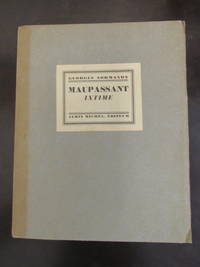
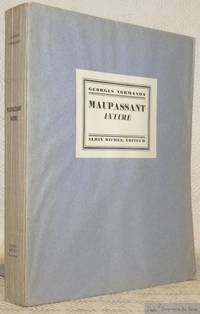
1927217<p>Albin Michel 1927. Brochure. Copy 17/300 sur vergé d'Arches</p> Albin Michel
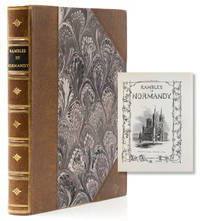
1846317438London: Virtue 1846. First edition. 8 full page steel engravings and 56 woodcuts. 208pp. 4to. Bound in modern three quarters mottled brown calf and marbled boards leather title label a.e.g. Fine. First edition. 8 full page steel engravings and 56 woodcuts. 208pp. 4to. With a tipped in etching signed at back. Virtue unknown
1989BN150556Würzburg : Stürtz 1989. 1989. Normandie : zwischen Abteien und Herrenhäusern ; die Wiege der normannischen Saga. Vorw. Malcolm Forbes. Übers. ins Dt.: D. u. J. Schumann <br/><br/>Normandie : zwischen Abteien und Herrenhäusern ; die Wiege der normannischen Saga. Vorw. Malcolm Forbes. Übers. ins Dt.: D. u. J. Schumann Normandie Bildband / Frankreich / Fotos / - Caracalla Jean-Paul Würzburg : Stürtz unknown
1995BN139560Joseph Henry Press Washington D.C. 1995. 1995. Biomarkers and Occupationals Health. Progress and Perspectives. <br/><br/>Biomarkers and Occupationals Health. Progress and Perspectives. Mendelsohn M.L. Peeters J.P. Normandy M.J. Editors. Joseph Henry Press, Washington, D.C. unknown
BN327122Editions des Falaises. Softcover. Le Palais Bénédictine : Monument de l'art et de l'industrie <br/><br/>Le Palais Bénédictine : Monument de l'art et de l'industrie PTC Normandie Editions des Falaises paperback
1788126576Rouen: 1788. Dupont de Nemours refuted First edition written in response to the Eden Treaty of 1786. Bound at the rear is Tableau du maximum des denrées et aliments dans le district de Rouen Rouen: de l'Imprimerie du District et du Journal de Rouen an 2e de la République 1793/4. Octavo 208 x 128 mm. Contemporary quarter roan spine lettered in gilt marbled paper boards and endpapers. Extremities rubbed boards scuffed contents generally bright with occasional soiling some chipping and unevenness to title leaf else a very good copy. Goldsmiths' 13590; McCulloch p. 145. hardcover
192792958Paris : Albin Michel 1927. 245x195mm. frontispice 30 planches graves broch. couverture remplie. Exemplaire numrot H. C. - sur vlin dÕArches. Bel exemplaire. 1036 Albin Michel unknown
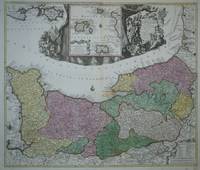
54021Augsburg. Ca. 1740. Folio. 63 cm X 54 cm. Originalt kobberstikk med samtidig håndkolorering.About 1740. Folio.63 cm X 54 cm. Original copper engraving with contemporary handcolouring. Norsk. <br/><br/><em>Lite hull ved nedre marg. Med detaljkart av Jersey og Guernsey.Small hole at lower margin. With insets of Jersey and Guernsey.Matthäus Seutter was born in 1685 the son of a goldsmith in Augsburg. In 1697 Seutter began his studies in Nuremberg and subsequently worked in the publishing house of Jeremias Wolff in Augsburg. In 1710 he established his own publishing house and print shop. The Seutter publishing house produced a great number of maps atlases and globes. However very few original maps were printed there as Augsburg at that time had no university and no connection to the fields of mathematics or the natural sciences. Seutter therefore copied the work of other cartographers making his own engravings based on their models. Over 500 maps were produced in his studio. Seutter's most well-known works are the 1725 ""Geographical Atlas or an Accurate Depiction of the Whole World"" ""Atlas Geographicus oder Accurate Vorstellung der ganzen Welt"" with 46 maps the 1734 ""Large Atlas"" ""Grosser Atlas"" with 131 maps and the 1744 pocket atlas ""Small Atlas"" ""Atlas minor"" with 64 maps. Matthäus Seutter died in 1757. Seutter's son Albrecht Karl his son-in-law Conrad Tobias Lotter and his business partner Johann Michael Probst ran the printing business for five more years. </em> unknown
1903652M14Paris: Society of British Bibliophiles 1903. First edition. Cloth. Very Good Indeed. 8" by 5.5". Mas . A very scarce erotic work by the renowned French authors Poinsot and Normandy; translated into English and privately printed in a limited edition run by the Society of British Bibliophiles. Georges Charles Segaut who wrote under the pseudonym Georges Normandy was a renowned writer playwright and literary critic. Beginning his literary career writing articles published in 'La Revue Contemporaine' he notably collaborated on an erotic work with Maffeo Charles Poinsot under the collective pseudonym of Paul de Robertski entitled 'The Whip in Poland and Austria-Hungary'. This work follows the erotic and often violent adventures of the sadistic and violent Joachim de Marsenne. This translation from the French of Poinsot and Normandy was limited to five hundred copies and intended for private distribution only. Collated complete with twenty black and white plates by 'Mas' and charming decorative headpieces. A very scarce work with no copies found on Copac or WorldCat. In a full cloth binding with gilt stamped title to spine. Externally very smart with minor shelfwear to extremities and slight fading to spine and upper extremity of boards. Slight offsetting and the light scattered spot to endpapers. Internally firmly bound. Pages slightly age toned to extremities but very bright and clean with the odd spot. Scattered spots to first and last few pages. Pages occasionally uncut throughout. Very Good Indeed Society of British Bibliophiles hardcover
26545Written between May 1815 and October 1822. Addressed to Messrs Henri Pierre Delacroix et Fils of Elbeuf Normandy from various French locations principally Paris. 105 items of correspondence in French in various formats mainly 8vo. In good condition on lightly-aged paper. Each text clear and complete. The whole contained in a grey paper folder with 'Juillet 1818' on the front wrap. Each item unobtrusively numbered in neat red pencil. Featuring a wide range of the correspondents as few write more than once. Occasional letters docketed. Accompanied by a modern abstract by a French-speaker reflecting the difficulty of the various hands contained in the collection. Beginning on the eve of Napoleon's defeat at the Battle of Waterloo this substantial correspondence provides a mass of valuable information about social history and textile industry in France in the early nineteenth-century. Textile mills began to appear at Elbeuf at the beginning of the sixteenth century; by 1802 the industry was deemed of sufficient importance for the Emperor Napoleon to pay a visit. For more on the subject see 'La draperie d'Elbeuf des origines à 1870' by Alain Becchia Université de Rouen 2000. Included are several accounts including one for the whole of 1816 from Bertrand et Fils for dying textiles with the various colours given including 'bleu carbeau' and 'vert dragon'. This account is followed by a bill to the younger Delacroix from his vintner Boules and a long statement of account by 'Barbier Sellier Caroissier a Rouen'. Also present is an itemised bill by another 'sellier' named Le Roi followed by a long itemised bill by a 'chaudronnier' named Morchaud. Although the first letter in the collection from Welz et Cie of Rouen 4 May 1815 together with another from the same firm four days later sets the general tone giving detailed instructions regarding business about an 'envoy de laine' by a third party L. F. Ehrmann of Strasbourg the early correspondence also reflects the political anxieties of the period. On 15 May 1815 a correspondent writes anxiously from Paris of 'les morts et blessés la perspective de veuves et enfants de créancier et ouvriers'. On 21 May Duruflé of Paris comments with equal anxiety: 'il faut attendre le resulta du chant de mai. On a lespoir - s'il ya Delusion - que sa poura detourner les ennemis du projet qu'ils ont d'<arracher> notre territoire. S'il en est autrement il parait que nous avons des forces considerable sur toute la Ligne de nos frontieres et bien disposée'. On 12 July one Boulé writes from Paris that 'depuis la fin du Courant je n'ai pas recu un Soli et je n'avait presque rien recu de ce que je devait recevoir obligé de recevoir des Troupes étranger et de les faire nourire il faut de l'argent'. Duruflé writes again on 20 July that 'les moments de crise qui vienne de se passé in ne nous est heureusement rien arrivé. Madame Duruflé en a été quitté come bien d'autres pour <>'. Shortly afterwards one Choberl compliments the firm on not sending cloth to Angers. A. J. Curet on 30 July 1815 states that 'nous jouissons de la paix et de la tranquilité'. Among the orders contained in the correspondence is a request for cloth 'pour manteau capotte' for the 'habillement du 11e. Regiment. de Dragons'. Reflecting the state of affairs after Napoleon one Boucher writes from Paris in September of 1815 that the movement of troops in Paris is 'toujours considerables et nocturnes'. Of interest is a letter in French from the English inventor Samuel Pugh writing that he has not received a bill. A small swatch of green cloth is attached to a letter from Lamargne of Toulouse. With inadvertently poetic utterance a correspondence writes on 14 October that 'la couleur feuille morte n'est pas ma nuance'. Commenting on financial impropriety G. Jammon writes 18 October 1822 about 'des chevaliers d'industrie' who with 'aucun Domicile fixe' can have goods delivered and then disappear. One of the last letters contains a handwritten cheque by Henry Delacroix made out to 'Monsieur Charles Michel'. This is followed 24 October 1822 by an offer of the 'Sistemes sic de Tisseranderie Continue'. Written between May 1815 and October 1822. Addressed to Messrs Henri Pierre Delacroix et Fils of Elbeuf, Normandy, from various hardcover
15391601040003Rouen: Nicolas le Roux for Francoys Regnault of Paris Jehan Mallard of Rouen et Girard Anger of Caen 1539-01-01. First Edition. Hardcover. Good. Folio 31 cm. Collated: 6 clx i.e. clii 2 4 lxxxii ff. Bound in mid-18th century calf raised bands. Red leather spine label. Rehinged and rejointed wear to edges. Typeset in Gothic Bastarda Blackletter. Text in parallel columns. Book plate of I. Hoague on front paste down. Title page in red and black. Woodcut engraved borders to title page. Title has institutional stamps from Library of New York Association of the Bar. Contemporary ink underlining to a few pages otherwise pages clean and unmarked. Contents: 1 Tractatus arboris consaguineitatis 2 Royal ordinances and 3 the Proceeds of the Court de Parlement de Normandie. <br> An important edition of the customary law of Normandy. Le Rouille's Grand Coutumier retains the original customs of Medieval Normandy prior to the second reform. Traditional Norman law provided one of the foundations of English law especially during the Plantagenet rule of England. The Custom of Normandy developed from a mixture of legal principles from Scandinavian law and Frankish Carolingian law used in old Neustria with influences from Roman law and canon law. In 1453 Charles VII of France ordered the drafting of all the customs of France. Normandy was the last to implement the King's edict in 1585. The main provisions of the Coutumier were in force in their medieval state in France until the Revolution. This retention of Norman customary law was a result of the French crown's attempts to placate Norman desire for a continuation of their judicial autonomy. It contains "125 articles starting with jurisdiction judicial officers various ducal rights for example wrecks and treasure trove various forms of feudal tenure legal procedure and legal remedies succession law criminal law and punishment various forms of civil dispute possession actions other forms of court action and prescription." Dawes Gordon. A Brief History of Guernsey Law Jersey Law Review. Feb. 2006. It remained the law of the English held Channel Islands Jersey and Guernsey Scutton aptly states they "tenaciously retained" Norman law. <br>"There are two compilations of the customary law of the duchy of Normandy that were written in the thirteenth century. One known as the Tres ancien coutumier the 'very old custumal' was written in Latin about the year 1200 when Normandy was still part of the Angevin empire. French and Anglo-Norman translations of it are also known. The other called by its editor the Summa de legibus in curia laicali 'summary of laws in the lay court' was composed also in Latin sometime between the years 1230 and 1250 at a time when Normandy was under the direct control of the French crown. It was later translated into French in a version that became known as the Grand coutumier de Normandie. The last printed edition of the Grand coutumier de Normandie appeared in 1539 in an edition by Guillaume Le Rouille and that edition included the Latin text as a sort of appendix." Charles Donahue Summa de Legibus Normannie Liber Consuetudinis Normanniae; HLS MS 220 Harvard Law School Library 2010. <br> Refs: Adams; N339; Brunet Manuel du Libraire; II 379. Goldsmiths'-Kress; 27. Rouen: Nicolas le Roux for Francoys Regnault of Paris Jehan Mallard of Rouen & Girard Anger of Caen 1539. Rouen: Nicolas le Roux for Francoys Regnault of Paris, Jehan Mallard of Rouen et Girard Anger of Caen hardcover