PETIT (Jean-Louis)Livre Rare Book
778 résultats
1741001738Paris Guillaume Cavelier 1741
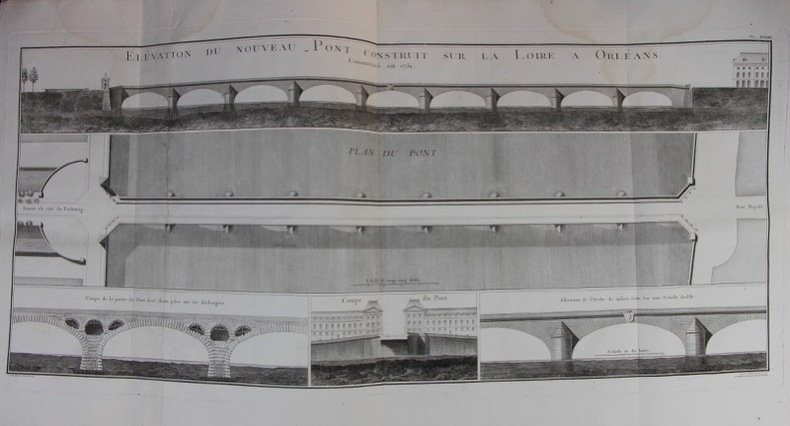
17820036Paris, Imprimerie Royale et Imprimerie de François-Ambroise Didot, 1782-1783-1789. Un volume (57,5 cm x 42 cm). Volume de Plans uniquement. 1 portrait de Jean-Rodolphe Perronet dessiné par Cochin et gravé par Saint-Aubin. 75 planches simples, doubles et dépliantes. 2 croquis de figures mathématiques d'un précédent propriétaire de l'ouvrage (T.de Boisanger, élève ingénieur à l'Ecole des Ponts et Chaussées) Demi-veau à coins, usagé mais solide. Dos orné de filets et fleurons dorés. Pièces de titre en maroquin rouge.
17560035Paris, Guillaume Desprez, 1756. Un volume (40 cm x 27 cm), XII (Avant-Propos)-104 (Discours préliminaire, Edit du Roy pour l'établissement de l'Hôtel royal des Invalides donné au mois d'Avril 1674, Description historique de l'Hôtel Royal des Invalides, Table des cent huit planches gravées, qui représentent différens Plans de l'Hôtel Royal des Invalides, avec les Peintures & Sculptures de l'Eglise) Un frontispice et une vignette sur le titre, un bandeau (deux vignettes), un cul de lampe (Avant-Propos), une vignette et une initiale illustrée (Discours préliminaire), une vignette et un cul de lampe (Edit du Roy pour l'établissement de l'Hôtel Royall des Invalides donné au mois d'Avril 1674), une vignette et une initiale illustrée (Description historique de l'Hôtel Royal des Invalides). Cent sept planches gravées, qui représentent différents Plans de l'Hôtel Royal des Invalides, avec les Peintures & Sculptures de l'Eglise. Exemplaire complet de toutes ses planches conformément à la table (p.103) qui " pourra servir d'Avis au Relieur pour placer chaque estampe dans son ordre". Demi chagrin XIXe. Dos à cinq nerfs ornés de fleurons dorés. Charnières et coiffes frottées mais solide reliure qui a permis la conservation de ce bel ouvrage gravé du XVIIIe siècle.
178351809Imprimerie royale, 1782 1783 2 volumes grand in-folio demi-basane rel. post., 12- 112- 6- 154 pp. Portrait frontispice gravé par Saint Aubin d’après Cochin. 67 planches gravées par Tardieu, Duval, Germain & Berthault d'après Eustache de St Fare & Le Sage. Lég. mouillures marginales au second volume. Bon exemplaire.
1756129305Guillaume Desprez 1756 In-folio 40 cm x 27 cm, veau porphyre, triple filet dore et grandes fleurs de lis aux angles, dos orne de meme, tranches marbrees Reliure de l'époque,, XII- 104 pp. Titre imprimé en rouge et en noir. Frontispice gravé par Cochin d’après Cazes, 2 vignettes par Dulin gravées par le même, deux lettrines et 107 planches dont 31 à double page, gravees par Cochin, Lucas et Herisset d'après les dessins de Mansart, Cotte, Maler, Coypel, de la Fosse et Jouvenet.
173128315Paris P. Didot l'ainé 1731 une gravure originale d'époque gravée en noir par PERROT, d'après le dessin de Pierre Dulin, sur papier vergé ligné, Format total : 51 centimètres de haut par 37,4 centimètres de large, [Planches pour : Le Sacre de Louis XV, Roy de France et de Navarre, dans l'église de Reims. Le Dimanche XXV octobre MDCCXXII, Publication : Paris : A. Guérinet Editeur, [s.d. - 1731 environ],
177651920Imp. Royale 1776 In-4 demi-basane muette reliure moderne, sans couverture. 24 pp. & un plan et trois planches dépliantes in fine. Quelques mouillures en marge et aux plis.
171027522Leide PIERRE VANDER Aa 1710 Une Gravure originale , technique : Eau-forte, en noir sur papier vergé crème, format de la gravure : 38 cm de haut par 48,5 cm de large, par Gabriel PERELLE, PARIS. "VEÜE DU JARDIN DES THUILLERIES COMME IL EST A PRESENT", [Estampe], à Leide, chez PIERRE VANDER Aa [circa 1710]
171027521Leide PIERRE VANDER Aa 1710 Une Gravure originale , technique : Eau-forte, en noir sur papier vergé crème, format de la gravure : 38 cm de haut par 48,5 cm de large, par Gabriel PERELLE, PARIS. "VEÜE DU BOUT DE LA GRANDE ALLEE DES THUILLERIES", [Estampe], à Leide, chez PIERRE VANDER Aa [circa 1710]
171027520Leide PIERRE VANDER Aa 1710 Une Gravure originale , technique : Eau-forte, en noir sur papier vergé crème, format de la gravure : 38 cm de haut par 48,5 cm de large, par Gabriel PERELLE, PARIS. "L'OBSERVATOIRE est un Edifice que le roy a fait commencer environ l'année 1667,Sur un lieu éminent à l'extrémité du Faubourg de St Iacques, pour servir aux Observations du Cours des Astres et à plusieurs expériences de Phisyque, il a tout l'Appareil et toutes les comoditez que demandent ces 2 belles sciences. Mais outre la Magnificence de sa structure, on y voit une solidité qui l'a fait prendre de loin pour une Citadelle.", [Estampe], à Leide, chez PIERRE VANDER Aa [circa 1710]
171027517Leide PIERRE VANDER Aa 1710 Une Gravure originale , technique : Eau-forte, en noir sur papier vergé crème, format de la gravure : 38 cm de haut par 48,5 cm de large, par Gabriel PERELLE, PARIS. "L'HOSTEL DE MARS DIT LES INVALIDES", [Estampe], à Leide, chez PIERRE VANDER Aa [circa 1710]
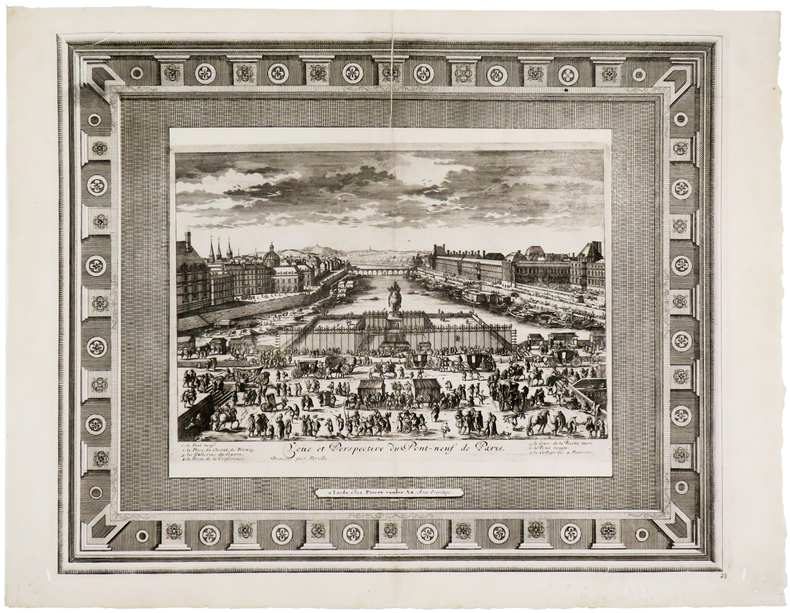
171027512Leide PIERRE VANDER Aa 1710 Une Gravure originale , technique : Eau-forte, en noir sur papier vergé crème, format de la gravure : 38 cm de haut par 48,5 cm de large, PARIS. «VEÜE ET PERSPECTIVE DU COLLÈGE DES 4 NATIONS", [Estampe], à Leide, chez PIERRE VANDER Aa [circa 1710]
1710LBW-5724Leyde, Pierre Vander Aa, [circa 1710]. 336 x 412 mm.
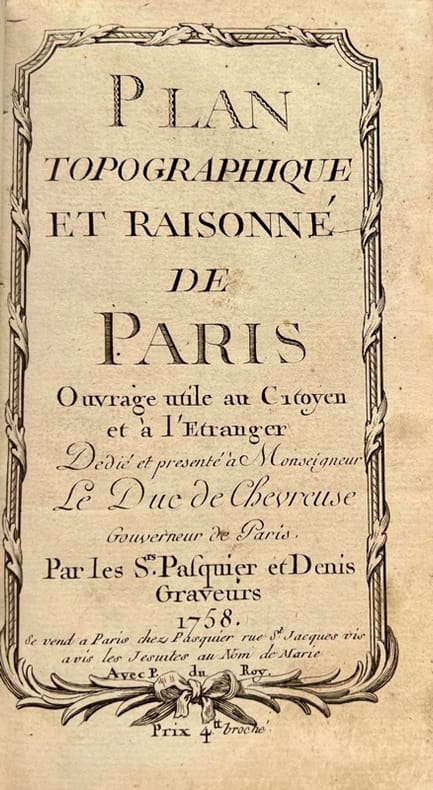
175842372Se vend à Paris, chez Pasquier et Denis, 1758. Petit in-8 de 3 ff.n.ch., 149 pp., 1 f.n.ch., veau lisse brun, dos orné, pièce de titre en maroquin rouge (reliure de l'époque).
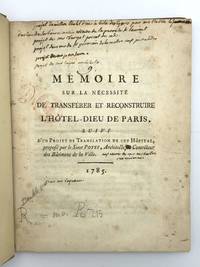
1786403054Paris 1786. 4to 231 x 183 mm. 44pp. Three large folding engraved plates. Late 19th-/early 20th-century boards. Intermittent foxing. Provenance: with contemporary ink annotations in French on the title identifying designers of other plans; Bibliothèque Imperiale inkstamp on some text leaves and plates duplicate stamp; Louis Greenbaum bookplate. BOUND WITH: Two copies of: Supplément au mémoire. Paris: Desenne Bailly Petit 1786. 4to. 63pp. FIRST EDITIONS. The plates depict an aerial plan of the hotel and its environs; a detailed plan of the first floor; and two perspective views on one sheet. The Hôtel-Dieu de Paris is the oldest hospital in the city. The present texts document the plans for reconstructing it after the ascension of Louis XVI who unlike his father favored renovation rather than demolition of the existing structure. The architect Bernard Poyet was supervisor of works in the city of Paris. He proposed a new façade based on Rome's Colosseum. The design was composed of a series of pavilions converging towards a center like the spokes of a wheel merging at the hub. His plan was rejected in favor of a more utilitarian design. Duveen & Klickstein pp. 272-273. See also our inventory numbers 403055 and 403056. <br/><br/> hardcover books
17200642Paris, o.D., 1720. Unter der Ansicht Legende 1-78 und A-Z. - Die seltene Ansicht im typischen, kräftigen Altkolorit, in einem sehr schön erhaltenen und breitrandigen Exemplar.
1788048102Lisbon: Regia Officina Typografica 1788. First Edition. Hardcover Full Leather. Good Condition. Contemporary acid calf worn at edges old library label to spine and title page stain to last few pages not obscuring text. Translated from the French edition published in 1778r. Details a major outbreak of rinderpest cattle plague in 1775. 166pp.<br /> <br /> Rinderpest was a major disease of cattle and is believed to have been wiped out in 2011 making it one of two infectious diseases to have been eradicated smallpox being the other. Size: duodecimo 12mo. Quantity Available: 1. Shipped Weight: Under 1 kilo. Category: Medicine & Health; Inventory No: 048102. Regia Officina Typografica hardcover
180023314Paris: L. Janet 1800. First edition. leather_bound. Full black calf gilt arabesque border panels spine and covers. Aeg. Near fine. 271 pages. 20 x 13 cm. All plates with tissue guards. From the Library of Betsy Flagg Melcher American miniature portraitist daughter of Ernest Flagg noted American architect in the Beaux-Arts Style. The book is from the Studio and Libraries at Yellow House Northeast Harbor Maine. Text in French. OCLC: 1490305. LC: PQ1245. Light scattered foxing throughout. L. Janet unknown
175929000Paris: Chez Moreau Hochereau l'ainé 1759. With uncancelled state of leaf L1. 1 vols. 8vo. Contemporary stained sheep red morocco label spine gilt. Rubbed head and tail of spine chipped some soiling and light browning else very good with an 1811 ex-libris on the title. With uncancelled state of leaf L1. 1 vols. 8vo. Chez Moreau, Hochereau l'ainé unknown books
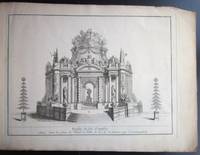
1749D4444Paris c. 1749. Hardcover. Very Good. Oblong 2o 325 x 440 mm. Engraved title-page engraved explanation of plates with pasted overslip adding a description of plate 6 and 6 engraved plates some staining to title-page and margins of plates. Contemporary marbled paper wrappers worn; cloth folding case. The plans and drawings illustrating the public festivities held in Paris to celebrate the TREATY OF AIX-LA-CHAPELLE on 12 February 1749. The treaty signed on 18 October 1748 was mainly a diplomatic agreement between Britain and France but it also marked the end of the War of Austrian Succession. Although the celebration called for fireworks at the Place de l'Hotel de Ville with numerous orchestras playing and buffets set up around the city the affair was rather gloomy due to French resentment over the terms of the treaty. Berlin 3019; Vinet 524. <br/><br/> hardcover books
174546589Paris L'Imprimerie Royale 1745. 4to. Without wrappers. Extracted from "Mémoires de l'Academie des Sciences. Année 1742". Pp. 371-378 and 3 folded engraved maps 1. Premier Plan Cours de la Seine dans l'etendue de Paris 20x23 cm - 2. Second Plan ou l'on voit les Rues dont on à les pentes.les diverses Quartiers de Paris 195x22 cm - 3. Coupe de la Ville de Pars. Plan des Rues. 225x30 cm. Clean and fine. unknown
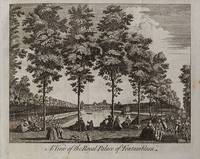
1780200088AG1780. no place no year / c.1780. Original engraving. Plate Size: 23.3 cm x 19 cm. Sheet Size: 26.5 cm x 20.5 cm. Original engraving. In very good condition. A beautiful engraving of the opulent Fontainbleau Palace and grounds to the southeast of Paris. The artist skilfully captures a scene from everyday life of people at leisure. unknown
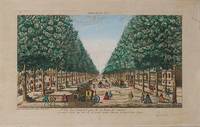
1750200061AG1750. Paris Mondhare c.1750-1780. Original hand-coloured copper engraved vue d'optique. Plate Size: 38.7 cm x 23.2 cm. Sheet Size: 44.7 cm x 28. 6 cm Original print. In very good actually remarkable condition. Clean and crisp and radiant impression with only the faintest trace of browning. Some very minor traces of light staining to outer margin corner. A wonderful vue d'optique from 18th Century France. A beautiful original hand-coloured copperplate engraving that shows a view the Porte Saint-Antoine which was one of the gates of Paris. The Porte of Sainte Antoine was located and protected by the Bastille. This engraving captures a more peaceable atmosphere of Parisian life around that notorious landmark: finely-dressed people and family groups are shown out strolling along the tree-lined broad boulevard and off to the side along the more sheltered promenade. It is a busy scene: In the foreground under the shade of a tree a religious beggar seeks alms; nearby an unbusy street vendor is shown with a table of offered refreshments; a dog is shown possibly bounding after one of the wheels of the passing horse-drawn carriages in a time-honoured dangerous tradition; off to the side a crowd of spectators view ball games. Louis-Joseph Mondhare 1734 - 1799 was a Paris print engraver publisher and print dealer. Originally from Normandy Mondhare began publishing in Paris around 1760 and started to print prints bearing the address of the hotel de Saumur rue Saint-Jacques. From 1784 he established a partnership for 12 years with his son-in-law Pierre Jean. Wikipedia From about 1740 to about 1820 optical prints also called "vue optique" or "vue d'optique" prints were made to be viewed through a Zograscope or other devices of convex lens and mirror all of which produced optical illusion of depth. Intaglio optical prints have exaggerated converging lines and bright hand-colours which contribute to the illusion of depth. Typically the legends of optical prints have reversed words along the top edge as those would be seen though the scope but words on the bottom of the prints are normal. Wikipedia unknown
178839924Lisboa: Na Regia officina typografrica 1788. Small 8vo 15.5 cm 6". 166 2 pp. <br><br>Sole Portuguese translation of Paris' treatise on the plague Mémoire sur la peste originally printed in 1778. <br>Â Â Â Â <br>Â Â Â Â Blake NLM 18th Century p. 338. Contemporary mottled sheep nicely gilt to spine with a black leather title label a bit sprung and with edges corners and spine tips rubbed; front hinge inside open but board holding strong with front free endpaper lacking. Paper shelving label of a private library on spine with another inside front cover; another label on title-page once obscured part of the title but this was partly sometime reversed; same leaf with small hole to blank area. Text of last page offset to pastedown with a light circular stain to pastedown and final four leaves. In fact a rather nice little book! Na Regia officina typografrica hardcover books
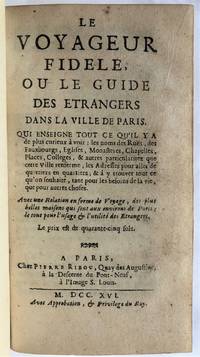
17164057fParis: Pierre Ribou 1716. 12mo 157 x 86 mm. 8 517 3 pp. Woodcut headpiece and initials typographic ornaments. A few pages faintly printed occasional light foxing minor staining to pp. 280-281. 19th-century jansenist red morocco turn-ins gold-tooled gilt edges extremities scuffed. Provenance: Martine-Marie-Pol de Béhague comtesse de Béarn 1870-1939 by descent to her nephew Hubert de Ganay and thence to his heirs; bookplate with initials H H.A traveler's guide to Paris in the final days of the Sun-King's reign filled with information on Parisian gastronomic and material culture and its many purveyors First Edition second issue with the same sheets as the 1715 edition and only the title reset.Louis Liger whose name is given in the title of the 1715 issue replaced here by the price quarante-cinq sols was an agronomist and compiler of several popular works on domestic economy gardening and agriculture. The present anecdotal guide to Paris an outlier in his oeuvre is narrated by a fictional visitor from Germany who relates 13 days spent exploring the city: a conceit familiar to modern readers of guidebooks and the NY Times but which must have had the snap of novelty then. Each day is devoted to a different neighborhood starting with the Ile de la Cité Notre-Dame etc. moving on to the Marais the Halles Faubourg St. Honoré St. Germain etc. and ending with several faubourgs all now part of Paris: the hospice of the Salpêtrière the Invalides the Observatory and the Champs-Elysées at the time a pleasant leafy esplanade where masked couples partied and flirted. Described are the churches monuments private residences and inhabitants of each quartier including local thugs madames prostitutes and their johns: the descriptions are interwoven with personal anecdotes meals concerts a mugging a brawl over a woman etc. Following this narrative section are 13 chapters or "Articles" on specific topics with practical information on lodging and commodities. The first five chapters cover churches not previously mentioned schools academies lectures private tutors and libraries including the Bibliothèque royale previously open on Tuesdays but now because of the overflow of books closed to all except those who "are known and have friends there" although foreigners are well received p. 316 the Bibliothèque of the Abbaye de Saint-Victor designated a public library in 1654 and private or monastic libraries such as the Bibliothèques Ste-Geneviève and libraries of the Cordeliers or the Jacobins Dominicans. Follow a couple of chapters listing hôtels garnis hotels and hôtels particuliers private grand houses. Having dispensed with culture the narrator cuts loose and goes shopping. The remaining Articles portray a Paris chock full of riches culinary sartorial artisanal mechanical and artistic. A litany of the many public plazas where markets are held introduces chapters on butchers the fish market vegetable markets cheese vendors cork vendors very important candle-vendors mouth-watering descriptions of melons and pastries no need to single out the best patisseurs as they are in every quartier and a brief account of the "caffez" filled with mirrors and lights where nouvellistes and beaux esprits meet to hold conversations on les belles lettres to fortify themselves for which they consume prodigious amounts of coffee chocolate and various drinks no longer known like rossolis and populo both made with spirits cinnamon and sugar. Reluctantly leaving the Parisian table the author turns to every other item for sale in the city. While individual merchants are not named the clustering of professions by street in Paris made it easy to advise the reader where to find linen and textiles haberdashery fans ribbons and lace ready-made clothes used clothes tailors dress-makers theater costumes embroidery tapestries of many different kinds including of gilt leather tortoiseshell boxes children's toys coffee tins furniture mirrors crystal chandeliers objets de curiosité such as antiques porcelain paintings shells or gold and silver-inlaid objects and the goldsmiths and silversmiths who made them and conservators who restored them. For simpler needs the affluent male or female reader learns where to find bonnet-makers glove-makers perfumers furs and leather goods. And let's not forget wig-makers all 200 of them on the Quai des Augustins the many gadgets needed for carriages weaponry for war or the hunt garden implements construction materials such as pierres de taille and their manufacturers the metalworkers glaziers paper-makers shoemakers sculptors engravers and architects and finally laborers and domestic servants.Scarce. OCLC lists two copies of the 1715 issue in N. America Columbia and Northwestern. Dufour Bibliographie artistique historique et litteraire de Paris avant 1789 1882 pp. 322-23. Pierre Ribou hardcover books