Gilbert CESBRONBiblio.com
43 665 résultats
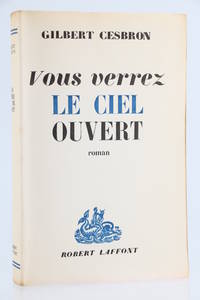
195679809Paris: Robert Laffont 1956. Fine. Robert Laffont Paris 1956 12.50 x 20 cm broché First edition one of 100 numbered copies on corvol l'orgueilleux paper the only deluxe copies along with a few hors commerce copies also on corvol l'orgueilleux paper. Handsome copy despite the spine and boards showing slight sunning at head and foot. Robert Laffont hardcover
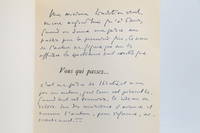
195682560Paris: Stock 1956. Fine. Stock Paris 1956 14.50 x 20.50 cm broché First edition printed in 980 numbered copies on vélin du marais paper ours one of the 100 hors commerce. Handsome copy. Work illustrated with a frontispiece by André Dunoyer de Segonzac. Handsome unsigned autograph thought by Paul Géraldy on the half-title page: ""Une ancienne tradition veut encore aujourd'hui qu'à Paris quand on donne une pièce au public pour la première fois le nom de l'auteur ne figure pas sur les affiches. Les spectateurs sont avertis que c'est une pièce de théâtre et non pas un auteur qui leur est présentée. Quand tout est terminé le rideau se relève. Un des comédiens s'avance et nomme l'auteur pour référence accessoirement."" ""An old tradition still holds today that in Paris when a play is given to the public for the first time the author's name does not appear on the posters. The spectators are informed that it is a play and not an author that is being presented to them. When everything is finished the curtain rises. One of the actors steps forward and names the author for reference incidentally."" Stock unknown
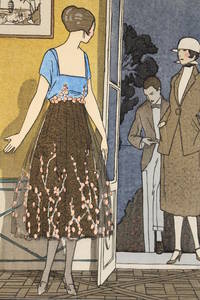
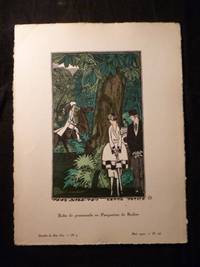
192054760Paris: Lucien Vogel éditeur 1920. Fine. Lucien Vogel éditeur Paris Avril 1920 18 x 24 cm une feuille Original color print printed on vergé paper signed in the plate. An original print used to illustrate the Gazette du bon ton one of the most attractive and influential 20th century fashion magazines featuring the talents of French artists and other contributors from the burgeoning Art Deco movement. A celebrated fashion magazine established in 1912 by Lucien Vogel La Gazette du bon ton appeared until 1925 with a hiatus from 1915 to 1920 due to the war the editor-in-chief having been called up for service. It consisted of 69 issues printed in only 2000 copies each and notably illustrated with 573 color plates and 148 sketches of the models of the great designers. Right from the start this sumptuous publication was aimed at bibliophiles and fashionable society Françoise Tétart-Vittu La Gazette du bon ton in Dictionnaire de la mode 2016 and was printed on fine vergé paper using a type cut specially for the magazine by Georges Peignot known as Cochin later used in 1946 by Christian Dior. The prints were made using stencils heightened in colors some highlighted in gold or palladium. The story began in 1912 when Lucien Vogel a man of the world involved in fashion he had already been part of the fashion magazine Femina decided with his wife Cosette de Brunhoff the sister of Jean creator of Babar to set up the Gazette du bon ton subtitled at the time: Art fashion frivolities. Georges Charensol noted the reasoning of the editor-in-chief: In 1910 he observed there was no really artistic fashion magazine nothing representative of the spirit of the time. My dream was therefore to make a luxury magazine with truly modern artists I was assured of success because when it comes to fashion no country on earth can compete with France. Un grand éditeur dart. Lucien Vogel in Les Nouvelles littéraires no. 133 May 1925. The magazine was immediately successful not only in France but also in the United States and Latin America. At first Vogel put together a team of seven artists: André-Édouard Marty and Pierre Brissaud followed by Georges Lepape and Dammicourt as well as eventually his friends from school and the School of Fine Arts like George Barbier Bernard Boutet de Monvel and Charles Martin. Other talented people soon came flocking to join the team: Guy Arnoux Léon Bakst Benito Boutet de Monvel Umberto Brunelleschi Chas Laborde Jean-Gabriel Domergue Raoul Dufy Édouard Halouze Alexandre Iacovleff Jean Émile Laboureur Charles Loupot Chalres Martin Maggie Salcedo. These artist mostly unknown when Lucien Vogel sought them out later became emblematic and sought-after artistic figures. It was also they who worked on the advertising drawings for the Gazette. The plates put the spotlight on and celebrate dresses by seven designers of the age: Lanvin Doeuillet Paquin Poiret Worth Vionnet and Doucet. The designers provided exclusive models for each issue. Nonetheless some of the illustrations are not based on real models but simply on the illustrators conception of the fashion of the day. The Gazette du bon ton was an important step in the history of fashion. Combining aesthetic demands with the physical whole it brought together for the first time the great talents of the artistic literary and fashion worlds; and imposed through this alchemy a completely new image of women: slender independent and daring which was shared by the new generation of designers including Coco Chanel Jean Patou Marcel Rochas and so on Taken over in 1920 by Condé Montrose Nast the Gazette du bon ton was an important influence on the new layout and aesthetics of that little dying paper that Nast had bought a few years earlier: Vogue. Lucien Vogel éditeur unknown
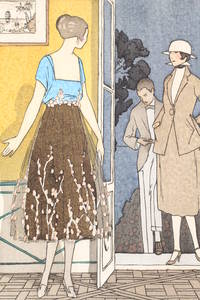
192057608Paris: Lucien Vogel éditeur 1920. Fine. Lucien Vogel éditeur Paris Avril 1920 18 x 24 cm une feuille original print in color printed on laid paper signed lower right of the board. Original content produced for the illustration of The Gazette fashionable one of the finest and most influential twentieth century fashion magazines celebrating the talent of creators and artists French burgeoning art deco. Famous fashion magazine founded in 1912 by Lucien Vogel The Gazette fashionable appeared until 1925 with an interruption during the War of 1915 to 1920 due to mobilization of its editor. She is 69 Deliveries from just 2000 copies and is illustrated including 573 color plates and 148 sketches depicting models of fashion designers. Upon publication these luxury publications ""are for bibliophiles and worldly aesthetes"" Françoise Tétart-Vittu ""good Gazette of tone"" in the fashion dictionary 2016. Printed on fine laid paper they use a typeface created specifically for the magazine by Georges Peignot the Cochin character taken in 1946 by Christian Dior. The prints are made with the technique of metal stencil enhanced color and some outlined in gold or palladium. The adventure began in 1912 when Lucien Vogel man of the world and fashion - it has already participated in Femina magazine - decided to found with his wife Cosette de Brunhoff John's sister the father of Babar Gazette good tone in which the subtitle is then ""Art fashions and frivolities."" Georges Charensol quotes the editor: ""In 1910 he observed there was no truly artistic fashion magazine and representative of the spirit of his time. So I thought of making a glossy magazine with truly modern artists . I was certain of success because no country for fashion can compete with France. """" A great art editor. Lucien Vogel ""in Literary News No. 133 May 1925. The success of the magazine is immediate not only in France but also the US and South America. Originally Vogel therefore brings together a group of seven artists: André-Édouard Marty and Pierre Brissaud followed by Georges Lepape and Dammicourt; and finally his friends from the School of Fine Arts as are George Barbier Bernard Boutet de Monvel or Charles Martin. Other talents come quickly reach the equipped Guy Arnoux Léon Bakst Benito Boutet de Monvel Umberto Brunelleschi Chas Laborde Jean-Gabriel Domergue Raoul Dufy Edward Halouze Alexander Iacovleff Jean Emile Laboureur Charles Loupot Charles Martin Maggie Salcedo. These artists mostly unknown when Lucien Vogel appealed to them will eventually become iconic figures and artistic sought. These are the same illustrators who make the drawings advertisements Gazette. The boards highlight the dresses and sublime seven artists of the time: Lanvin Doeuillet Paquin Poiret Worth Vionnet and Doucet. The designers provide for each number of exclusive models. Nevertheless some of Illustrations contained no real model but only the idea that the illustrator is done in the fashion of the day. Gazette fashionable is a milestone in the history of fashion. Combining the aesthetic requirement and plastic unit it brings together for the first time the great talents of the world of arts literature and fashion and imposed by this alchemy a new image of women slender independent and bold also driven by the new generation of designers Coco Chanel Jean Patou Rochas Marcel . Recovery in 1920 by Condé Montrose Nast Gazette fashionable modeled for the new composition and the aesthetic choices of the ""little dying newspaper"" that Nast had bought a few years ago: the Vogue magazine. Lucien Vogel éditeur hardcover
194450213Lyon: H. Lardanchet 1944. Fine. H. Lardanchet Lyon 1944 14 x 20 cm broché First edition one of 1000 numbered copies on vélin du Marais the only issue after 100 vellum copies. Work illustrated with original woodcuts by Jean Chièze. Handsome copy. H. Lardanchet hardcover
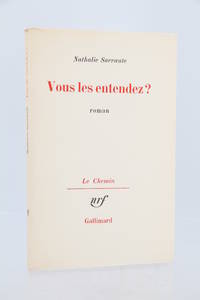
197284522Paris: Gallimard 1972. Fine. Gallimard Paris 1972 12.50 x 20 cm broché First edition one of 56 numbered copies on pure Lafuma-Navarre laid paper the only deluxe copies. Handsome copy. Gallimard unknown
197283500Paris: Gallimard 1972. Fine. Gallimard Paris 1972 12.50 x 20 cm broché First edition one of 56 numbered copies on pure Lafuma-Navarre laid paper the only deluxe copies. Rare and handsome copy despite the back cover being lightly and marginally sunned without consequence. Gallimard unknown
192039027Paris: Lucien Vogel éditeur 1920. Fine. Lucien Vogel éditeur Paris 1920 19.50 x 25 cm une feuille Original color print printed on vergé paper the signature does not let identify the artist. An original print used to illustrate the Gazette du bon ton one of the most attractive and influential 20th century fashion magazines featuring the talents of French artists and other contributors from the burgeoning Art Deco movement. A celebrated fashion magazine established in 1912 by Lucien Vogel La Gazette du bon ton appeared until 1925 with a hiatus from 1915 to 1920 due to the war the editor-in-chief having been called up for service. It consisted of 69 issues printed in only 2000 copies each and notably illustrated with 573 color plates and 148 sketches of the models of the great designers. Right from the start this sumptuous publication was aimed at bibliophiles and fashionable society Françoise Tétart-Vittu La Gazette du bon ton in Dictionnaire de la mode 2016 and was printed on fine vergé paper using a type cut specially for the magazine by Georges Peignot known as Cochin later used in 1946 by Christian Dior. The prints were made using stencils heightened in colors some highlighted in gold or palladium. The story began in 1912 when Lucien Vogel a man of the world involved in fashion he had already been part of the fashion magazine Femina decided with his wife Cosette de Brunhoff the sister of Jean creator of Babar to set up the Gazette du bon ton subtitled at the time: Art fashion frivolities. Georges Charensol noted the reasoning of the editor-in-chief: In 1910 he observed there was no really artistic fashion magazine nothing representative of the spirit of the time. My dream was therefore to make a luxury magazine with truly modern artists I was assured of success because when it comes to fashion no country on earth can compete with France. Un grand éditeur dart. Lucien Vogel in Les Nouvelles littéraires no. 133 May 1925. The magazine was immediately successful not only in France but also in the United States and Latin America. At first Vogel put together a team of seven artists: André-Édouard Marty and Pierre Brissaud followed by Georges Lepape and Dammicourt as well as eventually his friends from school and the School of Fine Arts like George Barbier Bernard Boutet de Monvel and Charles Martin. Other talented people soon came flocking to join the team: Guy Arnoux Léon Bakst Benito Boutet de Monvel Umberto Brunelleschi Chas Laborde Jean-Gabriel Domergue Raoul Dufy Édouard Halouze Alexandre Iacovleff Jean Émile Laboureur Charles Loupot Chalres Martin Maggie Salcedo. These artist mostly unknown when Lucien Vogel sought them out later became emblematic and sought-after artistic figures. It was also they who worked on the advertising drawings for the Gazette. The plates put the spotlight on and celebrate dresses by seven designers of the age: Lanvin Doeuillet Paquin Poiret Worth Vionnet and Doucet. The designers provided exclusive models for each issue. Nonetheless some of the illustrations are not based on real models but simply on the illustrators conception of the fashion of the day. The Gazette du bon ton was an important step in the history of fashion. Combining aesthetic demands with the physical whole it brought together for the first time the great talents of the artistic literary and fashion worlds; and imposed through this alchemy a completely new image of women: slender independent and daring which was shared by the new generation of designers including Coco Chanel Jean Patou Marcel Rochas and so on Taken over in 1920 by Condé Montrose Nast the Gazette du bon ton was an important influence on the new layout and aesthetics of that little dying paper that Nast had bought a few years earlier: Vogue. Lucien Vogel éditeur unknown
192021004Paris: E. Sansot 1920. Fine. E. Sansot Paris 1920 11 x 17 cm broché First edition with no mention of deluxe copies false statement of third edition. A very slight tear without loss at head of spine otherwise a handsome copy. E. Sansot unknown
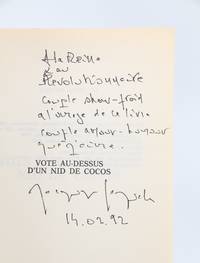
199287601Paris: Flammarion 1992. Fine. Flammarion Paris 1992 13.50 x 22 cm broché First edition of which there were no deluxe copies. Handsome copy. Precious and amusing autograph inscription signed by Jacques Séguéla to his friends Bernard Kouchner and Christine Okrent: "" A la reine & au révolutionnaire couple show-froid à l'image de ce livre. Couple amour-humour que j'aime. Jacques Séguela. 14.02.92"" To the queen & to the revolutionary couple show-cold in the image of this book. Love-humor couple that I love. Jacques Séguela. 14.02.92 Flammarion unknown
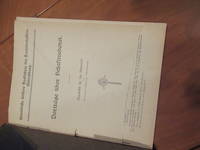
1925027081Munchberg circa 1925: Staatliche Hohere Fachschule Fur Textilindustrie 1925. First Or Early Edition . Wrappers. Very Good/Good Dustjacket. 11 " Tall. Drawings Plates. Early Twentieth Century Textbook From "The Textile Town Of Germany" Quite Scarce With No Copy Shown In Institutional Holdings Indexed By Worldcat Assuming My Spelling Is Correct. Undated Possibly 1920'S. Blue-Grey Card Wrappers With Patterned Plain Blue Dust Jacket Which Is So Well-Cut And Well-Folded Inside That It May Be Original. Bottom 2" Of Title Page Torn Away Probably A Notice That The Book Belongs To The School Stapled Text Bock Detached But Complete Leaving First And Last Leaves Still Attached To The Covers. Copiously Illustrated With Parts Looms Designs Etc. Some Hand Notes Probably By Los Angeles Textile Manufacturer Maria Kipp Or Her Weaver Emmie Napolitano. <br/> <br/> Staatliche Hohere Fachschule Fur Textilindustrie unknown
1925009123Berlin: Association Internationale De Bibliophilie / International Association Of Bibliophiles 1925. First Edition . Cream Cloth. Very Good. 358 Pp. First Edition First Printing. Richard C. Tolman's Copy With His Signatures "R. C. Tolman" On Front Endpaper And Again On Title Page. A Bright Fairly Clean Copy No Fraying Small Bump And Tear To Cloth At Top Of Rear Board With A Few Ex-Library Marks Of The California Institute Of Technology Blindstamps Label And A Few Traces Of Removed Labels. <br/> <br/> Association Internationale De Bibliophilie / International Association Of Bibliophiles hardcover
187224357Berlin: Decker 1872. Gebunden. Decker unknown
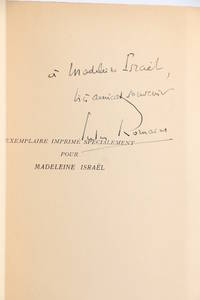
193986205Paris: Flammarion 1939. Fine. Flammarion Paris 1939 18 x 19.50 cm broché First edition one of 10 numbered copies on Japan paper this copy nominative and specially printed for Madeleine Israël deluxe copy. Bookplate pasted at head of first endpaper. Rare and handsome copy. Autograph inscription signed by Jules Romains to Madeleine Israël. Flammarion unknown
195112267Paris & Bruxelles Brussels: A. FlamentLes lettres latines 1951. Fine. A. Flament Les lettres latines Paris & Bruxelles Brussels 1951 15 x 19 cm broché First edition one of 1500 numbered copies on laid paper the only issue along with 50 on Japan paper. Handsome copy. A. FlamentLes lettres latines unknown
172241213Zurich Zurich: David Gessner 1722. Fine. David Gessner Zurich Zurich 1722 15 x 20 cm relié The rare first edition of this revised commented and annotated edition by Johann Jakob Leu of Josias Simler's major work: ""De republica helvetiorum"" 1576. With a large folding map of Switzerland by Michael Kauffer after Christoph Weigel. A frontispiece by Fussli often lacking elsewhere has not been included with this copy. Contemporary half vellum with corners. Smooth spine with title in black ink. Boards rubbed. Some marginal foxing. Map reinforced on verso with old paper. A good copy. Hans Jakob Leu was called upon by the publisher David Gessner to revise Simler's edition: De republica helvetiorum. From 1720 Leu gathered a great quantity of information on the regiments of each canton. His initial goal was to continue Simler's work up to 1720 and to complete it in its ancient parts; he made of it a new work more extensive and solid. David Gessner hardcover
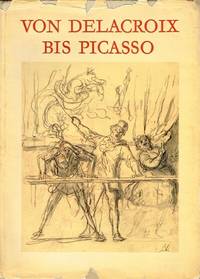
195814724Dresden Germany: Verlag Der Kunst. Very Good in Fair dust jacket. 1958. 1st Edition. First Printing. Hard Cover. Publisher's full cream linen red lettering on spine and cover. In German. Illustrated with 95 exquisite full-page color reproductions. . Endpapers and pages very slightly yellowed at edges slight discoloration and slight dents at bottom of boards; otherwise tight and square. All of the excellent reproductions are in perfect condition bright and fresh. The unclipped dust jacket now in Mylar is significantly chipped with some loss on the rear panel. A large heavy six pounds book - additional shipping charges may apply. VERY GOOD/FAIR. . Color Illustrations. Folio 13" - 23" tall. 30 190-plates pp . Verlag Der Kunst hardcover
193823575Mainz: Albert Eggebrecht 1938. Fine. Albert Eggebrecht Mainz 1938 19 x 27.50 cm reliure cartonnée de l'éditeur Second edition. Publisher's orange cardboard Bradel binding smooth spine dark brown sheep title-label. A slight tear at head of spine a light and faint marginal dampstain at head of leaves otherwise handsome copy. Albert Eggebrecht unknown
1987294228Eremitage Unsere liebe Frau vom Berge Karmel Bühl 1987. Softcover Heft 14 Hefte 1987-1990. Nur 1. Jahrgang Heft 34 2.-4. Jg. je Heft 1-4. Zustand: Keine Beschädigungen keine Eintragungen. Rücken Ecken Kanten gut. Eremitage Unsere liebe Frau vom Berge Karmel, Bühl, paperback
193210334Muenchen: Duncker Humblot 1932. Gebunden. Duncker + Humblot unknown
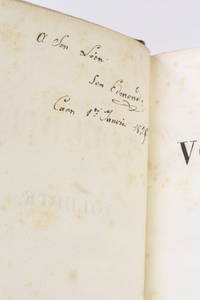
183467094Paris: Eugène Renduel 1834. Fine. Eugène Renduel Paris 1834 13.50 x 22 cm 2 volumes reliés First edition. Contemporary half purple sheep bindings spines with four raised bands uniformly faded decorated with blind-tooled compartments and gilt fillets paper boards imitating cardboard endpapers and pastedowns of pebbled paper. Manuscript gift inscription on verso of half-title of first volume. Bookplates pasted on first pastedowns of each volume. Scattered foxing. Eugène Renduel hardcover
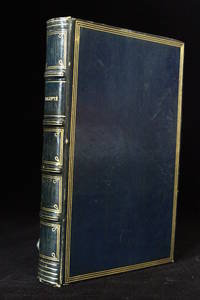
184548814Paris: Charpentier 1845. Fine. Charpentier Paris 1845 11.50 x 18.50 cm relié Third edition published anonymously with some parts in first edition as it was revised and corrected. Full glazed navy calf binding spine with four raised bands decorated with double gilt compartments gilt fillets at head and foot lower headcap with a slight tear gilt roulettes on headcaps triple gilt fillet frames on boards gilt fillets on leading edges gilt dentelle frame on pastedowns marbled endpapers and pastedowns top edge gilt elegant unsigned contemporary binding. Some minor foxing of no consequence. A perfectly established copy. Charpentier hardcover
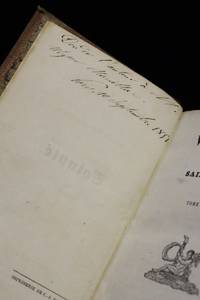
183552475Bruxelles Brussels: Louis Hauman & Cie 1835. Fine. Louis Hauman & Cie Bruxelles Brussels 1835 10 x 15.50 cm 2 volumes reliés en 1 First Belgian edition one year after the first edition. Binding half shagreen red back with four nerves set with golden dots adorned with double gilded boxes and gilded typographic florets small traces of friction on the upper cap chestnut cardboard plates guards and contreplats of handmade paper corners very slightly blunted. Signed autograph from Sainte-Beuve to Ulysse Marcillac next to the title page of the first volume. Nice copy. Louis Hauman & Cie unknown
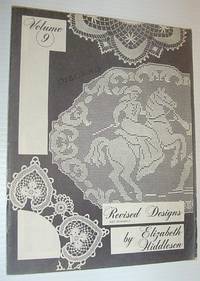
1955523a4577USA: Self-Published 1955. Book. Good. Paperback. Revised Edition. 4to - over 9¾" - 12" tall. 43 pages. Many patterns. Average wear. Two ink stamps else unmarked. A sound copy. Circa 1955. Self-Published Paperback
3213Paris: Emile Perrin 1882-1890. Five volumes bound in three complete with the supplement issued in 1953. FIRST and only non-reprint EDITION OF THE MONUMENTAL BIBLIOGRAPHY OF VOLTAIRE. Thousands of items described in great detail. Engraved frontispieces. Edition limited to 550 numbered sets of which this is one of 500 on good wove paper. Large 8vos. Attractively bound in recent cloth leather spine labels. ENTIRELY UNCUT. Original wraps bound in. Light foxing else an excellent set. Supplement in wraps. Scarce and important. <br/><br/> Paris: Emile Perrin, 1882-1890 paperback