29 résultats
18822020187Leipzig: Breitkopf und Hartel 1882. First Edition. Hardcover. Good. Tall octavo 234 pages half morocco speckled papers spine worn top joint splitting <br/><br/>Edited by Lina Ramann. Essays on Goethe Weimar music. etc. Breitkopf und Hartel hardcover
18802020161Leipzig: Breitkopf und Hartel 1880. First Edition. Hardcover. Good. Tall octavo half morocco speckled papers spine worn top joint splitting. <br/><br/>Edited by La Mara. Breitkopf und Hartel hardcover
18822020185Leipzig: Breitkopf und Hartel 1882. First Edition. Hardcover. Good. Tall octavo 273 pages half morocco speckled papers spine worn top joint splitting <br/><br/>Edited by Lina Ramann. Essays on Robert Schumann Berlioz Clara Schumann Robert Franz John Field. Breitkopf und Hartel hardcover
18812020184Leipzig: Breitkopf und Hartel 1881. First Edition. Hardcover. Good. Tall octavo half morocco speckled papers spine worn <br/><br/>Edited by Lina Ramann. Essays on Church Music George Sand Thalberg Robert Schumann Louis de Rouchand La Scala Heinrich Heine Berlioz Italian music Breitkopf und Hartel hardcover
1882074912Leipzig: Breitkopf & Härtel 1882. Franz Liszt's Gesammelte Schriften Bd. 4; VIII 273 S.; mit Register; übertragen von E. Ramann; fliegender Vorsatz mit Besitzerstempel Titelblatt mit Besitzervermerk Kanten berieben Ecken leicht gestaucht Rücken professionell erneuert. Erste Auflage. Leinen. Befriedigend. 244 cm. Breitkopf & Härtel Hardcover
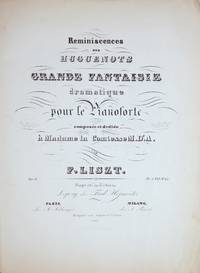
185531566Paris: Benoit ainé PN B. et C.ie 51871 1855. MEYERBEER Giacomo 1791-1864. Folio. 1f. title 29 1 blank pp. Engraved.<br /> <br /> Plate numbers and imprint of Brandus from their first edition of 1850.<br /> <br /> From the collection of pianist Mario Feninger 1923-2016 with his handstamp "Ex Mario Feninger de Rogatis Libris" to foot of title. <br /> <br /> Slightly worn and browned; occasional moderate offsetting; outer leaves partially detached and frayed and torn at edges; musicseller's handstamp to foot of title. First French Edition later issue with Benoit title page. LW A165/1. Searle 414/1. Raabe 223/1.<br /> <br /> Liszt made numerous transcriptions from the operas of Meyerbeer including L'Africaine Le Prophète Les Huguenots and Robert le diable. Benoit ainé [PN B. et C.ie 5187(1)] unknown
186131545Leipzig: C. F. Kahnt PN 787 1861. Folio. 1f. title within decorative shield engraving 3-11 1 blank pp. Engraved.<br /> <br /> Contents: 1. Vor der Schlacht; 2. Nicht gezagt; 2. Es rufet Gott uns mahnend.<br /> <br /> Musicseller's handstamp to foot of title.<br /> <br /> Spine reinforced with tape; slightly worn and browned; corners and edges frayed; dampstaining to right margin just touching music; title soiled; offsetting to caption titles. Second Edition with German titles. LW A207. Searle 511. Raabe 202. LC Catalog 164.<br /> <br /> Liszt's transcriptions of his three works for men's chorus S. 560/4-6 originally published in 1845. C. F. Kahnt [PN 787] unknown
184140942Leipzig: Fred. Hofmeister PN2269 1841. Folio. Ivory wrappers with manuscript titling to upper. 1f. recto title verso blank 3-31 i blank pp. Engraved.<br /> <br /> Slightly worn browned and thumbed; small chips and tears to outer margin of title with minor loss; some upper outer corners slightly turned. <br /> <br /> Wrappers slightly worn browned and stained with small chips to outer edge and spine. Searle 412. Raab 221. Fred. Hofmeister [PN]2269] unknown
188022872Leipzig: Breitkopf Und Hartel. Very Good. 1880. First German Edition. Hardcover. Bound in three-quarter leather with paper covered boards. Text is in Old German. I believe this is the first German edition. ; Small 4to 9" - 11" tall; 215 pages . Breitkopf Und Hartel hardcover
184031569Braunschweig: G.M. Meyer PN 361 1840. SCHUBERT Franz 1797-1828. Folio. 1 title 2-19 1 blank pp. Engraved.<br /> <br /> Contents: <br /> - Erlkönig D 328<br /> - Sei mir gegrüsst D 741<br /> - Du bist die Ruh D 776<br /> - Auf dem Wasser zu singen D 774<br /> <br /> Musicseller's handstamp to foot of title.<br /> <br /> Slightly worn; very minor soiling offsetting and foxing throughout. An early edition. LW A42. Searle 558. Raabe 243. <br /> <br /> Liszt transcribed nearly 150 songs for solo piano including 44 of Schubert's Lieder. <br /> <br /> "His response to poetic imagery his conviction that purely musical images of poetic ideas are capable of projection to the listener and his belief that he could illustrate such imagery without words are keys to understanding Liszt's lifelong aesthetic. The musical image of the idea the true symphonic poem thus had its genesis in concept and form in Liszt's adoration of Schubert." Derek Watson: Liszt p. 214. G.M. Meyer [PN 361] unknown
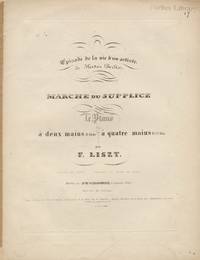
183940937Berlin: Ad. Mr. Schlesinger PN S. 2224 1839. Folio. Disbound. 1f. recto title verso blank i blank 4-13 i blank pp. Engraved. With secondary pagination to rectos in manuscript.<br /> <br /> Formerly in the collection of the Forbes Library in Northampton Massachusetts with their handstamp to upper outer corner of title and several pages.<br /> <br /> Slightly worn and browned; outer leaf separated at spine; narrow strip of early paper tape to inner margin of title. First Edition later issue. Searle 470. Raabe 134. Ad. Mr. Schlesinger [PN S. 2224] unknown
187441065Leipzig: Breitkopf & Härtel PN 9056 1874. Octavo. Original publisher's dark ivory wrappers. 1f. recto title verso blank 1f. recto preface in German verso preface in French 1f. recto composer's note in German on performance practice verso same note in French dated "Weimar Mars 1856" 97 i blank pp. Title preface and note lithographed; music engraved. <br /> <br /> Small B & H stamp to lower outer corner of title.<br /> <br /> With publisher's catalogue to verso of lower wrapper. <br /> <br /> Wrappers slightly worn and soiled; spine lacking. Occasional small stains; dampstaining to lower outer corners of first leaves; one signature partiallky detached. Re-issue from first edition plates. Searle 97. Raabe 414. Sonneck p. 266. <br /> <br /> Liszt was a distinguished Hungarian composer pianist conductor and writer.<br /> <br /> "Sketchbook evidence points to 1846-7 as the years when Liszt began to conceive the idea of a series of programmatic orchestral works. Of the four works he named all based on French poetry Ce qu'on entend sur la montagne and Les Préludes eventually became symphonic poems. . <br /> <br /> Liszt's concentration on the symphonic poem largely coincided with his tenure as Kapellmeister in Weimar where he had an orchestra at his disposal and provided music for performances at the Court Theatre. The Grand Duke commissioned Liszt's 'overtures' to preface specific dramas which thereby determined the subject matter of what were to become a number of his symphonic poems. Cormac F2017 argues that Liszt's approach to the overtures and their transformation into symphonic poems was influenced by his experience of an array of dramatic media opera plays melodramas tableaux vivants and by his interaction with staff and actors involved in the dramatic productions in Weimar. A New German School acolyte Felix Draeseke writing about the symphonic poems in a series of essays from the late 1850s acknowledged the influence of dramatic music especially opera on Liszt's Festklänge. Draeseke also addressed the issue that continues to interest scholars - the symphonic poems' engagement with sonata form. .<br /> <br /> Looking at the 12 Weimar symphonic poems Vande Moortele . views all but three Orpheus Héroide funèbre and Hunnenschlacht as using sonata form as one of the central principles guiding their large-scale organization. Furthermore Liszt seems to have attempted the same merging of sonata form and sonata cycle evident in the B Minor Sonata in Tasso Les préludes and Die Ideale and possibly Ce qu'on entend sur la montagne. .<br /> <br /> Some of the symphonic poems include mimetic representation of scenes and actions such as Hunnenschlacht's depiction of a battle and Prometheus's evocation of a voice followed by a storm. The inclusion of such passages drew criticism that a number of the symphonic poems seemed formless and could not be understood without access to a programme. In other symphonic poems such as Les Préludes and Orpheus Liszt responded to a philosophical programme without compromising musical logic. In these cases critics recognized Liszt the 'tone poet' who could capture a poetic stimulus in an expressive evocative musical flow unified by a single theme that underwent transformations. In general Liszt's sumptuous orchestral colorings were the dominant focus of critics' positive reception of his symphonic poems and programme symphonies." Dolores Pesce Maria Eckhardt and Rena Charnin Mueller in Grove Music Online. Breitkopf & Härtel [PN 9056] unknown
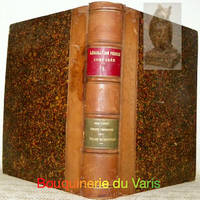
189455718Berlin - Paris : Otto Liebmann - Pedone-Lauriel 1894. 265x175mm. XXVI- demi-basane dos ˆ nerfs piÂce de titres rouge et verte cuir par endroit frottÂŽ cachet de bibliothÂque sur la page de titre cuir tachÂŽ sur un bord. 1821 Otto Liebmann - Pedone-Lauriel unknown
186631560Paris: S. Richault PN 15383 R 1866. BERLIOZ Hector 1803-1869. Folio. Original publisher's light green printed wrappers. 1f. title 7 1 blank pp. Engraved.<br /> <br /> From the collection of pianist Mario Feninger 1923-2016 with his small handstamp to upper wrapper "Ex Mario Feninger de Rogatis Libris" and head of first page. Publisher's handstamp to foot of title.<br /> <br /> Wrappers detached. Somewhat worn and soiled; minor offsetting. First Edition co-published with Biedermann in Germany. LW A205. Searle 475. Raabe 142. LC Catalog 152.<br /> <br /> Liszt was a fervent champion of Berlioz while in Paris and transcribed a number of his works for piano. It was Berlioz who first introduced Liszt to Goethe's Faust. <br /> <br /> "A lucid and delicately laid-out scherzo of charming effect." Derek Watson: Liszt p. 201. S. Richault [PN 15383 R] unknown
1880066737Leipzig: Breitkopf & Härtel 1880. 215 S.; aus dem Französischen von La Mara d. i. Ida Marie Lipsius; Privateinband etwas späterer Zeit; Titelblatt mit Besitzerstempel stellenweise mässig stockfleckig Kanten teils etwas berieben u. bestossen stabiles Expl. Erste deutsche Ausgabe. Halbleinen. Gut. 249 cm. Privateinband. Breitkopf & Härtel Hardcover
185040941Leipzig: Breitkopf & Härtel PN 8090 1850. Folio. Unbound as issued. 1f. recto title verso blank 3-29 i blank pp. Engraved.<br /> <br /> Small oval handstamp to blank lower margin of title.<br /> <br /> Slightly worn browned and foxed. First Edition. Searle 414:3. Raab 223.<br /> <br /> Liszt made numerous transcriptions from the operas of Meyerbeer including L'Africaine Le Prophète Les Huguenots and Robert le Diable. Breitkopf & Härtel [PN 8090] unknown
188128117AB1881. Nouvelle édition. Leipzig Breitkopf & Haertel 1881. Gross-8°. 1 Bl. 4 538 S. 1 Bl. Illustr. silbergeprägter Orig.-Leinenband Um 200 S. erweitere Neuauflage über die von Liszt beschriebene Volksmusik der Roma und der Juden in Ungarn und Russland. - Mit getilgtem Namenszug auf dem Halbtitelblatt. Einband berieben und bestossen. unknown
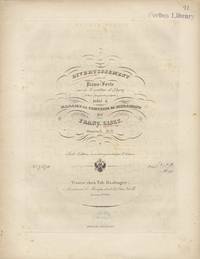
183840939Vienne: Tob. Haslinger PN T. H. 7573 1838. Folio. Disbound. i title 2-23 i blank pp. Engraved. With secondary pagination to rectos in manuscript.<br /> <br /> Small oval handstamp of P.K. Weizel Brooklyn NY to lower margin of title. <br /> <br /> Formerly in the collection of the Forbes Library in Northampton Massachusetts with their handstamp to upper outer corner of title and several pages.<br /> <br /> Very slightly worn soiled and foxed; outer bifolium separated at spine; small blank piece of ivory paper laid down to final blank page. First Edition. Searle 419. Raabe 230. Tob. Haslinger [PN T. H. 7573] unknown
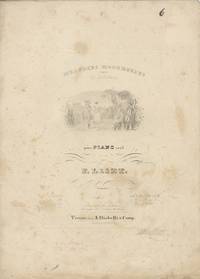
184040936Vienne: A. Diabelli & Comp. PN D et C No. 6959 1840. Folio. Unbound. 1f. recto title with vignette of dancing couple and group of musicians 3-1. i blank pp. Engraved<br /> <br /> Some wear and minor foxing; outer bifolium separated at spine' 6" in contemporary manuscript to upper outer corner of title.<br /> <br /> Indecipherable signature in pencil to lower outer corner of title with several annotations in purple ink. First Edition. Searle 425. Raab 250. Auman and White 124a. A. Diabelli & Comp. [PN D et C No. 6959] unknown
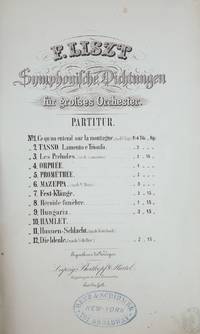
186241066Leipzig: Breitkopf & Härtel PN 9056 1862. Octavo. Original publisher's blue printed wrappers. 1f. recto title verso blank 1f. recto composer's note on performance practice in German verso same note in French dated "Weimar Mars 1856" 1f. recto preface in German verso preface in French 97 iii blank pp. Title note and preface lithographed; music engraved. <br /> <br /> With publisher's catalogue to verso of lower wrapper. <br /> <br /> With Beer & Schirmer New York and Musik-Antiquariat Doblinger handstamps to upper wrapper; Beer and Schirmer and publisher's handstamp to title.<br /> <br /> Wrappers worn soiled chipped and torn; spine reinforced with paper tape with small pieces of same tape to verso of upper wrapper. Minor internal wear. First Edition later issue. Searle 97. Raabe 414. Sonneck Orchestral Music p. 266. <br /> <br /> Liszt was a distinguished Hungarian composer pianist conductor and writer.<br /> <br /> "Sketchbook evidence points to 1846-7 as the years when Liszt began to conceive the idea of a series of programmatic orchestral works. Of the four works he named all based on French poetry Ce qu'on entend sur la montagne and Les Préludes eventually became symphonic poems. . <br /> <br /> Liszt's concentration on the symphonic poem largely coincided with his tenure as Kapellmeister in Weimar where he had an orchestra at his disposal and provided music for performances at the Court Theatre. The Grand Duke commissioned Liszt's 'overtures' to preface specific dramas which thereby determined the subject matter of what were to become a number of his symphonic poems. Cormac F2017 argues that Liszt's approach to the overtures and their transformation into symphonic poems was influenced by his experience of an array of dramatic media opera plays melodramas tableaux vivants and by his interaction with staff and actors involved in the dramatic productions in Weimar. A New German School acolyte Felix Draeseke writing about the symphonic poems in a series of essays from the late 1850s acknowledged the influence of dramatic music especially opera on Liszt's Festklänge. Draeseke also addressed the issue that continues to interest scholars - the symphonic poems' engagement with sonata form. .<br /> <br /> Looking at the 12 Weimar symphonic poems Vande Moortele . views all but three Orpheus Héroide funèbre and Hunnenschlacht as using sonata form as one of the central principles guiding their large-scale organization. Furthermore Liszt seems to have attempted the same merging of sonata form and sonata cycle evident in the B Minor Sonata in Tasso Les préludes and Die Ideale and possibly Ce qu'on entend sur la montagne. .<br /> <br /> Some of the symphonic poems include mimetic representation of scenes and actions such as Hunnenschlacht's depiction of a battle and Prometheus's evocation of a voice followed by a storm. The inclusion of such passages drew criticism that a number of the symphonic poems seemed formless and could not be understood without access to a programme. In other symphonic poems such as Les Préludes and Orpheus Liszt responded to a philosophical programme without compromising musical logic. In these cases critics recognized Liszt the 'tone poet' who could capture a poetic stimulus in an expressive evocative musical flow unified by a single theme that underwent transformations. In general Liszt's sumptuous orchestral colorings were the dominant focus of critics' positive reception of his symphonic poems and programme symphonies." Dolores Pesce Maria Eckhardt and Rena Charnin Mueller in Grove Music Online. Breitkopf & Härtel [PN 9056] unknown
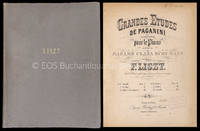
186030660AB1860. Leipzig Breitkopf & Härtel um 1860. 4°. 51 S. Moderner Einband. Platten-Nr. V.A. 484. 6 Etüden «seule édition authentique entièrment revue et corrigée par l'auteur» Titelbatt. Ders.: Zwei Episoden aus Lenau's Faust für grosses Orchester Piano zu zwei Händen. Leipzig J. Schuberth um 1860. 26 S. Ders.: Etudes d'exécution transcendante pour le piano par F. Liszt. Cah. 1. Leipzig Breitkopf und Härtel um 1860. 54 S. gestochene Noten. Ders.: Légendes. No. 1 St. Francois d'Assise. Piano. Pars Ménestrel um 1870. 13 S. Platten-Nr. H. 4612. Papier gebräunt zum Teil mit hinterlegten Einrissen. Mit handschr. Namenszügen auf den Titelblättern. unknown
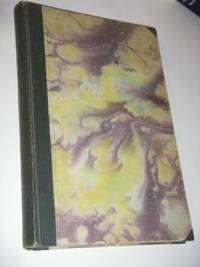
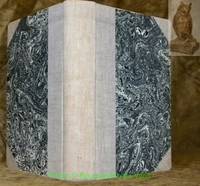
1881106040Leipzig : Breitkopf et Haertel 1881. 250x170mm. reliure demi-toile coins avec dos muet. Plats papier marbr. Bel exemplaire. 1233 Breitkopf et Haertel unknown
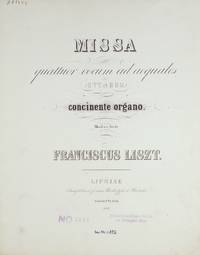
185340935Lipsiae: Breitkopfii et Härtelii PN 8636 1853. Folio. Dark yellow cloth-backed light gray boards. 1f. recto title verso blank 1f. recto dedication to "Patri Venerabili Albach" verso blank 3-35 i blank pp. Engraved.<br /> <br /> Scored for Tenors I and II Basses I and II and Organ.<br /> <br /> Handstamps of the Music Institute of the University of Vienna to title and dedication; deaccession note and stamp to verso of title.<br /> <br /> Binding somewhat worn rubbed and bumped with remnants of label to inner corner of upper board. Minor internal wear; lower outer corners bumped. First Edition of the first version. Searle 8a. Raab 485a. <br /> <br /> The Mass for four male voices and organ was composed in 1846-47 and was first performed in 1852 in Weimar "to celebrate the birthday of the President of the French Republic - later the Emperor Napoleon III. This is an unusual and austere work in which singers effectively declaim not sing parts of the Credo. The melodic line of the Gloria reveals the influence of plainchant." Collet: Franz Liszt. The Man & His Music Alan Walker ed. p. 340. Breitkopfii et Härtelii [PN 8636] unknown
1877mon0000210225William Reeves 1877-01-01. Hardcover. Acceptable. in x in x in. Ex-library book usual markings. Hardback with dust cover. Well read copy with some spine wear. Pages are rough cut and have coloured edges due to age. The bottom corner of the back cover board has been torn off. William Reeves hardcover
1871125188Leipzig: J. Schuberth & Co 1871. 1871 or that era. Folio. Fair Ex-lib. usual markings; heavy wear to extremities of boards; spine mostly gone; front and back boards detached but present; ffep and title pages detached and heavily chipped; main block secure and mostly in good condition but with brittle page edges. Tan paper over boards; Dark brown cloth at spine; 129 pp. comprised totally of a musical score. Oversize 15 x 21.5 inches and heavy 7.5 pounds / 3.4 kilos. The mass was composed by Franz Liszt between 1855 and 1858 for the dedication of the new part of the cathedral at Esztergom Hungary by Archbishop Janos Scitovszky. Liszt conducted the work and the organist was Alexander Winterberger. The dedication concert the work's premiere was on August 31 1856. The reverberation time in the cathedral is 9 seconds Wikipedia creating the potential for an acoustic nightmare in performing a piece of this magnitude! The performance was attended by 4000 guests including Emperor Franz Joseph I and other imperial majesties of Austria-Hungary ecclesiastical dignitaries well-known musicians and members of the press. After the premiere Liszt and others continued to make various small changes and corrections to the original score. The first publication was in 1859 by the Imperial Printing House Vienna followed by subsequent editions and variations piano reductions etc. by J. Schuberth 1871. G. Schirmer 1909. etc. This particular edition/volume contains NO individual parts violin flute soprano etc. for actual performance but IS an actual complete copy of the entire conductor's score meaning that it includes all the orchestral organ vocal soloist SATB and choral SATB parts with vocal text all together for a conductor to use in rehearsal or performance. This edition was published by J. Schuberth & Co. no date likely in Leipzig rather than New York or Philadelphia as the names of the instruments are listed in German and the price on the front cover is listed in Thaler an old German/European coinage. The work is complete: Kyrie Gloria Credo Sanctus Benedictus Agnus Dei with all parts readable even where margins are chipped. An excellent copy for the conducting student Liszt afficionado musical researcher or someone interested in Hungarian/Esztergom ecclesiastical history. For an excellent article by Morten Solvik on Liszt's writing of this work see this link from the American Symphony Orchestra's web site. J. Schuberth & Co hardcover