GOUNOD CharlesLivre Rare Book
1 000 résultats
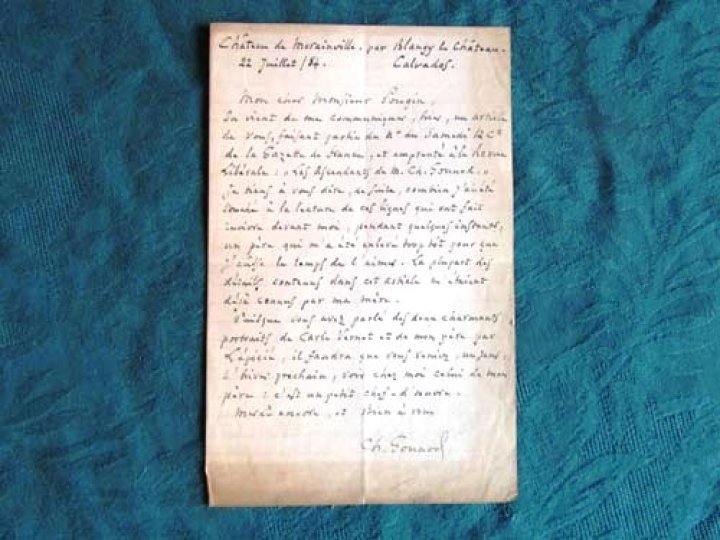
188411907Lettre Autographe Signée de Charles Gounod (1818-1893) au musicologue Arthur Pongin.Il étudie l'harmonie avec Antoine Reicha puis, au Conservatoire de Paris, avec Jacques Fromental Halévy et la composition avec Jean-François Lesueur. En 1839, il remporte le Grand Prix de Rome pour sa cantate Fernand.Château de Morainville par Blangy le Château. 22 juillet 1884. Calvados.Il a lu son article sur les Ascendants de M. Ch. Gounod : "J'ai été très touché à la lecture de ces lignes qui ont fait revivre devant moi pendant quelques instants, un père qui m'a été enlevé trop tôt pour que j'eusse le temps de l'aimer. La plupart des détails contenus dans cet article m'étaient déjà connus par ma mère". Il l'invite à venir voir le portrait de son père par Lépicié : "c'est un petit chef-d'oeuvre"...LAS 1 page de format in-8°(21x14). Très bon état.
186725608Paris: Choudens PN A.C. 1411. 1867. Large octavo. Quarter red pebbled cloth with marbled boards titling gilt to spine. 1f. recto decorative lithographic title by Barbizet printed in light purple verso blank 1f. recto dedication "A Sa Majesté Charles XV Roi de Suède de Norvège" printed in blue verso blank 1 named cast list and index 2-303 i blank pp. Lithographed.<br /> <br /> Named cast includes Carvalho Daram Duclos Michot Puget Laurent Barré Laveissière Troy jeune Troy Cazaux Wartel and Neveu. <br /> <br /> Publisher's handstamp to lower margin of title.<br /> <br /> Binding slightly worn rubbed and bumped; hinges split; endpapers browned. Some dampstaining to inner margins; occasional splitting creasing and small tears. First Edition first issue. <br /> <br /> Roméo et Juliette was first performed at the Théâtre Lyrique in Paris on 27 April 1867. The opera was "Gounod's most spectacular immediate success. Coming as it did during the Exposition Universelle of 1867 when Paris was invaded by visitors from the provinces and abroad the opera drew full houses for many consecutive nights. It started its rapid conquest of foreign stages at Covent Garden on 11 July 1867 and before the end of the year had been seen at major centres in Germany and Belgium." Steven Huebner in Grove Music Online. Choudens [PN A.C. 1411.] unknown
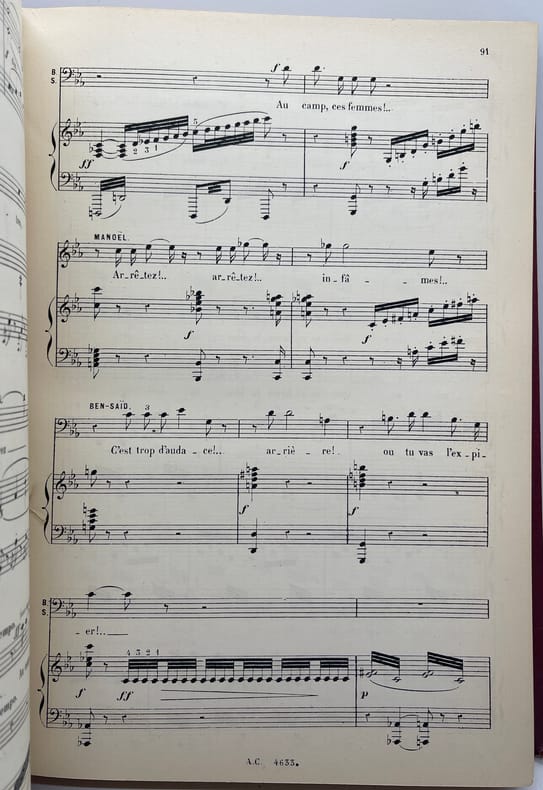
188014523Paris Choudens père et fils sans date (vers 1880) In-4 plein maroquin rouge cardinal Paris, Choudens père et fils, sans date (vers 1880). In-4, (4)-267 pp., plein maroquin rouge cardinal, double filet en encadrement estampé à froid, chiffre "M.D" à l'or sur le plat supérieur, dos à nerfs, entre-nerfs avec encadrement estampés à froid, ornés de lyres, double filet à l'or sur les bords, toutes tranches dorées, dentelles sur les chasses, signée Lortic. (Très petits frottements aux bords des coiffes et aux coins, discrète tache au dos.)
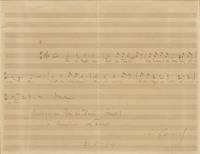
251361 page ca. 76 x 187 mm. Four measures of an Adagio for organ with pedals in E-flat major in 4/4. Notated in black ink on three printed staves. <br/><br/>A note in black ink to verso signed Comte Élie de "Palys" explains that this autograph of Gounod has been "given by M. de Lassus his son-in-law to Mme Porteau." With rectangular blindstamp to upper left corner. <br/><br/>Very lightly foxed and stained; creased at central fold. "Best known today as the composer of the opera Faust and an Ave Maria descant to the first prelude of J.S. Bach's Das wohltemperirte Clavier Gounod wrote in most of the major genres of his day sacred and secular. That his reputation began to wane even during his lifetime does not detract from his place among the most respected and prolific composers in France during the second half of the 19th century." Steven Huebner in Grove Music Online. unknown books
7116viii 32 pp. 8vo 212 x 138 mm. modern aubergine cloth a little sunned title on upper cover. Paris: Félix & Regnault-Delalande 1824.<br/> <br/> A rare sale catalogue issued by the prolific expert Regnault-Delalande 1762-1824 describing the painter’s extensive collection. This copy is printed on large paper and begins with a valuable biography of the artist. Gounod 1758-1823 was a pupil of Lépicié; his first appearance at the Paris Salon was in 1799. His son Charles became a famous musician and composer.<br/> <br/> 192 lots. The catalogue describes paintings by S. Bourdon Chardin van Dyck Gounod La Tour Miel and Rembrandt; drawings by Bouchardon Ant. Carracci Cochin fils van Dyck Gounod Greuze Jordaens Le Brun N. Poussin Raphael C. J. Vernet etc.; prints by G. & B. Audran Bartolozzi Callot Earlom Morghen Nanteuil Porporati Rembrandt C. Vernet etc. The print suites and books include the works of Palladio Scamozzi Perrault Newton Barbault Bartoli Piranesi etc. We also find the standard art historical books and artistic treatises of the 18th century.<br/> <br/> Fine copy. In the characteristic binding of the Bibliothèque Heim and with the library’s stamp on verso of title. <br/> <br/> ⧠Lugt 10600. Oxford Art Online. unknown
7116viii 32 pp. 8vo 212 x 138 mm. modern aubergine cloth a little sunned title on upper cover. Paris: Félix & Regnault-Delalande 1824. A rare sale catalogue issued by the prolific expert Regnault-Delalande 1762-1824 describing the painter's extensive collection. This copy is printed on large paper and begins with a valuable biography of the artist. Gounod 1758-1823 was a pupil of Lépicié; his first appearance at the Paris Salon was in 1799. His son Charles became a famous musician and composer. 192 lots. The catalogue describes paintings by S. Bourdon Chardin van Dyck Gounod La Tour Miel and Rembrandt; drawings by Bouchardon Ant. Carracci Cochin fils van Dyck Gounod Greuze Jordaens Le Brun N. Poussin Raphael C. J. Vernet etc.; prints by G. & B. Audran Bartolozzi Callot Earlom Morghen Nanteuil Porporati Rembrandt C. Vernet etc. The print suites and books include the works of Palladio Scamozzi Perrault Newton Barbault Bartoli Piranesi etc. We also find the standard art historical books and artistic treatises of the 18th century. Fine copy. In the characteristic binding of the Bibliothèque Heim and with the library's stamp on verso of title. ❧ Lugt 10600. Oxford Art Online. hardcover books
188127462Paris 1881. 279 x 198 mm. Signed by the artist in pencil at lower left. A very good impression on laid paper. <br/><br/>Remnants of hinges to upper corners of verso. Béraldi: Les Graveurs du XIXe Siècle Paris: 1885-92 XI-188. <br/><br/>Faust an opera in five acts to a libretto by Jules Barbier and Michel Carré after Carré's Faust et Marguerite and Johann Wolfgang von Goethe's Faust Part I in the French translation by Gérard de Nerval was first performed in Paris at the Théâtre Lyrique on March 15 1859. <br/><br/>"Faust became particularly important to the French musical establishment at the end of the century. A work by a winner of the Prix de Rome that could claim to be thoroughly modern and personal in style at its première and go on to international stages was a significant enhancement to the musical prestige of a French operatic culture previously dominated by Meyerbeer and the none-too-easily exportable genre of opéra comique. Its national value was enhanced because after some initial assessments as 'Wagnerian' Gounod's compositional voice in Faust was heard as important in the definition of a 'French' musical aesthetic." Steven Huebner in Grove Music Online. <br/><br/>Renouard 1845-1924 was a noted painter and engraver whose works are held at the Louvre the Opéra Museum etc. unknown books
188127462Paris 1881. 279 x 198 mm. Signed by the artist in pencil at lower left. A very good impression on laid paper. <br /> <br /> Remnants of hinges to upper corners of verso. Béraldi: Les Graveurs du XIXe Siècle Paris: 1885-92 XI-188. <br /> <br /> Faust an opera in five acts to a libretto by Jules Barbier and Michel Carré after Carré's Faust et Marguerite and Johann Wolfgang von Goethe's Faust Part I in the French translation by Gérard de Nerval was first performed in Paris at the Théâtre Lyrique on March 15 1859. <br /> <br /> "Faust became particularly important to the French musical establishment at the end of the century. A work by a winner of the Prix de Rome that could claim to be thoroughly modern and personal in style at its première and go on to international stages was a significant enhancement to the musical prestige of a French operatic culture previously dominated by Meyerbeer and the none-too-easily exportable genre of opéra comique. Its national value was enhanced because after some initial assessments as 'Wagnerian' Gounod's compositional voice in Faust was heard as important in the definition of a 'French' musical aesthetic." Steven Huebner in Grove Music Online. <br /> <br /> Renouard 1845-1924 was a noted painter and engraver whose works are held at the Louvre the Opéra Museum etc. unknown
4840La pice impose au concours est la Cantate Jeanne dArc....N 1. (candidat premier) : ...La premire partie meilleure que le reste : quelques passages assez lgants (...) N2 : ...pas dinvention dans tout cela ! Pauvre dides ; fourmille dexpdients N 3 ...Aucune ide nen aura jamais aucune motion na rien dans le ventre, mme la fin, pas une seconde denthousiasme : cest un vrai glaon !... N 4 pas dides, ennuyeux comme... la pluie... a t dit : un gaga ! . Sa conclusion, les candidats : ...N 3 et 4 sont trs infrieurs aux N 1et 2. Je ne sais quelle ide ils ont eu de faire de la musique. Ce concours, vu ltat actuel de lart dramatique, donne bien peu desprances. Les effets sont cherchs dans la voix, dans les cris, non dans la forme ni dans lexpression...
36231Oblong folio 175 x 264 mm.<br/><br/>30 measures in total notated on both sides of the leaf the initial 13 measures in black ink the following 17 in purple pencil possibly a continuation of the same work. <br/><br/>With several deletions and "Notes manuscrites de Ch. Gounod" in pencil to upper right margin.<br/><br/>Slightly worn and browned; cut from a larger leaf. "Gounod wrote in most of the major genres of his day sacred and secular. That his reputation began to wane even during his lifetime does not detract from his place among the most respected and prolific composers in France during the second half of the 19th century." Steven Huebner in Grove Music Online. unknown books
188888513s. n. | Paris 1888 | 11 x 15 cm | Une photographie
189020892Ollendorff 1890 1 Paris, Ollendorff Éditeur, 1890, in-12, cartonnage Bradel jaspé, pièce de titre en chagrin noir, couvertures conservées, 216 pages.
36231Oblong folio 175 x 264 mm.<br /> <br /> 30 measures in total notated on both sides of the leaf the initial 13 measures in black ink the following 17 in purple pencil possibly a continuation of the same work. <br /> <br /> With several deletions and "Notes manuscrites de Ch. Gounod" in pencil to upper right margin.<br /> <br /> Slightly worn and browned; cut from a larger leaf. "Gounod wrote in most of the major genres of his day sacred and secular. That his reputation began to wane even during his lifetime does not detract from his place among the most respected and prolific composers in France during the second half of the 19th century." Steven Huebner in Grove Music Online. unknown
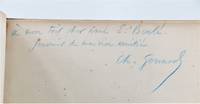
016423Charles Gounod, Le Tribut de Zamora, Grand Opéra de 4 actes de Adolphe d'Ennery et Jules Brésil, musique de Ch Gounod. Paris, Choudens, sd [1881]. In-4, [2]-387p. Edition originale de la partition du dernier opéra de Gounod, qui profita du refus de Verdi de mettre en musique le livret de d'Ennery et Brésil. Cet opéra fut un succès. Exemplaire du compositeur Ambroise Thomas (1811-1896) avec un envoi sur le tire : « à mon cher et illustre ami Ambr. Thomas. Ch. Gounod » (le d a été en partie coupé à la reliure). Demi-basane rouge, dos lisse, filets, papier légèrement jauni, petits frottements. Rare envoi de Gounod sur une partition, très intéressante provenance.
354720 NOV 1855 TRES BELLE LETTRE.LA CREATION DE SA MESSE SOLENNELLE DE SAINTE CECILE.Gounod s'adresse un mcne et un bienfaiteur : ...Je croirais manquer l'efficace et bienveillant patronage que vous avez daign accorder notre grande Solennit Chorale du Dimanche 25 9bre, si je ne venais vous demander, comme dernire faveur, de bien vouloir honorer de votre prsence cette crmonie dont votre puissante recommandation vient d'assurer le succs... Il lui adresse donc 6 places comme ...humble marque du prix que j'attache votre prcieux intrt... et lui demande encore une faveur, ...persuad que prs de vous (...) la confiance doit porter bonheur. J'ai compos rcemment, sur la demande du Comit de l'Association des Artistes Musiciens, une Messe Solennelle grand orchestre, qui doit tre excute le Jeudi 29 9bre dans l'Eglise de St Eustache midi, l'occasion de la fte de Ste Ccile, et au bnfice des Caisses de Secours et pensions destins (sic) aux artistes pauvres. Oserais-je esprer (...) que vous voudrez bien vous intresser cette Suvre ? Je serais aussi fier que reconnaissant de votre prsence et de votre suffrage... assure Gounod.Ddicace A la mmoire de J. Zimmermann, mon Pre (en fait son beau-pre) la Messe solennelle pour soli, choeurs, orchestre et orgue oblig, compose par Gounod reue un accueil enthousiaste, en particulier de la part de Camille Saint-Sans qui crivit : "L'apparition de la Messe Sainte Ccile (...) causa une sorte de stupeur. Cette simplicit, cette grandeur, cette lumire sereine qui se levait sur le monde musical comme une aurore, gnaient bien des gens (...). C'tait par torrents que les rayons lumineux jaillisaient de cette Messe."
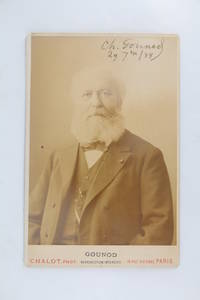
188888513Paris: s. n. 1888. Fine. s. n. Paris 1888 11 x 15 cm Une photographie Original photograph depicting Charles Gounod full face. Vintage gelatin silver print mounted on cardboard produced by photographer Isidore Alphonse Chalot at 18 rue Vivienne Paris. Autograph inscriptions in black then blue ink on the verso by the recipient A. Lasserre inspector at the Opéra Garnier: ""Portrait de Ch. Gounod signé le soir de la 926eme représentation de Faust samedi 29 septembre 1888 A. Lasserre."" Additional handwritten note in pencil in the right margin of the verso: 1867e représentation de Faust le 28 septembre 1929. Printed stamp at foot of the verso: ""Maison Martinet Albert Hautecoeur 18 bd des Capucines."" Charles Gounods dated autograph signature to upper right corner of the photograph : ""Ch. Gounod 29 7bre / 88."" leaux "" s. n. unknown
0486283496New. Brand new and still unused unknown
395518 measures in treble clef notated in black ink on a portion of a 14-stave rastrum-ruled album leaf 177 x 233 mm. With text in French in Gounod's hand commencing "Il etait un Roi du Thulé" Marguerite's melancholy aria from Act III. <br /> <br /> Identified in the composer's hand at foot: "Ballade du Roi de Thulé . à Monsieur Lebert. Ch. Gounod" and dated 26 August 1869.<br /> <br /> Slightly faded; browned; creased at central vertical fold; portions of leaf slighty lightened; margins of verso reinforced with brown paper tape. Faust an opera in five acts to a libretto by Jules Barbier and Michel Carré after Carré's Faust et Marguerite and Johann Wolfgang von Goethe's Faust Part I in the French translation by Gérard de Nerval was first performed in Paris at the Théâtre Lyrique on 19 March 1859 in a version with spoken dialogue; recitatives were added in 1860 and a ballet and couplets for Méphistophélès were added for a new production in 1869. <br /> <br /> "The historical importance of Faust is that it sounded a new note in French music. The conventional pomposities of the grand opera which then dominated the stage were superseded by a more intimate and poetic approach. The fashion Gounod set was one of conversational exchange rather than declamation." James Harding: Gounod p. 114.<br /> <br /> "Faust remains one of the landmarks of French 19th-century opera full of variety and with an underlying sensuality that saved it from the sentimentality and banality to which Gounod's later works especially his oratorios often descended in his quest for inspired simplicity." Robert Orledge in Grove Music Online<br /> <br /> A considerable success at its premiere the work was one of the most frequently performed works at the Opéra and one the staples of the international repertory. unknown
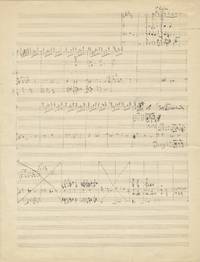
39978One bifolium 272 x 347 mm. 4 pp. Notated in black ink on 26-stave rastrum-ruled paper. Unsigned and undated.<br /> <br /> With significant corrections cancels etc.<br /> <br /> Slightly worn and browned; small tear to blank outer margin of first leaf repaired; horizontal crease; short split to head and tail of spine.<br /> <br /> In very good condition overall. Music unlocated but very likely from a sacred vocal work with orchestra. <br /> <br /> The first page contains 16 measures of music on 8-line staves the uppermost stave marked with the key signature of 5 sharps in a contrapuntal style incorporating stretto technique whereby a melody is restated in overlapping fashion in two or more voices. <br /> <br /> The second page contains 28 measures including four cancelled measures with music still visible on 4- and 5-line staves with a sharp-key signature as in the first page and passages of high-register 8th notes most likely for violin; the uppermost stave is designated "1e. Basson." <br /> <br /> The third page contains 21 measures on an 8-line stave being an alternate iteration of the material from the first page; the final 4 measures which are cancelled contain tremolo string material similar to the second page. <br /> <br /> The upper portion of the fourth and final page contains 8 measures of music similar to the first and third pages in a stretto character but with a new key signature of 3 flats. <br /> <br /> With 2 measures of music also with 3 flats to lower portion of final page. <br /> <br /> Gounod's interest in sacred music and counterpoint was awakened in his youth and continued for the span of his career. "Gounod arrived at the French Academy in Rome at the end of January 1840. Little there sustained his musical interest. He excoriated performances of operas by Donizetti Bellini and Mercadante composers he later characterized as mere 'vines twisted around the great Rossinian trunk without its vitality and majesty' and unable to match that composer's spontaneous melodic gifts. Gounod was however genuinely moved by performances of Palestrina at the Cappella Sistina and more generally by the cultural legacy of Rome in the other arts a legacy he felt that musicians could ill afford to ignore. His Roman experience laid the foundation for the stark comparison he drew in his aesthetics between on the one hand a universally appealing combination of beauty truth and Christianity and on the other egoism artifice and insularity. He described stile antico counterpoint as a selfless analogue to Michelangelo's frescoes issuing from pure Faith." Steven Huebner in Grove Music Online<br /> <br /> A fine example of a Gounod working manuscript in the composer's elegant hand displaying how he skillfully wove together counterpoint orchestration and compositional structure; well worthy of further study. unknown
1858257<p>Gounod Charles François <i>Le Médecin Malgré Lui Comédie en 3 Actes de Molière Arrangé en Opéra-Comique par MM Jules Barbier & Michel Carré. Musique de Charles Gounod Partition Piano et Chant.</i>Paris: Colombier Éditeur rue Vivienne No. 6 1858. 27.5 cm x 18 cm iv ; 190 pages. In-8vo. Original green wrapper bound-in. Bound in half blue goatskin with gold lettering on the spine over blue marbled boards. Slight wear to corners binding otherwise very good. Internally pristine printed on heavy paper wrapper slightly chipped. Engraved title page. First edition C 2097 Columbier. Signed and inscribed in ink by Gounod at the top of the title page: "à mon ami Léon Leroy : Souvenir affecteux. Ch. Gounod." </p> Sold with an ALS of presentation from Gounod to Léon Leroy dated "Samedi 5 février /70". The text is: " Mon cher ami Il y a huit jours que j'ai <u>votre </u>médecin … Et le mien aussi – car je viens d'être malade et je sors de mon lit. C'est pourquoi je n'ai pu mettre la main sur votre addresse dont la copie était dans mes papiers. Voulez-vous avoir la bonté de faire prendre mon souvenir chez mon concierge Il y est déposé par bande à votre nom --- à vous Ch. Gounod. " "My dear friend It has been eight days since I had your doctor --- and my own as well – since I came to be sick and I left my bed. It's why I have not been able to put my hand on your address which was in my papers. Would you have the goodness to come and get my souvenir from my concierge It is deposited in a wrapper in your name. Yours Ch. Gounod." Léon Leroy was a distinguished clarinetist and a member first in Paris then later in New York of the <i>Société Moderne pour Instruments</i>à <i>Vent and a soloist with the Garde Republicaine Band in Paris. </i><i>Le Médecin Malgré Lui </i>was Gounod's third opera dating from 1858. Colombier, Éditeur, rue Vivienne, No. 6 books
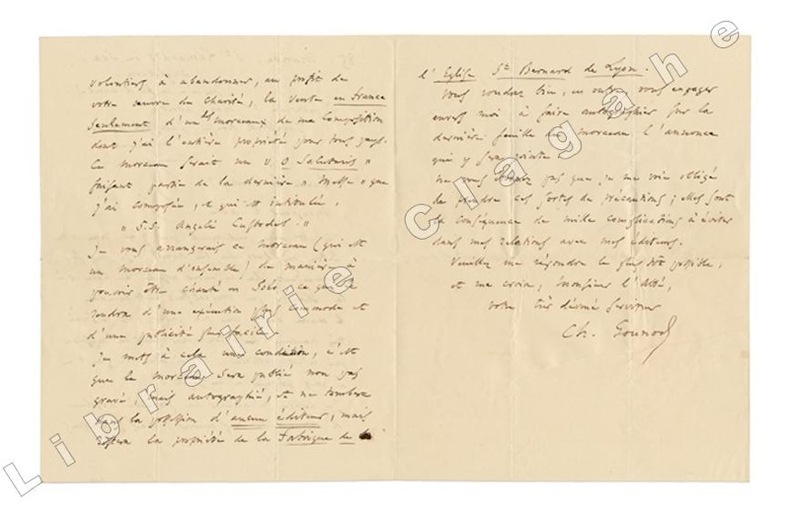
18307“Monsieur l’abbé, [...] Je vous suis reconnaissant de m’avoir associé au zèle et à la charité qui vous ont fait entreprendre l’oeuvre dont vous me parlez [...] Voici donc ce que j’ai à vous proposer à ce sujet. Je désire n’aliéner la propriété absolue d’aucune de mes oeuvres ; mais je consens volontiers à abandonner, au profit de votre oeuvre de charité, la vente en France seulement d’un des morceaux de ma composition dont j’ai l’entière propriété pour tous pays. Ce morceau serait un “O Salutaris” faisant partie de la dernière “Messe” que j’ai composée, et qui est intitulée “S.S. Angeli Custodes”. Je vous arrangerai ce morceau (qui est un morceau d’ensemble) de manière à pouvoir être chanté en solo, [...]. Je mets à cela une condition, c’est que le morceau sera publié non pas gravé, mais autographié, et ne tombera dans la possession d’aucun éditeur, mais restera la propriété de la fabrique de l’Eglise St-Bernard de Lyon. Vous voudrez bien en outre, vous engager envers moi à faire autographier sur la dernière feuille du morceau l’annonce qui y sera jointe. Ne vous étonnez pas que je me vois obligé de prendre ces sortes de précautions ; elles sont la conséquence de mille complications à éviter dans mes relations avec mes éditeurs. [...] signé : Ch. Gounod.”
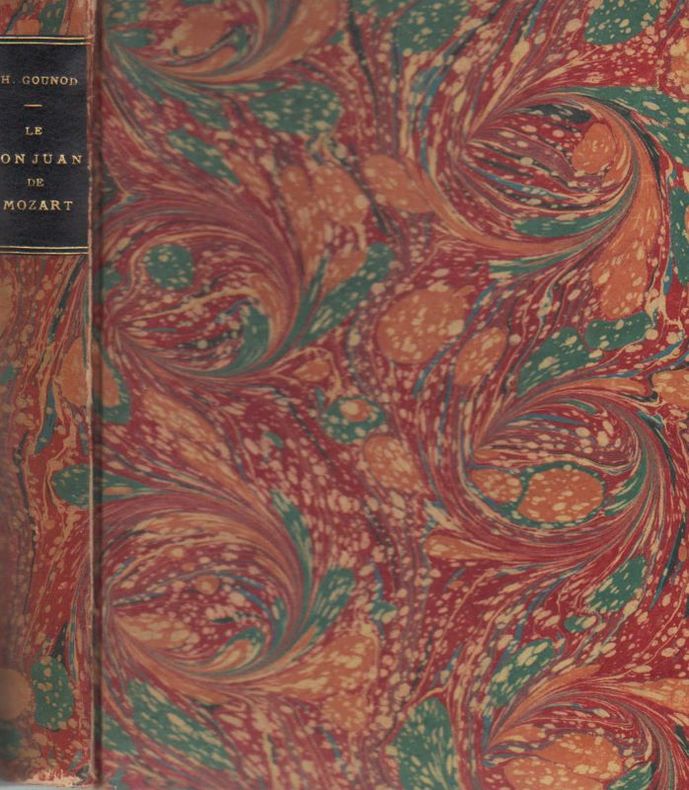
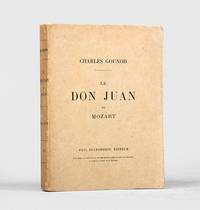
1890142346Paris: Paul Ollendorff 1890. A fine "Banquet Years" association First edition an exceptional presentation copy to the proprietor of the famed Montmartre cabaret Le Chat Noir inscribed on the half-title "À Monsieur Rodolphe. Salis Hommage de l'auteur Ch. Gounod". This work a study of Mozart's Don Juan reveals its particular importance to Gounod and its continuing influence on his life and work: "The score. has had an influence on my whole life akin to a revelation; it was and has remained for me a kind of embodiment of dramatic and musical faultlessness; I consider it a work without a flaw of uninterrupted perfection" our translation. The connection between Gounod and a famous Parisian cabaretier may seem a surprising one at first but the composer had a very close relationship with Le Chat Noir contributing critical work to the establishment's weekly magazine; Ravel Satie Massenet and Fauré were also keen supporters of the cabaret. Also significantly themes from Gounod's Faust were used by Albert Tinchant when he arranged the score for La Tentation de Saint Antoine a shadow play - "féerie à grand spectacle en 2 actes et 40 tableaux" - based on Flaubert's book and designed by painter-designer Henri Rivière who developed these "ombres chinoises" for which Le Chat Noir became famous. Gounod's "Ronde du veau d'or" accompanies part three of the tableau L'Avarice entitled "La Bourse" and music from the final scene of Faust is employed for the "Apothéose". Octavo. Unopened in original cream printed stiff paper wrappers. Wrappers just a little rubbed very occasional spotting to the text an excellent copy. Nicolai"La Tentation de Saint-Antoine au Chat Noir : un exemple de collaboration multidisciplinaire" in Flaubert revue critique et génétique 21 2019. unknown
18803465831880. 5 pages signed by the composer on the cover page. Folio. Blue cloth folder. Bookplate of Dr. Max Thorek and hsi usual stamp on the last page of ms. 5 pages signed by the composer on the cover page. Folio. With a copy of the printed score tipped in. unknown
186782010Choudens | Paris S.d (1867) | 19 x 28 cm | relié
186782010Paris: Choudens 1867. Fine. Choudens Paris S.d 1867 19 x 28 cm relié Roméo et Juliette - Opera score in 5 acts by J. Barbier et M. Carré Choudens Paris n.d 1867 19x28cm bound. First edition. Opera in five acts based on the play Romeo and Juliet by William Shakespeare music by Charles Gounod for voice and piano and libretto by Jules Barbier and Michel Carré. Contemporary red half shagreen color restored gilt spine glazed calico boards double ruled in gilt central gilt initials of Ernest Beulé on the first board moiré silk endpapers with some spotting and staining to the margins first original cover preserved all edges gilt strictly contemporary binding. Rare inscription signed by Charles Gounod to archaeologist Ernest Beulé. Choudens hardcover